Stem, rachis, midrib, and petiole miners of American bellflower
I observed mines of multiple agromyzid species on stems and stemlike structures of American bellflower (Campanulastrum americanum), along with a gracillariid stem mine, making C. americanum the plant with the highest diversity of stem miners noted in the survey. This page provides images and written descriptions of these miners and the sign they leave behind. In the image galleries, you may click on a thumbnail to view the full-size version of the image.
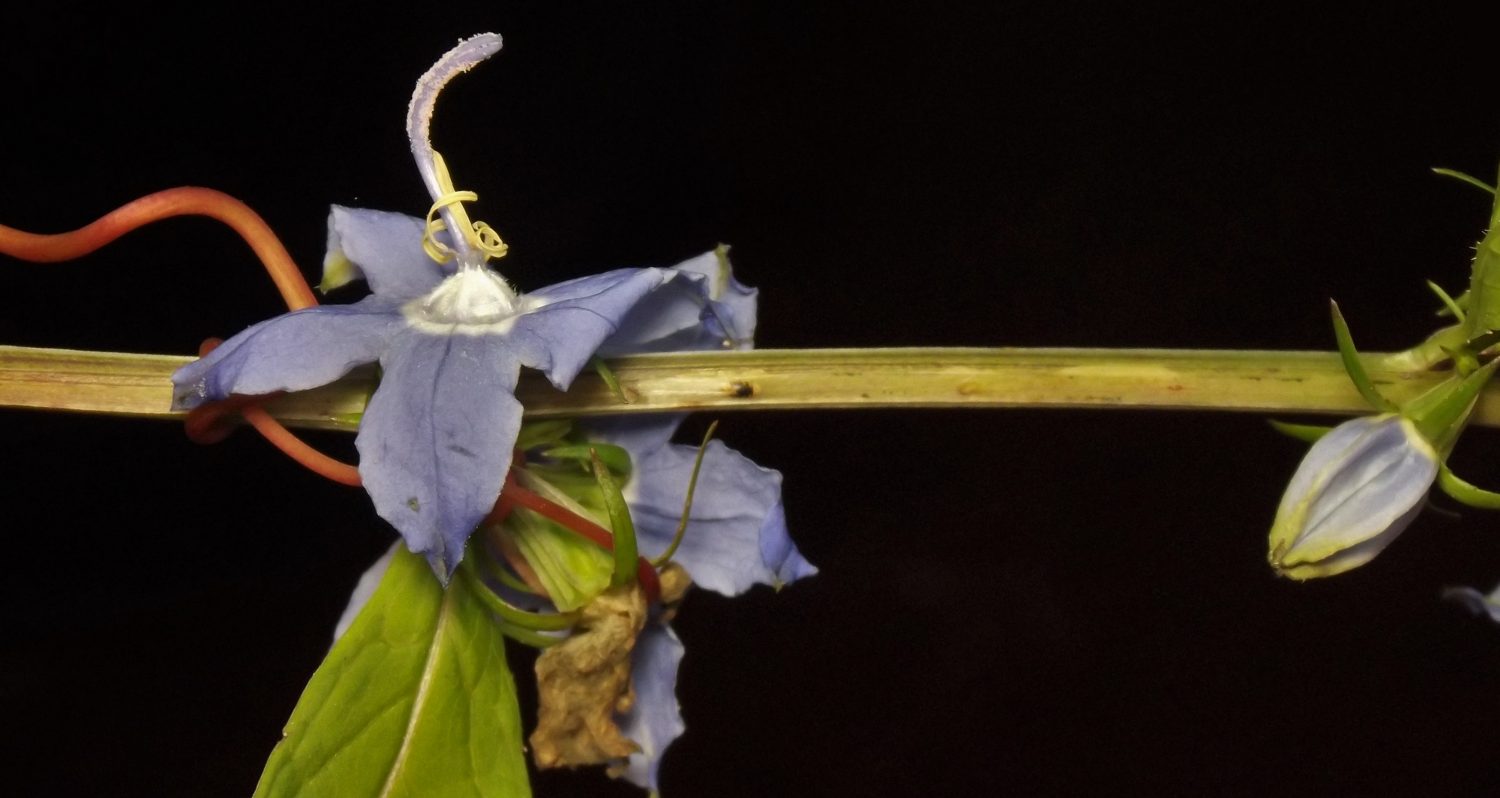
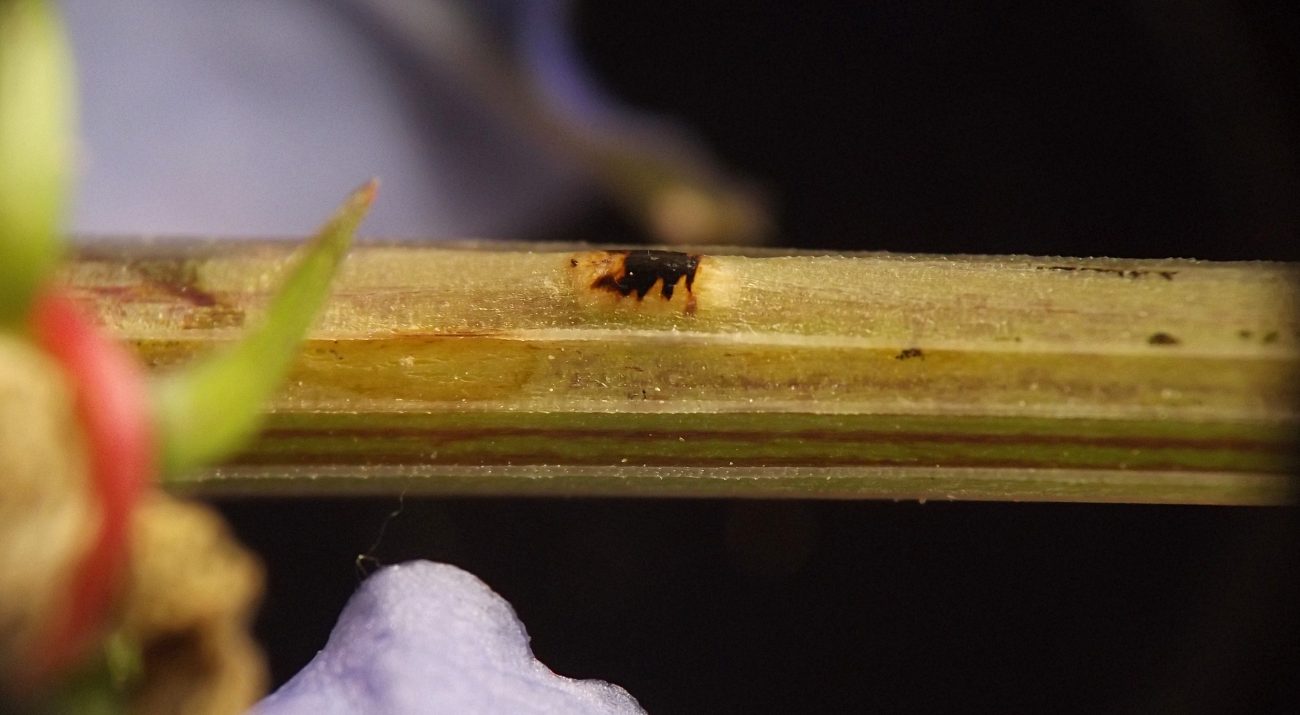
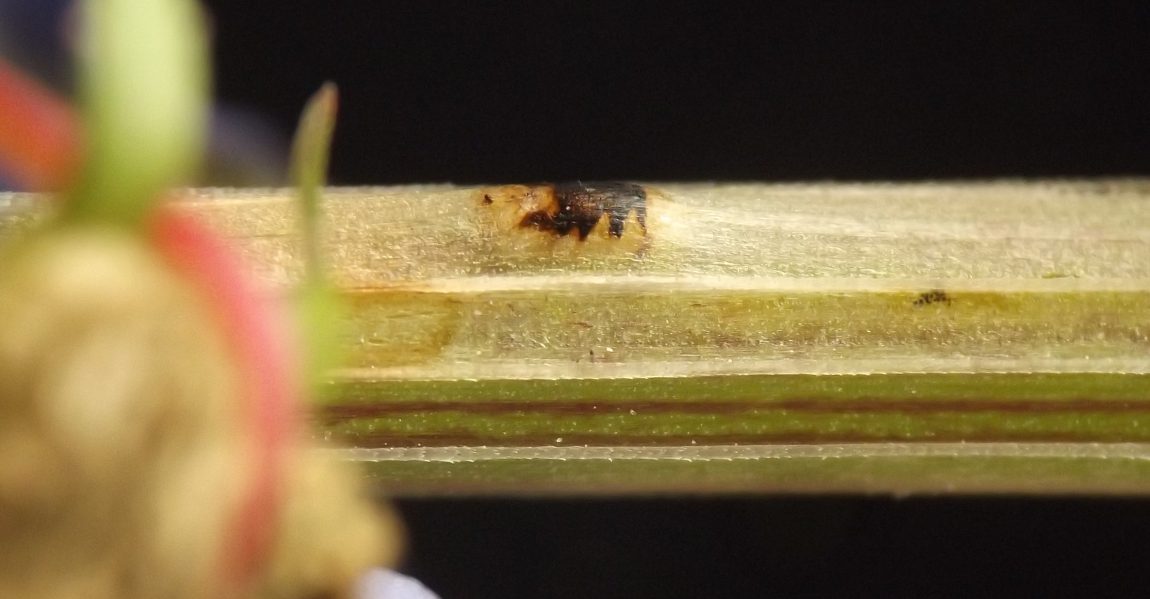
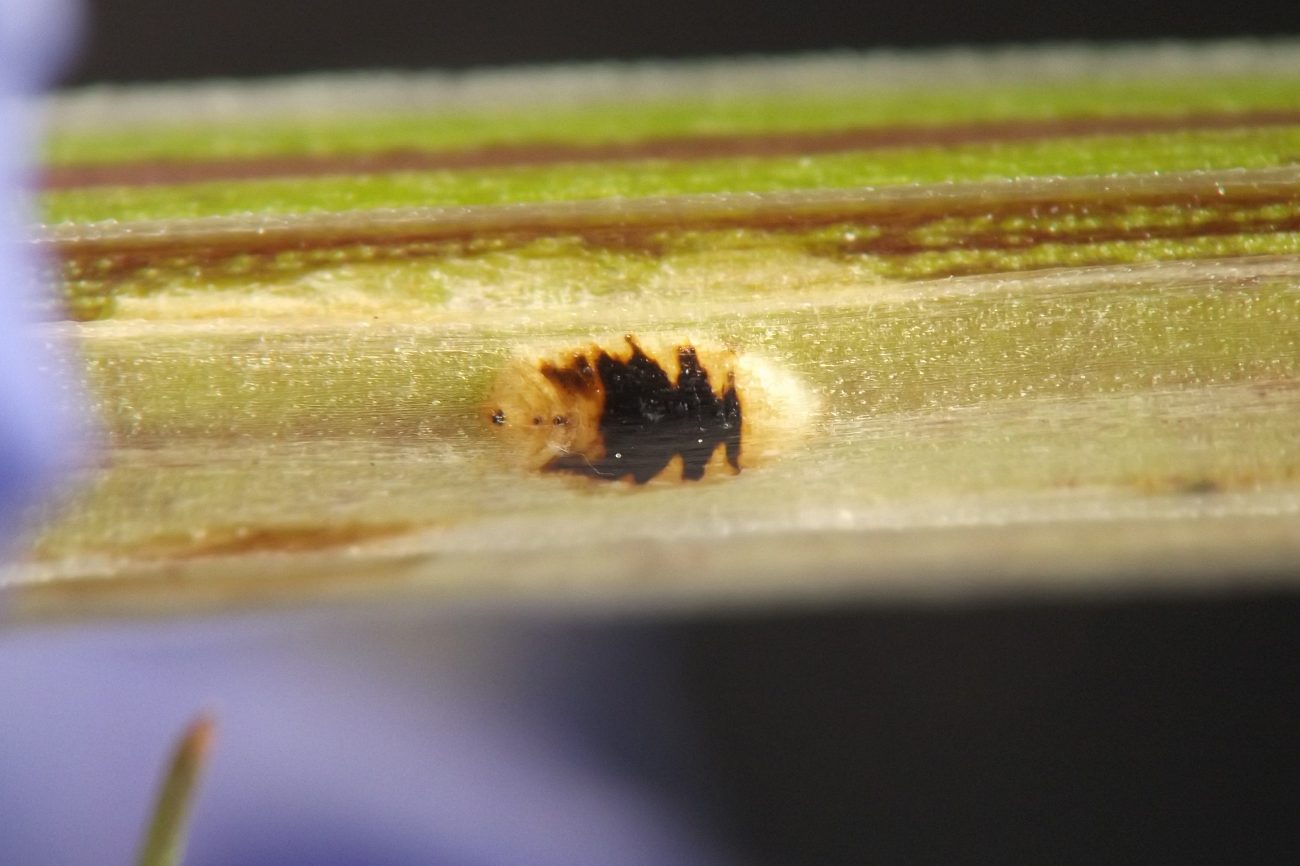
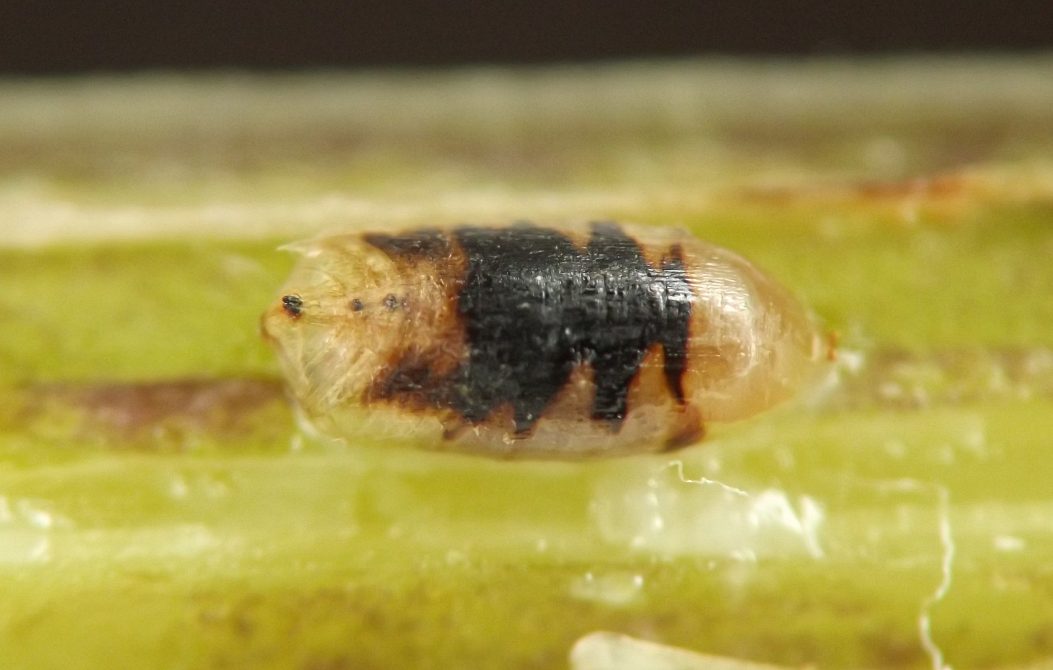
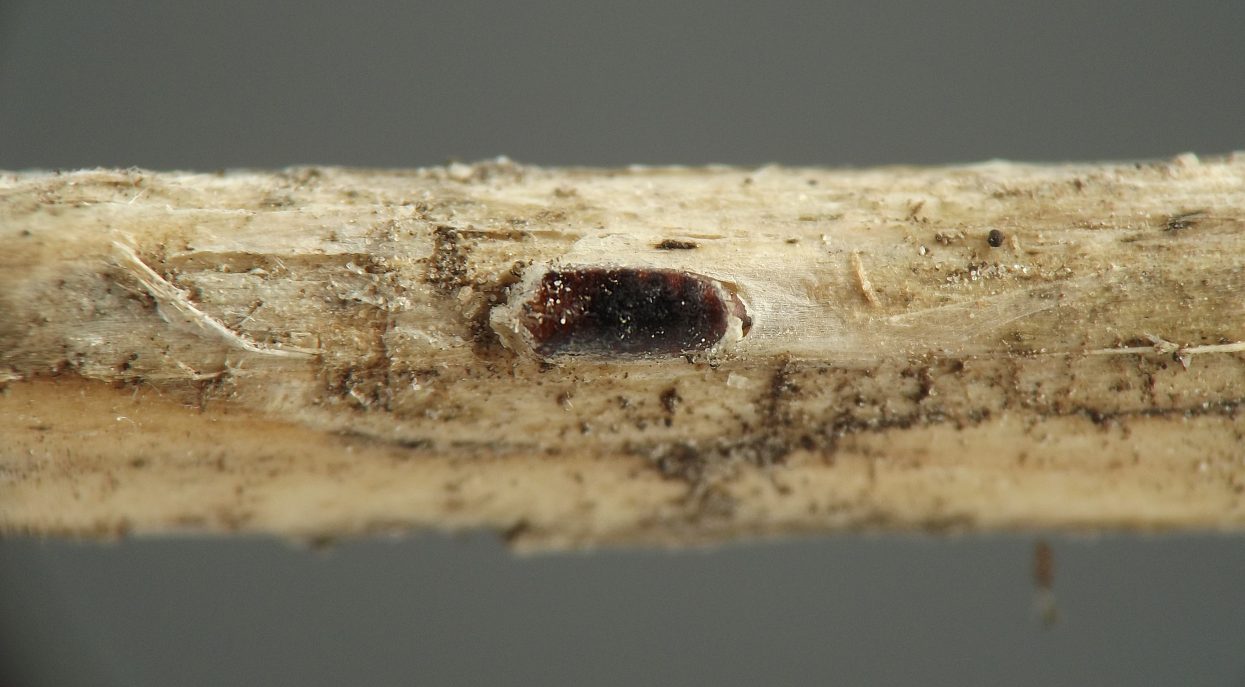
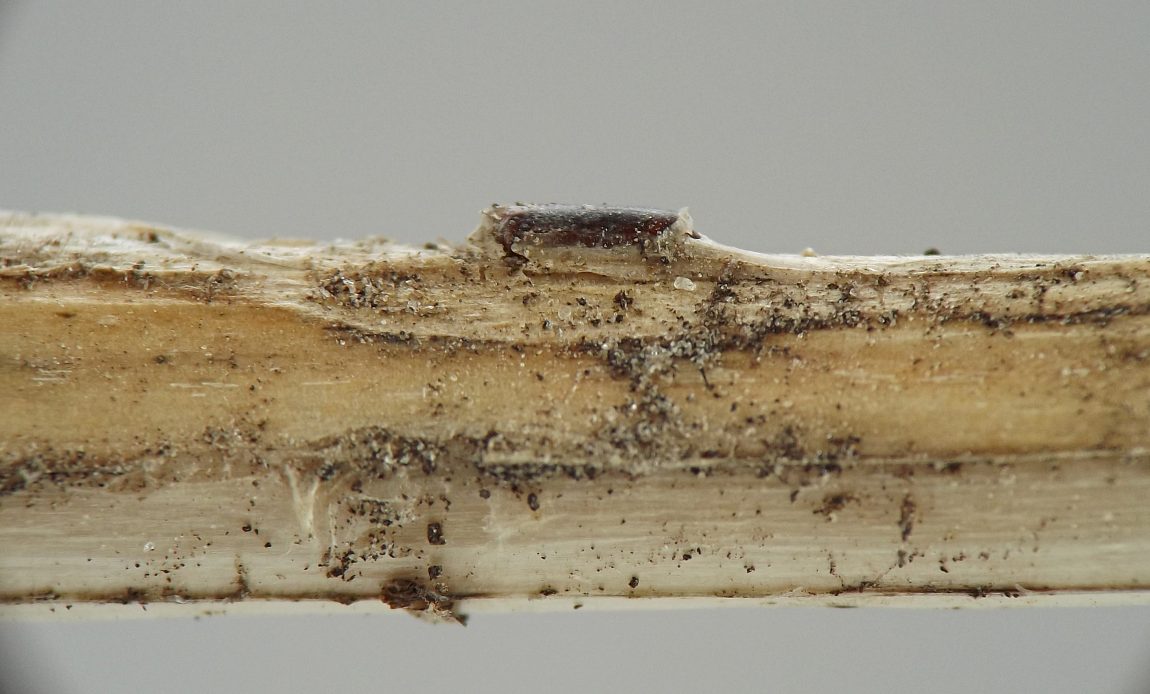
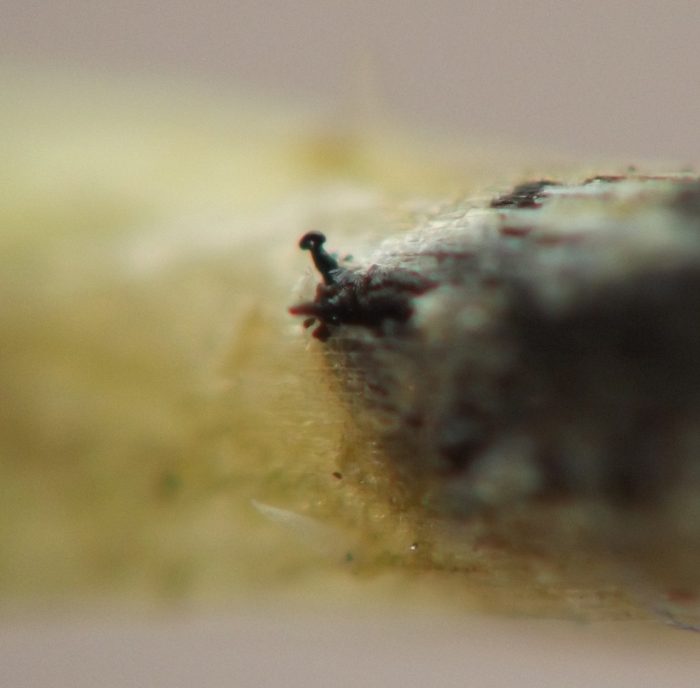
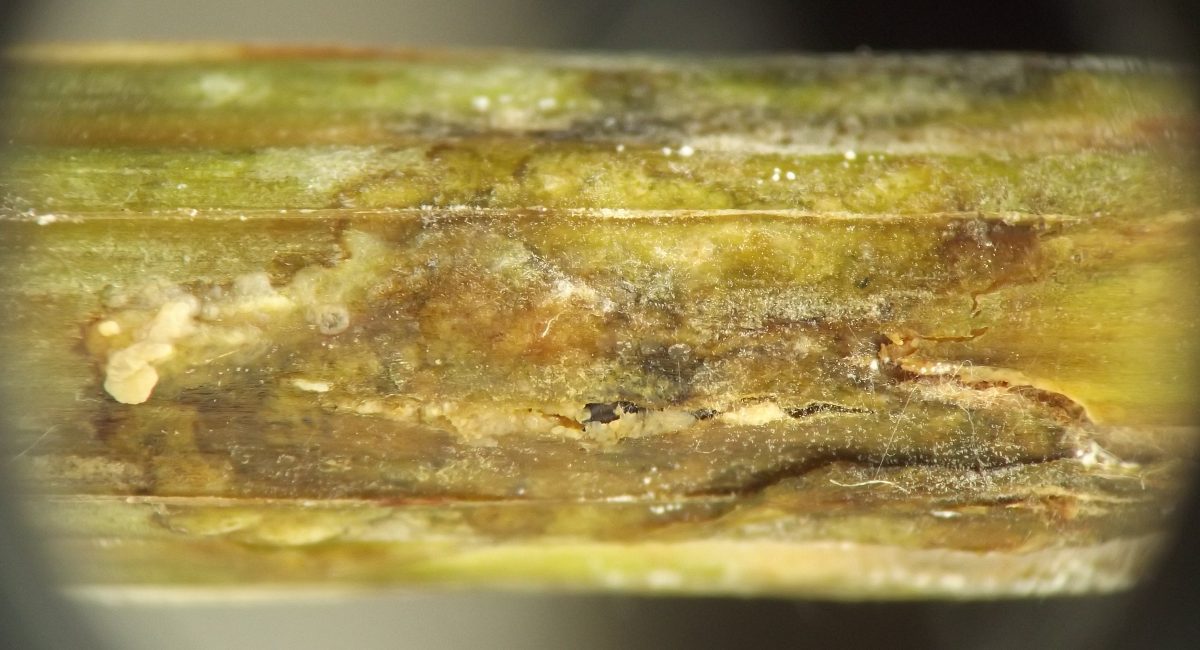
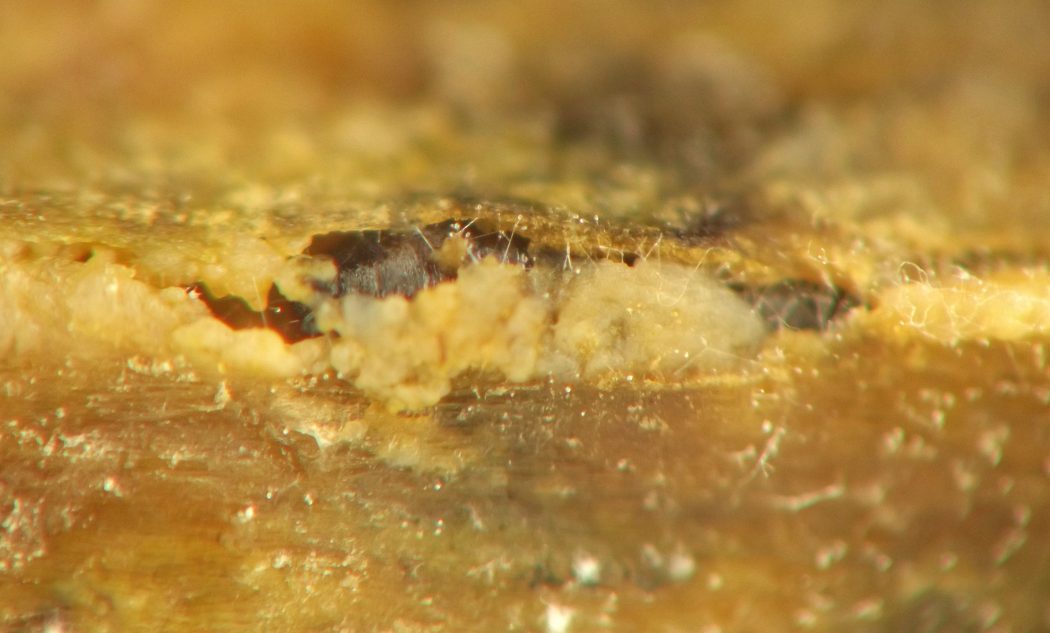
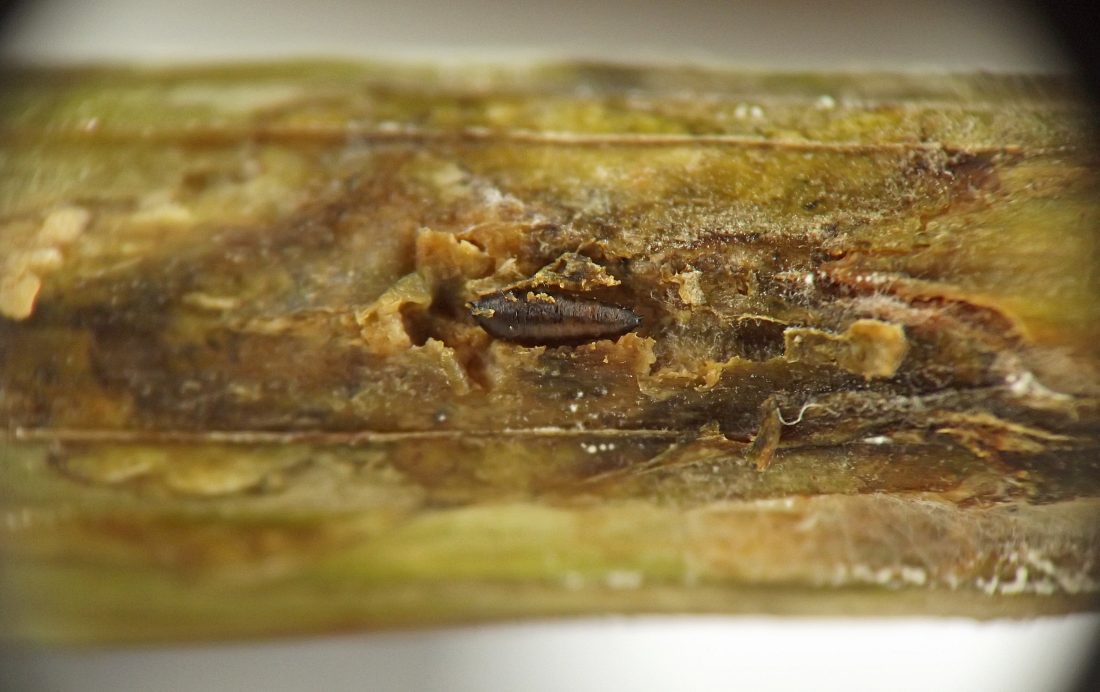
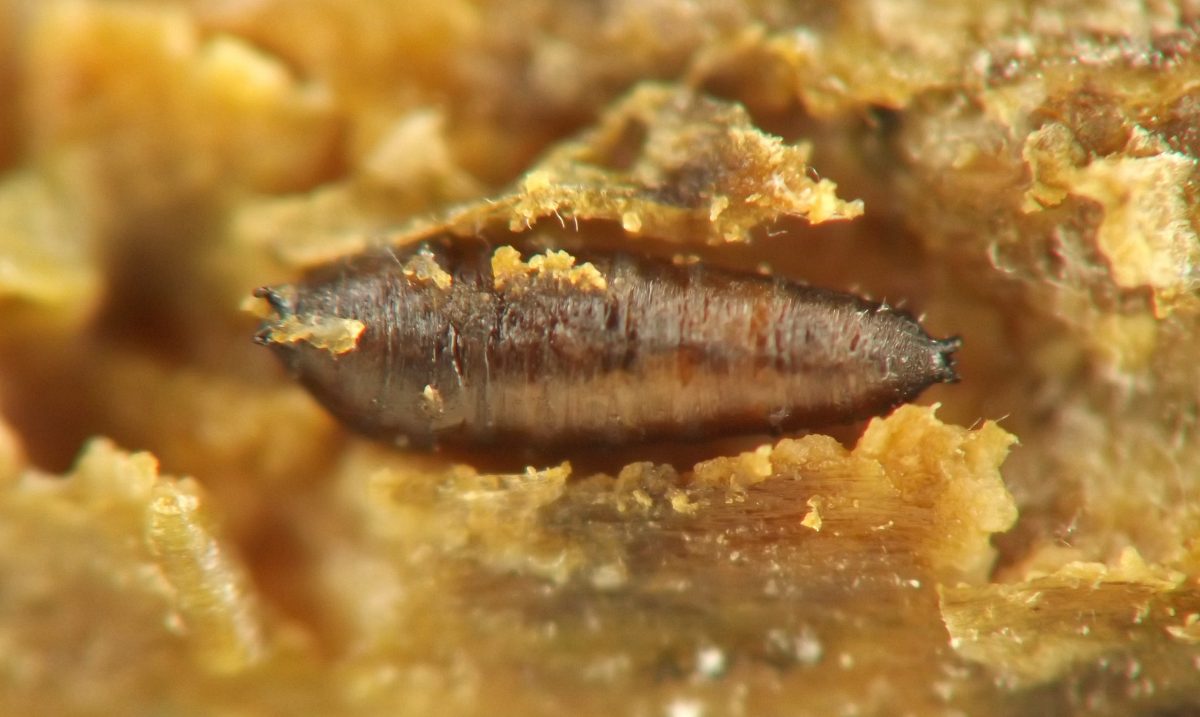
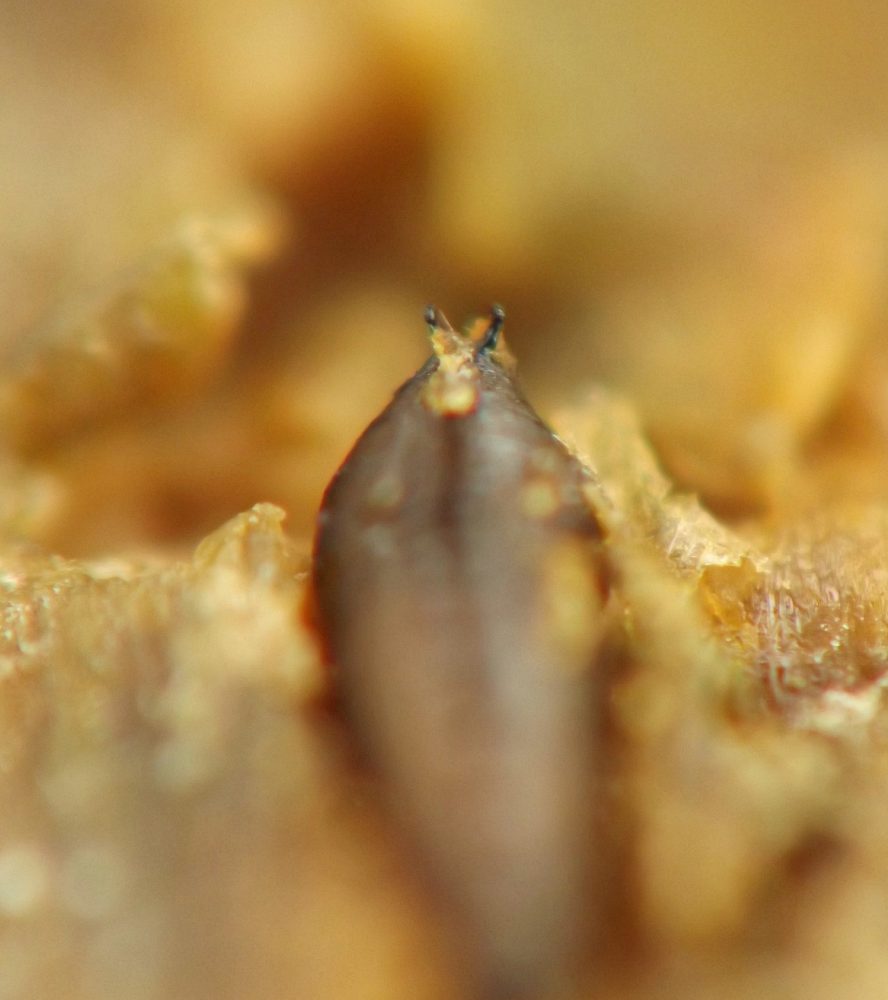
I found solid black or bicolored black-and-beige puparia of this fly positioned under the epidermis at the end of their pale rachis or stem mines, with the anterior spiracles of the puparium projecting through the epidermis. Some of the black puparia occurred on overwintering dead stems, where they stood out against the whitish color of the dried stem tissue. I also located a black puparium in the petiole of a leaf from an overwintering basal rosette. This individual's mine extended from the petiole into the blade of the same leaf, where it made a looping linear excursion and two brief, fingerlike extensions before returning to the petiole. Finally, a stem-mining larva belonging to the subfamily Agromyzinae or Ophiomyiinae (based on the shape of the larva's cephaloskeleton) produced a puparium in captivity that was somewhat barrel-shaped and tapered posteriorly. It was not immediately clear if this was also an Ophiomyia, but I include it here for the sake of comparison.
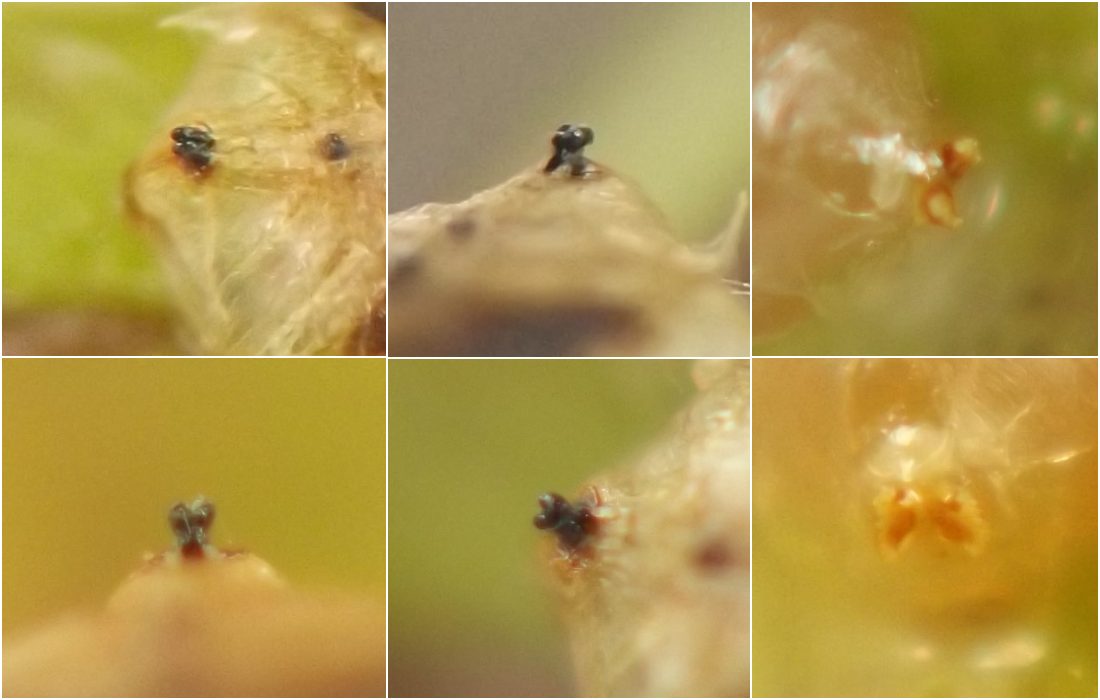
Notably, the various aforementioned puparia showed differences in the shape and orientation of the anterior spiracles, with at least one of the bicolored puparia having relatively short spiracle stalks that were parallel and nearly appressed to one other (image 1-07), while in several other puparia the stalks were somewhat longer and angled away from one another (i.e., not parallel) and/or separated by a significant fraction of their length (images 1-16, 2-04, 3-08).
Puparia in living and dead stems
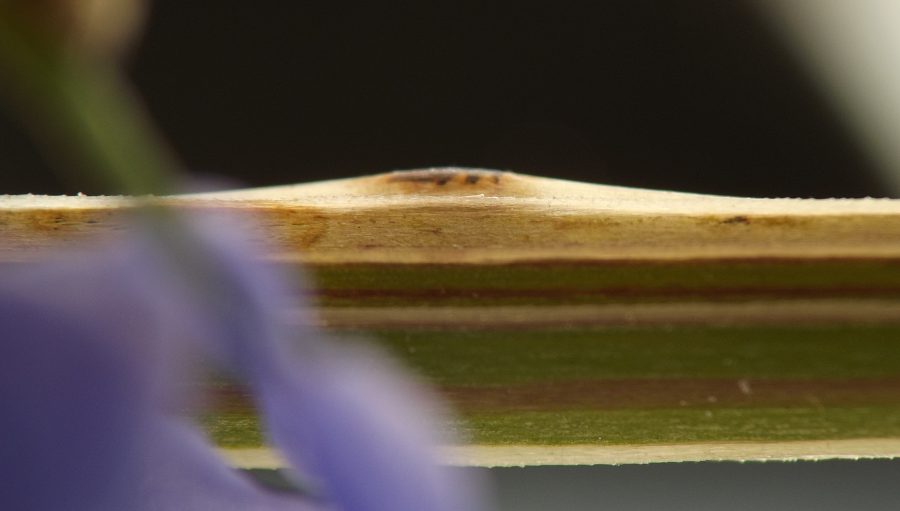
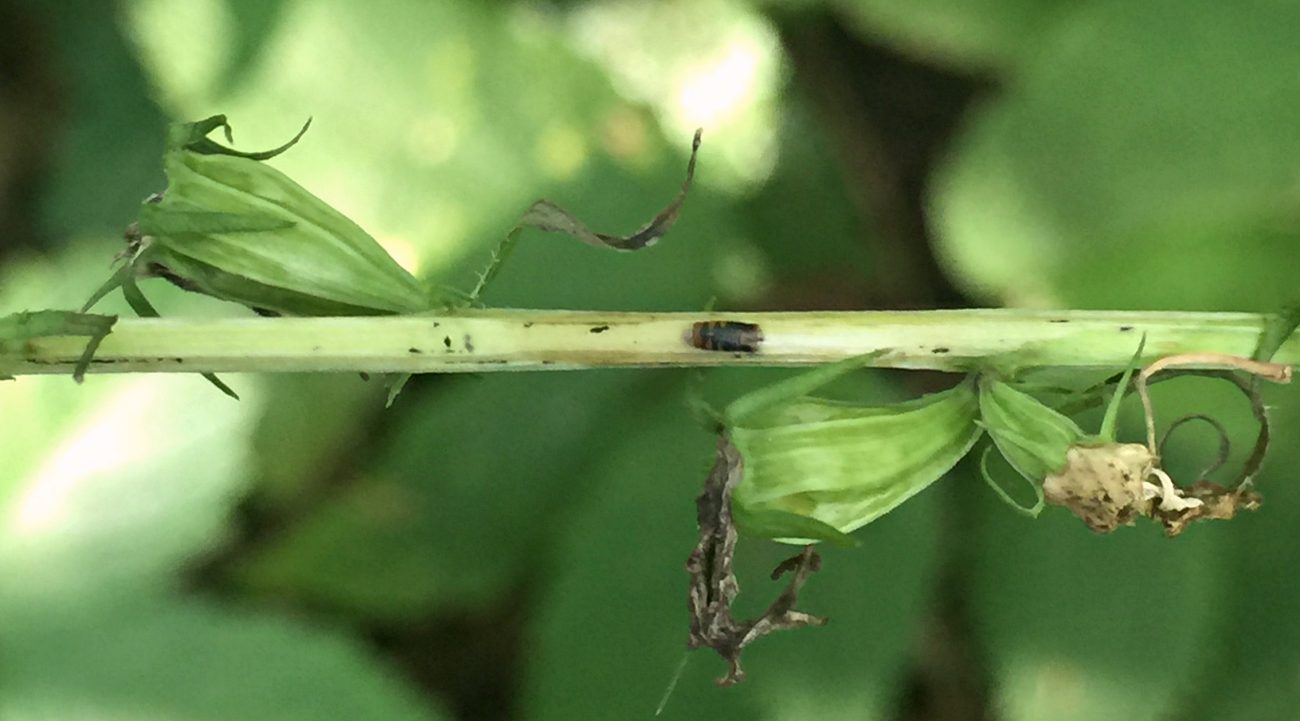
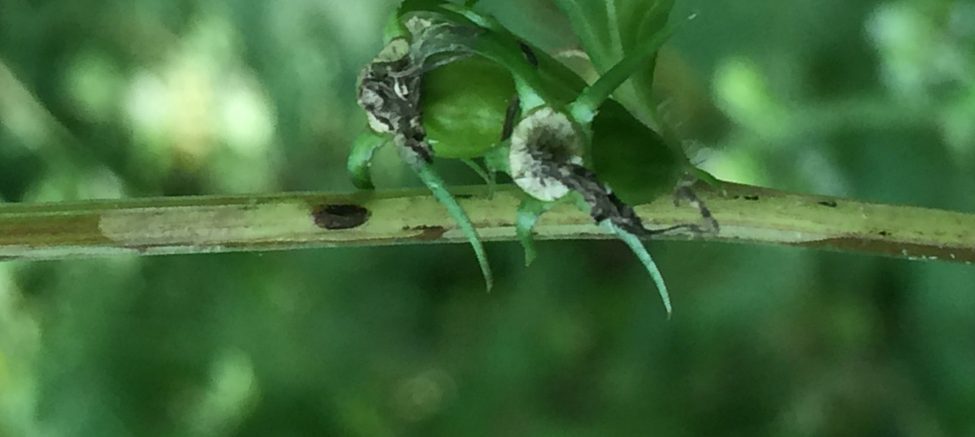
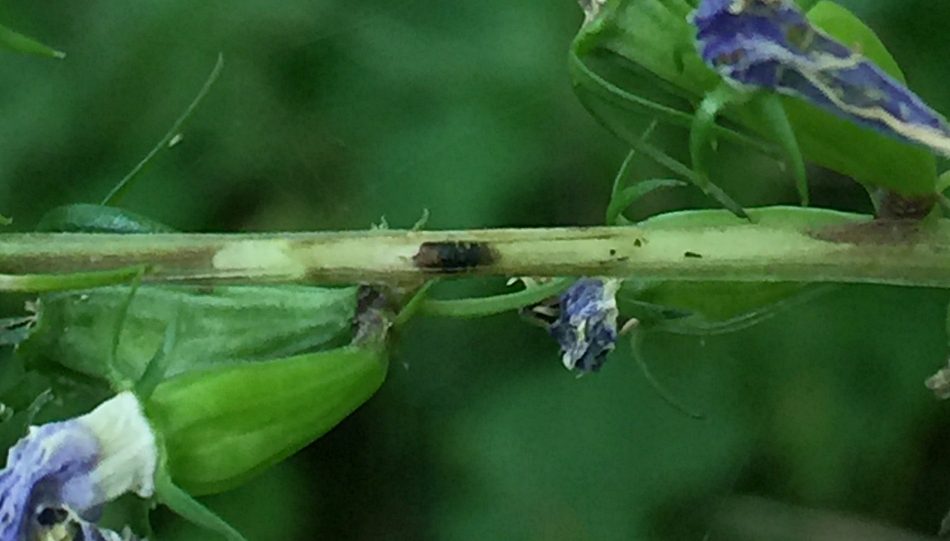
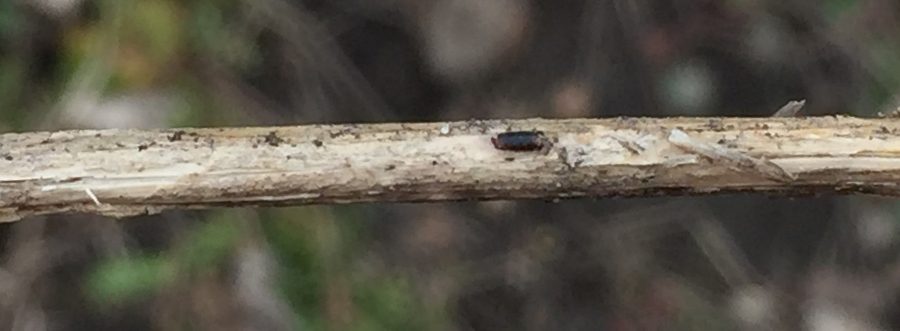
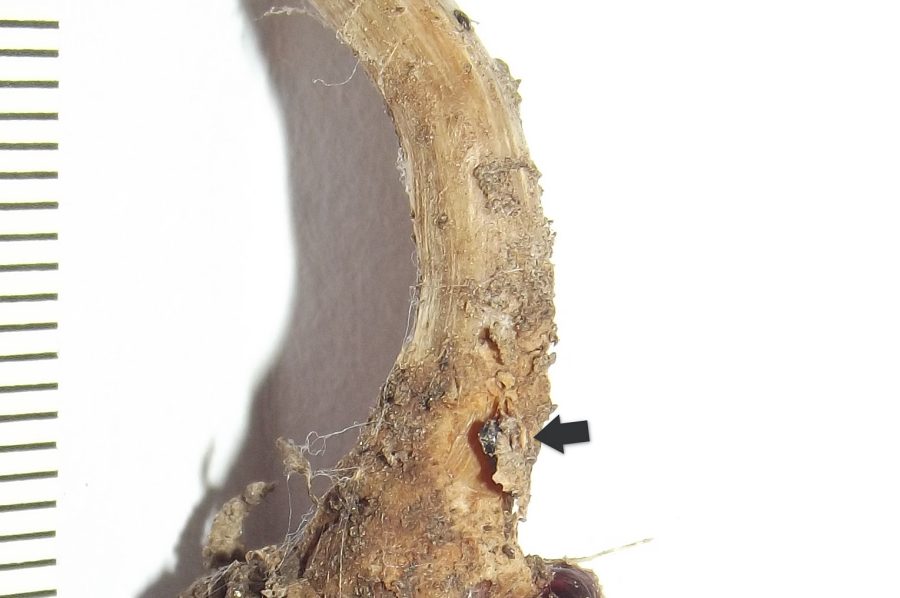
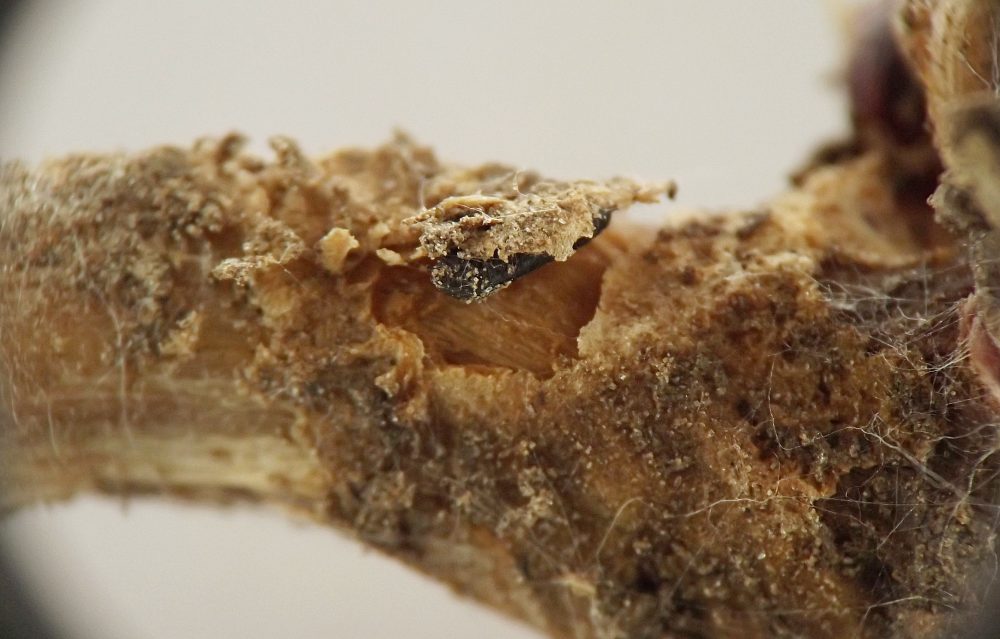
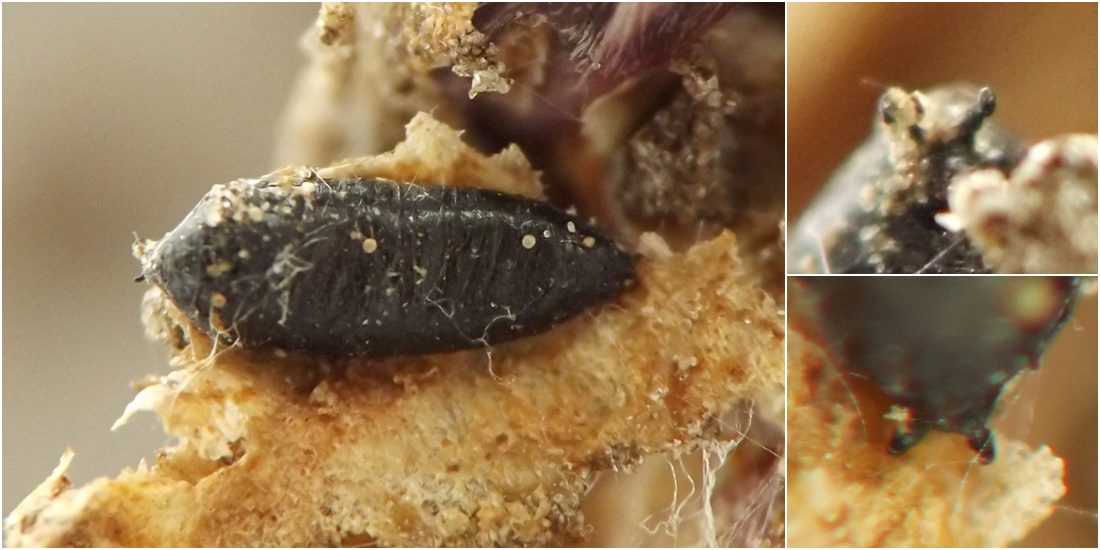
Black puparium in a rosette leaf petiole
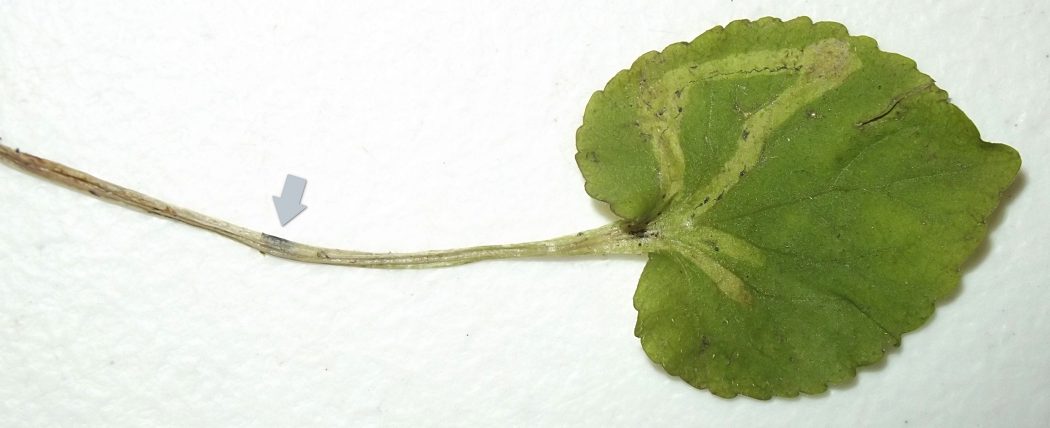
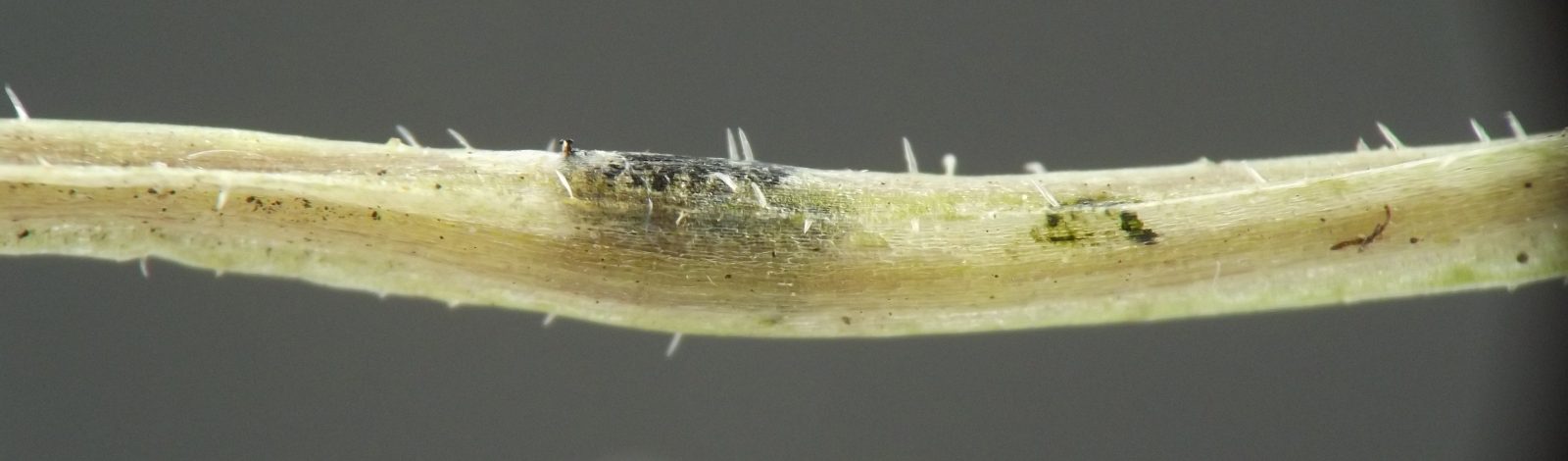
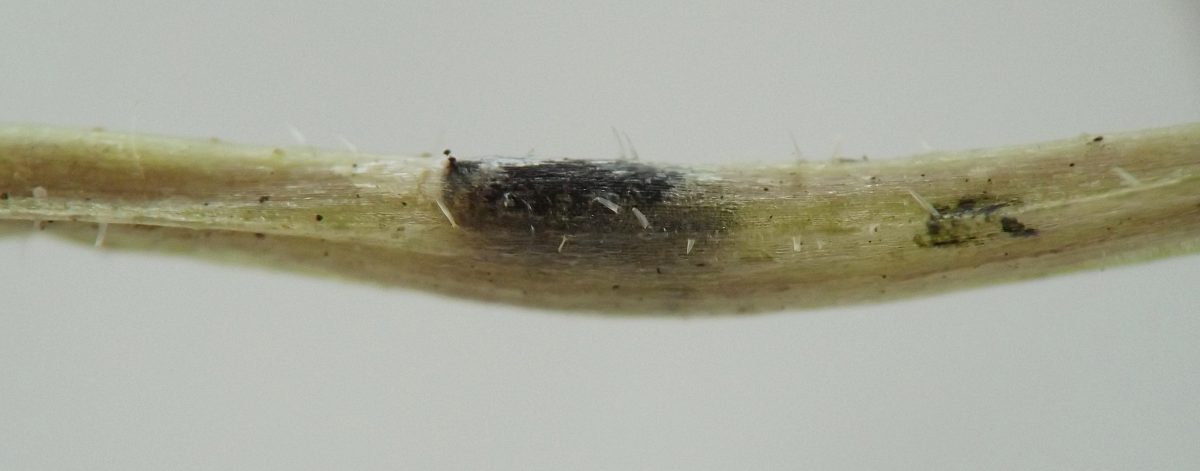
Agromyzinae/Ophiomyiinae larva and its barrel-shaped puparium in a living stem
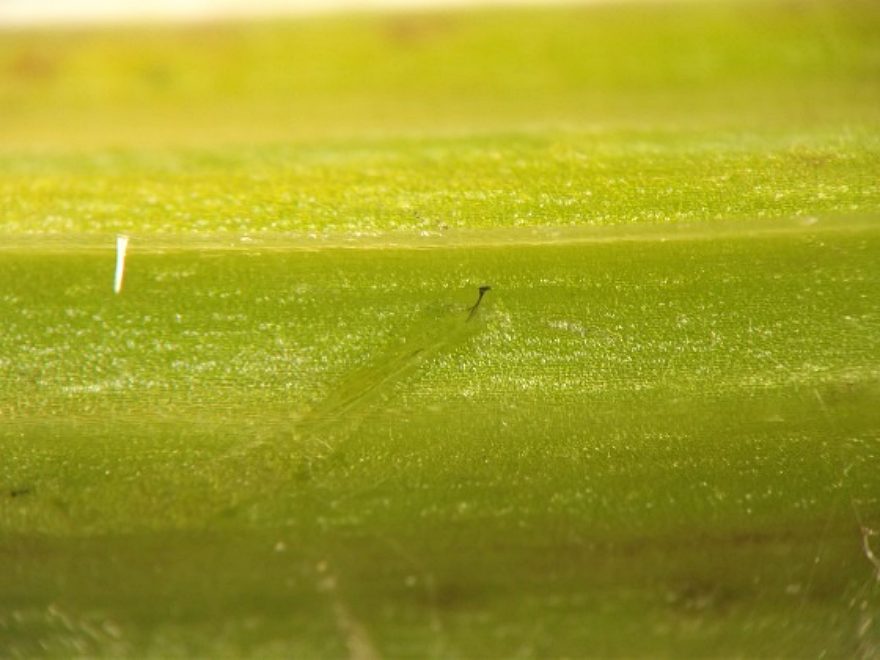
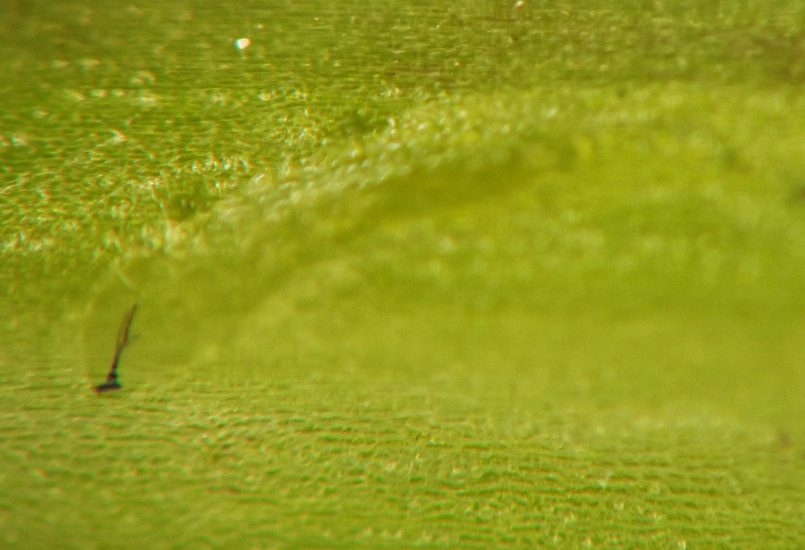
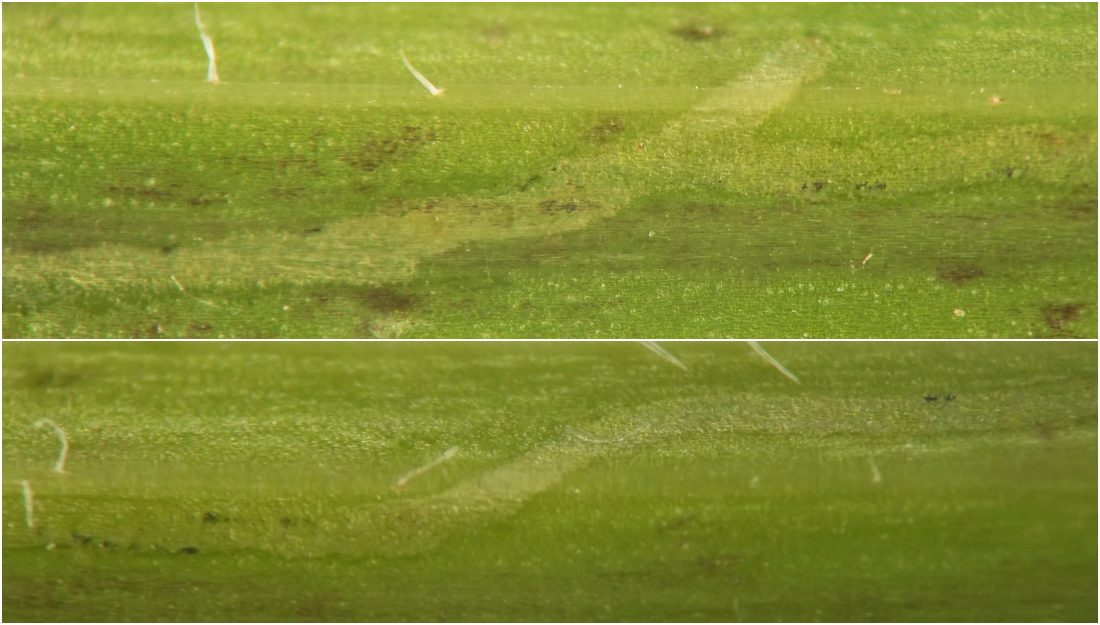
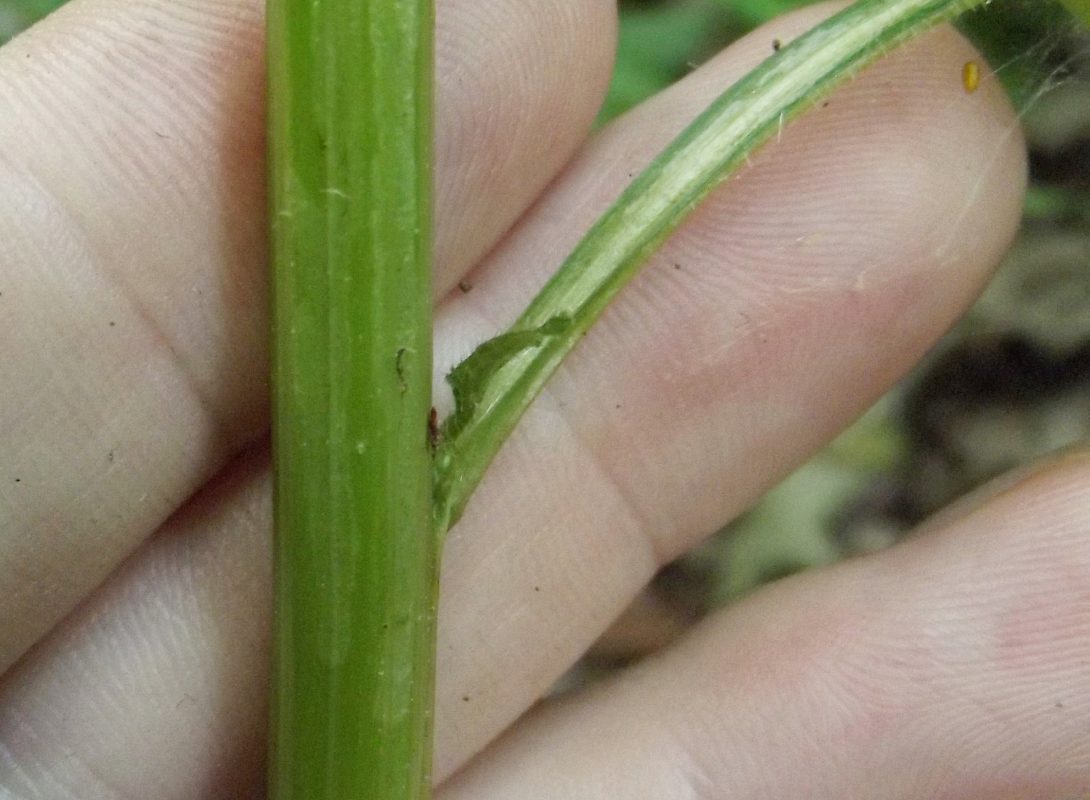
In early to mid-June, I observed pale, barely discernible stem mines on growing shoots of the host. Often a mine would include several parallel linear passes along the long axis of the stem, effectively forming a blotch mine. In one case, a semicircular exit slit was visible in the epidermis in the lower portion of the mine, indicating the mature larva had exited the mine in order to pupate off the plant. I cannot attribute these to Liriomyza with complete certainty as of this writing (August 2026), but am placing them here for now due to the color and shape of the mine channel (which appear agromyzid in origin to me), the lack of internal pupation, and the concurrent presence of superficially similar leaf midrib and petiole mines on the same plants that are more readily attributable to Liriomyza (see below).
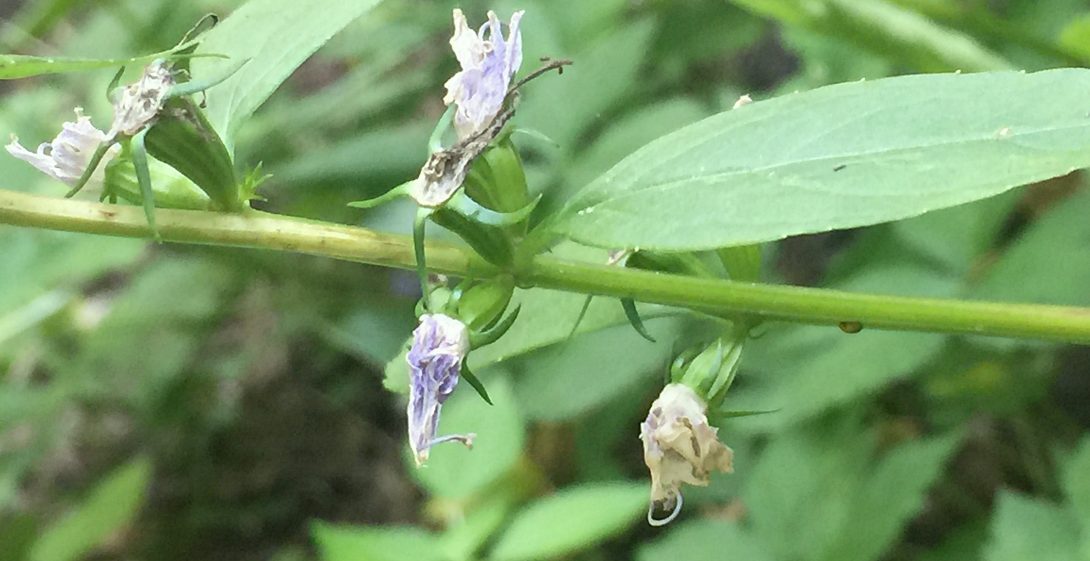
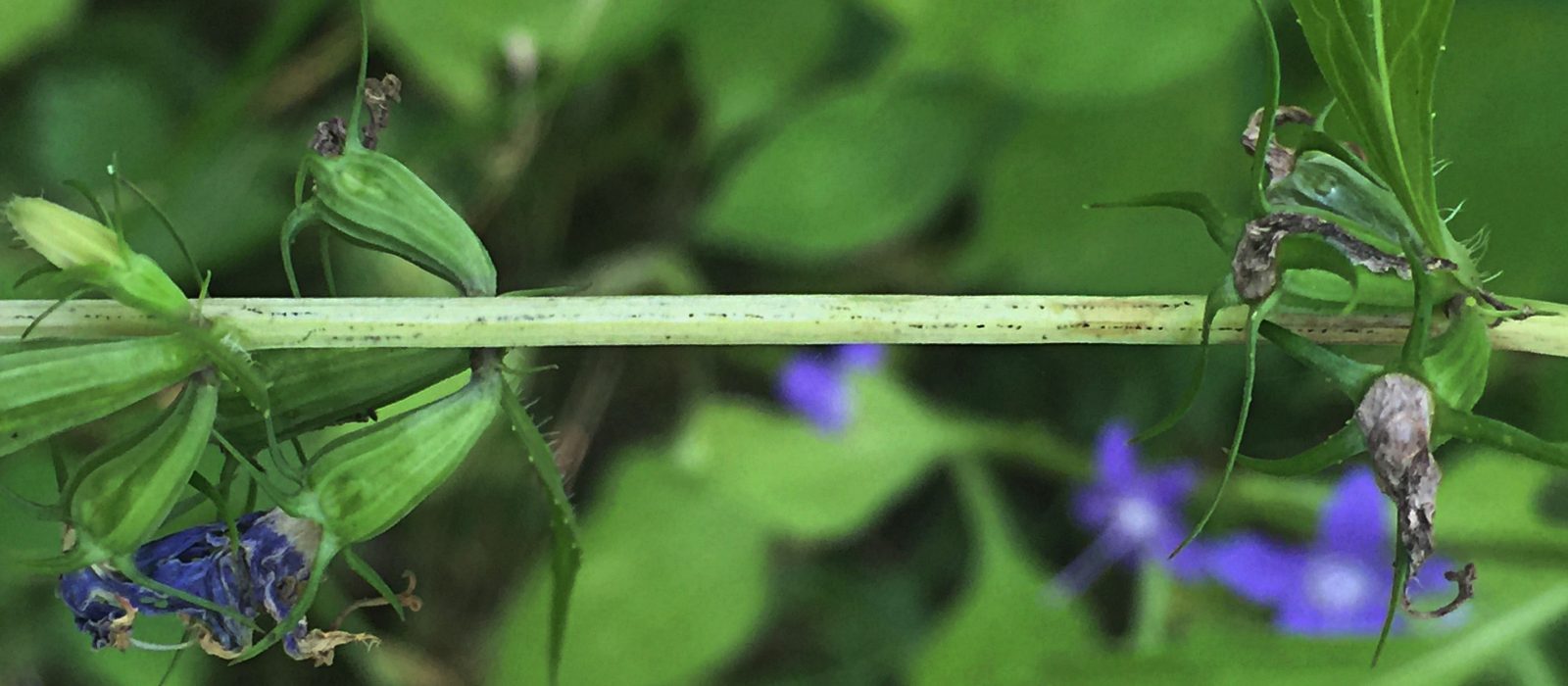
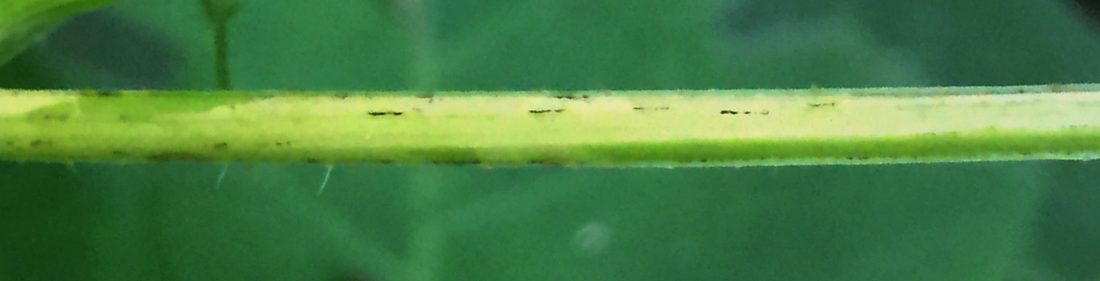
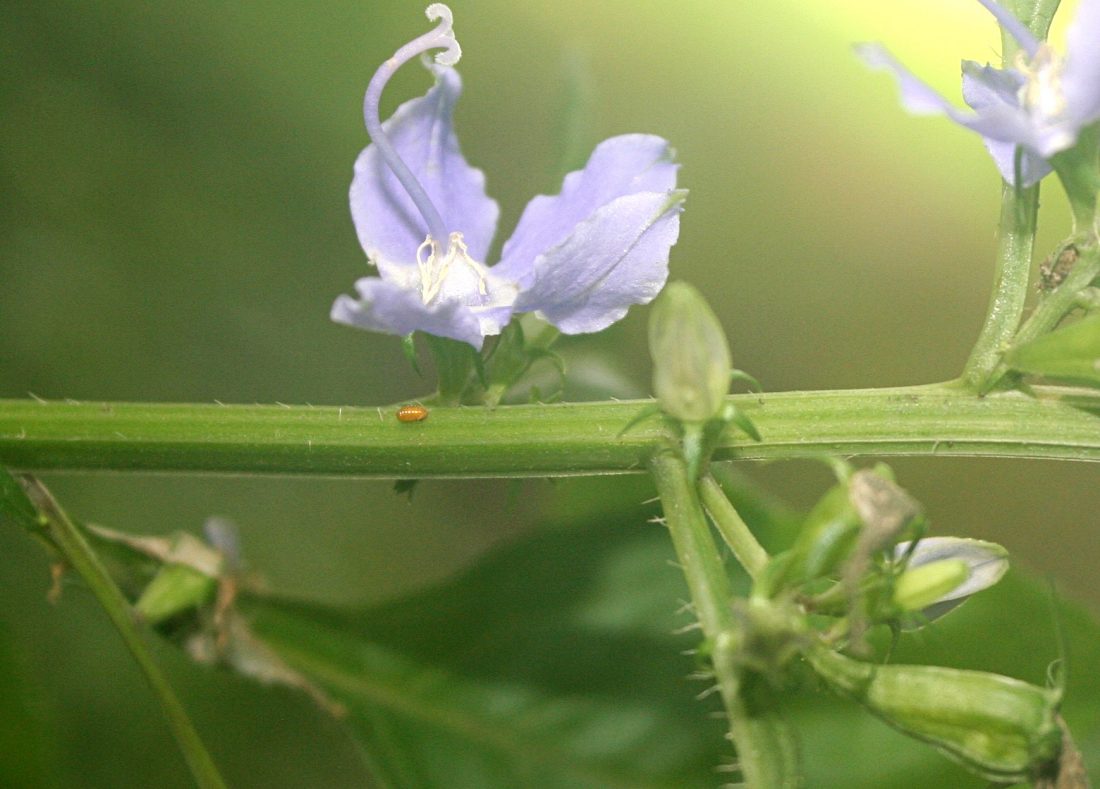
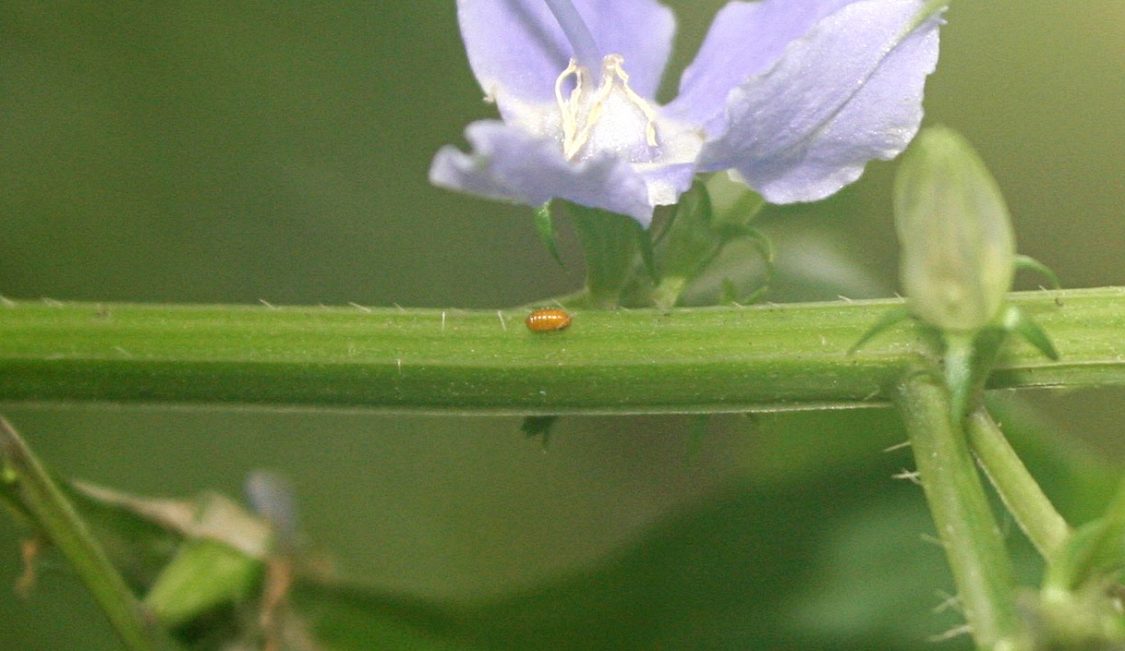
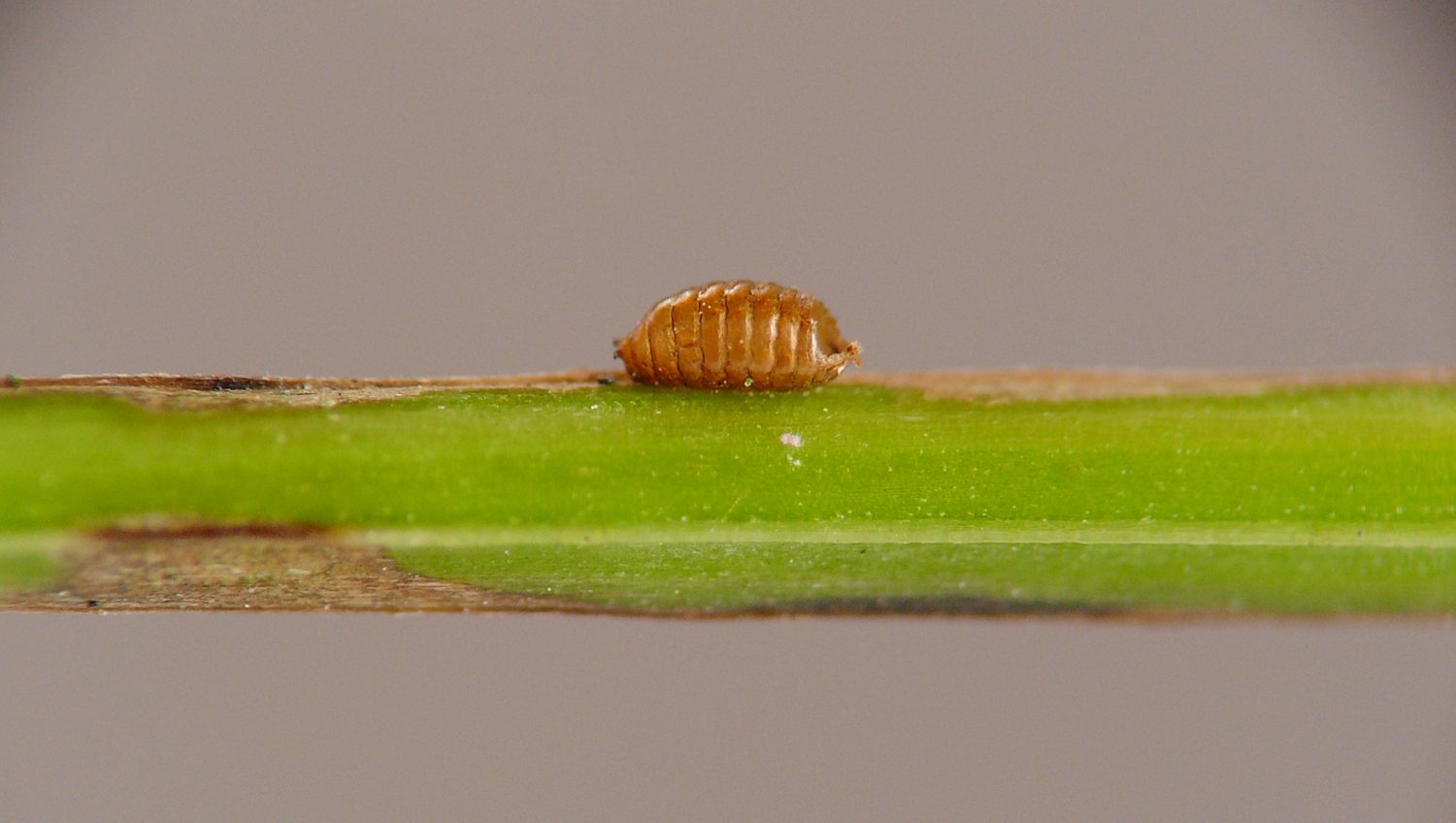
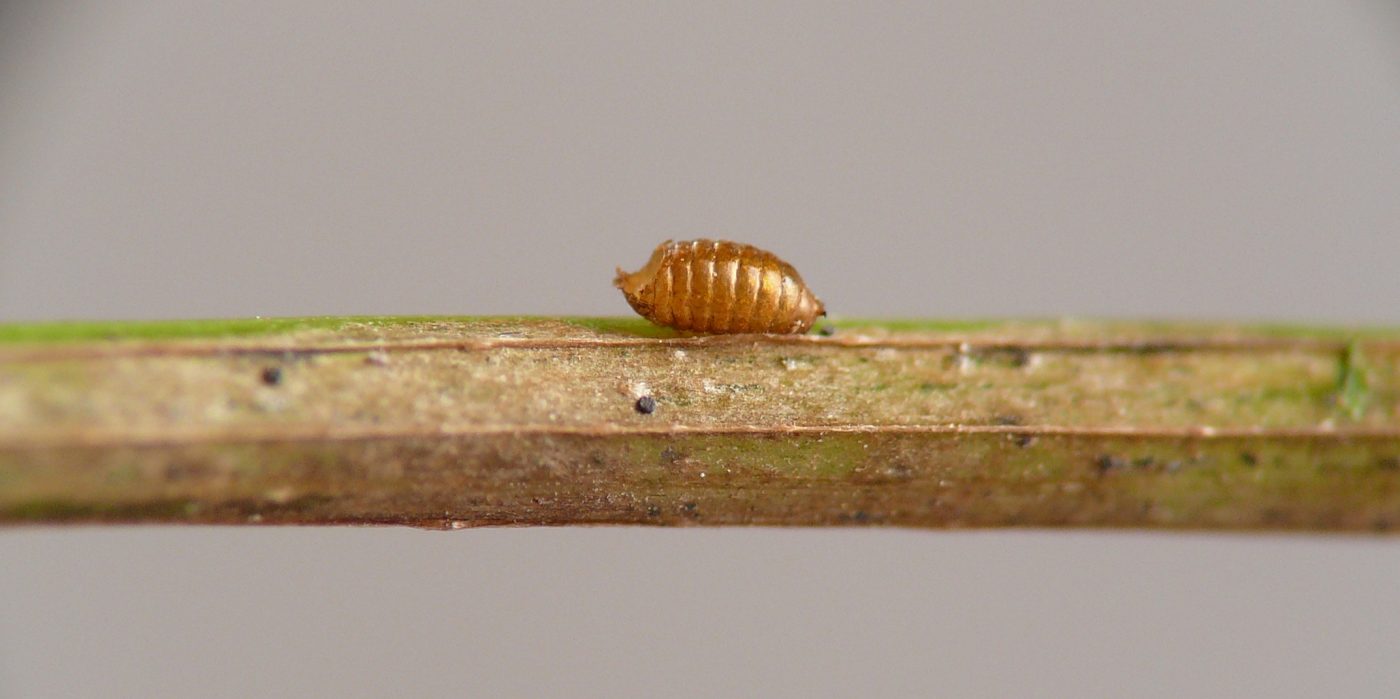
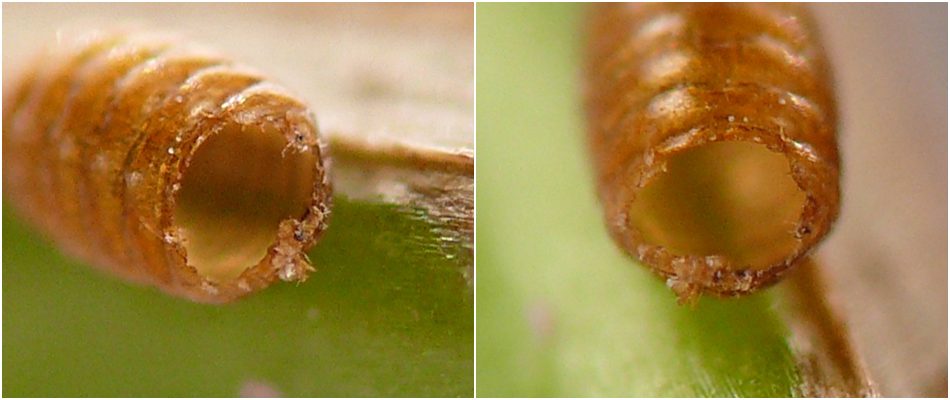
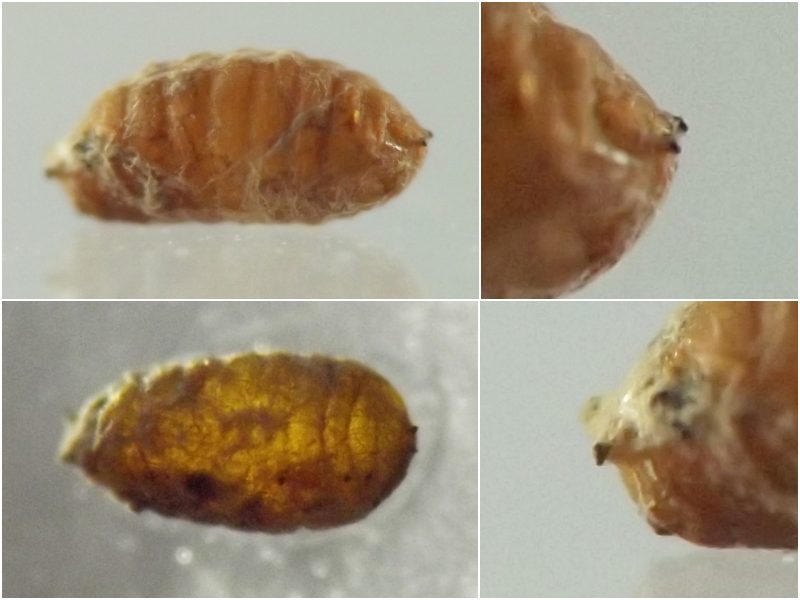
Later, during the host's blooming period in midsummer to late summer, I found Liriomyza stem mines on the rachises of flowering racemes of many plants. These mines were partially similar to the June examples in being often difficult to discern, sometimes forming effective blotches, and lacking internally-formed puparia. However, some of the midsummer mines showed clear frass patterns, consisting of short dotted or dashed lines of black excrement. In several instances I was able to locate the squat, orange, ovoid puparium of the miner, which was fastened to the exterior of the rachis or stem a short distance below the lowermost portion of the mine.
Also on bolting plants, I noted whitish leaf mines mainly confined to the midrib, petiole, and/or a lateral vein. Similar mines have given rise to puparia and at least one adult of a Liriomyza species in rearing efforts performed by other workers (see summary in Eiseman 2022).
I suspect the midrib, petiole, and rachis/stem mines are all made by the same Liriomyza species, but have been unable to confirm this, and there are some differences in mine characteristics (as just described) that could suggest a more complicated picture. My attempts to rear puparia of the midsummer rachis miner indicate that the puparium is most likely the overwintering stage.
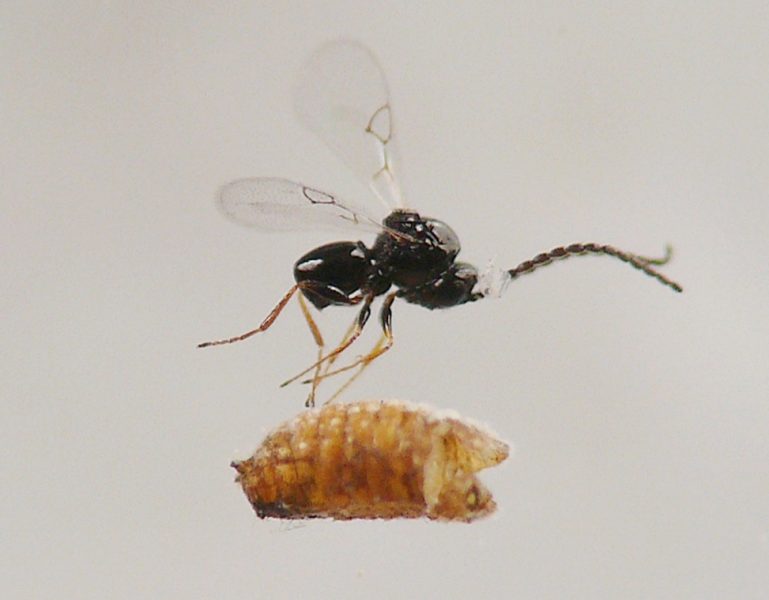
I reared an adult wasp from one of the stem miner puparia, which C. Eiseman identified as a figitid in the subfamily Eucoilinae (pers. comm.).
Stem mines
Midrib and petiole mines
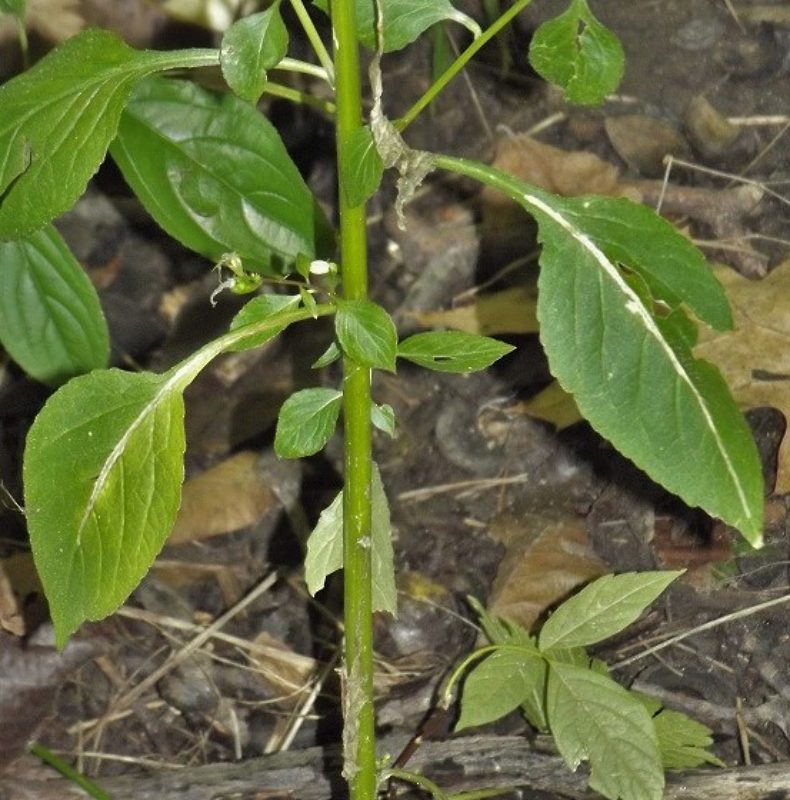
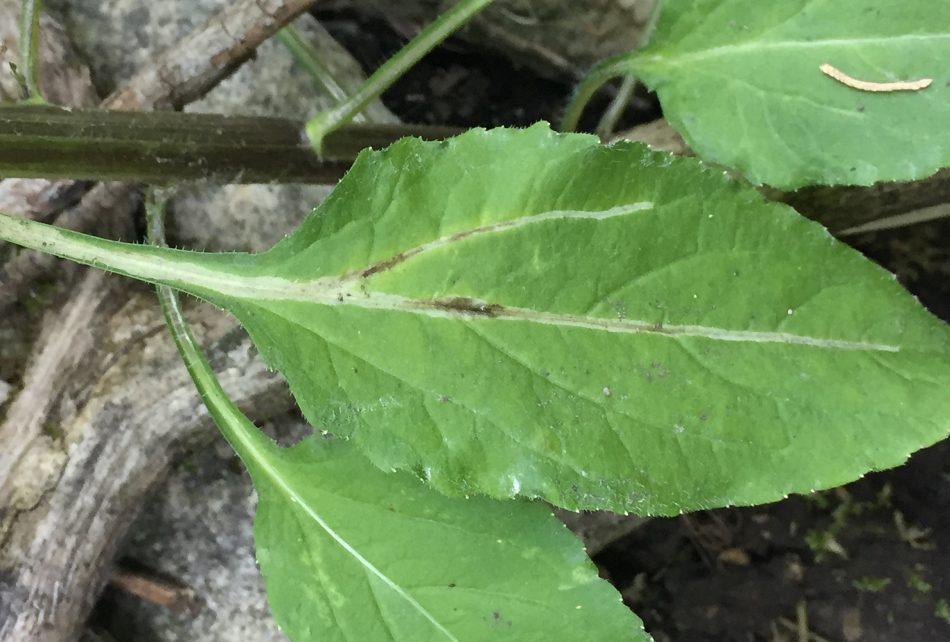
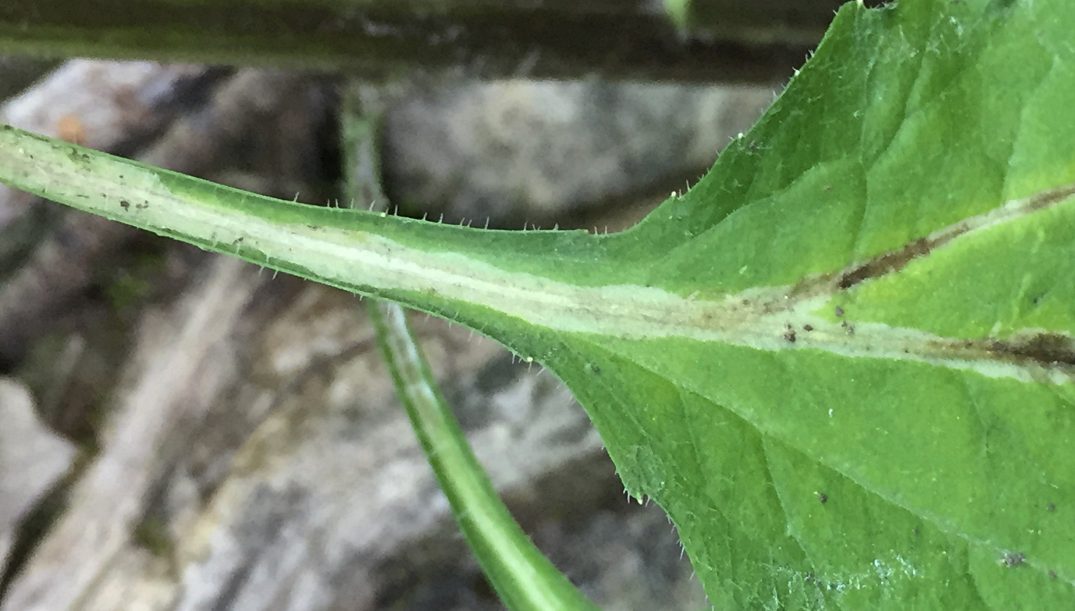
An agromyzid mine I found in summer on a flowering or fruiting plant moved between the main stem and the midrib of a leaf, but I was unable to locate the larva or the puparium.
Leaf-to-stem mine
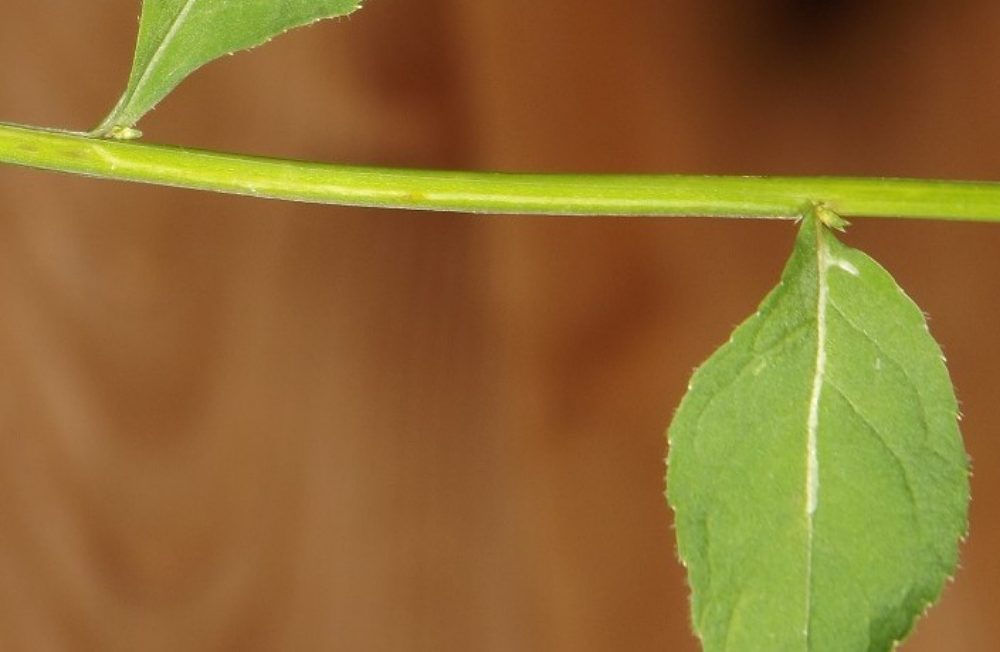
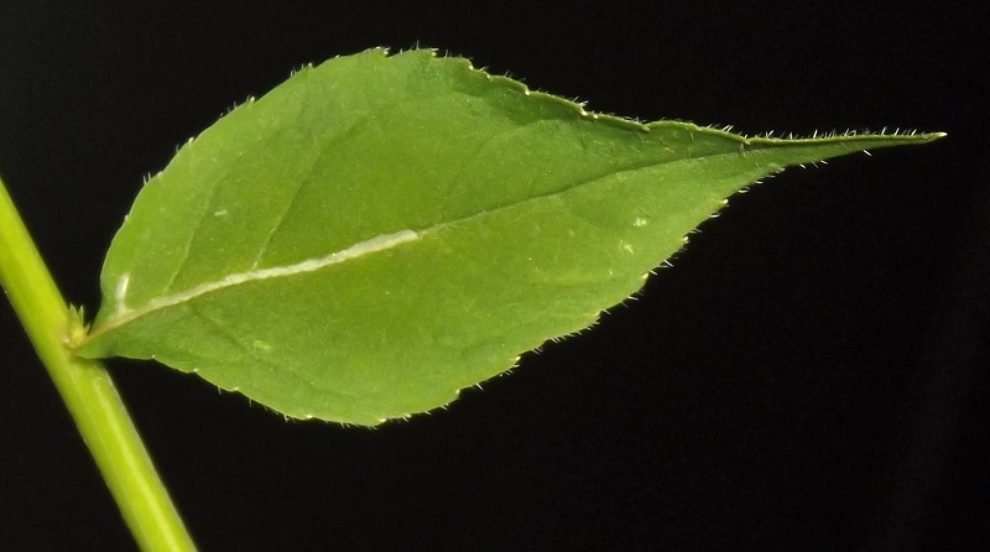
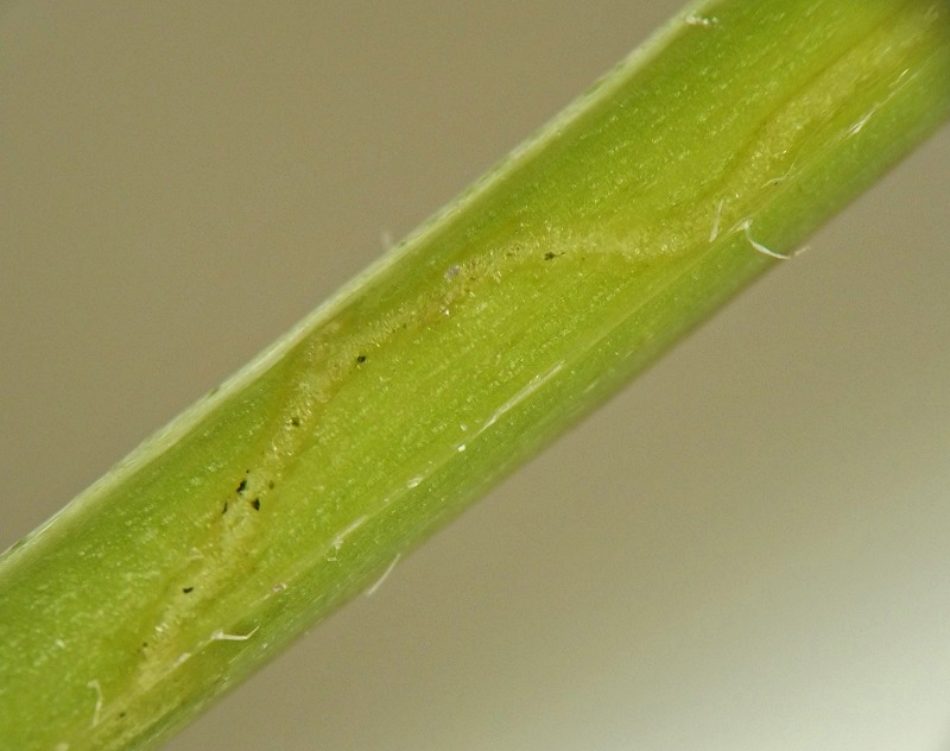
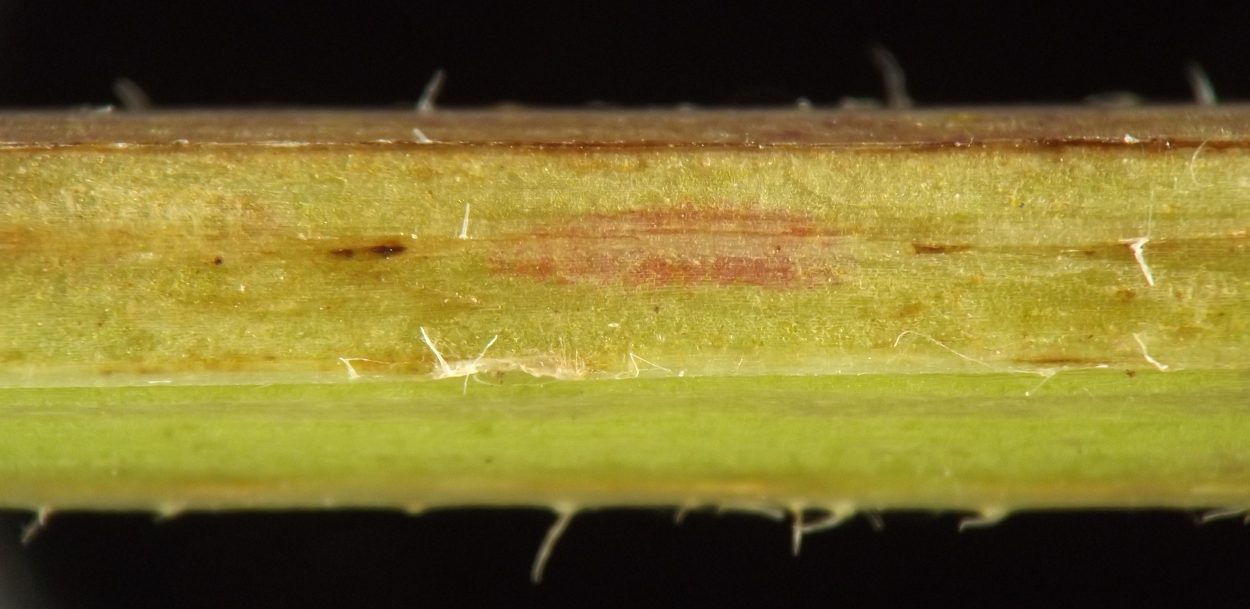
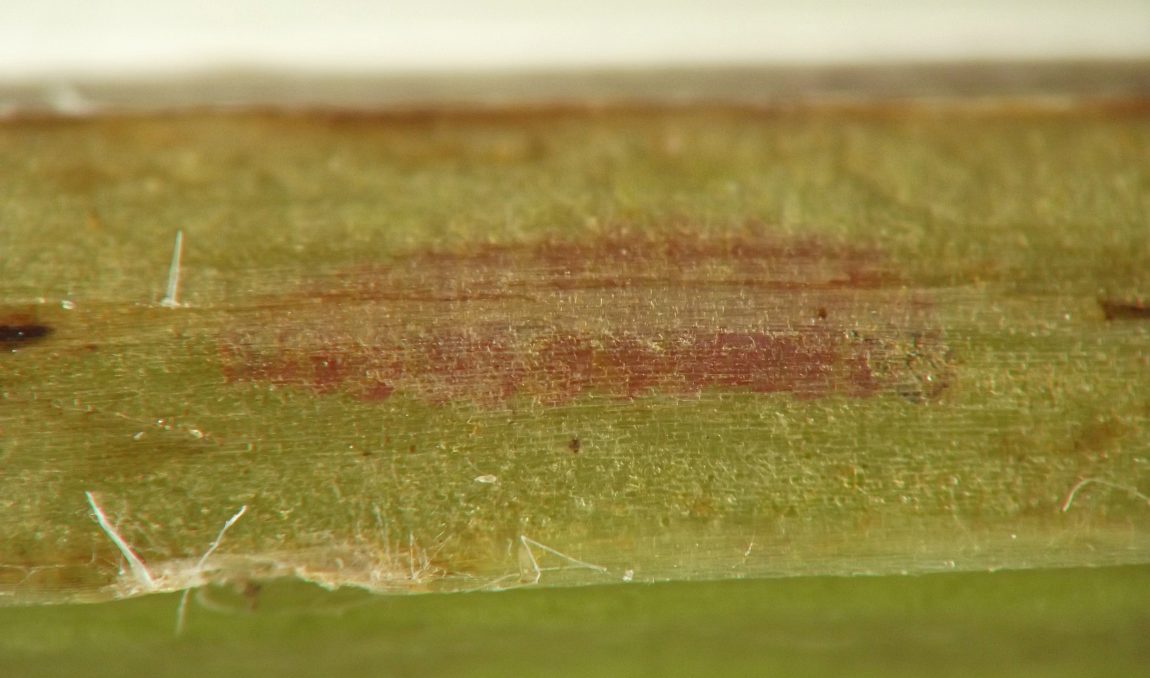
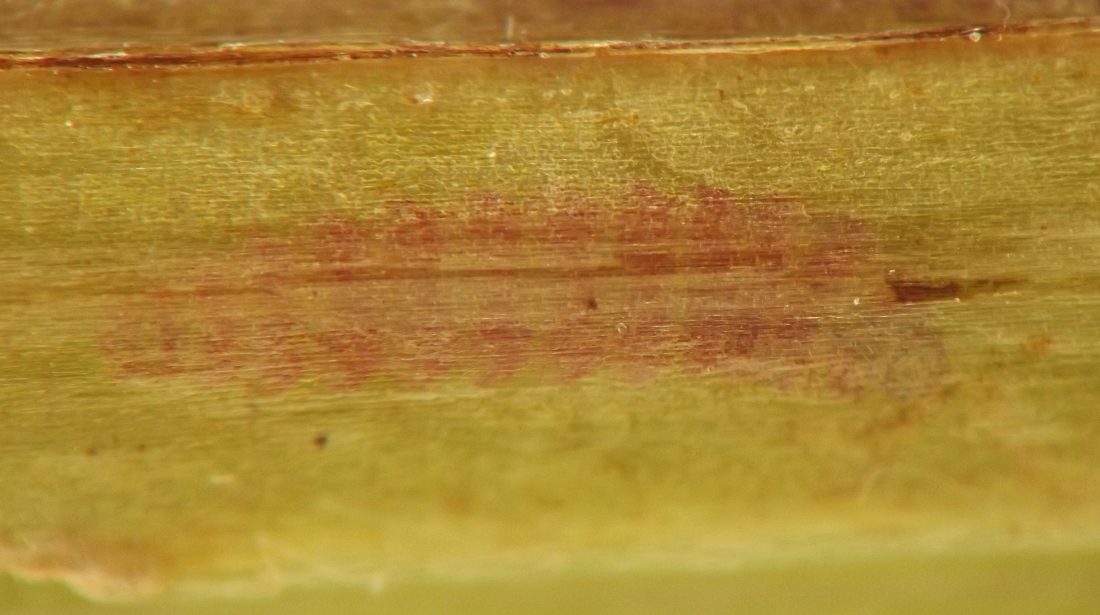
I found a bright red gracillariid larva, evidently Marmara sp., in a stem mine on this host in late July. The mine was difficult to discern, but showed a slight whitish discoloration relative to the ground color of the stem.
Mine and prepupal larva in living stem
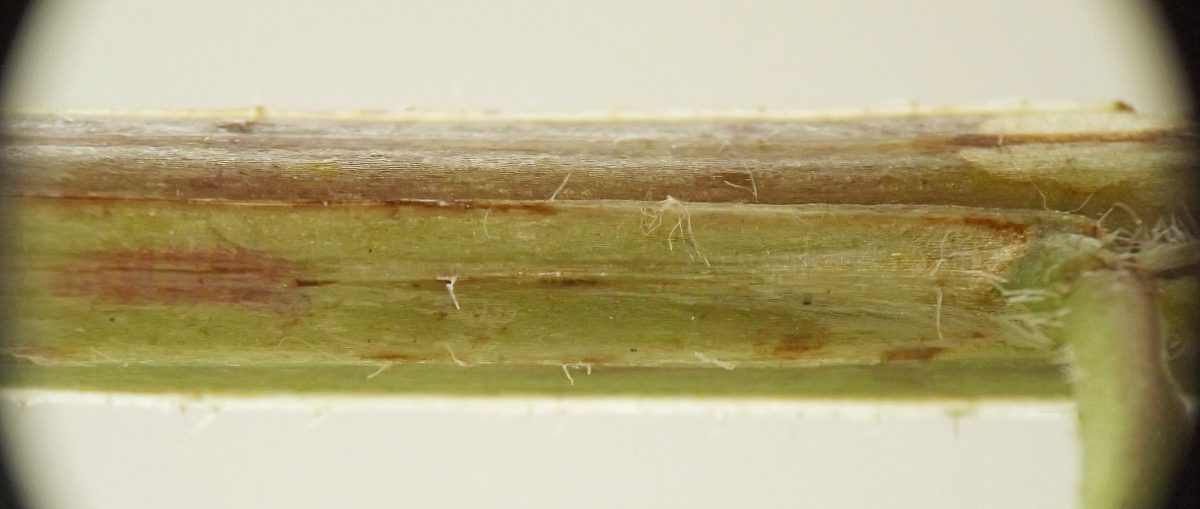
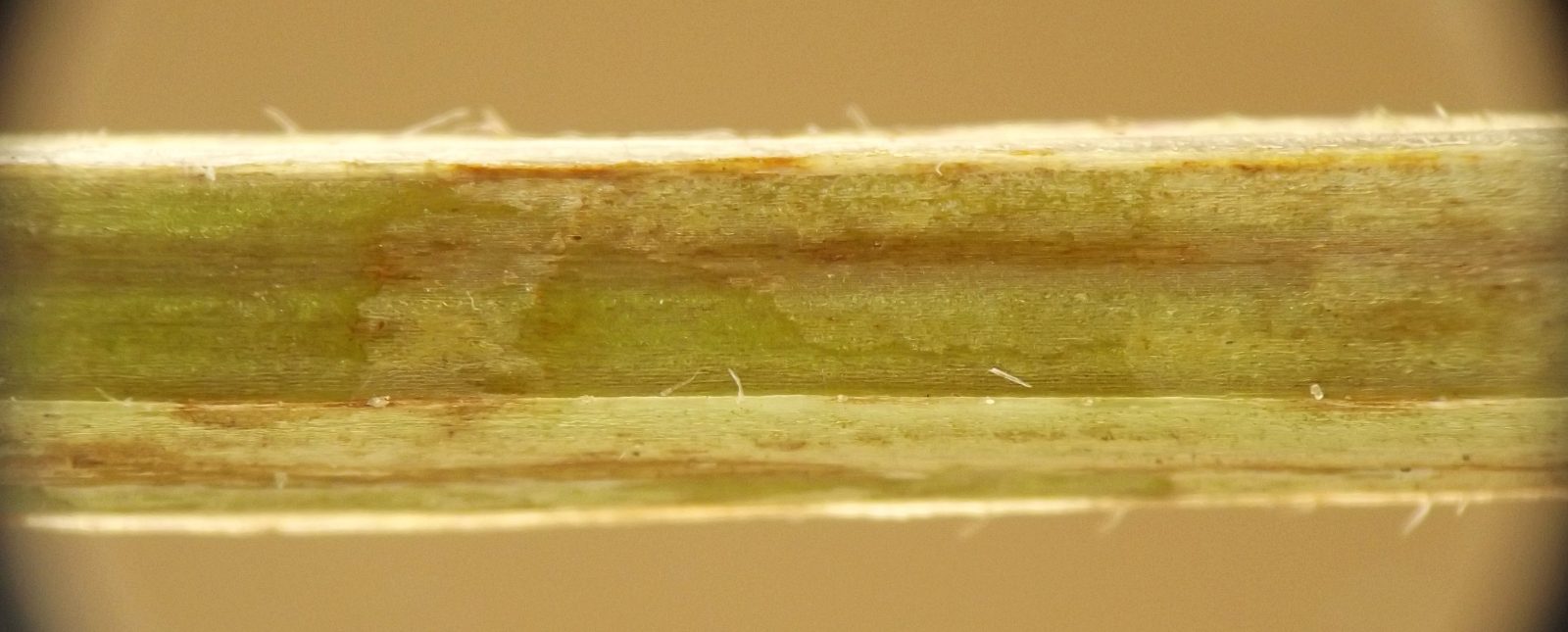
Thank you to C. Eiseman for identifying the wasp reared from a puparium of the Liriomyza stem miner (image 5-08).
- Eiseman, C.S. 2022. Leafminers of North America, 2nd edition. Self-published e-book. Available from the author at https://charleyeiseman.com/leafminers/.[return to in-text citation]
Page created: August 21, 2026. Last update: August 28, 2026