Beetle borers (Coleoptera) in stems and midribs of Cryptotaenia canadensis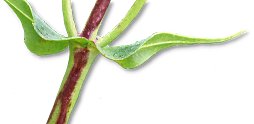
During the survey I encountered numerous beetle larvae inside stems and a leaf midrib of Cryptotaenia canadensis. After closely examining these larvae and their plant damage, I have sorted them into two tentatively identified taxa: Apioninae (Curculionoidea: Brentidae) and Listronotus (Curculionoidea: Curculionidae). This page compares these two groups of observations visually, and also provides brief written descriptions of noted morphology and/or life history for each. Within the image gallery, you may click on a thumbnail to view the full-size image.

Curculionoidea: cf. Brentidae: Apioninae.
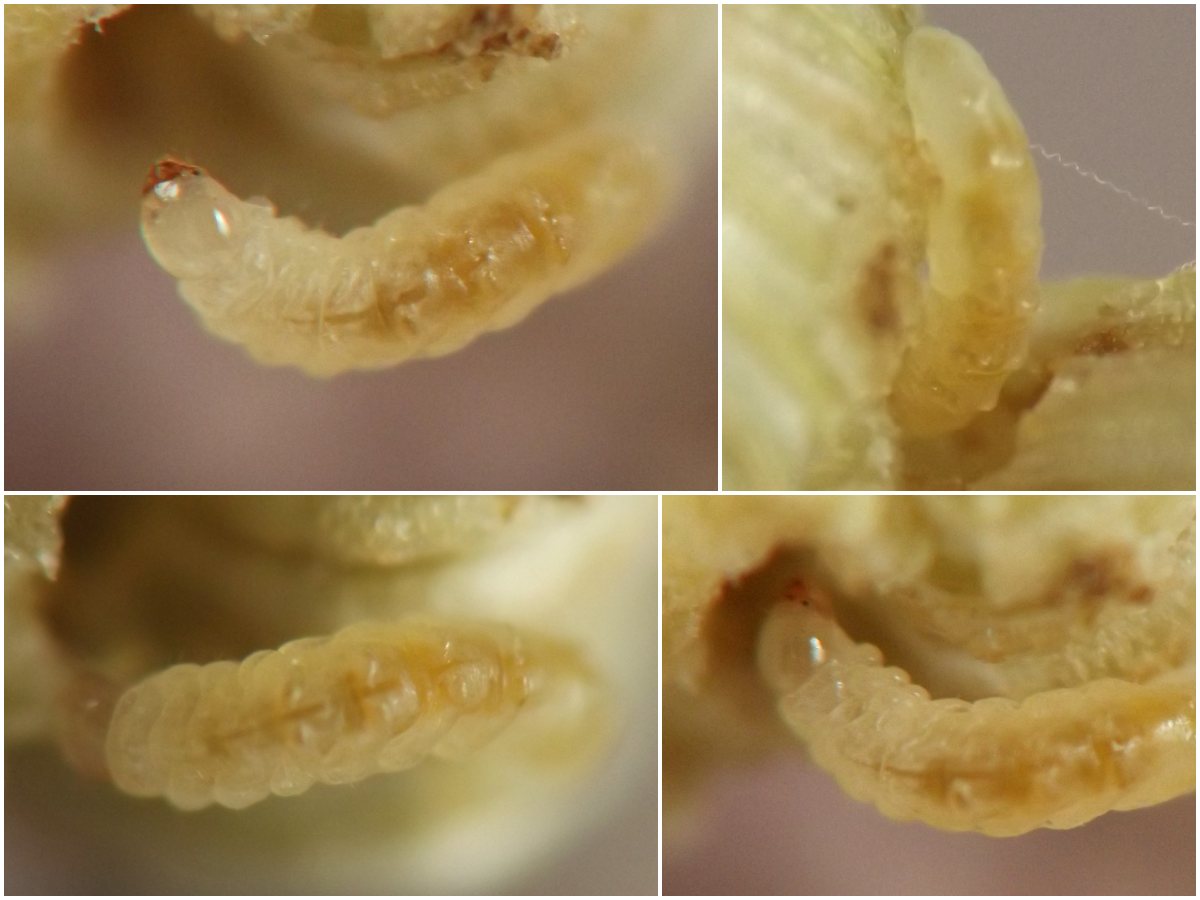
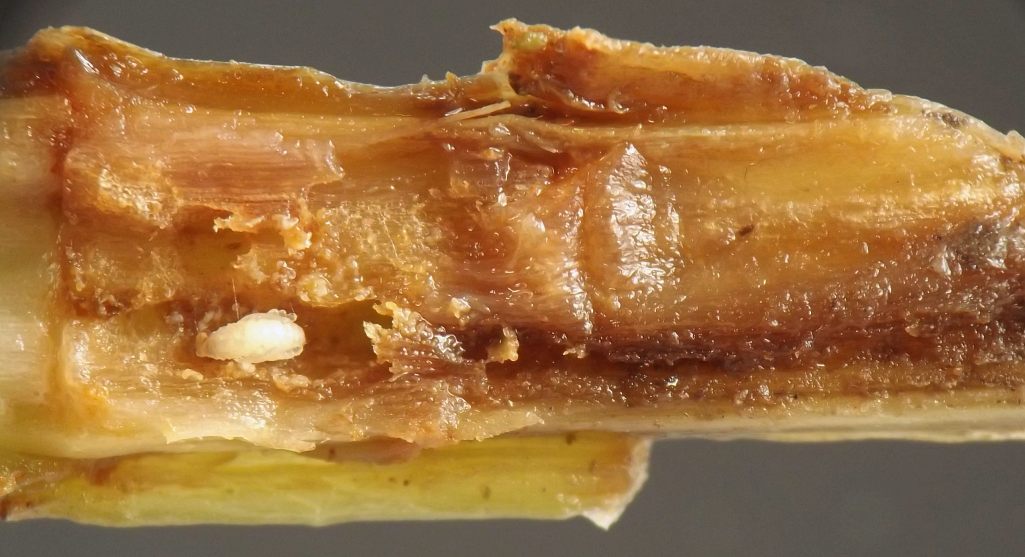
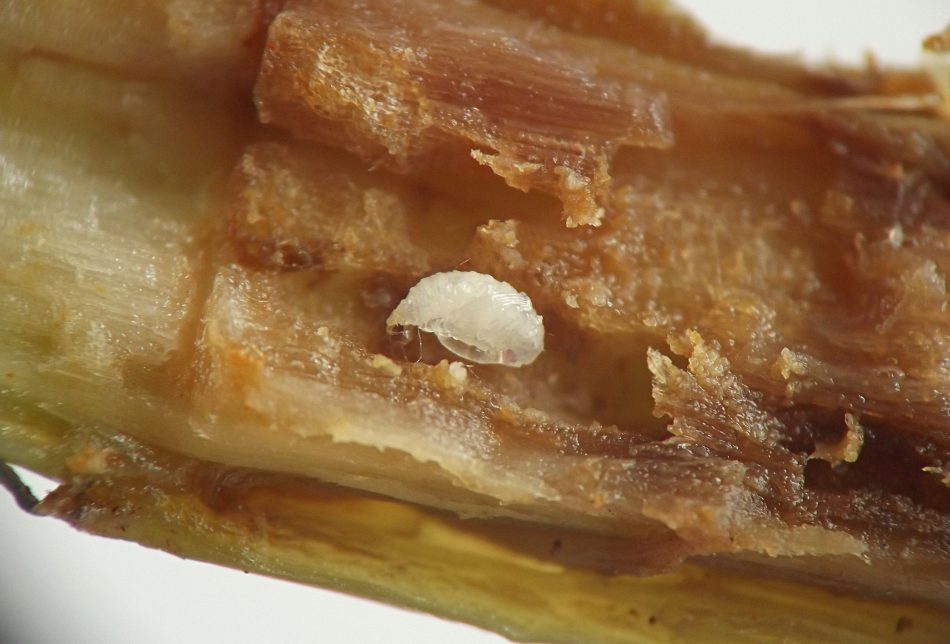
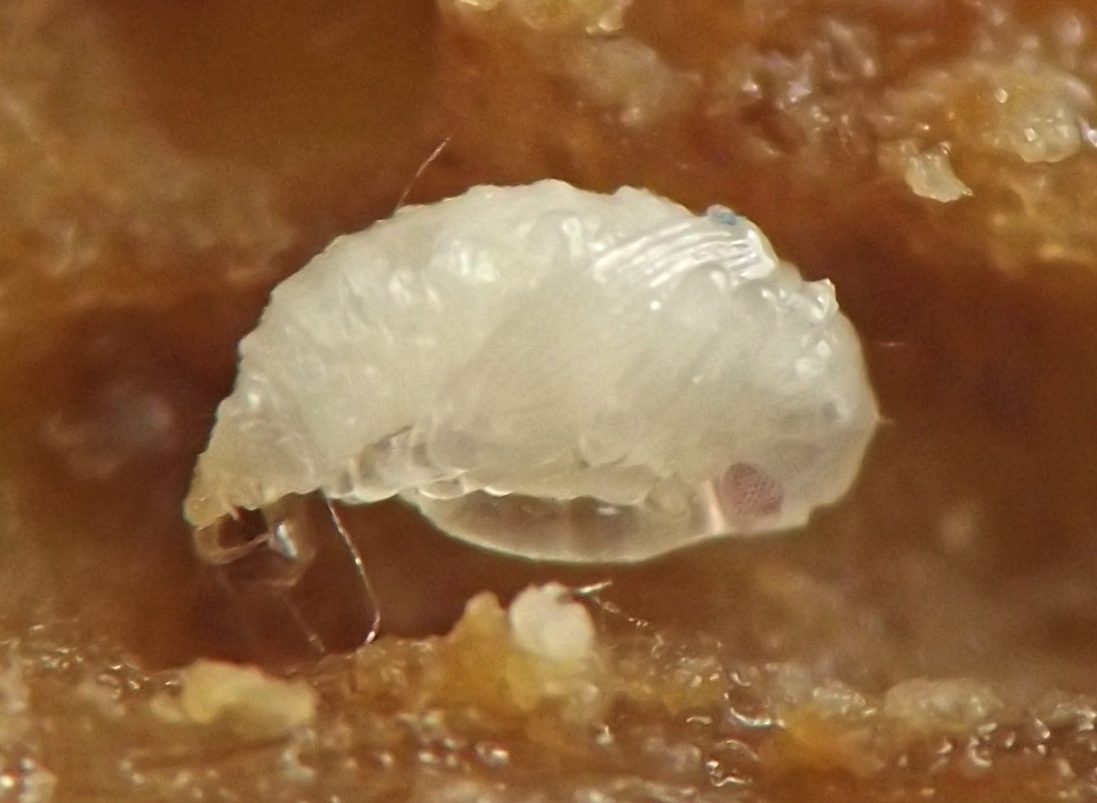
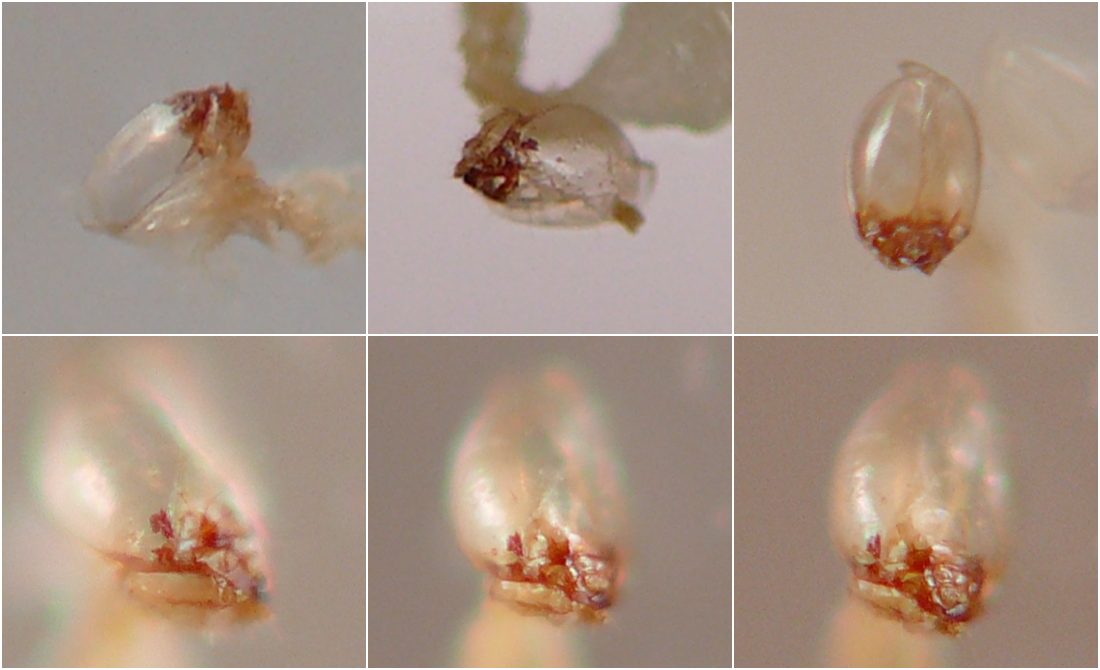
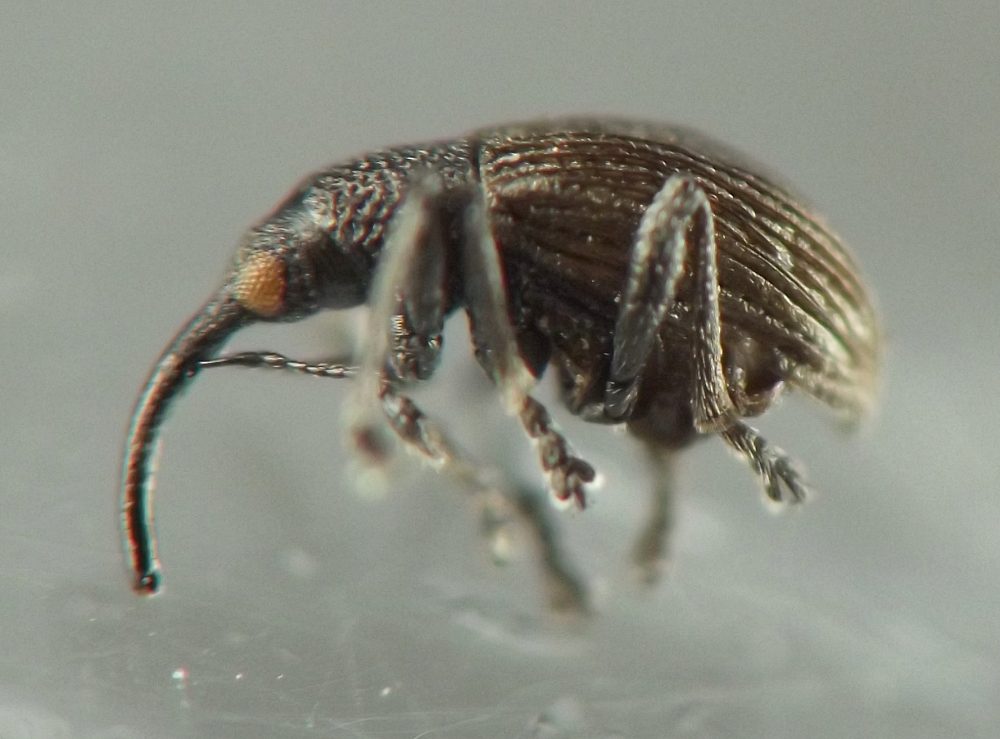
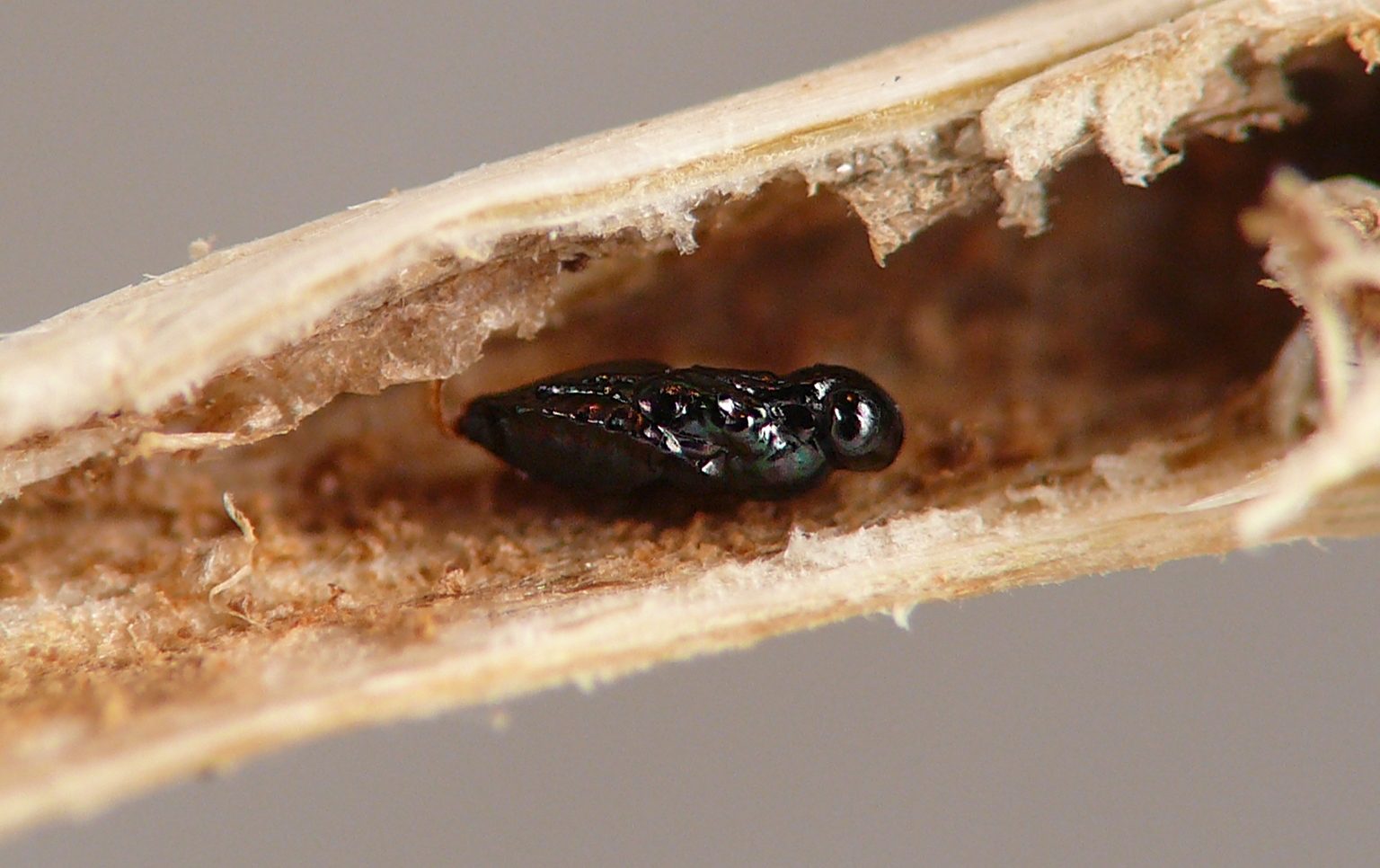
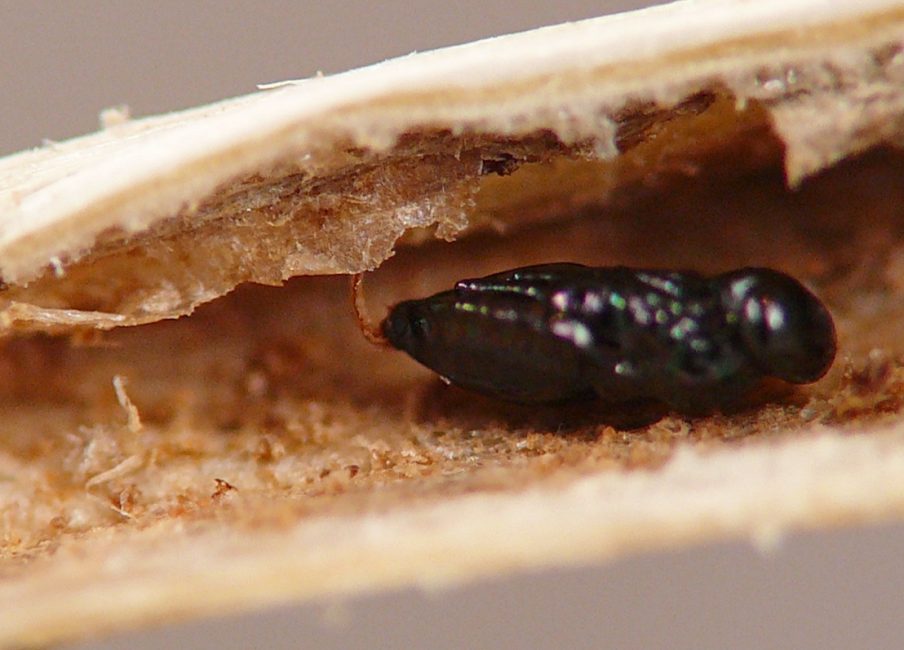
From 2022-2026, in stems and a midrib of the host, I found larvae, pupae, and adults I am including together in this record, though it is not certain they are all conspecific. Larval feeding sign consisted of slightly rough-walled linear tunnels in solid areas of pith, and scraped or gouged areas in thin pith linings of hollow areas, along with scattered grains and occasional clumps of pale frass. The larvae were elongate and cylindrical with a tapered posterior end, dorsal ampullae, and six round, fleshy knobs on the ventral surface of the thorax where legs would be expected. The dorsal ampullae, overall body shape, and head capsule configuration were reminiscent of Mordellidae, but mordellid larvae are generally larger and possess visible thoracic legs, along with urogomphi and/or a terminal spine (Ford and Jackman 1996; Stehr 1987-1991). The pupae were white in color and compact, with legs, wing pads, eyes, and a rostrum visible; the eyes of one developing (but still fairly immature) individual had turned reddish. Adults were black with dark brown elytra and red or black eyes. Rostrum length differed significantly between two of the adults; sexual dimorphism in this character is known to occur in Apioninae (Wilhelm et al. 2011). In one stem having the aforementioned feeding damage, I found a black, iridescent parasitoid pupa, which I surmised had fed on the apionine larva. It was attached to the inner wall of the stem via a short, thick filament of unidentified material. I also found similar wasp pupae in Osmorhiza stems damaged by apionine weevils (record 0349). Other reported apiaceous hosts for apionines include Angelica, Chaerophyllum, Cicuta, Heracleum, and Osmorhiza (Kissinger 1968 and current study).
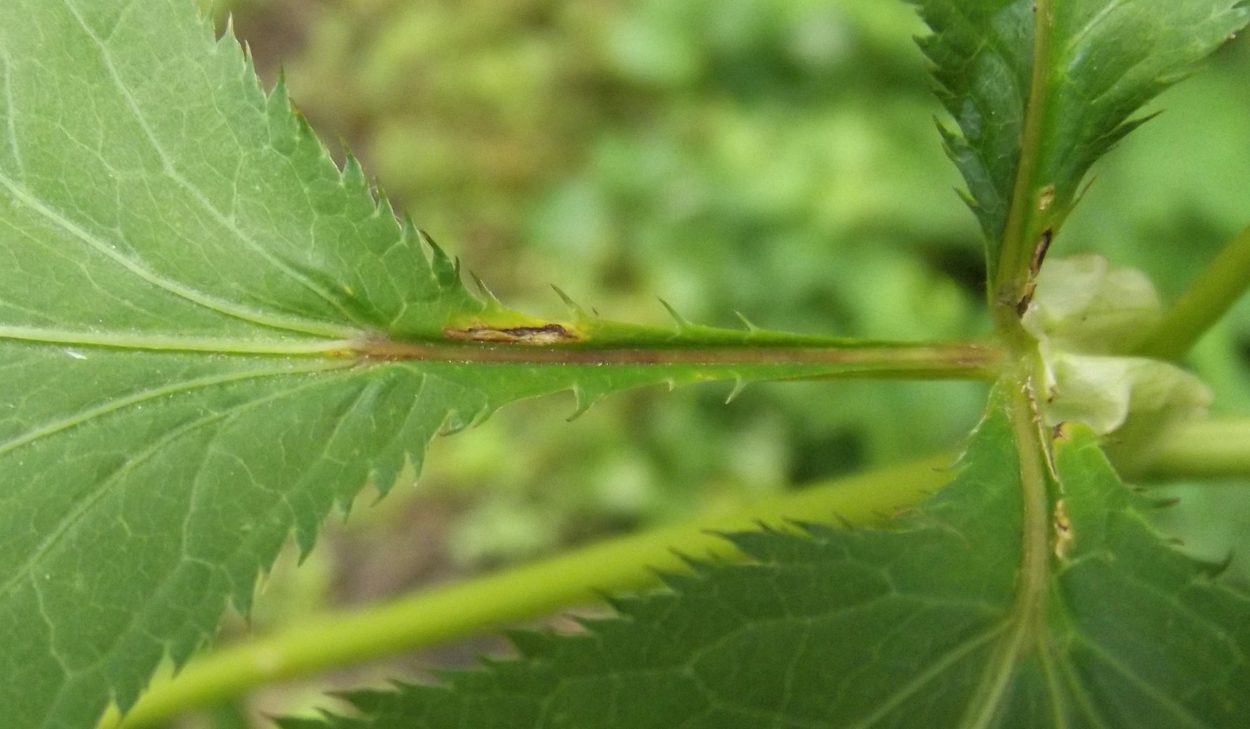
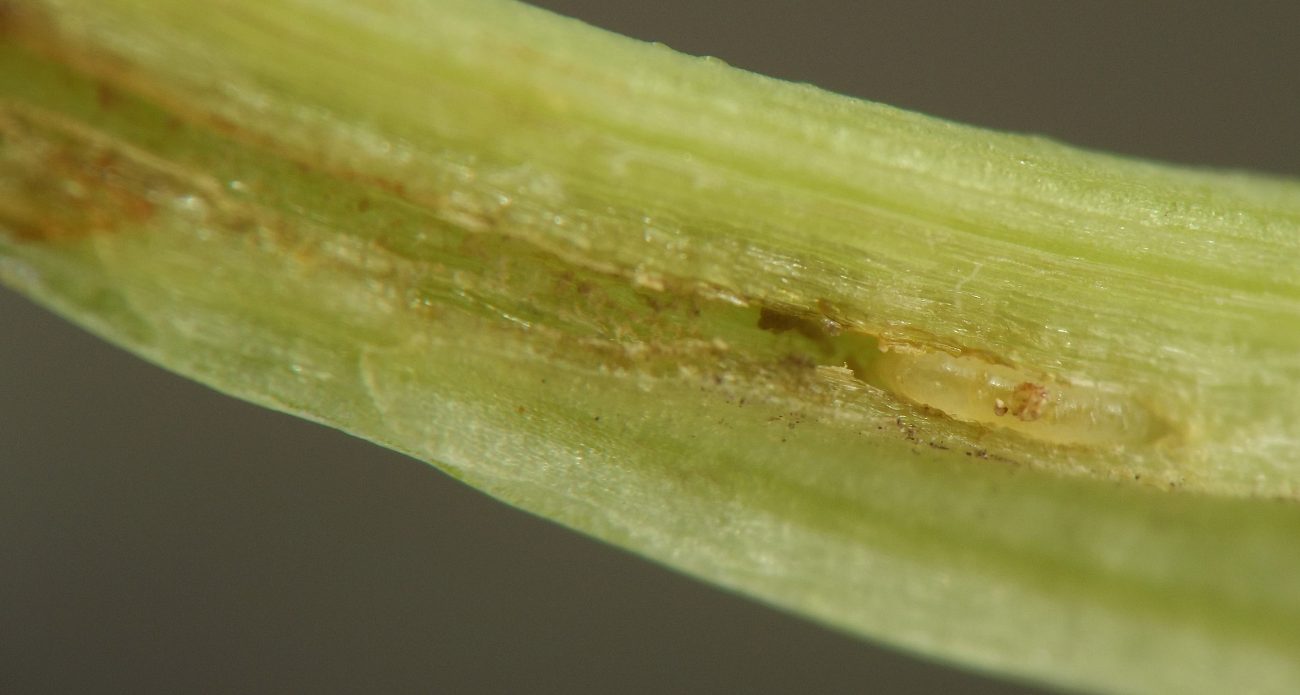
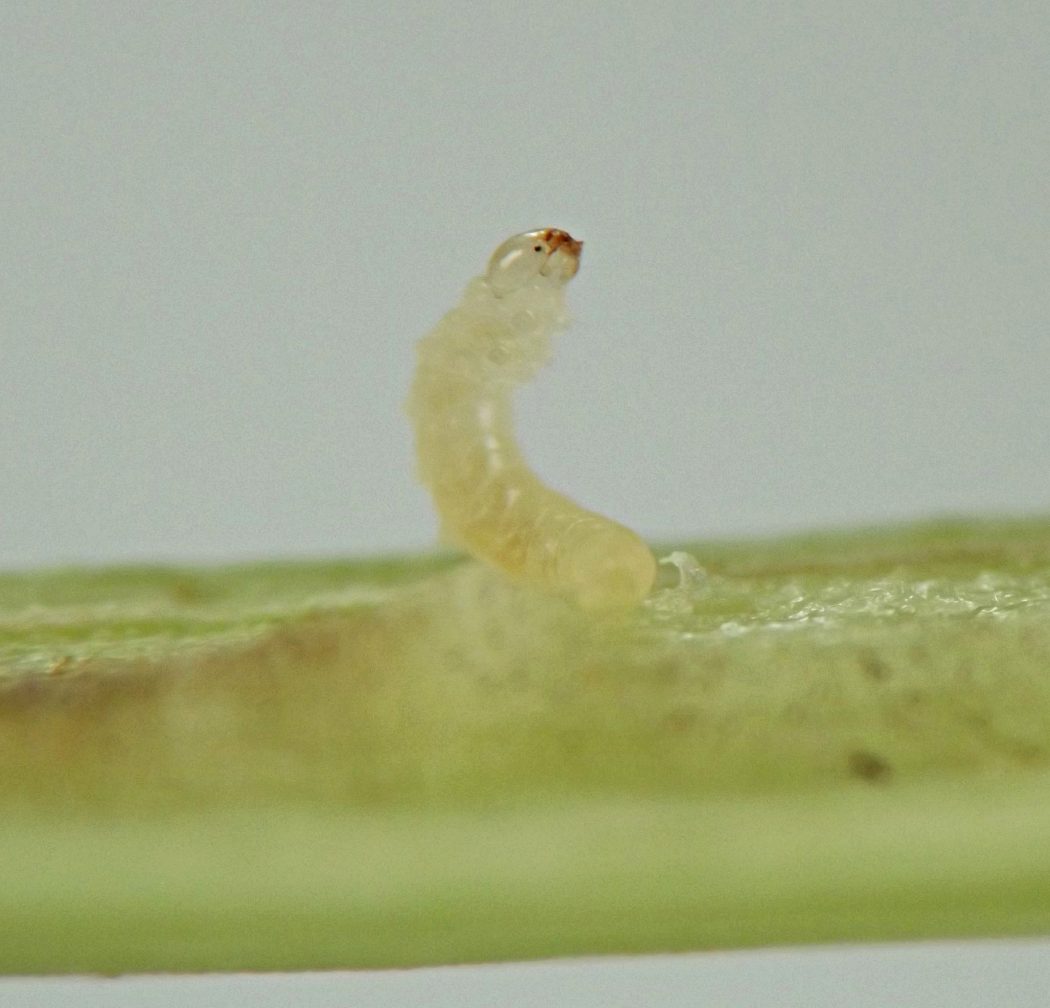
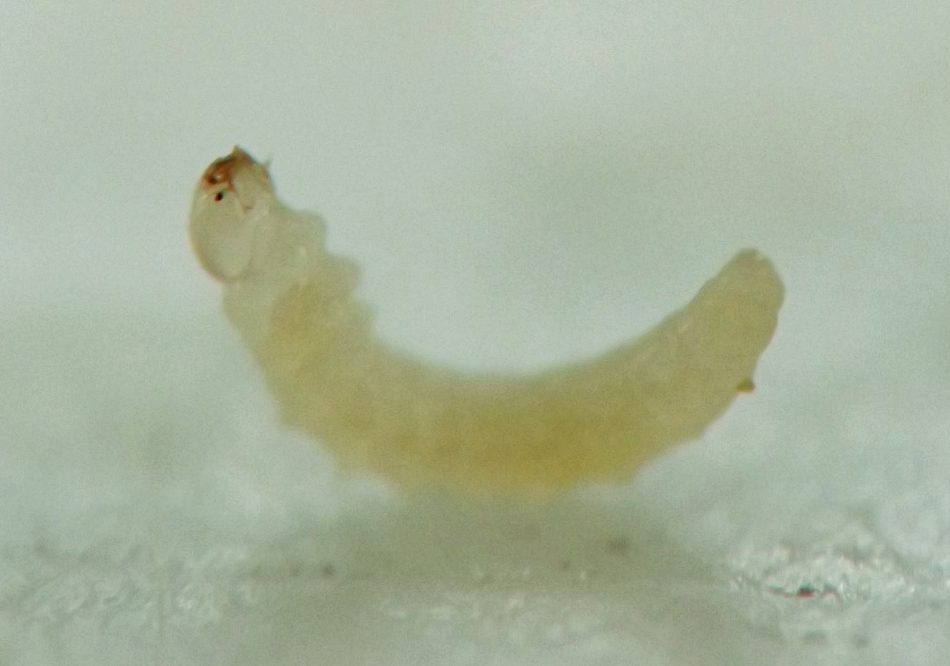
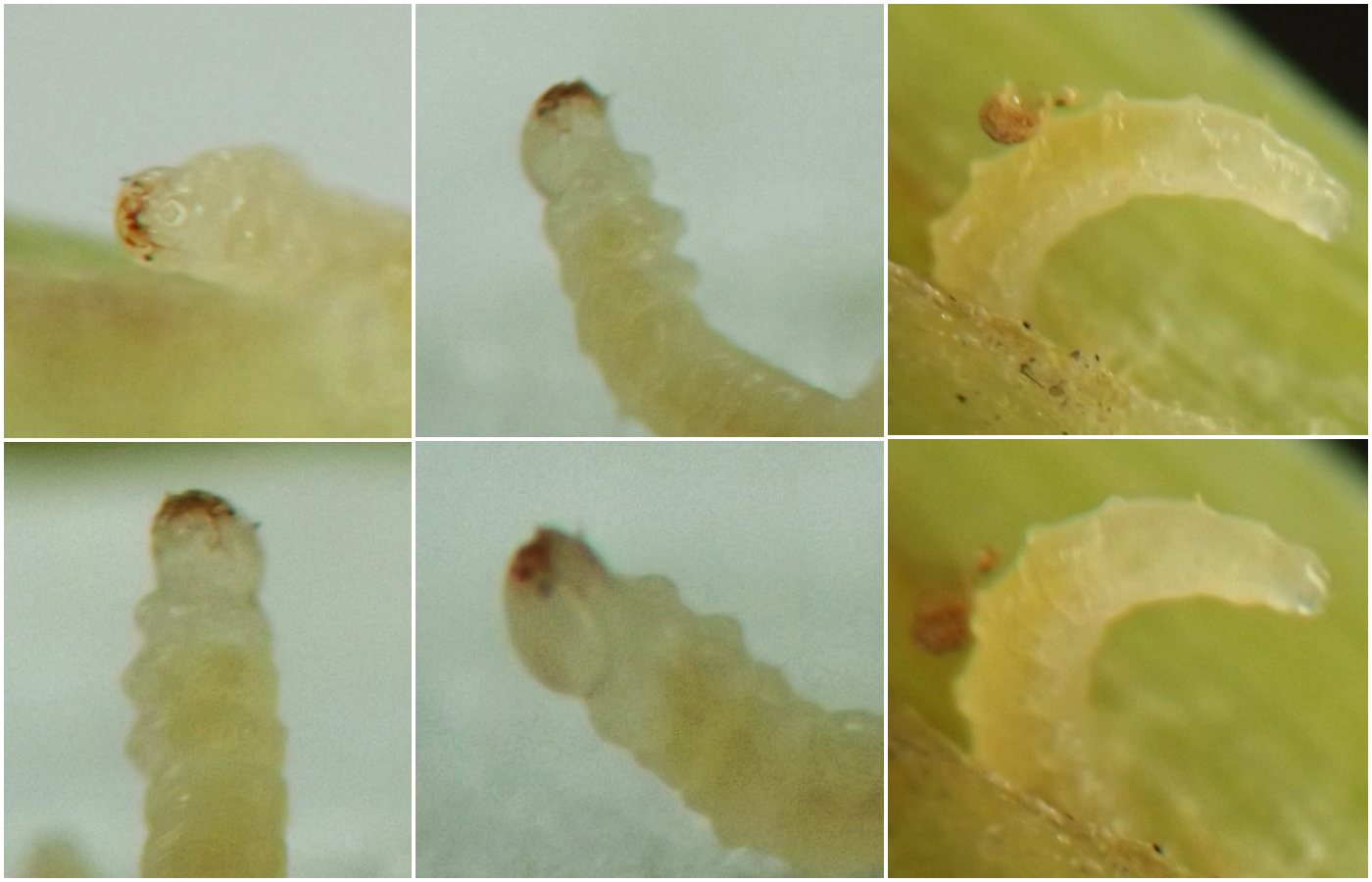
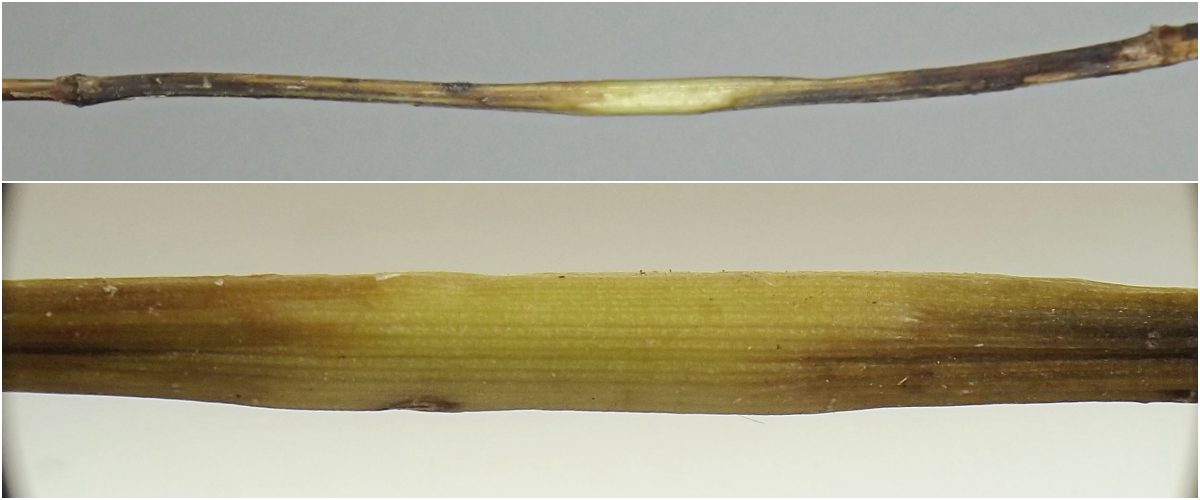
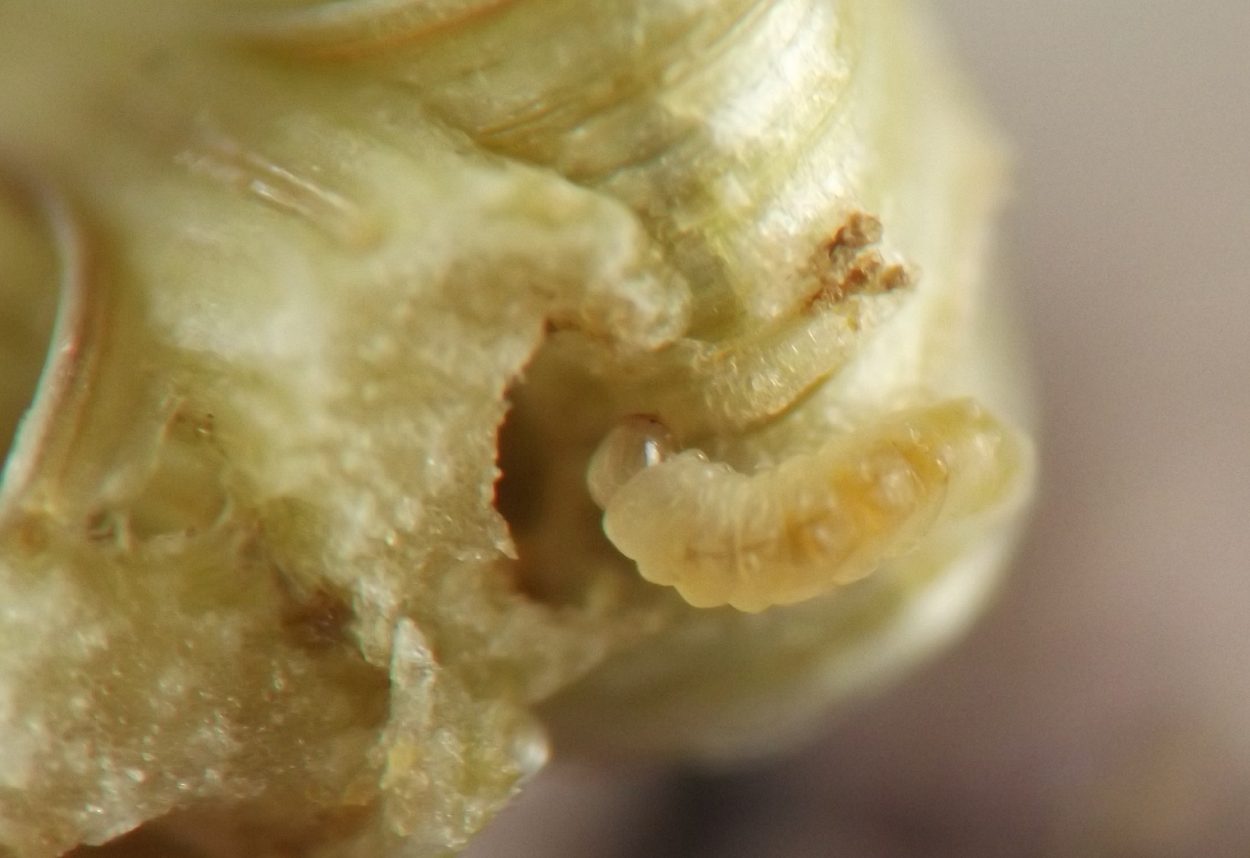
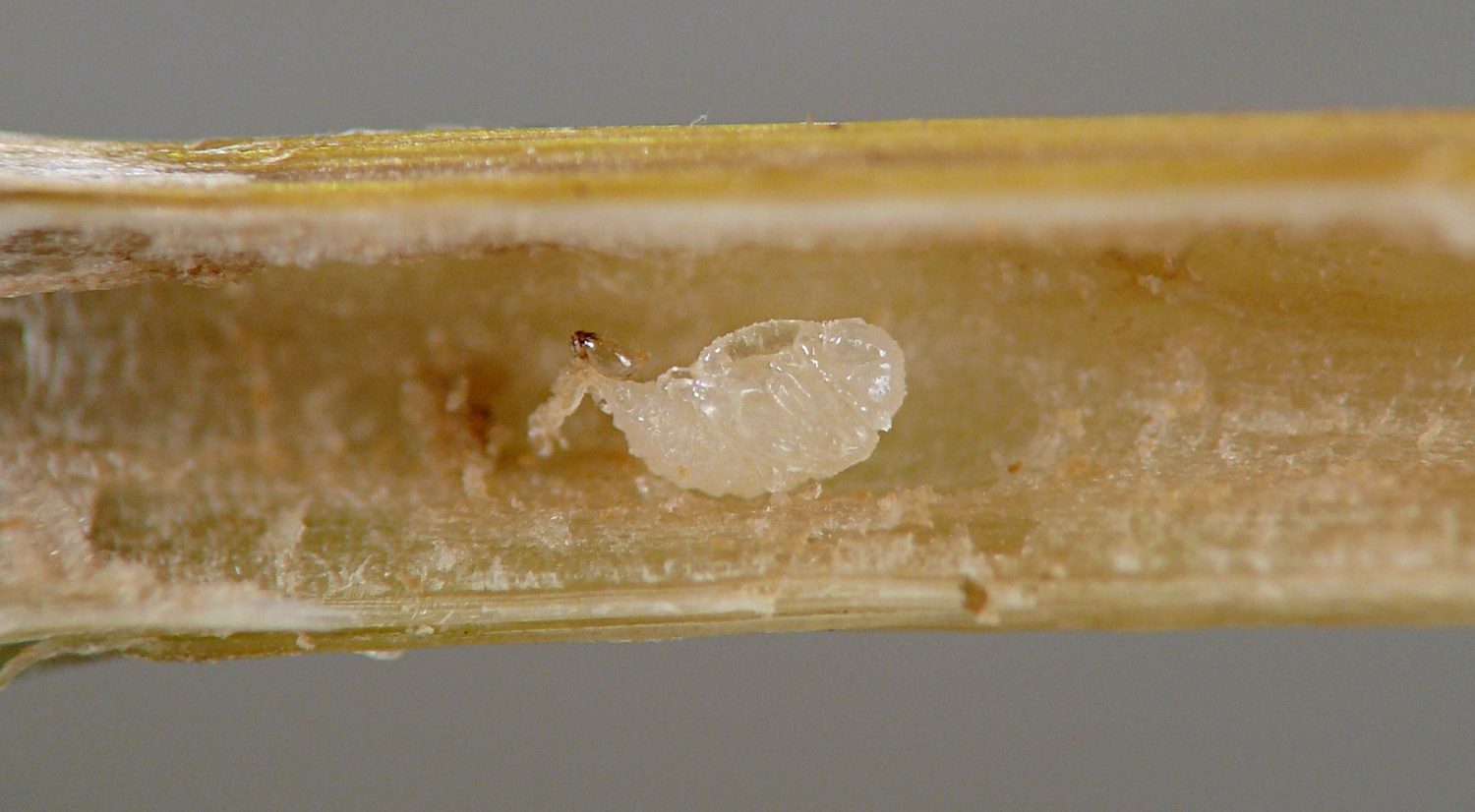
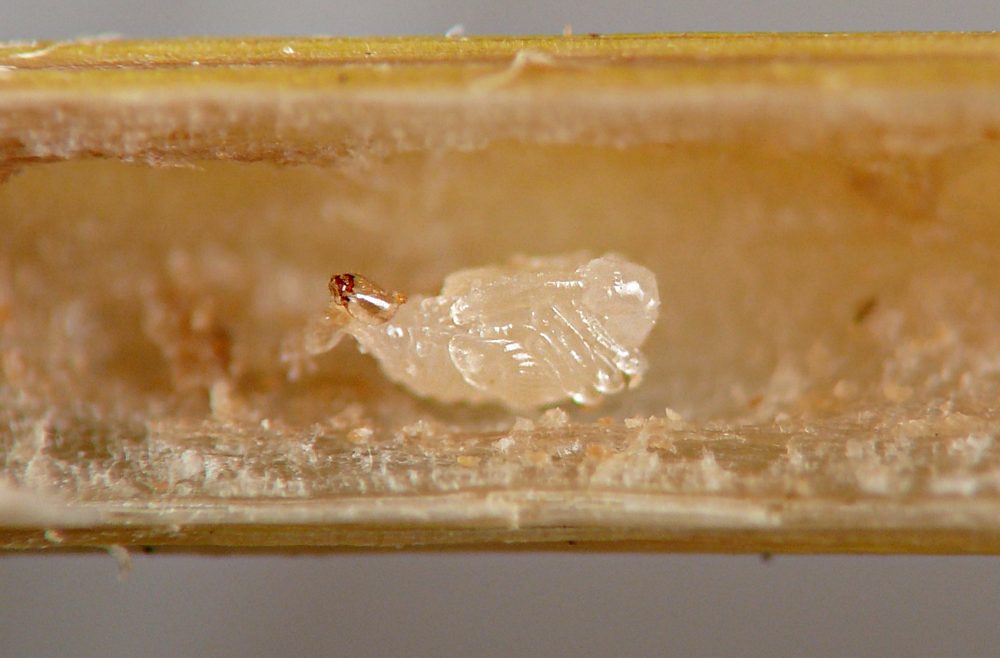
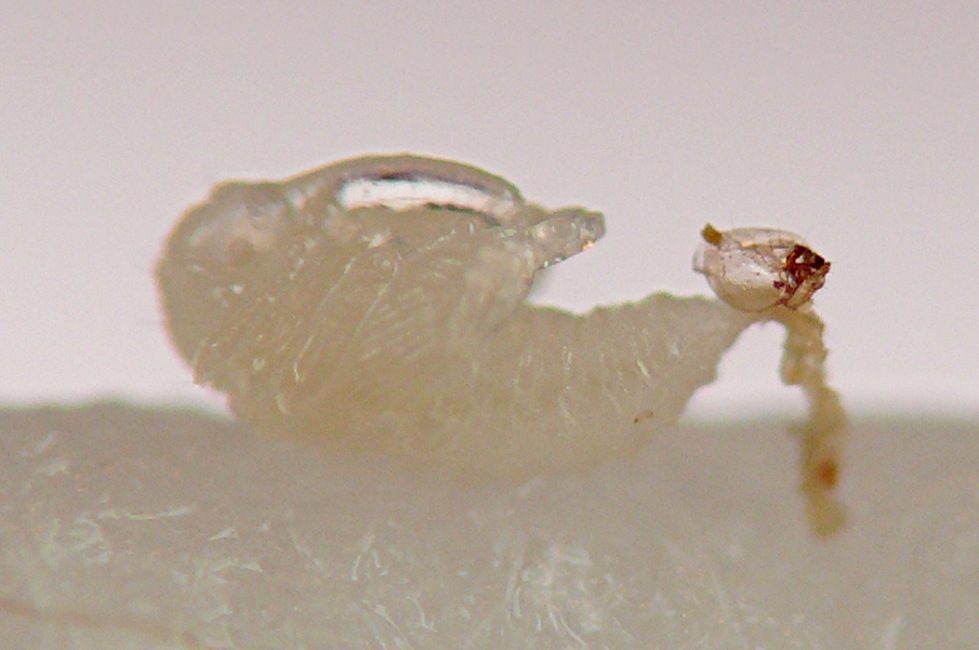
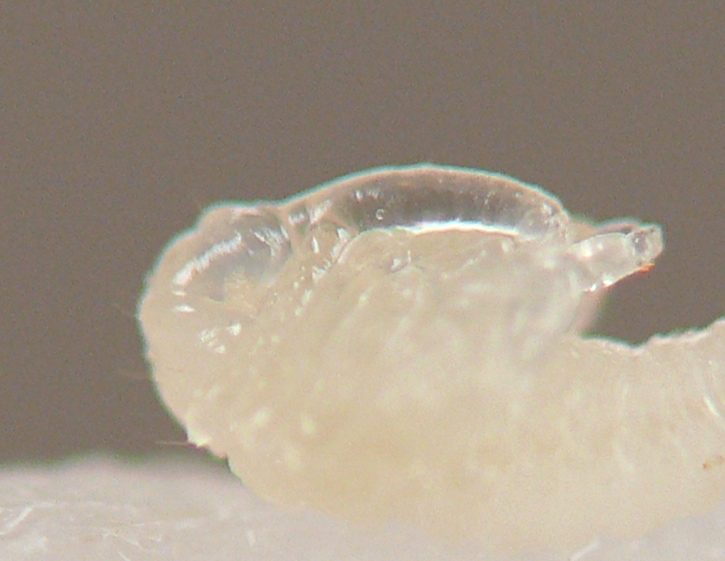
Curculionoidea: cf. Curculionidae: Listronotus sp.
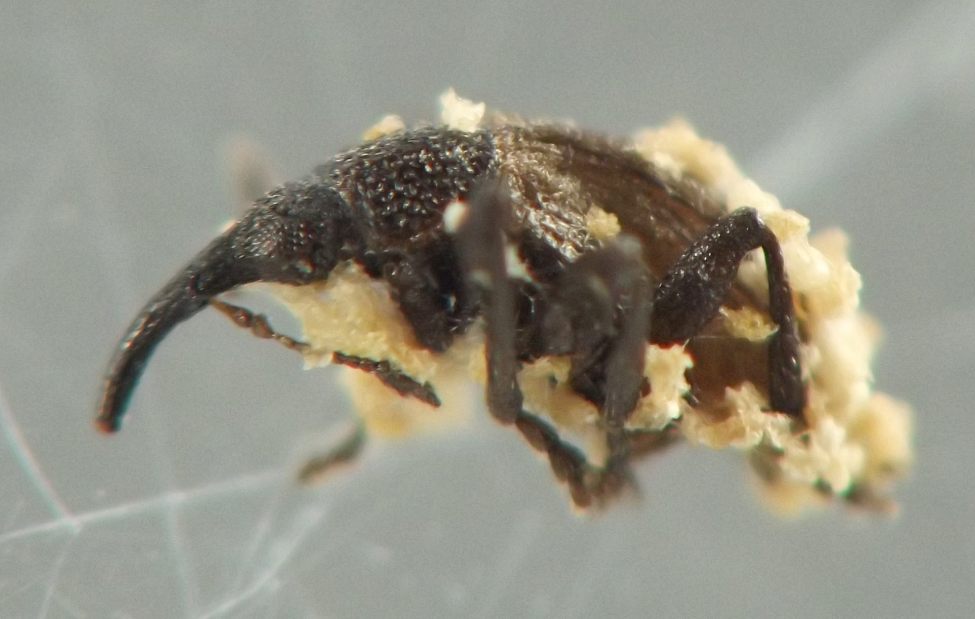
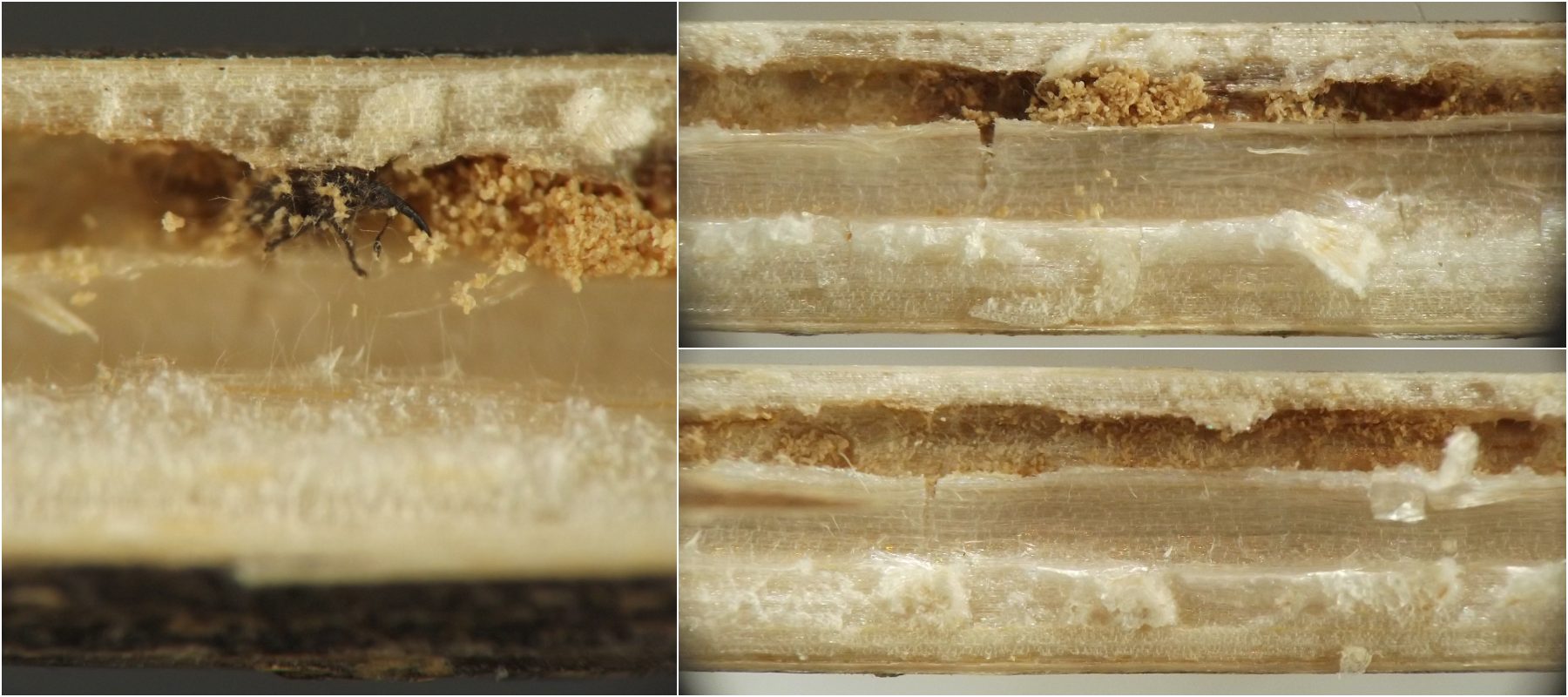
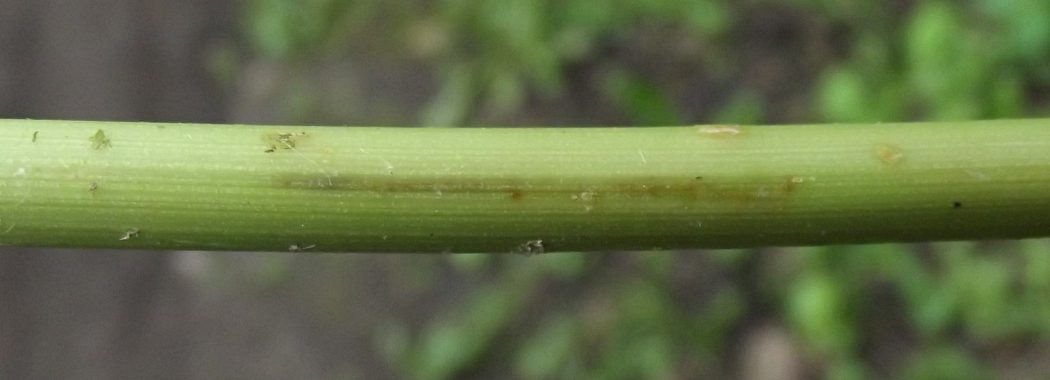
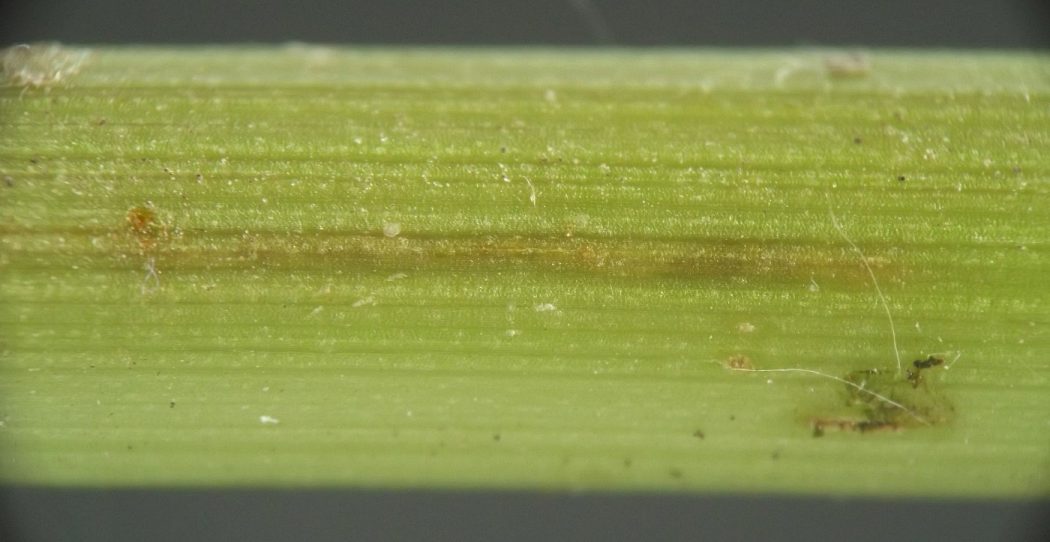
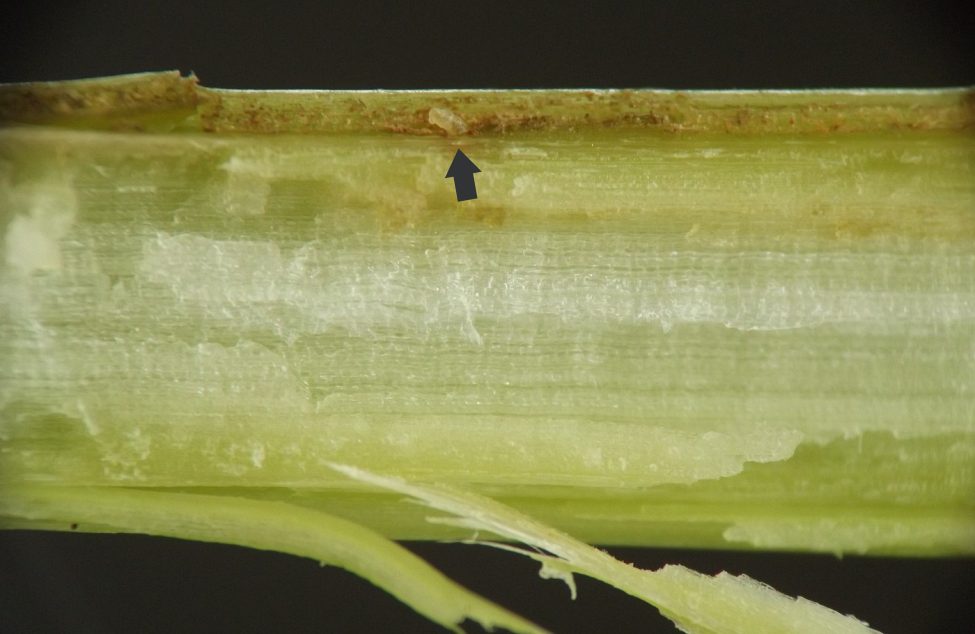
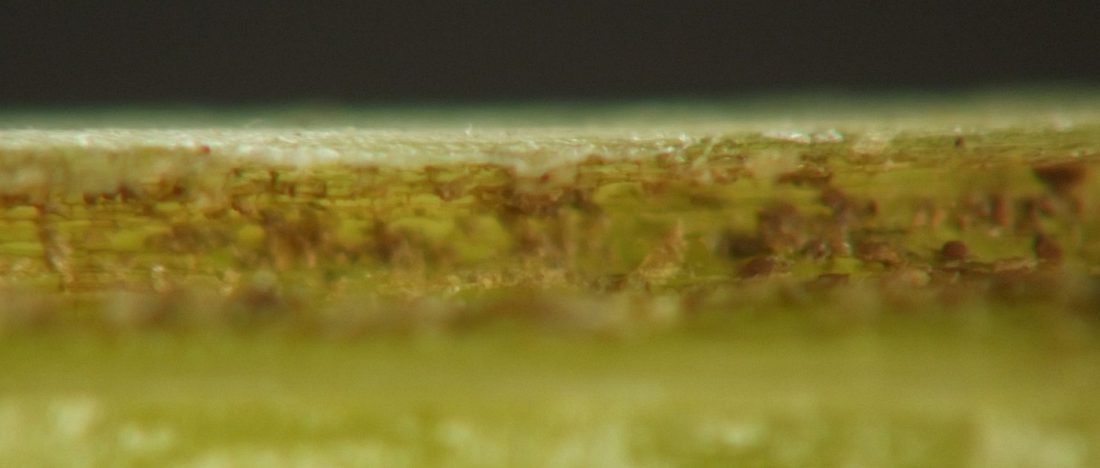
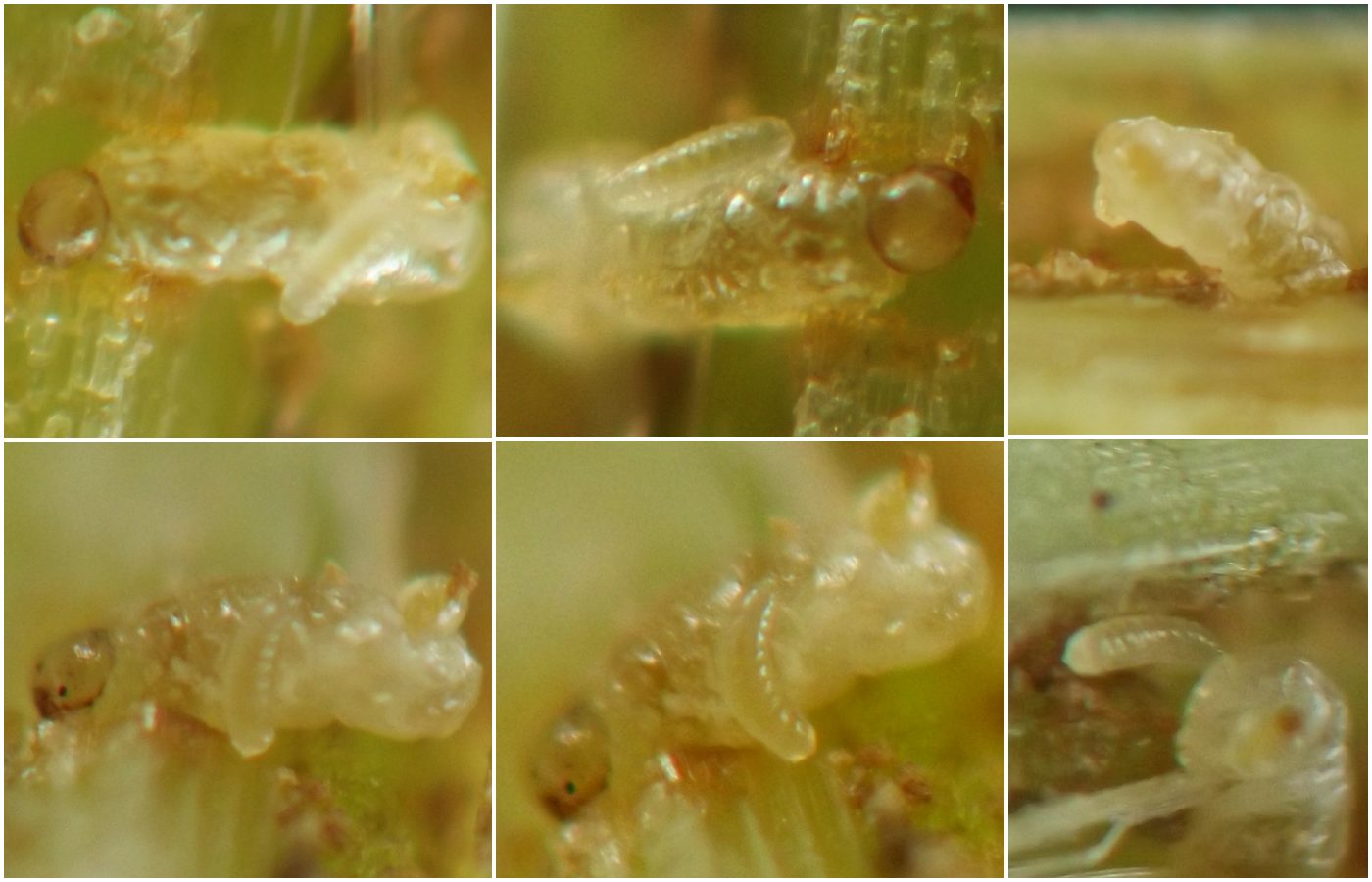
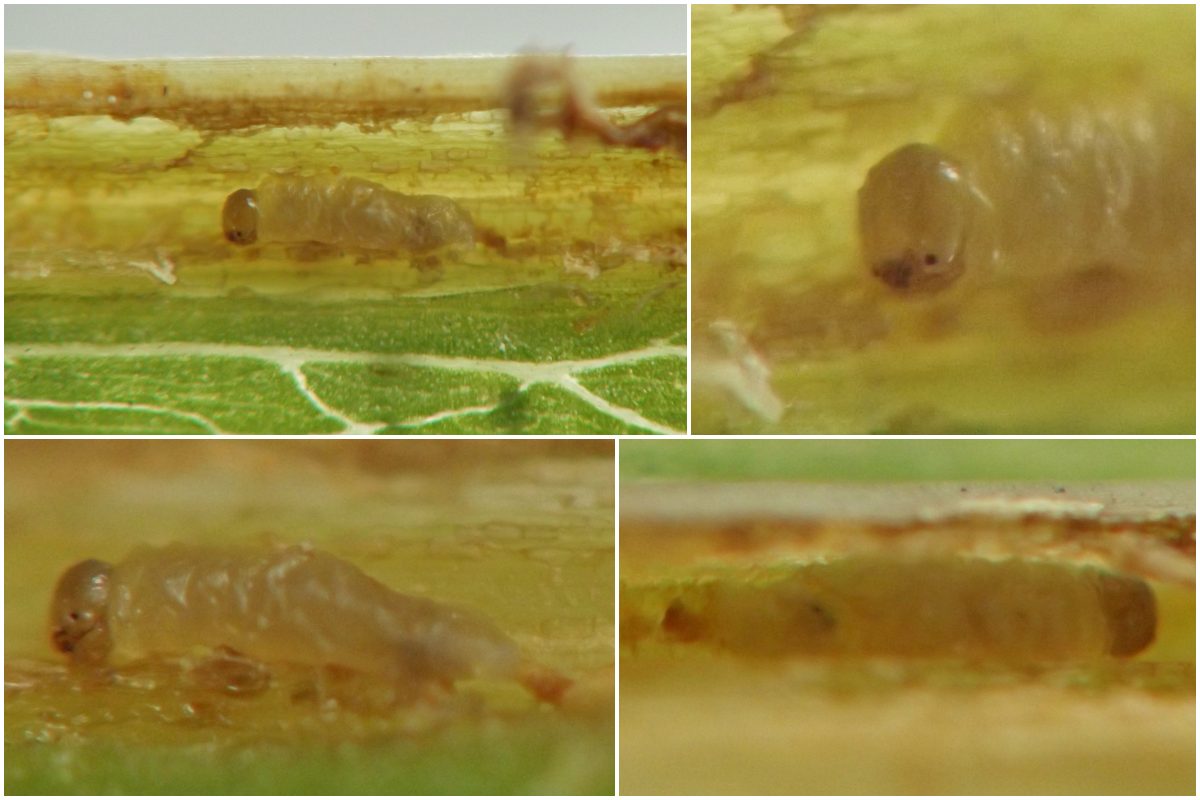
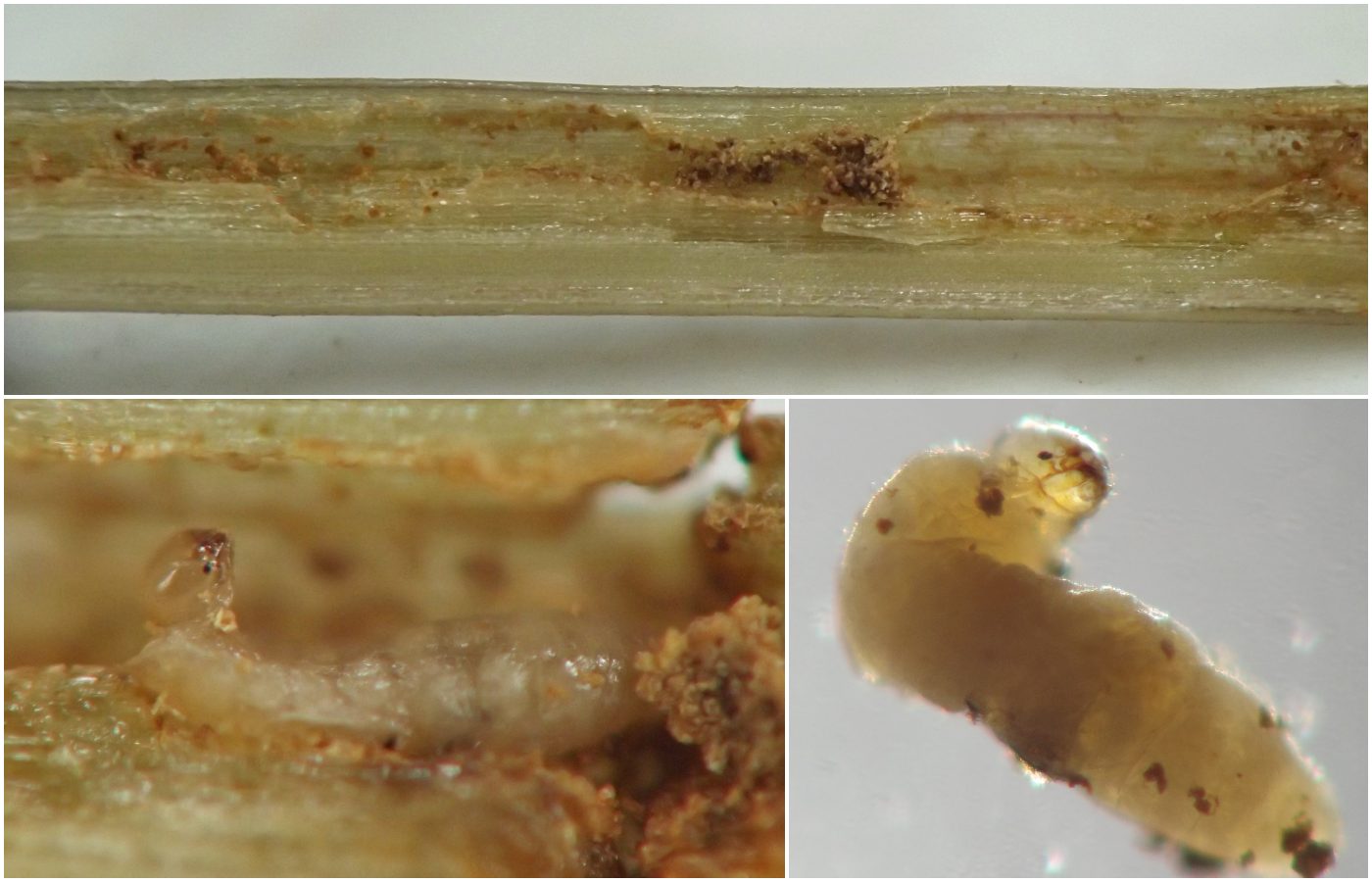
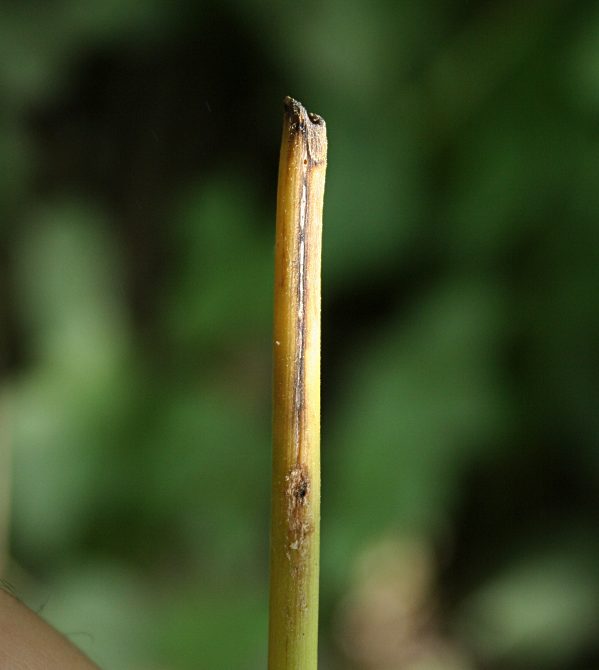
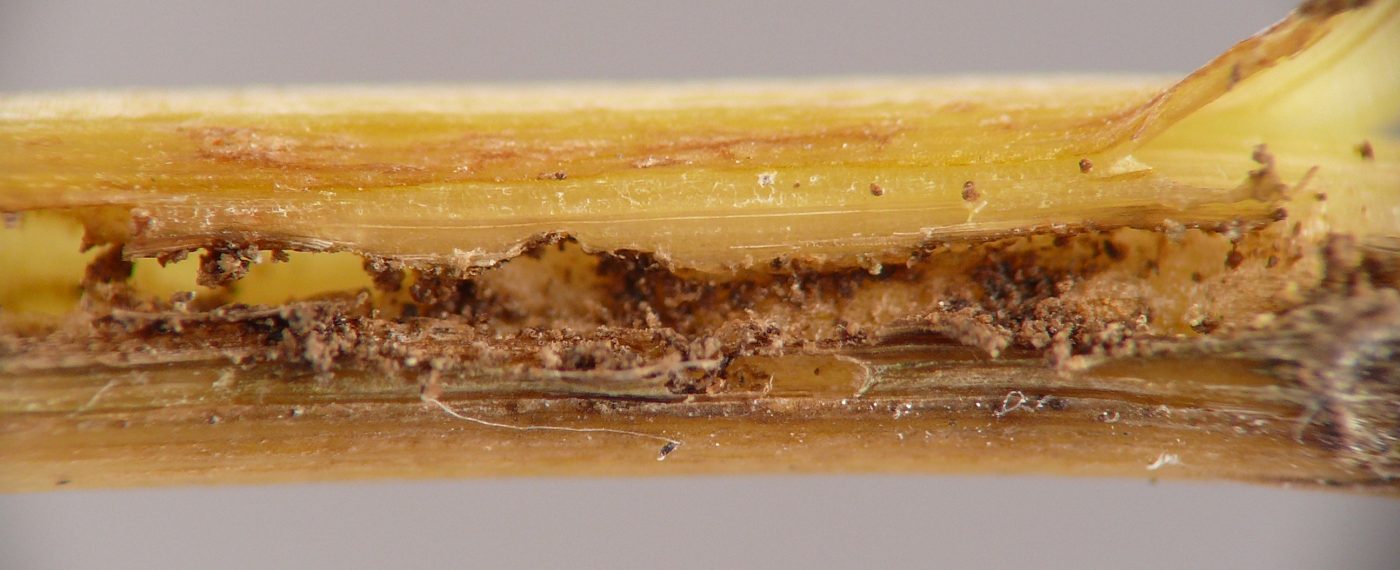
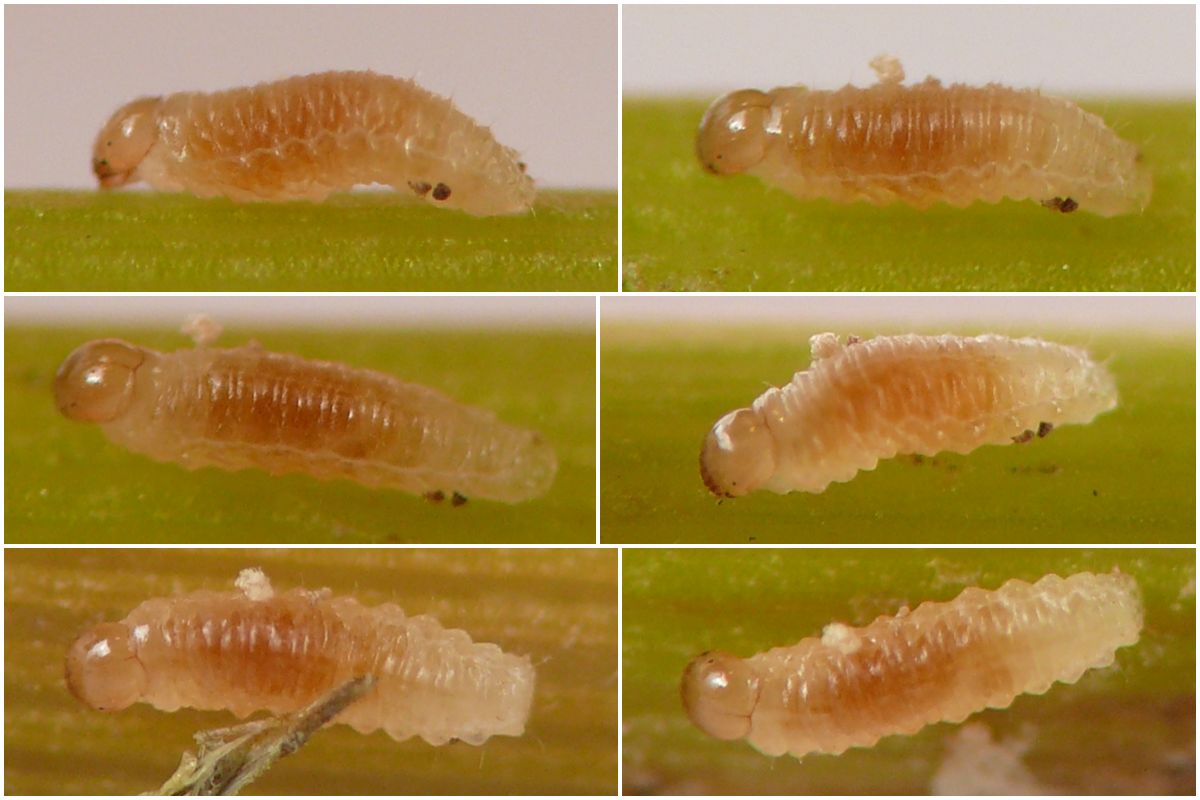
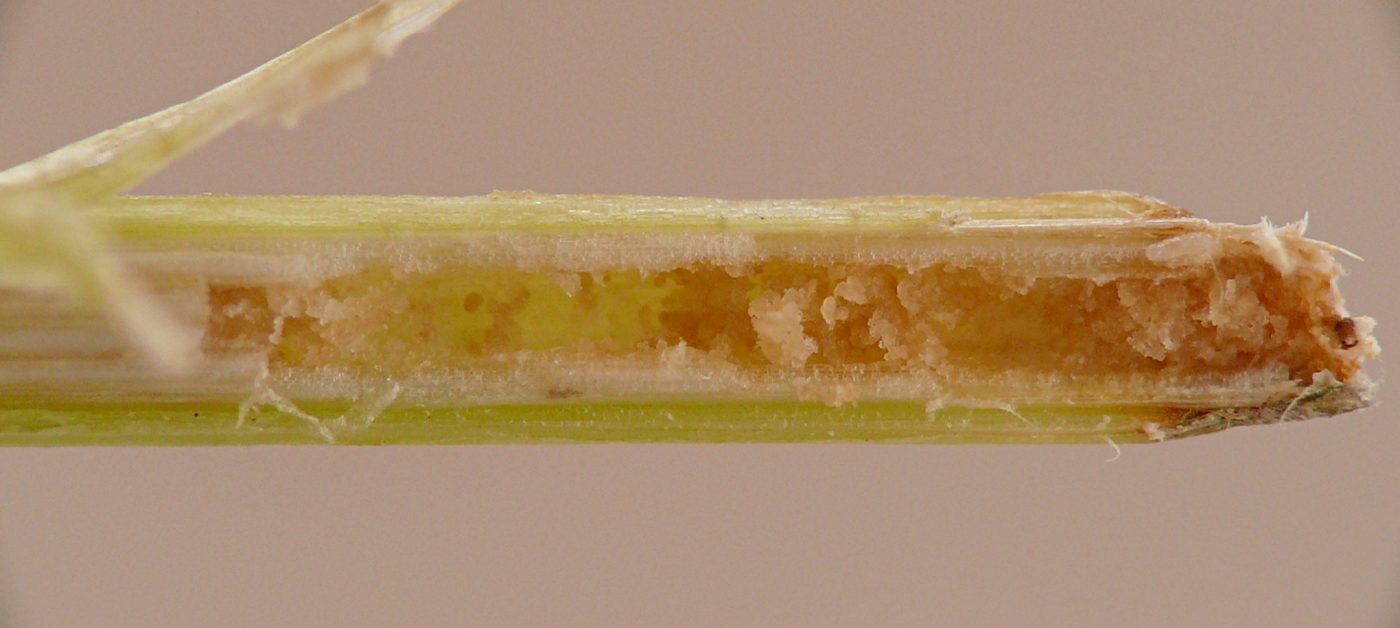
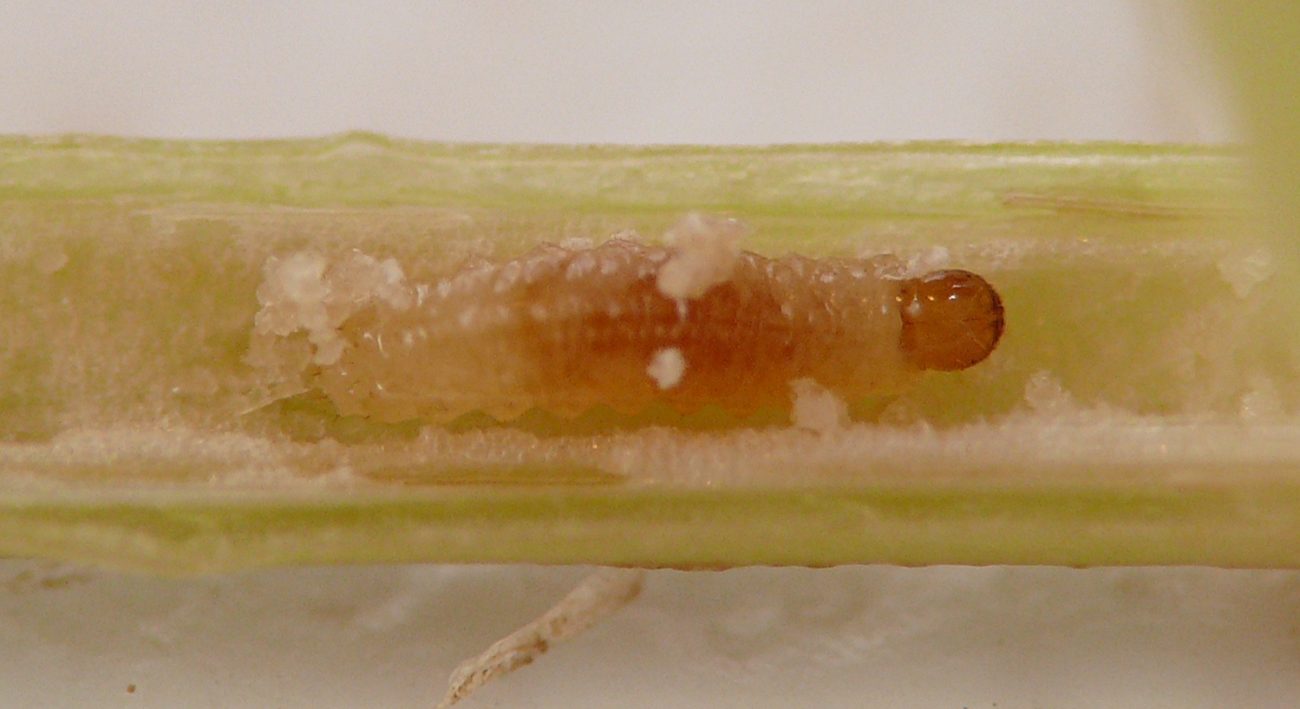
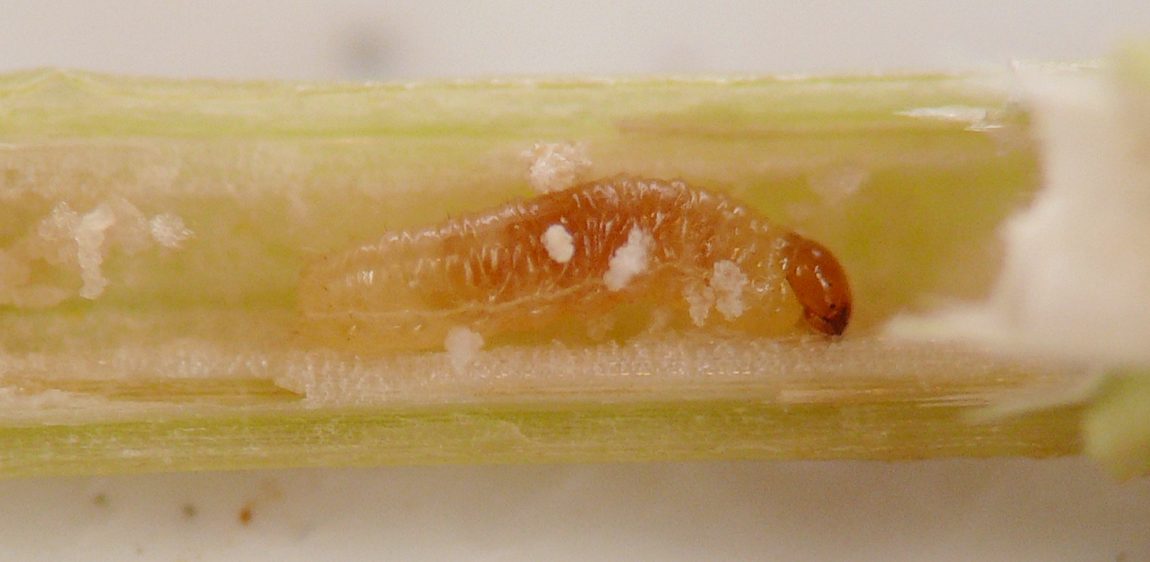
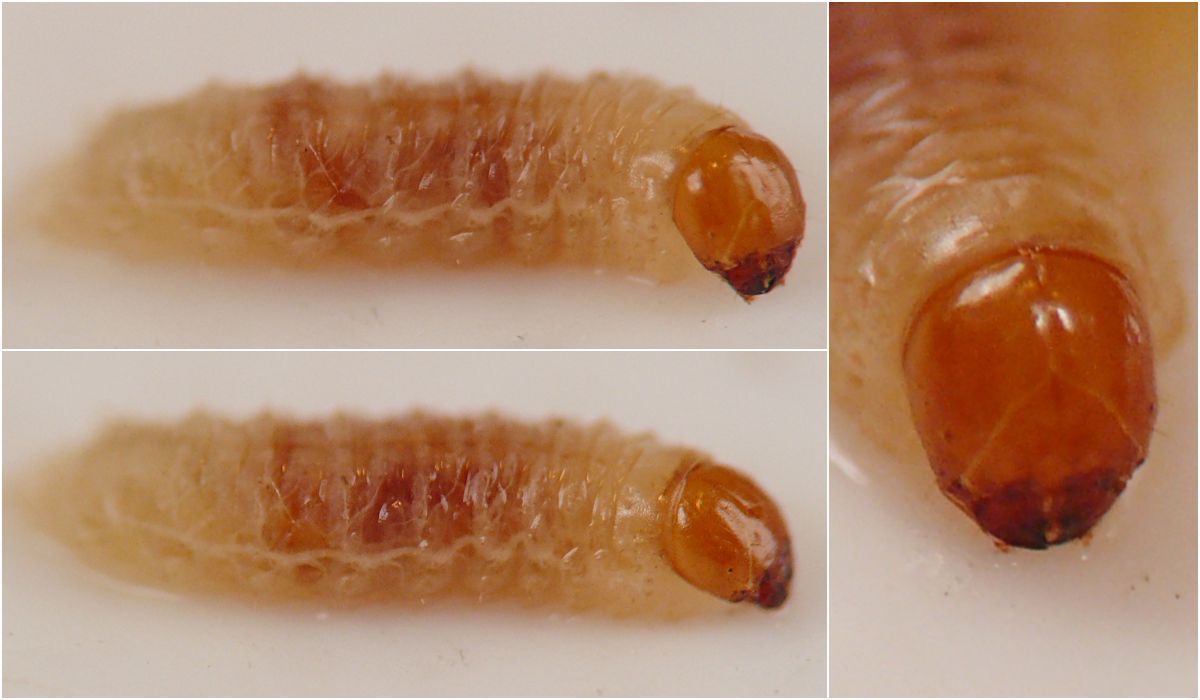
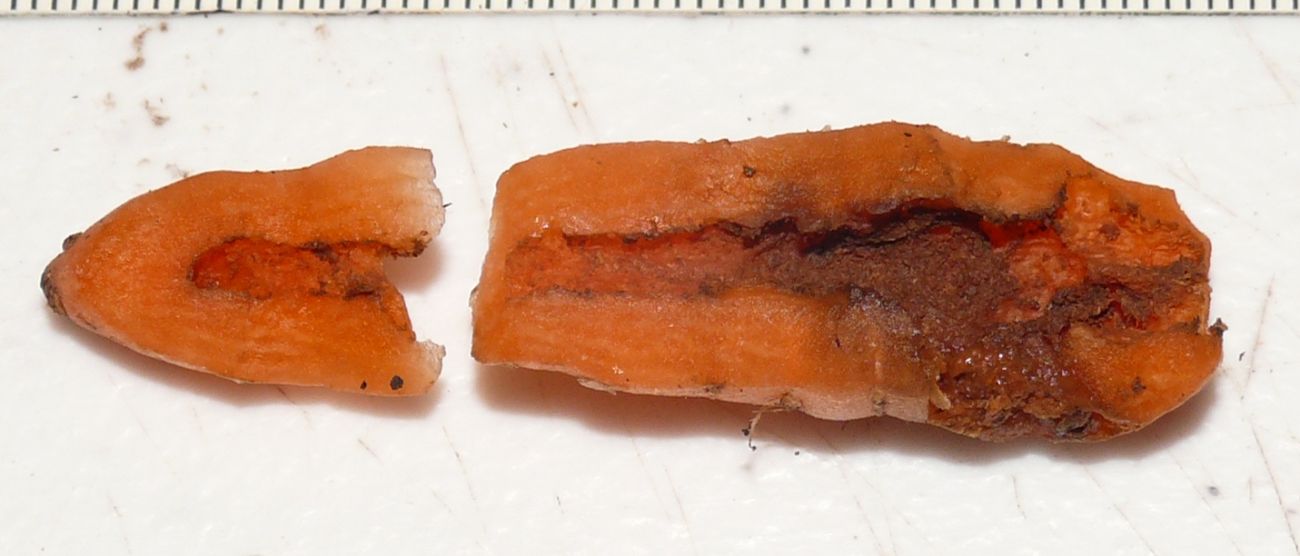
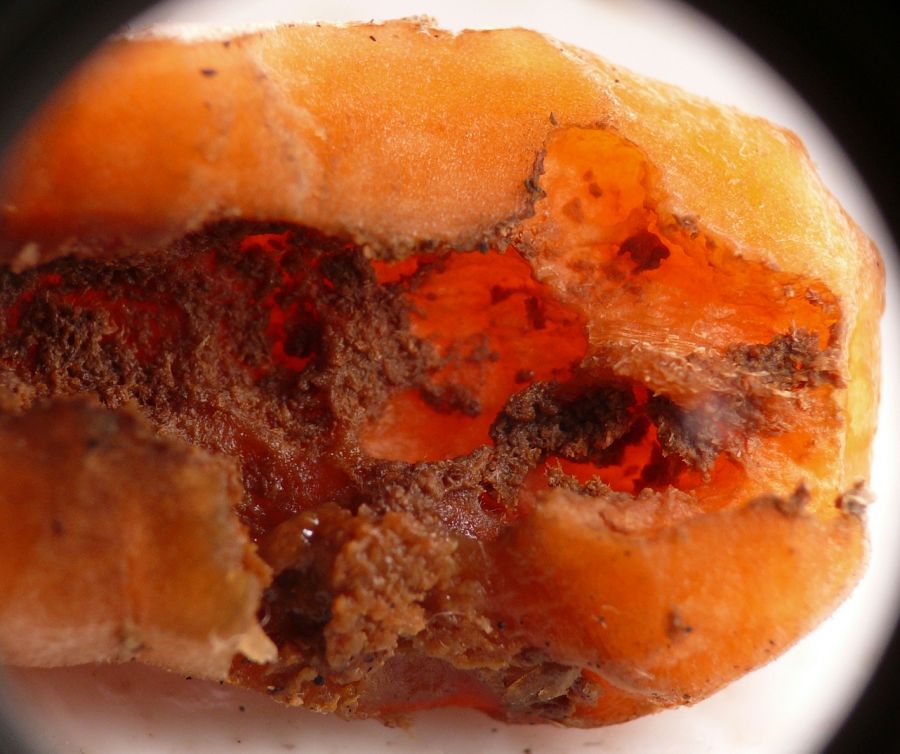
In mid-July 2022, I encountered young larvae in a stem and a midrib of the host. The affected stem contained a somewhat rough-walled tunnel, externally visible as a linear, darkly discolored area, about 30mm in length, oriented along the long axis of the stem (images 2-01 and 2-02). Inside the tunnel, a tiny parasitoid larva clung to the exterior of the incapacitated ?Listronotus larva (images 2-03 through 2-05), similar to the ectoparasitoid I found attached to a ?Listronotus larva in a Sanicula stem the same year (record 0488). The midrib, which had been partially tunneled out, contained a larva that also appeared to be ill or deceased (image 2-06). A month later, in mid-August, I found a tunneled stem with yet another unwell larva inside it (image 2-07). In 2025, I collected a larva in a host stem on 13 August. The upper part of the plant had broken off, leaving a substantial portion of the stem still standing (images 2-08 and 2-09), with the weevil larva inside. The larva received a fresh stem in the rearing container on 20 August, then an organic carrot on 13 September, which it partially hollowed out (images 2-10 through 2-16). By 24 September it had abandoned the carrot and burrowed into soil, but I was unable to rear it further. I concluded that the 2022 and 2025 larvae belonged to Listronotus based on their close resemblance to larvae and plant damage in Daucus (record 0191) and Sanicula (0488), from which I was able to rear adults. I also reared a Listronotus adult from Osmorhiza (0350) but did not record details of the larva or plant damage. An adult weevil identified as Listronotus has been photographed on a Cryptotaenia canadensis plant in west central Illinois (Moorehouse 2024).
- Ford, E.J. and J.A. Jackman. 1996. New larval host plant associations of tumbling flower beetles (Coleoptera: Mordellidae) in North America. The Coleopterists' Bulletin 50(4): 361-368.[return to in-text citation]
- Kissinger, D.G. 1968. Curculionidae subfamily Apioninae of North and Central America: with reviews of the world genera of Apioninae and world subgenera of Apion Herbst (Coleoptera). Taxonomic Publications: South Lancaster, Massachusetts. 559 pp.[return to in-text citation]
- Moorehouse, A. 2024. Listronotus from Adams County, IL, USA [...]. Contributor post on iNaturalist.org. Retrieved September 5, 2026 from https://www.inaturalist.org/observations/222326848.[return to in-text citation]
- Wilhelm, G., Handschuh, S., Plant, J., and H.L. Nemeschkal. 2011. Sexual dimorphism in head structures of the weevil Rhopalapion longirostre (Olivier 1807) (Coleoptera: Curculionoidea): a response to ecological demands of egg deposition. Biological Journal of the Linnean Society 104(3): 642-660.[return to in-text citation]
- Stehr, F.W. (ed.). 1987–1991. Immature insects (vols. 1–2). Kendall/Hunt Publishing Company. [return to in-text citation]
Page created: September 5, 2026. Last update: none