Some insects associated with weedy non-native and invasive plants
A selection of insects I have observed feeding, nectaring, or sheltering on invasive or otherwise weedy non-native plants. I emphasize records of internal feeders in stems and stemlike structures, but other insect associates of these plants are included as well. The insect image galleries are organized by host plant. When viewing a image gallery, click an image thumbnail to view the full-size version of the image.
At least three species of agromyzid fly make their home in the stems and stemlike structures of wild parsnip, which is more than I have thus far located in the similarly-built native relative cow parsnip (Heracleum maximum). The parsnip webworm, Depressaria radiella, also lives and feeds on this plant.
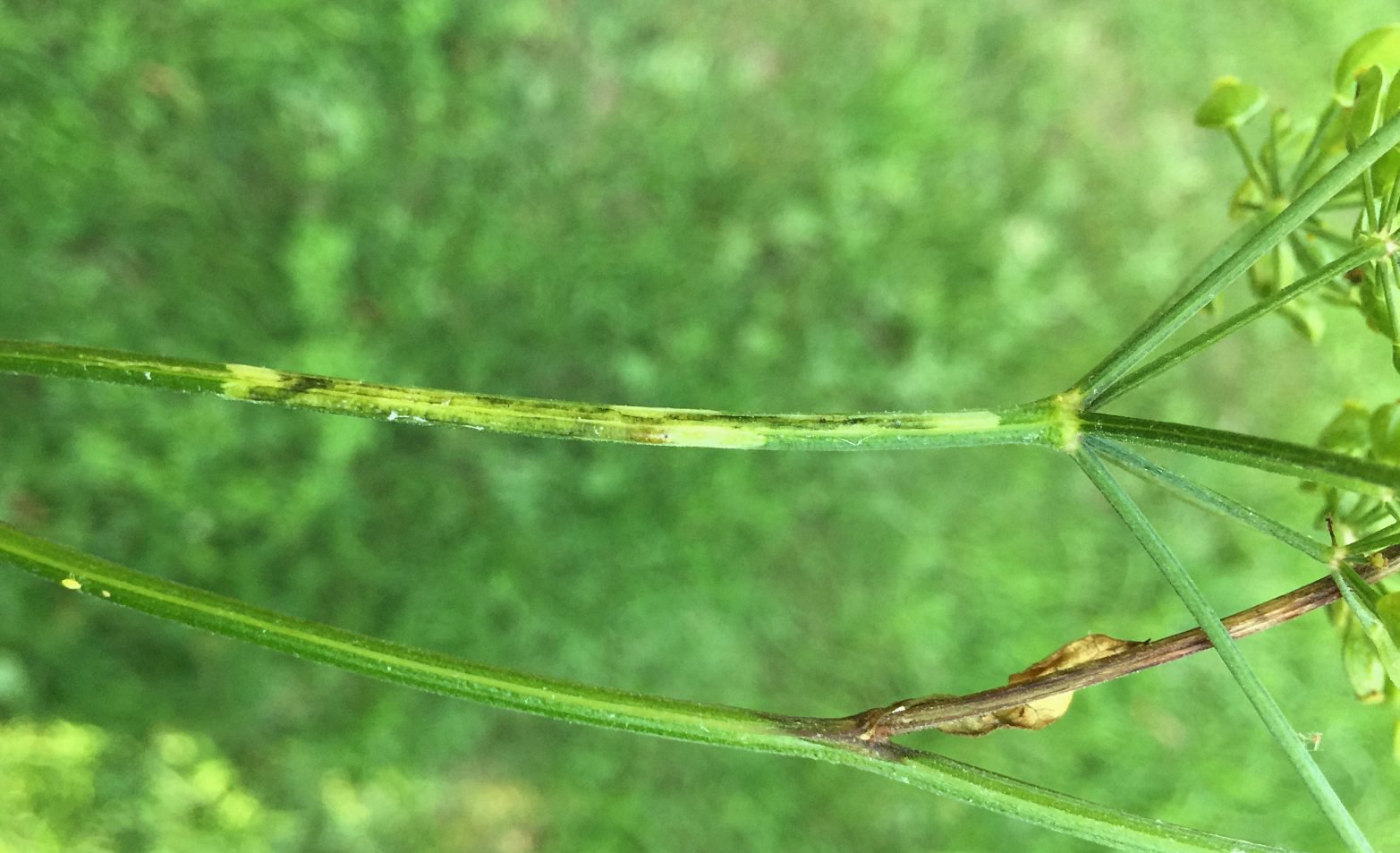
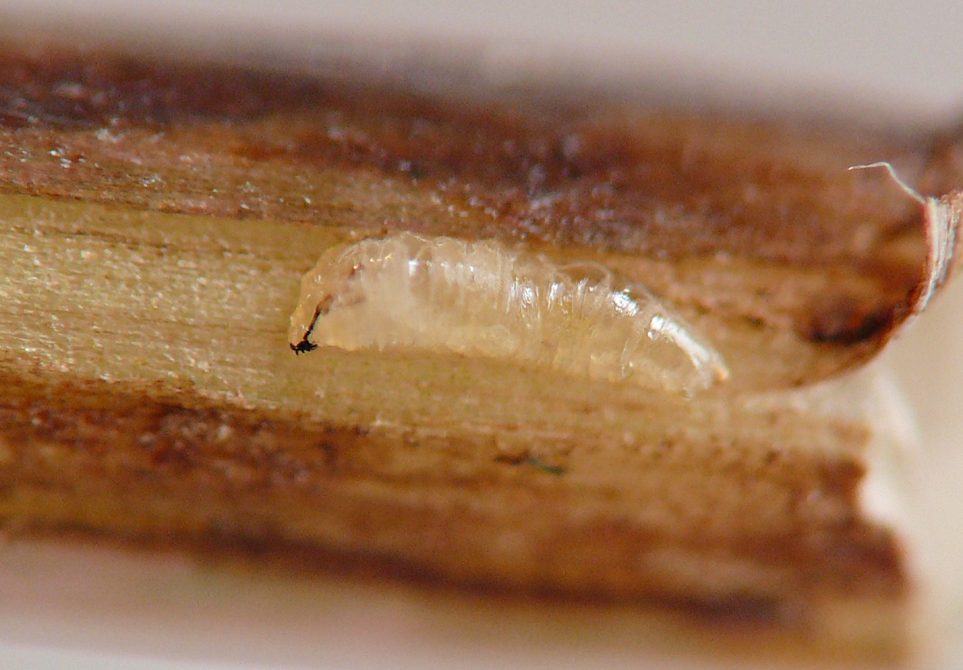
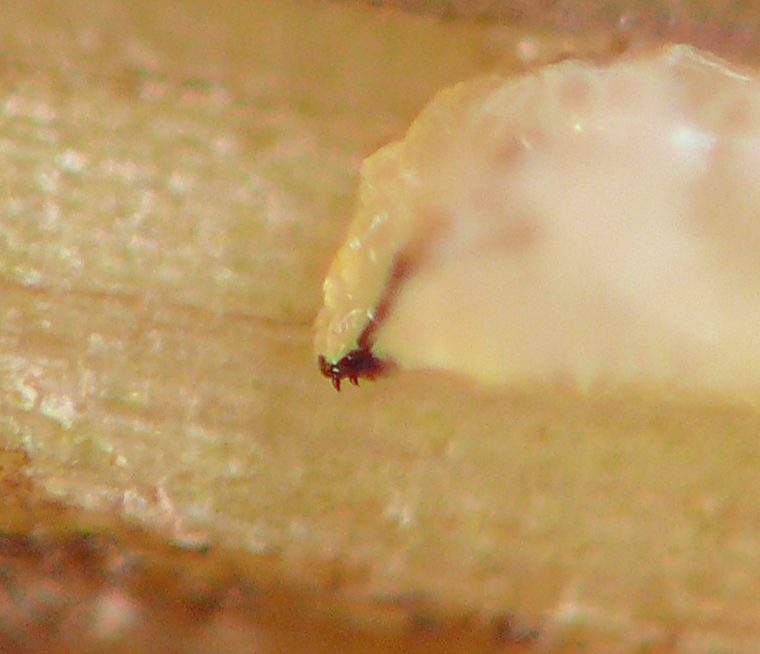
Stem miner, Diptera: Agromyzidae: cf. Ophiomyia sp.
I found a single example of this stem miner in July 2023. The mined area and puparium were in the stem of a branch of the infructescence underneath the umbel. The mine extended over a region of the stem approximately 15cm in length. It was a whitish color with irregularly deposited splotches and spotty lines of dark green or black frass. The yellowish-brown puparium was formed just under the epidermis with the anterior spiracles protruding. Identification of the insect to genus is tentative.
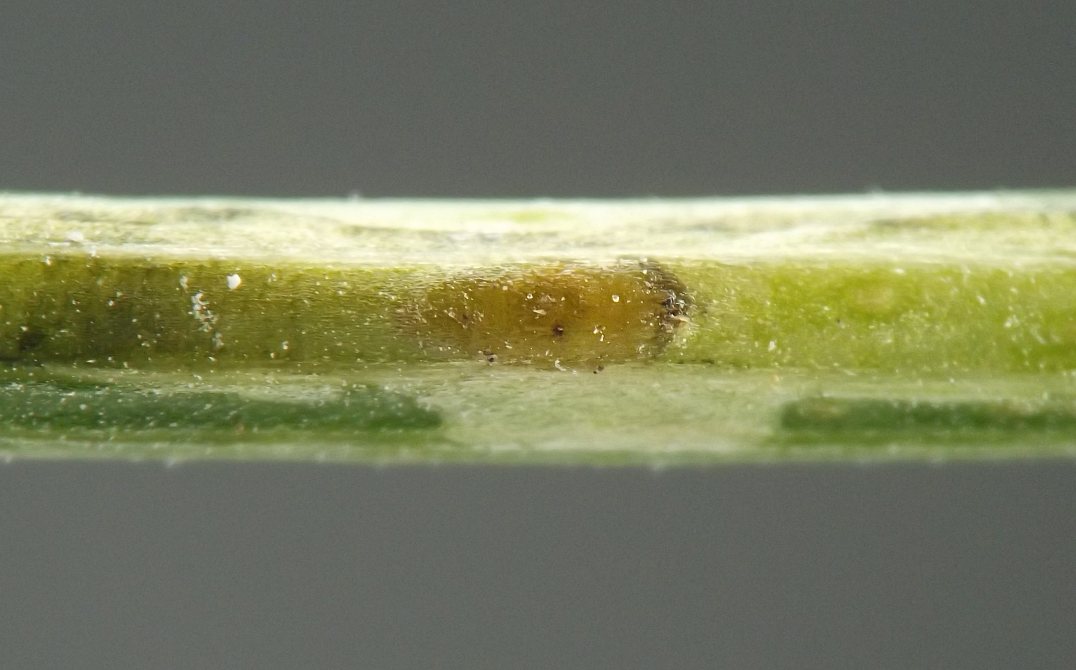
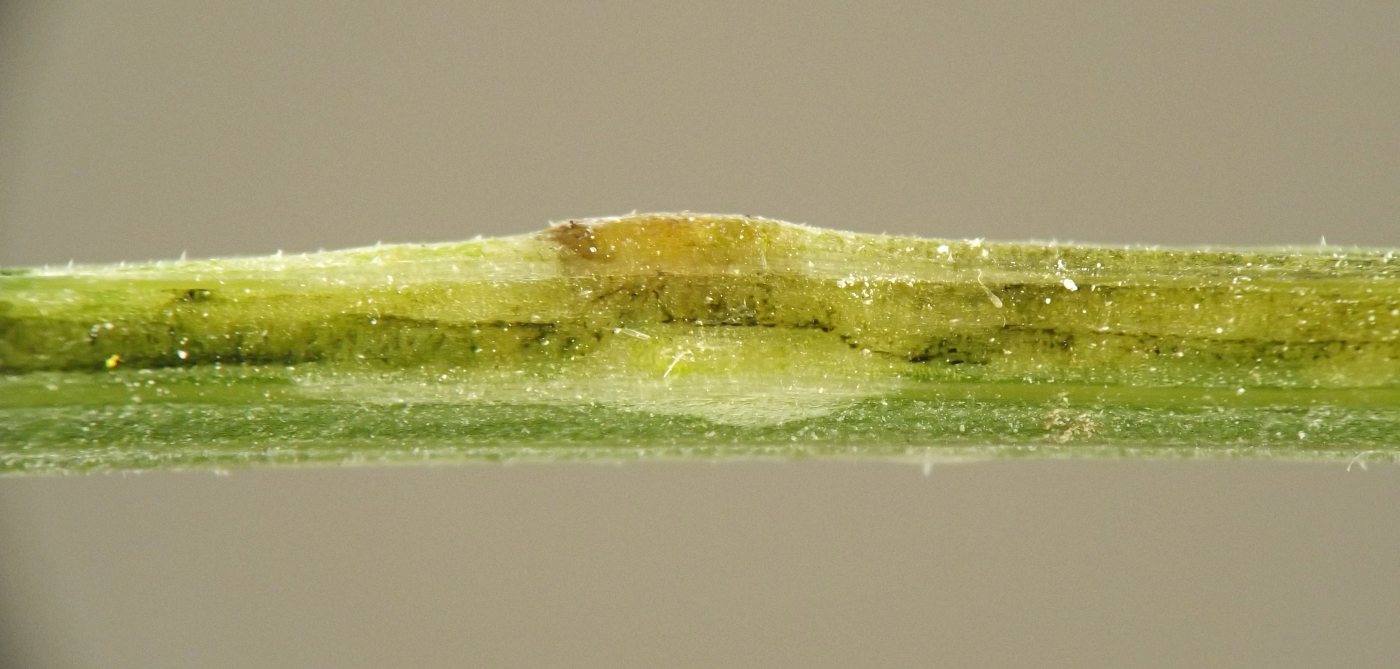
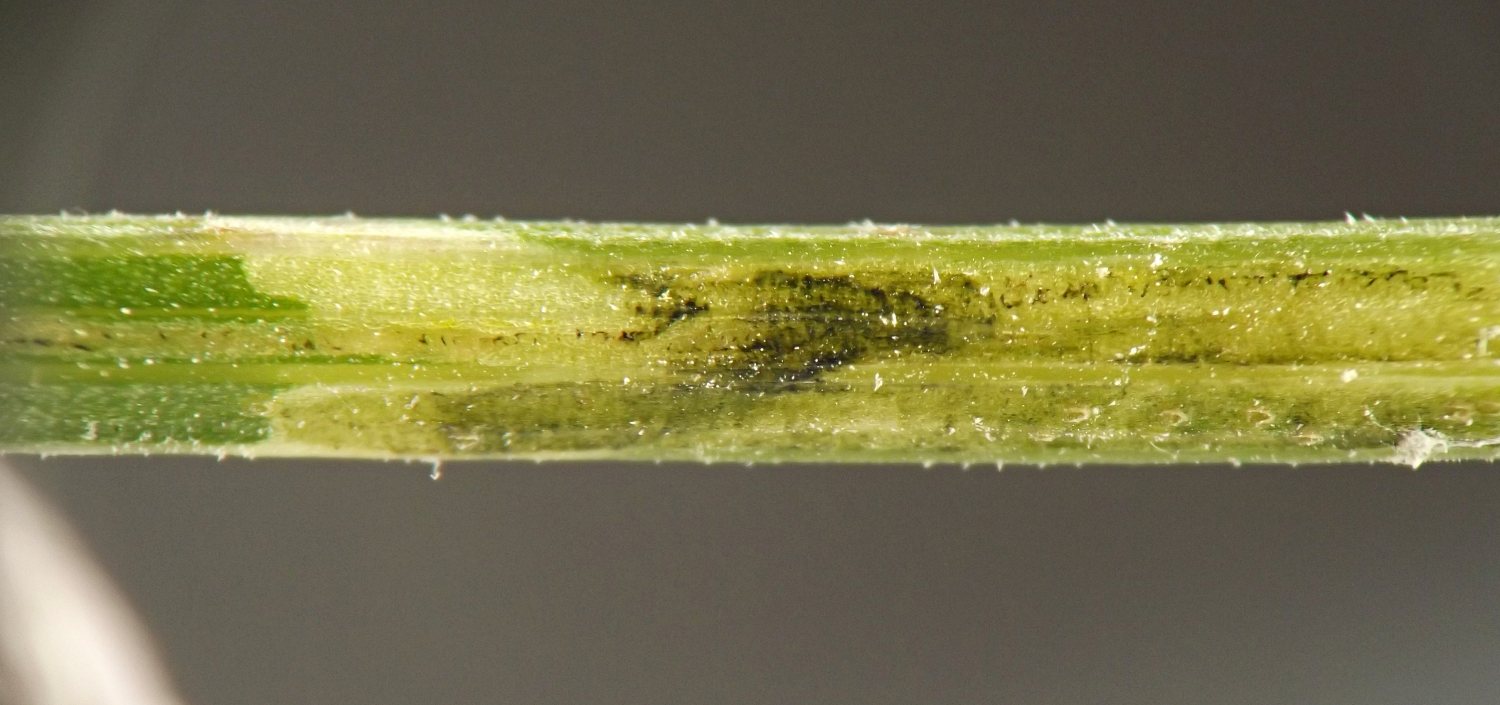
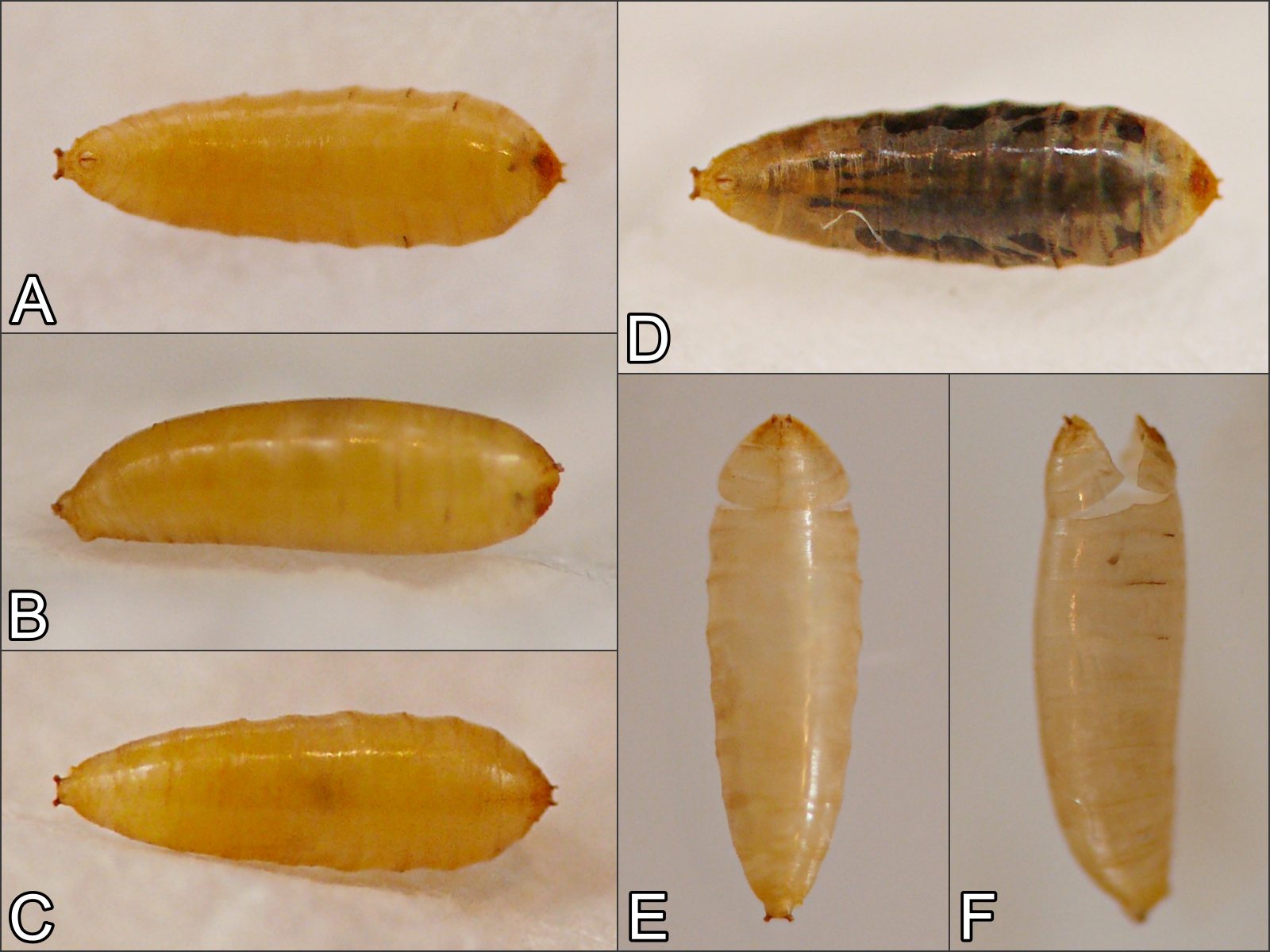
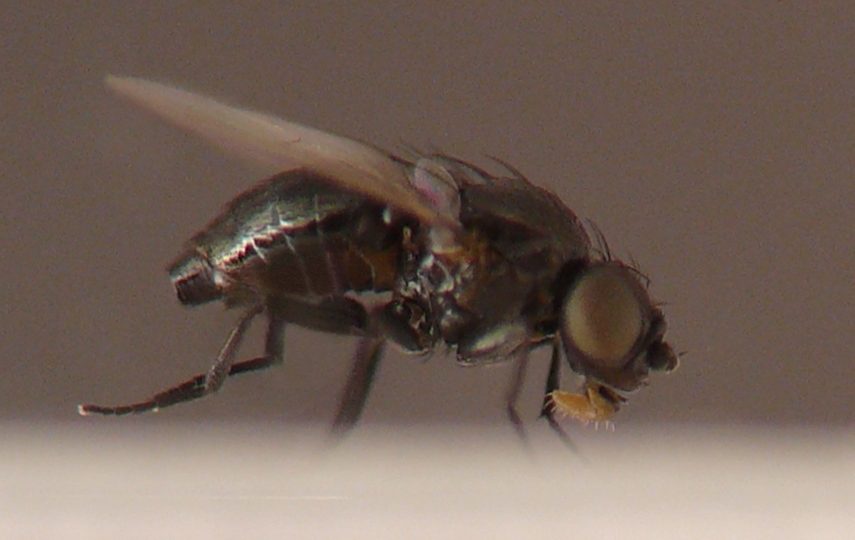
Stem borer, Diptera: Agromyzidae: Melanagromyza sp.
At least three times from 2022 to 2023 I found a puparium of this borer in the interior of a stem of the host. The larva's tunnels may be found in the pith of dead stems in the winter, both in the relatively thin layer lining the hollow internodes and in the solid nodes. Puparia are straw-colored with black posterior spiracular plates bearing short horns. An adult female, whom I reared from an overwintered puparium in April 2022, was black overall with bronze and blue-green iridescence on the abdomen.
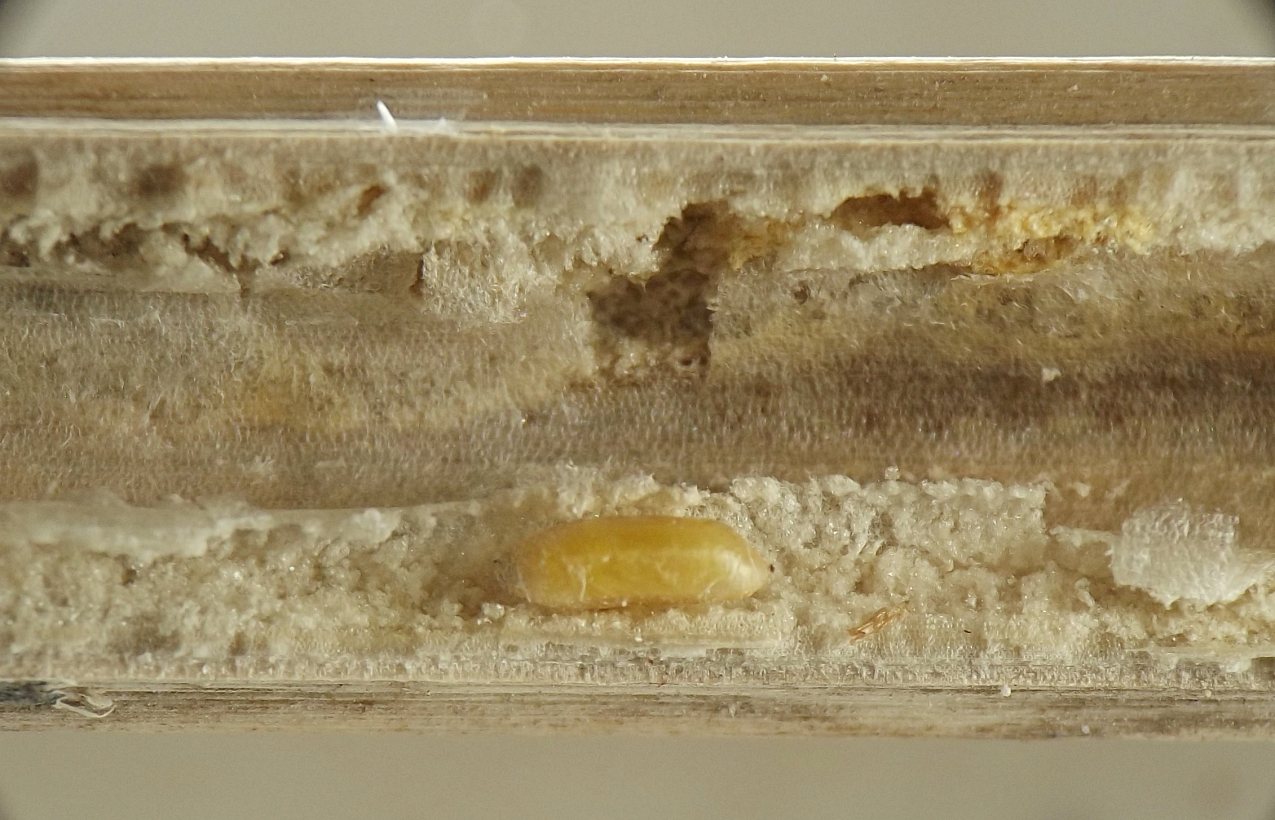
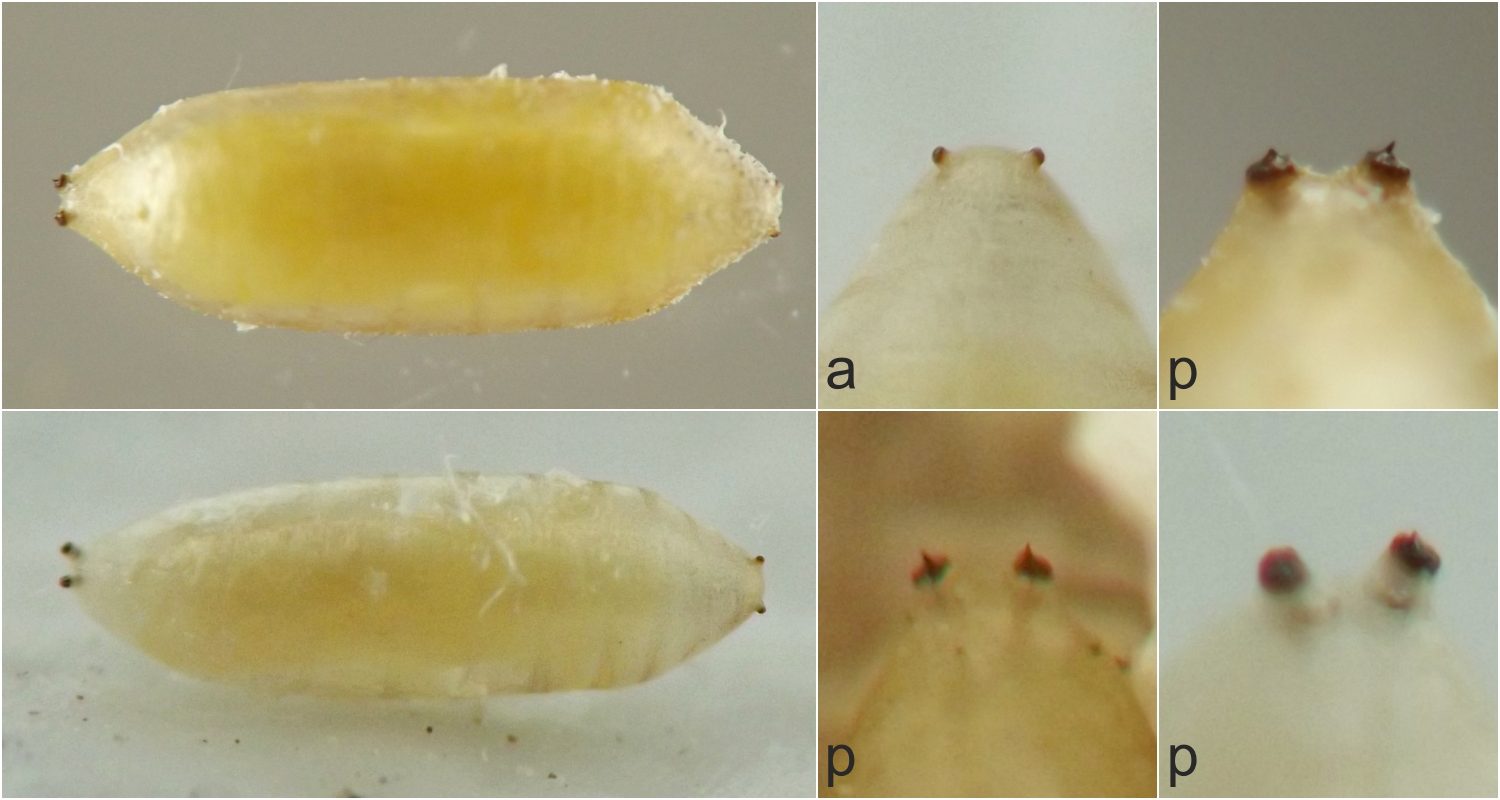
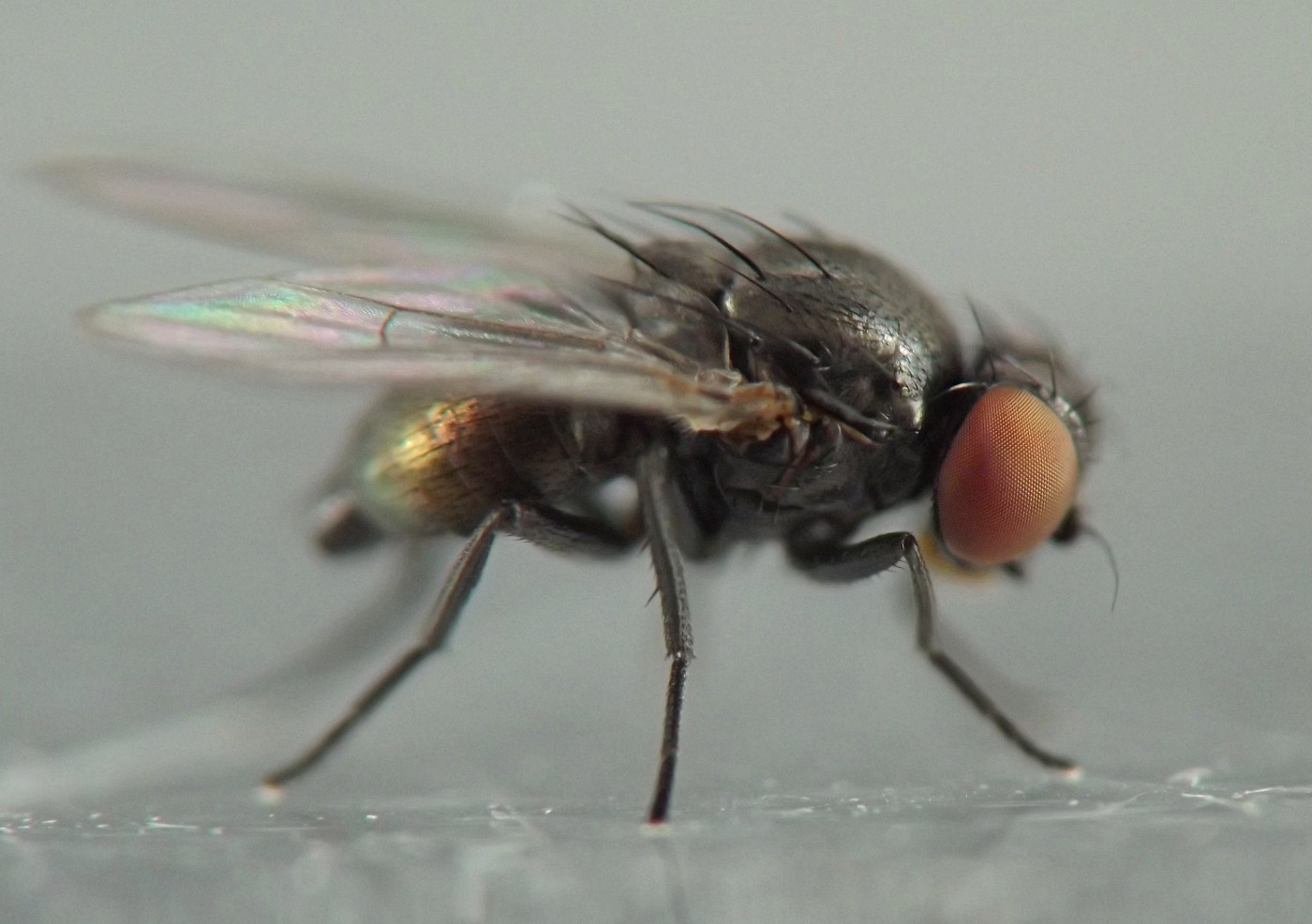
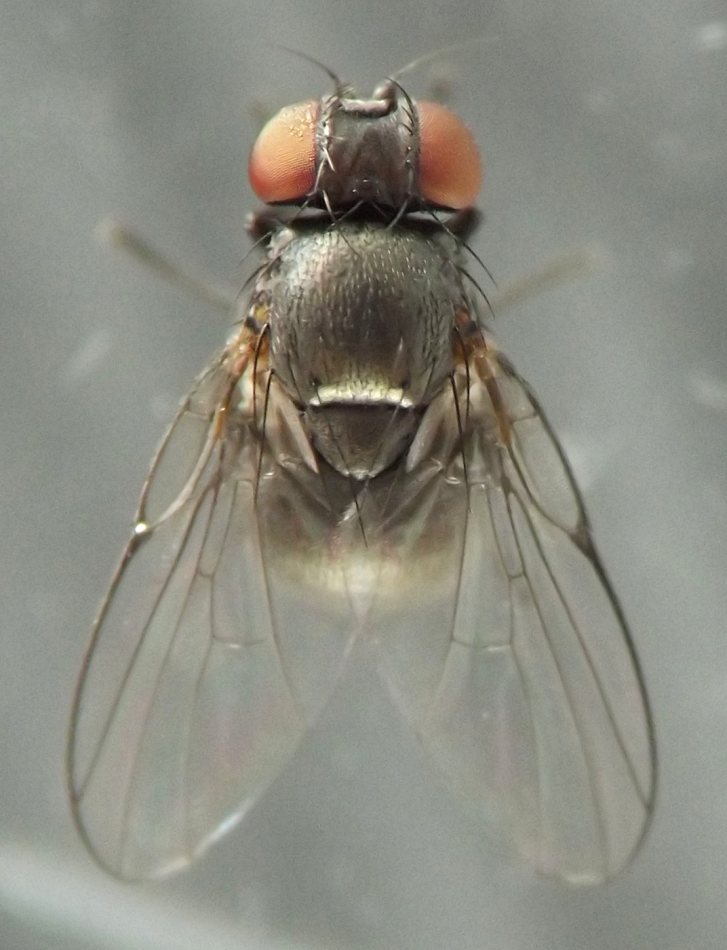
Miner/borer in petiole (and stem?), Diptera: Agromyzidae: Phytomyza nugax.
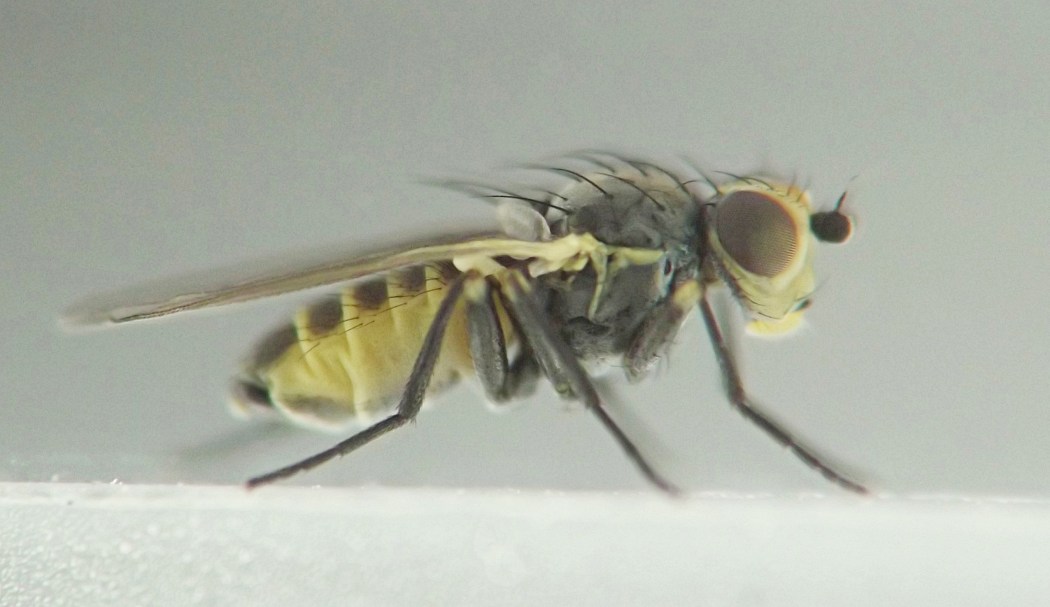
I reared an adult male from a puparium positioned just under the epidermis of a petiole of a stem leaf. The stem just below the petiole showed subtle, yellowish linear mining, which I guessed was related to this insect, but I was unable to confirm this. An agromyzid with a closely similar puparium (the same species?) tunnels in petioles and stems of cow parsnip in my area. Some of the images and information shared here are also presented in Eiseman et al. (2026).
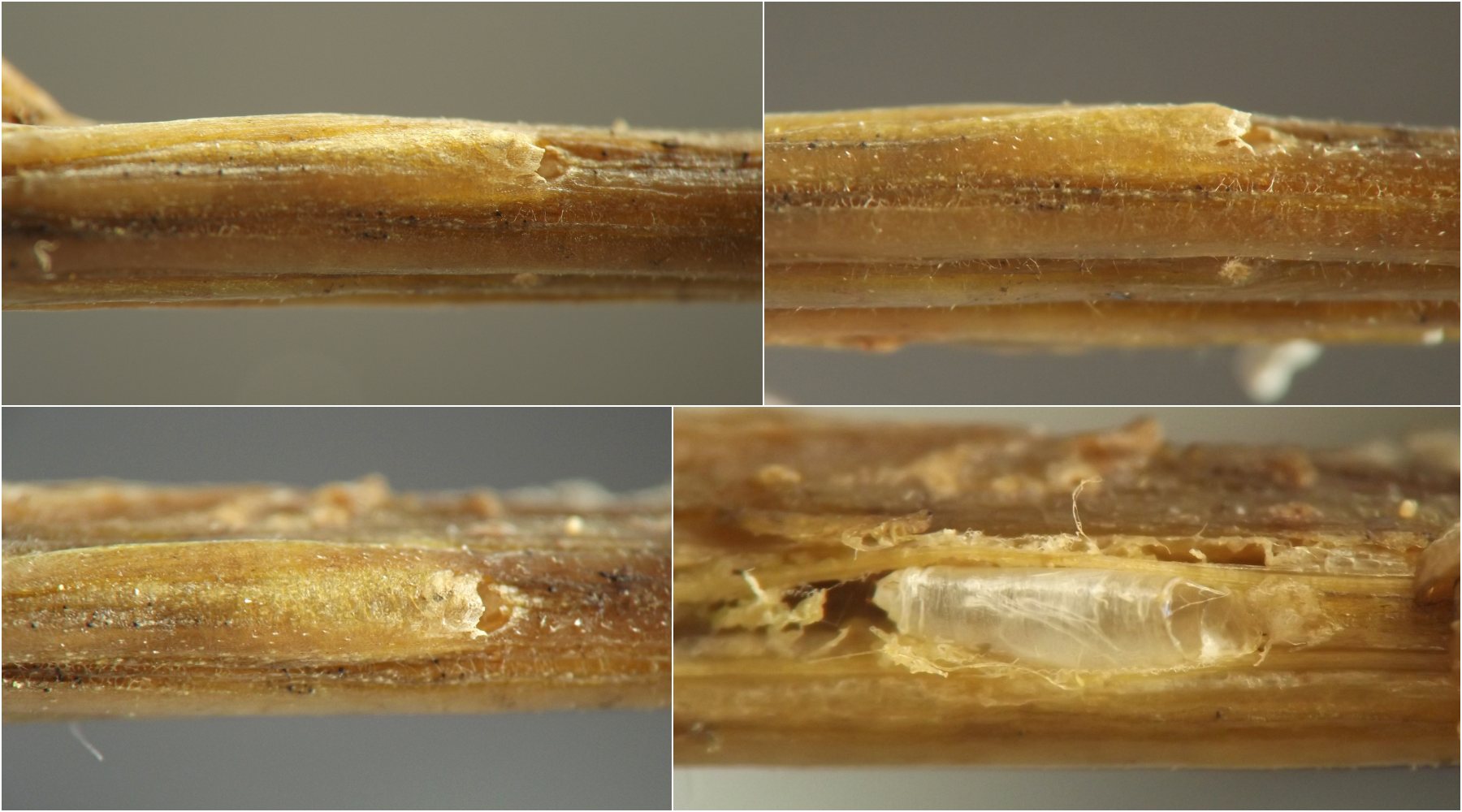
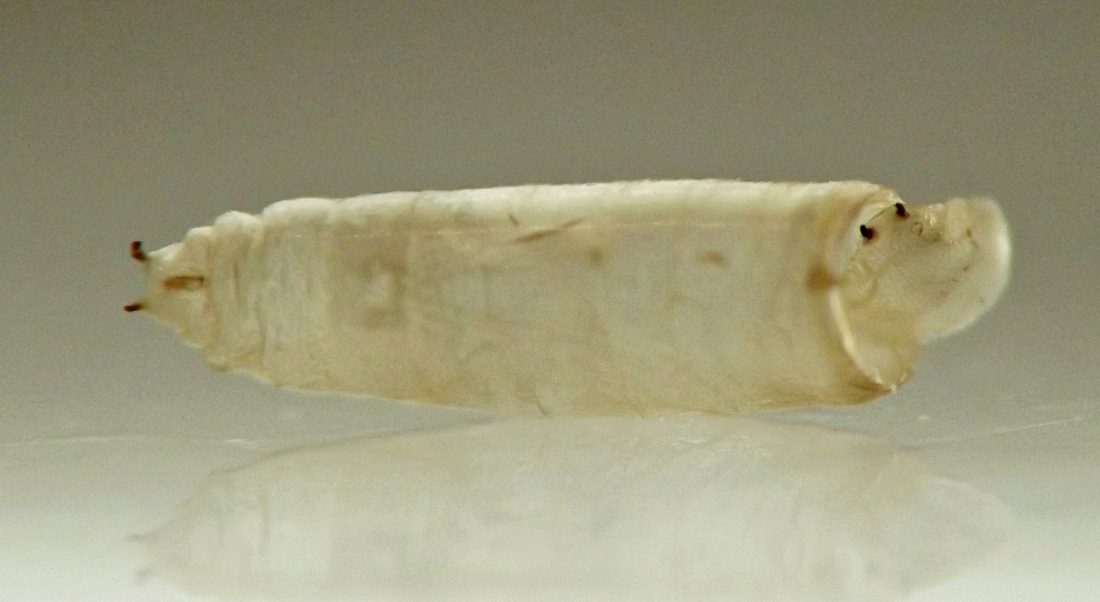
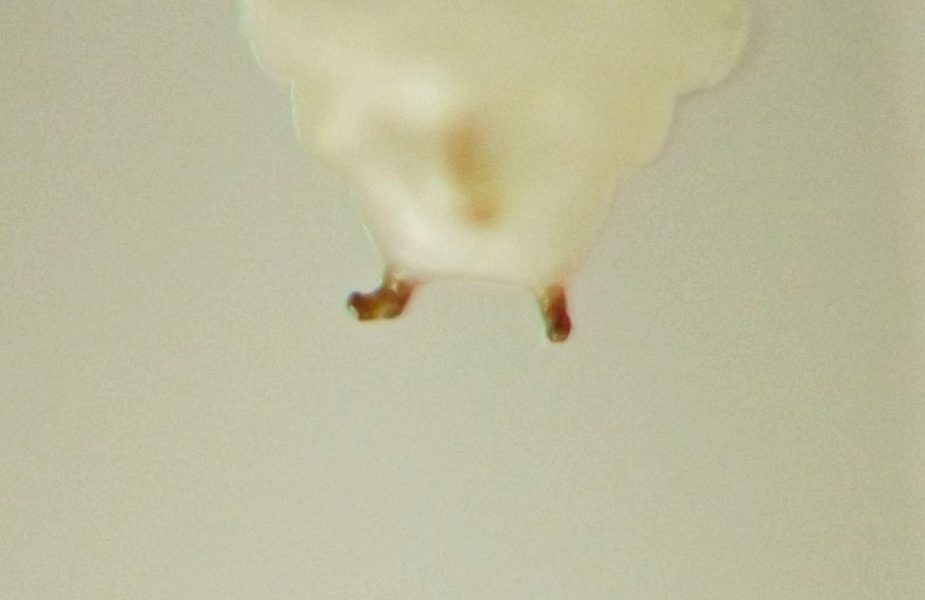
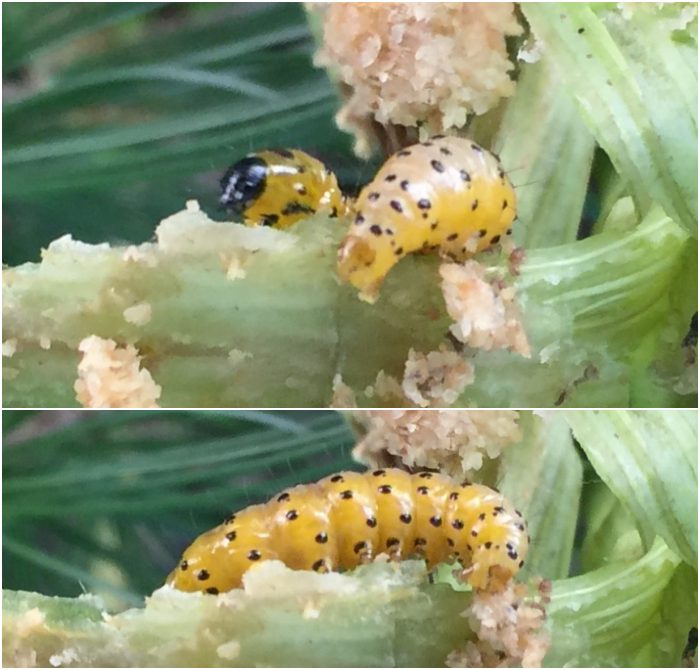
Petiole and stem feeder, Lepidoptera: Depressariidae: Depressaria radiella.
A larva I found in late June had eaten away much of the petiole of a stem leaf, spinning a silk-and-frass covering in place of the petiole tissue. From underneath this covering it also gnawed into the outer wall of the stem adjacent to the petiole base.
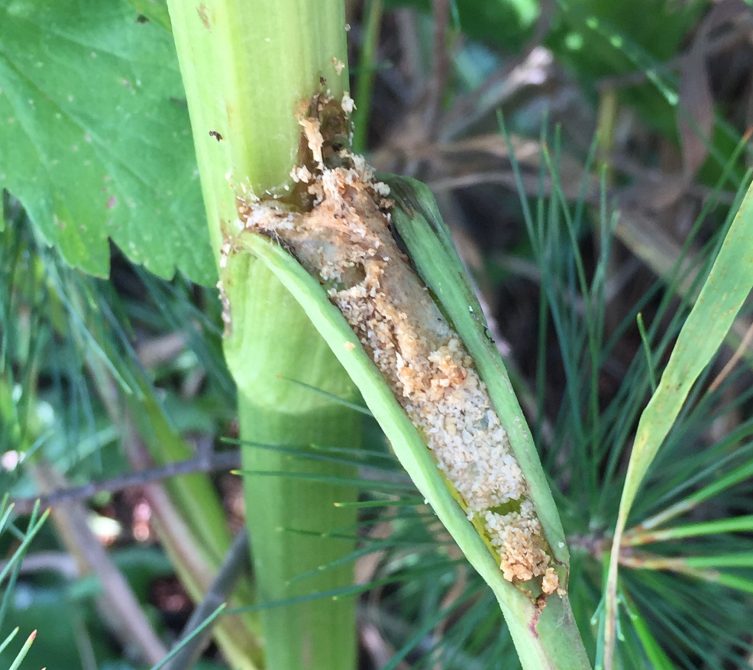
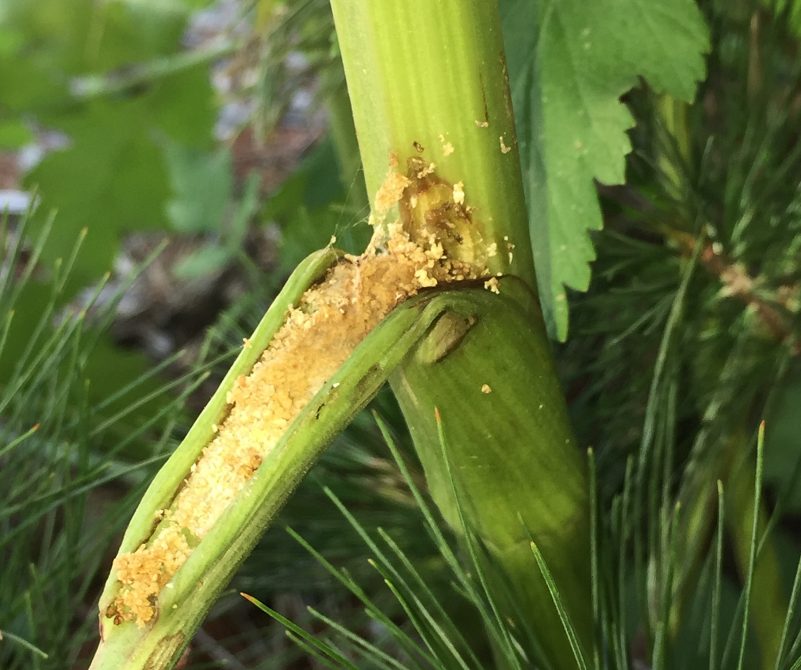
Internally-feeding herbivores I've found in stems of this plant include Ophiomyia and Melanagromyza agromyzids, a Listronotus weevil borer, and possibly a mordellid borer as well. The mordellid record involves a beetle larva, tentatively identified to family, that I found overwintering in the stem base and crown of a wild carrot plant in March 2022, but I did not take photographs or otherwise document the features of the larva that suggested Mordellidae as an identification, so this record is listed here provisionally and not described further below. Eiseman (2022b) also reported Ophiomyia sp. and Listronotus sp. from wild carrot stems, along with an undetermined Marmara species (Gracillariidae).
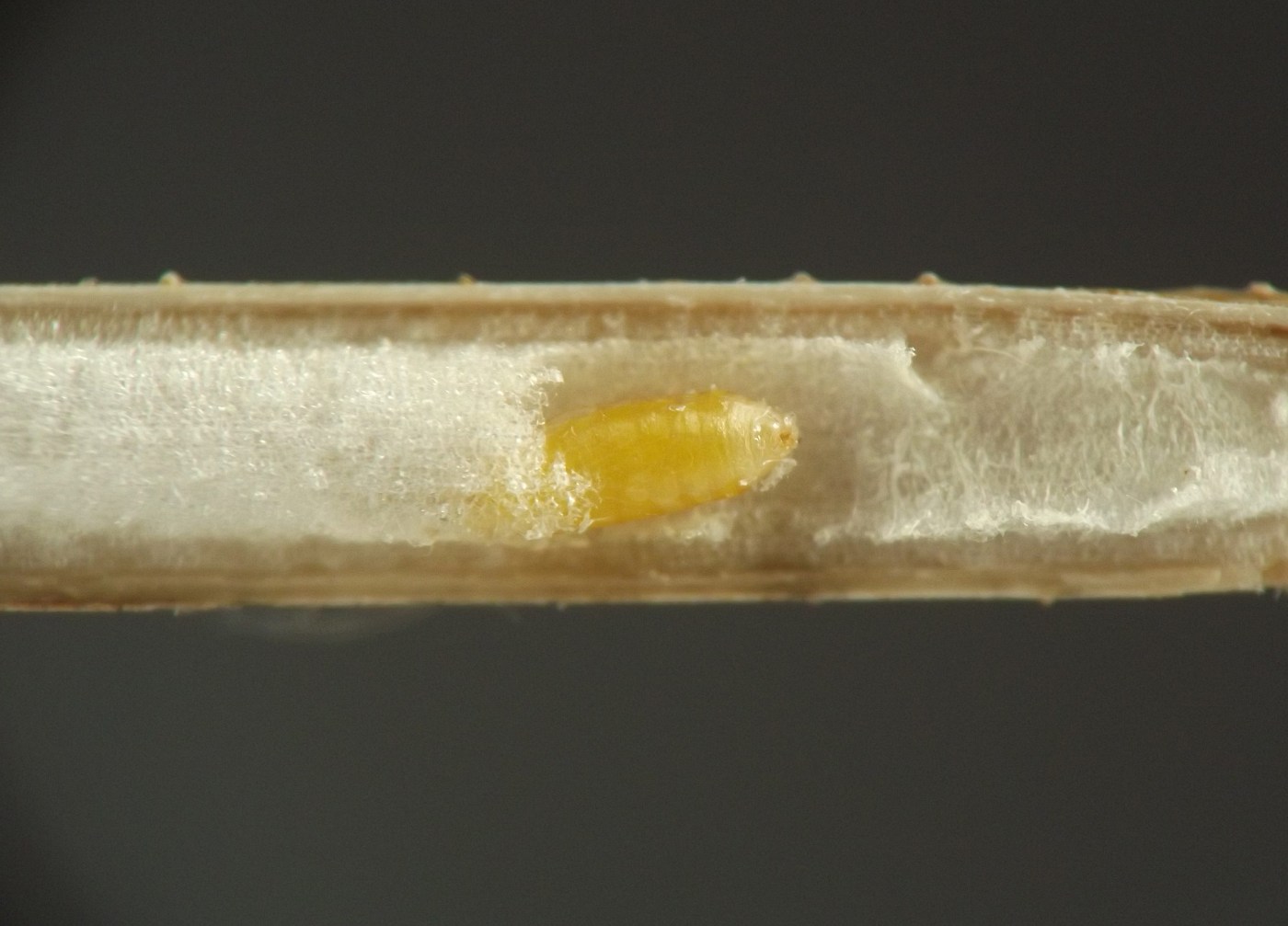
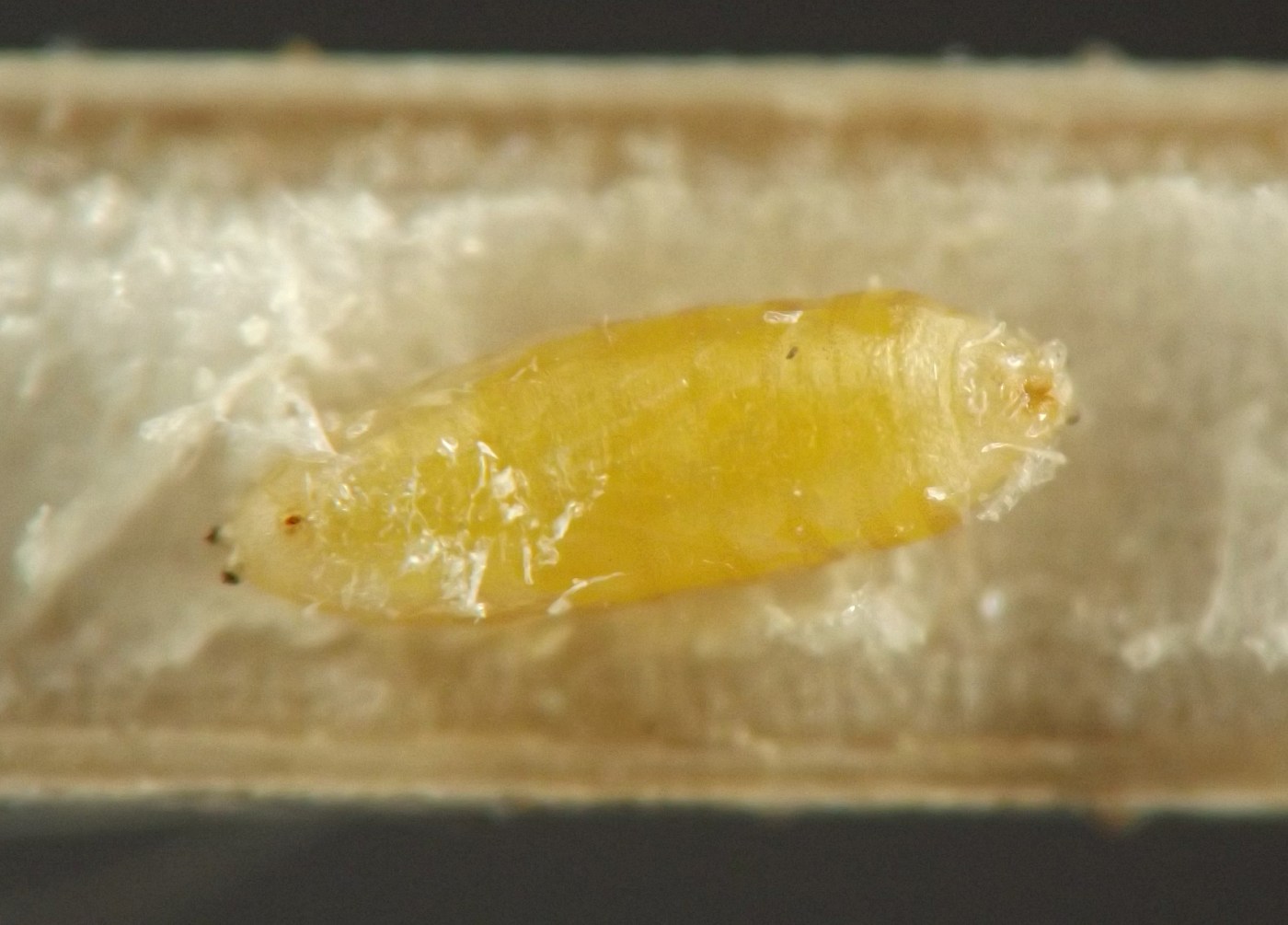
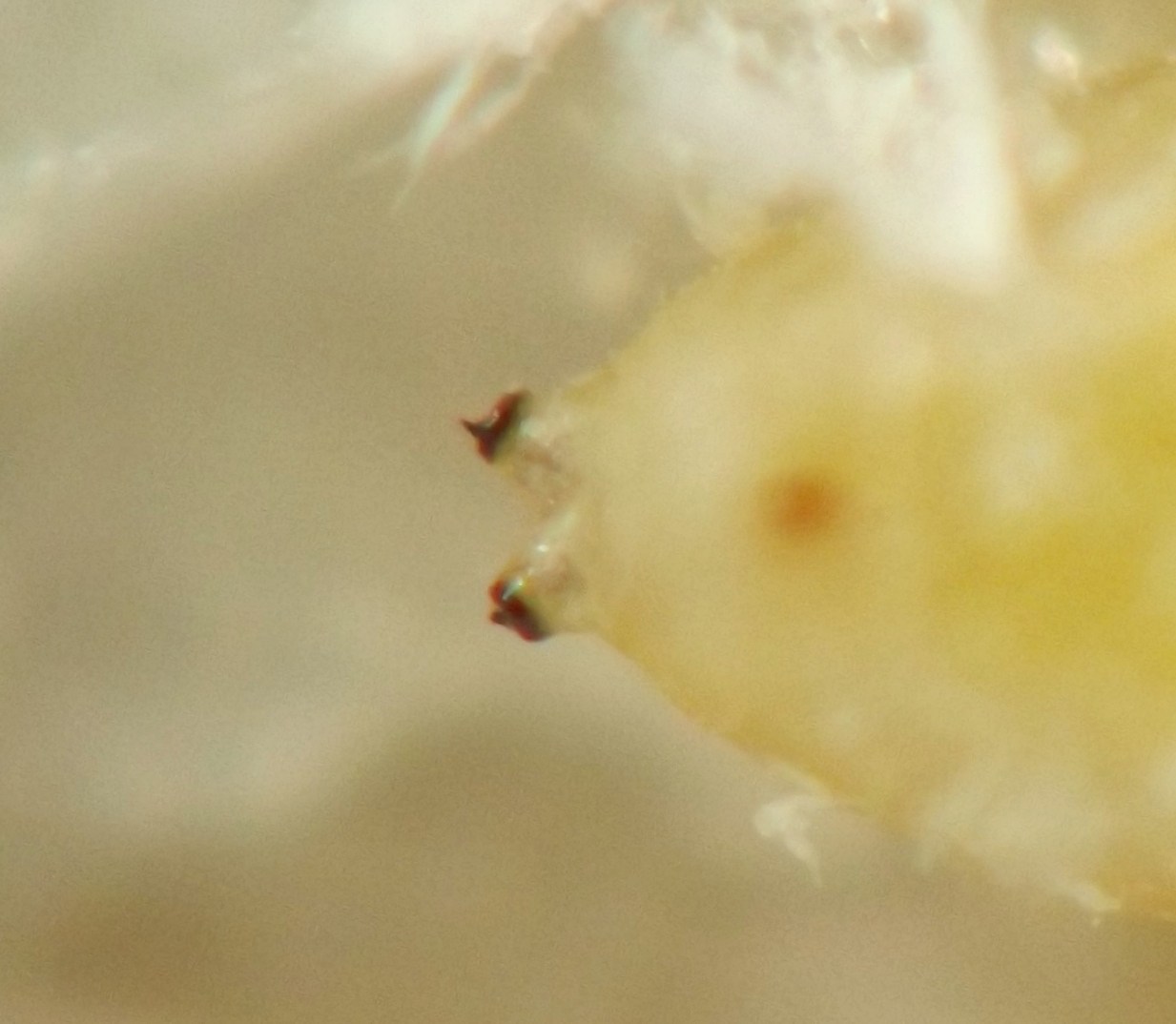
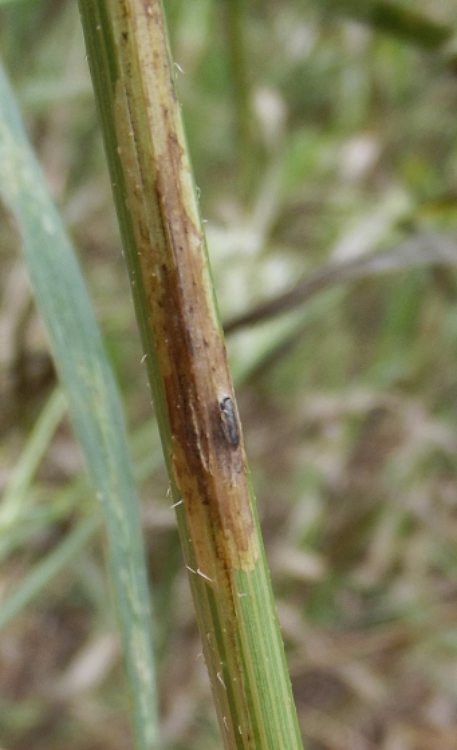
Diptera: Agromyzidae, stem borer (Melanagromyza sp.) and stem miner (Ophiomyia sp.).
These two records represent two agromyzid species that feed in the host's stems (lumped together in this entry to save space). I found straw-colored puparia of the Melanagromyza overwintering in the pith of upper portions of dead stems (above the lowest branching point of the stem), while the black Ophiomyia puparium I observed was positioned just under the epidermis of a living stem in early September, surrounded by shallowly mined stem tissue that had assumed a brownish and yellowish discoloration.
Stem borer, Coleoptera: Curculionidae: cf. Listronotus sp.
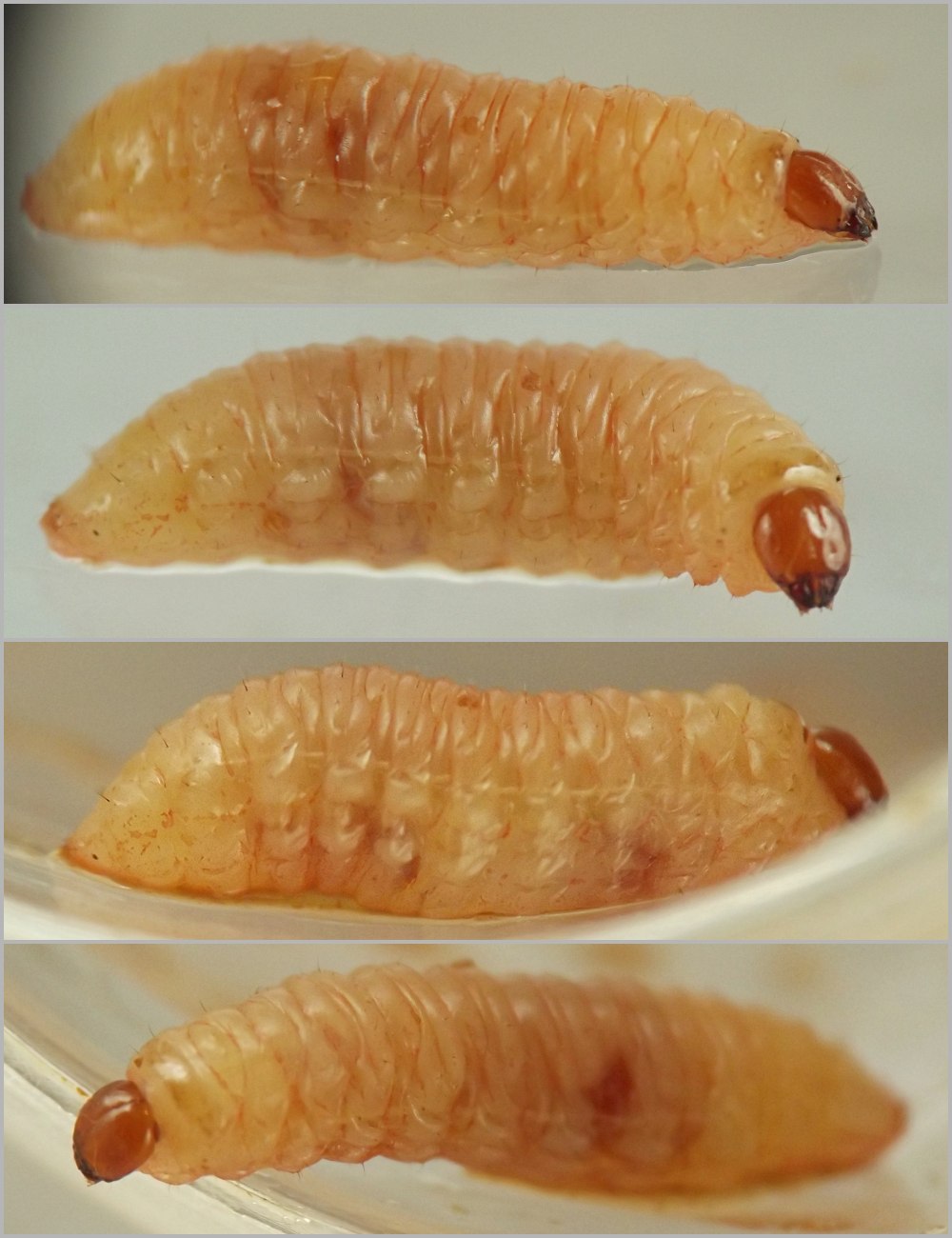
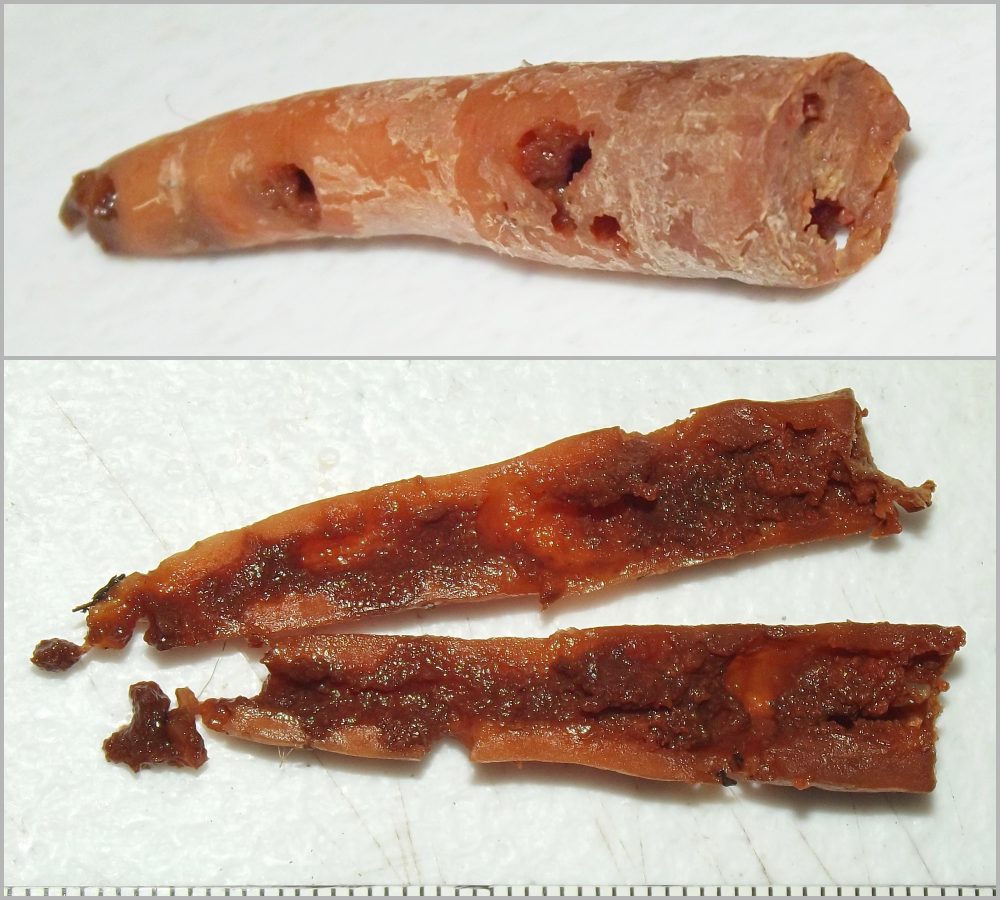
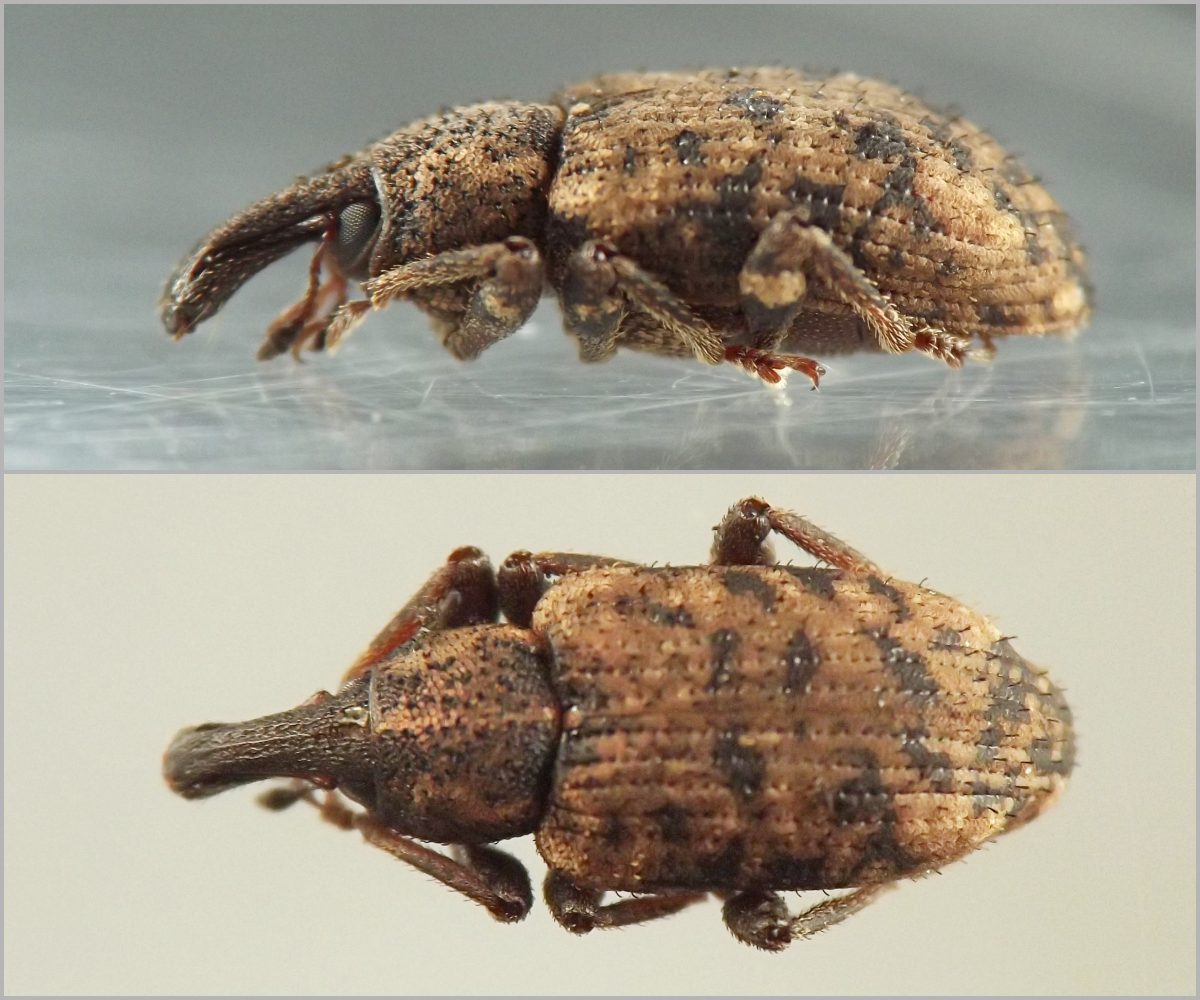
Plants inhabited by this borer may droop due to the larva shallowly girdling the stem in a spiral pattern before proceeding into deeper stem tissues. I photographed inhabited, drooping stems in early June 2023 and mid-July 2024, and reared the larva from the 2023 stem to adulthood. Because the original stem piece I collected with the 2023 larva inside it was not sufficient for the larva's development, I gave the larva two successive organic carrot pieces in which it completed its growth. It abandoned these to pupate in the potting mix in the bottom of the rearing container by 06 July 2023, emerging as an adult on 16 July. The 2024 drooping stem contained a larva tunneling in its very base, and this, combined with the need to raise the 2023 larva on carrot root, suggested to me that at least some wild larvae probably migrate into the crown or root of the plant as they mature.
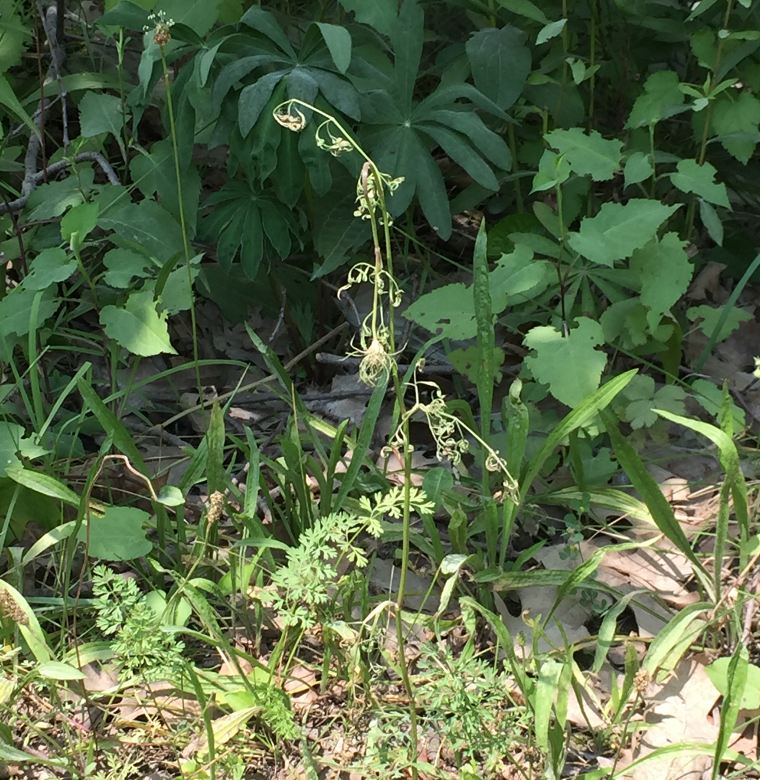
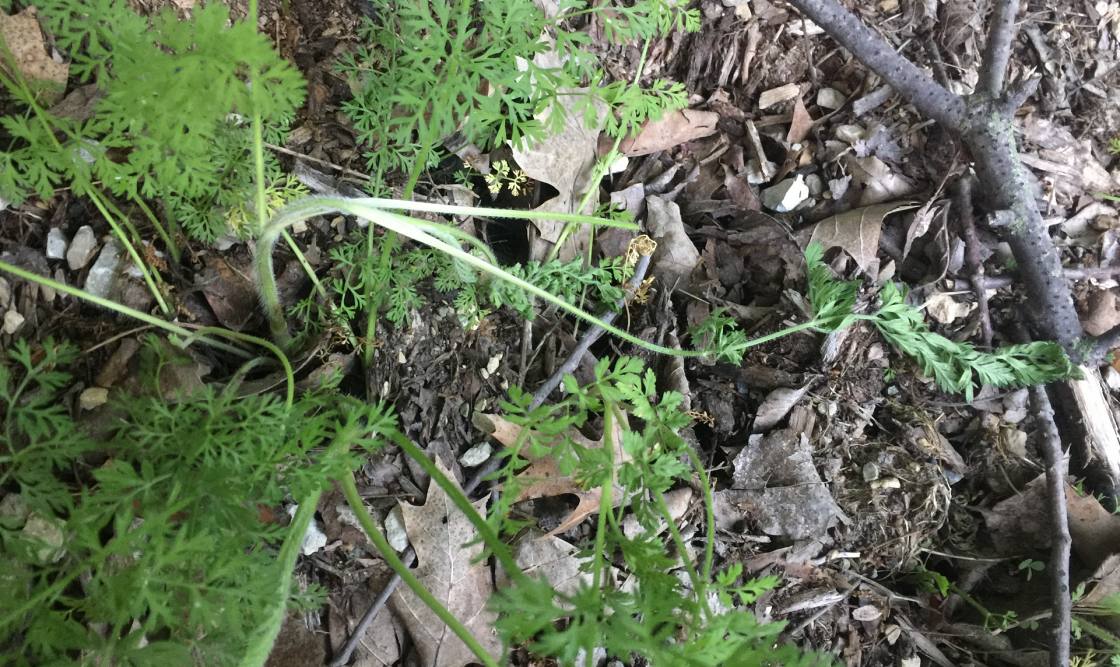
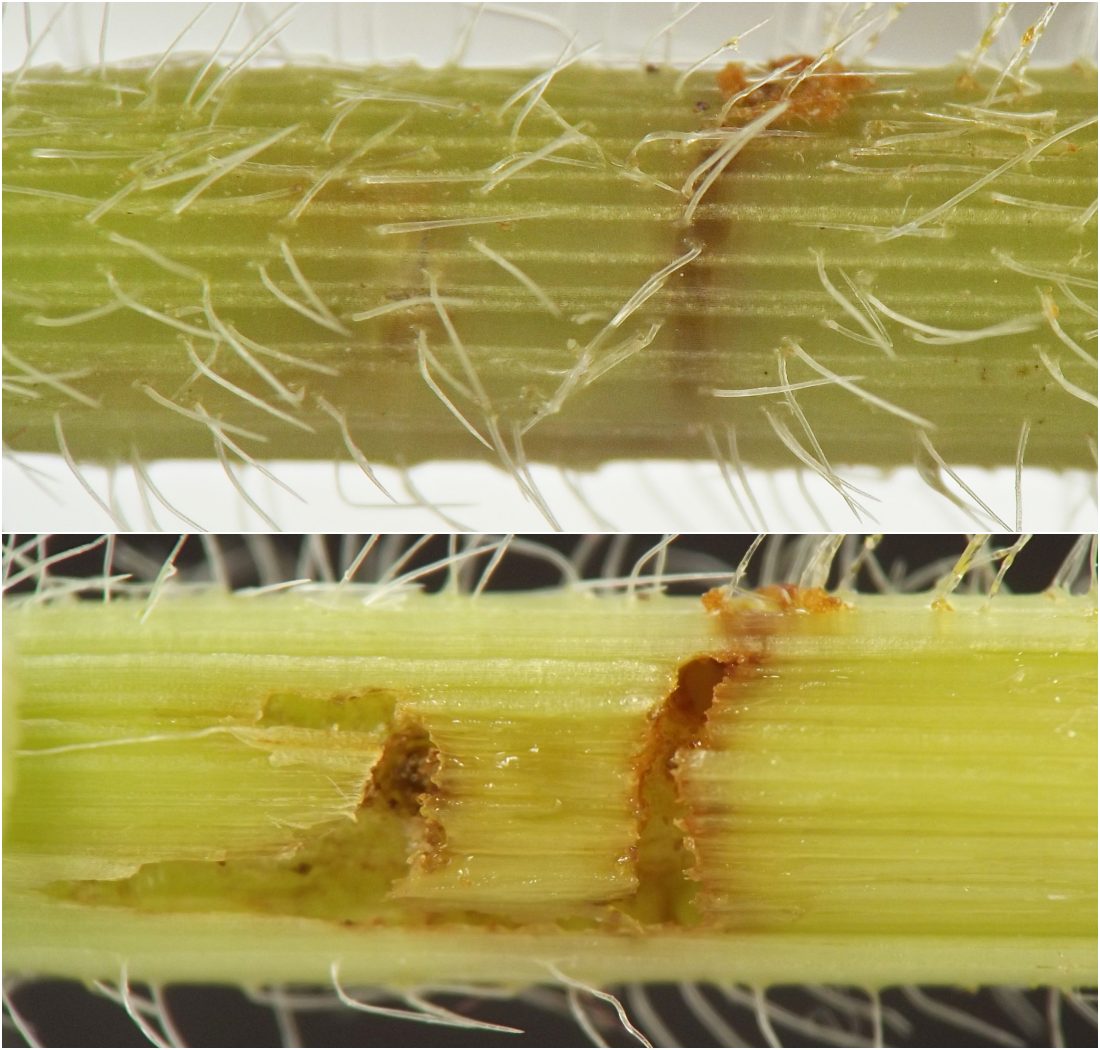
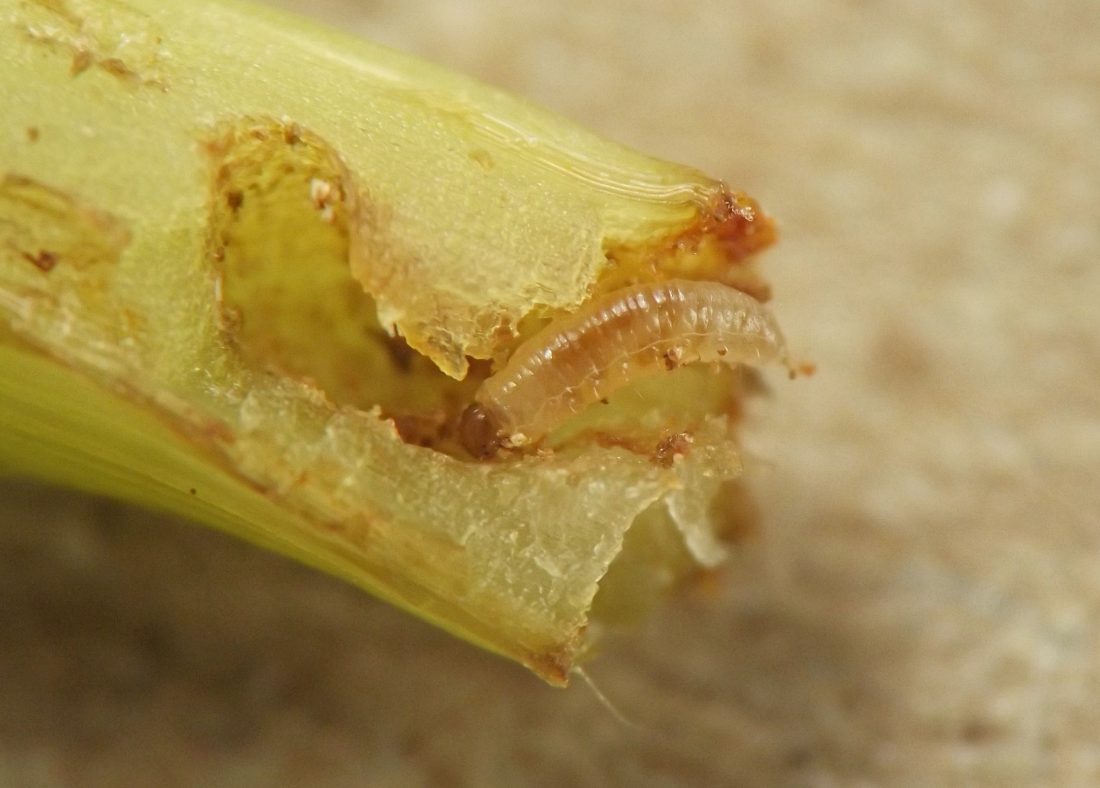
I have observed 4 species of stem borers and stem miners (belonging to Agromyzidae, Curculionoidea, Mordellidae, and Gracillariidae) feeding on garlic mustard, along with a leaf miner (Diptera: Agromyzidae: Liriomyza brassicae) and an external fruit, flower, and foliage feeder (Lepidoptera: cf. Plutellidae: Plutella xylostella). MJ Hatfield previously observed the leaf miner and the plutellid moth in northeastern Iowa and helped clue me in to their presence (Hatfield 2021; Hatfield 2022; Hatfield 2026). I've also witnessed native bees, honeybees, syrphid flies, and adult lepidopterans nectaring at the flowers; aphid colonies feeding externally on the upper parts of the plants; and ants (Formicidae) and flies (apparently Milichiidae) visiting nectaries at the bases of the developing siliques.
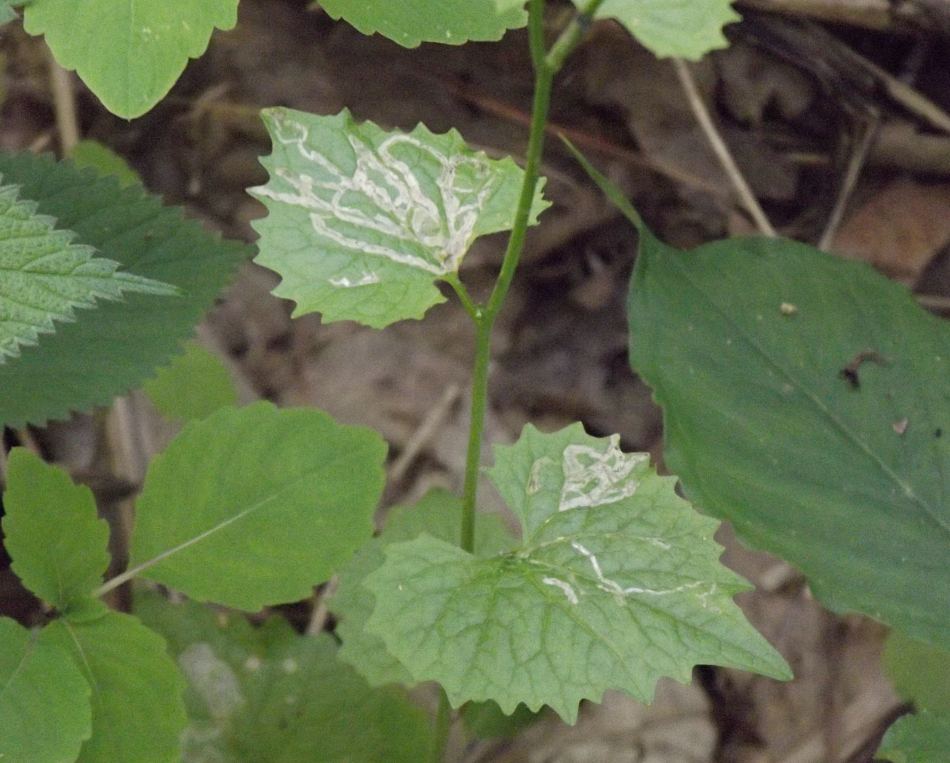
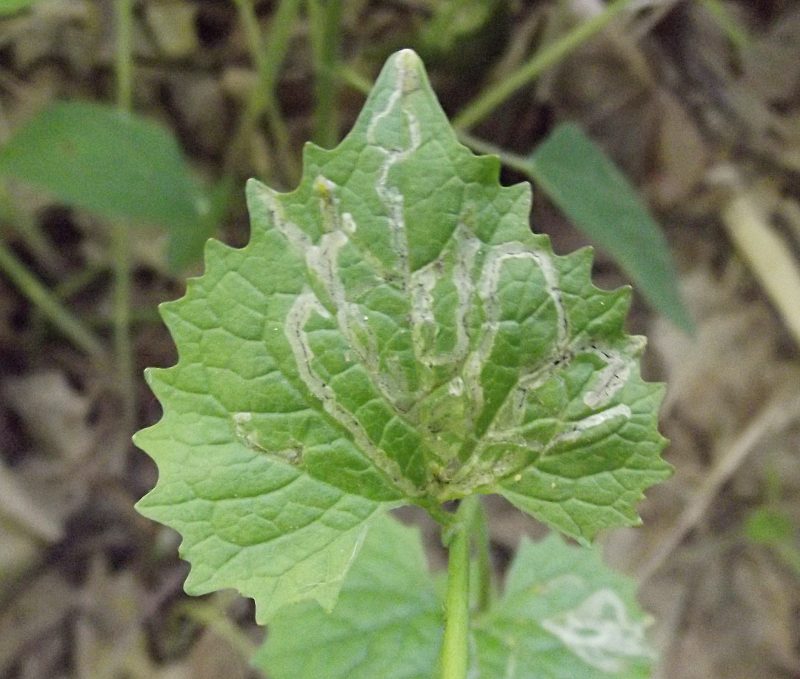
Leaf miner, Liriomyza brassicae.
In late May 2021 I observed a garlic mustard plant with two adjacent leaves being mined by several agromyzid larvae (apparently Liriomyza brassicae, based on Eiseman (2025), p. 1646). Several of the mines appeared to include brief intrusions into major veins and/or midribs, and my observations suggested one mine briefly entered a leaf petiole, but this was inconclusive. In addition, the stem internodes between and above the affected leaves showed patchy whitish discoloration suggestive of stem mining, but I was unable to eliminate the possibility that at least some of the discoloration could be due to the natural bloom on the stem surface.
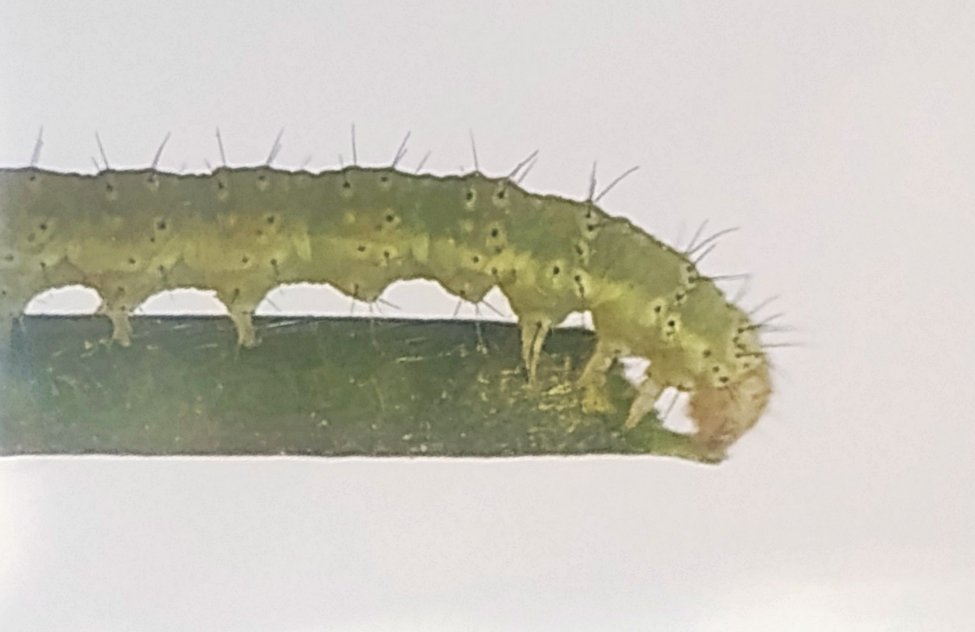
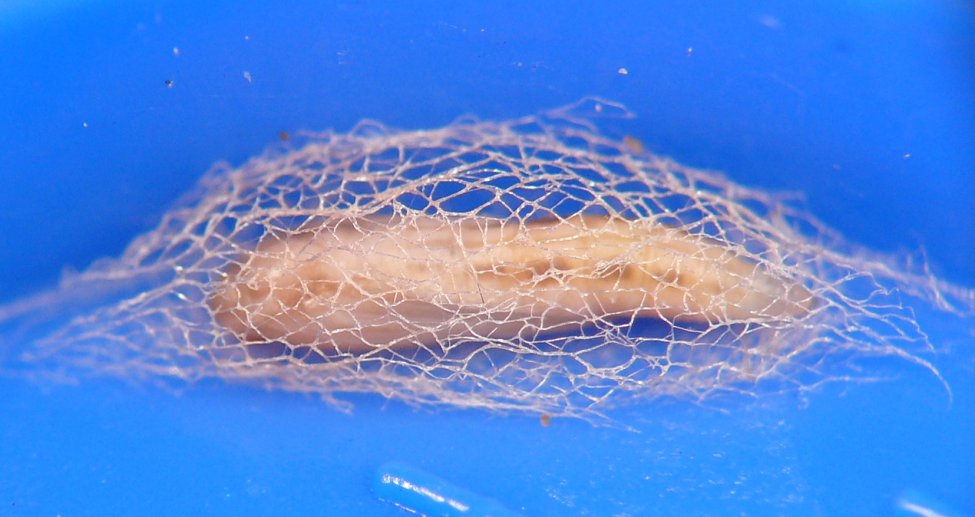
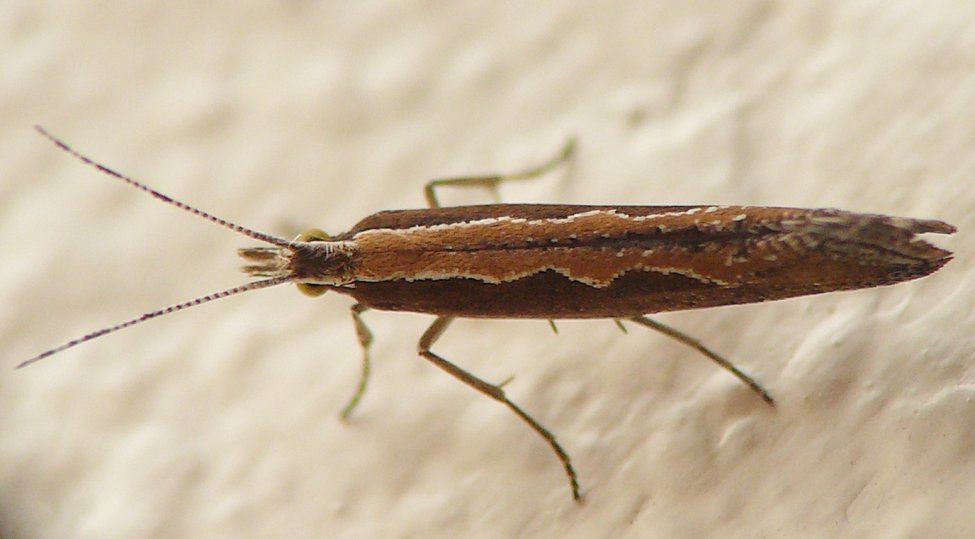
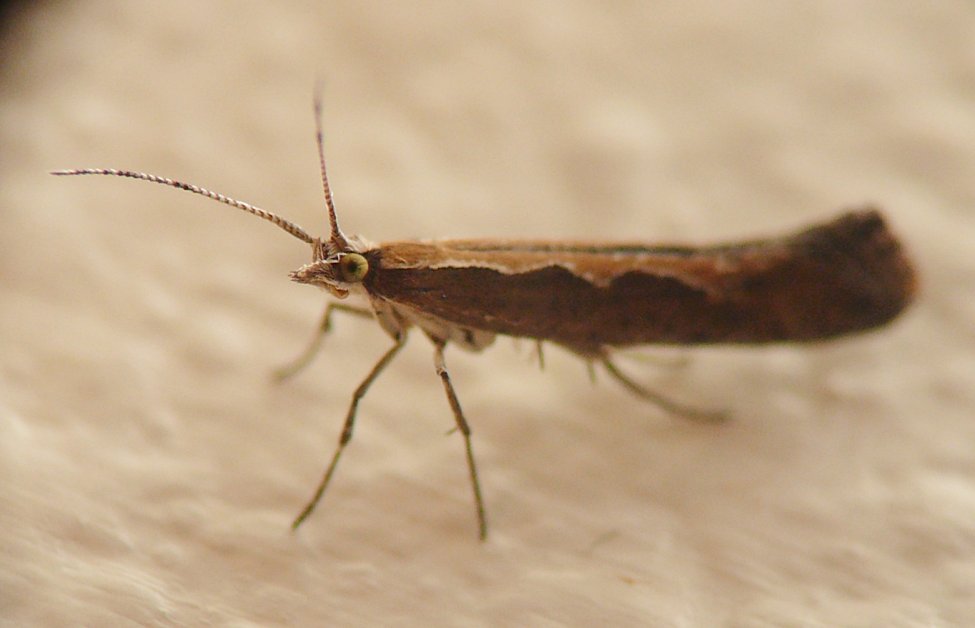
Plutella xylostella, diamondback moth.
I found two larvae of this moth feeding on siliques of garlic mustard in northeast Iowa in early May. When done feeding, they spun cocoons made of a netlike mesh on the sides and corners of the rearing container. Adults emerged in late May.
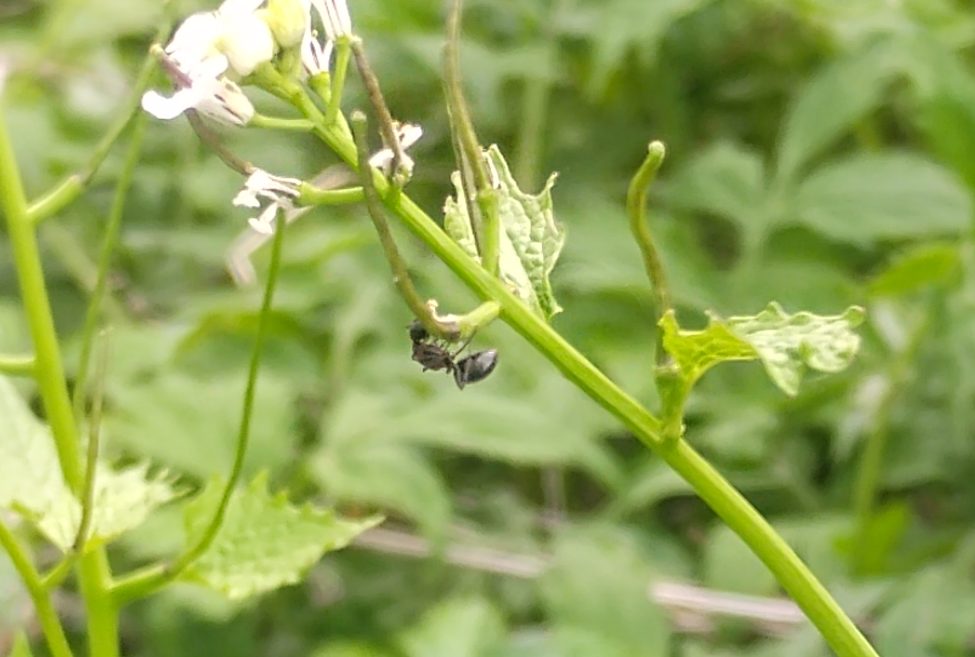
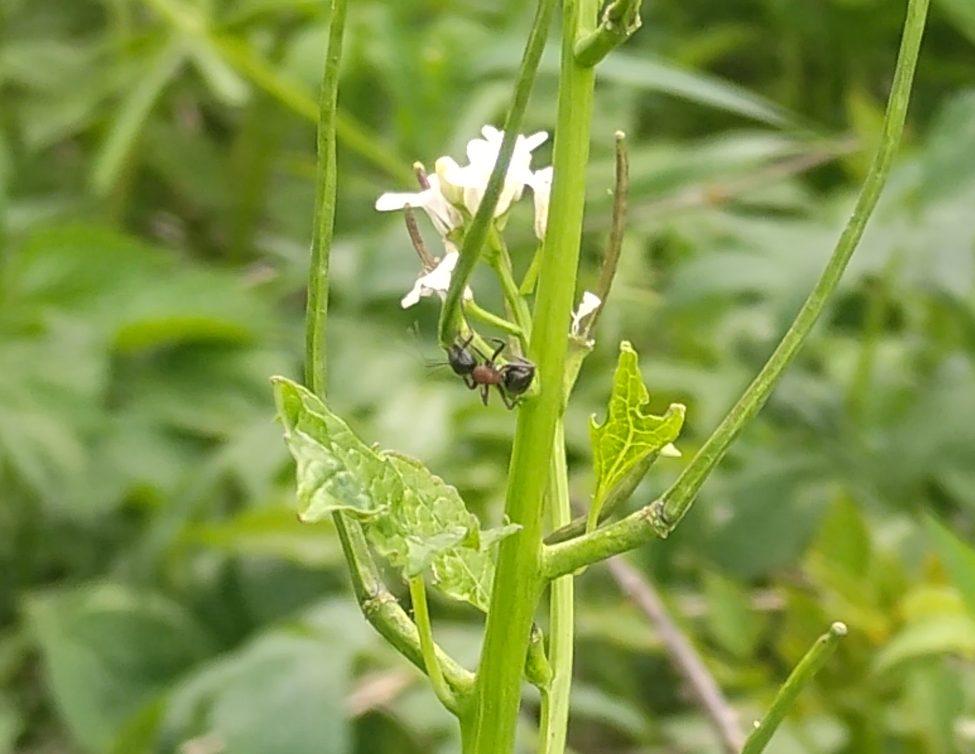
Ants visiting nectaries.
At two different locations in northeastern Iowa in May, 2026, I observed ants (superficially resembling field ants, Formica spp.) systematically visiting one silique after another in order to imbibe the tiny transparent droplets formed at the bases of the siliques. These droplets were small enough that some could not be easily seen without a hand lens. After feeding at the base of a silique, an ant would sometimes scurry out to the tip of the structure, pause momentarily, then turn around and walk back to the stem, from which it moved on to the next silique and repeated the process. Ants would also visit the flowers and drink the nectar there, but seemed to spend most of their time moving among the siliques. In one case I observed one of these larger ants in an altercation with a smaller, reddish ant about half its size.
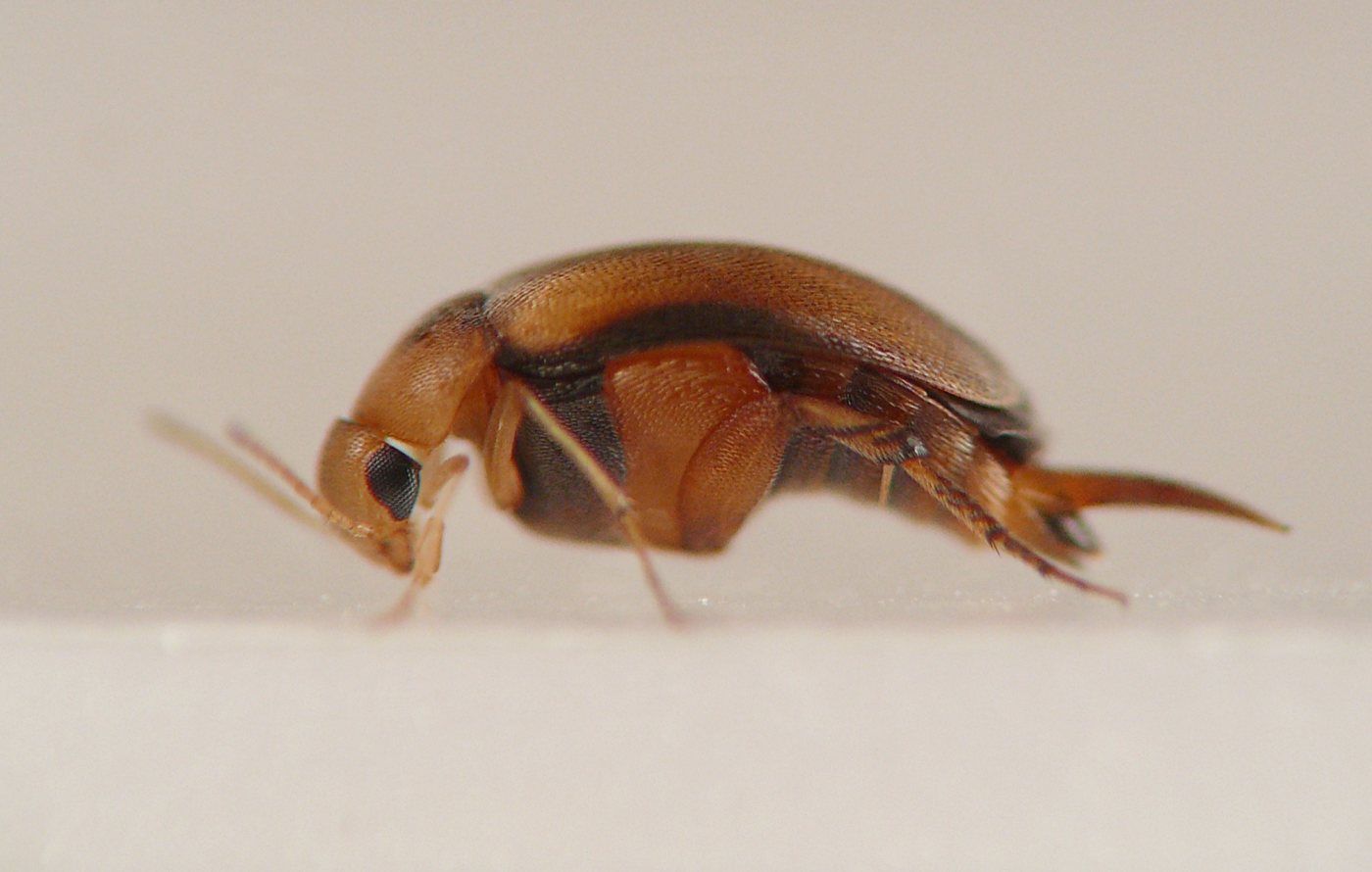
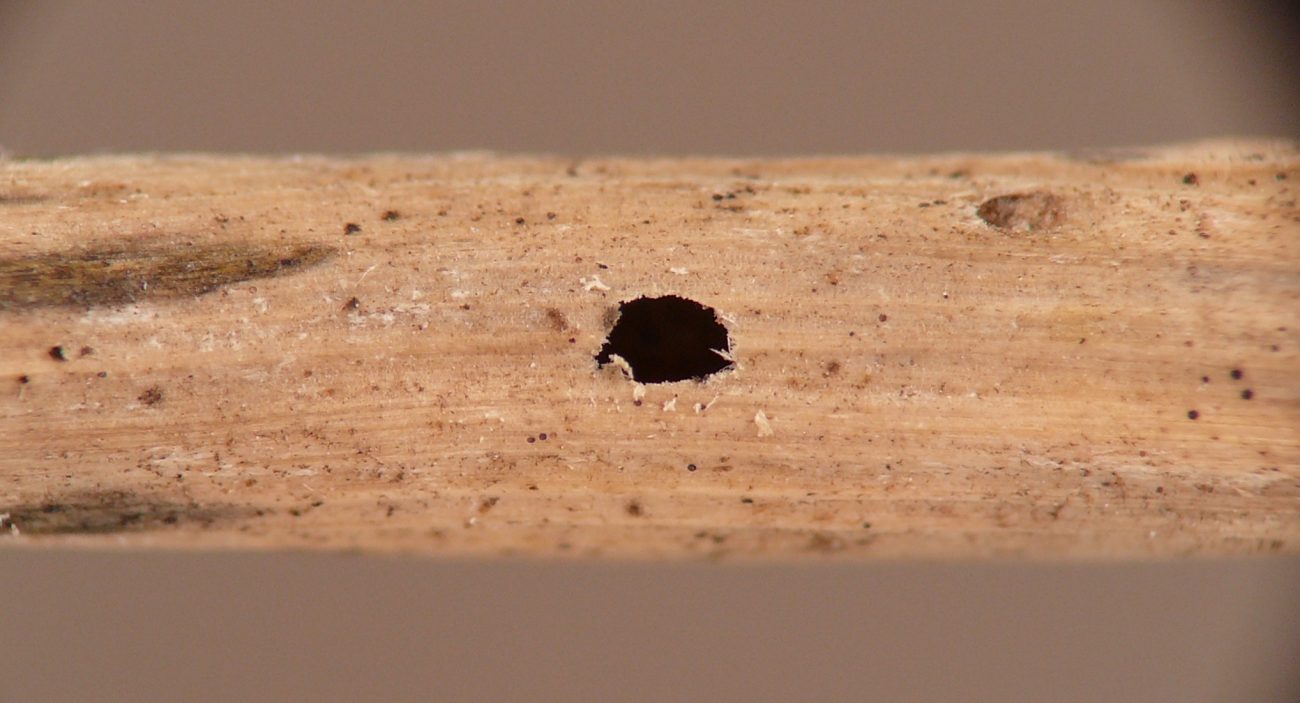
Stem borer, Coleoptera: Mordellidae: cf. Mordellina ancilla.
In December 2022 I found a young larva overwintering in a tunnel in the pith of a stem. It was a pale whitish color, with dorsal ampullae and diminutive paired urogomphi that were triangular in lateral view. Later, in December 2024 I found similar mordellid larvae overwintering in garlic mustard dead stems in my yard. I reared one of these to adulthood in early 2025. The adult was a very small mordellid, brick-red overall with some darker shades of reddish-black on the outer edges of the elytra and the underside of the second thoracic segment. It left a roundish exit hole in the stem when it emerged. Compare to Mordellina ancilla, reared by Hall et al. (2025) from garlic mustard in Ontario.
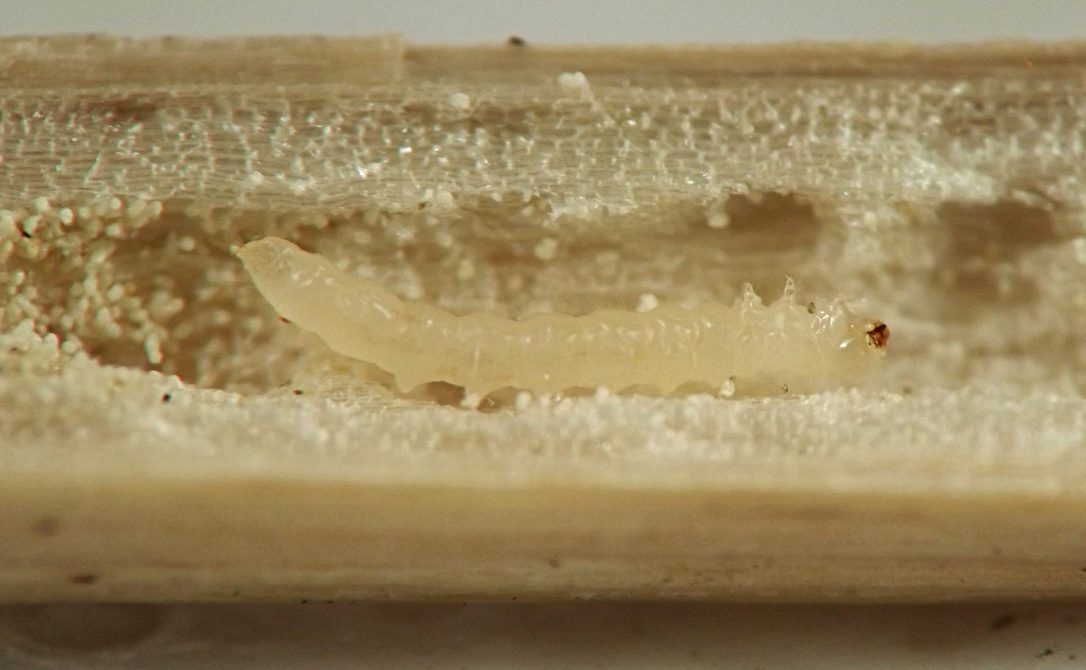
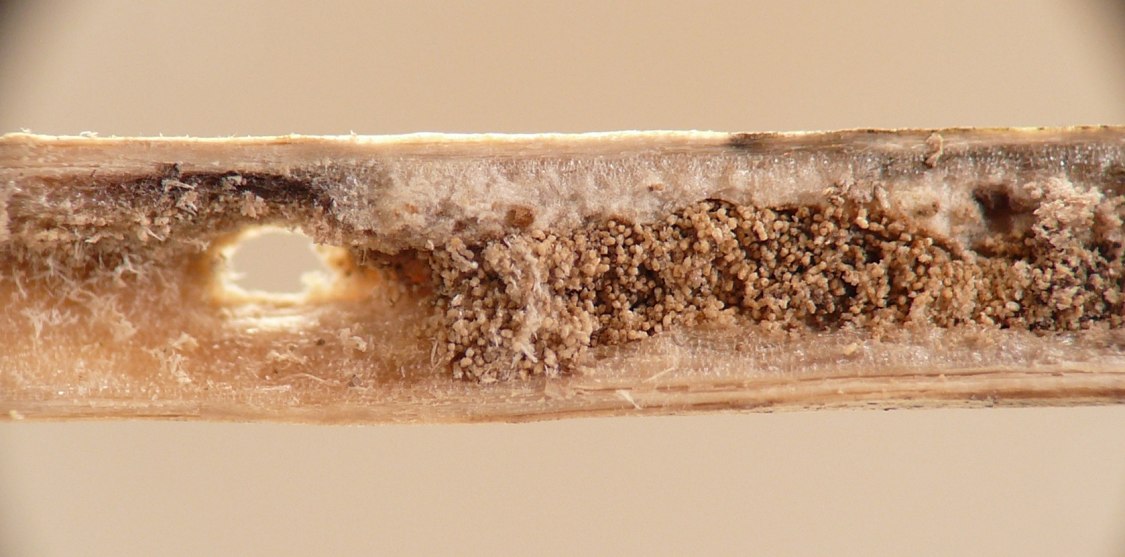
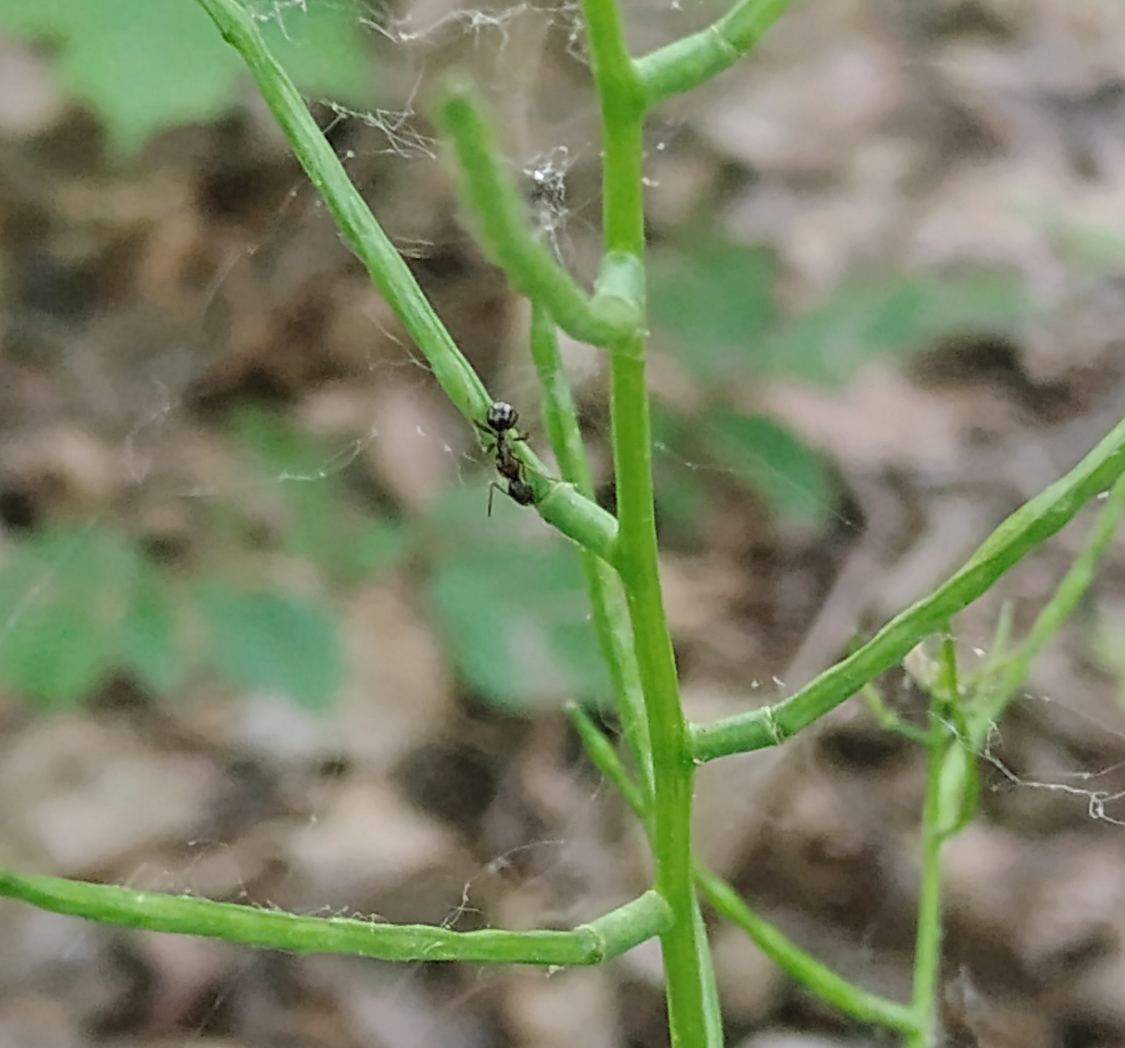
Stem borer, Coleoptera: Curculionoidea: cf. Curculionidae: Ceutorhynchus sp.
I observed larvae tunneling in stem interiors in spring and early summer. The tunnels, which were not externally visible, sometimes contained accumulations of solid frass, and some stems appeared to host multiple larvae. Blossey et al. (2001) and Blossey et al. (2002) observed unspecified "stem-mining weevils" (with "stem-mining" evidently referring to stem boring) in their field surveys of garlic mustard herbivores in North America. Blossey et al. (2001) go on to list two weevil species, Ceutorhynchus alliariae and C. roberti, whose larvae "mine stems and leaf petioles" of garlic mustard in Europe, along with other C. spp. known to feed in petioles, root crowns, and seeds of this host in its native range. Gerber et al. (2008) refer to C. alliariae and C. roberti as stem borers. Finally, C. scrobicollis has been released as a garlic mustard biocontrol agent in Canada (Hall et al. 2025), and a decision about its release in the United States was pending as of 2012 (Becker et al. 2013). Given these findings, a Ceutorhynchus species, either introduced to North America or native and typically found on a native host, may very well be the borer I observed, but further research would be needed to assess this hypothesis.
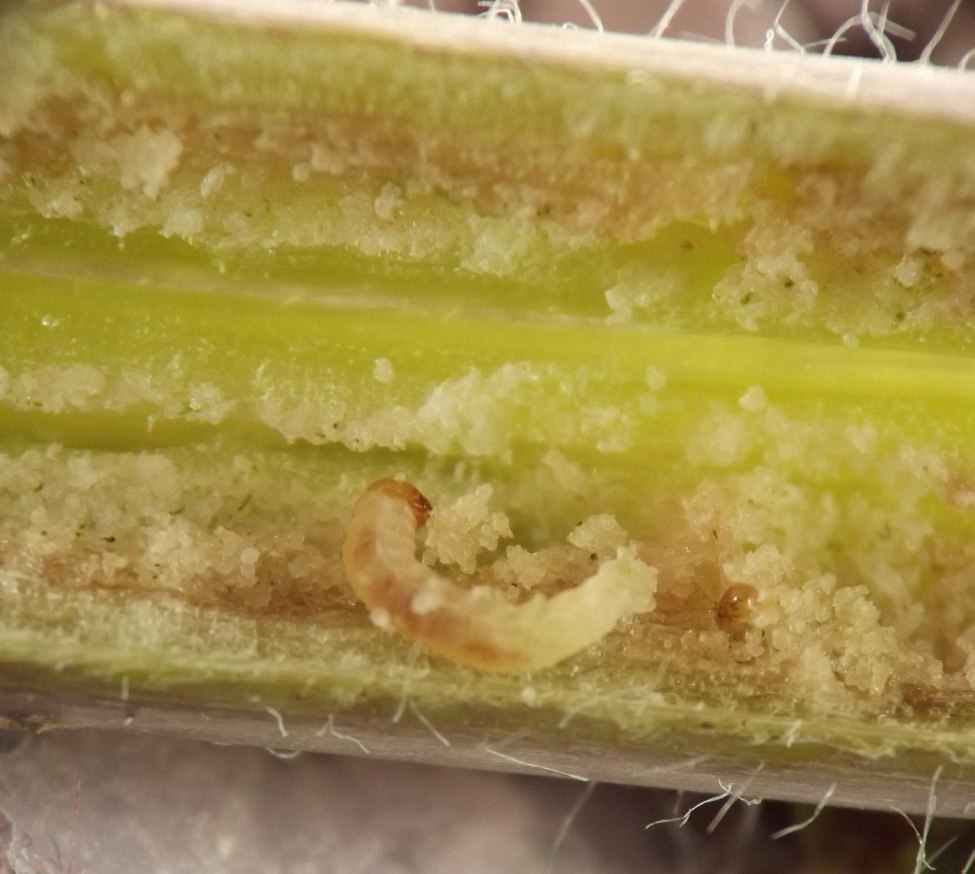
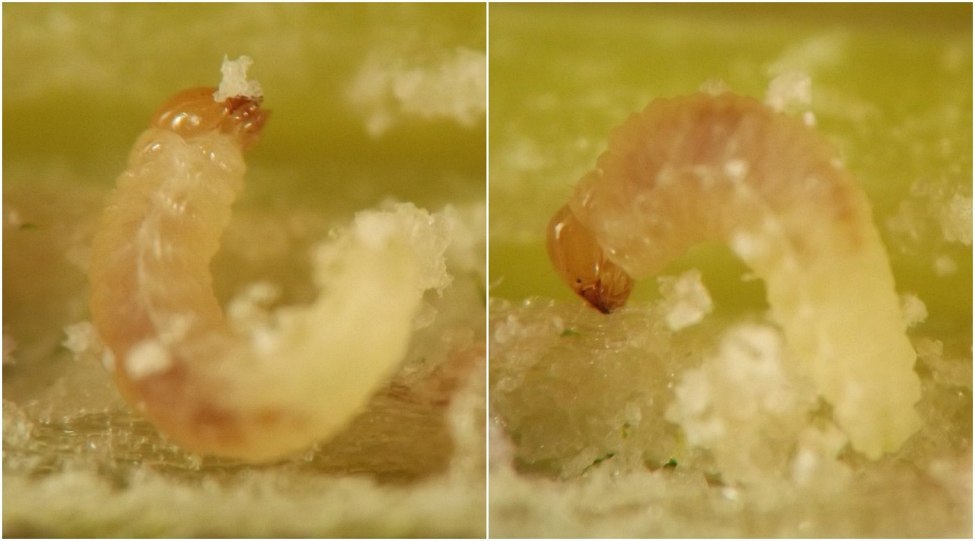
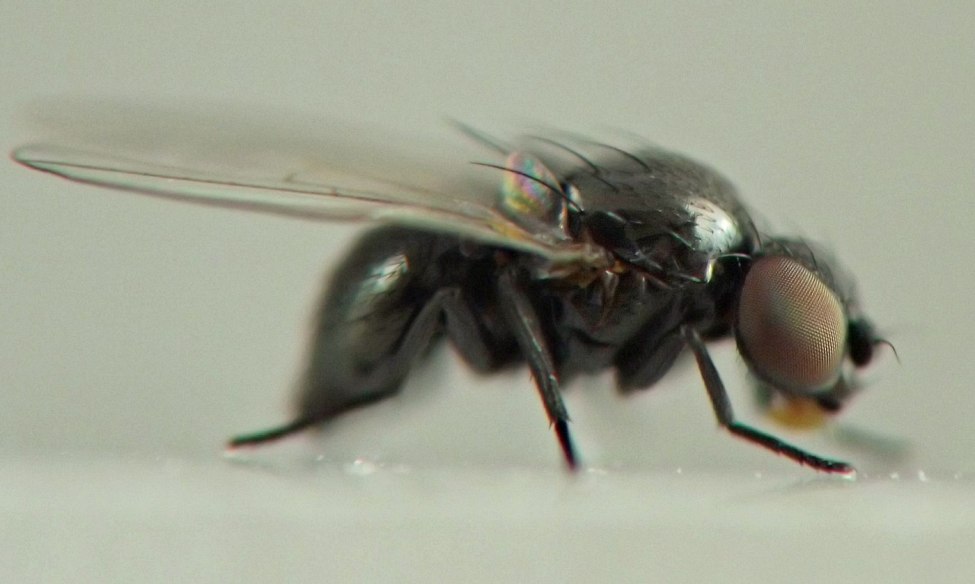
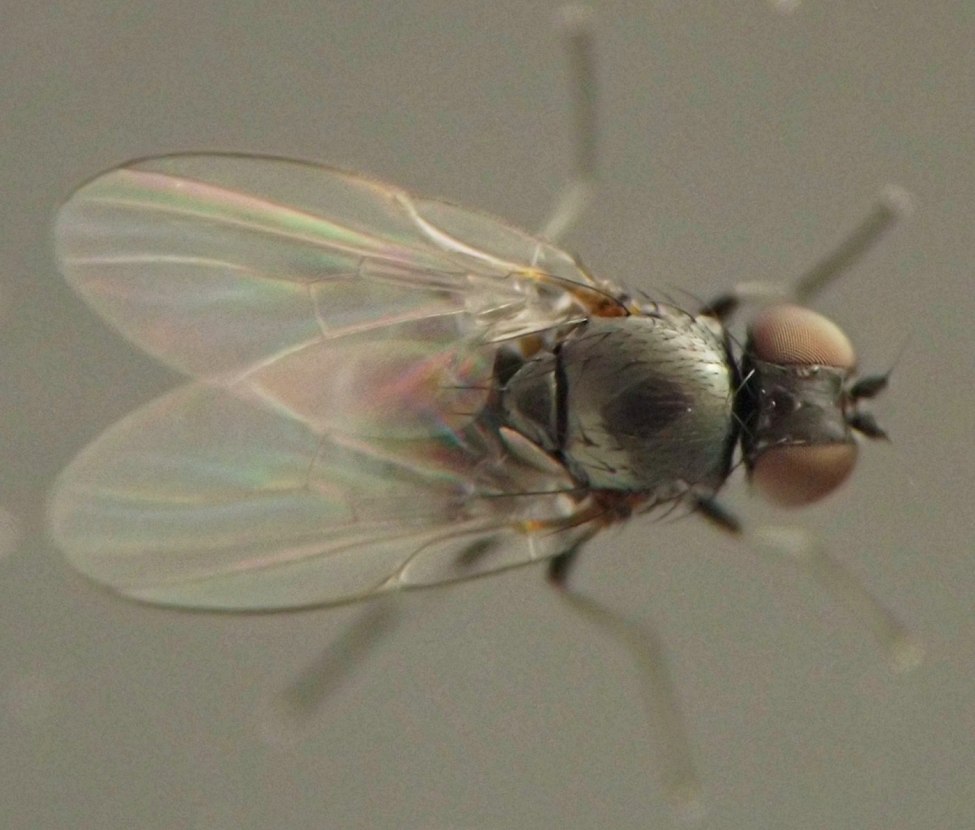
Stem miner, Diptera: Agromyzidae: Ophiomyia sp.
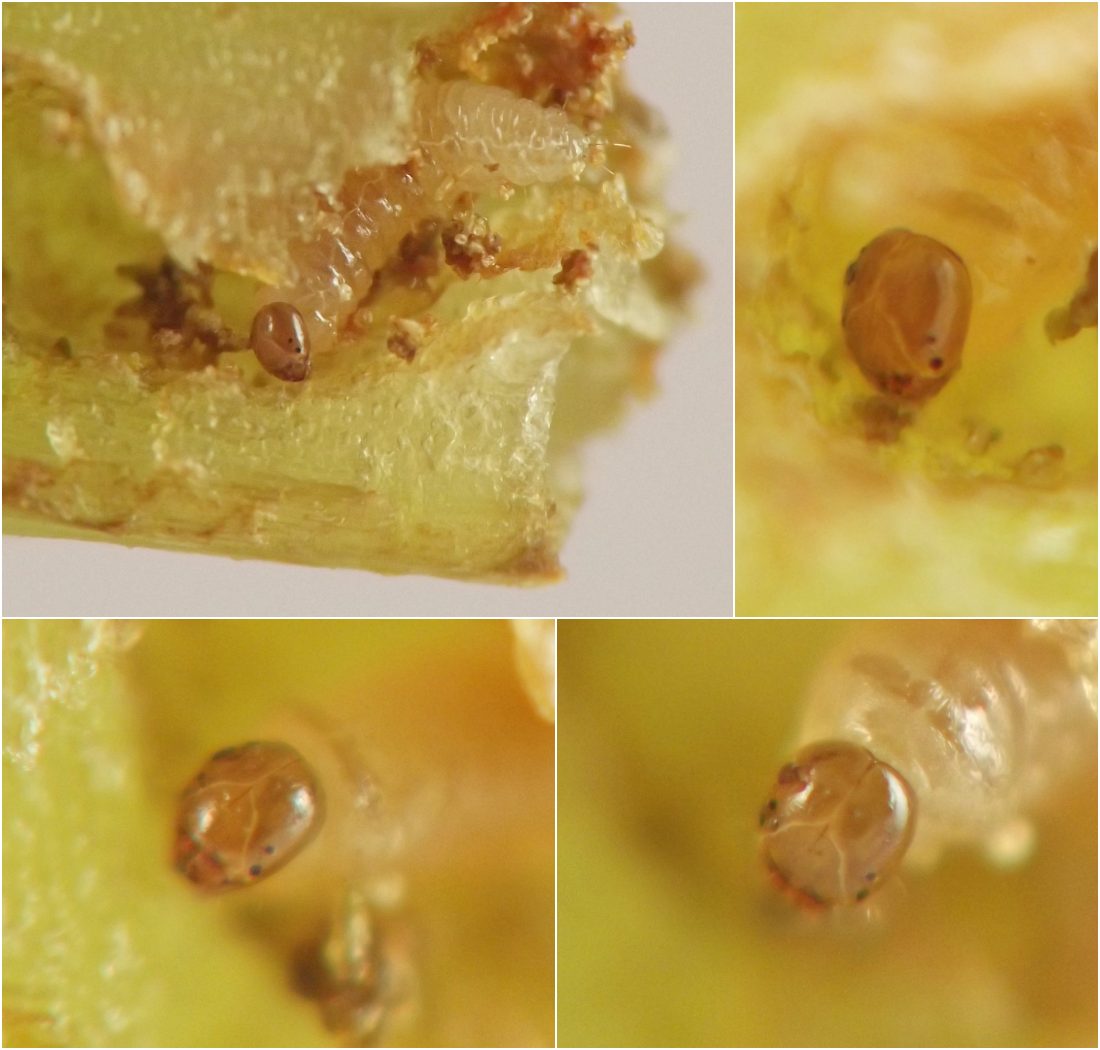
On 23 June 2022 I observed a mature garlic mustard plant with a short, whitish, linear stem mine in the upper half of the stem. Examining the mine closely, I found it to contain a very young gracillariid larva, but I observed no other larvae. I held the stem in a rearing container until 20 July, when a female Ophiomyia sp. agromyzid emerged. Examination of the stem revealed the fly's puparium formed just under the epidermis, surrounded by extensive stem mining with a pattern of alternating strips of frass. The gracillariid larva was nowhere to be found and the whitish linear mine containing it had long since been obliterated by the fly's mining. Blossey et al. (2001) mention an unspecified stem-mining fly they found associated with garlic mustard in North America, but it is unclear whether the insect they found might be the same as this one. Ophiomyia alliariae is a known garlic mustard specialist in Europe (Becker et al. 2013).
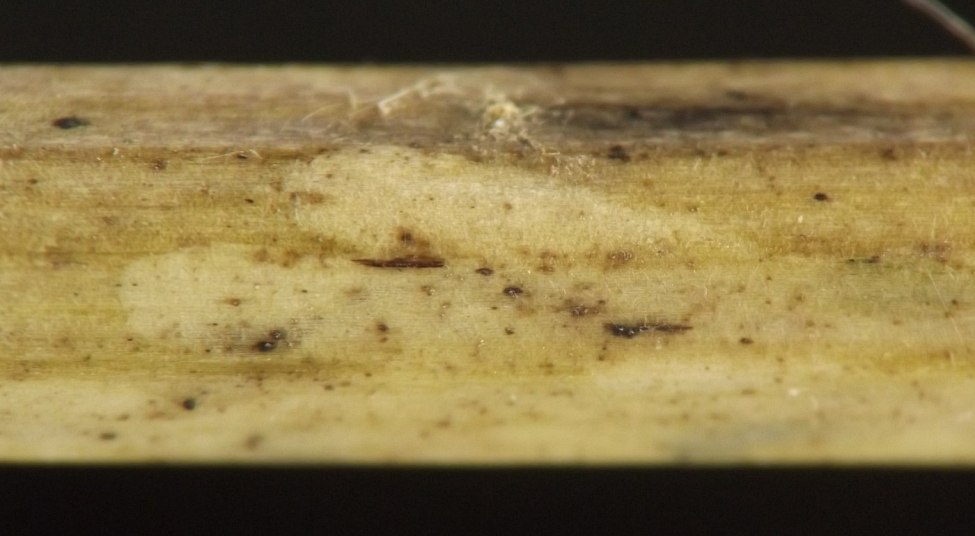
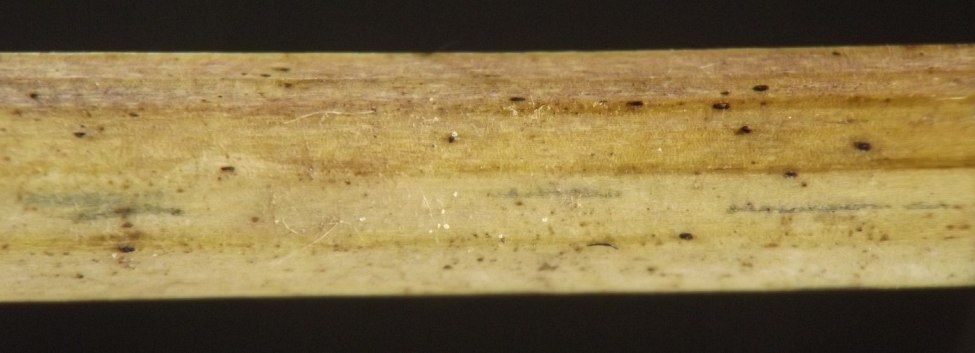
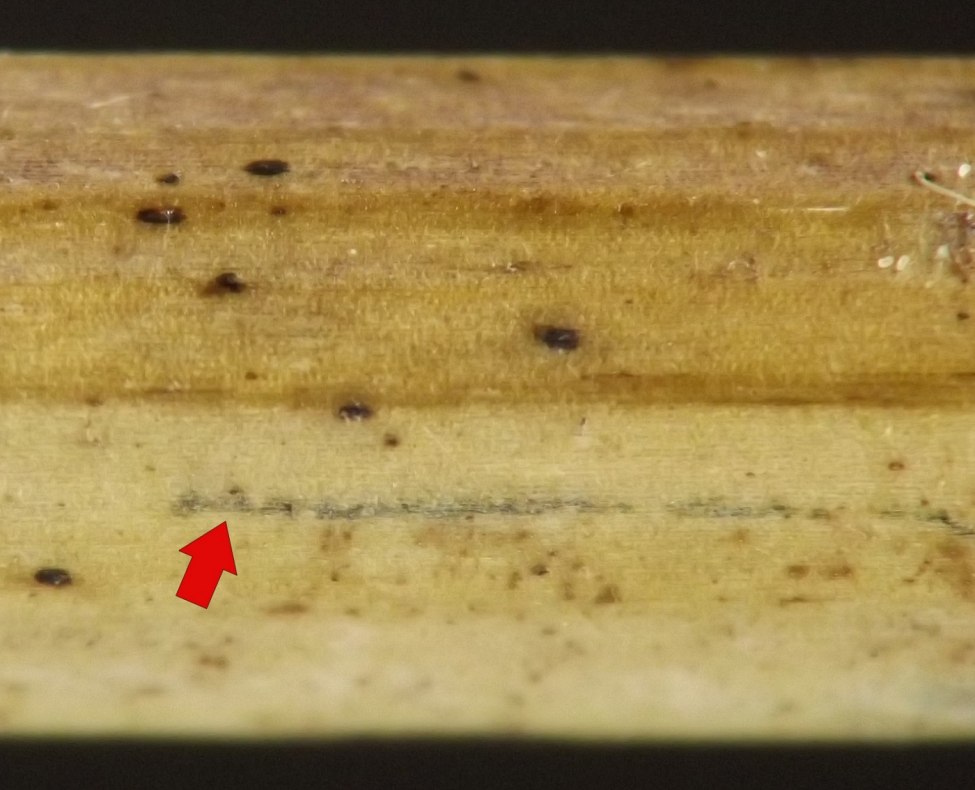
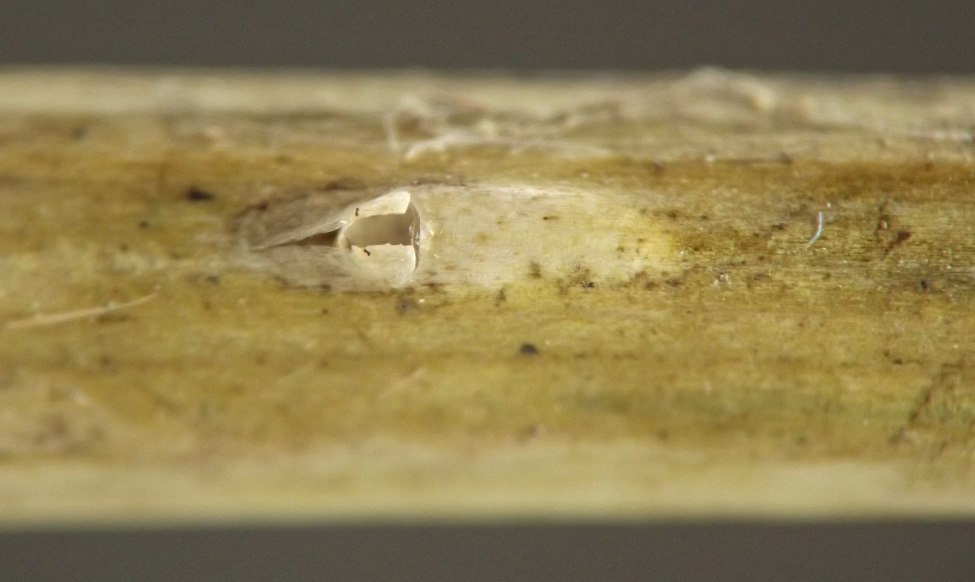
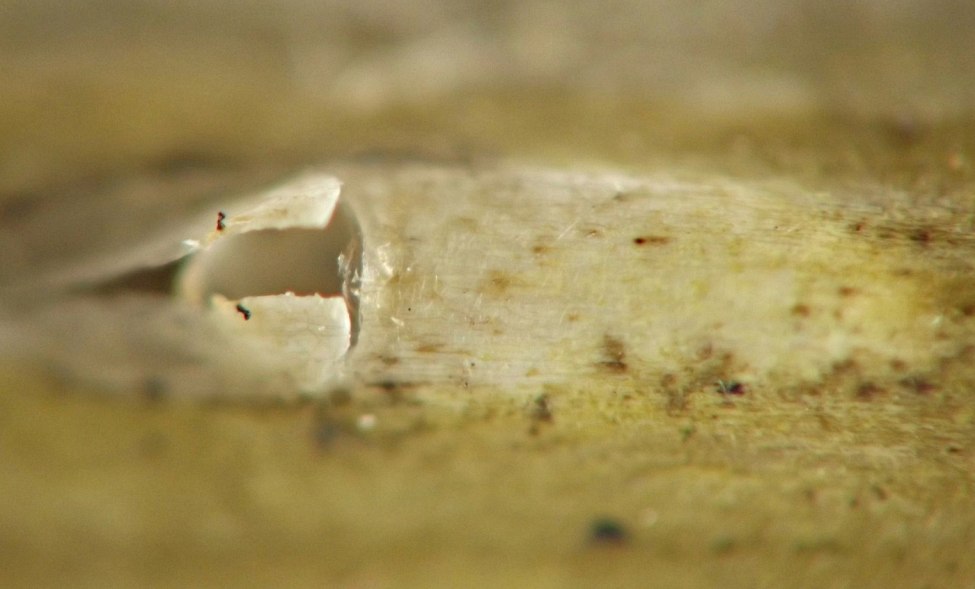
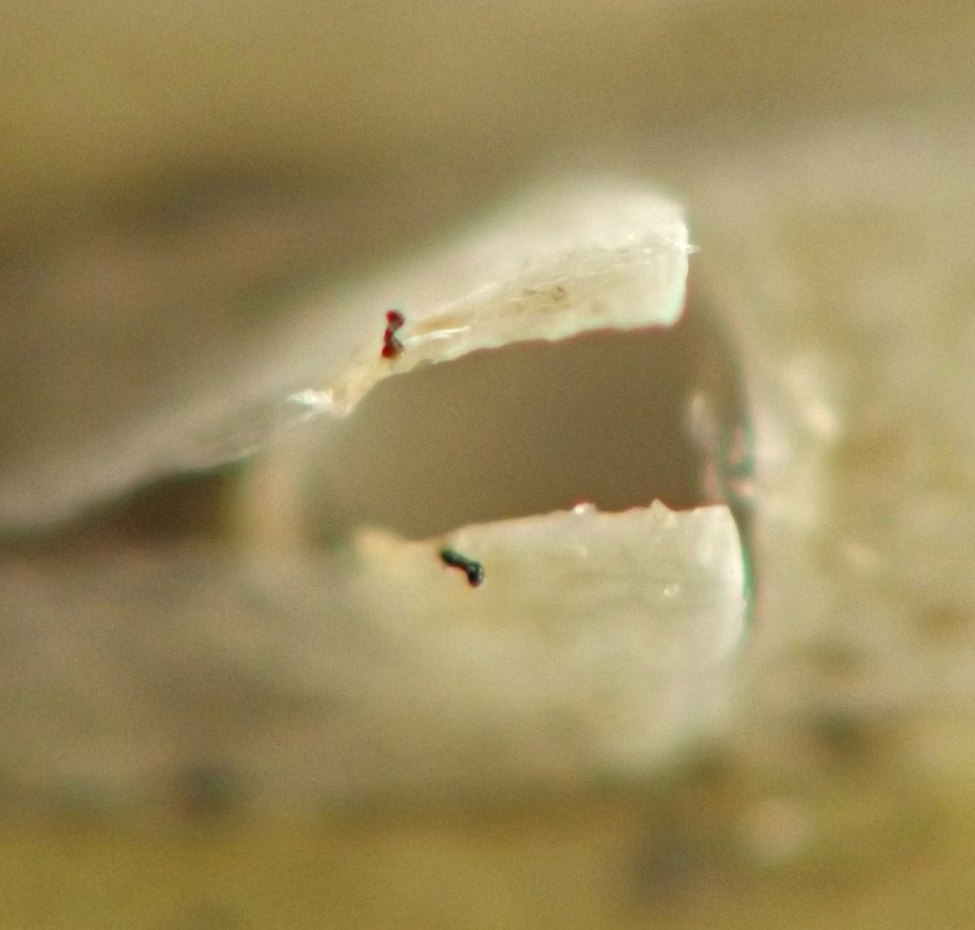
Stem miner, Lepidoptera: cf. Gracillariidae: Marmara sp.
I photographed a very young larva tentatively identified as Marmara sp. in a short, whitish, linear stem mine in late June. The larva's mine was later destroyed by an Ophiomyia sp. agromyzid larva mining the same stem, and the gracillariid larva evidently did not survive the competition with the fly.
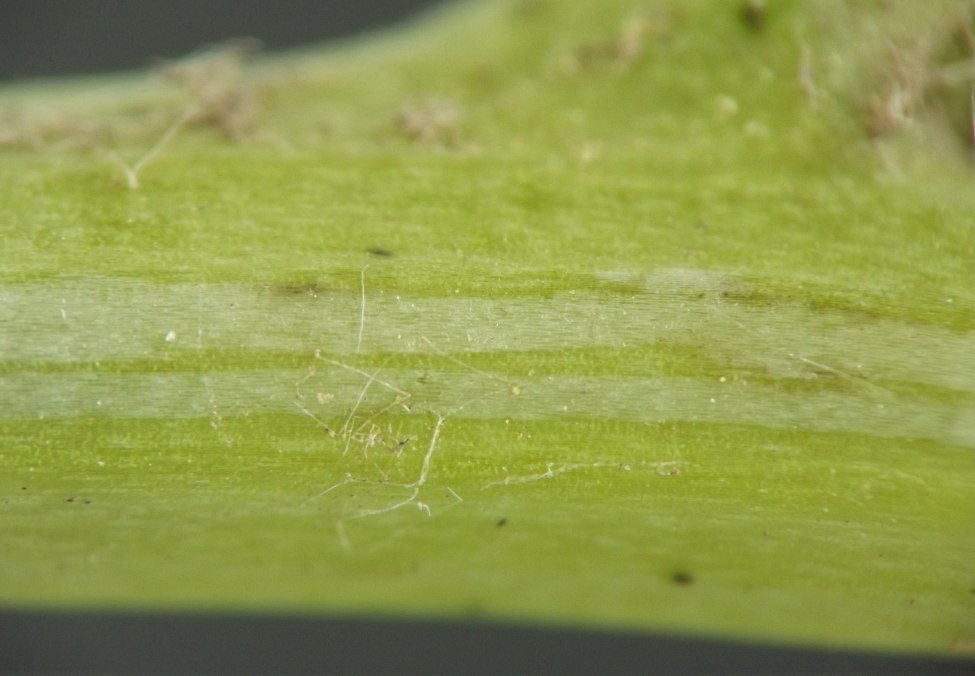
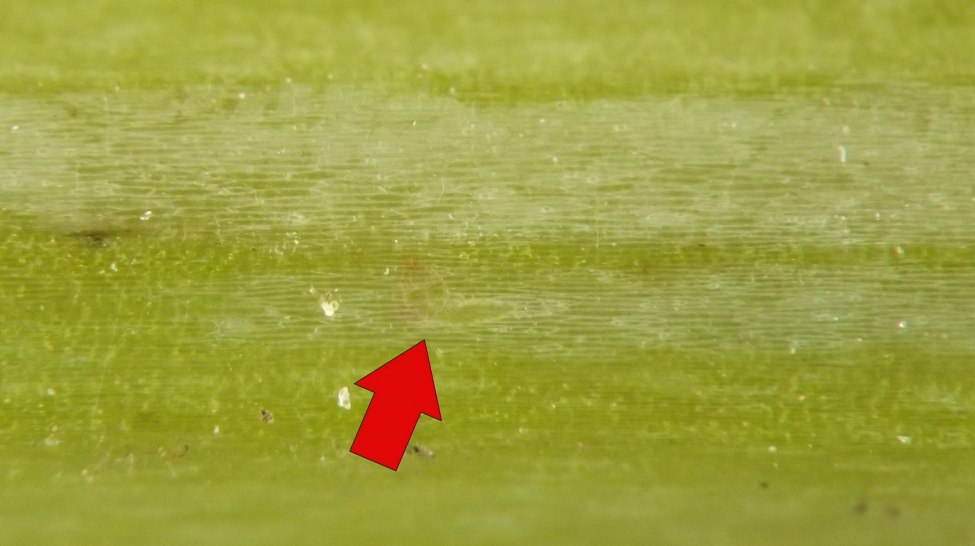
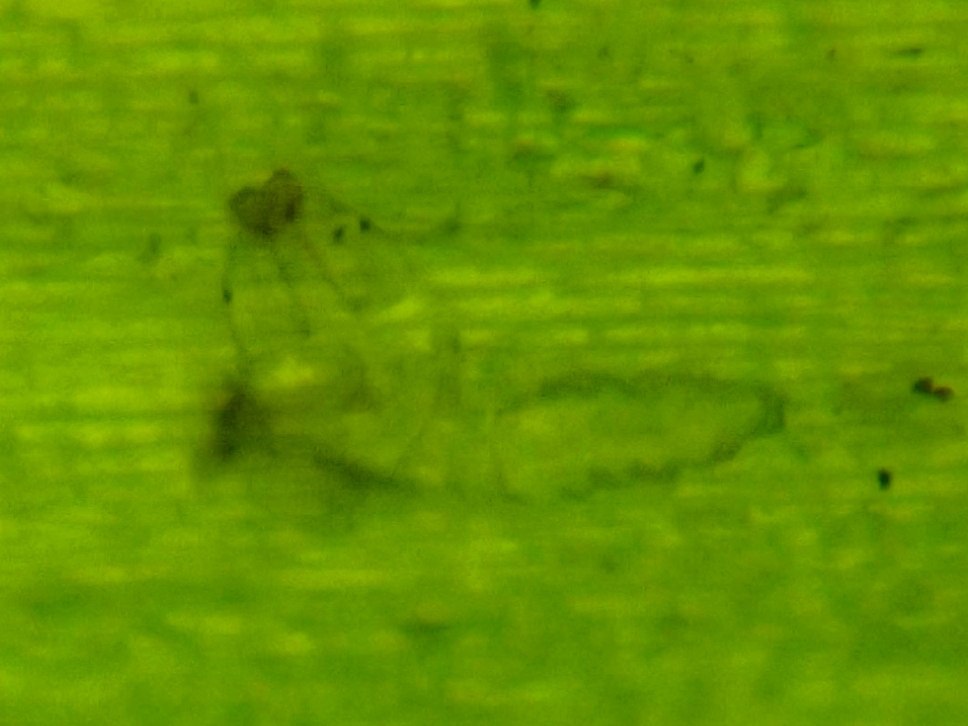
On this host, I have observed Ophiomyia agromyzid mines in midribs, petioles, and peduncles, along with phytomyzine agromyzid leaf blade mines and galls made by the cynipid wasp Phanacis taraxaci.
Midrib, petiole, and peduncle miner, Diptera: Agromyzidae: Ophiomyia.
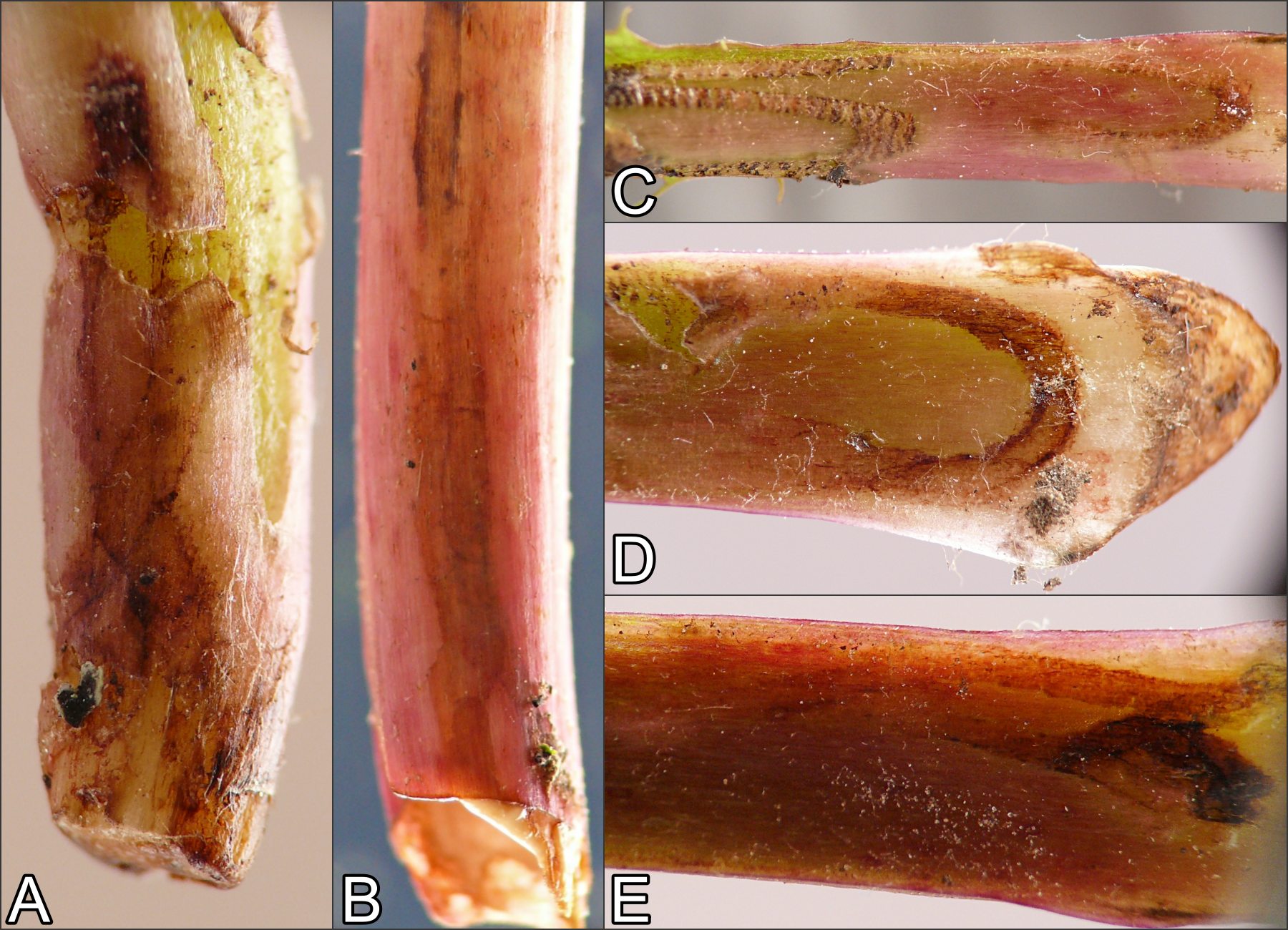
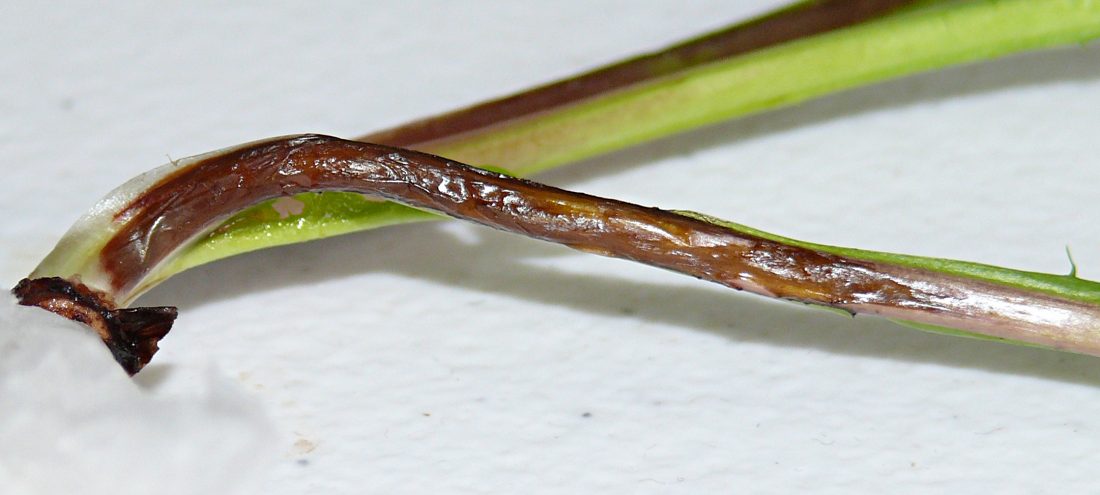
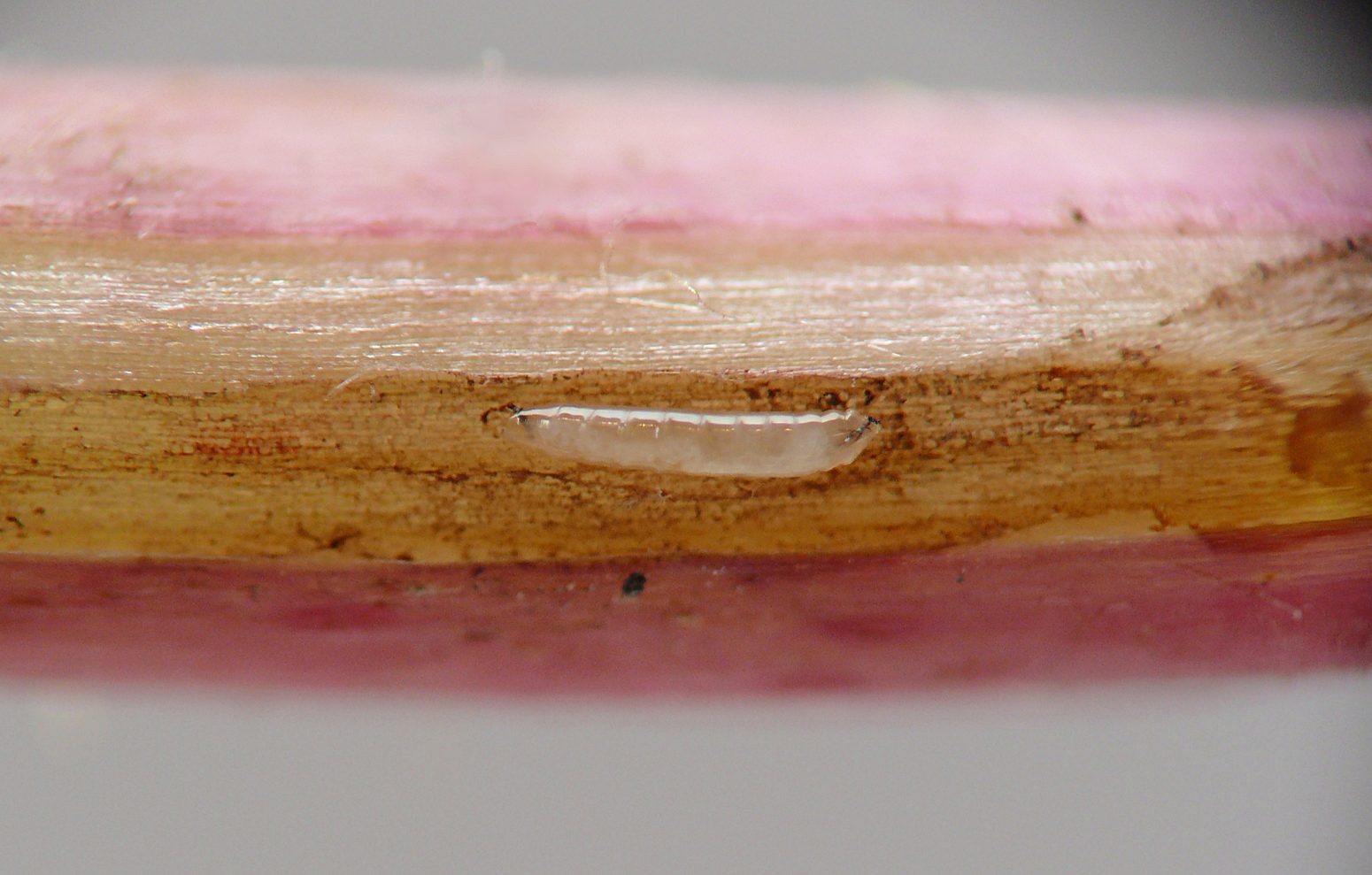
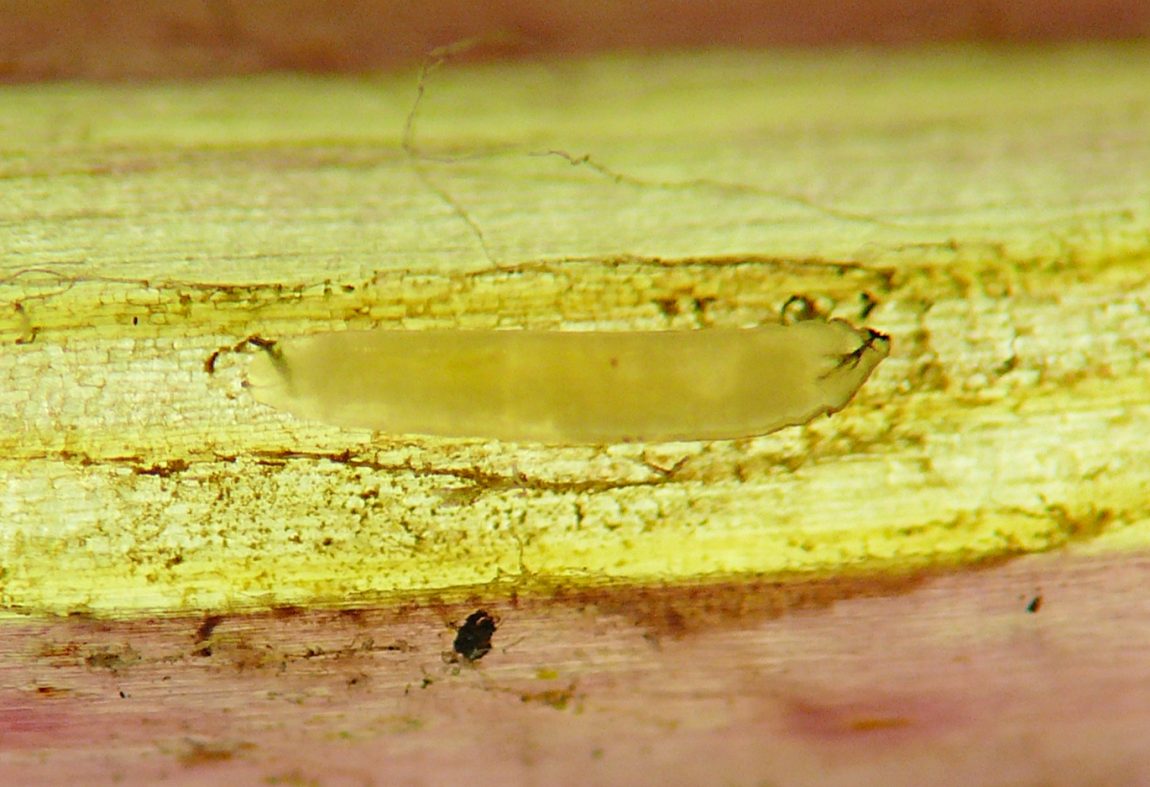
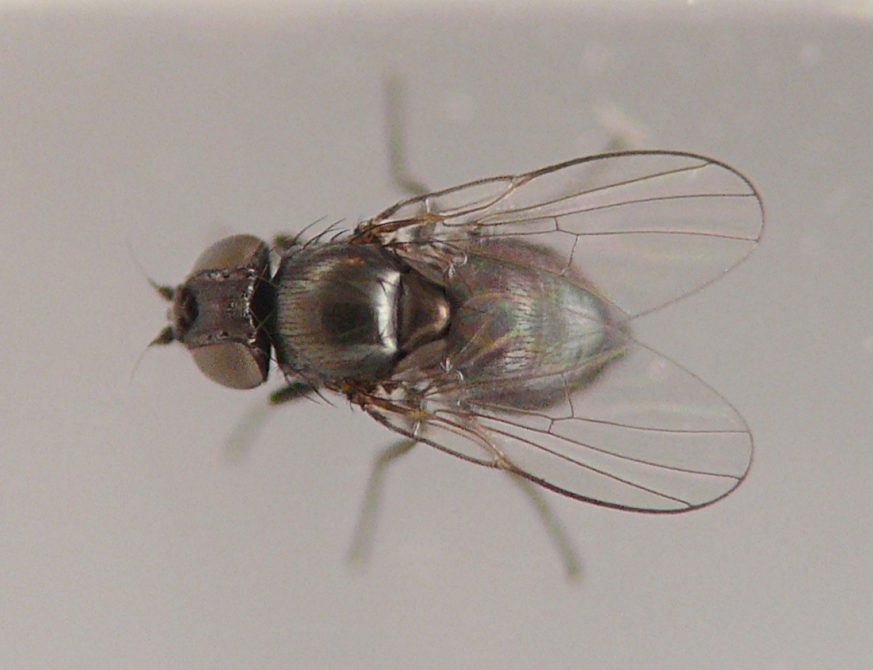
I found affected plants in 2024 and 2025, and reared a larva to adulthood in 2025. The winding mines were externally visible on midribs and petioles, and could be seen on the lower portions of flower stalks as well with proper lighting. I photographed at least three larvae mining just under the epidermis of the bases of two flower stalks in 2025 (images 14-05 through 14-08, below). The successful rearing involved a larva mining primarily in a petiole. Initially the mines were linear and pinkish or grayish (image 14-02), but as feeding progressed, a ~45mm stretch of the lower petiole turned dark brown on the underside (image 14-04). The mature larva evacuated the plant material and formed its yellow puparium on the bottom of the rearing container by 23 July, with the adult fly emerging on 03 August (images 14-09 through 14-11). While the aforementioned observations all appear to be the work of Ophiomyia agromyzids, it is unclear whether only a single species is represented.
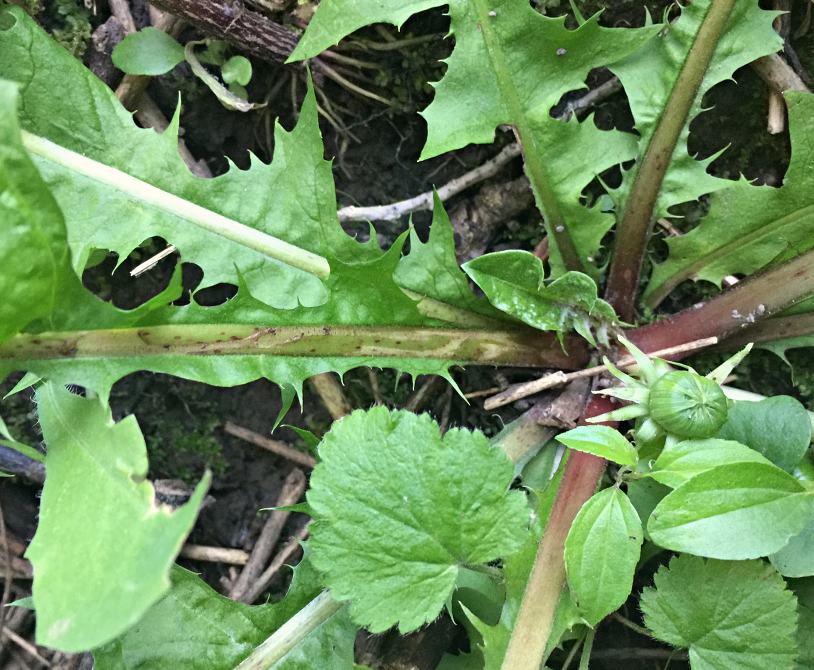
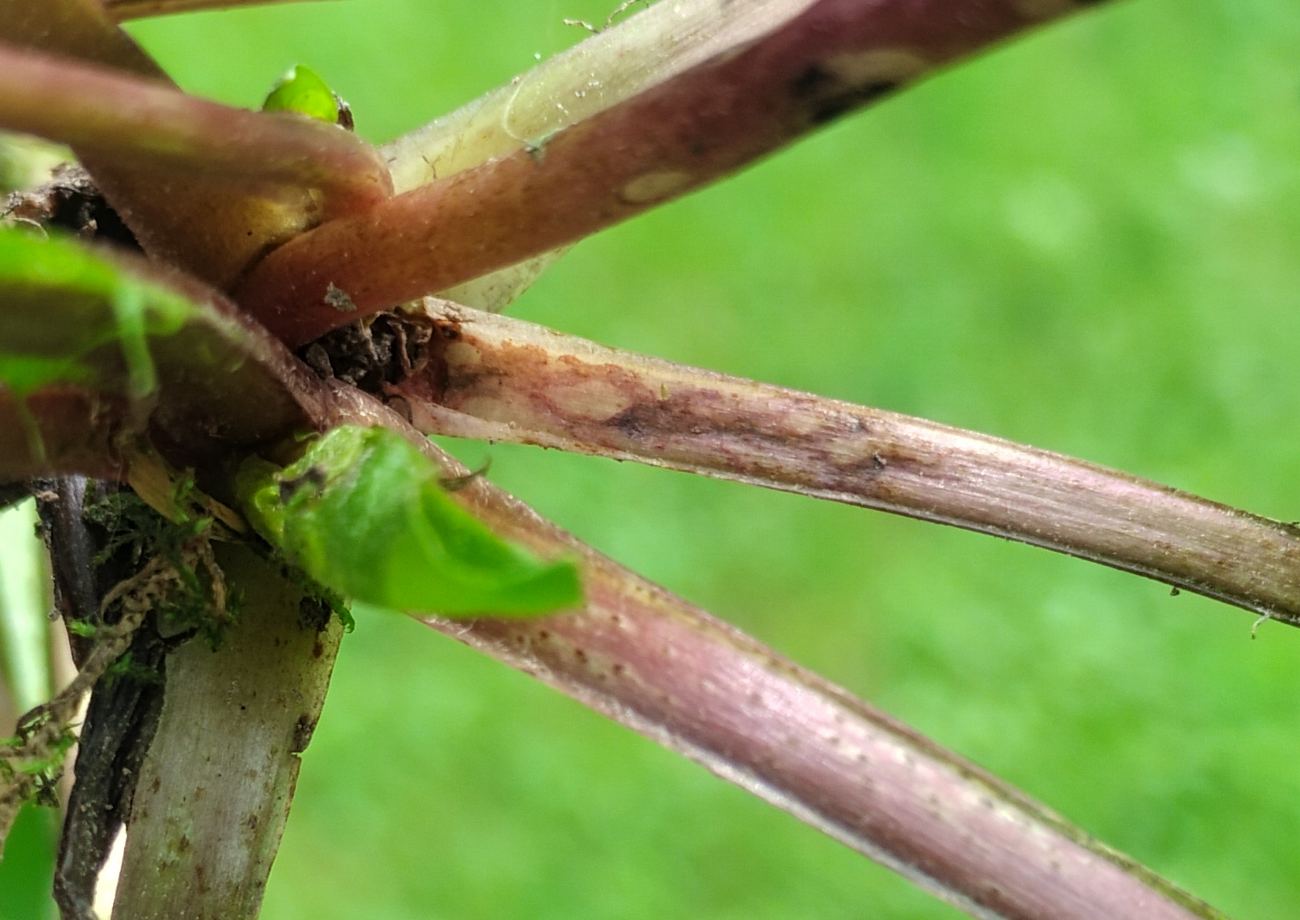
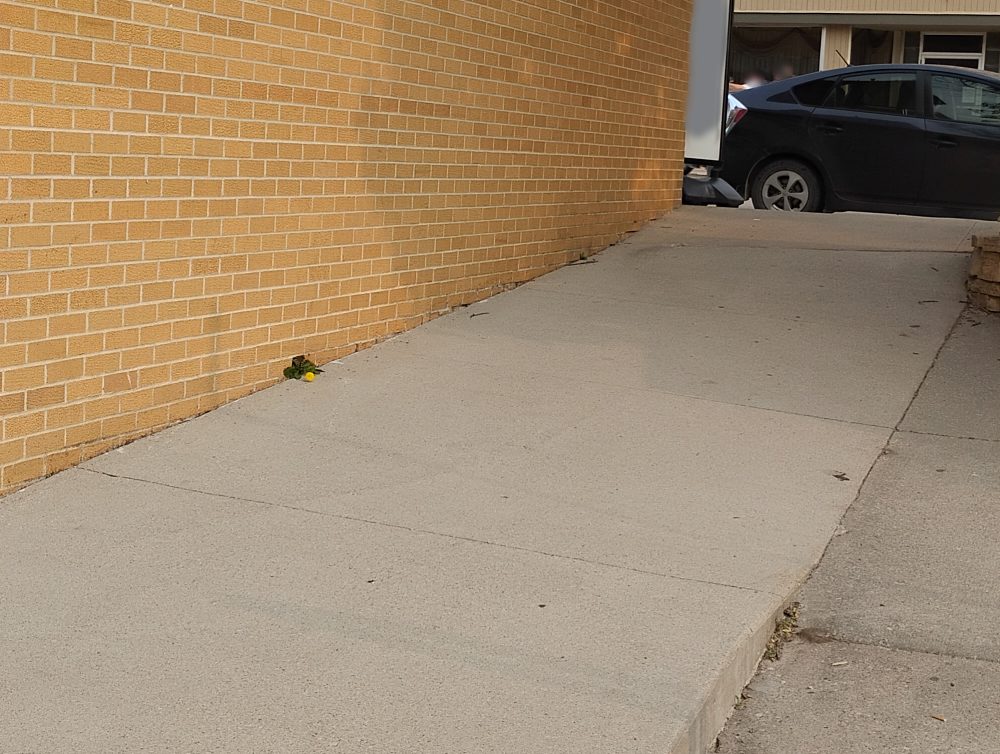
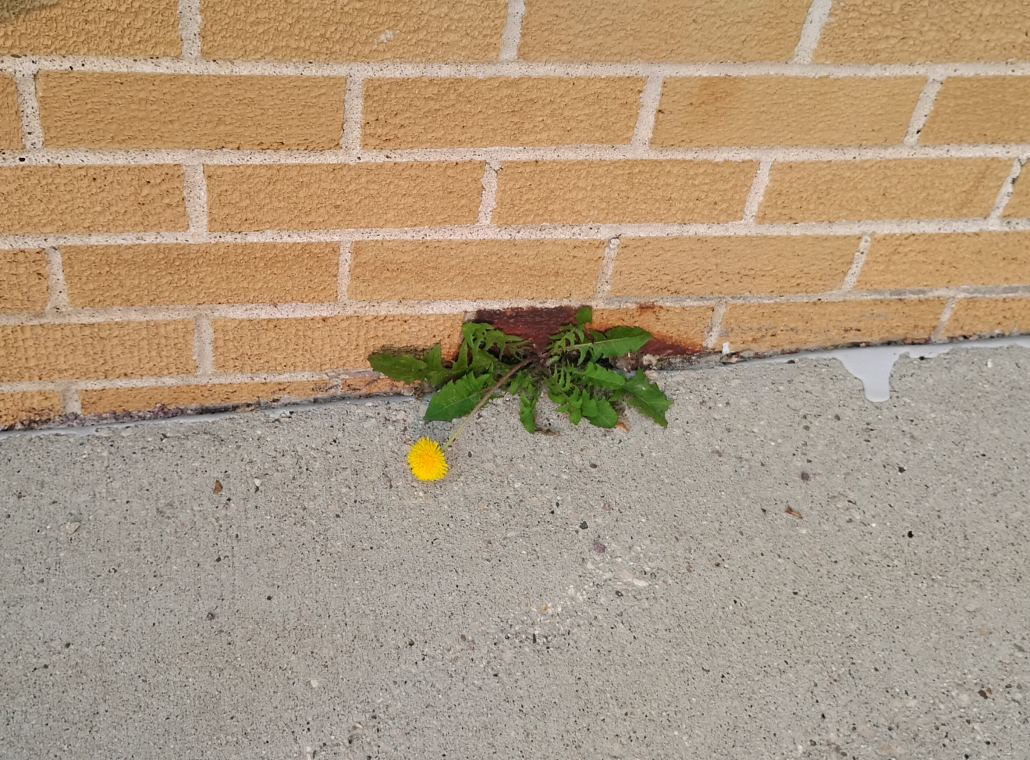
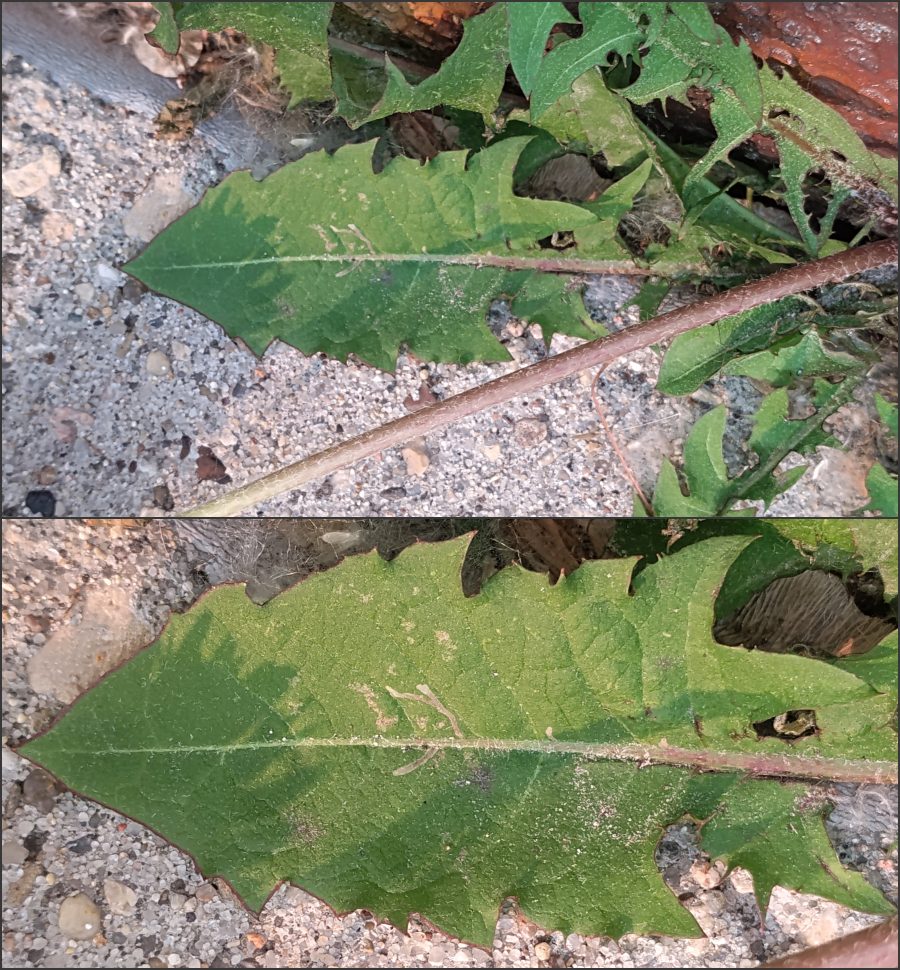
Midrib and leaf blade miners (Agromyzidae) on a solitary plant deep in an urban setting.
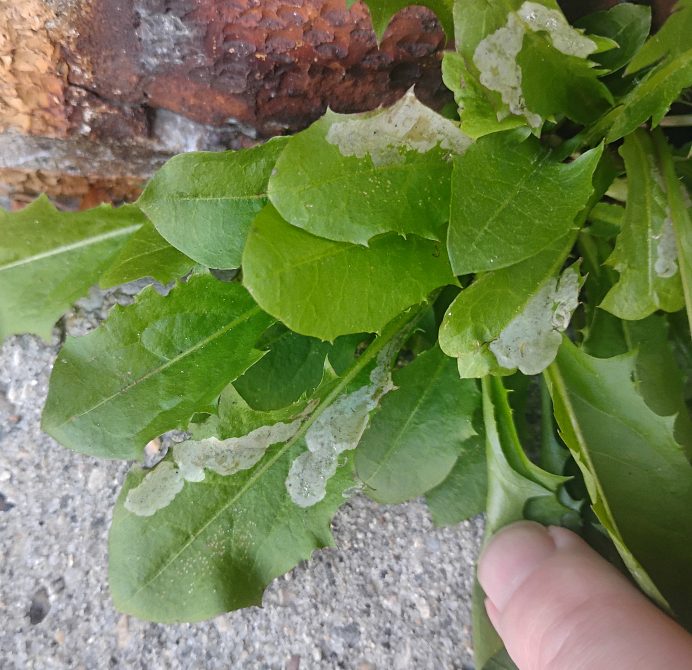
I have grown quite fond of one dandelion plant in particular that is living its life in the middle of a downtown I visit, wedged between a concrete sidewalk and a brick wall. The proprietors of the brick building have tried several times to kill this plant but its taproot reaches so thoroughly into the crevice between the sidewalk and wall that it has proven all but impossible to pull out. Here I document two species of agromyzid fly that have used this plant as their host over the two or three years I have been following it. Based on the key in Eiseman (2022), the midrib miner that strays briefly into the leaf blade (image 15-03) is an Ophiomyia species, while the blotch miner in the leaf blade (image 15-04) belongs to the subfamily Phytomyzinae.
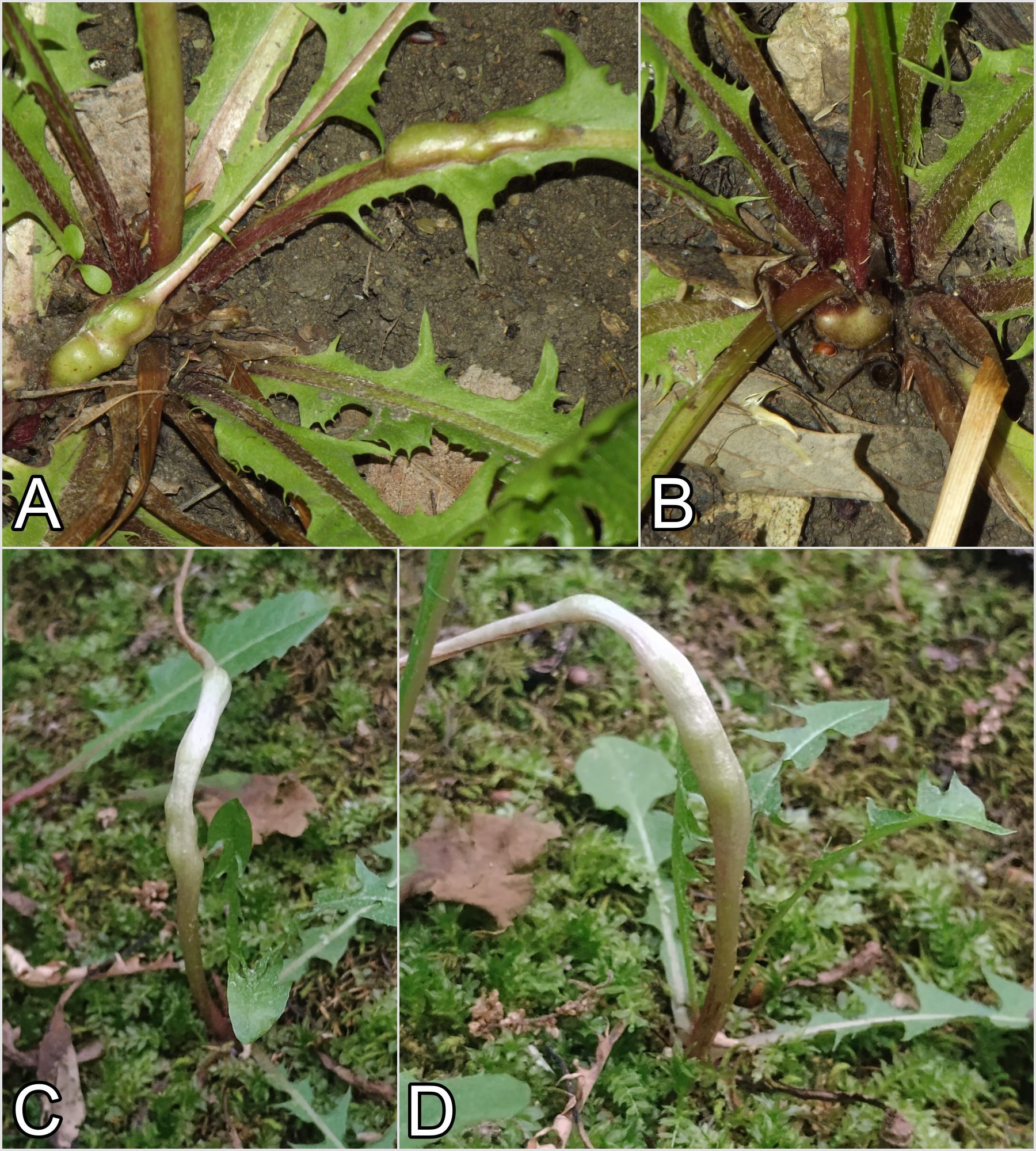
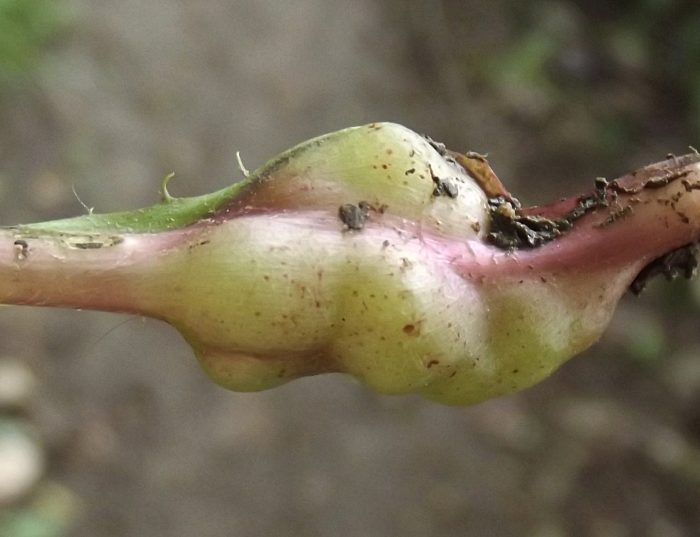
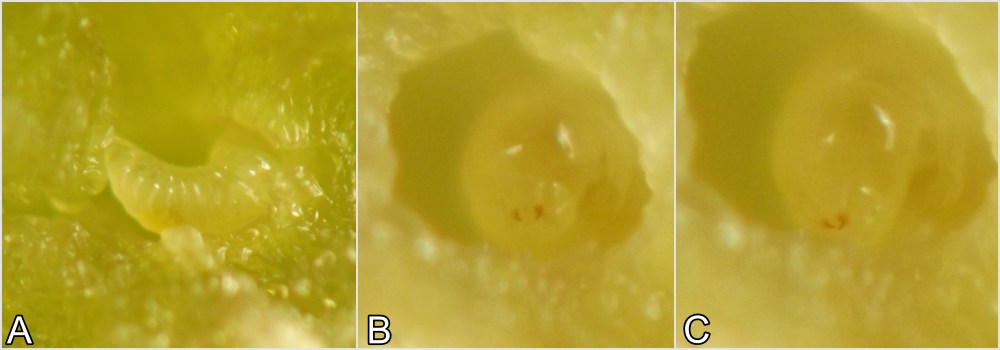
Gallmaker in midrib, petiole, and peduncle, Hymenoptera: Cynipidae: Phanacis taraxaci.
From 2021 to 2026, I found this gallmaker only a few times, despite encountering many dandelion plants. In 2021 I found a plant with several galled petioles, and photographed a larva inside one of the galls (image 16-03). In 2026 I found a swollen peduncle I am tentatively attributing to this species. P. taraxaci has been previously recorded from peduncle galls, according to the references cited in Gallformers Contributors (2026), but note that a fungus (Protomyces pachydermus) is also reported to cause peduncle galls on this host (Gallformers Contributors 2026b). Phytomyza wahlgreni (Agromyzidae), a European species also known from Colorado, evidently forms a "strong" swelling on dandelion midribs (Eiseman 2022, p. 2132).
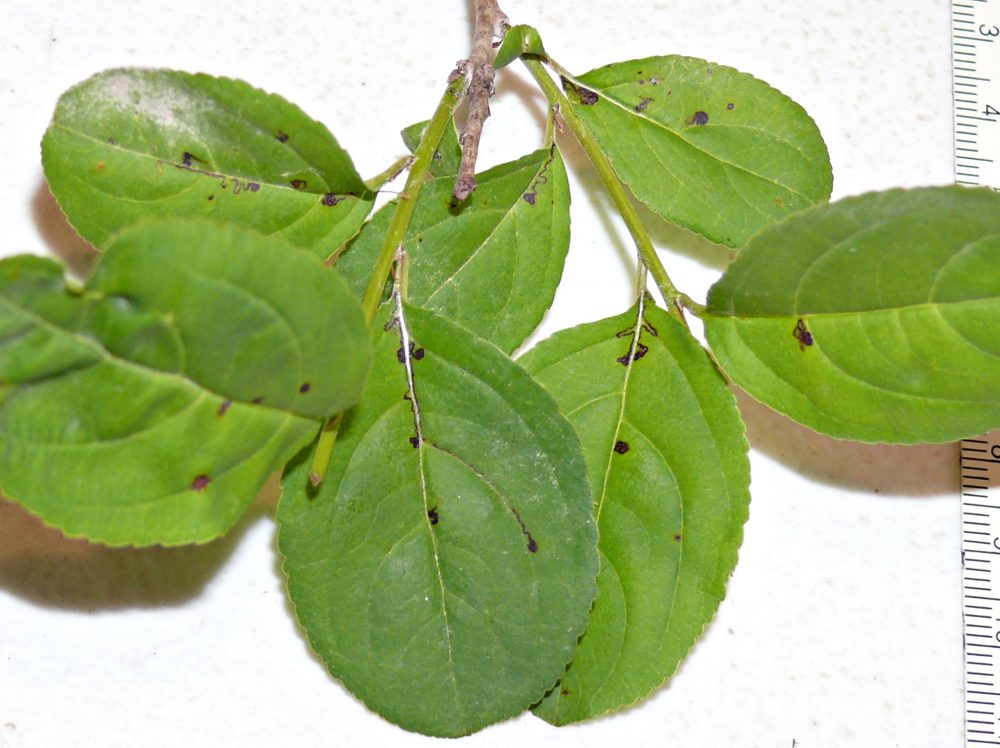
I observed a nepticulid leafminer feeding on this host, and saturniid and tortricid moths emerging from pupae concealed in cocoons attached to buckthorn twigs or stems, although for the latter moths it was unclear if they had conducted any feeding on the plant as larvae.
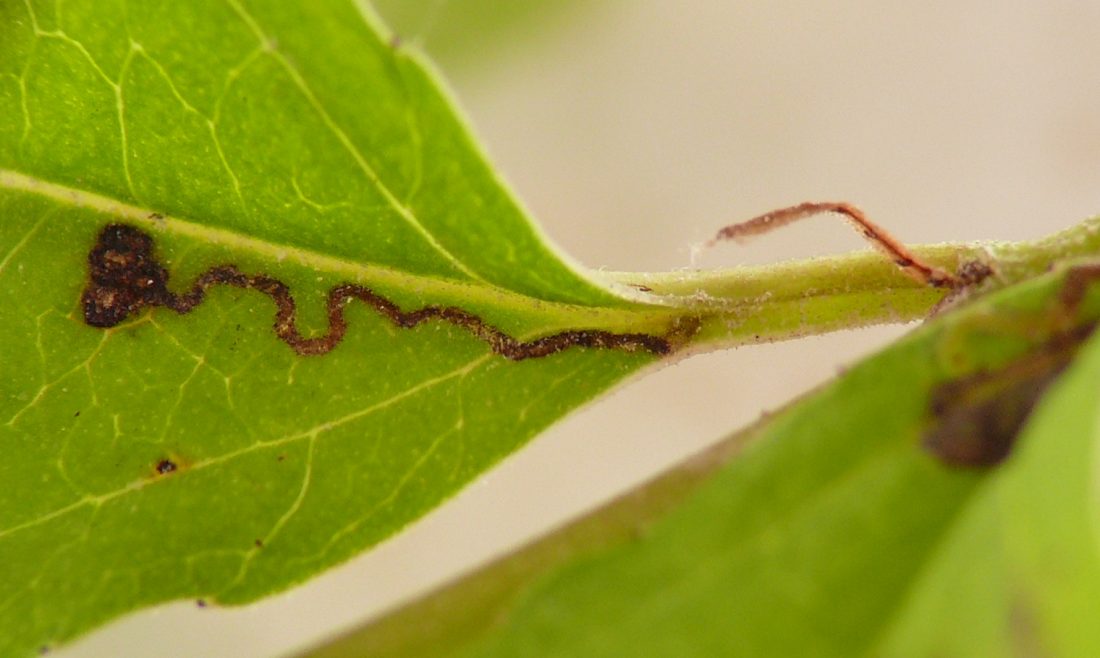
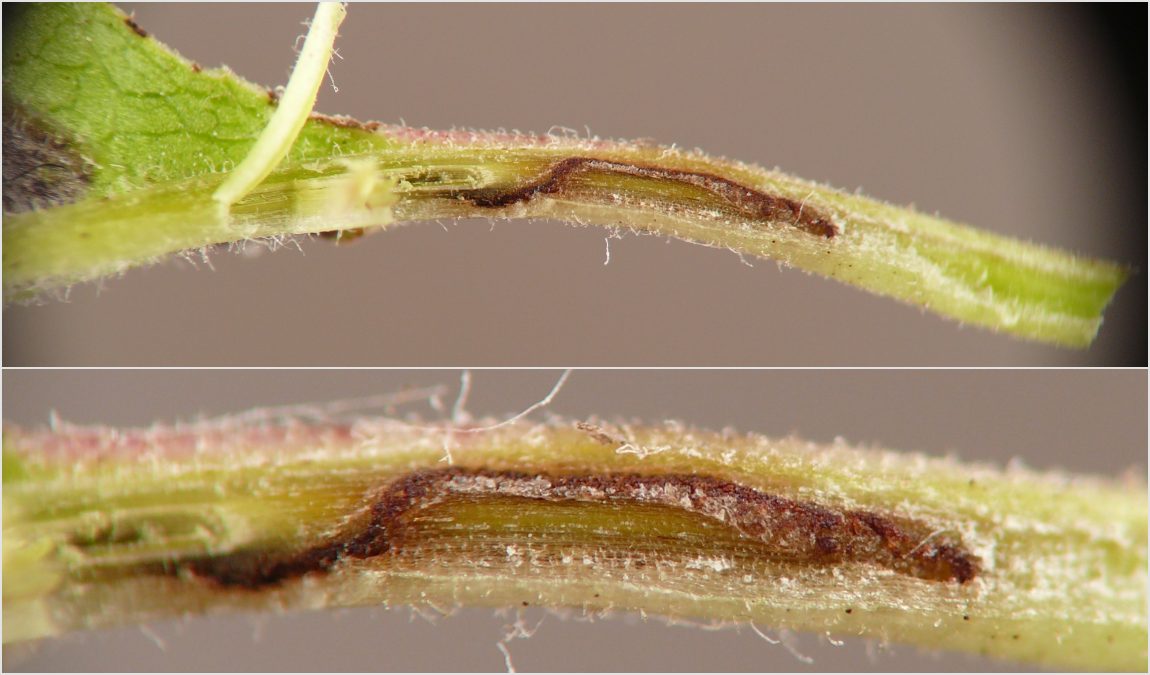
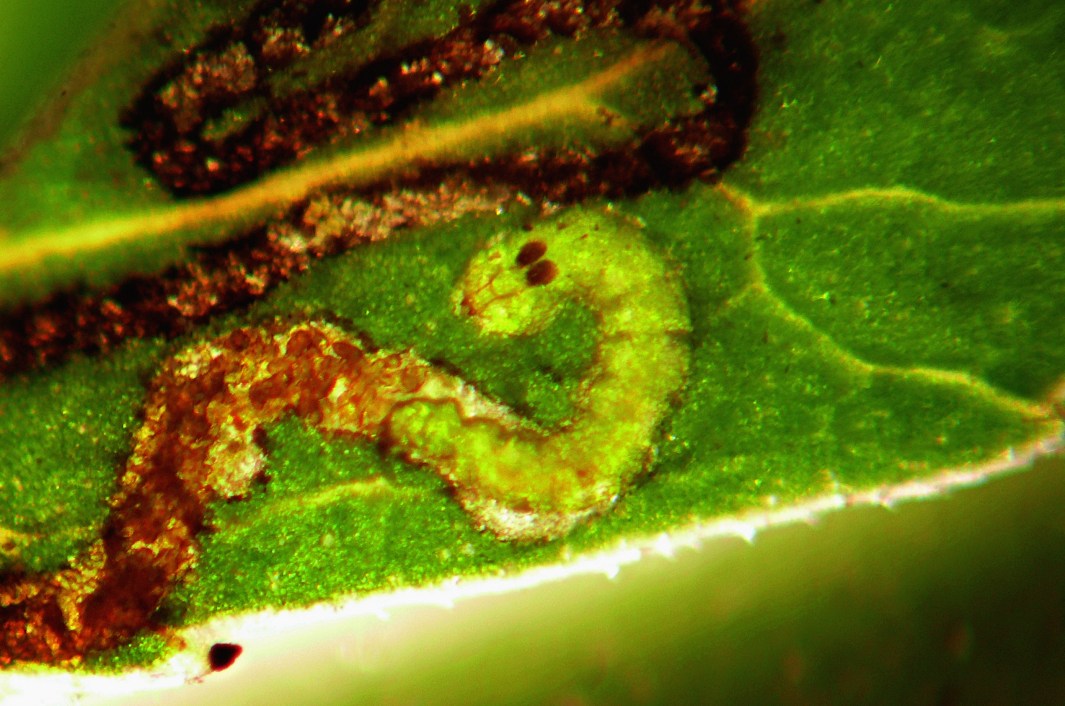
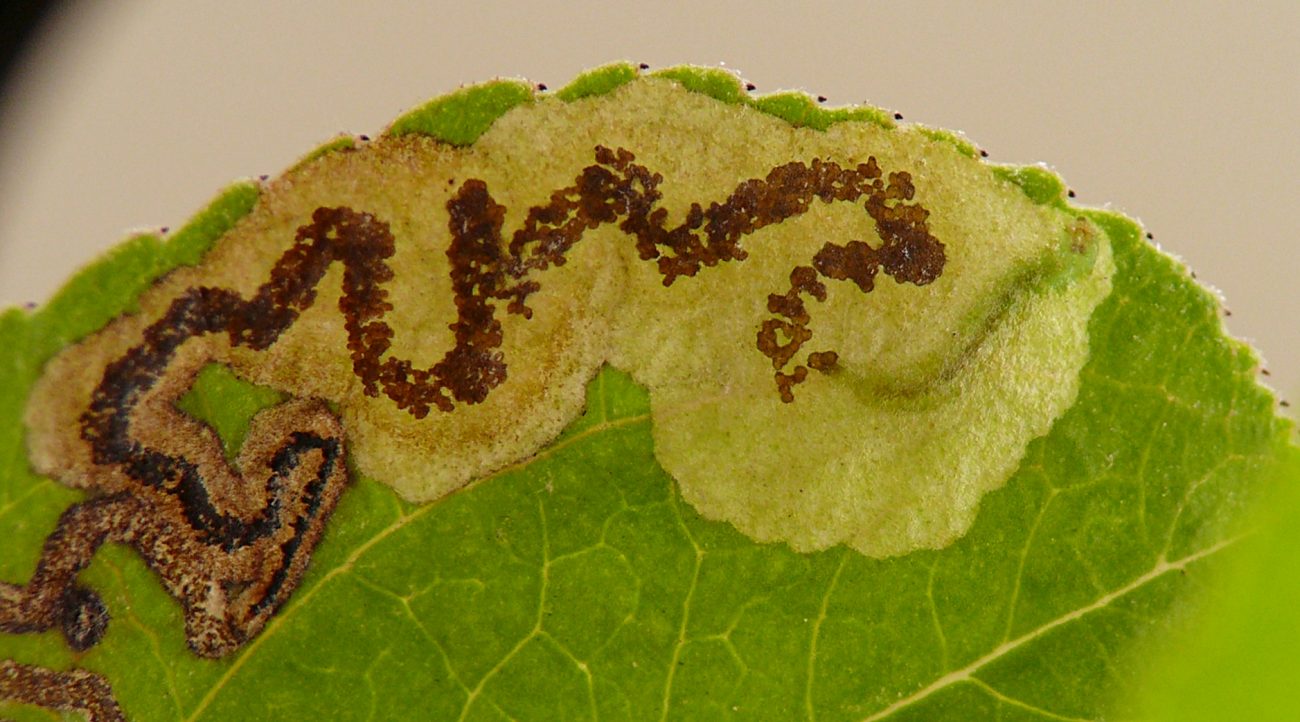
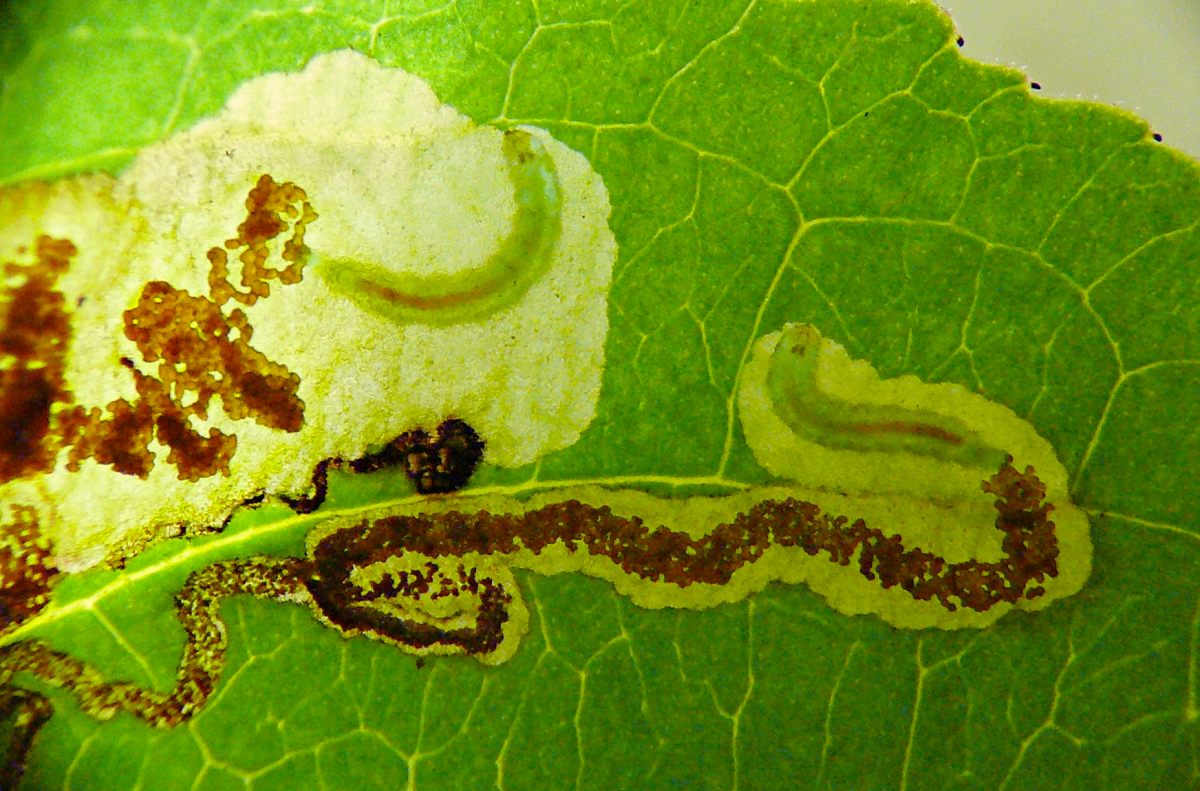
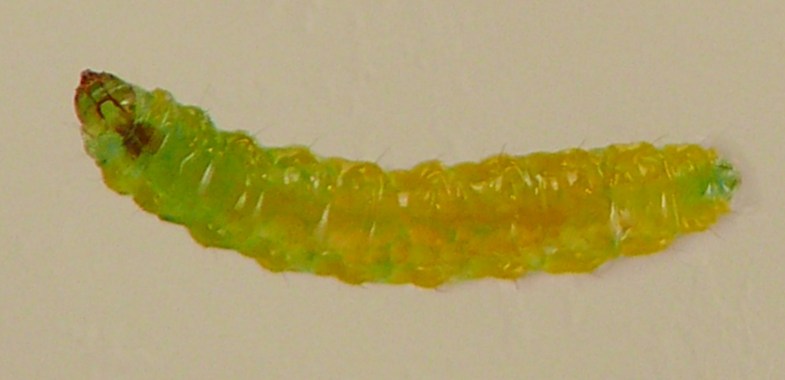
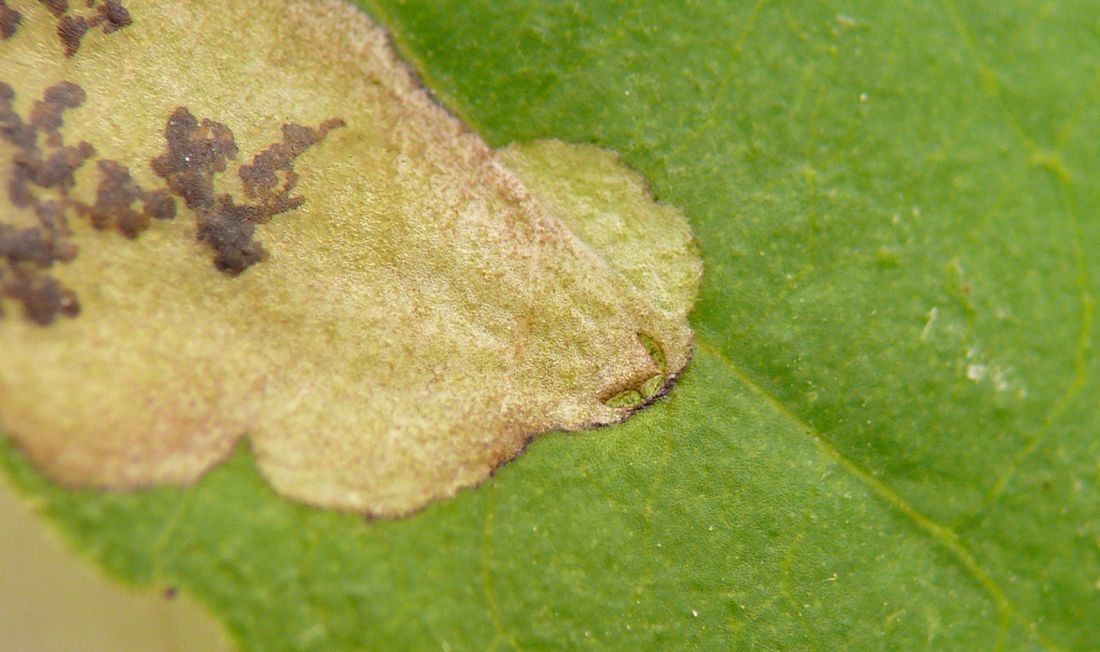
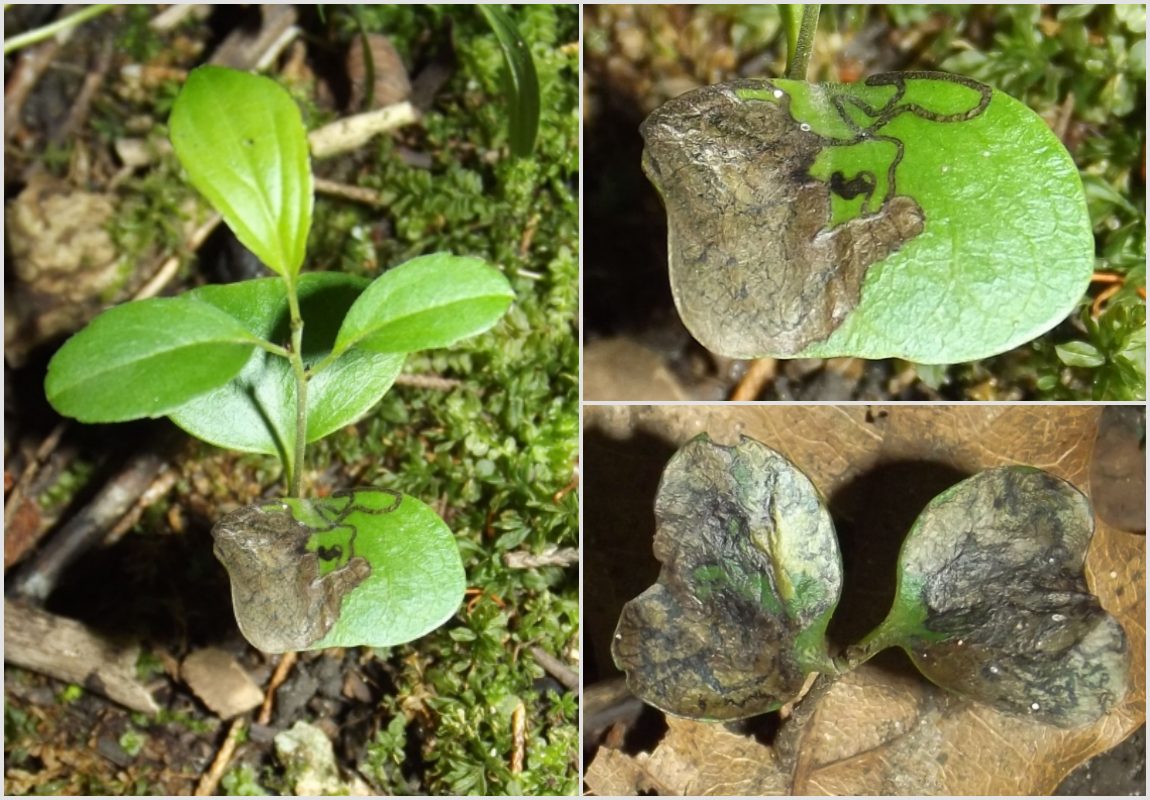
Leaf blade and petiole miner, Lepidoptera: Nepticulidae: Stigmella rhamnicola.
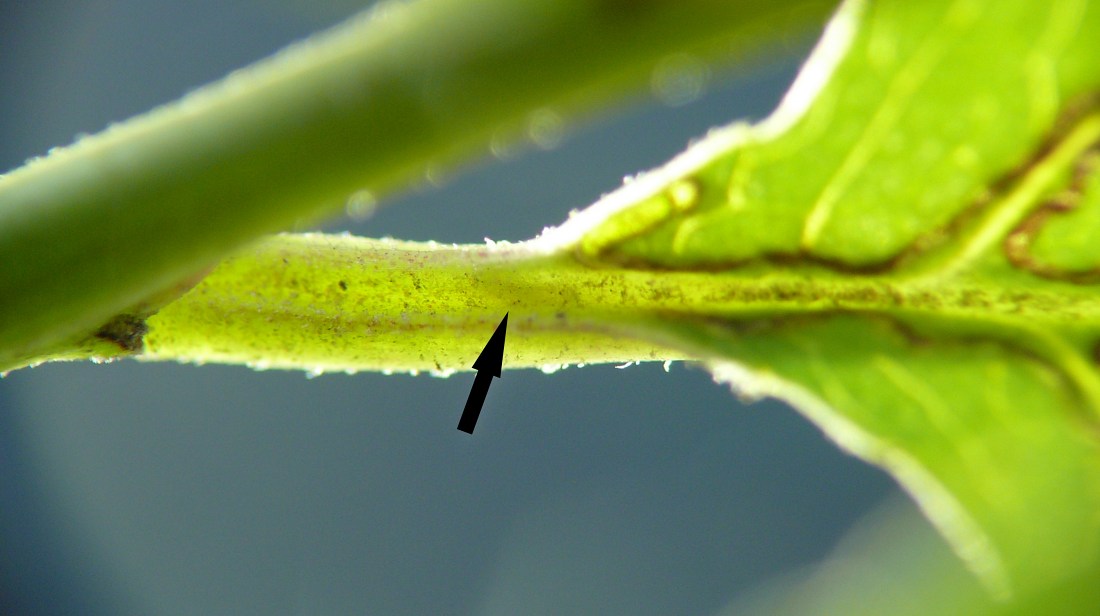
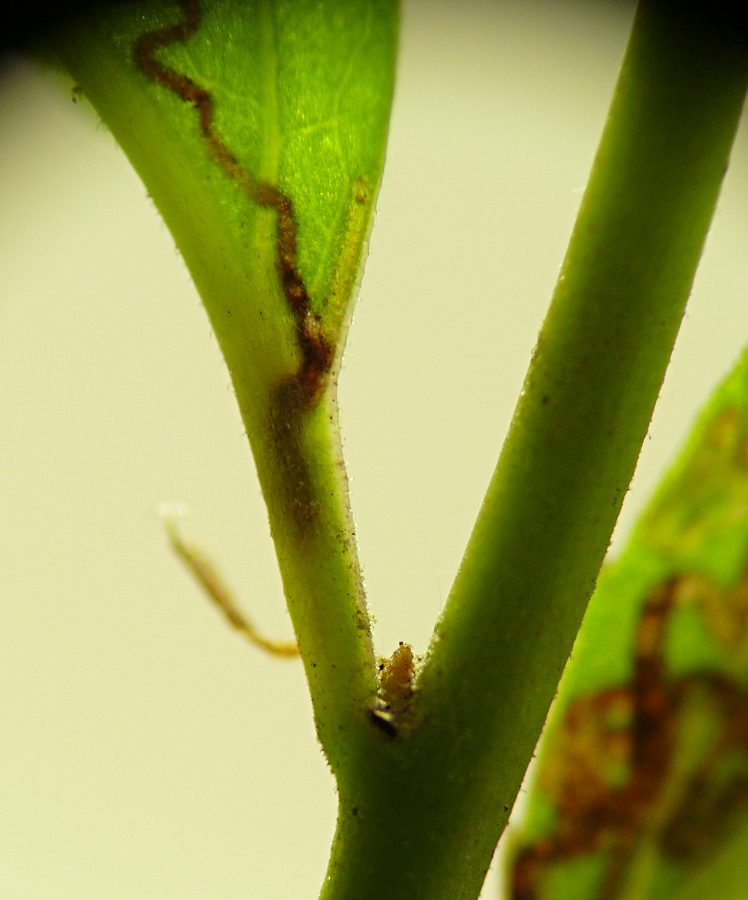
Leaf blade mines of this species sometimes enter the petiole for a short distance before returning to the blade. The greenish larva exits the mine when mature through a semicircular slit in the leaf epidermis (image 17-10). I reared several individuals to the completion of their larval stage. Some of the mines I observed occurred in cotyledons of seedling plants (image 17-11). Identification is based on Eiseman (2022).
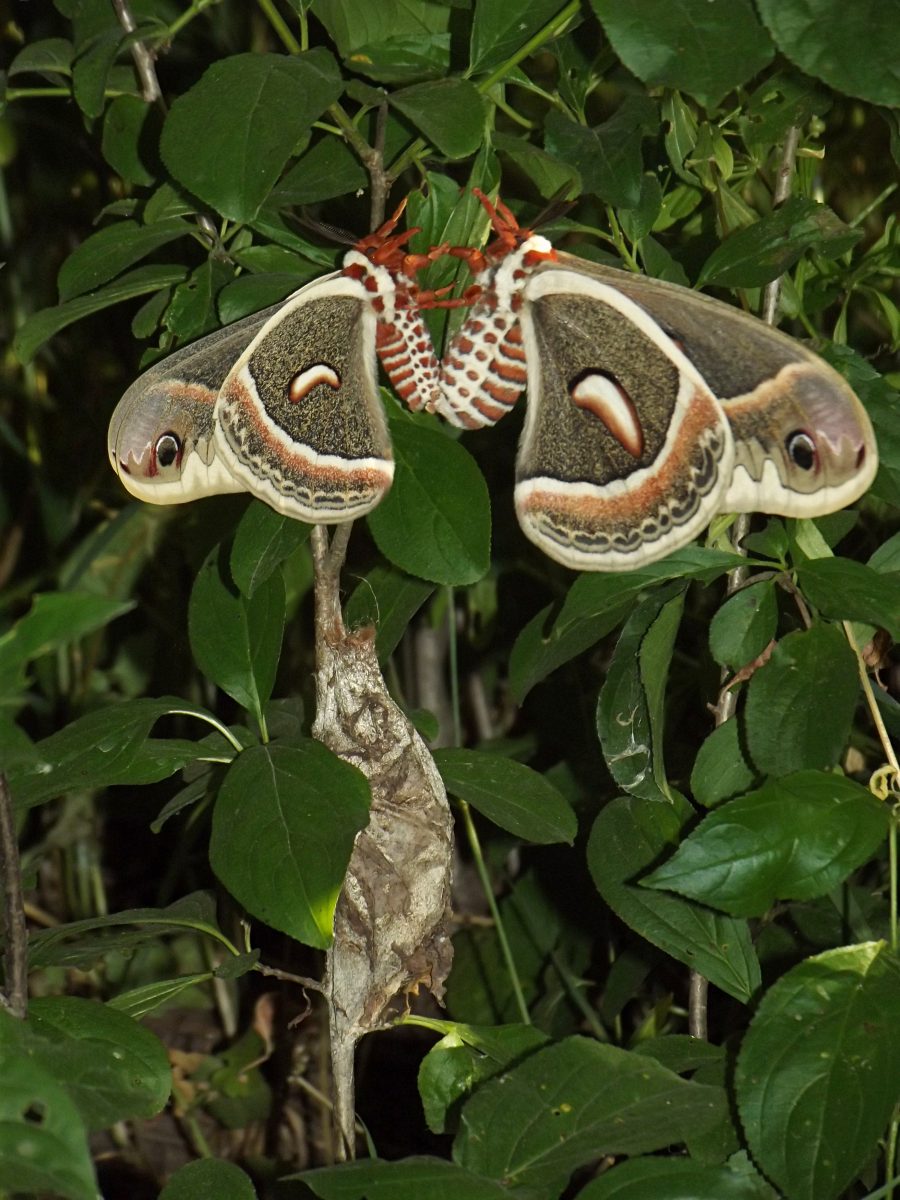
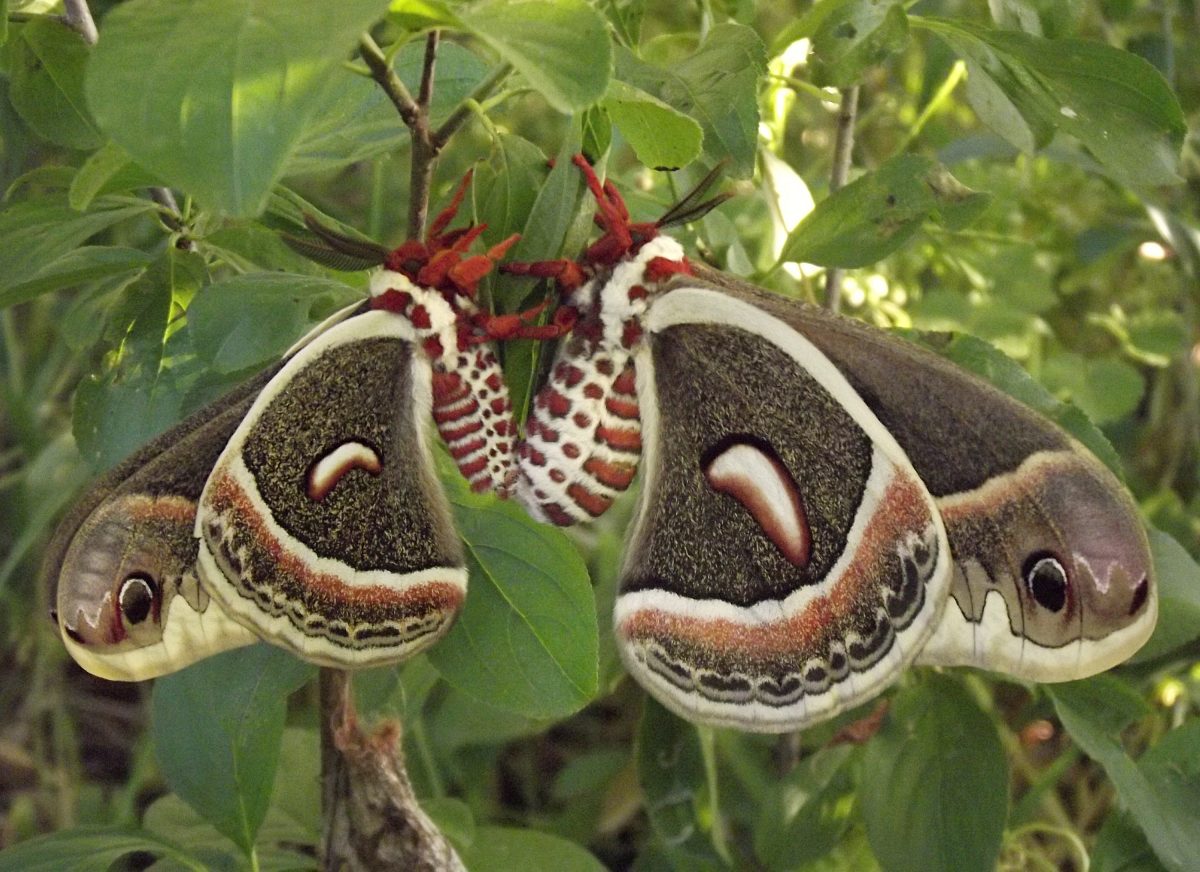
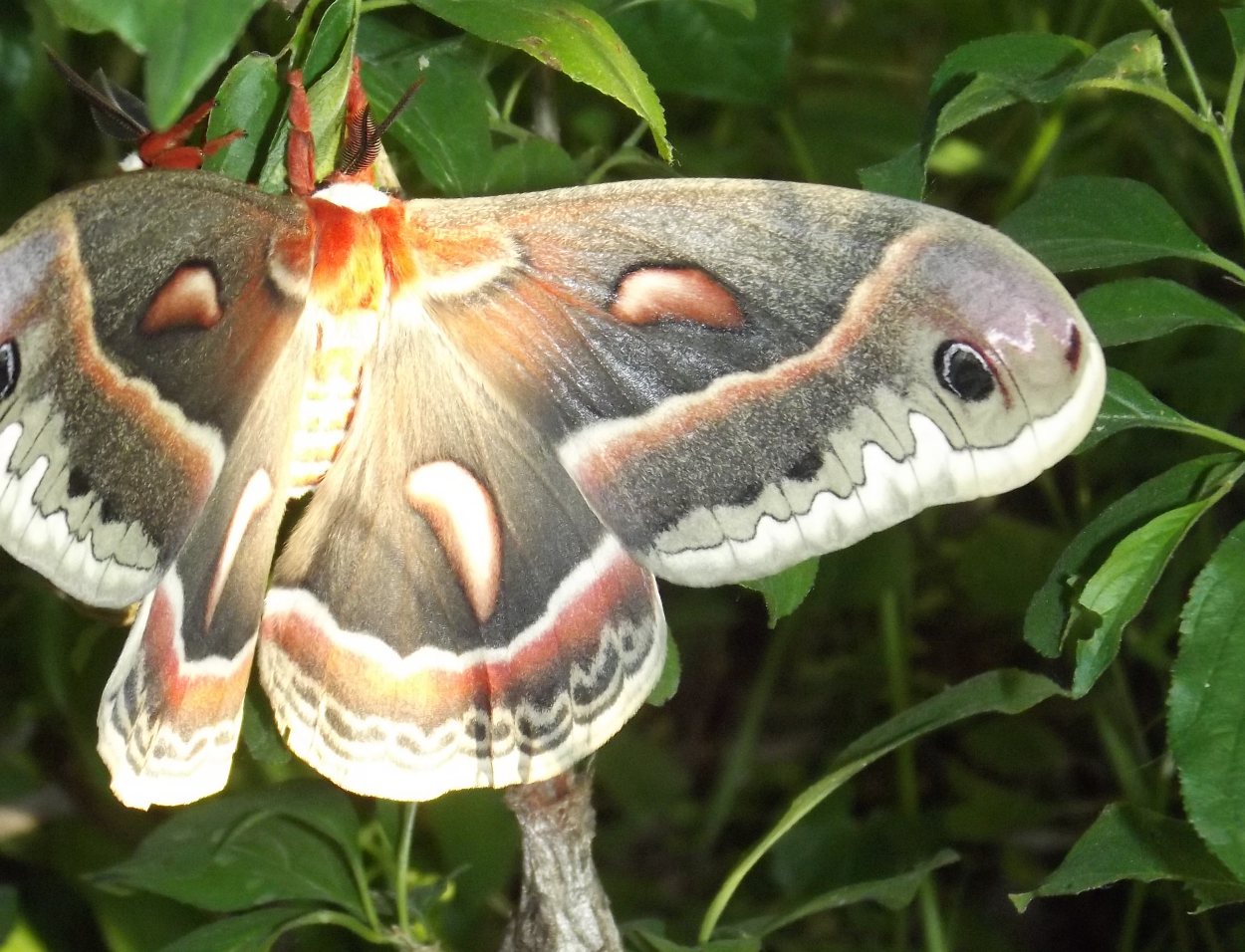
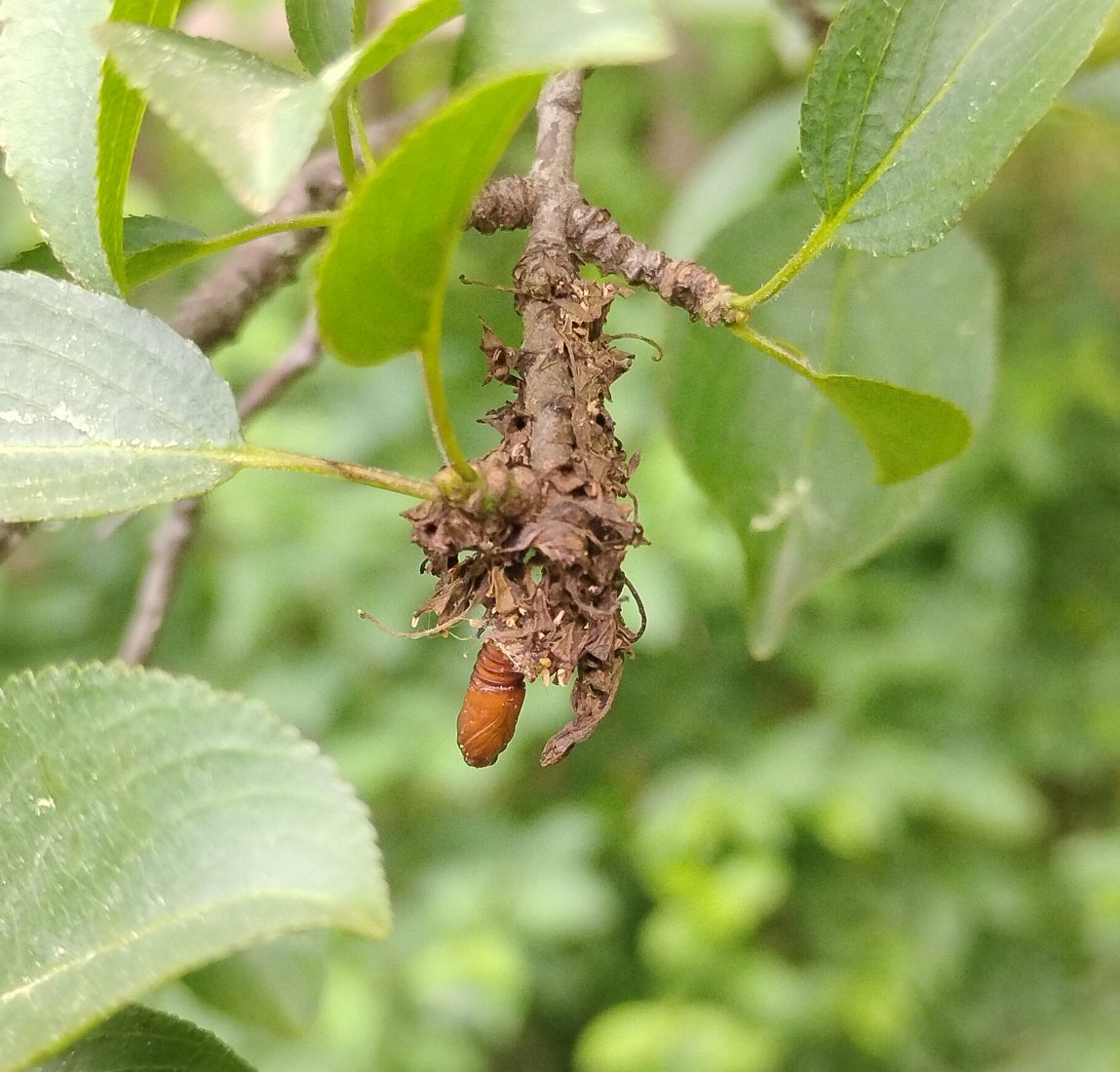
Other moths using buckthorn, H. cecropia (Saturniidae) and undetermined Tortricidae.
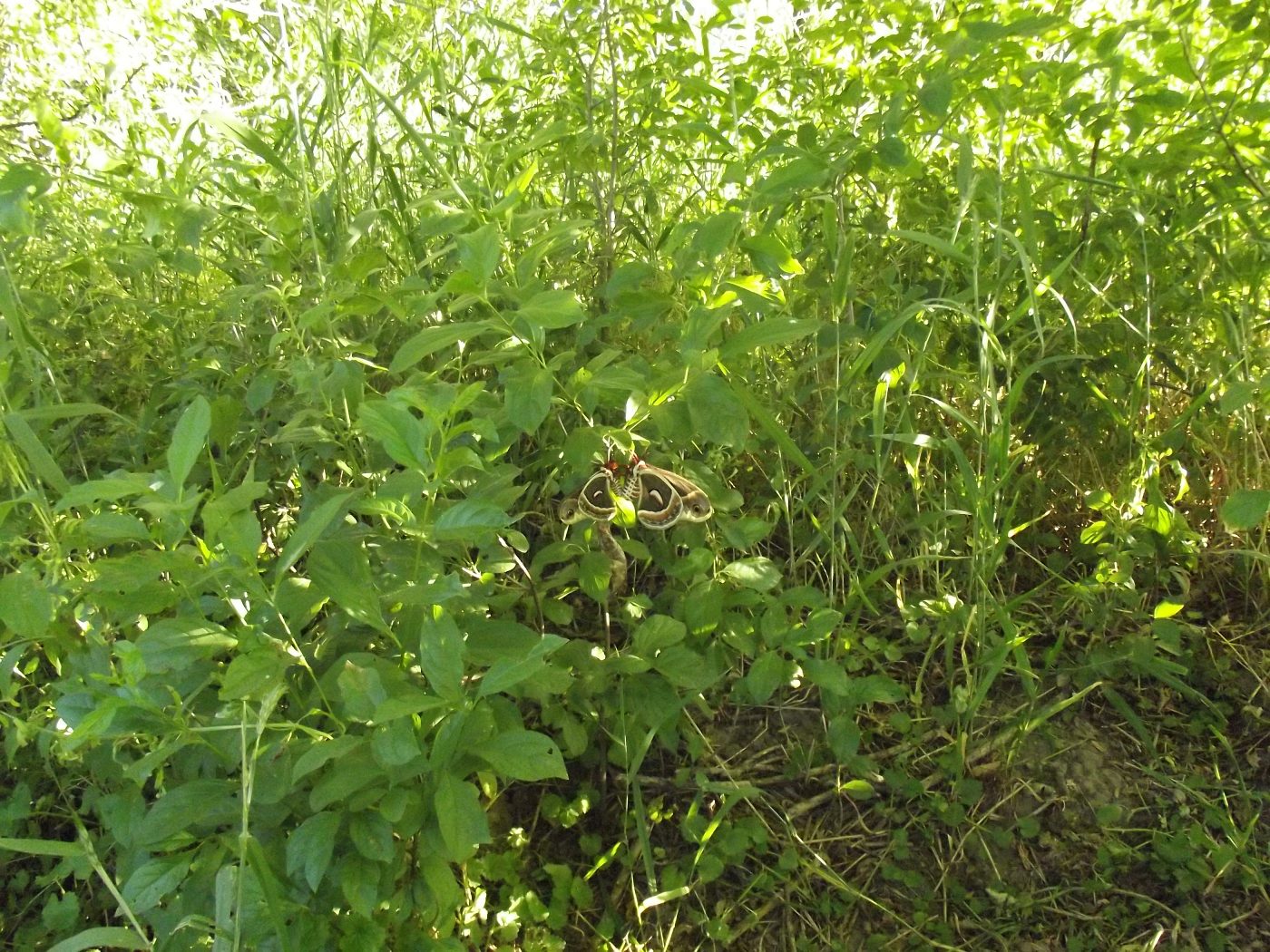
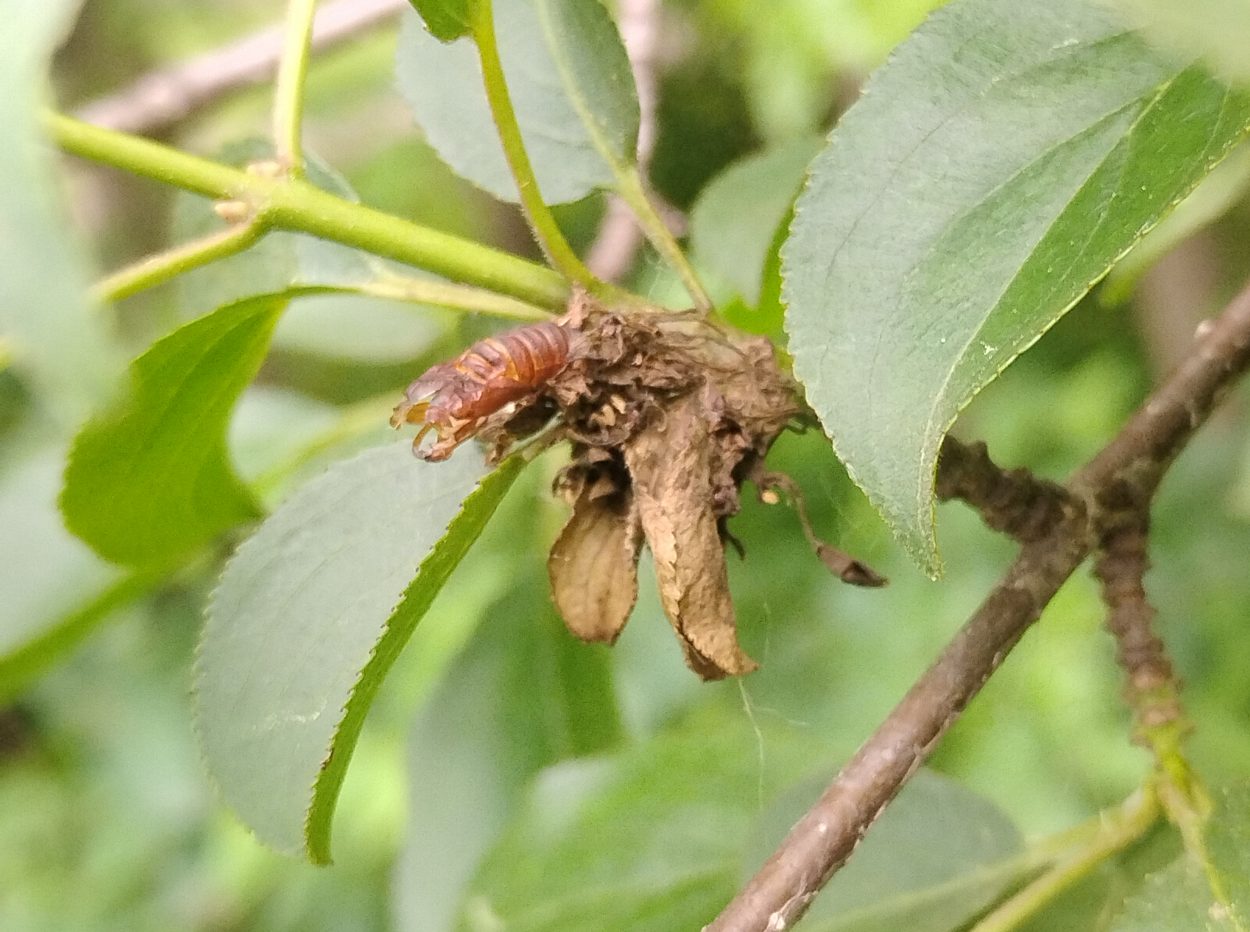
In mid-June 2021, I photographed two cecropia moths mating as they perched on a common buckthorn plant, with the cocoon of one of the moths (from which it had evidently just emerged) attached to the plant's stem. Dullea (2023) found a cecropia moth larva on common buckthorn in New York and reared it to adulthood on this plant, reporting that buckthorn was its "preferred" food, while Hanrahan (2012) observed multiple larvae on a common buckthorn shrub in a riparian area in Ontario. Other known rhamnaceous hosts for this moth include the native Rhamnus alnifolia in Wisconsin (Stiefel 2007) and native Ceanothus elsewhere in North America (Shropshire and Tallamy 2025); Fickenscher (2009) reported that 12.5% of cecropia larvae survived on invasive shrubs including glossy buckthorn (Frangula alnus) given to them in a no-choice feeding trial. However, it is unclear if the two moths and cocoon I observed represent a host record, as the cocoon could have been built by a larva that wandered into the buckthorn thicket after leaving its true host. Finally, in early June 2025, I observed an intact pupa of an unidentified tortricid protruding from a "nest" of dried leaves and flowers on a common buckthorn twig, while a second nearby twig on the same plant hosted the spent pupal exuviae of a second tortricid individual protruding from a similar shelter, with the freshly emerged adult moth resting on an adjacent leaf. I was unable to photograph the moth before it flew off, but it was yellow in color overall, possibly with some darker reddish or brownish patterning. The so-called "yellow-winged oak leafroller moth", Argyrotaenia quercifoliana, has been previously reported from common buckthorn (Shropshire and Tallamy 2025), as has another tortricid, Ancylis brauni (Eiseman 2023b). It was unclear whether the pupae and adult I observed had fed on the plant as larvae.
- Becker, R., Gerber, E., Hinz, H.L., Katovich, E., Panke, B., Reardon, R., Renz, M., and L. Van Riper. 2013. Biology and biological control of garlic mustard. United States Department of Agriculture (USDA) Forest Service, Forest Health Technology Enterprise Team. FHTET-2012-05.[return to in-text citation][return to in-text citation]
- Blossey, B., Nuzzo, V., Hinz, H., and E. Gerber. 2001. Developing biological control of Alliaria petiolata (M. Bieb.) Cavara and Grande (garlic mustard). Natural Areas Journal 21(4): 357–367. [return to in-text citation][return to in-text citation]
- Blossey, B., Nuzzo, V., Hinz, H., and E. Gerber. 2002. Garlic mustard. Chapter 29 in Van Driesche, R., et al., 2002. Biological control of invasive plants in the eastern United States. USDA Forest Service Publication FHTET-2002-04. 413 pp. [return to in-text citation]
- Dullea, D. 2023. Cecropia Fourth Instar - Hyalophora cecropia - Female. Contributor post on BugGuide.net. Retrieved August 9, 2026 from https://www.bugguide.net/node/view/2271870.[return to in-text citation]
- Eiseman, C.S. 2022. Leafminers of North America, 2nd edition. Self-published e-book. Available from the author at https://charleyeiseman.com/leafminers/. [return to in-text citation][return to in-text citation][return to in-text citation]
- Eiseman, C.S. 2022b. Carrot stem dwellers. BugTracks weblog. Retrieved August 4, 2026 from https://bugtracks.wordpress.com/2022/03/19/carrot-stem-dwellers/. [return to in-text citation]
- Eiseman, C.S. 2023b. Tortricidae ex buckthorn - Ancylis brauni. Contributor post on BugGuide.net. Retrieved August 9, 2026 from https://www.bugguide.net/node/view/2232530. [return to in-text citation]
- Eiseman, C.S. 2025. Leafminers of North America, 3rd edition. Self-published e-book. Available from the author at https://charleyeiseman.com/leafminers/.[return to in-text citation]
- Eiseman, C.S., Lonsdale, O., Feldman, T.S., and J. van der Linden. 2026. Thirty-three new species of Agromyzidae (Diptera) from the United States and Canada, with new host and distribution records for 154 additional species. Zootaxa 5745(1): 1-265. [return to in-text citation]
- Fickenscher, J.L. 2009. Insect responses to invasive shrubs in early-successional habitats. Master's Theses and Capstones [University of New Hampshire]. 521.[return to in-text citation]
- Gallformers Contributors. 2026. "Phanacis taraxaci", notes on ID and taxonomy. Gallformers website, www.gallformers.org. Retrieved August 9, 2026 from https://gallformers.org/gall/1426. [return to in-text citation]
- Gallformers Contributors. 2026b. "Protomyces pachydermus", notes on ID and taxonomy. Gallformers website, www.gallformers.org. Retrieved August 9, 2026 from https://gallformers.org/gall/5712. [return to in-text citation]
- Gerber, E., Hinz, H.L., and B. Blossey. 2008. Pre-release impact assessment of two stem-boring weevils proposed as biological control agents for Alliaria petiolata. Biological Control 45(3): 360-367.[return to in-text citation]
- Hall, T.C.K., McTavish, M.J., Bourchier, R.S., and S.M. Smith. 2025. First record of the native beetle Mordellina ancilla (Coleoptera: Mordellidae) in association with introduced garlic mustard (Brassicaceae) in Ontario, Canada. The Canadian Entomologist 157:e19. doi:10.4039/tce.2025.7[return to in-text citation][return to in-text citation]
- Hanrahan, C. 2012. Unknown larva - Hyalophora cecropia. Contributor post on BugGuide.net. Retrieved August 9, 2026 from https://www.bugguide.net/node/view/663148.[return to in-text citation]
- Hatfield, MJ. 2021. Agromyzidae, Garlic Mustard, upper side of leaf - Liriomyza brassicae. Contributor post at BugGuide.net. Retrieved May 15, 2026 from https://www.bugguide.net/node/view/1937787. [return to in-text citation]
- Hatfield, MJ. 2022. Agromyzidae, mine on Garlic Mustard - Liriomyza brassicae. Contributor post at BugGuide.net. Retrieved May 15, 2026 from https://www.bugguide.net/node/view/2086642. [return to in-text citation]
- Hatfield, MJ. 2026. Plutellidae, Diamondback Moth larva feeding on Garlic mustard, dorsal - Plutella xylostella. Contributor post at BugGuide.net. Retrieved May 15, 2026 from https://www.bugguide.net/node/view/2534575. [return to in-text citation]
- Shropshire, K.J. and D.W. Tallamy. 2025. Lepidoptera of North America, north of Mexico: an annotated list containing geographic ranges and host-plant records. ZooKeys 1261: 101-113.[return to in-text citation]
- Stiefel, J. 2007. Cecropia Moth Larva - Hyalophora cecropia. Contributor post on BugGuide.net. Retrieved August 9, 2026 from https://www.bugguide.net/node/view/148386.[return to in-text citation]
Page created: July 29, 2026. Last update: August 10, 2026