Petiole borer (Hymenoptera: Tenthredinidae) in Acer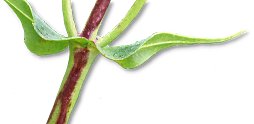
| Record no.: | 0006 |
|---|---|
| Feeding guild: | Petiole borer |
| Taxonomy: | Hymenoptera: Tenthredinidae: Caulocampus cf. acericaulis |
| Stages observed: | trace, larva |
| Distribution observed: | IA |
| Hosts in Acer: | A. saccharum (sugar maple) |
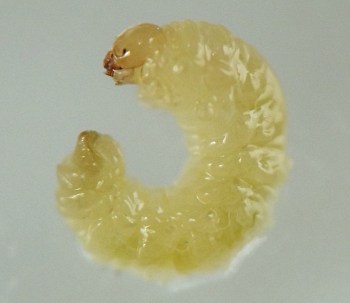
The maple petiole borer sawfly (Hymenoptera: Tenthredinidae: Caulocampus acericaulis) is one of the better-known petiole borers in North America. According to Britton (1906), records of damage probably due to this species appear as early as 1895 in the entomological literature. Britton reared adults, briefly described the immature and adult forms, and provided perhaps the first relatively comprehensive account of this animal's life history, including black-and-white photographs of affected leaves and and egg and a larva inside petioles. Yuasa's monograph on Tenthredinoidea larvae (Yuasa 1922) describes the larva of C. acericaulis in more detail. Smith (1968) reviews the genus and describes a second species, C. matthewsi, including the information that "the specimens [of C. matthewsi] were collected in a Malaise trap, and the host is not known; however, judging from the structure of the lancet, the habits of matthewsi may be similar to those of acericaulis. Both species of this genus were collected in the same locality" (p. 129). In addition to those works, descriptions of C. acericaulis biology and plant damage may be found in recent printed sources (e.g. Cranshaw 2004) and in entomology publications on the Web.
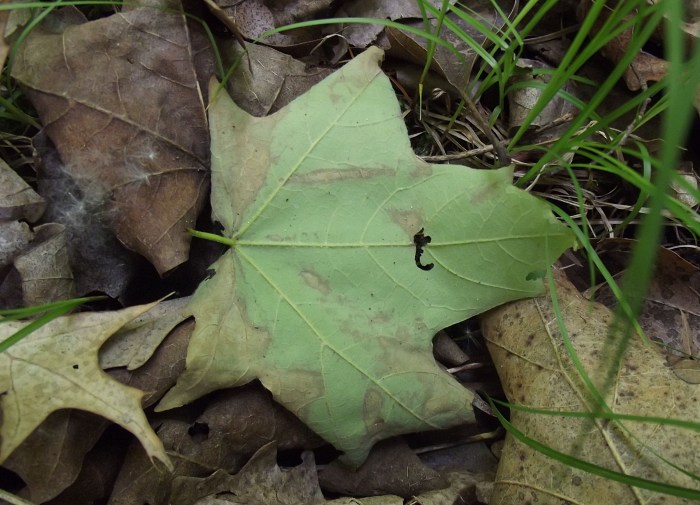
In the current study, I detected the presence of Caulocampus maple petiole borer sawfly larvae by observing fallen leaf blades of sugar maple (Acer saccharum) in late May through the first week of June, 2018 and 2023. The sawfly larvae, feeding inside the petioles of these leaves up in the tree, had neatly severed the petioles about 1 to 3 cm below the leaf blade. The leaf blade of each affected leaf, with a short stub of petiole attached, had then fallen to the ground, and the rest of the petiole -- with larva still feeding inside -- remained attached to the tree. Searching the lower branches of the trees soon revealed the remnant petioles still attached to the green stems.
The larva tunnels out part of the remaining length of its petiole, producing dark brown frass with which it plugs the open end of the petiole. Larvae are straw-colored, with six short, fleshy thoracic legs (visible with minimal magnification) and a slightly darker head capsule bearing two small dark eyespots and sclerotized mandibles. I observed one particularly robust larva, which I believed to be a final instar, produce a strong, sickly-sweet lemony scent. The odor was noticeable at least 30 cm away from the source.
When mature, the larva exits the petiole and burrows into the soil to pupate. Adults reared by Britton (ibid.) emerged the following spring when maple leaves were just beginning to unfurl.
 Prev
Prev
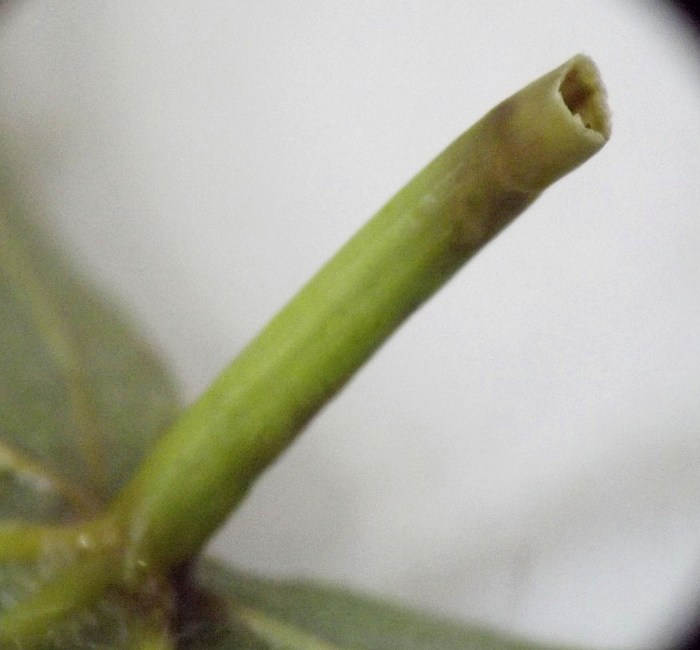
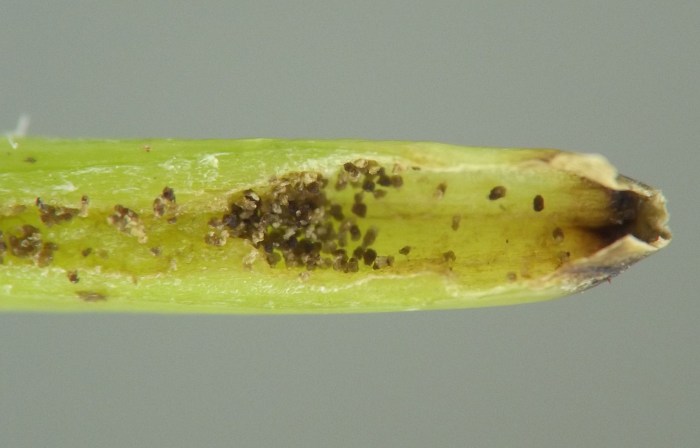
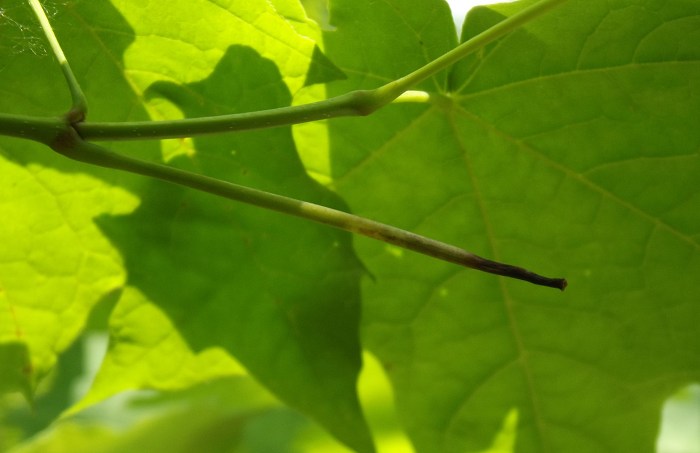
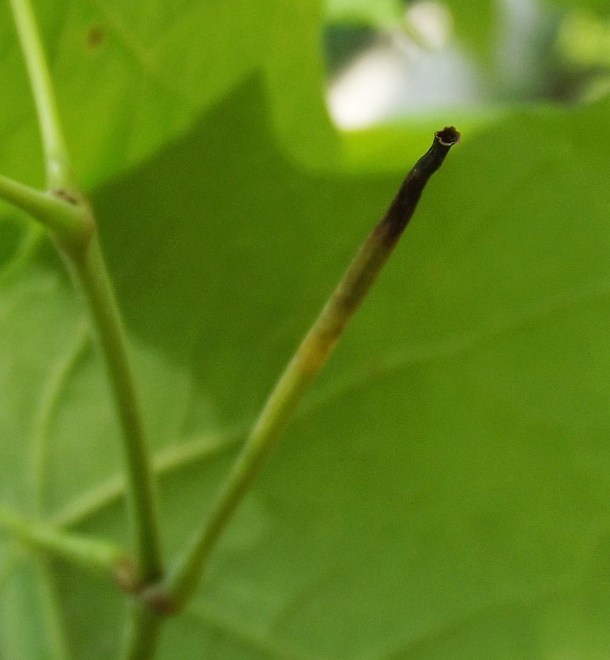
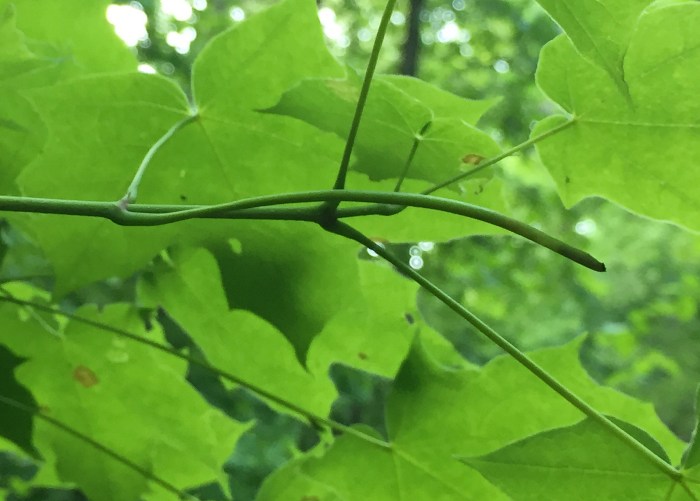
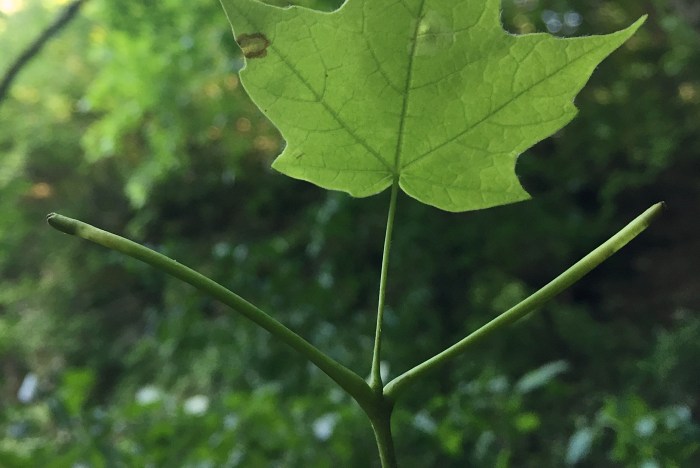
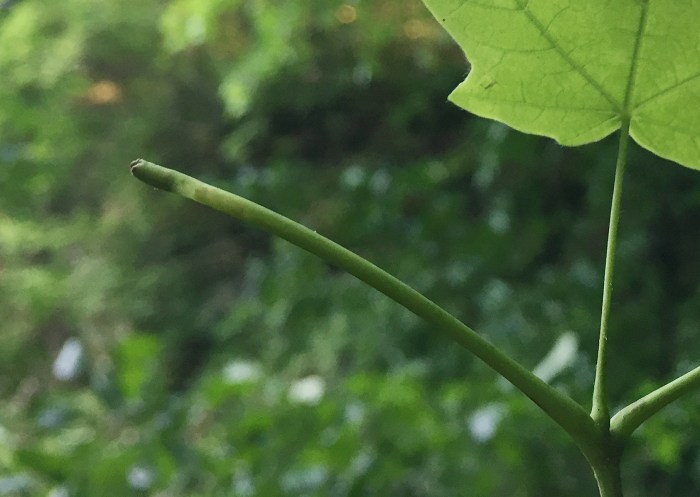
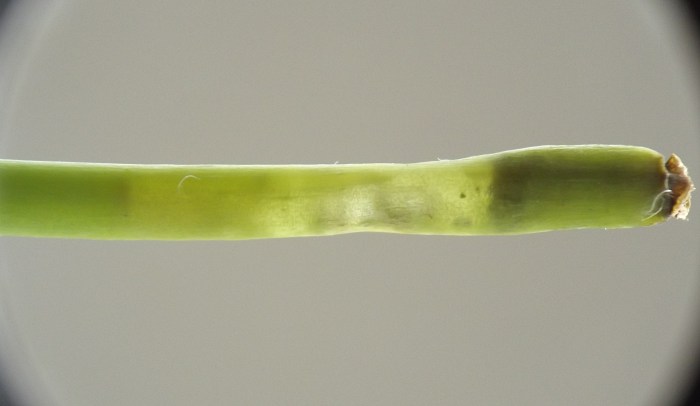
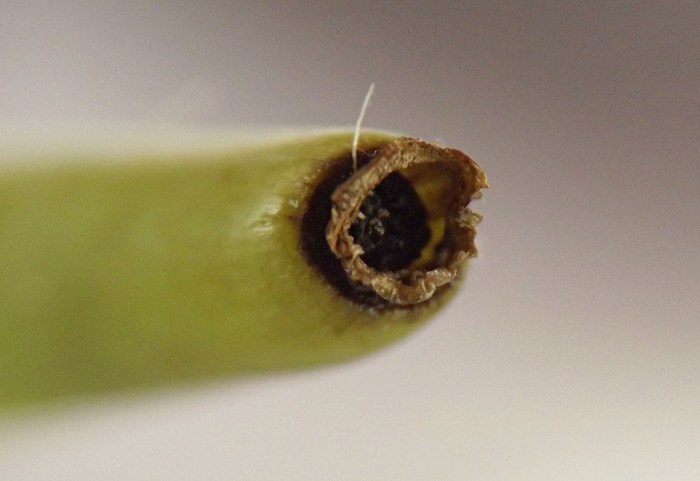
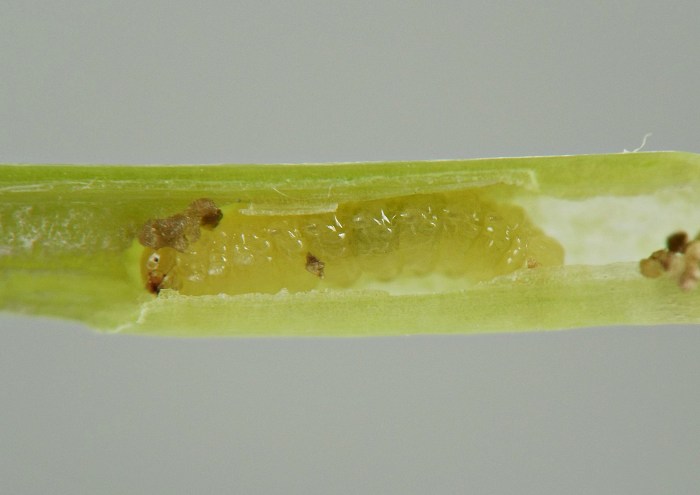
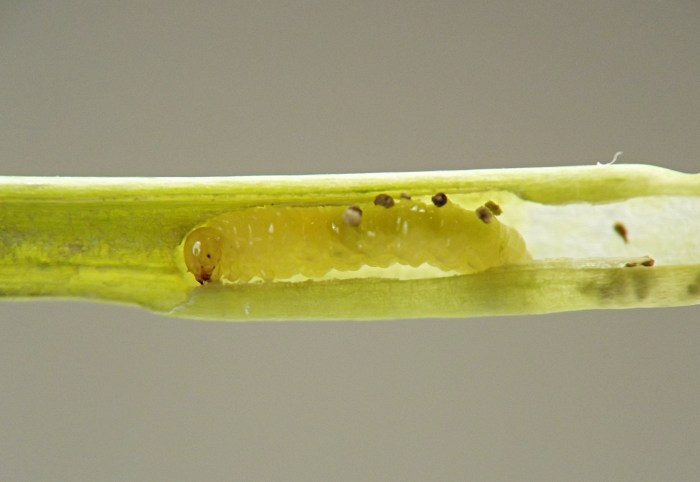
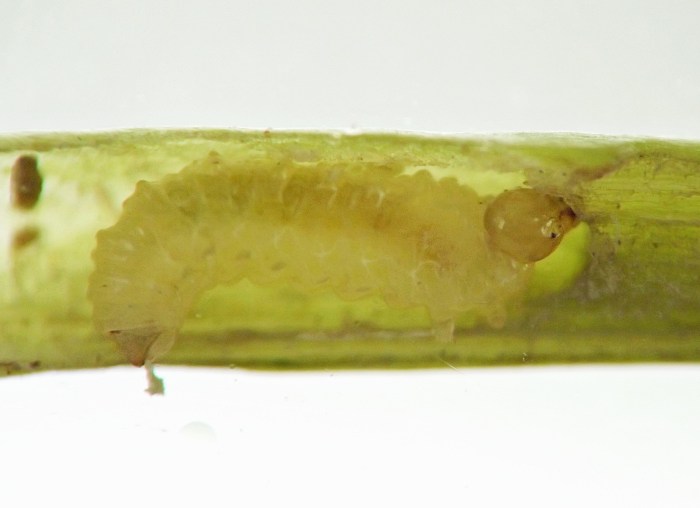
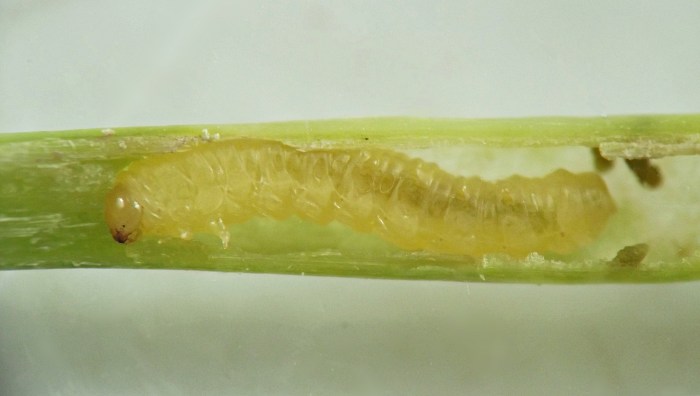
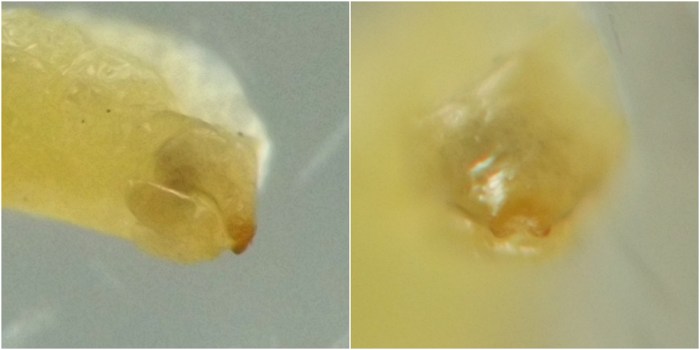
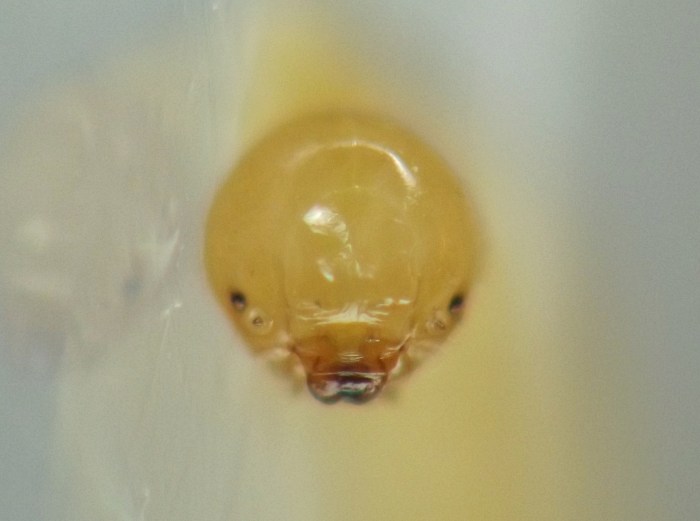
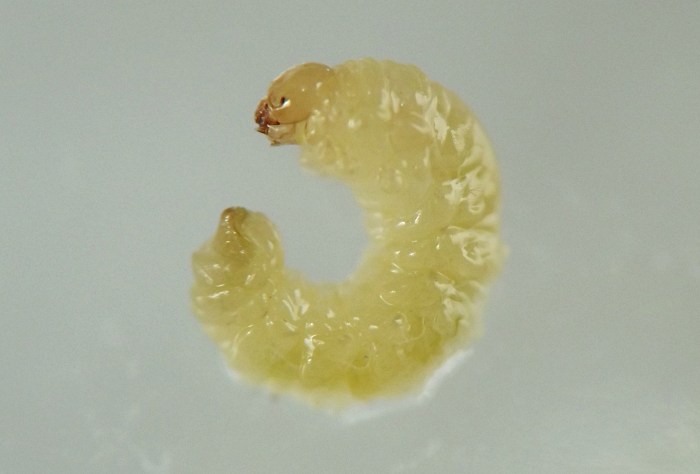
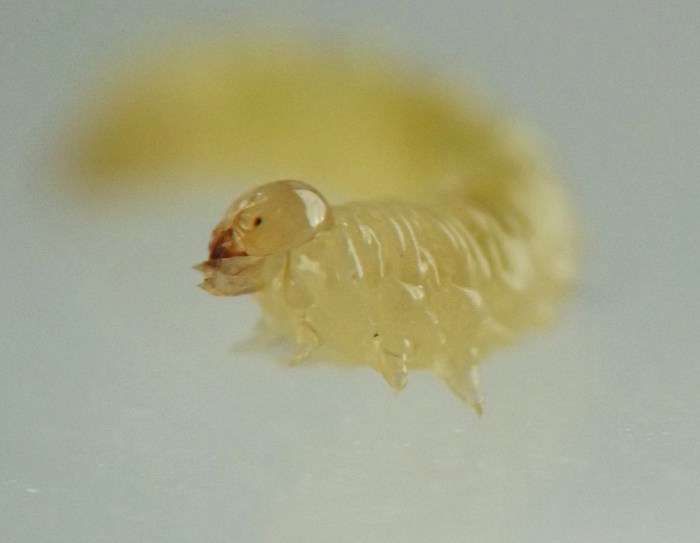
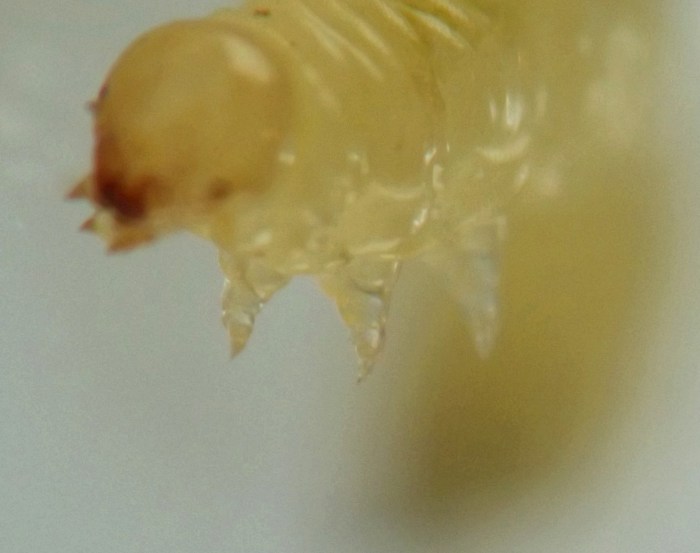
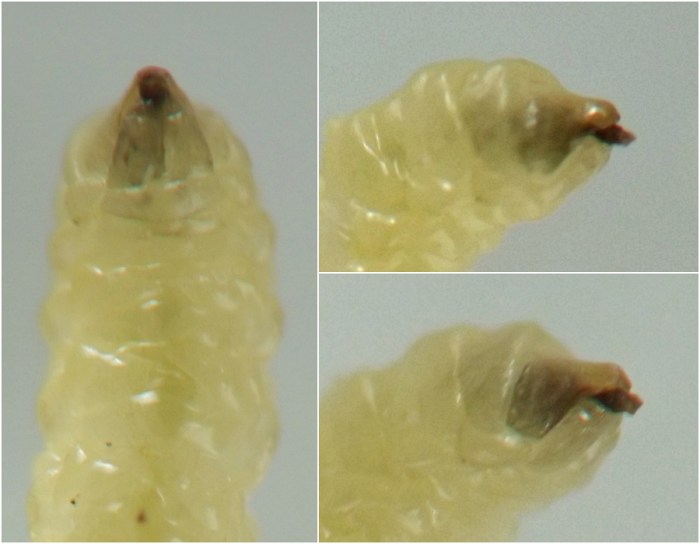
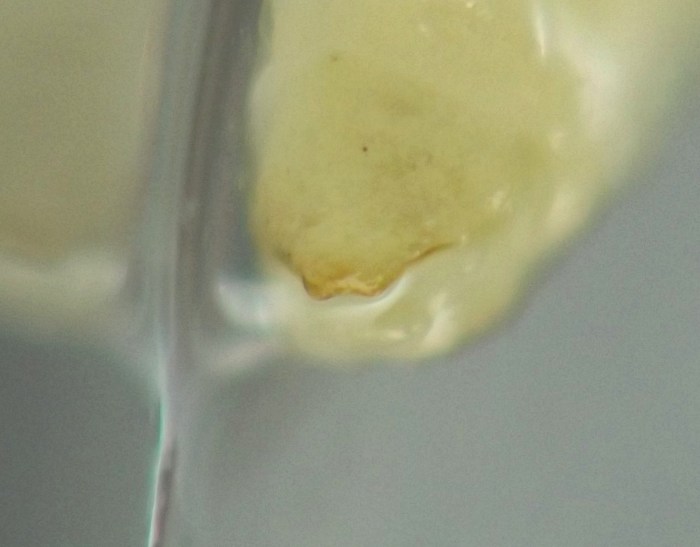
Field photos taken 06/02/18 (01, 03-04, 08); coll. 05/26/18, photos same day (02, 10); field photos taken 06/03/23 (05-07); coll. 06/03/23, photos taken 06/04/23-06/05/23 (09, 11-26).
- Britton, W.E. 1906. The maple leaf-stem borer or sawfly, Priophorus acericaulis MacGillivray, a new enemy of the sugar maple. Entomological News 17:313-320. Retrieved September 9, 2023 from https://www.biodiversitylibrary.org/page/24669971.[return to in-text citation]
- Cranshaw, W. 2004. Garden insects of North America. Princeton University Press: Princeton and Oxford.[return to in-text citation]
- Smith, D.R. 1968. The genus Caulocampus Rohwer. Proceedings of the Entomological Society of Washington 70(2):126-129. Retrieved September 9, 2023 from https://www.biodiversitylibrary.org/page/16262135.[return to in-text citation]
- Yuasa, H. 1922. A classification of the larvae of the Tenthredinoidea. Illinois Biological Monographs 7(4):1-172. Retrieved September 9, 2023 from https://www.biodiversitylibrary.org/page/16565277.[return to in-text citation]
Page created: September 8, 2023. Last update: February 9, 2026