Stem borer (Lepidoptera: Nepticulidae) in Acer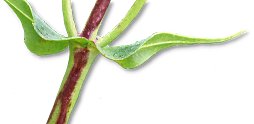
| Record no.: | 0007 |
|---|---|
| Feeding guild: | Stem borer |
| Taxonomy: | Lepidoptera: Nepticulidae: cf. Etainia ochrefasciella |
| Stages observed: | trace, larva, pupa, adult |
| Distribution observed: | IA |
| Hosts in Acer: | A. saccharum (sugar maple) |
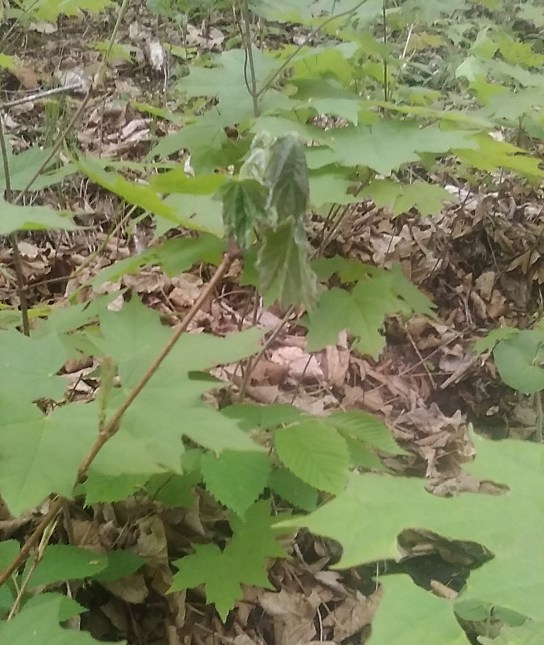
This nepticulid tunnels in new shoots of sugar maple in May, causing the leaves to wilt. The damage appears to be typically confined to the base of the shoot, where the shoot emerges from last year's woody twig, with tunnels observed extending into the shoot several mm toward the shoot apex from this point. At the time of larval activity, the very base of the shoot is surrounded by persistent bud scales. In one example I collected for study, removing these bud scales revealed discoloration of the shoot base associated with the larva's tunneling and an entrance hole in the outer wall of the shoot, plugged with frass and leading to the tunnel within.
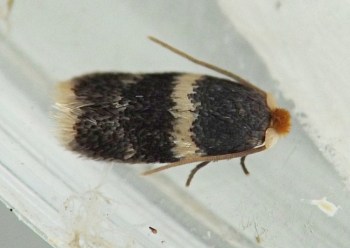
I obtained two cocoons in my efforts to rear this borer. The first cocoon was formed on the exterior of the woody twig ~20mm below where the shoot tunneling had occured. The second was formed in the open end of a tunneled shoot that had been removed from the woody portion of the twig so it would fit in the rearing container. Both cocoons were completed on or before May 21, and an adult emerged from the first cocoon on 11 June.
Etainia ochrefasciella (formerly Obrussa ochrefasciella) is known to feed in terminal buds of sugar maple in springtime. Kulman (1967) described the life history of this species in detail. According to Kulman, eggs are laid on leaf petioles in summertime, which the newly hatched larvae tunnel into briefly before moving into the adjacent axillary buds. The following spring, larvae migrate to terminal buds, where they complete their development; pupation is in a cocoon off the plant. Kulman found larvae only in petioles and buds, but located evidence of insects tunneling in new shoots in the springtime as well:
In Florida, several shoots of southern sugar maple, about 1/8 inch in diameter, were damaged by an unknown borer which bored for more than 1 inch in the center of the current year's shoot. Each boring was associated with a dead axillary bud which was not at the twig terminal. ... Studies are presently in progress on insects boring in expanding shoots of sugar maple. There is little chance that the damage just described could be confused with that caused by the hard maple bud miner. The Obrussa larva attacks only the buds, and usually leaves the bud scales intact. (ibid., p. 390)
It is possible that my finding of a nepticulid tunneling in new shoots represents the mystery insect whose sign Kulman found in Florida. The simplest explanation is that the shoot borer is also E. ochrefasciella but Kulman did not find inhabited shoots and rear larvae from them to adulthood, so he was unaware the species feeds in shoots as well as buds and petioles. The E. ochrefasciella larvae may simply sometimes fail to kill the bud prior to its opening, their feeding only resulting in the death of the vegetation after the shoot has elongated several centimeters and leaves have unfurled. Another (less likely?) possibility is that the shoot borer is a different species. Eventual examination of reared adults will likely be needed in order to shed light on the situation.
 Prev
Prev
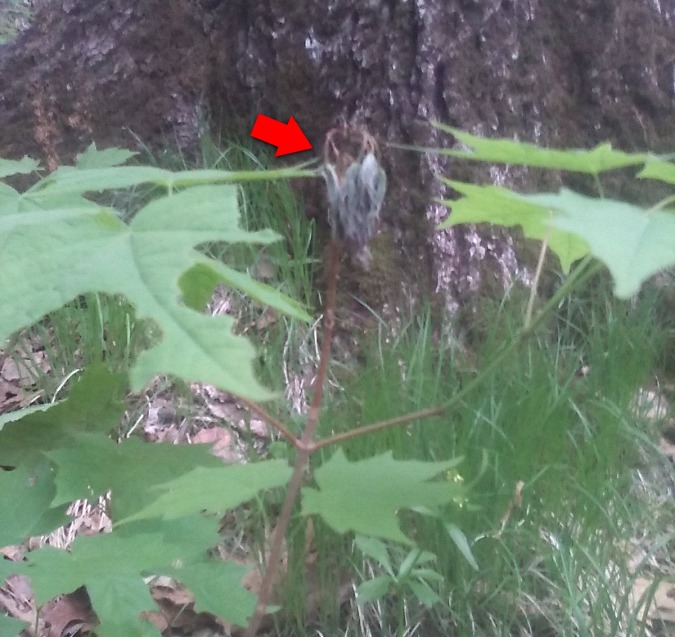
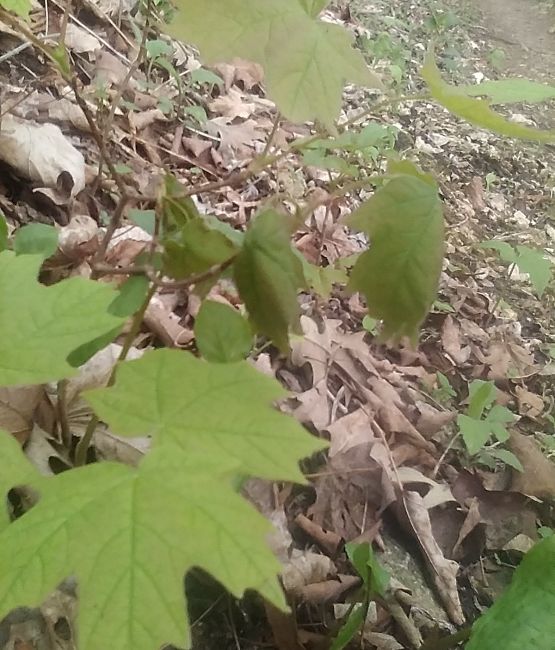
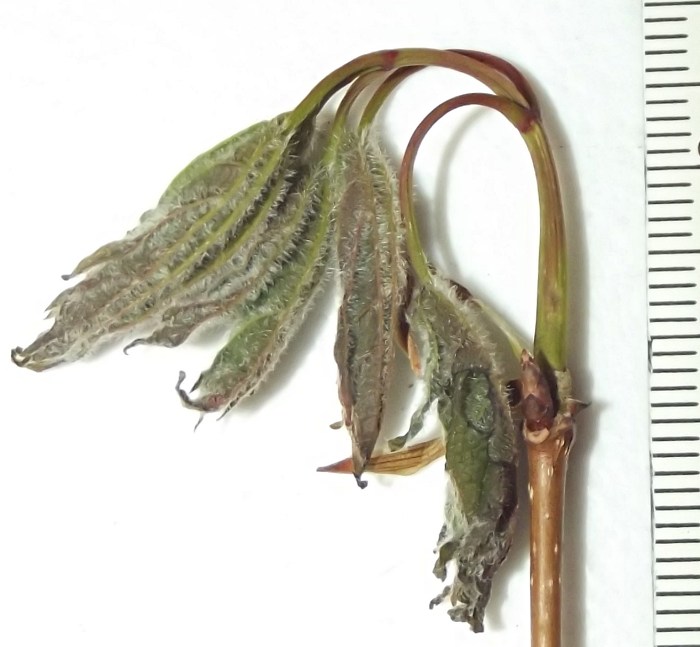
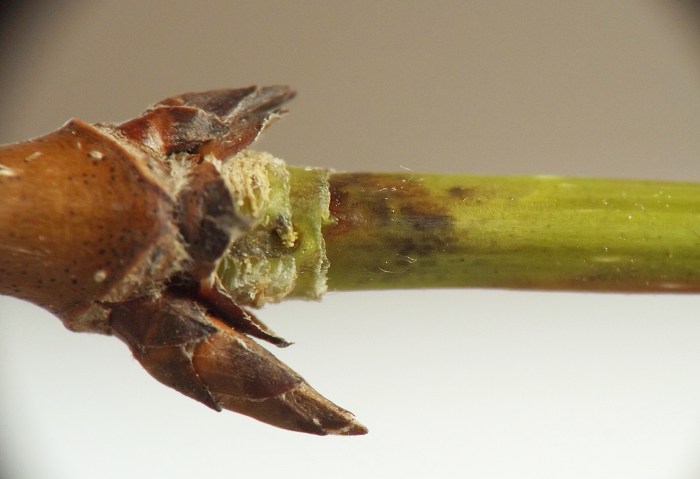
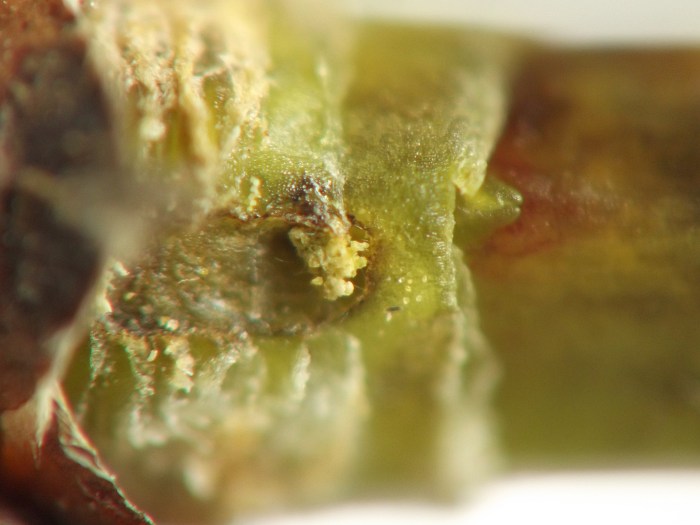
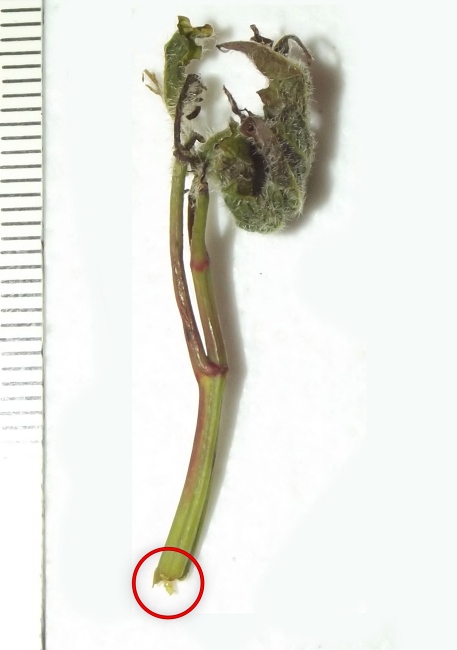
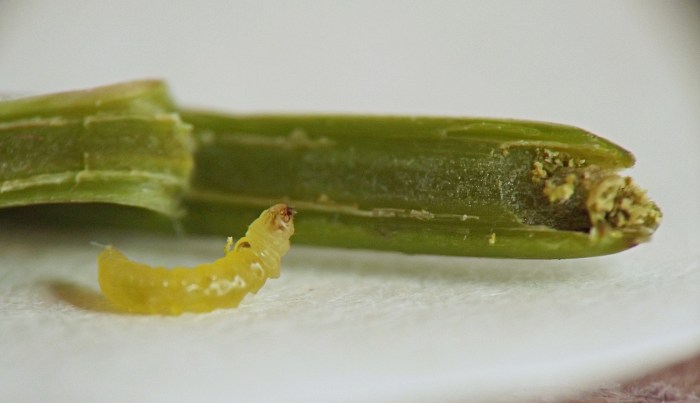
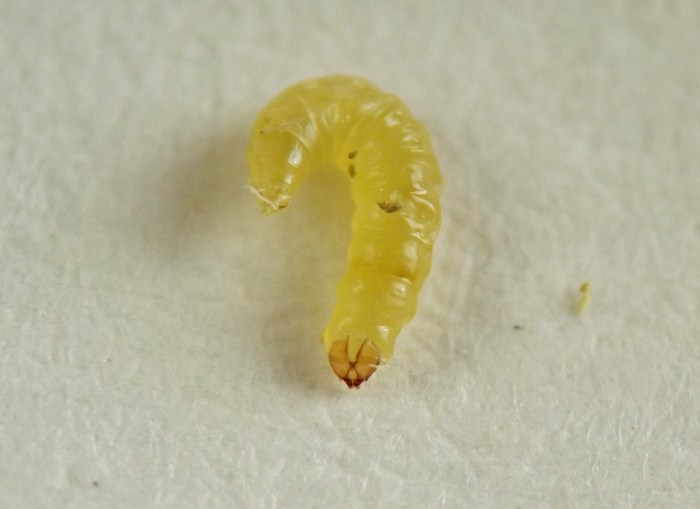
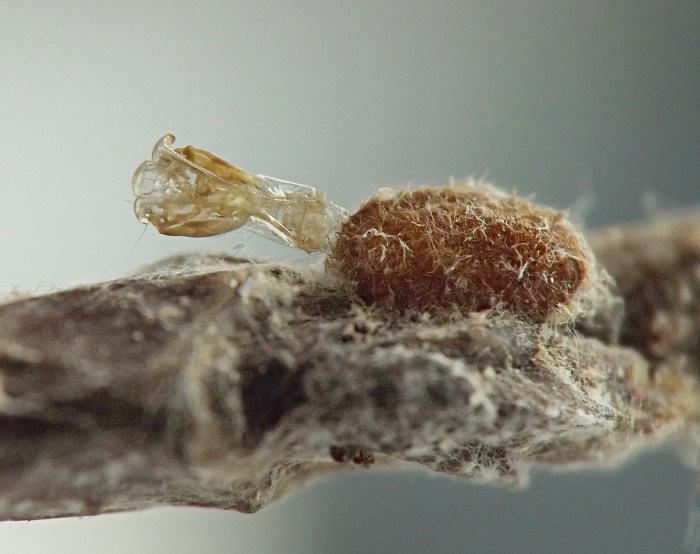
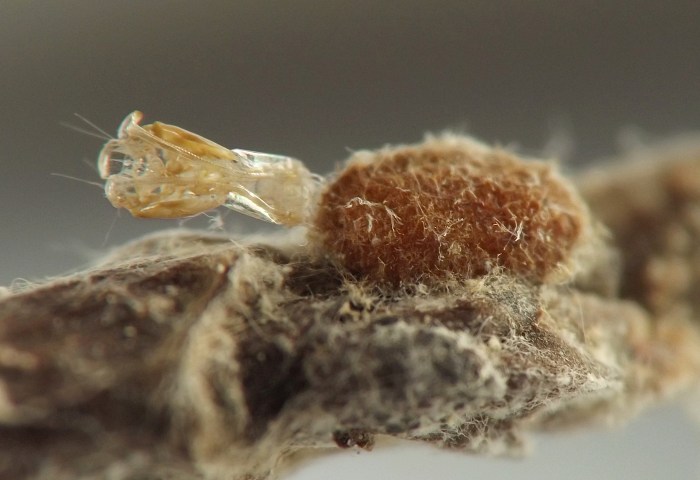
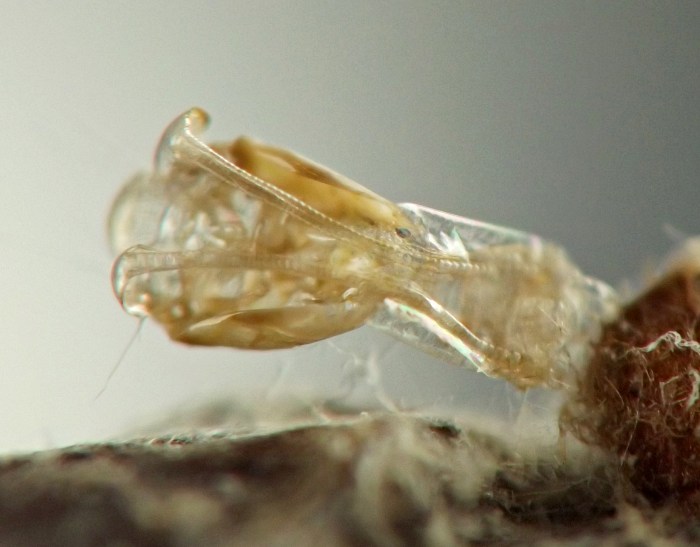
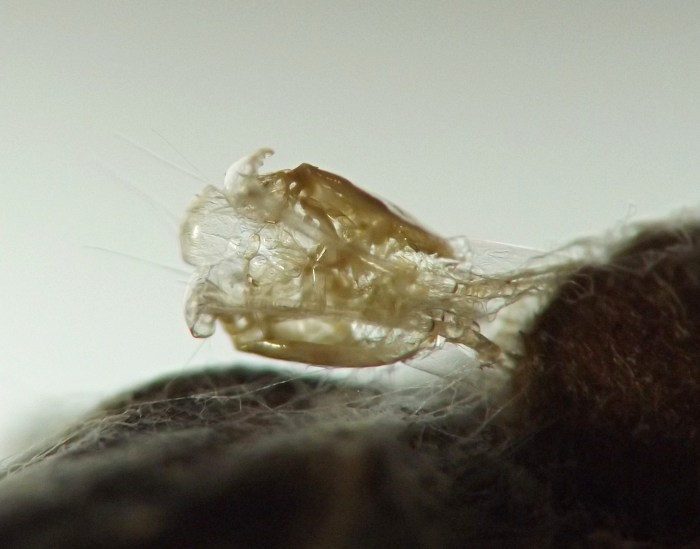
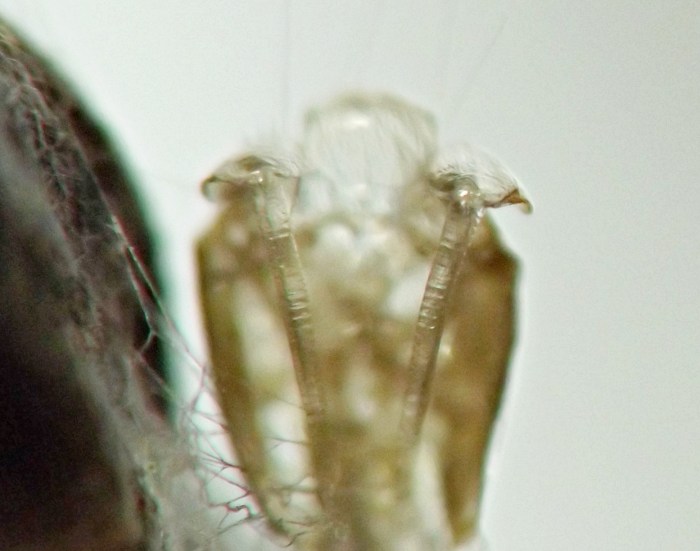
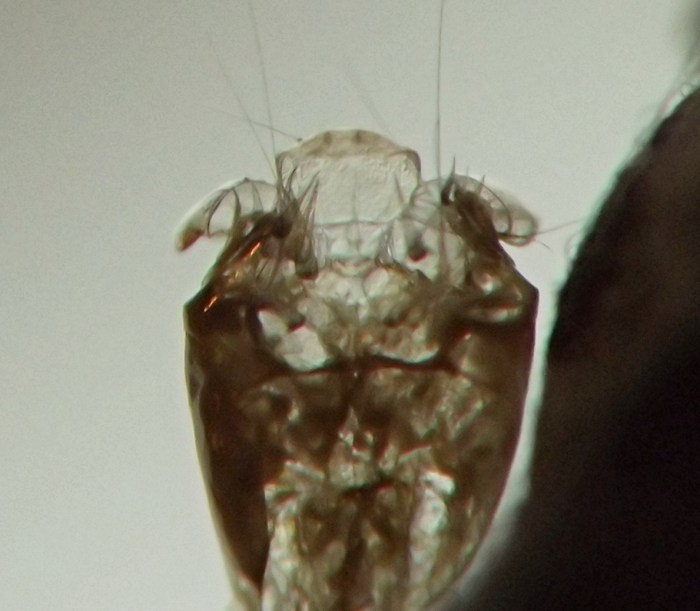
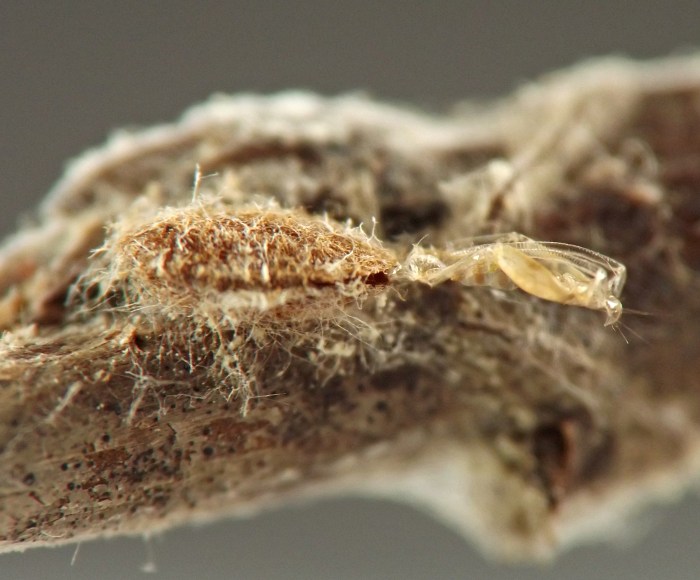
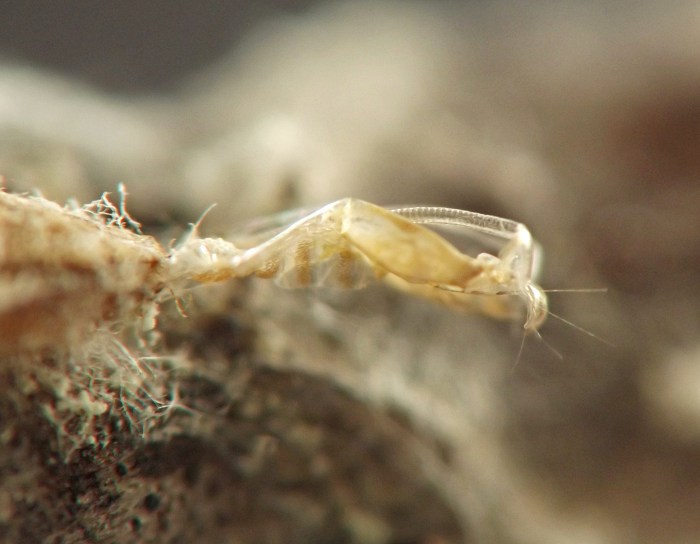
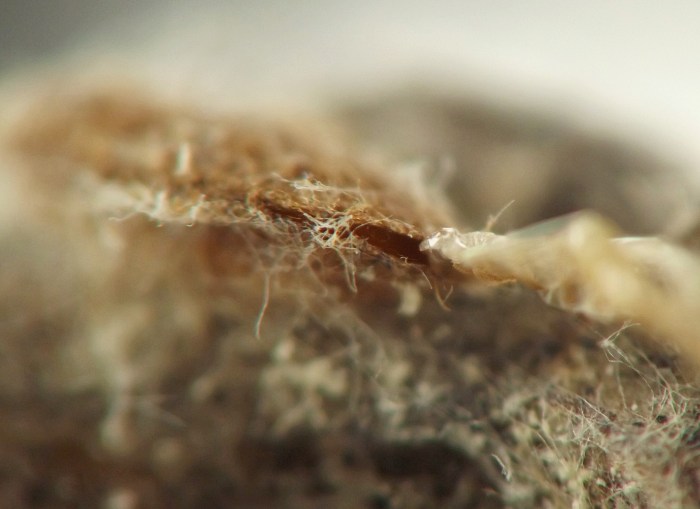
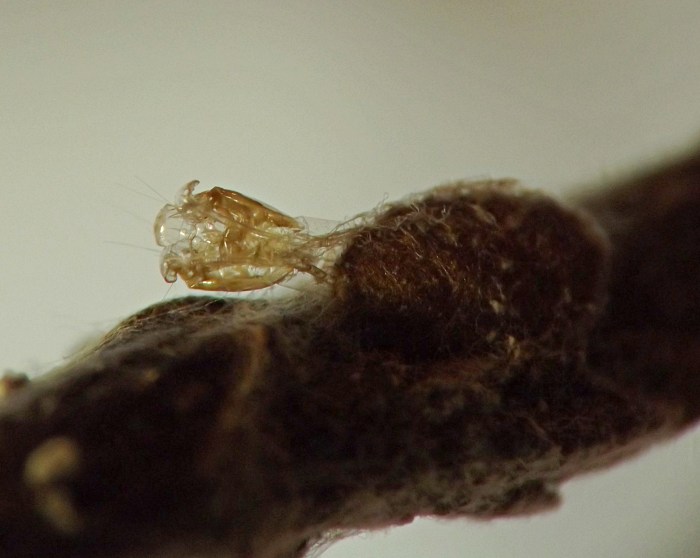
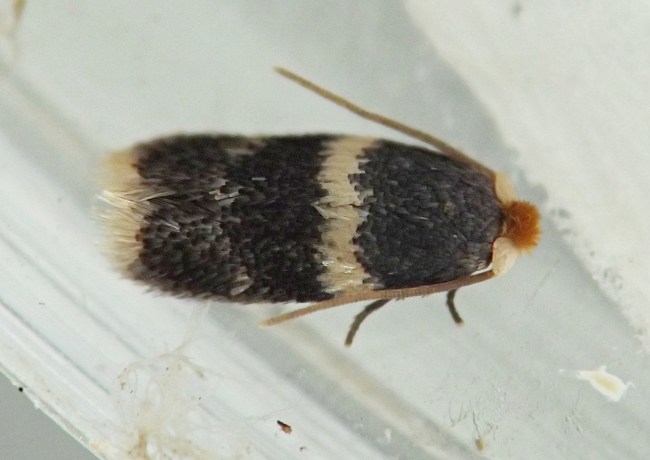
Field photos taken 05/11/23 (01-03); coll. 05/11/23, batch rearing, with cocoon by 05/21/23 and adult em. 06/11/23 (04-20).
- Kulman, H.M. 1967. Biology of the hard maple bud miner, Obrussa ochrefasciella, and notes on its damage (Lepidoptera: Nepticulidae). Annals of the Entomological Society of America 60(2): 387–391.[return to in-text citation]
Page created: September 17, 2023. Last update: February 9, 2026