Local feeder (Diptera: Cecidomyiidae) in petioles etc. of Ageratina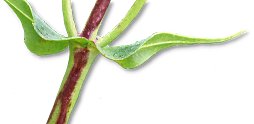
| Record no.: | 0022 |
|---|---|
| Feeding guild: | Local feeder in petiole and stem |
| Taxonomy: | Diptera: Cecidomyiidae: Neolasioptera sp. (+?) |
| Stages observed: | trace, larva, pupa, adult |
| Distribution observed: | IA |
| Hosts in Ageratina: | A. altissima (white snakeroot) |
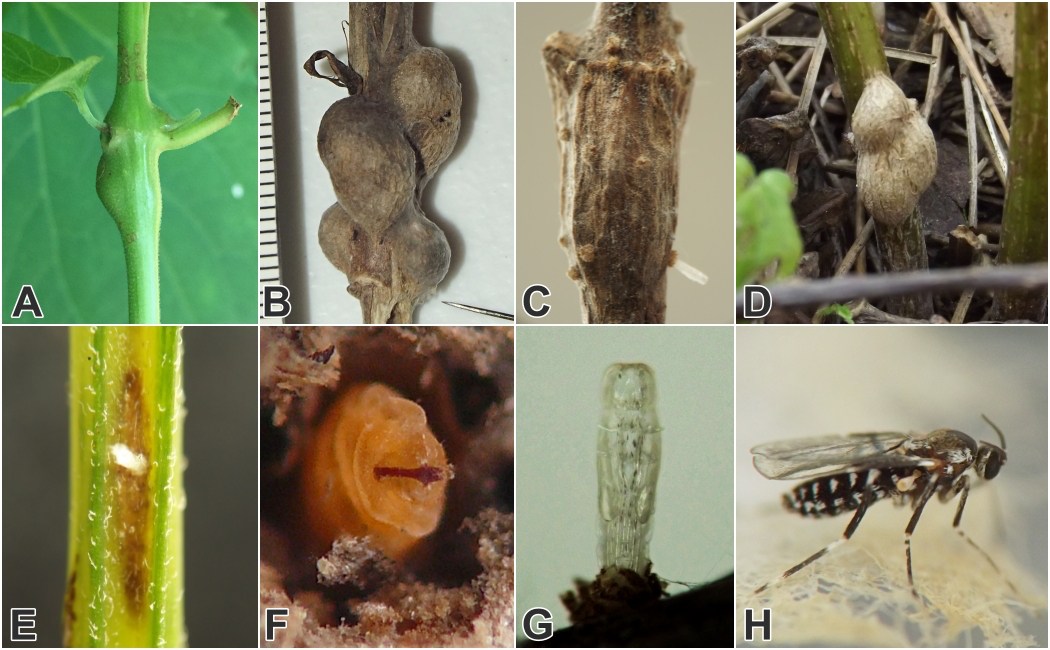
I found the gall midges included in this record in at least three situations in white snakeroot plants: (1) within leaf petioles that showed discoloration but essentially no swelling, (2) in lumpy, somewhat irregular, spindle-shaped to ovoid galls in upper stems, and (3) in ovoid to subglobular stem galls near the base of the stems, with some galls clustered in groups. Larvae from (1) have been confirmed as belonging to the genus Neolasioptera (see below), while larvae from (2) and larvae and adults from (3) are as yet unidentified beyond family level.
I located the first example of a petiole feeder in 2018, in the form of a pupal exuvium protruding from a discolored area on a petiole; inside the petiole was an apparent cecidomyiid cocoon in which the posterior end of the exuvium was still hidden, and next to the cocoon was the pupa of a wasp that had evidently parasitized a second cecidomyiid that had been present in the petiole. In October 2020, I found two petioles that each contained multiple yellowish or orangish Neolasioptera larvae in their interiors; in one of the petioles, larvae were located in a spot about halfway along the length of the petiole, with nothing but a slight crook in the petiole and some subtle outward discoloration to reveal their presence; in the other petiole, the larvae were clustered within the base of the petiole right where it joined the stem, and the leaf had prematurely wilted. R.J. Gagné (pers. comm., November 2, 2021) identified these larvae as Neolasioptera sp.
I encountered several examples of the slender, irregular upper stem galls in living and senesced stems. Two of these, in overwintering dead stems, were partially hollow inside and filled with black fungal material, but they contained no larvae so there remained some uncertainty as to the culprit. A third example I found on a living stem in late summer. I overwintered the gall indoors and found that it contained multiple larvae in the pith (panel F below) accompanied by some black fungal discoloration. The larvae's general appearance and the gall characteristics were reminiscent of Neolasioptera, but the larvae have not yet been identified to genus or species.
The subglobular stem galls occur singly or in clusters near the base of the stem, within ~20cm of ground level. In one example I observed, the larva overwintered in the gall and the adult emerged in spring. In another example, the gall was closer to ovoid in shape, 11mm long by 5.5mm wide, and it contained at least 11 larvae who overwintered in the gall and emerged as adults in spring. These galls may alternatively produce eurytomid wasps (see record 0023), who seem to conduct at least some of their feeding on gall tissue, perhaps after consuming the original cecidomyiid inhabitant.
See also: Ageratina stem insects compilation
 Prev
Prev
Page created: February 9, 2026. Last update: March 30, 2026