Stem borer (Lepidoptera: Tortricidae) in Ageratina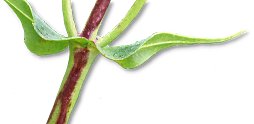
| Record no.: | 0028 |
|---|---|
| Feeding guild: | Stem borer |
| Taxonomy: | Lepidoptera: Tortricidae: Cochylini: cf. Cochylichroa avita |
| Stages observed: | trace, larva, pupa, adult |
| Distribution observed: | IA |
| Hosts in Ageratina: | A. altissima (white snakeroot) |
This borer's activities seem to usually occur in the middle to upper portions of white snakeroot stems; this may in part be a response to the fact that lower stems of the host are often occupied by mordellid, erotylid, or tephritid borers.
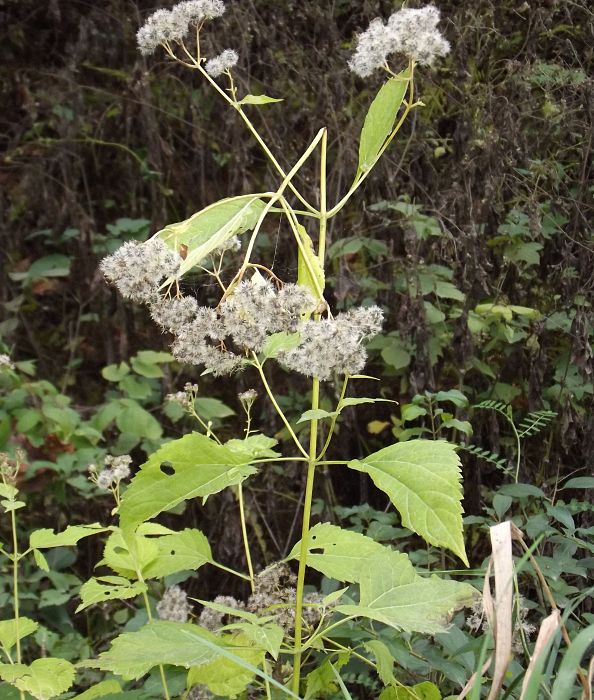
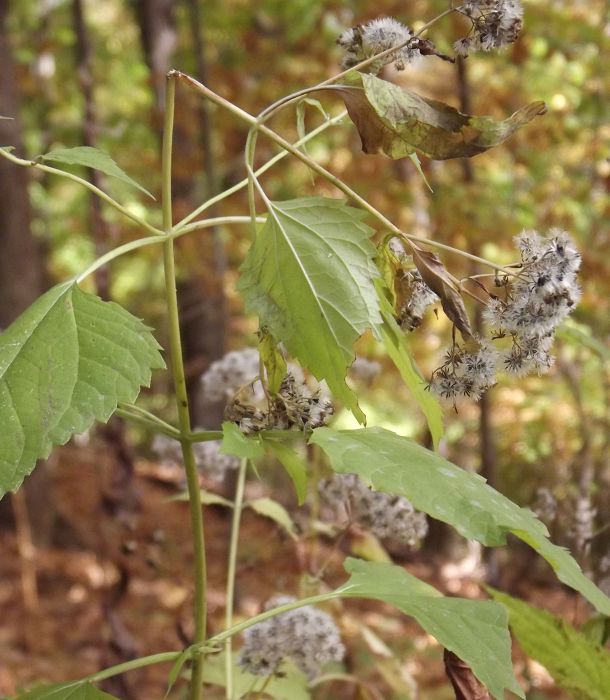
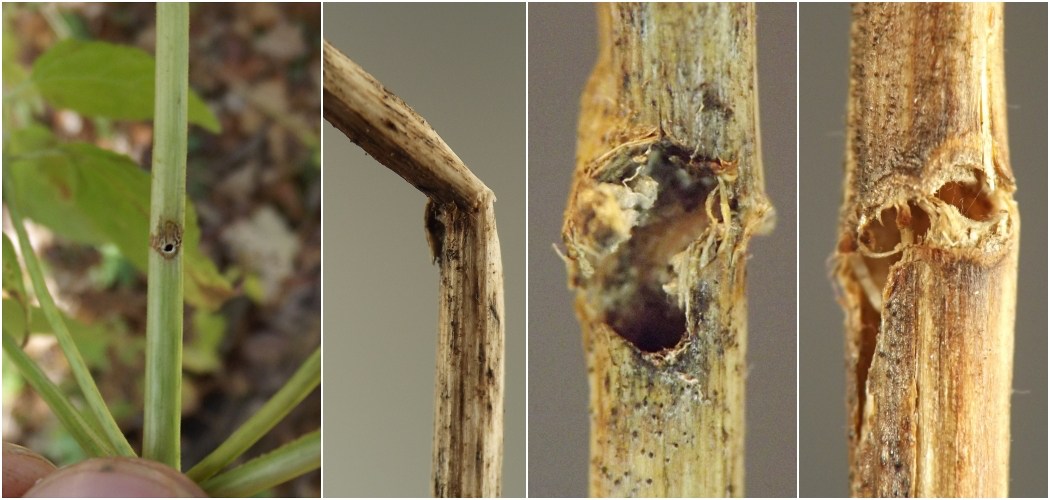
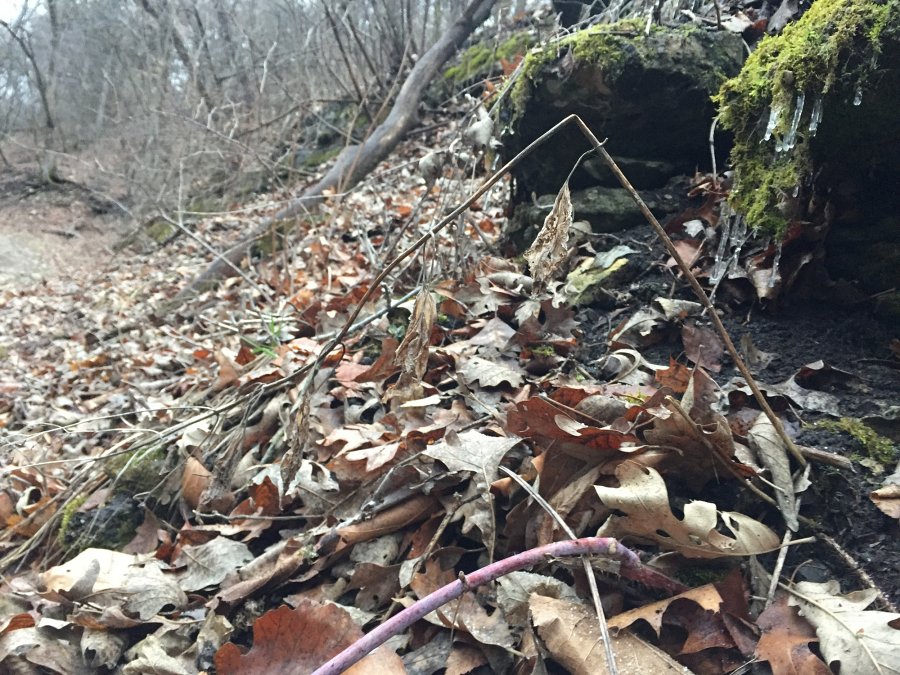
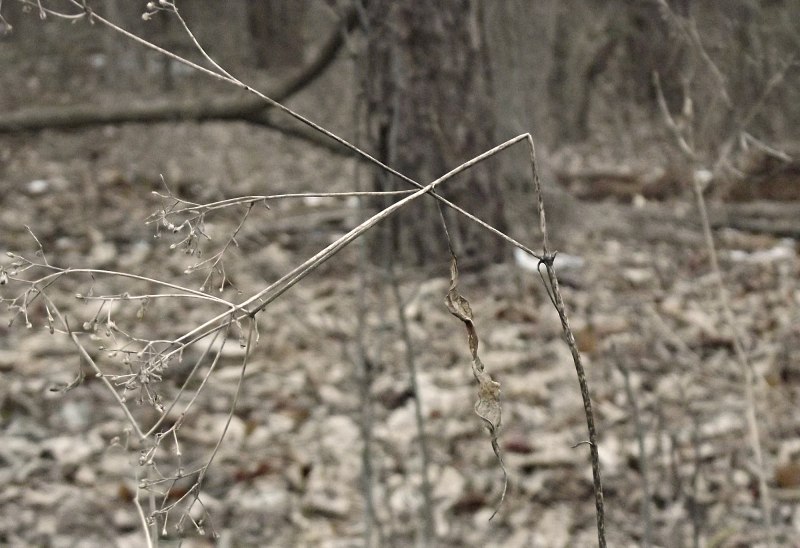
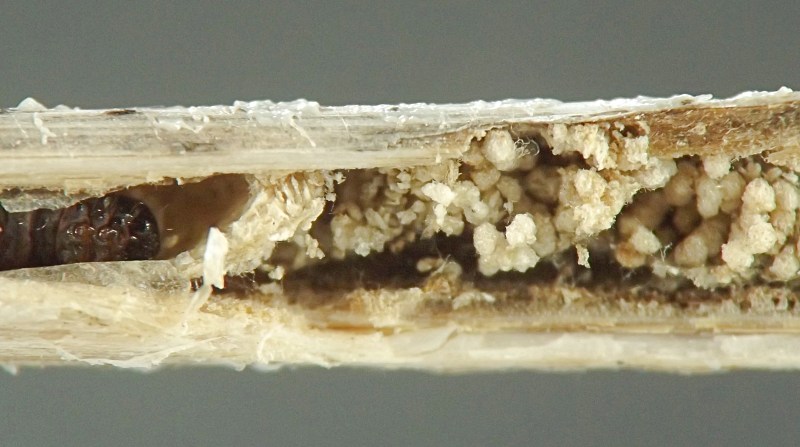
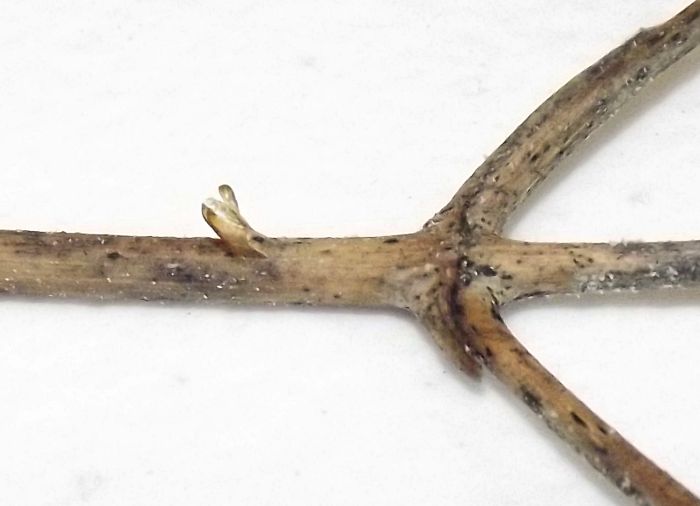
The larva of this moth feeds in the stem of the mature hostplant during late summer and autumn, excavating the pith completely in its relatively localized area of activity. As a result of the pith feeding, and sometimes also the external damage to the outer wall of the stem (discussed below), the stem is weakened at this point, and the topmost portion of the plant above the affected area may lodge conspicuously, signaling the presence of a larva inside. (In at least one example I observed, the stem did not lodge.) Because larval feeding frequently happens in the upper part of the stem, the lodged terminal portion of the plant may be only a decimeter or two in length.
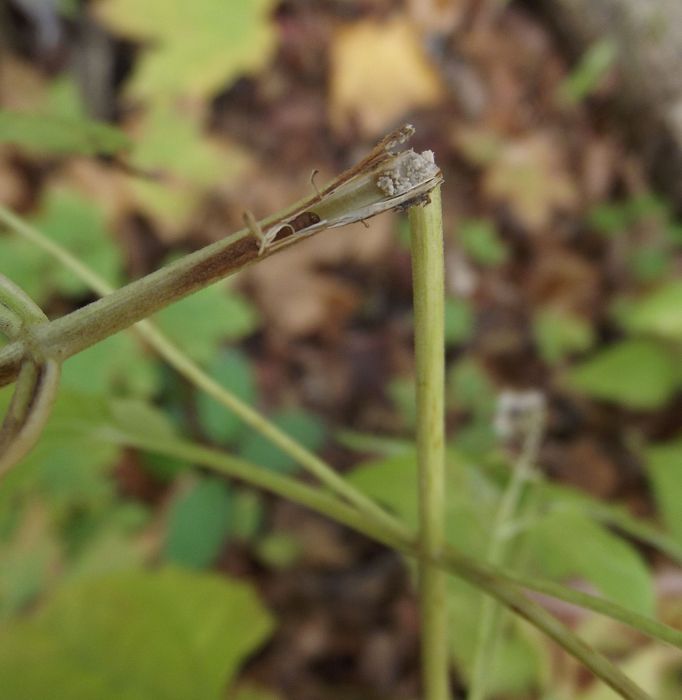
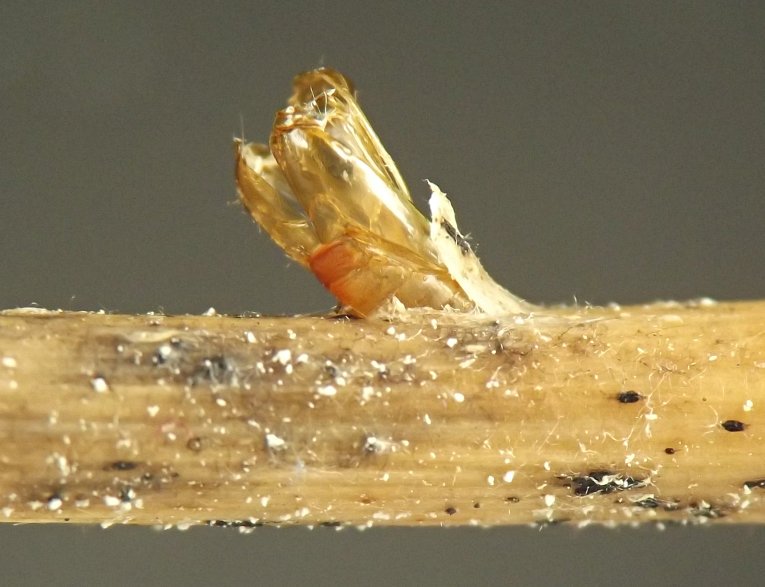
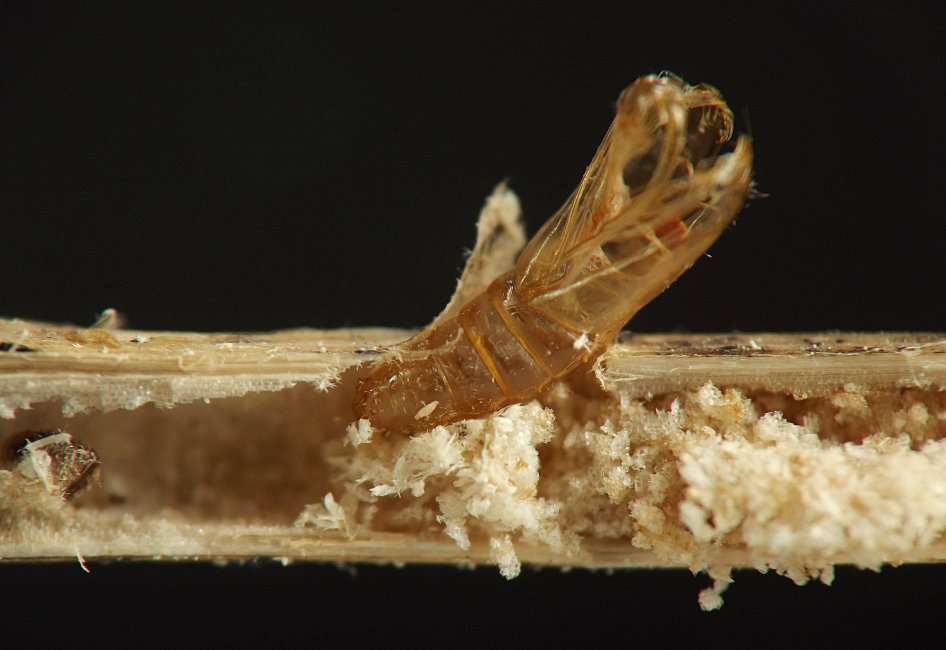
Interiorly, frass accumulates in the larva's tunnel. The larva spends the winter and spring in the stem and pupates there in its second summer, sometimes within a thin membranous cocoon with the consistency of cellophane. When the adult is ready to emerge, the pupa is thrust partway out of the stem.
I reared adults in summer 2021 and 2023 from larvae collected in spring, after they had overwintered in the field. The individual successfully reared in 2021 was collected as a larva on 17 April but did not emerge as an adult until 30 June; the 2023 individual was collected as a larva on 07 June and emerged on 23 July. The late emergence time of the adult is perhaps not surprising given that the hostplant does not mature until late summer into autumn.
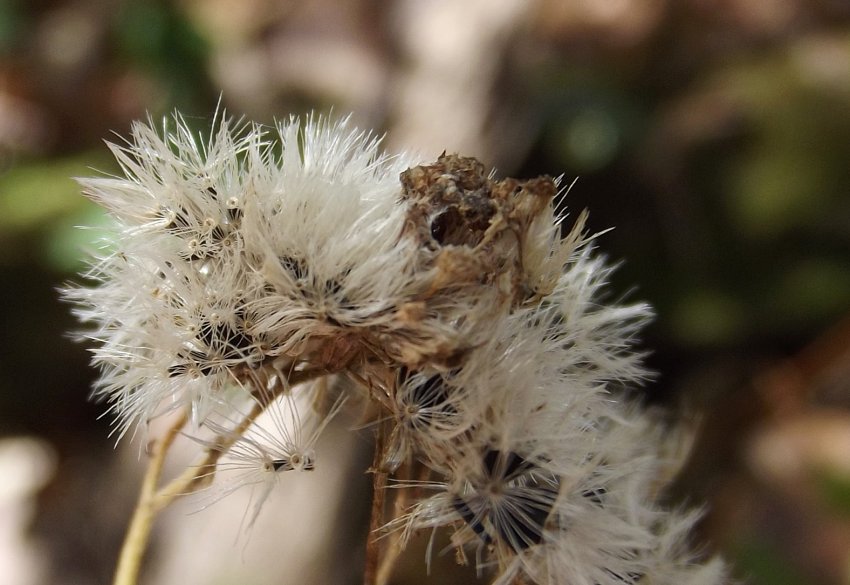
The forewing of the adult has a white ground color with patches of blue-gray and rusty orange scales. Similar-looking adults reared by Hatfield (2022) emerged in autumn only a few weeks after the larvae had finished feeding. As larvae, these individuals fed externally on flowers and/or developing seeds in the inflorescence, and Hatfield photographed one of them feeding on a flower gall formed by Schizomyia eupatoriflorae (Diptera: Cecidomyiidae). Because of the similar larval phenology and adult morphology, I suggest that the larvae feeding in flowers and stems belong to the same species -- which would be Cochylichroa avita, based on M. Sabourin's determination of the Hatfield material (ibid.).
It is possible some individuals may feed first in the inflorescence of the plant and then migrate into the stem. At the weak point where they lodge, some stems show an irregularly-shaped hole in the outer wall of the stem (continuous with the inner pith tunneling), which appears to have contributed to the weakening of the stem and its eventual lodging. This external hole could be the result of the larva tunneling into the stem from the outside after having fed externally on flowers or fruit, but it could also be cut from the inside by a larva that was in the pith all along; further study would be needed in order to resolve this question. The adults I reared from upper stems have not yet been examined by a specialist in order to clinch their identity.
Images for this record are available in the Ageratina stem insects compilation.
 Prev
Prev
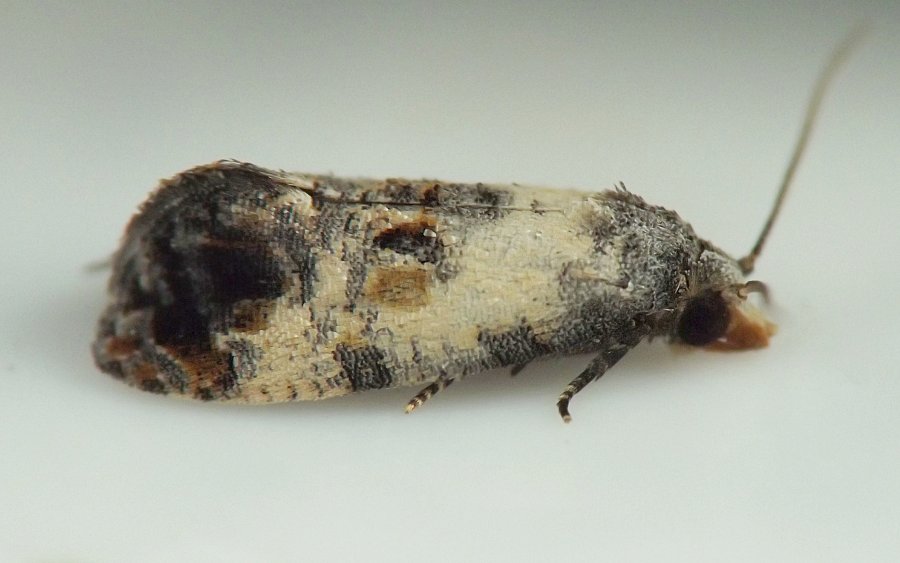
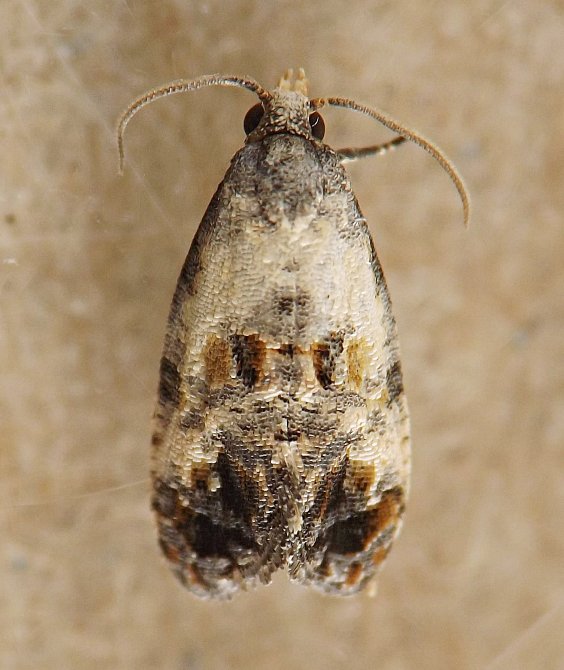
- Hatfield, MJ. 2022. Tortricidae, head in white snakeroot gall. Contributor post at BugGuide.net. Retrieved February 23, 2024 from https://bugguide.net/node/view/2189677.[return to in-text citation]
Page created: February 9, 2026. Last update: March 17, 2026