Stem borer (Coleoptera: Mordellidae) in Anemone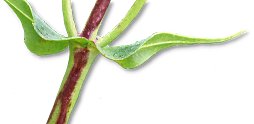
| Record no.: | 0057 |
|---|---|
| Feeding guild: | Stem borer |
| Taxonomy: | Coleoptera: Mordellidae |
| Stages observed: | trace, larva, pupa, adult |
| Distribution observed: | IA |
| Hosts in Anemone: | undetermined A. sp. (thimbleweed), either A. cylindrica (thimbleweed) or A. virginiana (tall thimbleweed) or both |
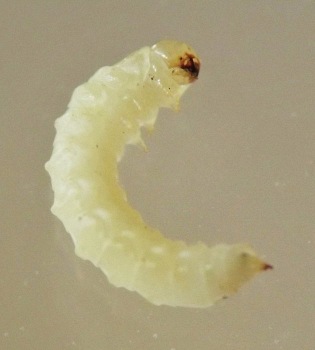
I first noted this species feeding in the stems of a species of thimbleweed (either Anemone cylindrica or A. virginiana) growing on a steep bluff prairie remnant.
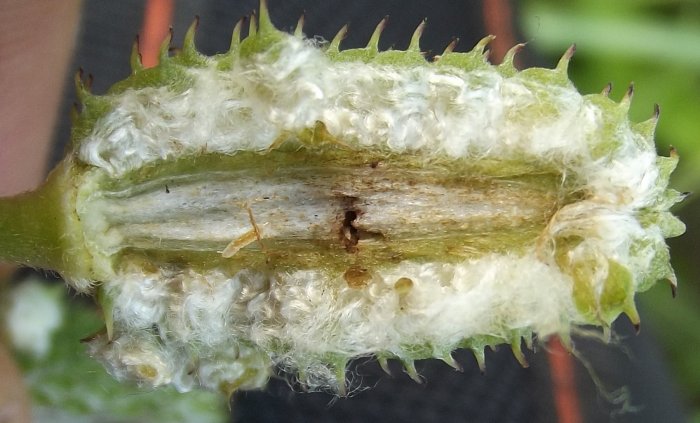
At that location, a typical larva began its feeding by tunneling in the elongate receptacle forming the core of the thimble-like seedhead. The receptacle would at least sometimes be almost entirely hollowed out and filled with frass before the larva would exit the receptacle and tunnel into the stalk of the seedhead (the peduncle). The larva's act of hollowing out the receptacle and then migrating into the peduncle sometimes weakened the juncture between peduncle and receptacle, so that the seedheads of affected plants could be broken off easily if grasped between a person's thumb and forefinger and twisted gently.
Tunneling down through the peduncle, a typical larva from the bluff prairie site would then eventually arrive in the main stem of the plant. Further feeding occurred here, and the larva continued descending through the main stem until finally reaching the base of the plant, where it spent the fall and winter.
During autumn, in various locations in my study area, I have observed that mordellid larvae that have mostly completed their feeding in stems of thimbleweed may cut the main stem of the plant from the inside at a point roughly 10-20cm above ground level, causing the upper part of the plant to break off and leaving behind a lower stem "stump" with the larva inside. Such stumps have hollow interiors as a result of larval tunneling, but the open end created when the upper stem breaks off is sealed with a cap of frass, allowing the larva to pass the winter safely in the stump. I have noticed these mordellid-created stem stumps in thimbleweed plants growing both in open prairie remnants and in well-wooded habitats, but the woodland-dwelling plants had not had their seedhead receptacles hollowed out.
An individual I collected as a larva in late April 2018 pupated shortly thereafter but failed to emerge as an adult. Later, in spring 2024, I reared adults from overwintered larvae. The silvery-gold markings on the elytra of the adult beetle appear consistent with Mordellistena incommunis, when compared to images and a comment at BugGuide.net (see Eiseman 2011 and Moyer 2012). Upon emergence from the stem, one of the reared adults left a roundish exit hole in the stem stump just below the top end of the stump.
Plant anatomy terms used in this account were derived from Tenaglia and Missouri Native Plant Society (2023).
 Prev
Prev
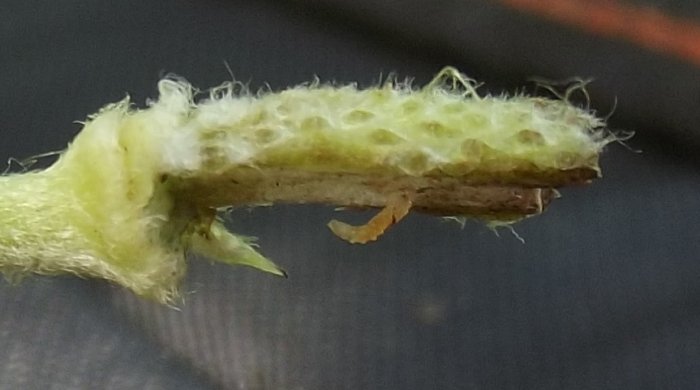
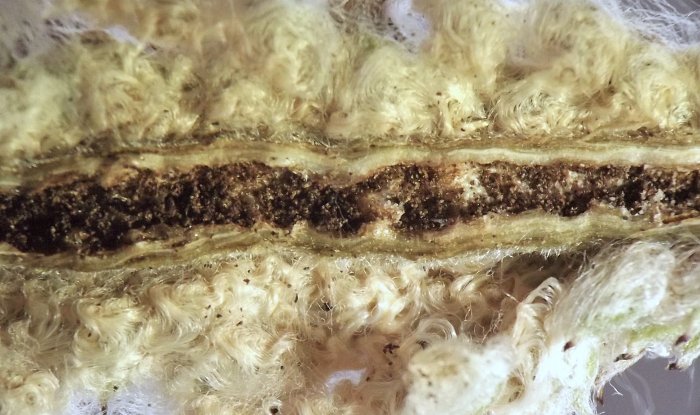
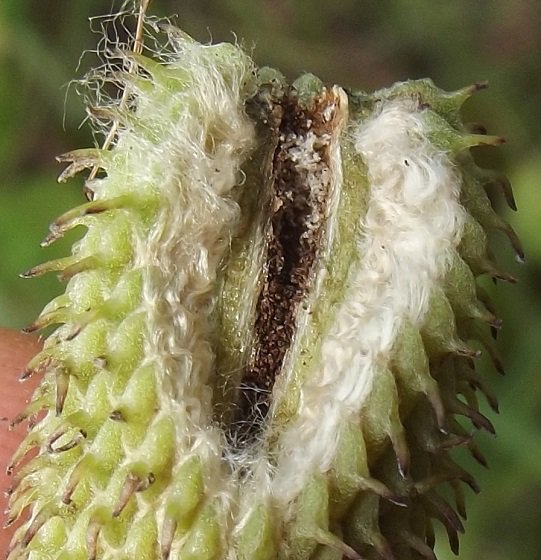
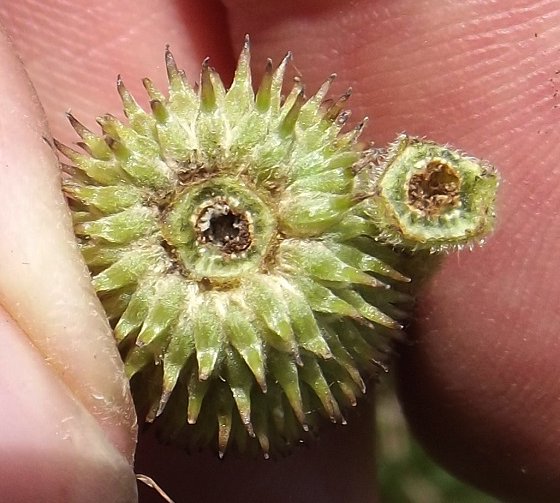
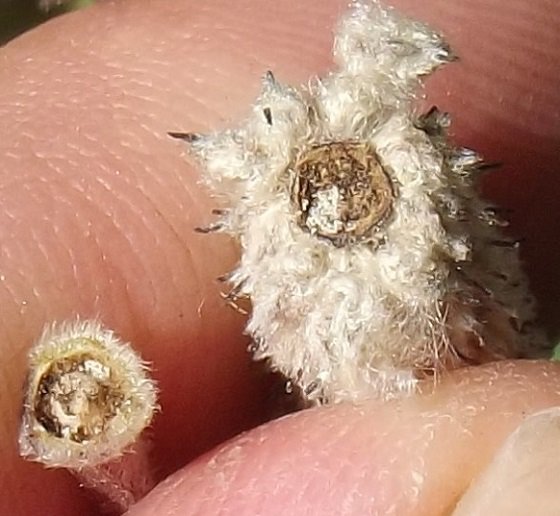
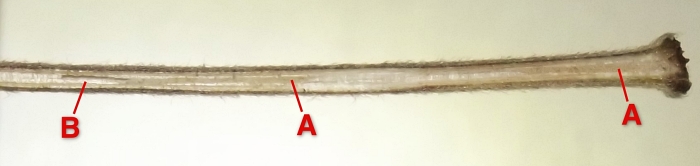
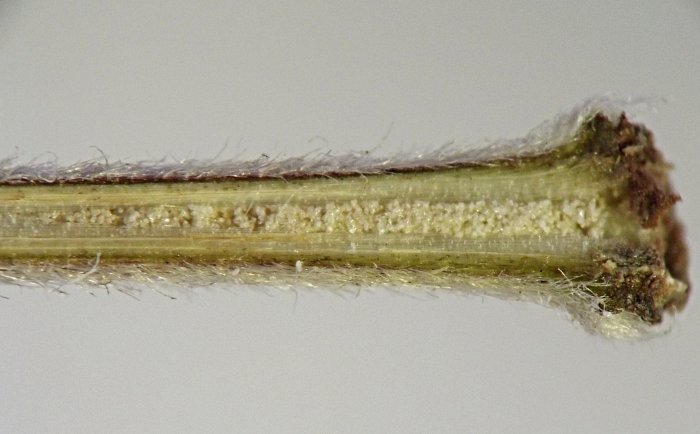
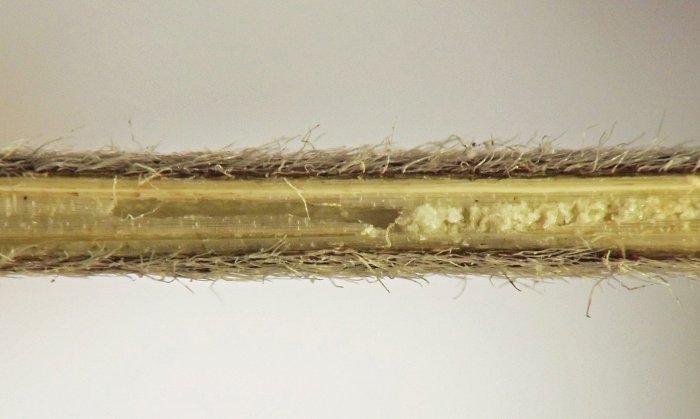
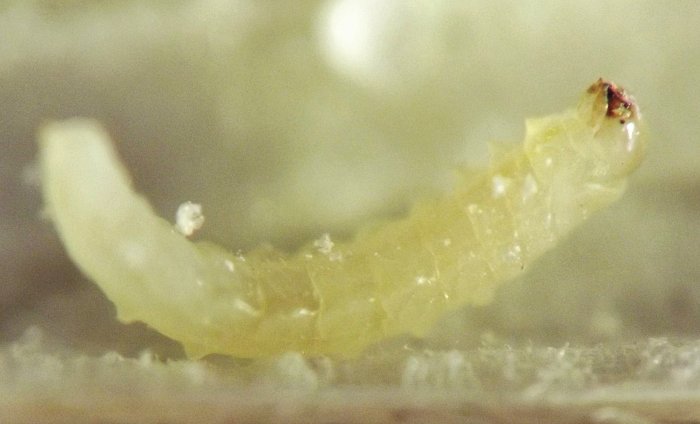
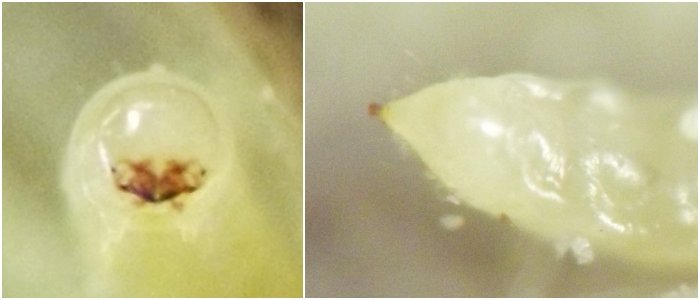
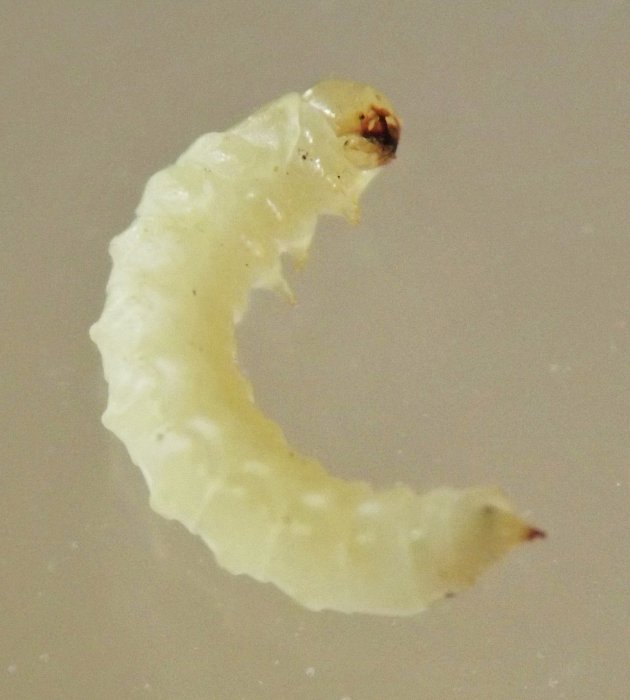
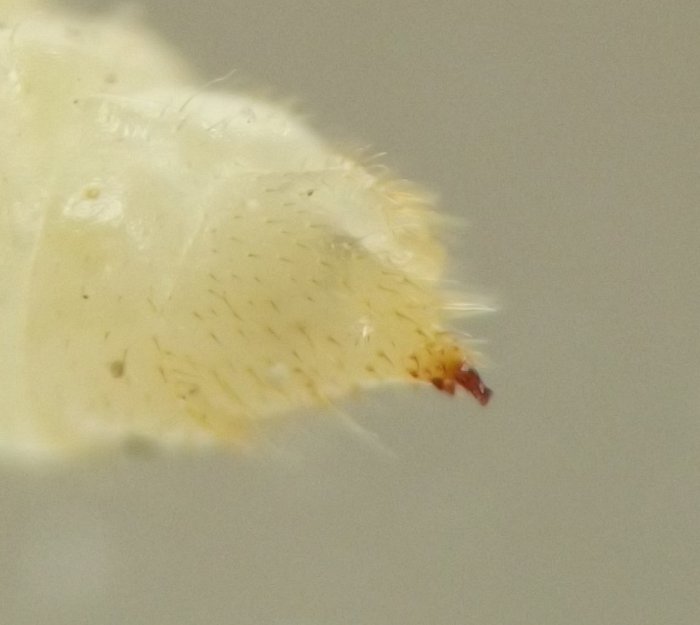
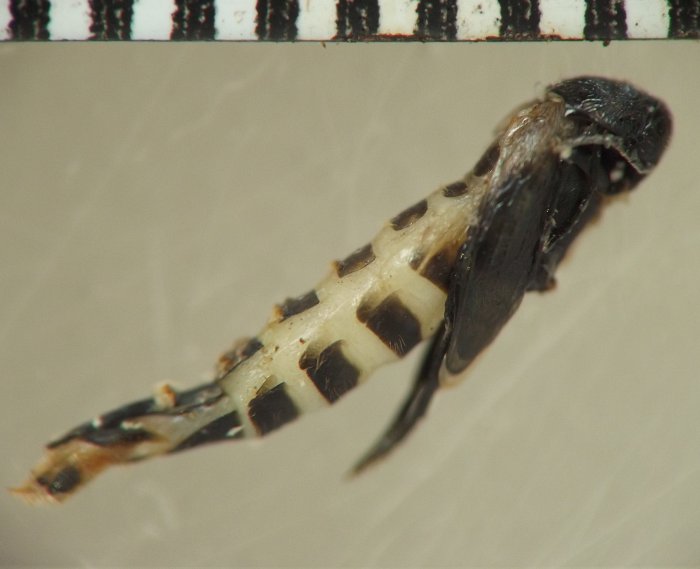
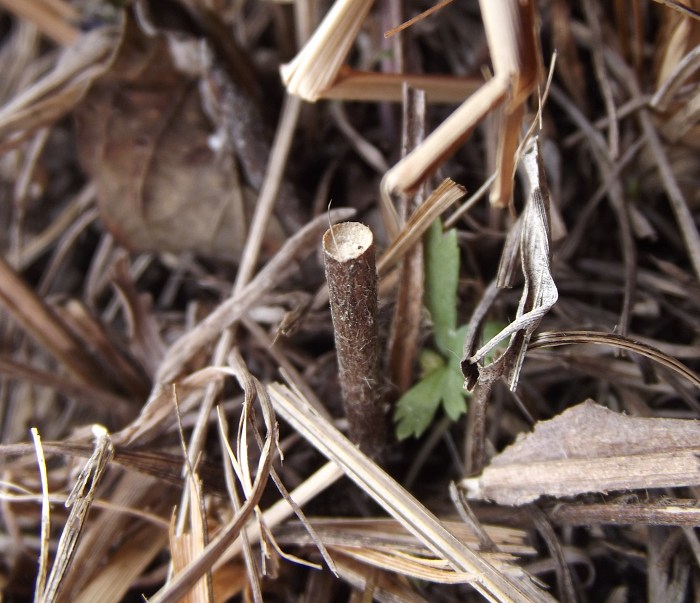
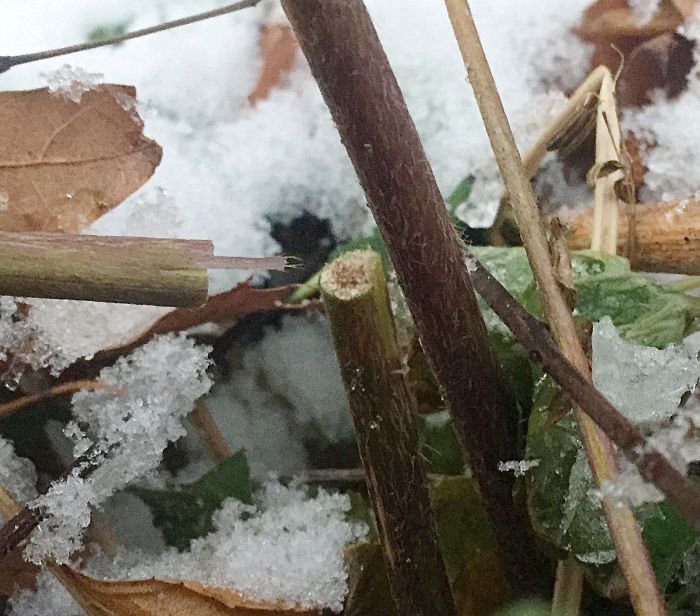
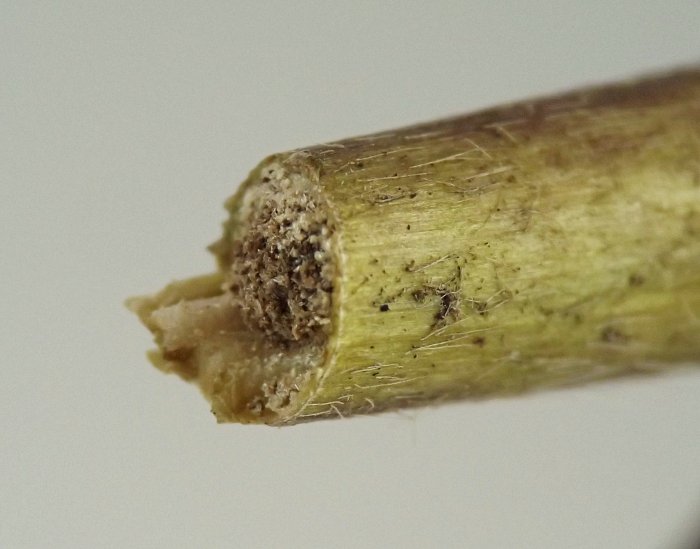
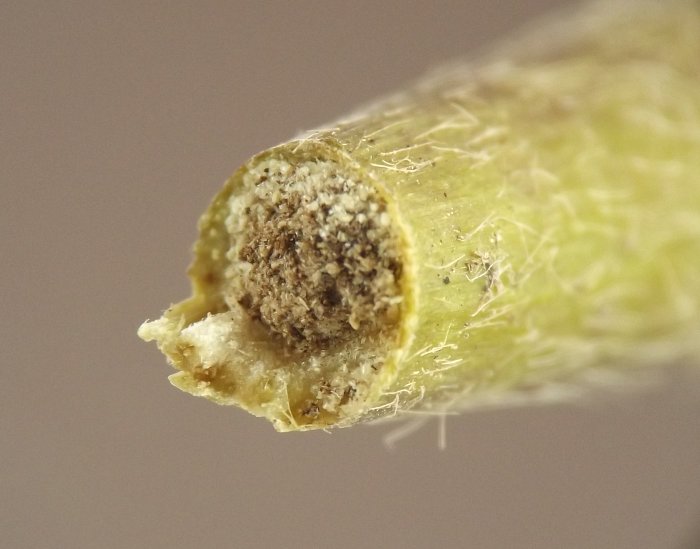
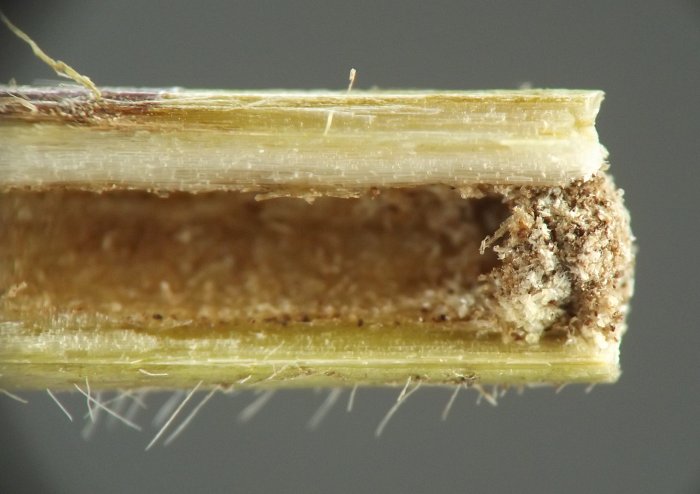
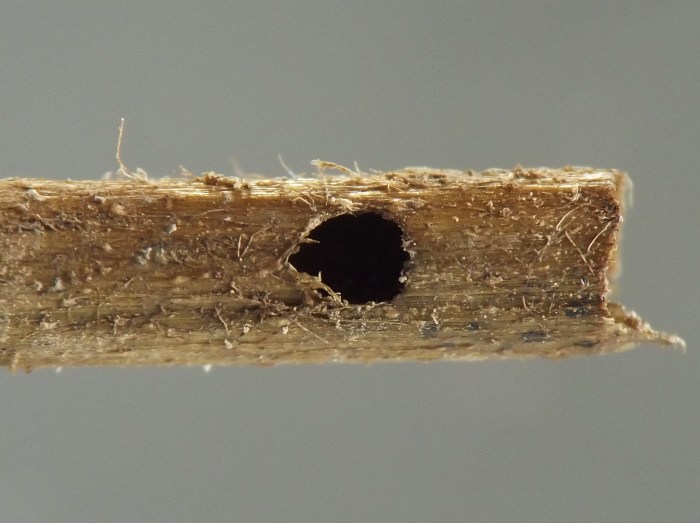
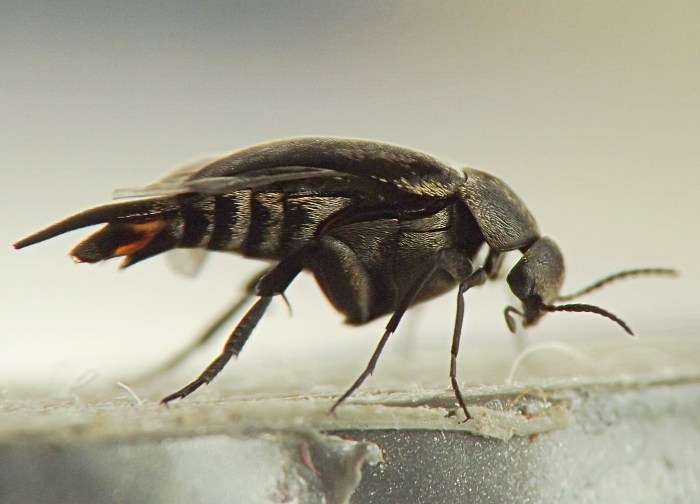
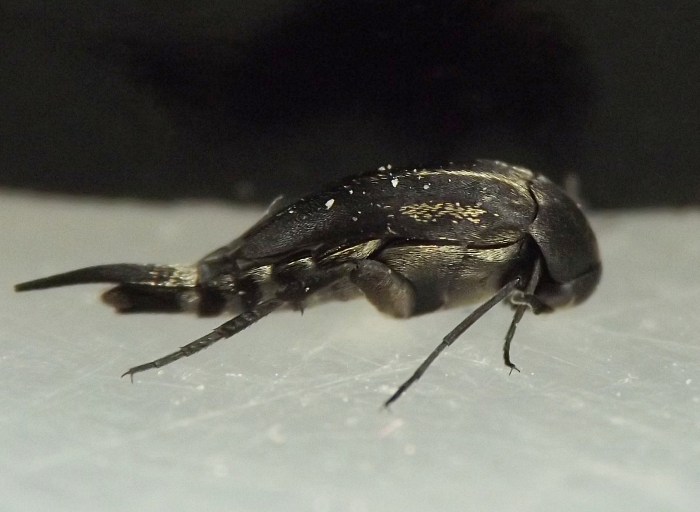
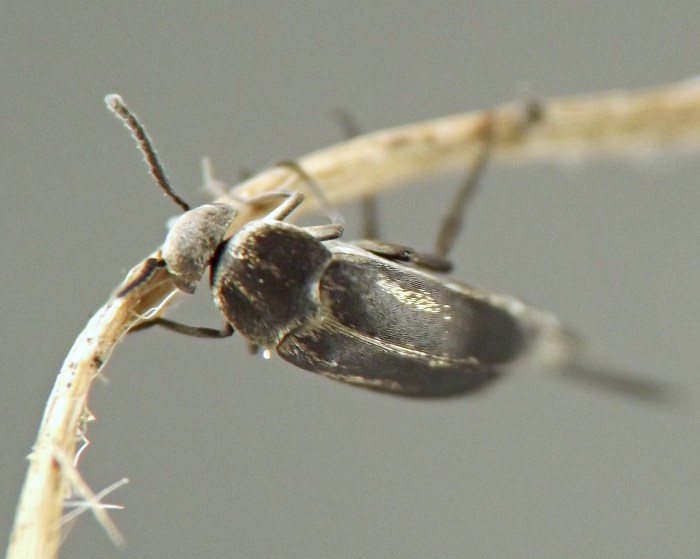
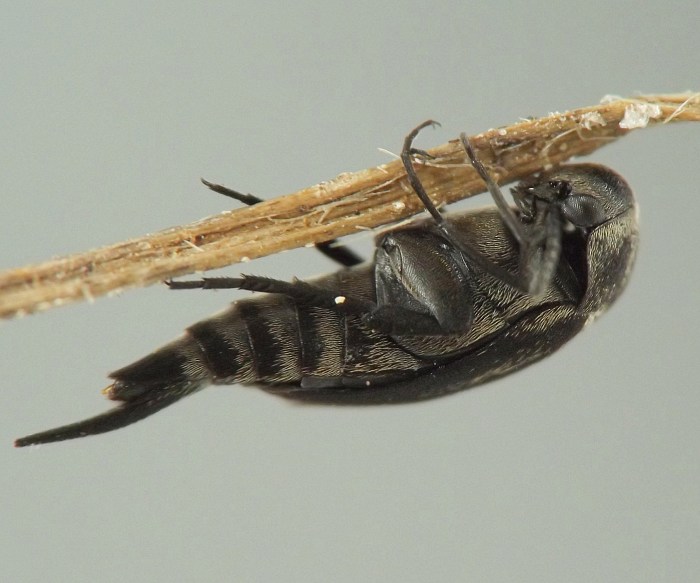
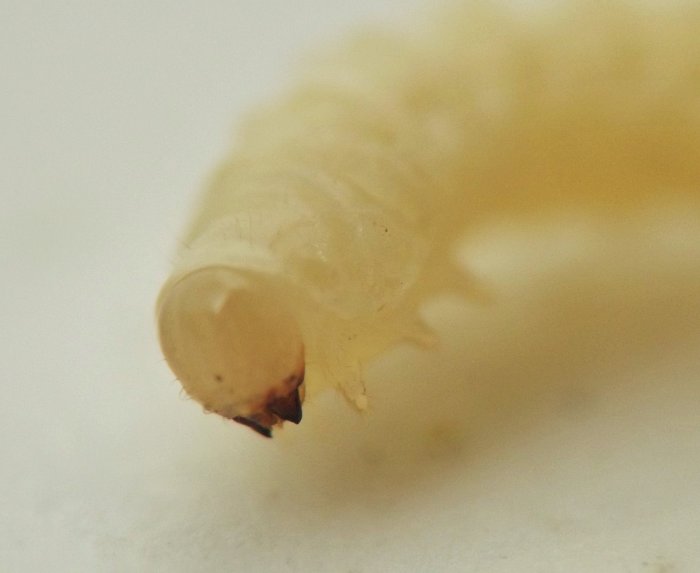
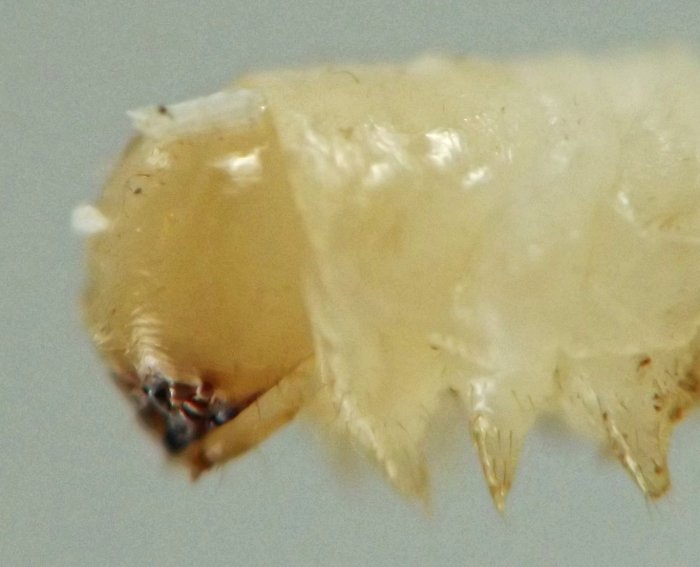
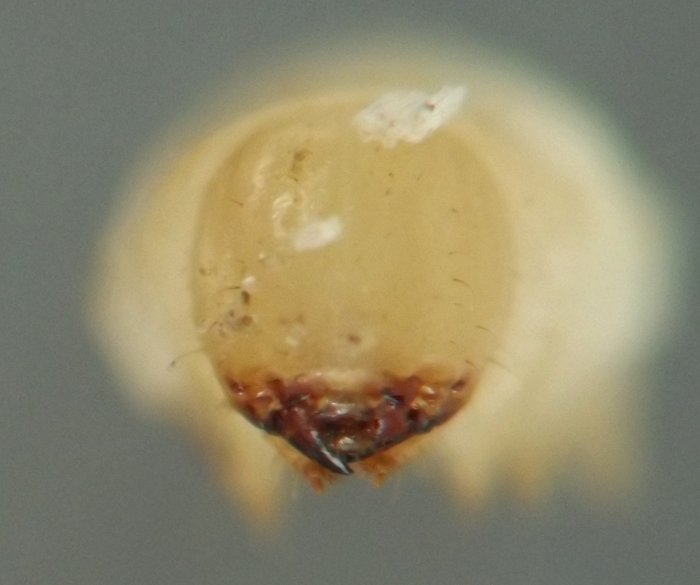
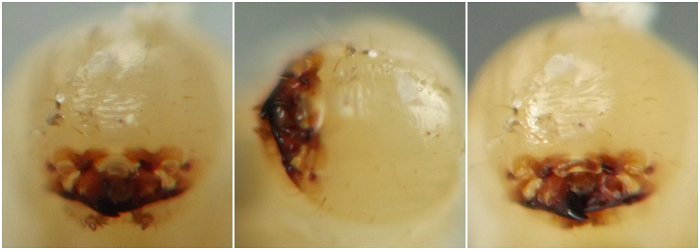
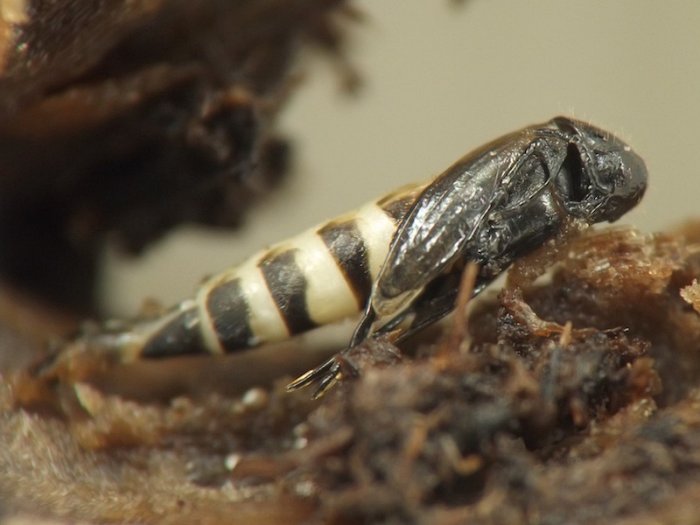
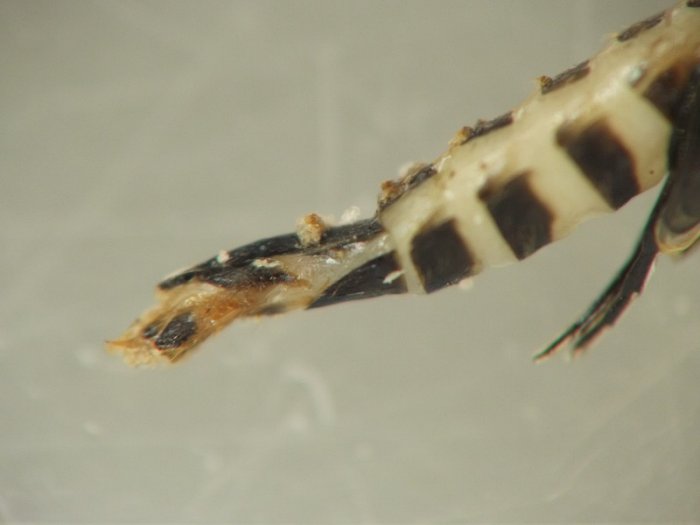
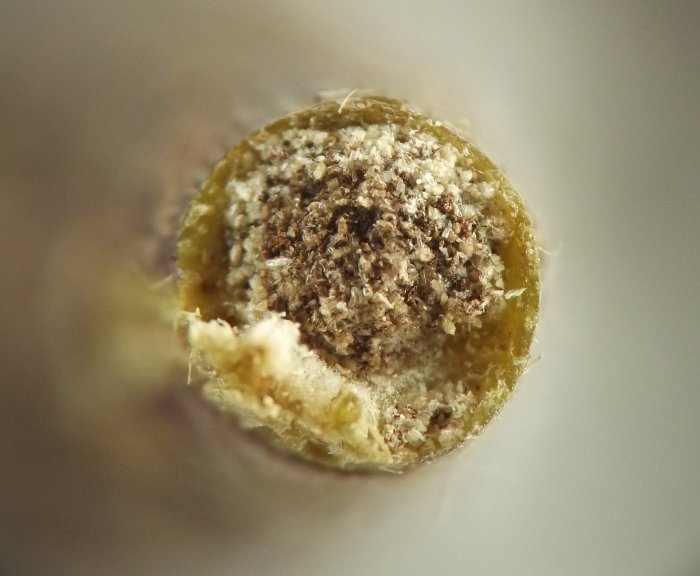
Coll. 07/07/17, photos same day (01-02); coll. 07/29/17, photos same day (03-08); coll. 08/14/16, photos same day (09-11); coll. as larva 04/26/18 and photographed on 04/28/18 (12-14), pupa photographed on 05/26/18 (15-17); coll. 11/20/22, photos same day (18-25, 27); field photo taken 04/26/18 (26); coll. 12/22/23, adult em. 04/08/24, photos of adult and exit hole in stem stump on adult's emergence day (28-32).
- Eiseman, C.S. 2011. Mordellid. Contributor post on BugGuide.net. Retrieved December 3, 2024 from https://bugguide.net/node/view/598354.[return to in-text citation]
- Moyer, T. 2012. Comment on contributor post at BugGuide.net. Retrieved December 3, 2024 from https://bugguide.net/node/view/598354.[return to in-text citation]
- Tenaglia, D. and Missouri Native Plant Society. 2023. Anemone virginiana L., thimbleweed. In Missouri Plants [website]. Retrieved November 8, 2023 from https://www.missouriplants.com/Anemone_virginiana_page.html. [return to in-text citation]
Page created: November 7, 2023. Last update: February 24, 2026