Stem borer (Diptera: Agromyzidae) in Anemone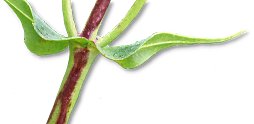
| Record no.: | 0058 |
|---|---|
| Feeding guild: | Stem borer, with initial mining |
| Taxonomy: | Diptera: Agromyzidae: Phytomyzinae: cf. Phytomyza |
| Stages observed: | trace, larva, puparium |
| Distribution observed: | IA |
| Hosts in Anemone: | undetermined A. sp. (thimbleweed), either A. cylindrica (thimbleweed) or A. virginiana (tall thimbleweed) or both |
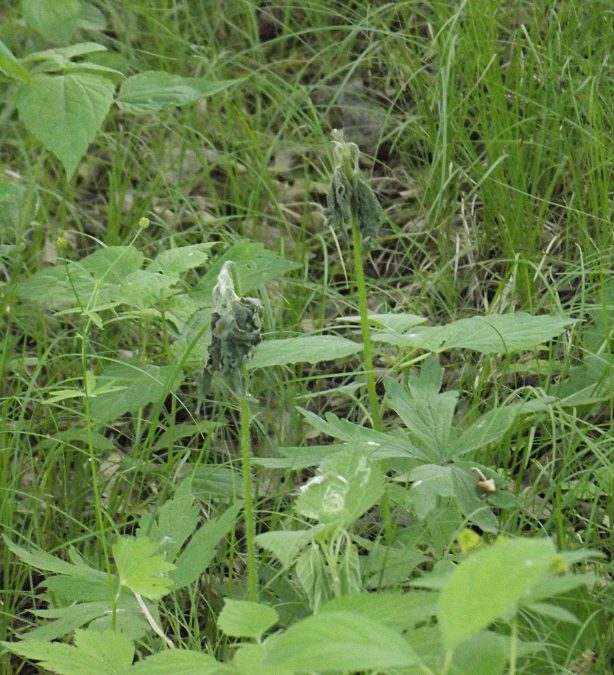
I have generally found plants inhabited by this agromyzid in relatively open upland woods. Larvae tunnel in the whitish tissue lining the stem interior of the thimbleweed host. From what I have observed, they feed in early to mid-June, before the hostplant has reached maturity. Early in their tunneling activities, some larvae girdle the shoot near its apex by tunneling shallowly around its circumference in a spiral pattern. Leaves above this girdled area may wilt or shrivel, providing a straightforward way for interested humans to locate inhabited stems in the field. After this initial work, larvae proceed into deeper tissues of the stem, and finish feeding at the base of the stem.
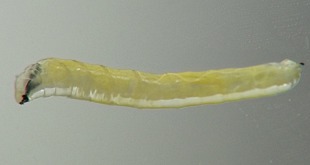
The one larva I examined closely and photographed was elongate, cylindrical, and pale yellowish-white in color. Its posterior spiracles were black in color and borne on short pale lobes projecting rearward from the posterior end of the terminal segment. The upper arm of the rearmost portion of the larva's cephalopharyngeal skeleton did not appear as if divided in two, suggesting this agromyzid belongs to subfamily Phytomyzinae (see Ellis 2024).
I reared two larvae to the puparium stage in 2021, with the puparia formed by late June. One of these puparia was formed inside its stem, while I found the other in the moistened tissue paper wrapped around the base of a stem in the rearing container. The puparia were black, widest near the anterior end and tapering to the posterior, the sides scalloped rather than smooth in profile, with the stalk of each anterior spiracle divided into two slightly curving arms (a rather unusual configuration among the stem-boring agromyzids I am familiar with).
No adults emerged by the end of the growing season, suggesting that the puparium is the overwintering stage.
 Prev
Prev
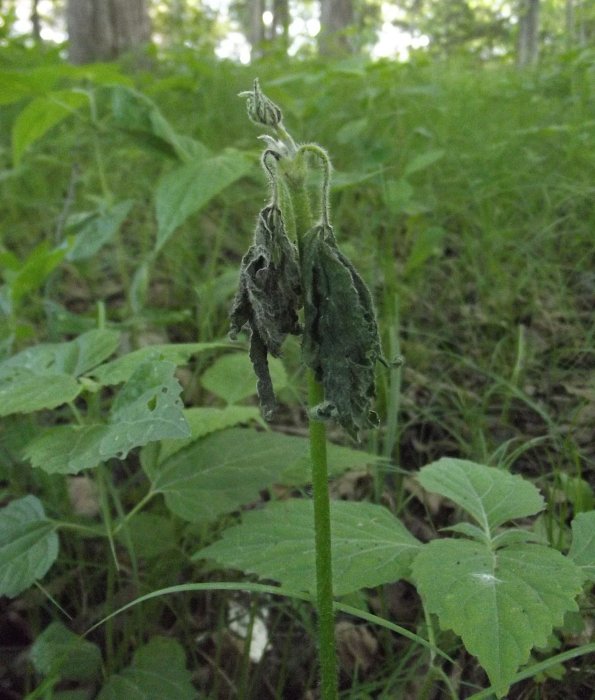
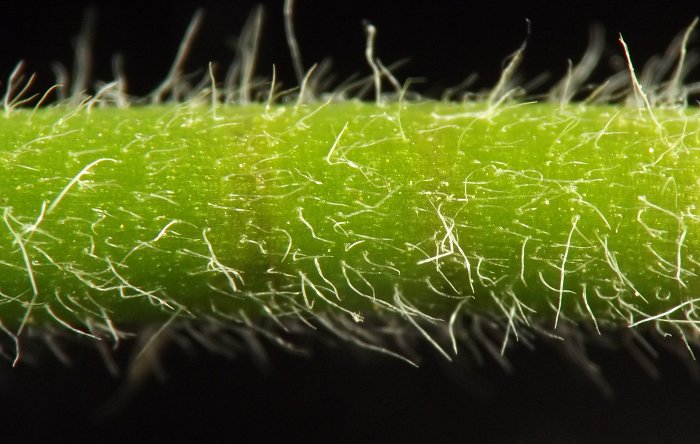
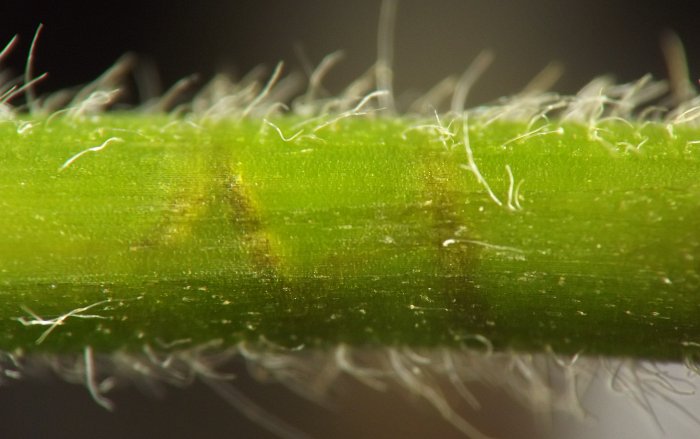
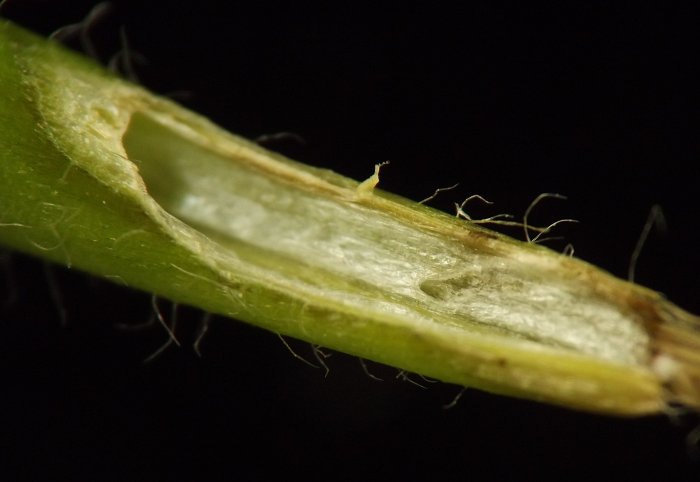
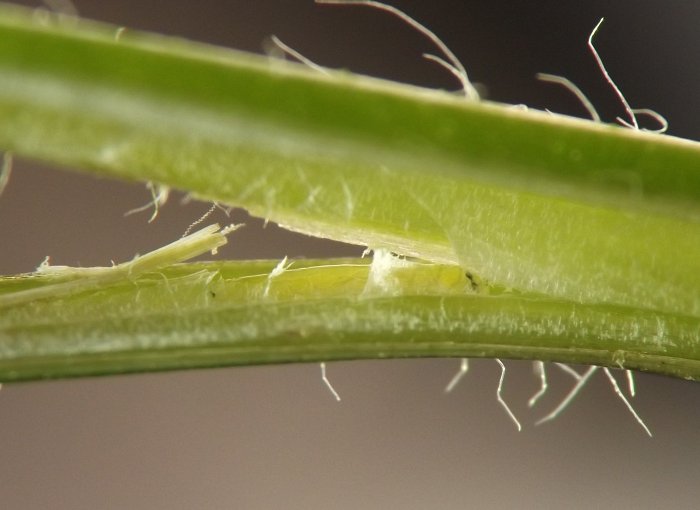
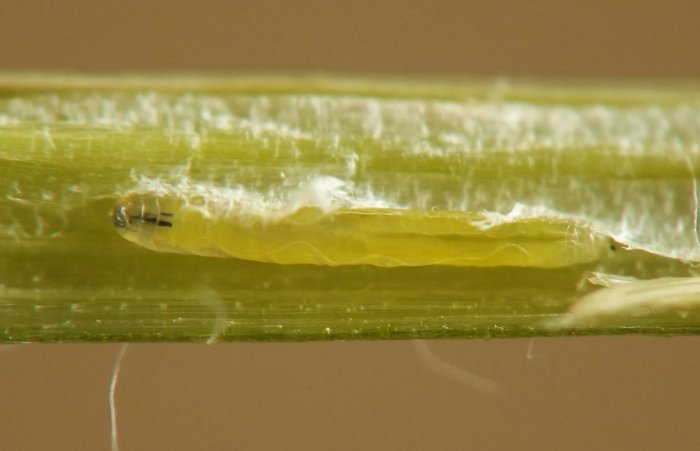
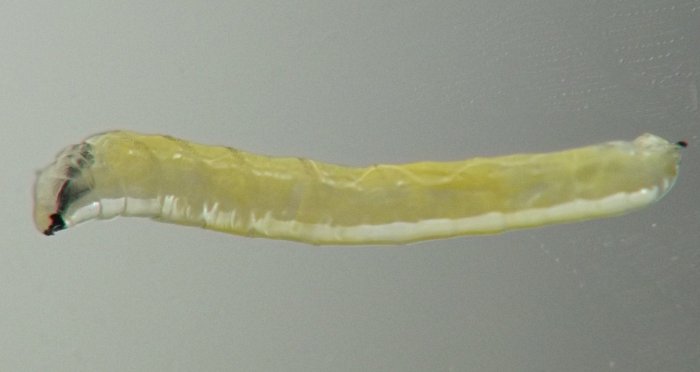
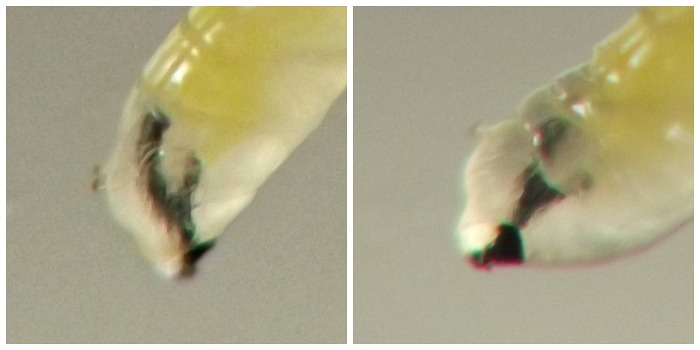
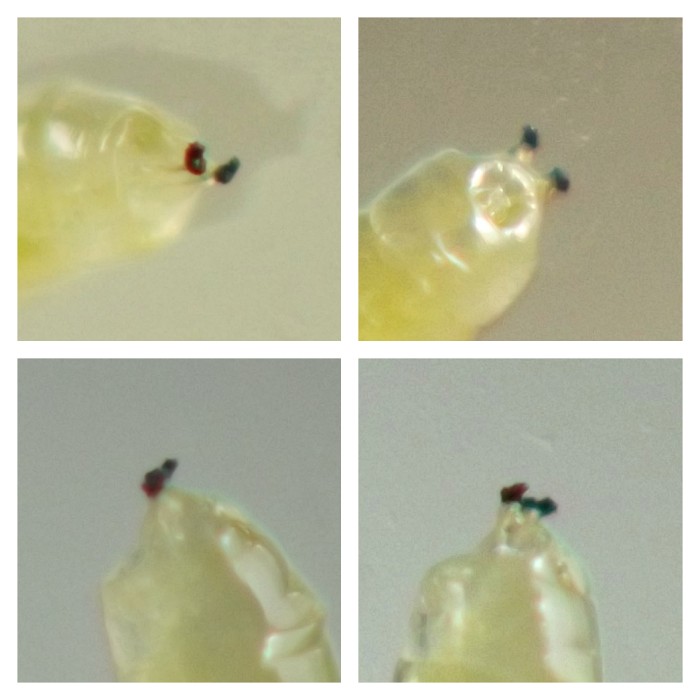
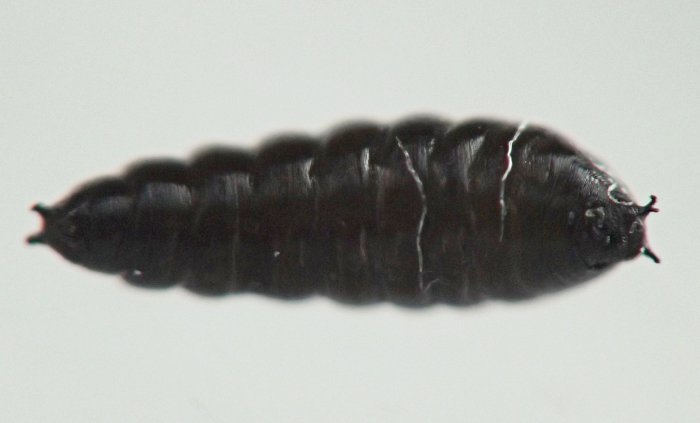
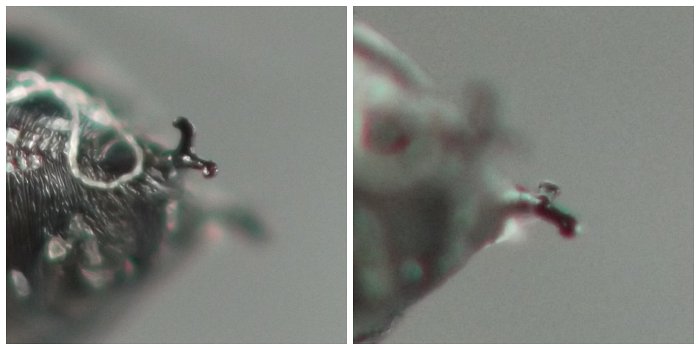
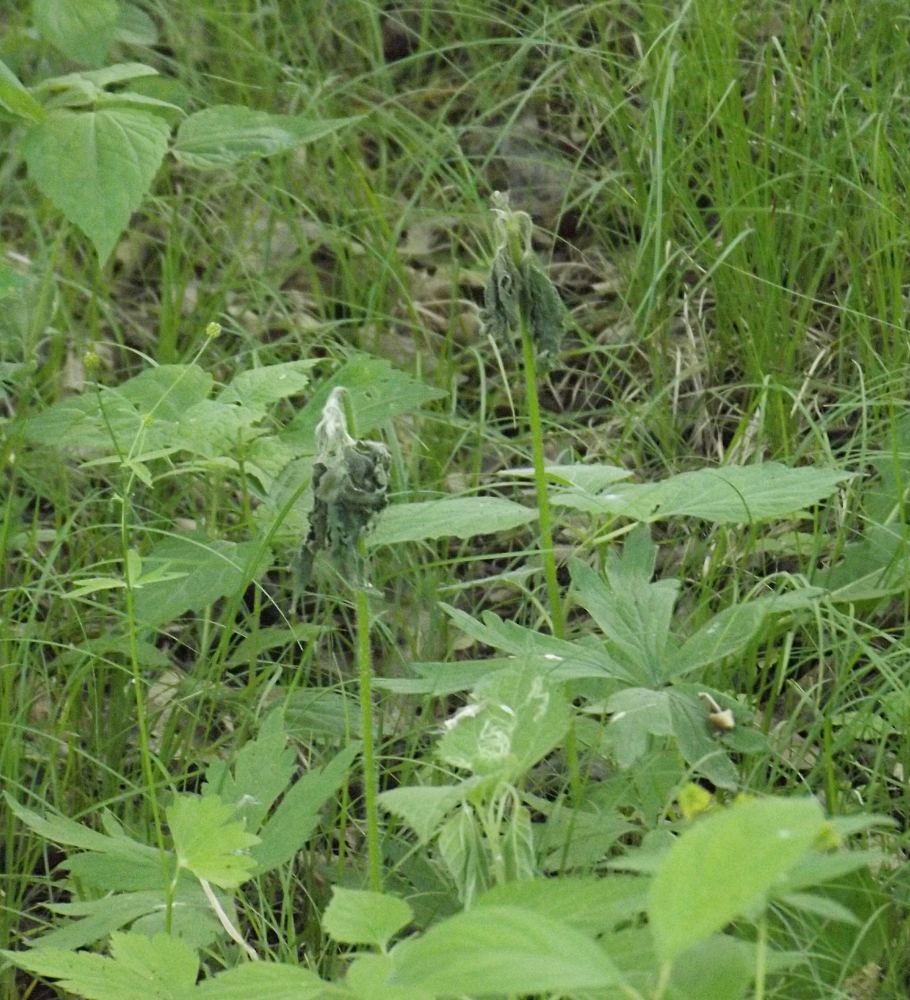
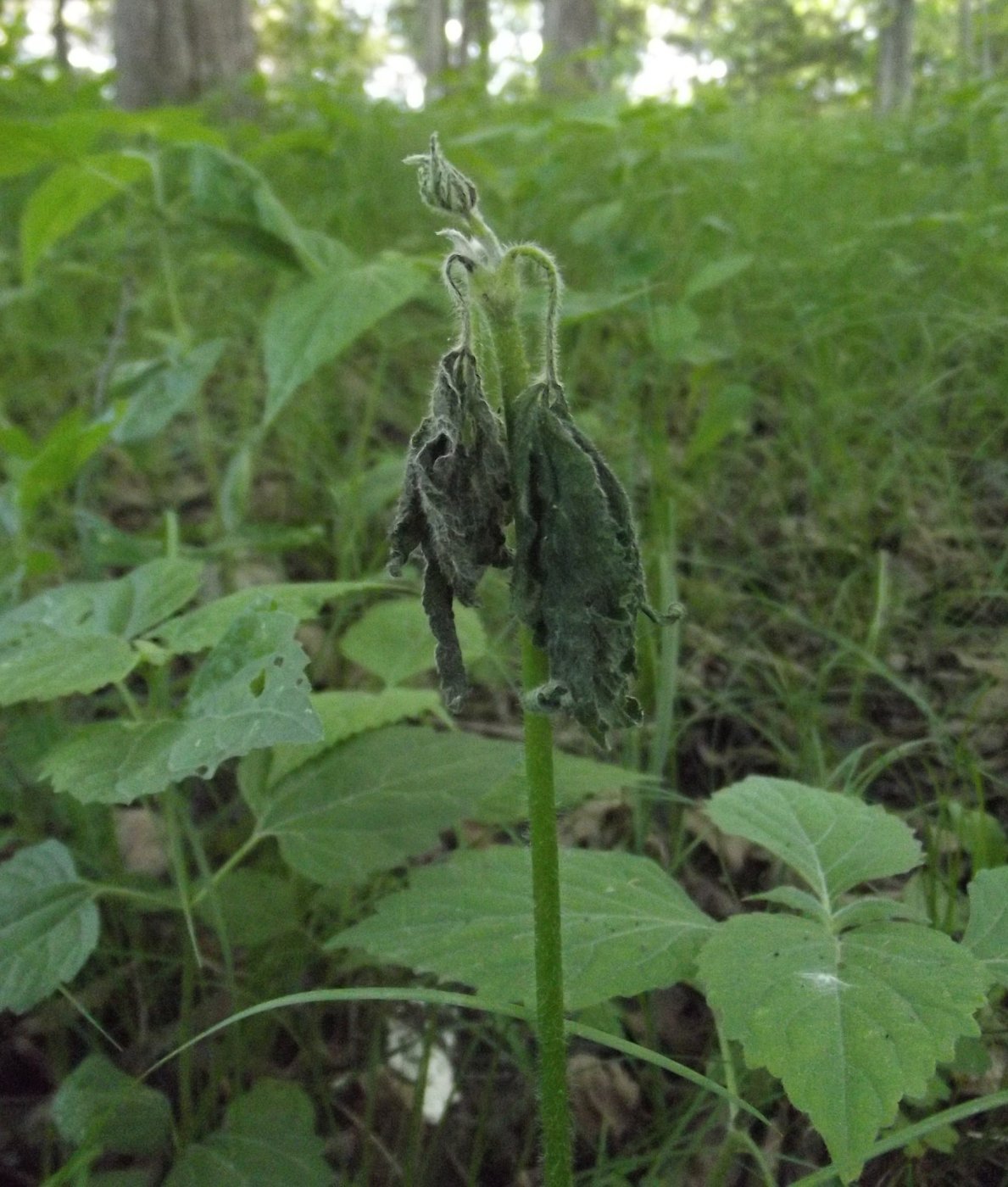
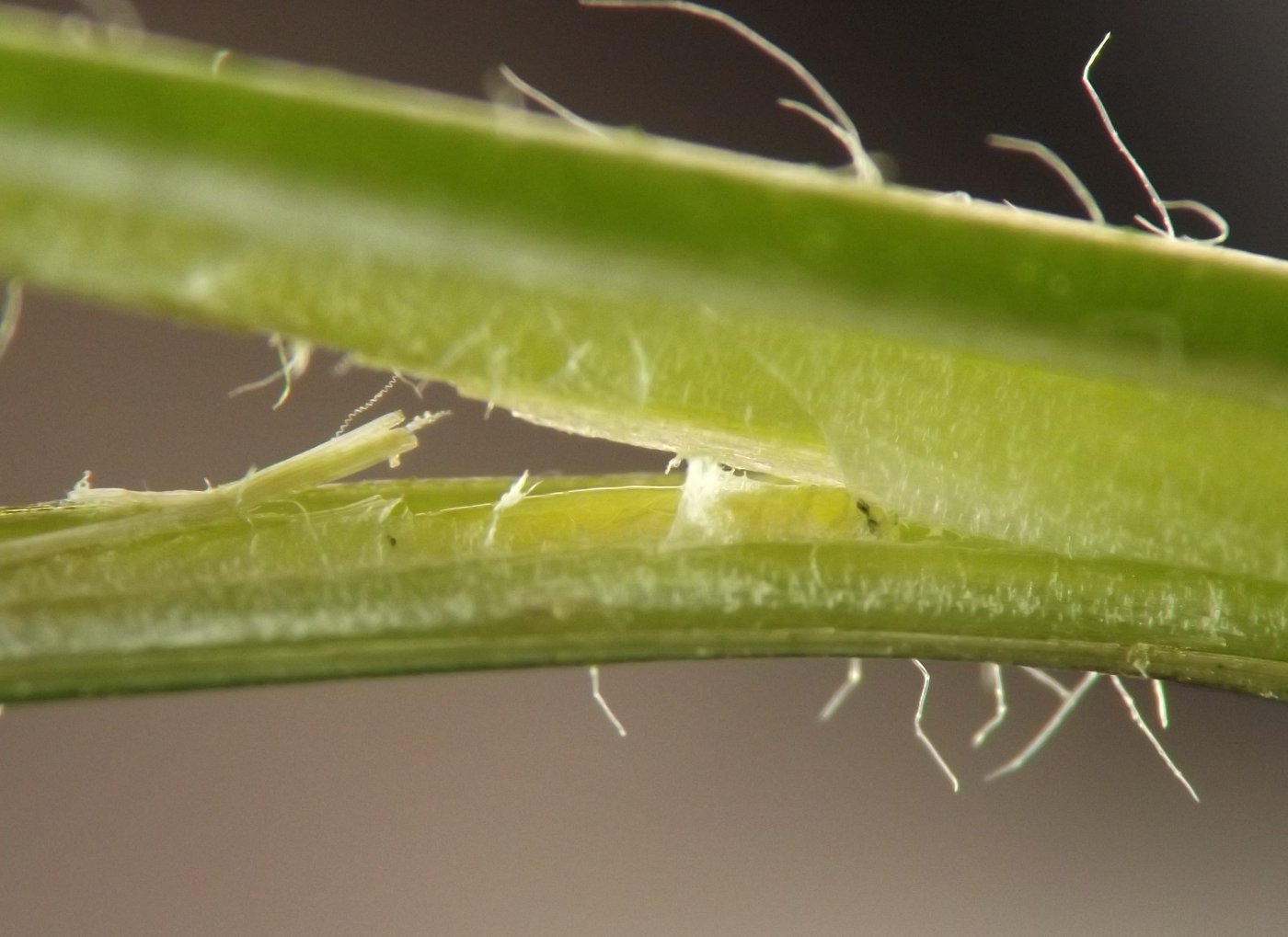
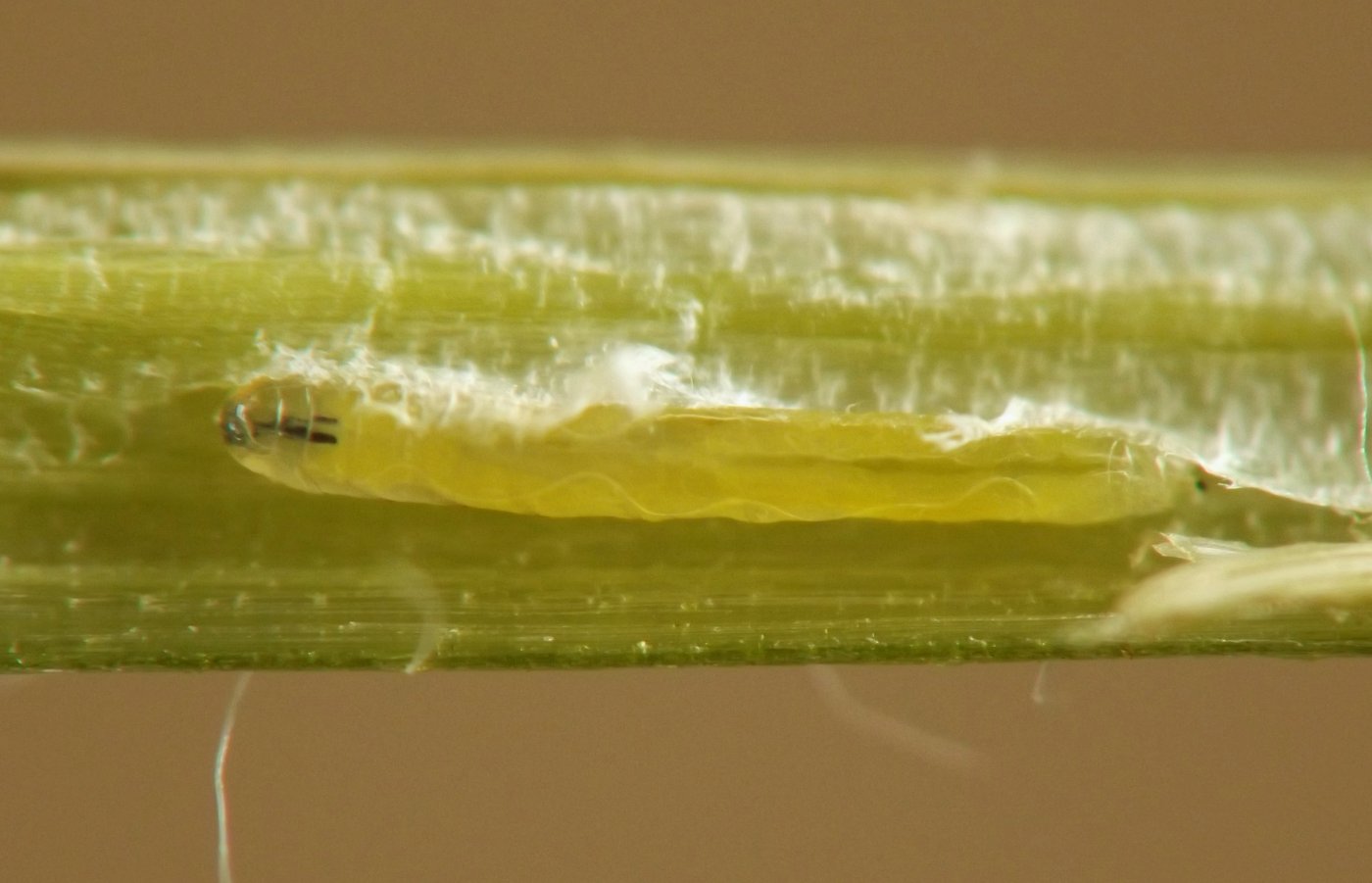
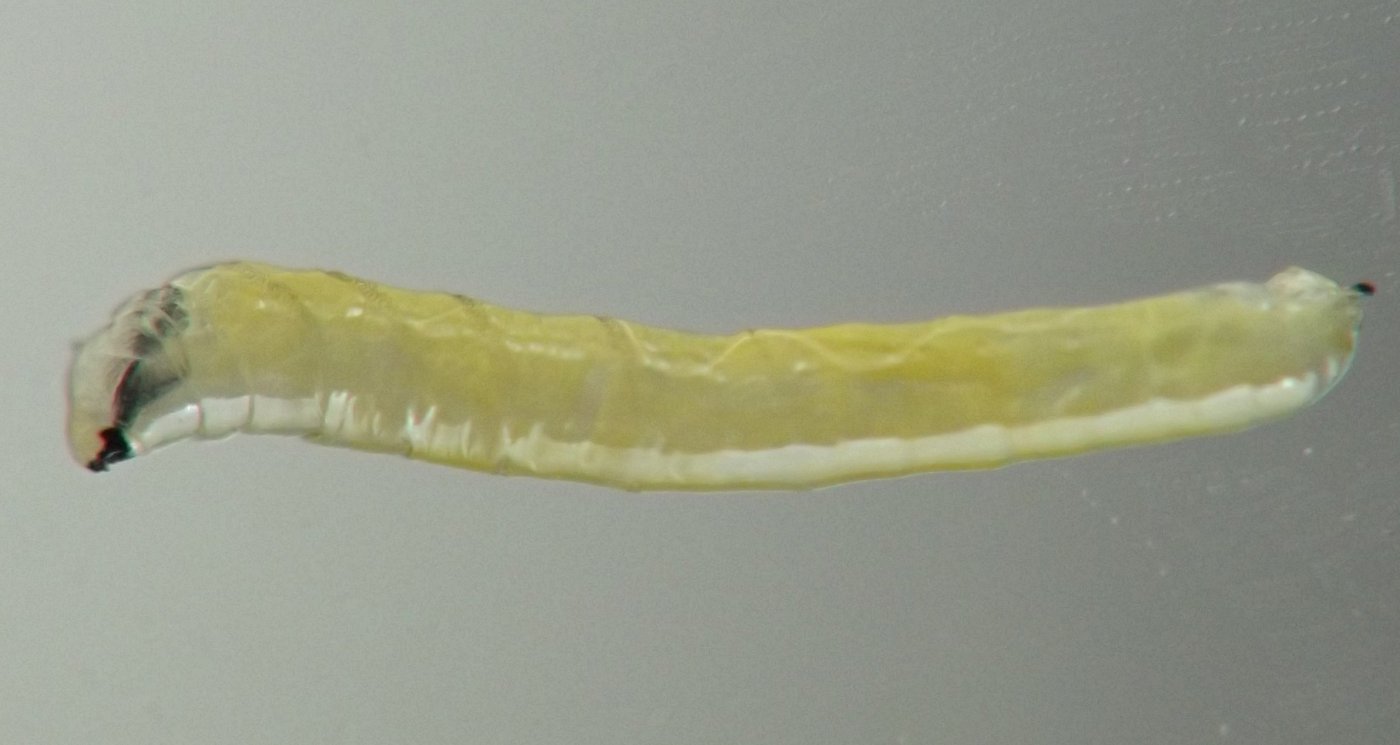
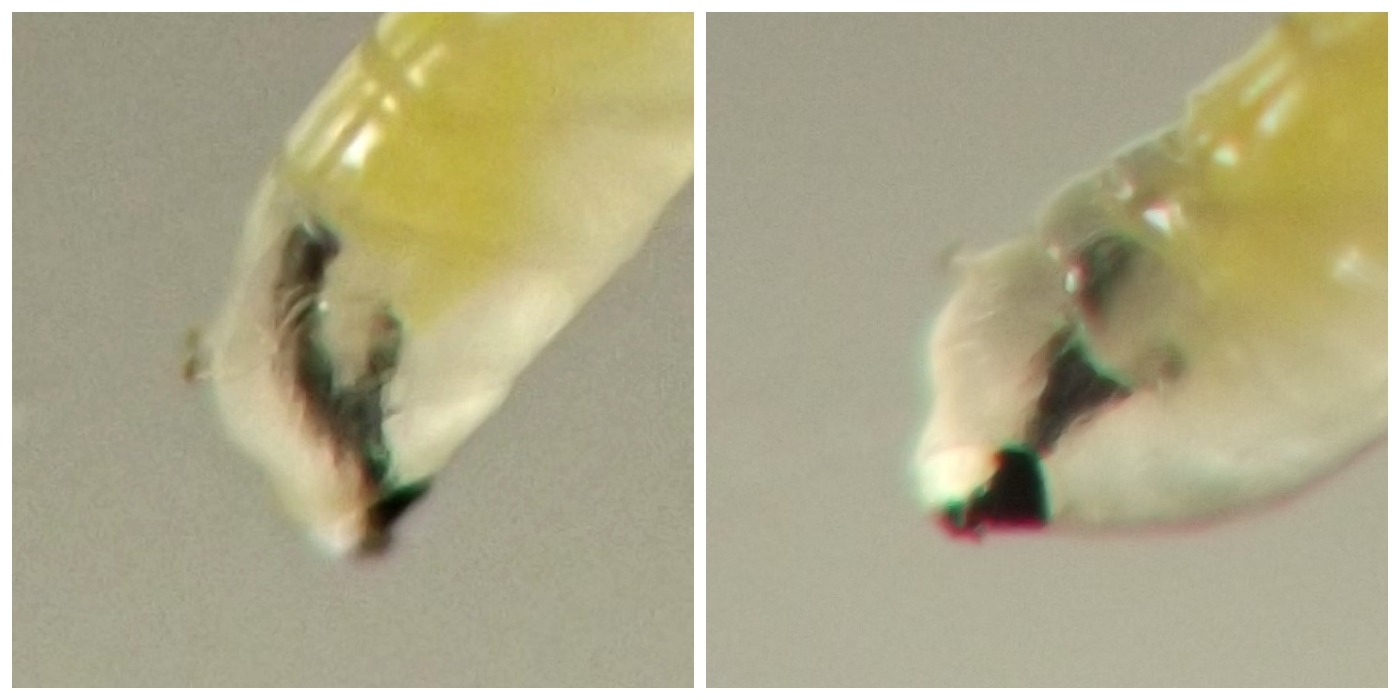
Field photo taken 06/04/21 (01); coll. 06/04/21, puparium by 06/17/21, photos taken 06/04/21-06/17/21 (02-11).
- Ellis, W.N. 2024. Agromyzidae. In Plant Parasites of Europe [website]. Retrieved June 19, 2024 from https://bladmineerders.nl/parasites/animalia/arthropoda/insecta/diptera/brachycera/agromyzidae/.[return to in-text citation]
Page created: September 8, 2023. Last update: February 8, 2026