Stem miner/borer (Lepidoptera: Opostegidae) in Blephilia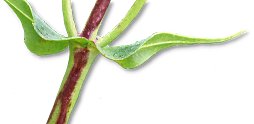
| Record no.: | 0097 |
|---|---|
| Feeding guild: | Stem miner, localized stem borer |
| Taxonomy: | Lepidoptera: Opostegidae: Pseudopostega sp. |
| Stages observed: | trace, larva, pupa, adult |
| Distribution observed: | IA |
| Hosts in Blephilia: | B. hirsuta (hairy woodmint) |
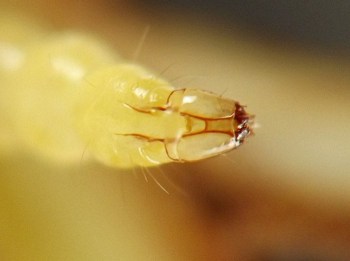
Feeding sign of this unique internal feeder may be found in the host plant's lower stems (including horizontal rooting portions of the lower stems) in fall and spring. The larva tunnels at various depths within a localized region of the stem, and the shallower tunnels result in faint grayish or blackish external discoloration along with blisterlike swelling of the stem epidermis in the affected area. The rest of the stem above and below this slightly swollen and discolored area appears unaffected both internally and externally. In some affected stems, larvae may also create more traditional linear stem mines that are formed just under the epidermis and are fully visible externally.
In 2021, I collected one affected stem on 28 October but did not fully dissect it in time to determine if it still held a larva inside. In 2023, I collected four affected stems on 9 May and 15 May. Three of these stems contained localized feeding areas that had already been abandoned by apparently mature larvae, who had each left a semicircular exit hole in the stem epidermis. The localized feeding area on one of the stems from the May 9th collection contained a late-stage larva feeding deep in the core of the stem. I photographed this larva in situ and then removed it from the stem for further photographs. I then transplanted it into a fresh length of Blephilia stem. The transplant was successful and the larva fed in the interior of the new length of stem for some time before abandoning it on or shortly before May 20, evidently in order to pupate.
Also in 2023, examination of the autumn growth of the host at the end of September revealed a single stem that had already been evacuated by the larva it had hosted. This suggested that some mature larvae could be active in summer or even early autumn, in addition to early spring.
I collected more affected stems at the start of the growing season in 2024, this time on 10 and 13 April (rather than in May) because of an early arrival of spring. One of these stems produced a single diminutive parasitoid wasp on 19 April. Larvae in the other stems successfully finished their feeding, exited the stems, and spun rusty-colored, dorsoventrally flattened ovoid cocoons, with all cocoons completed before 25 April. A single adult emerged from one of these cocoons on 8 May. Two other cocoons produced braconid wasps belonging to the subfamily Ichneutinae, as identified from photos by Zuparko (2024). A pupa from a fourth, incompletely formed cocoon failed to reach adulthood, but was photographed as it matured.
As mentioned earlier, the finding of affected stems of autumn growth vacated by presumably mature larvae suggests that some larvae finish feeding before the end of their first growing season, perhaps overwintering as pupae in cocoons. However, the presence of other larvae in a nearly mature state at the very beginning of the growing season strongly suggests that these individuals had overwintered in the plant material as middle-instar larvae. Thus, there may be a broad period of time from late summer or autumn through early spring during which larvae mature. Based on the documented flight periods of several species of Pseudopostega known from the study area (Harrison 2023, Davis and Stonis 2007), I hypothesize that most or all individuals of this species emerge as adults in spring or early summer.
 Prev
Prev
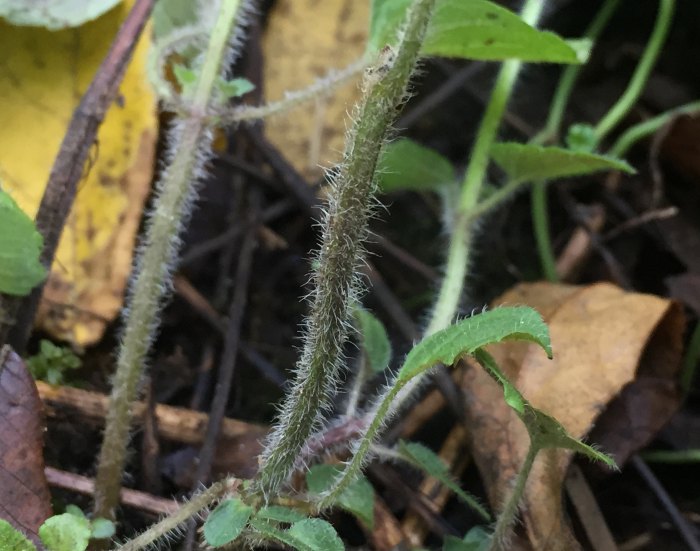
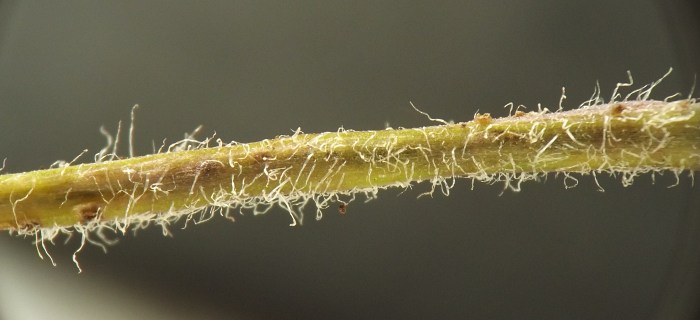
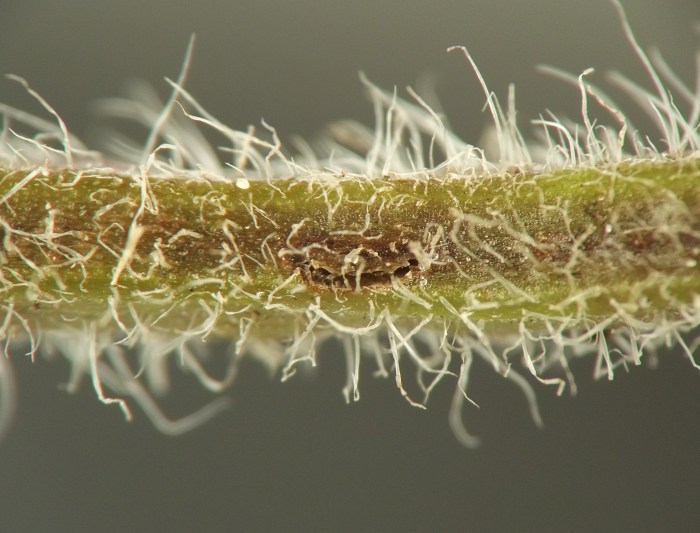
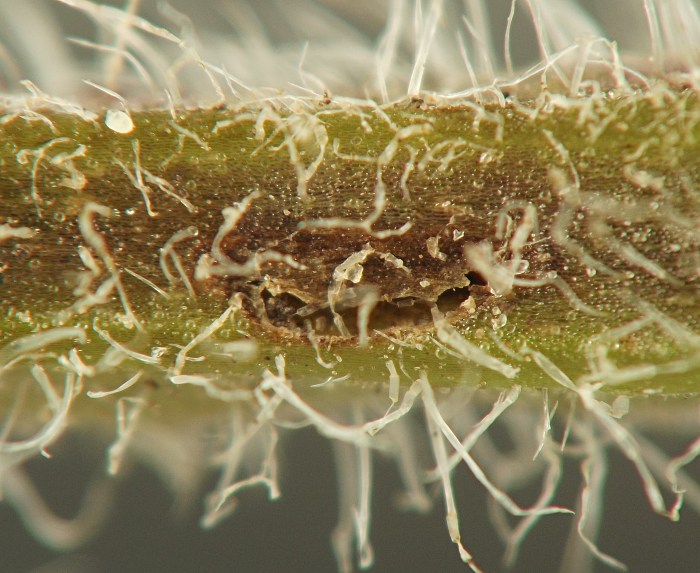
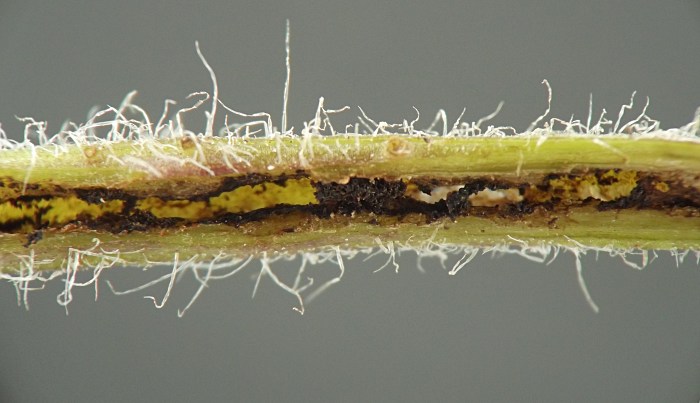
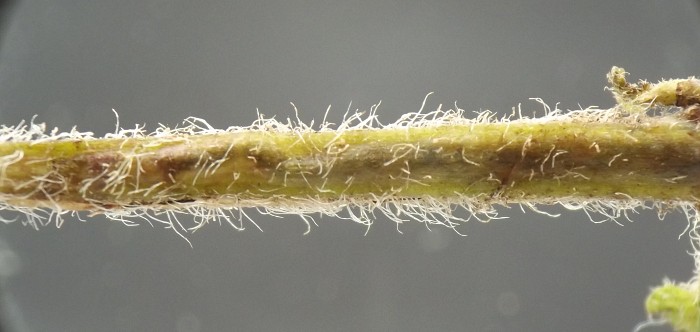
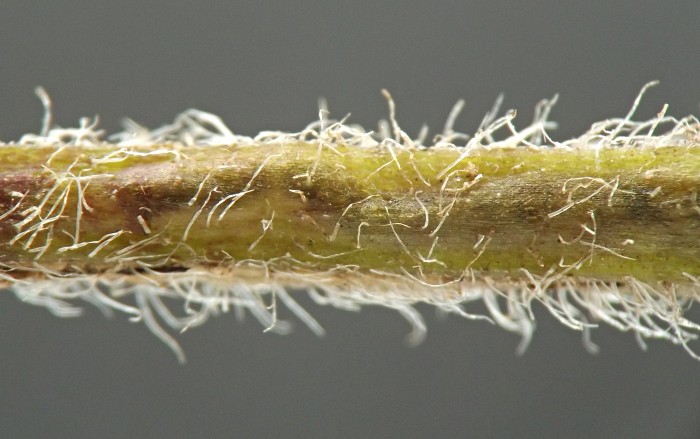
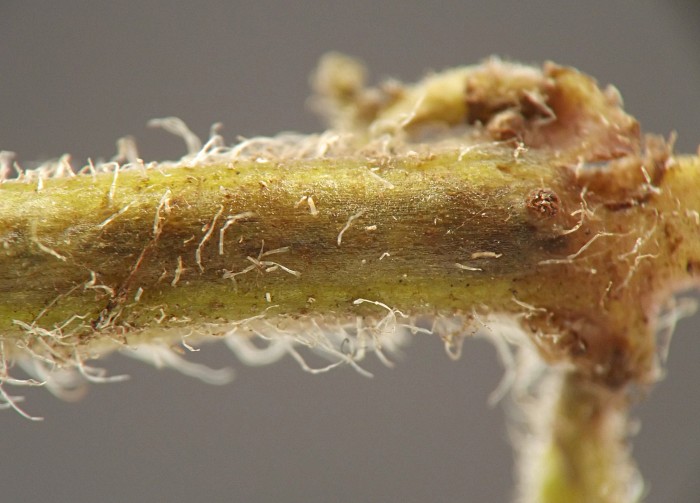
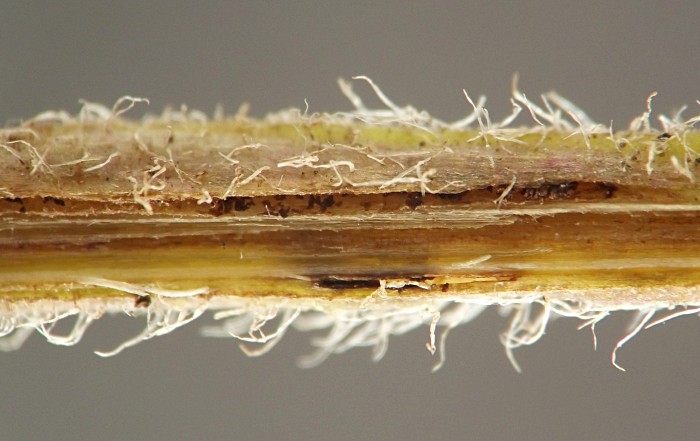
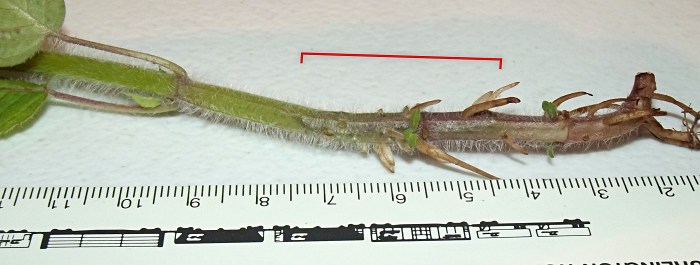
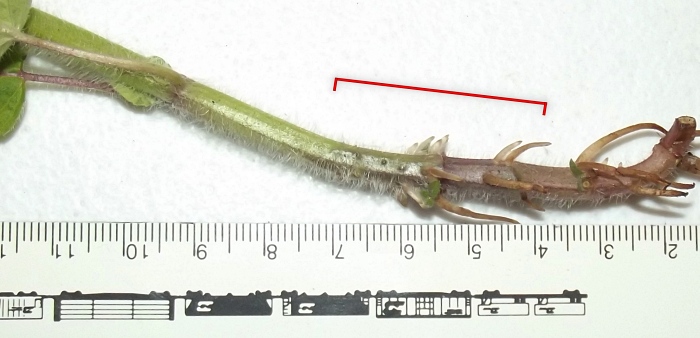
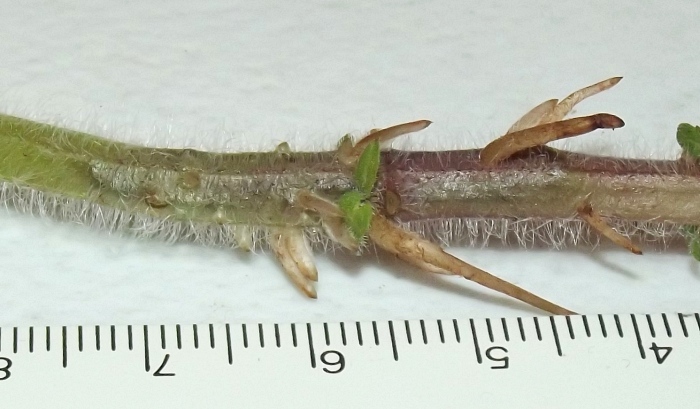
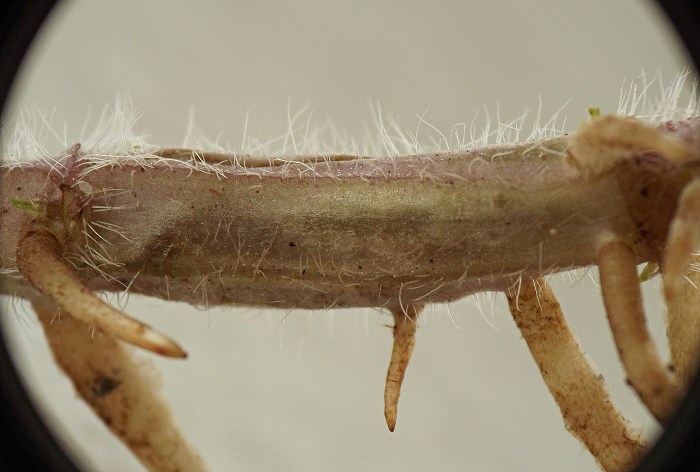
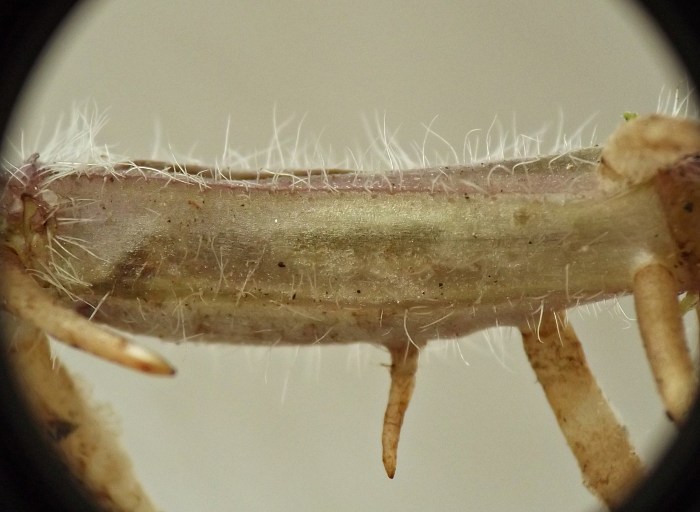
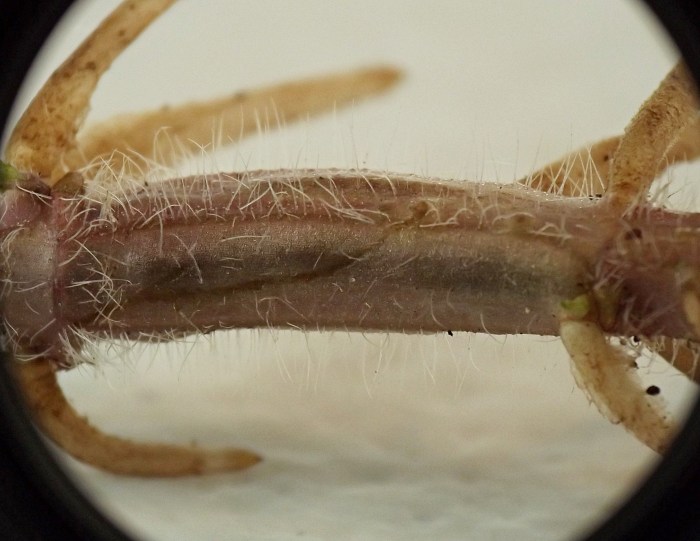
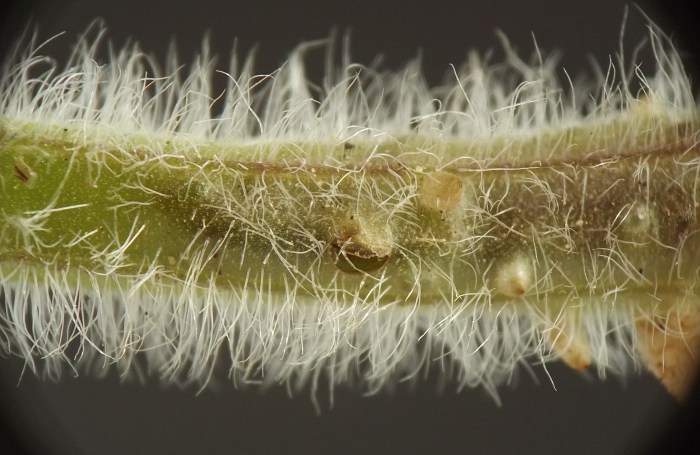
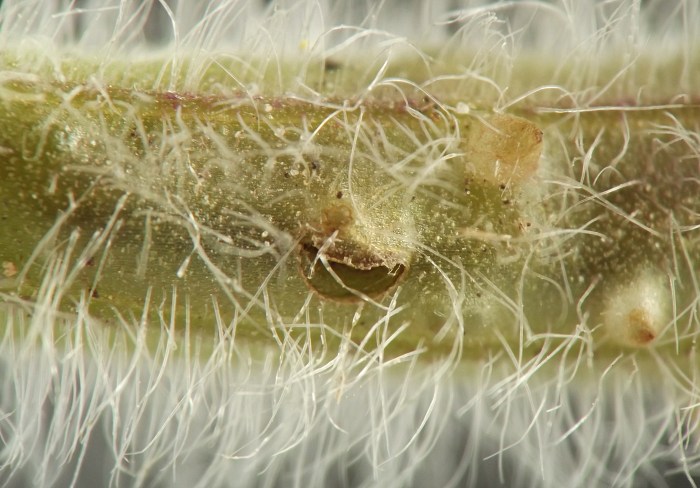

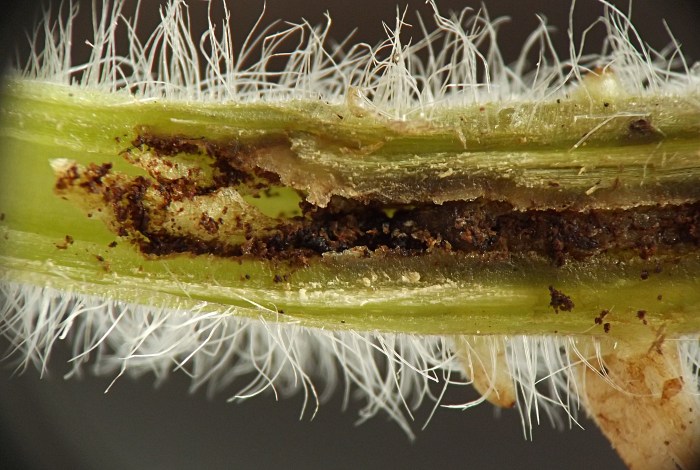
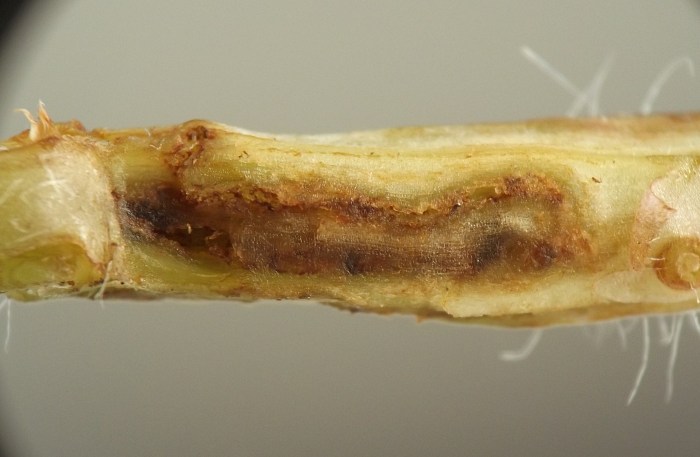
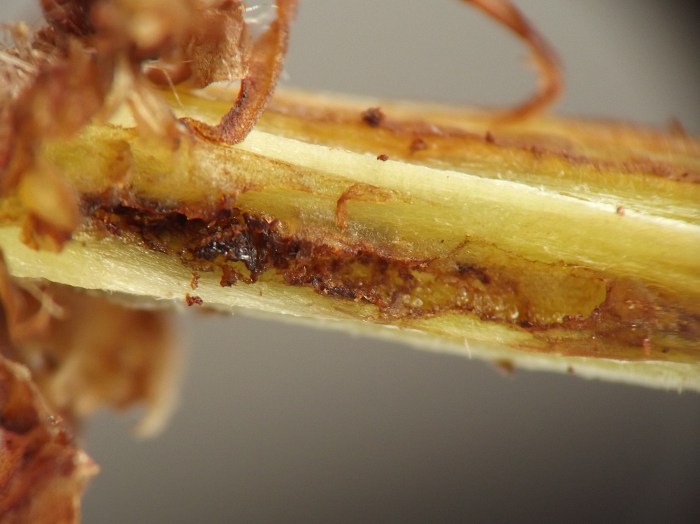
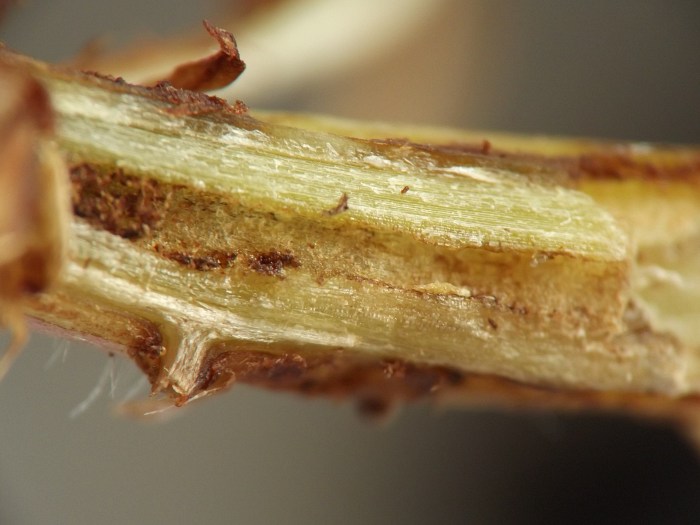
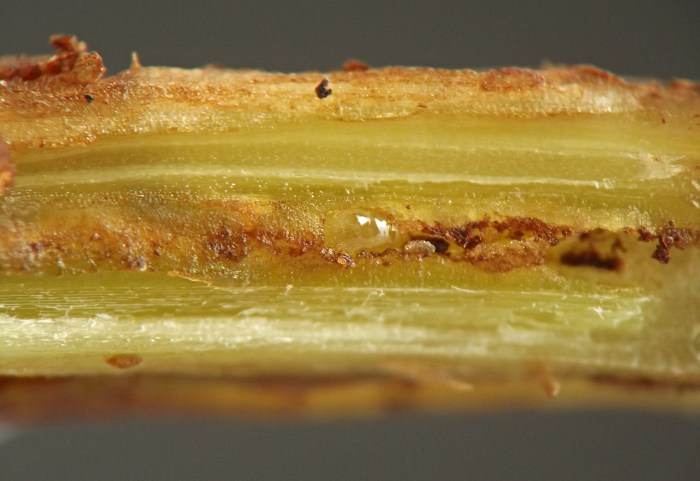
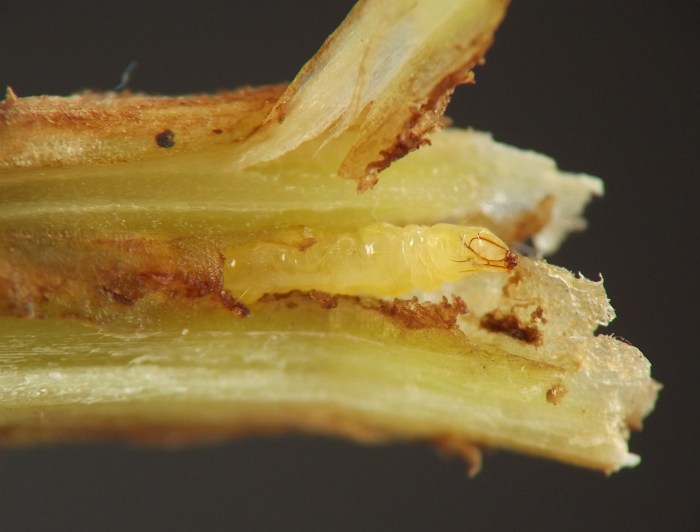
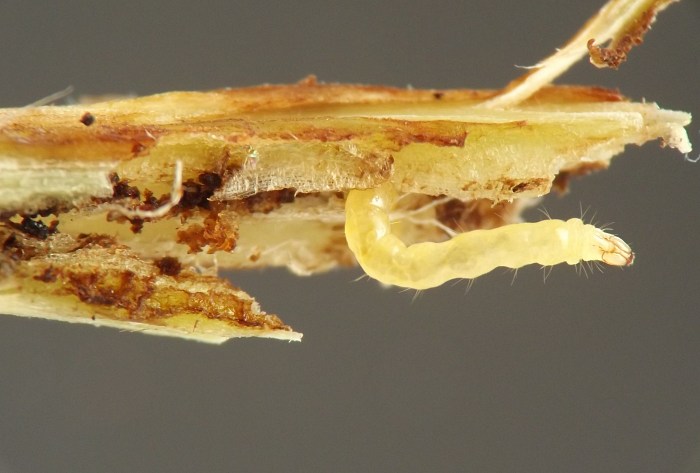
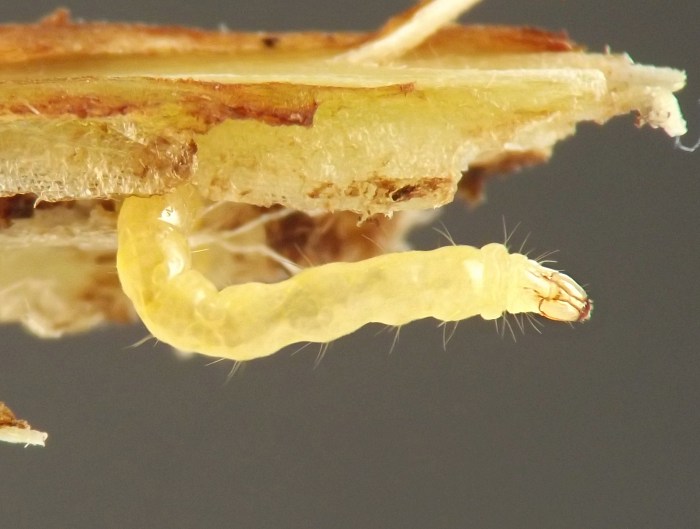
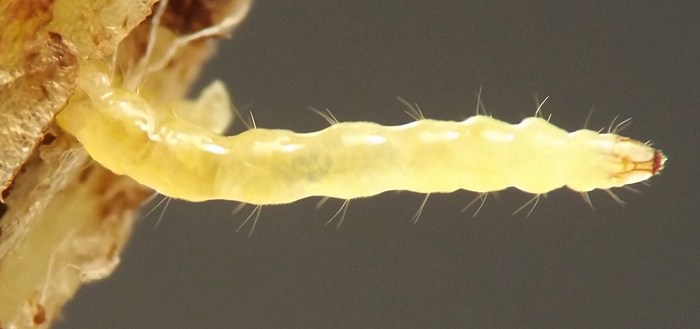
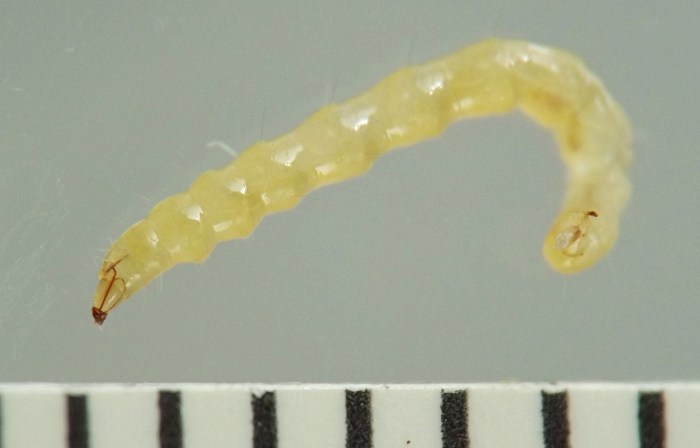
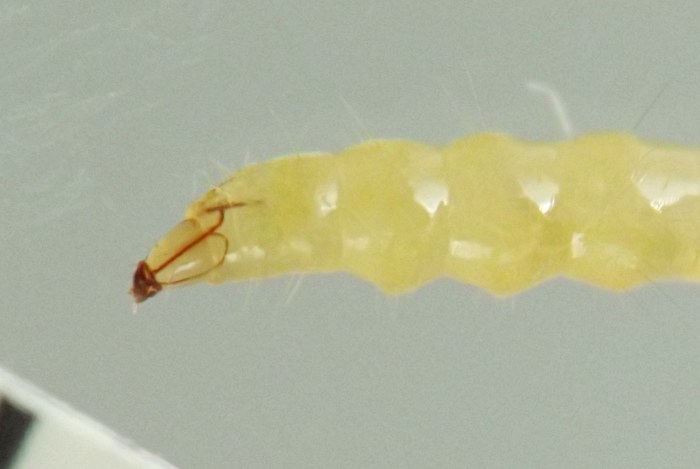
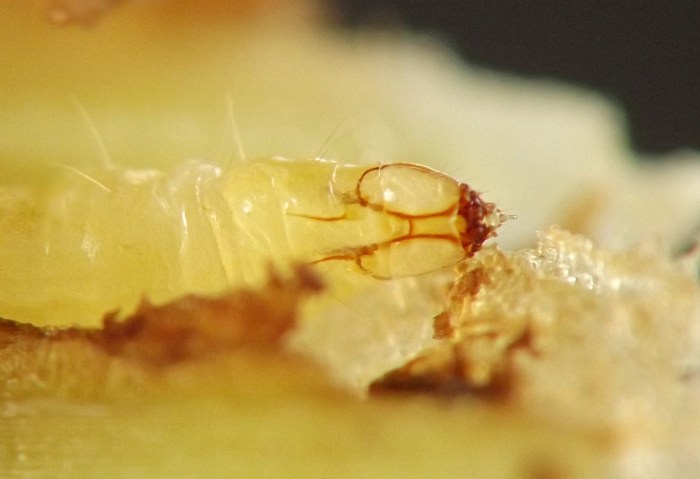
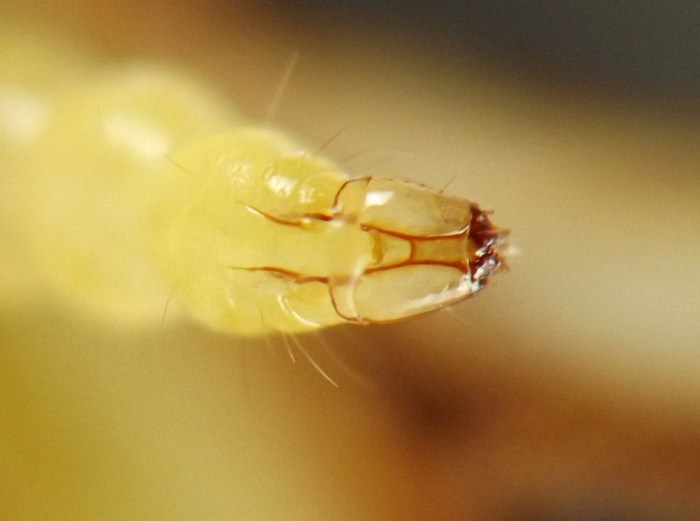
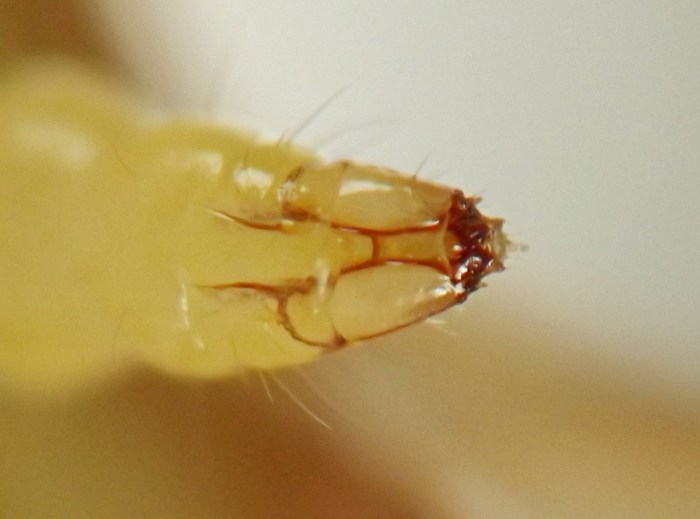
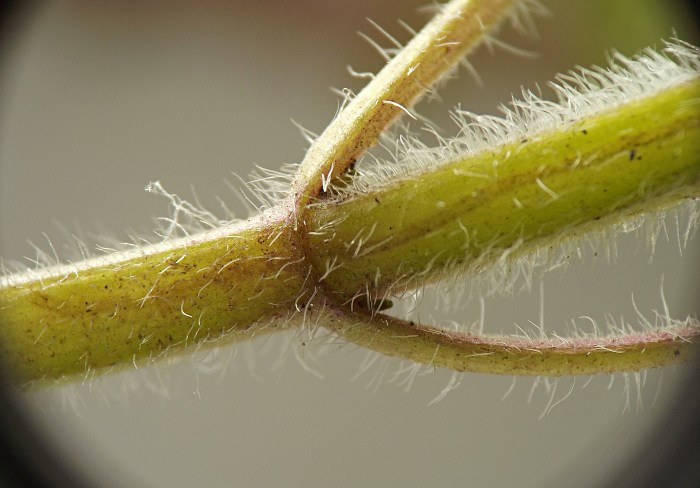
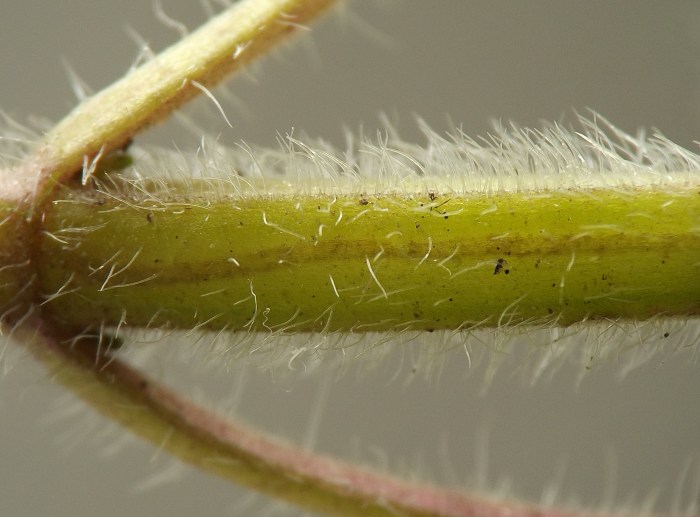
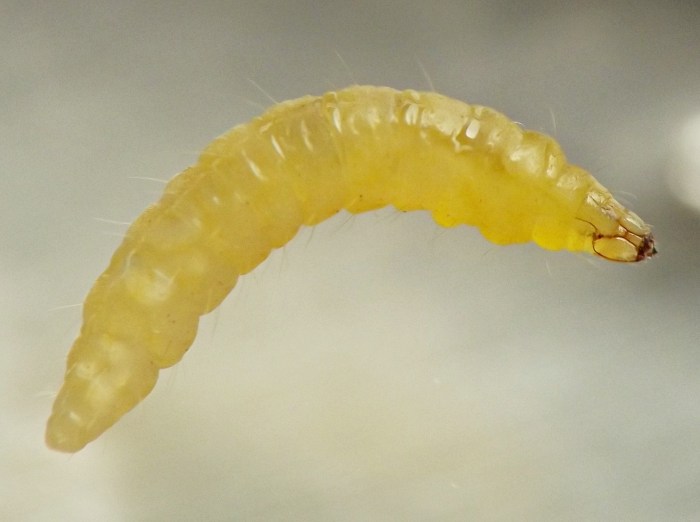
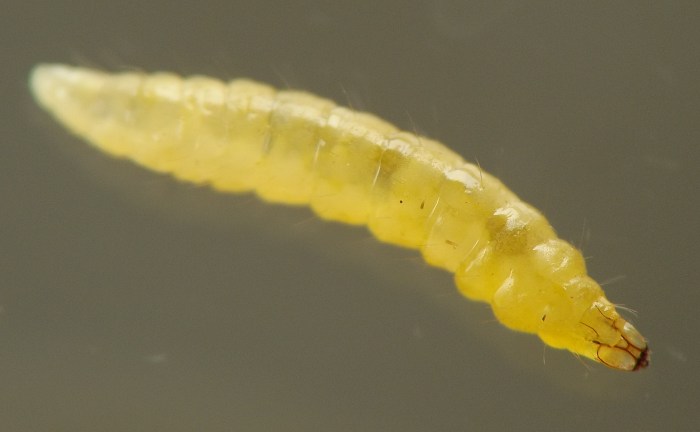
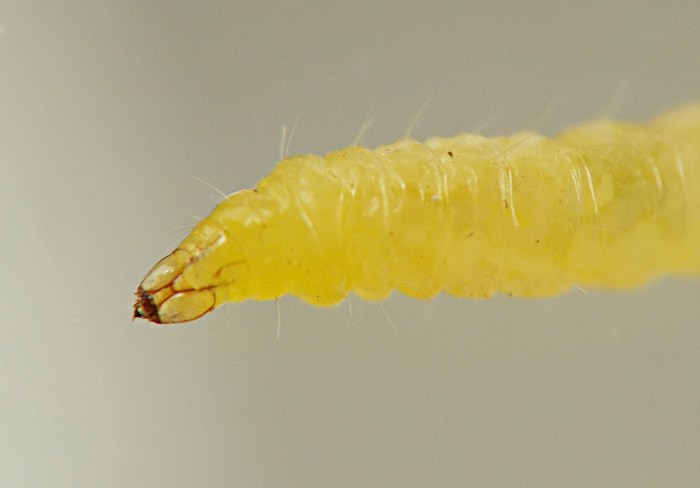
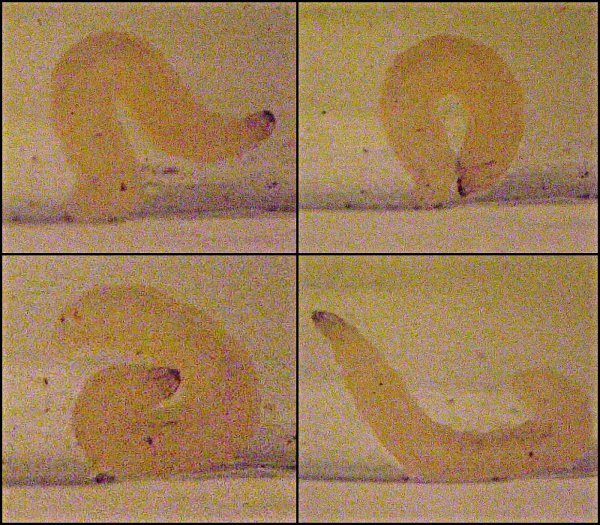
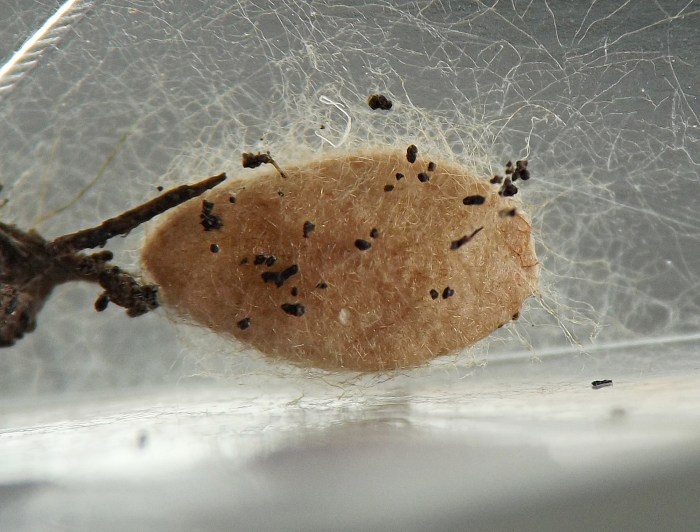
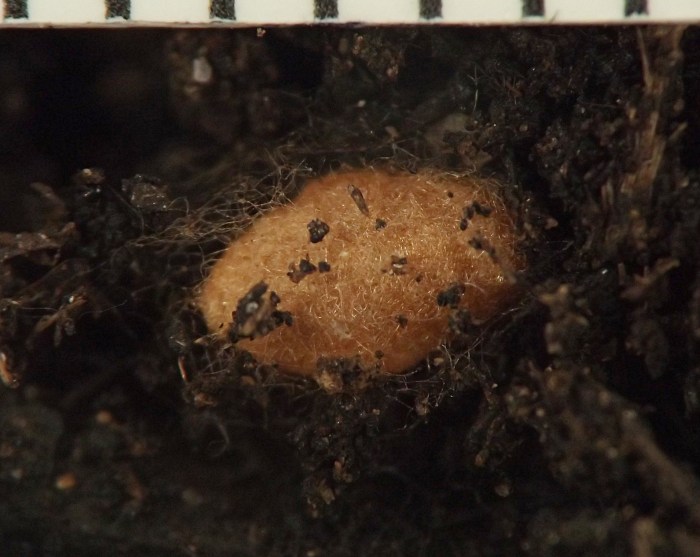
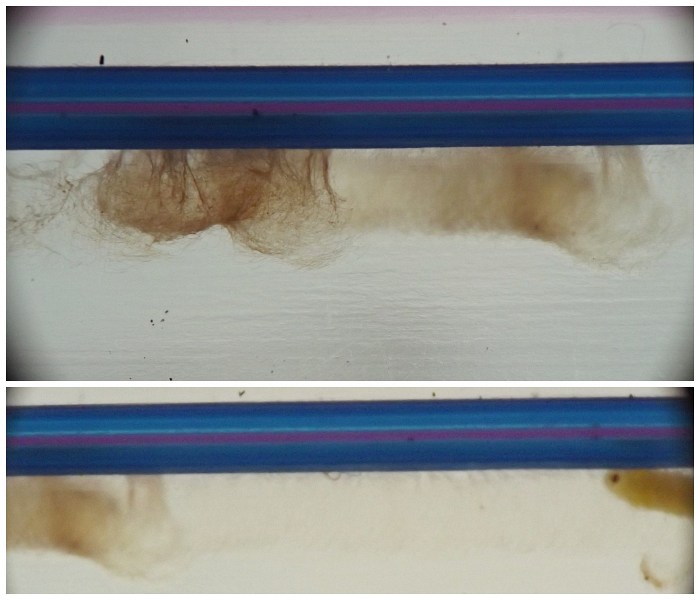
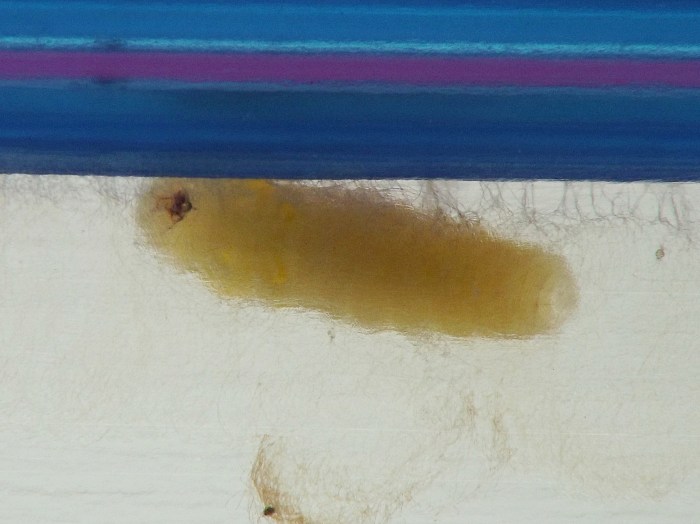
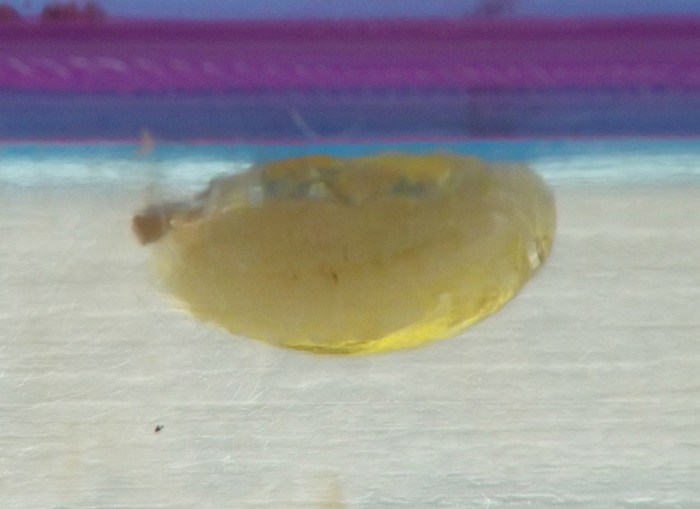
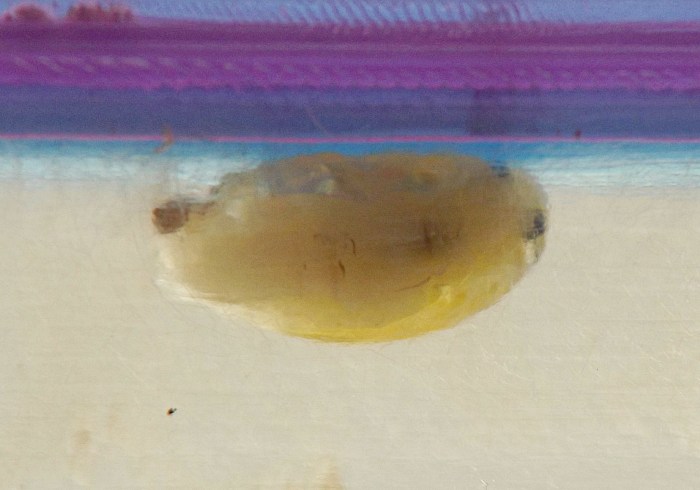
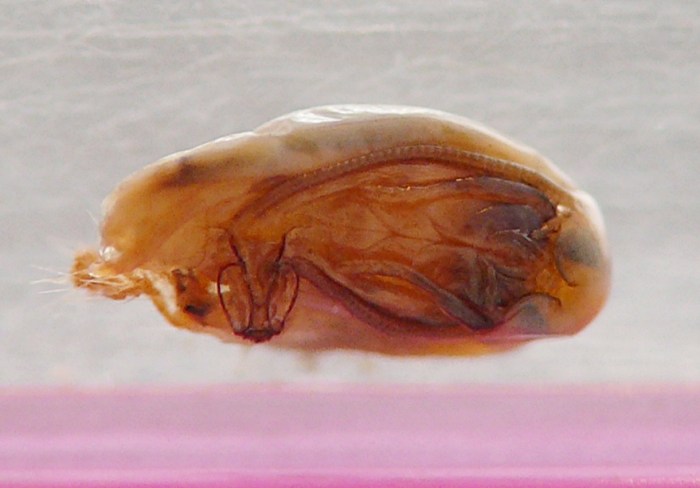
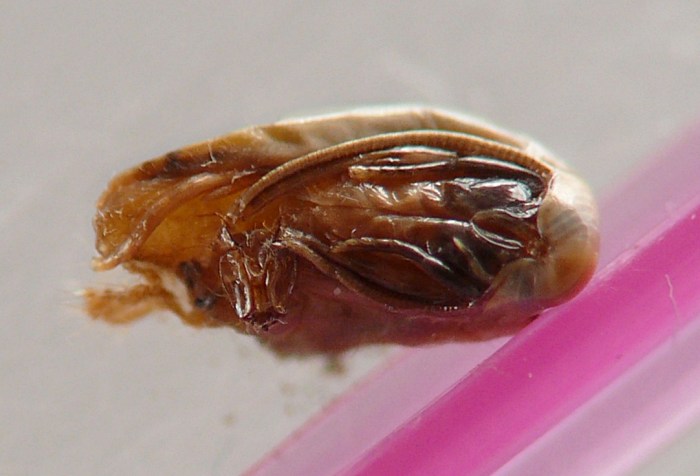
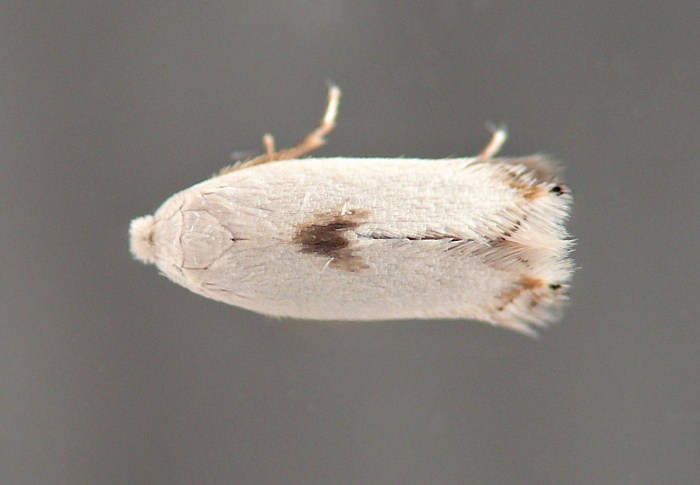
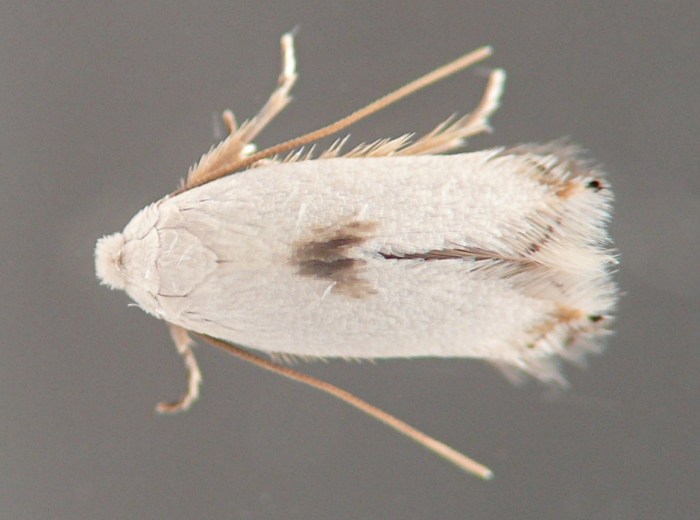
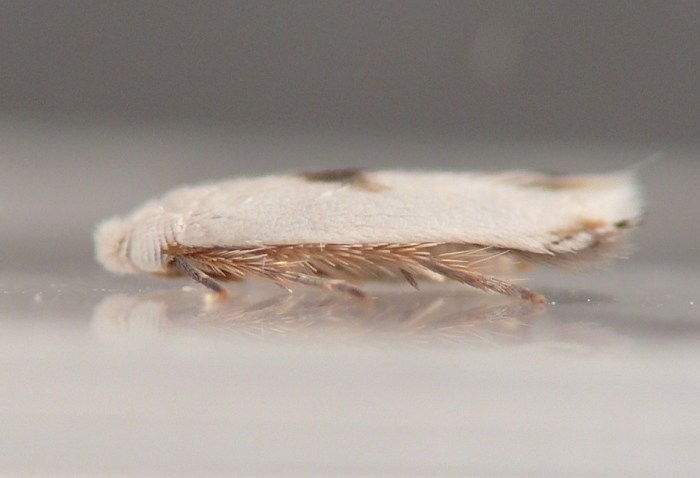
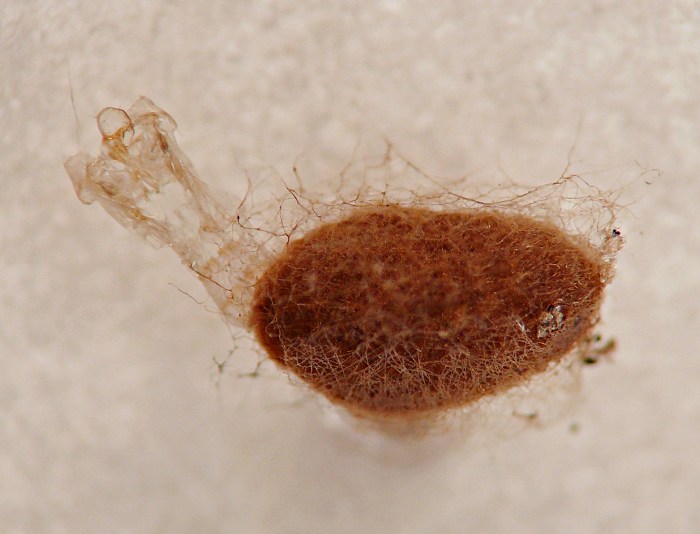
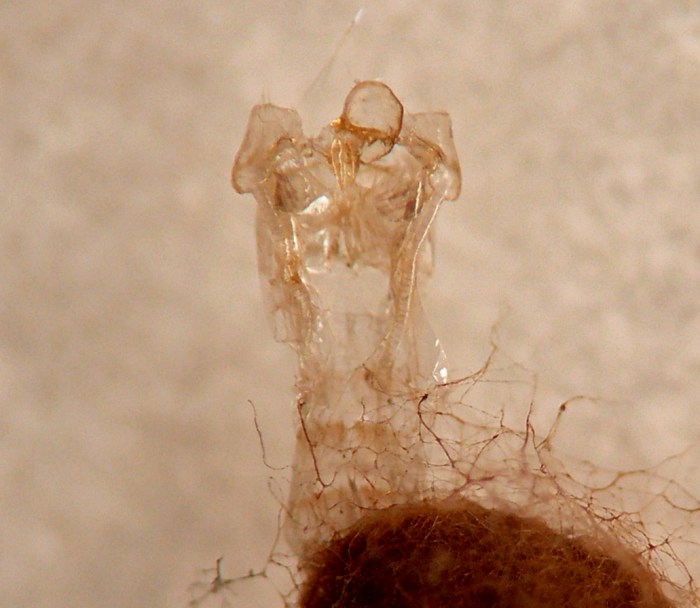
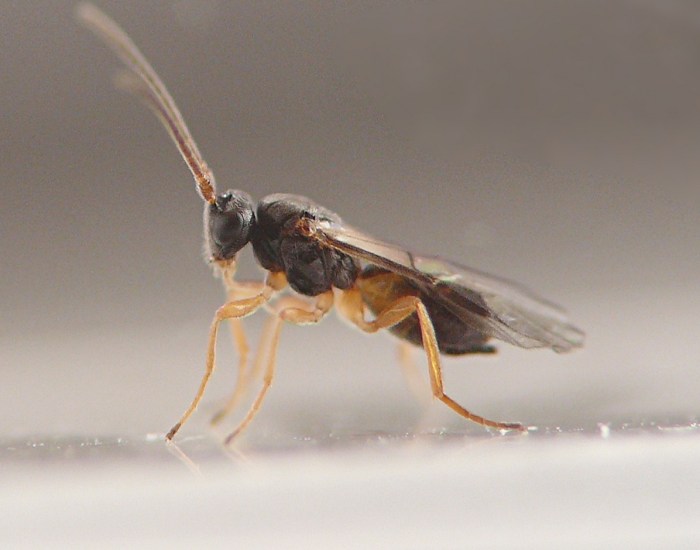
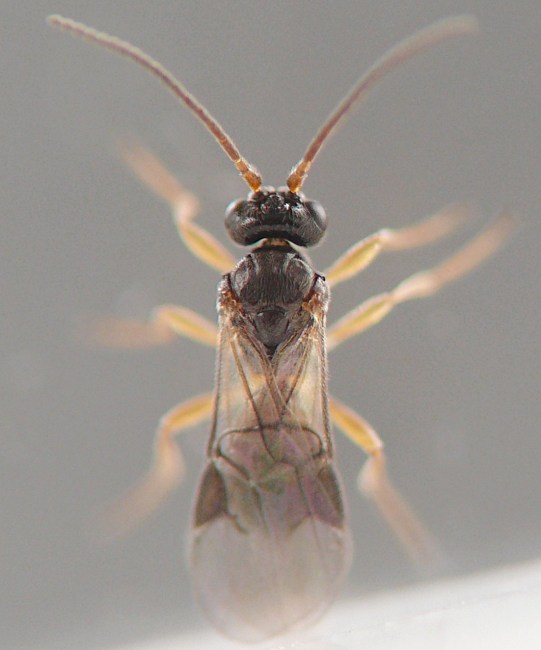
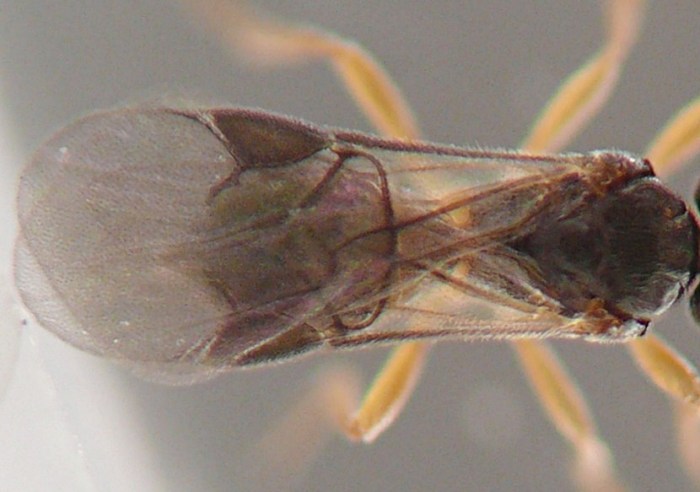
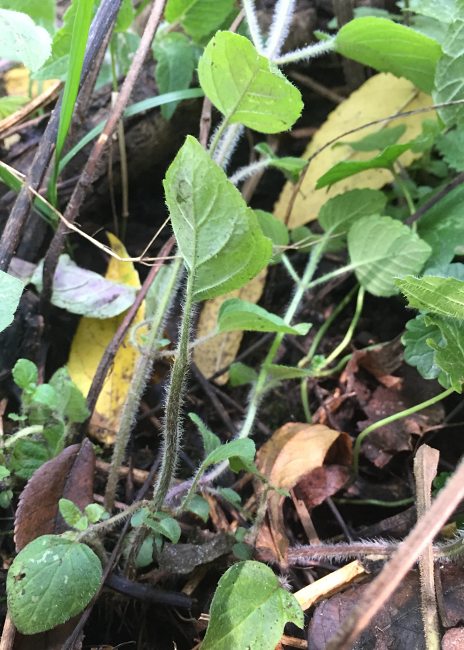
Coll. 10/28/21, photos same day (01-04); coll. 05/15/23, photos on 05/16/23 (05-07, 11-13); coll. 05/09/23, photos on 05/10/23 (08-10, 14-26); coll. 09/29/23, field photos same day (31-32), other photos on 09/30/23 (27-30); coll. 04/13/24, photos same day (33-34); coll. 04/13/24, larva out of stem 04/18/24 and photographed on 04/21/24 (35-37); coll. 04/13/24, larva out of stem and cocoon started on 04/22/24, cocoon apparently done by 04/23/24 and photographed on 04/25/24 (38); coll. 04/13/24, cocoon found in rearing container on 04/25/24 (39); coll. 04/10/24, cocoon spun by 04/21/24 and photographed on 04/23/24 (40-41), developing pupa photographed on 04/25/24 (42), 05/01/24 (43), 05/06/24 (44), and 05/10/24 (45); coll. 04/10/24, adult emerged 05/08/24 and photographed same day (46-48), cocoon with pupal exuviae photographed ~06/08/24 (52-53); coll. 04/13/24, adult wasp emerged from opostegid cocoon on 05/09/24 and photographed on 05/11/24 (49-51); coll. 04/13/24, larva out of stem and photographed on 04/18/24 (54); coll. 05/18/25, exit slit photographed on 05/19/25 (55).
- Davis, D.R. and J.R. Stonis. 2007. A revision of the New World plant-mining moths of the family Opostegidae (Lepidoptera: Nepticuloidea). Smithsonian Contributions to Zoology no. 625, 212 pp., 503 figs., 19 maps, 2 tables.[return to in-text citation]
- Harrison, T. 2023. Family Opostegidae. On Microleps.org [website]. Retrieved November 5, 2023 from http://www.microleps.org/Guide/Opostegidae/index.html.[return to in-text citation]
- Zuparko, R. 2024. Comment on contributor post at BugGuide.net. Retrieved June 6, 2024 from https://bugguide.net/node/view/2356671.[return to in-text citation]
Page created: September 28, 2023. Last update: February 13, 2026