Stem borer (Lepidoptera: Momphidae) in Circaea
| Record no.: | 0149 |
|---|---|
| Feeding guild: | Stem borer |
| Taxonomy: | Lepidoptera: Momphidae: Mompha luciferella |
| Stages observed: | trace, larva, pupa, adult |
| Distribution observed: | IA, MN |
| Hosts in Circaea: | C. lutetiana (enchanter's nightshade) |
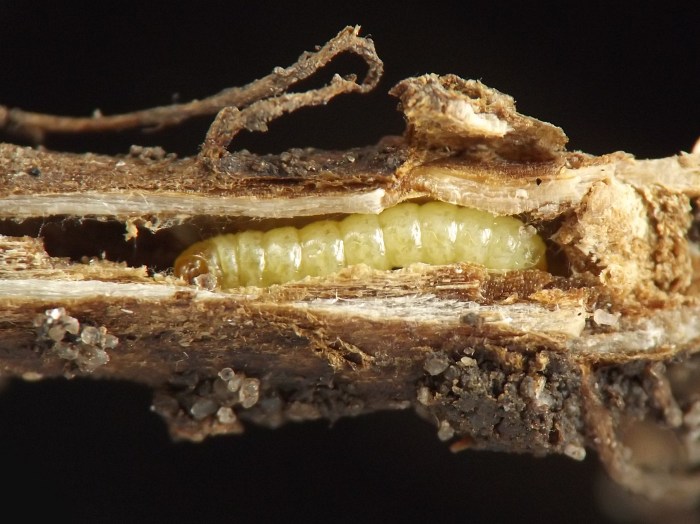
I reared adults of this borer from multiple overwintered dead stems of the host in spring 2021. The larva is yellow with a orangish-brown head capsule featuring a small dark spot in the ocellar area; also, my photos indistinctly show a lightly sclerotized area on the posterior end of the larva similar in color to the head capsule. The larva tunnels in the lower stem, producing dry granular pellets of frass, and pupates there in a white, finely woven cocoon. The anterior end of the cocoon connects to an operculum in the wall of the stem, through which the adult moth emerges, leaving the pupal exuviae behind in the cocoon.
In addition to these observations involving lower stems, I have found several upper stems of the host each containing a small hole opening into a short tunnel in the stem interior. In one case a 15mm-long stretch of tunnel adjacent to the hole was filled with compacted frass. In another case, found in a living stem during the growing season, the tunnel began as a whitish, externally visible linear mine, then proceeded deeper into the stem interior, where I found a head capsule, apparently lepidopteran, about 15mm from the entrance hole. In a third case, also in a living stem, the tunnel began about 6/10ths of the way up the stem, and moved downward approximately 35-40mm, with dark brownish frass scattered throughout, then seemed to end in a slightly enlarged, vacant chamber. Although it is not at all clear whether these tunnels were all made by the same type of insect, I suggest that at least some of these examples may represent the work of early-instar M. luciferella, tunneling in a limited area of the upper stem before relocating to the lower stem to complete the bulk of its feeding activity.
Reared adults were identified as M. luciferella by T. Harrison (pers. comm., after examining specimens in hand).
 Prev
Prev
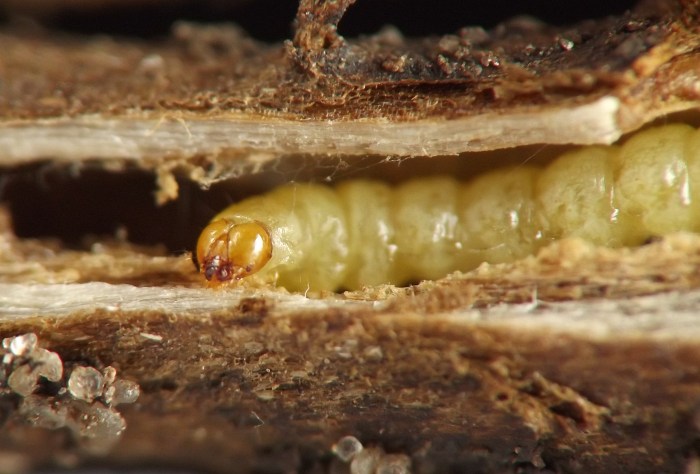
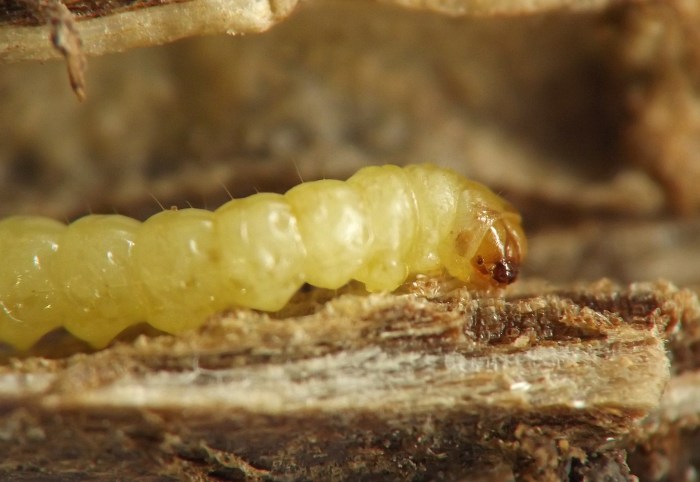
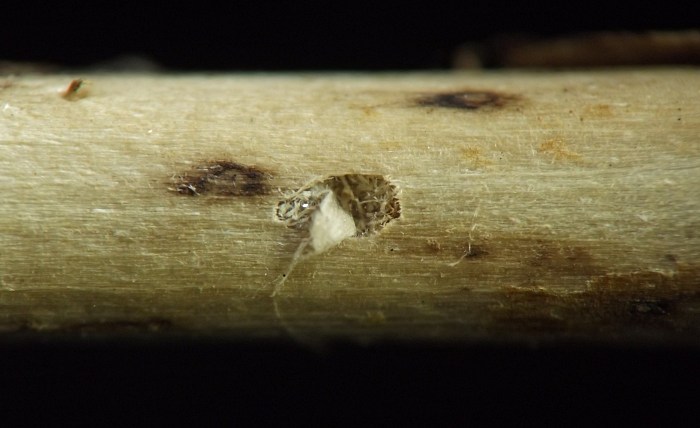
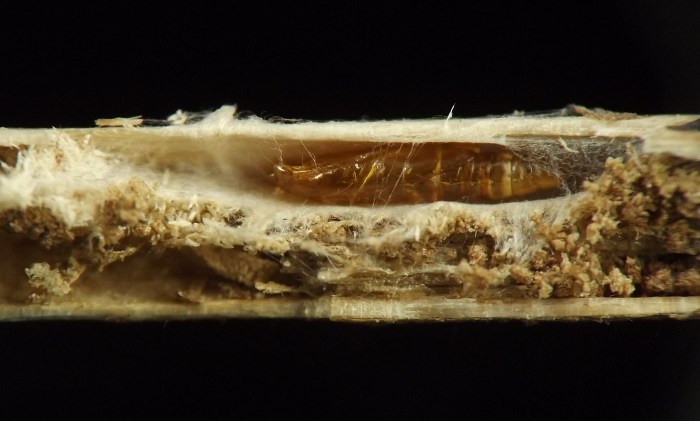
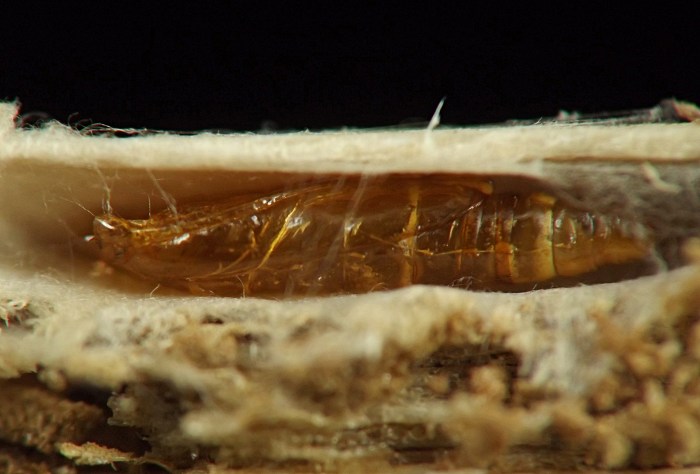
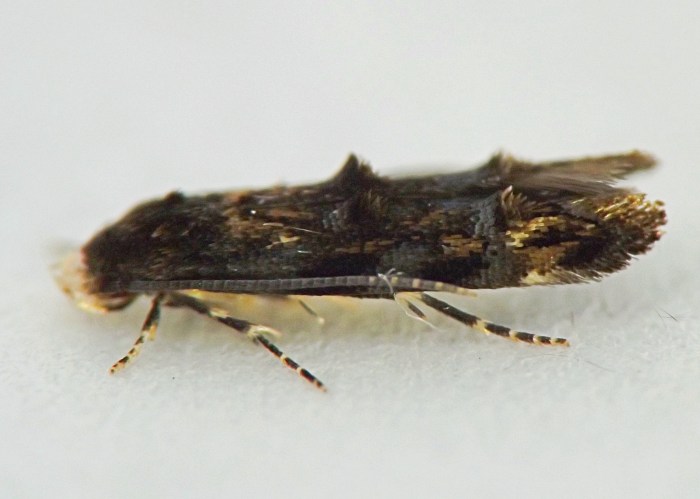
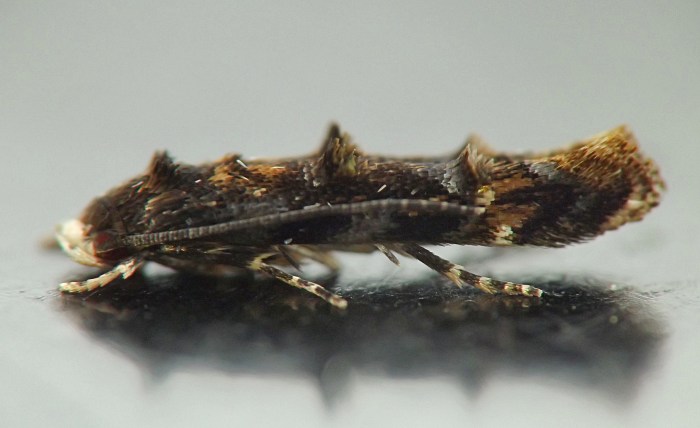
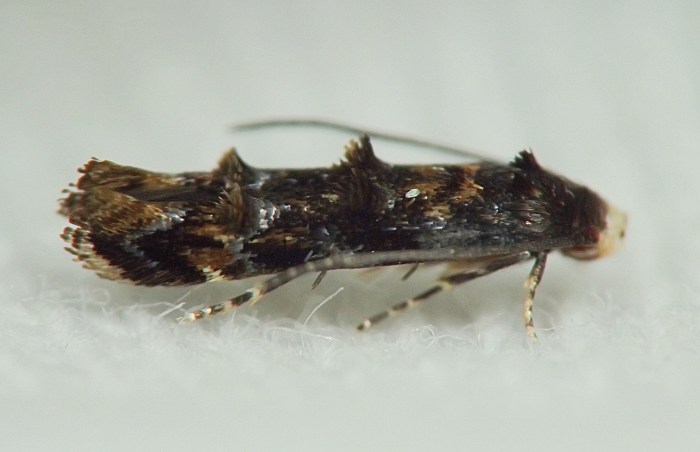
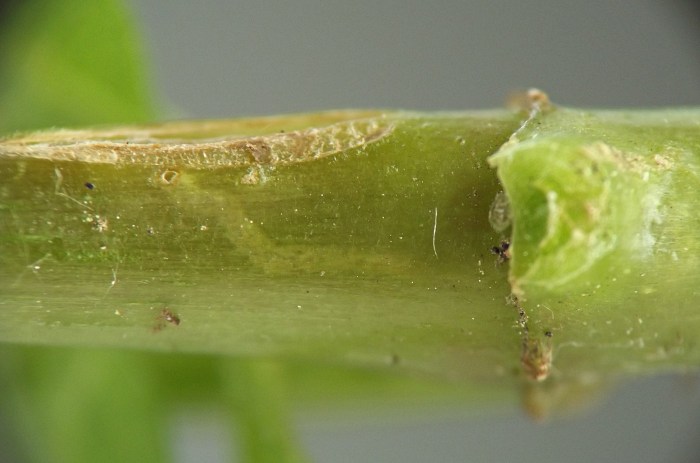
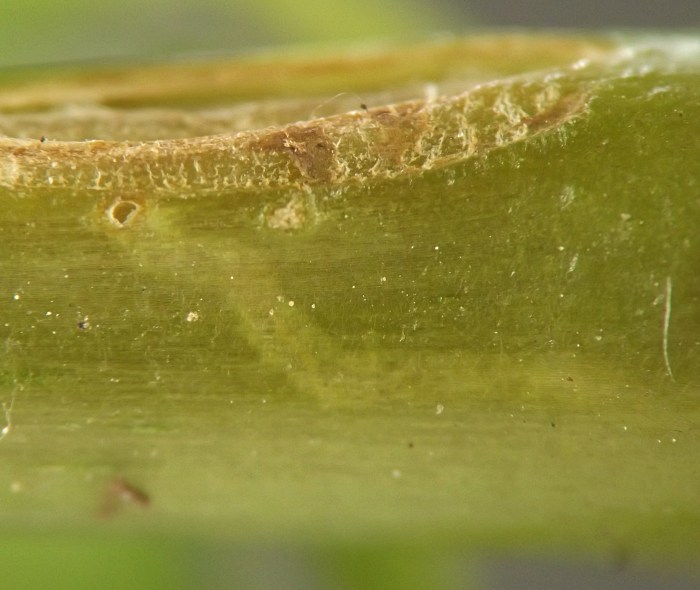
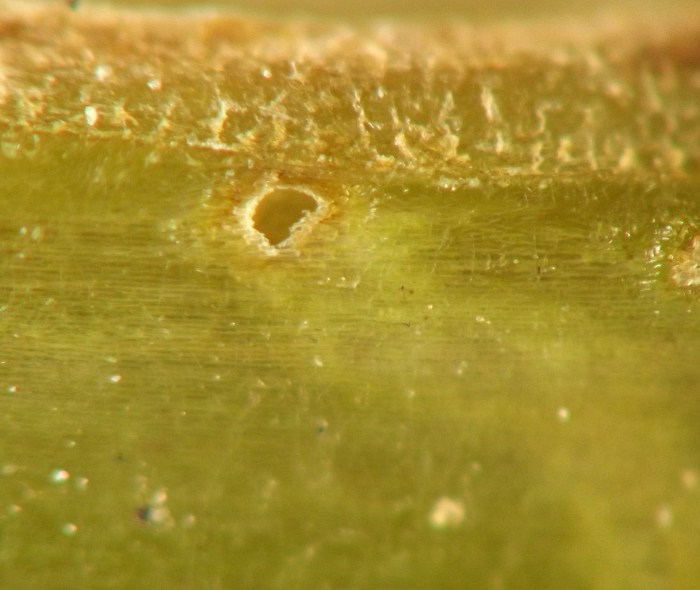
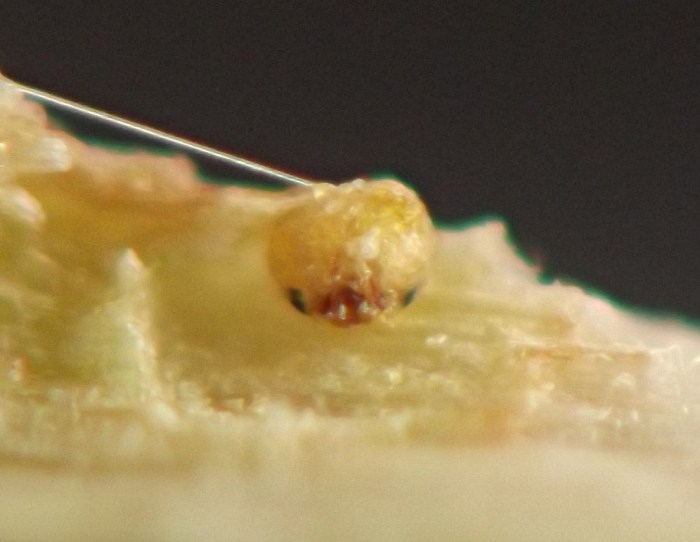
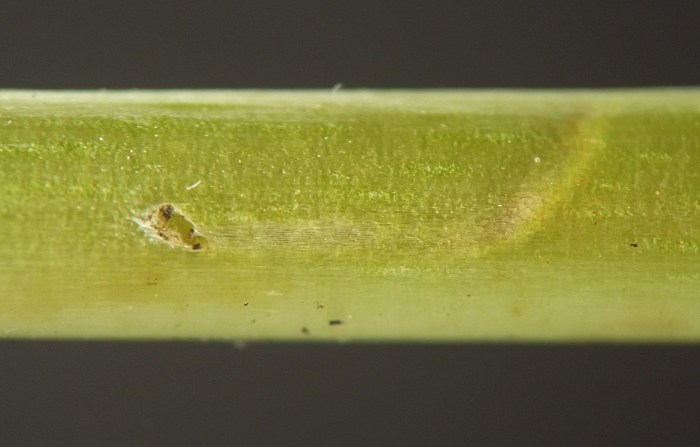
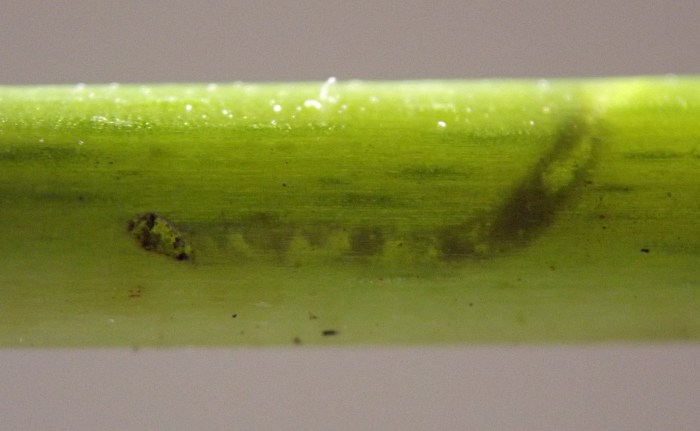
Coll. 10/26/20, photographed same day (01-03); coll. 04/21/21, adult em. 05/12/21, photos of adult and exuviae on 05/12/21-05/14/21 (04-09); coll. 08/02/22, photographed same day (10-13); coll. 08/21/22, photographed same day (14-15).
Page created: November 23, 2023. Last update: February 27, 2026