Local feeder (Diptera: Agromyzidae) in stems of Clematis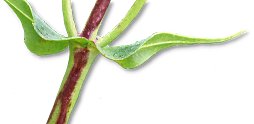
| Record no.: | 0158 |
|---|---|
| Feeding guild: | Local feeder in stem |
| Taxonomy: | Diptera: Agromyzidae: cf. Phytomyza sp. |
| Stages observed: | trace, larva, puparium, adult |
| Distribution observed: | IA |
| Hosts in Clematis: | C. virginiana (virgin's bower) |
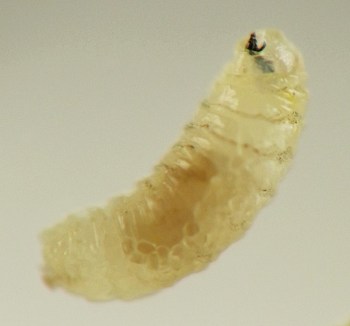
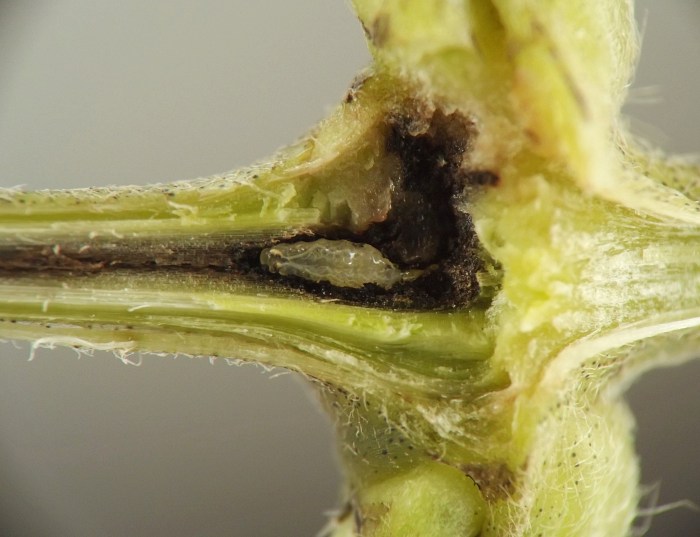
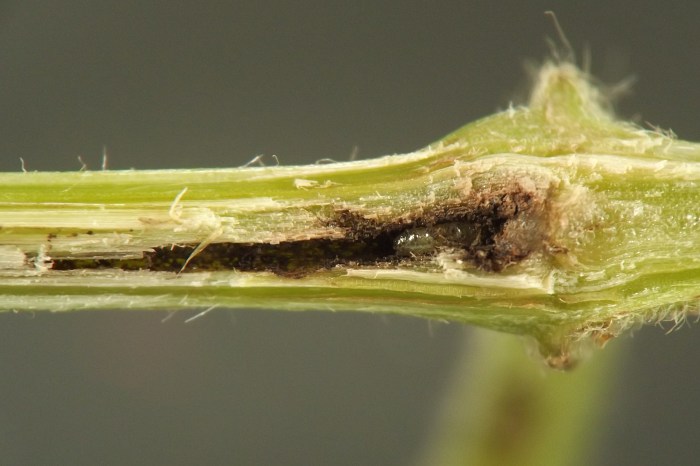
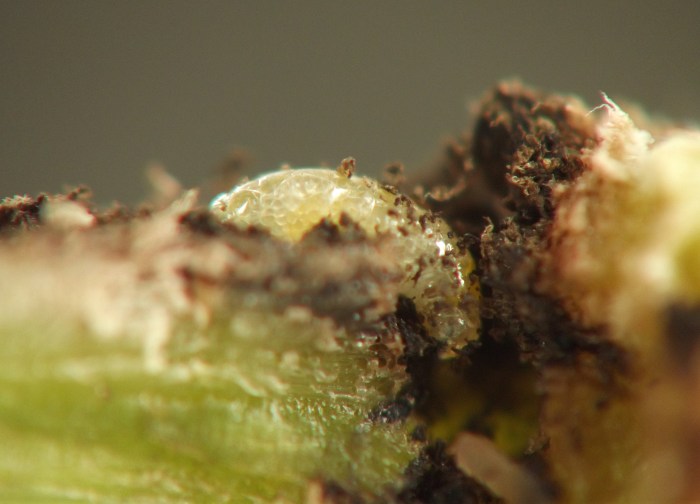
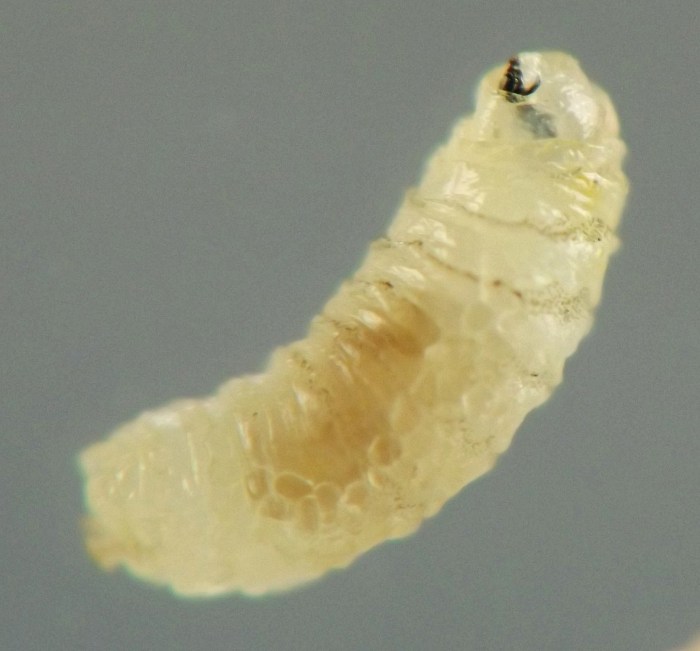
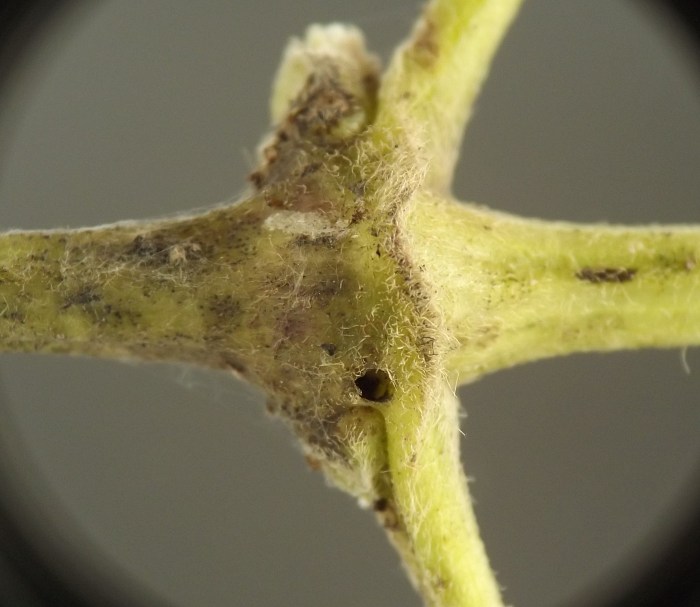
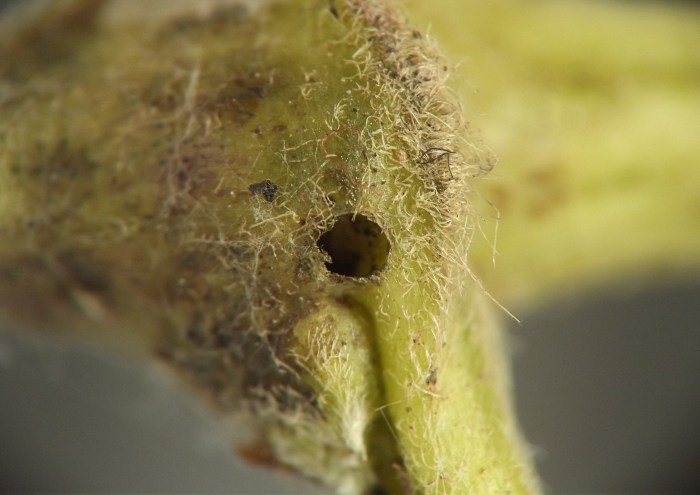
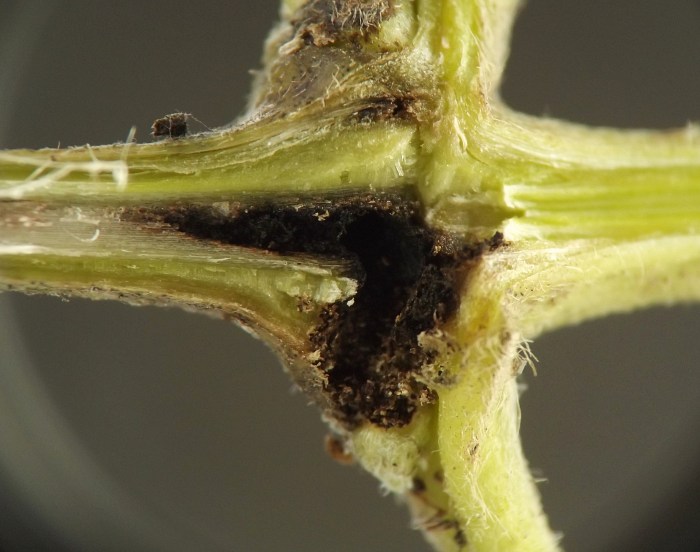
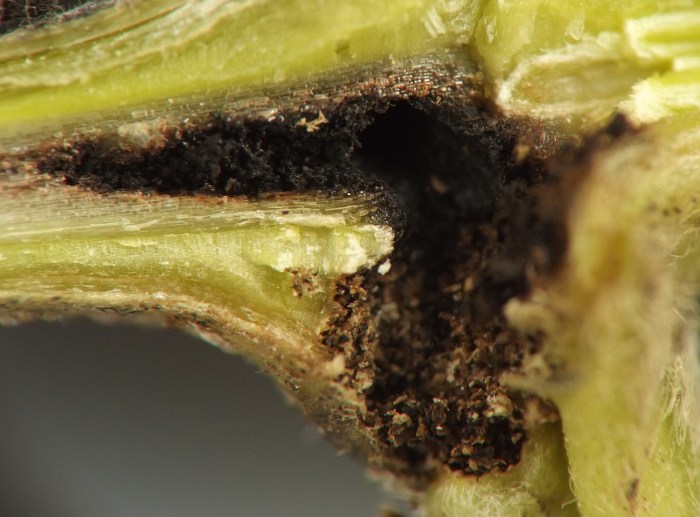
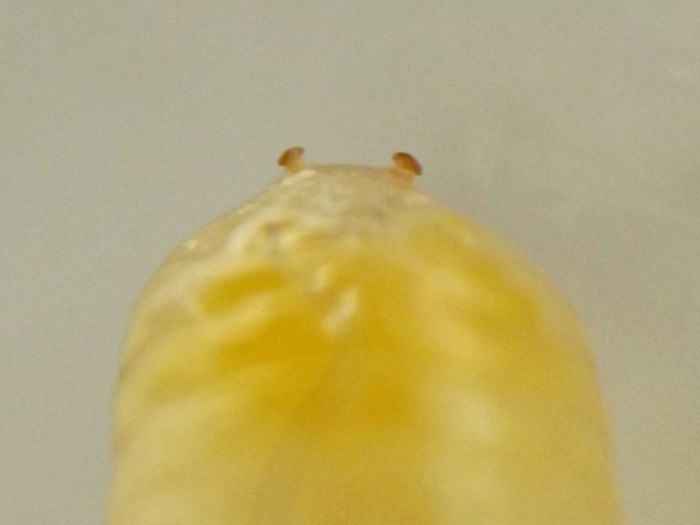
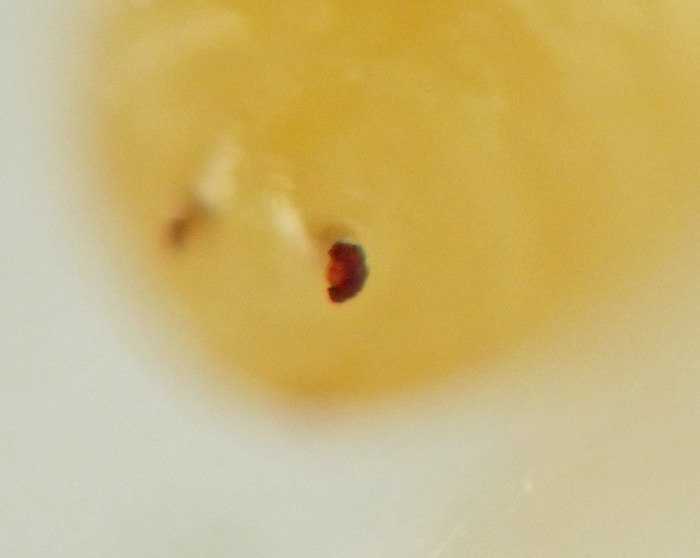
The larva tunnels in a current-year stem for a short distance (roughly 10-20mm) through the pith immediately adjacent to a node, then spends the rest of its time feeding in the node, causing extensive hollowing in this highly localized area. Dissecting an affected node reveals that the hollowed-out chamber inside is distinctly and strongly blackened. Externally, an affected node may discolor slightly but otherwise there seems to be little outward sign of the borer's presence, unless the larva has finished feeding and vacated the node, in which case an exit hole may be visible.
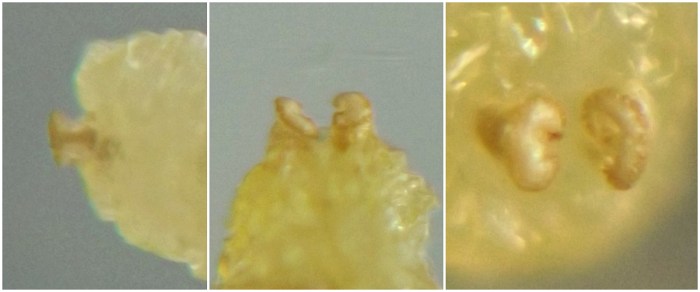
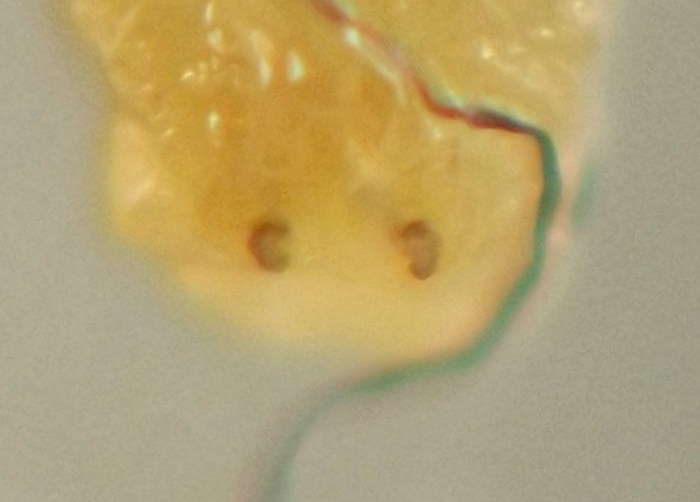
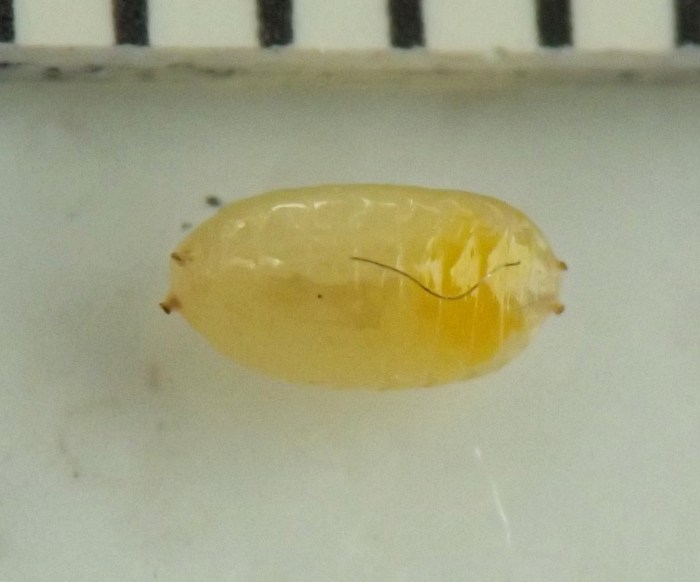
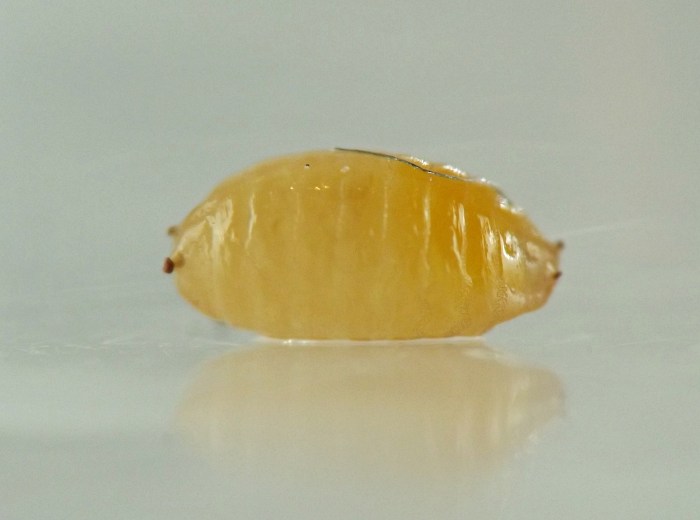
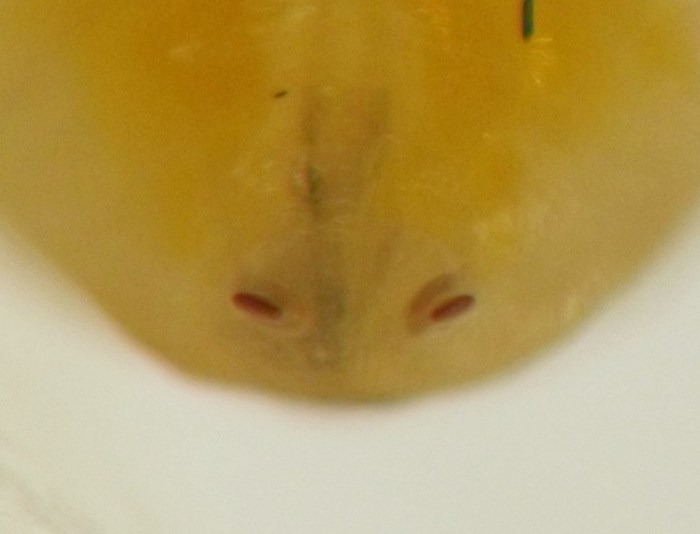
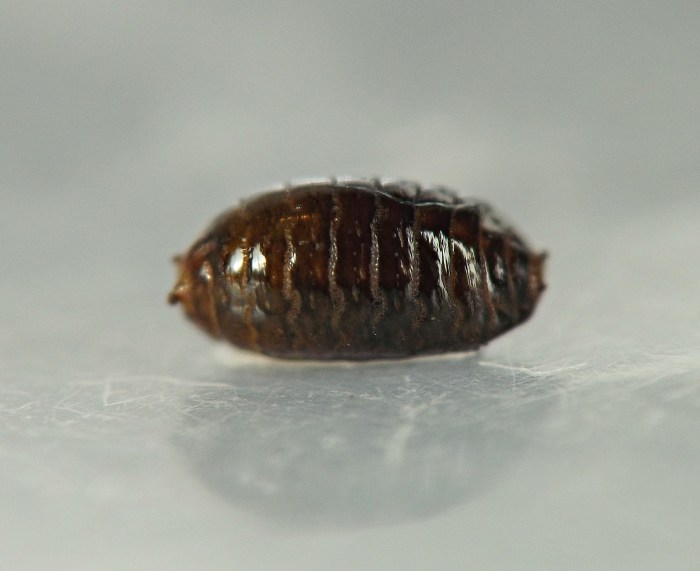
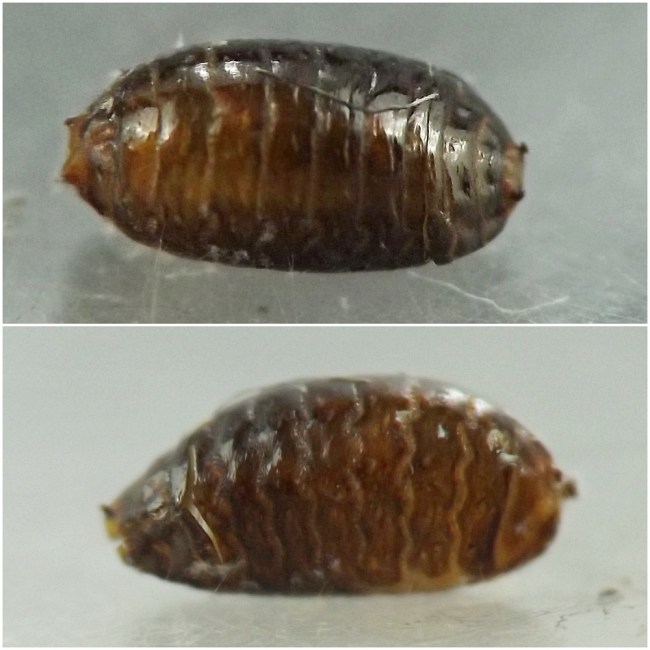
The only puparium I have so far obtained was formed outside the stem, by a larva that emerged from plant material collected on October 11, 2023, after the plant material was held indoors for three days. I did not observe the larva emerging from the stem, but after I found the puparium in the rearing bag, examination of the stem revealed an exit hole in one affected node that appeared freshly made. There was also a single leaf mine in the plant material, but the old age and small size of the leaf mine, along with the apparent absence of an exit slit in the leaf epidermis, strongly suggested the puparium did not come from the leaf.
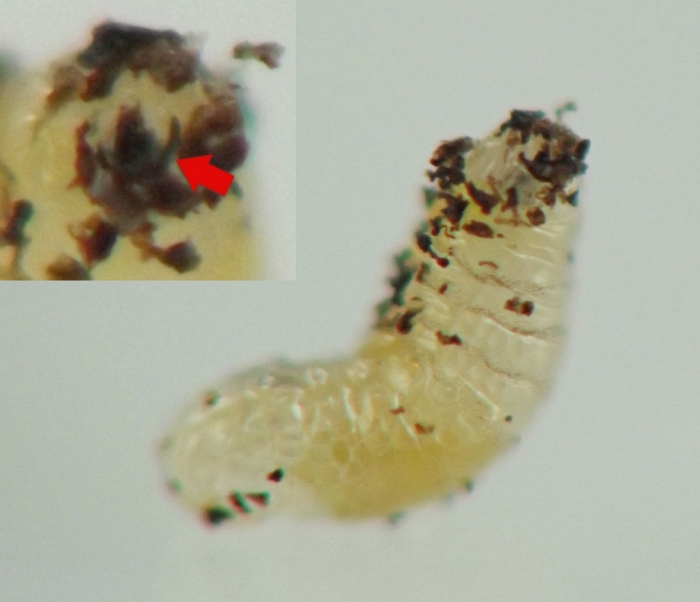
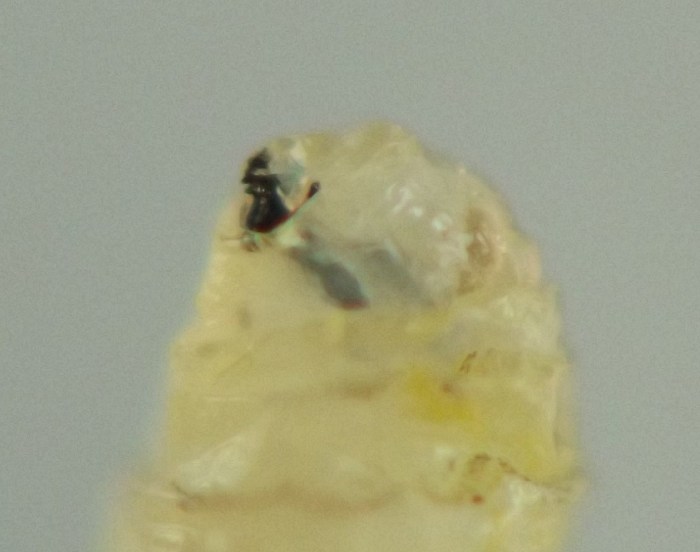
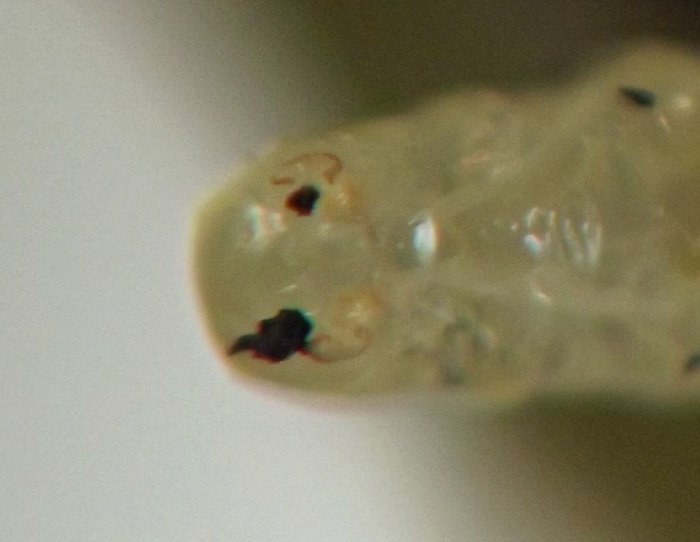
Details of the puparium also match larvae I collected in 2022 from inside "black hole" chambers in stem nodes. These larvae were all significantly immature despite having been collected over the course of three months from midsummer to late summer, on July 9, July 20, August 16, and September 6, suggesting that larvae typically do not reach maturity until late September or early October -- a good match for the timing of the puparium from the 2023 October 11 collection. It is conceivable that some larvae could overwinter in the stems and emerge the following spring, but thus far, in the current study, no such overwintering larvae have been found.
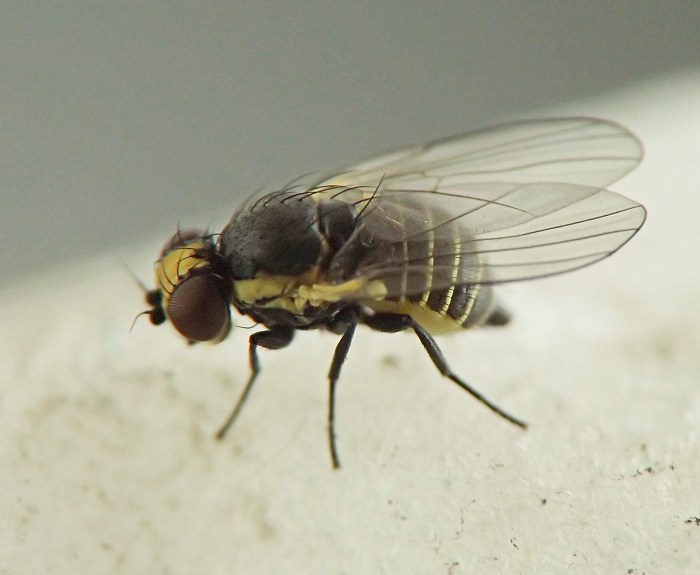
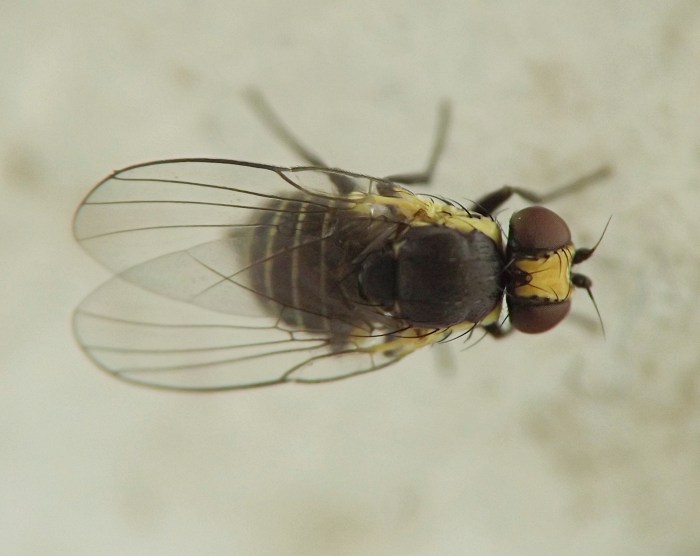
I reared an adult female from the 11 October 2023 puparium the following spring.
This local feeder/borer should not be confused with the agromyzid borer in the same host that tunnels for relatively long distances through the stem, primarily in the internodes, and pupates internally (see record 0159).
 Prev
Prev
Page created: October 16, 2023. Last update: March 20, 2026