Stem borer (Diptera: Agromyzidae) in Clematis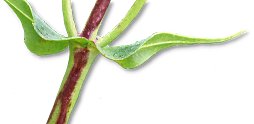
| Record no.: | 0159 |
|---|---|
| Feeding guild: | Stem borer |
| Taxonomy: | Diptera: Agromyzidae: cf. Phytomyza sp. |
| Stages observed: | trace, larva, puparium, adult |
| Distribution observed: | IA |
| Hosts in Clematis: | C. virginiana (virgin's bower) |
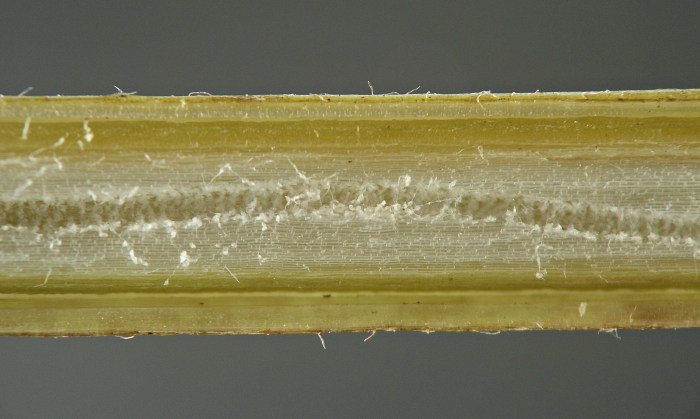
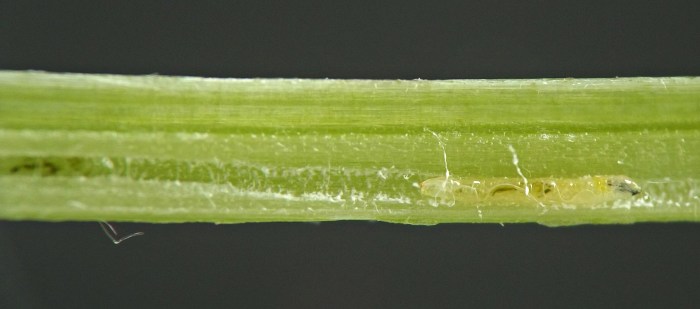
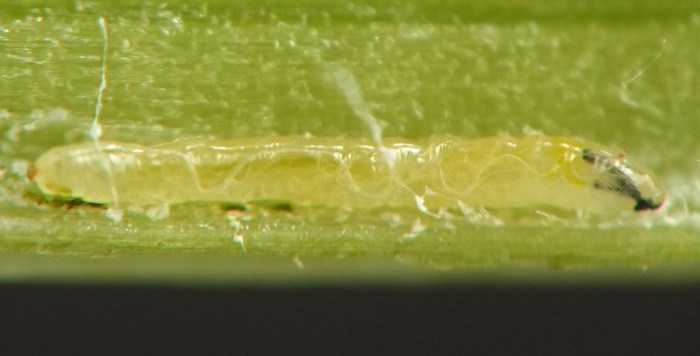
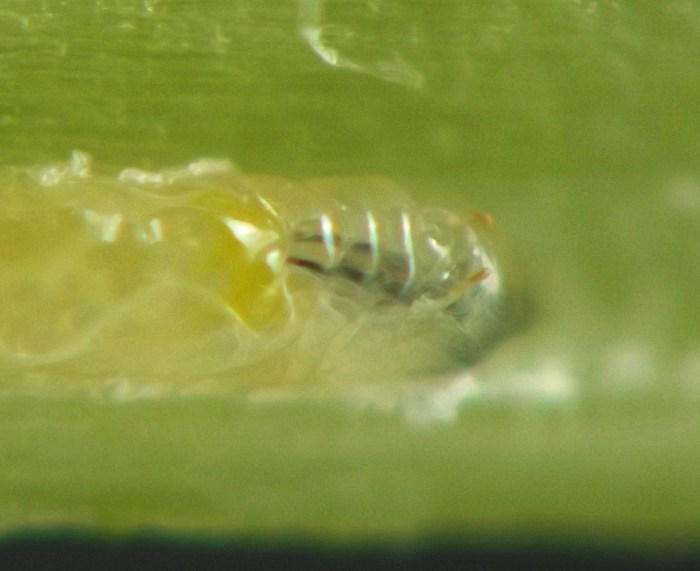
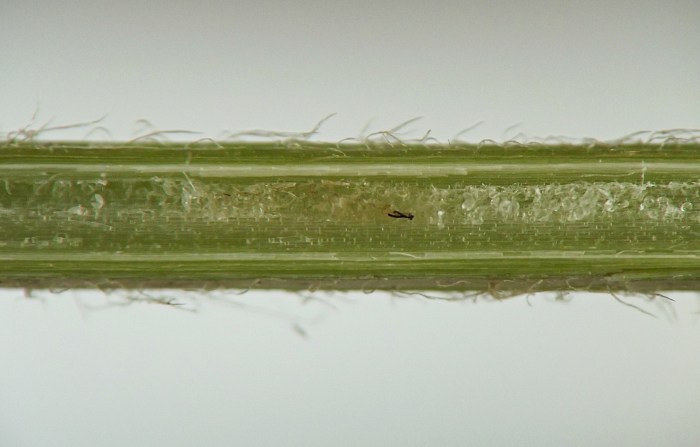
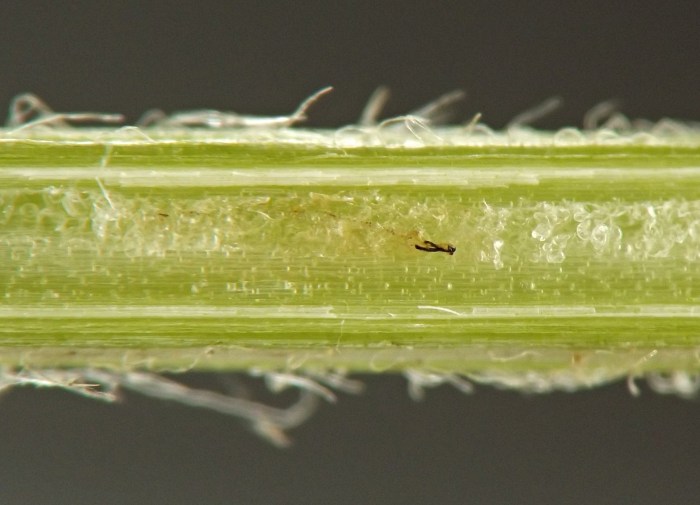
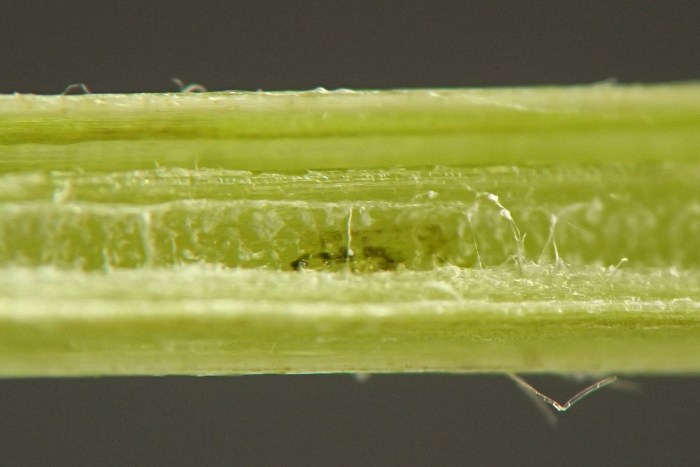
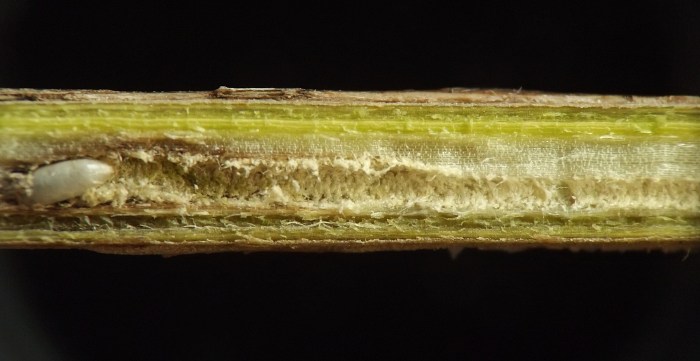
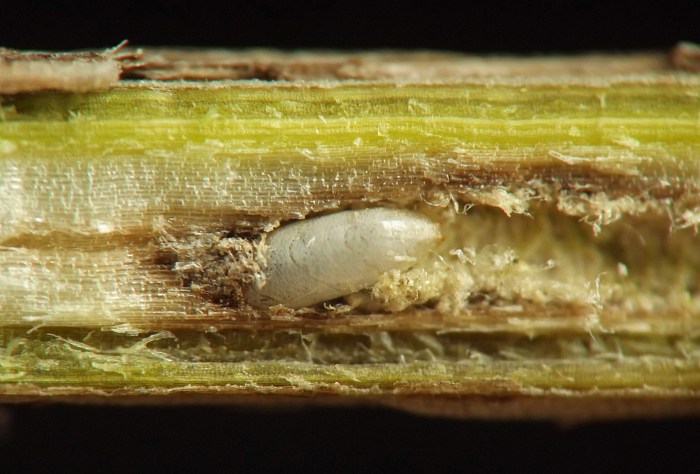
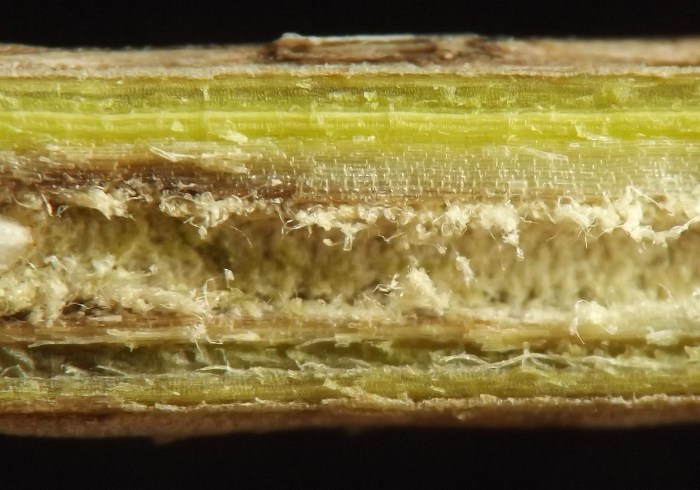
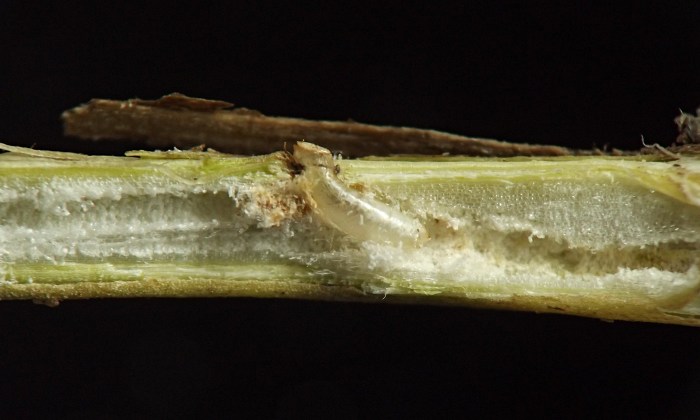
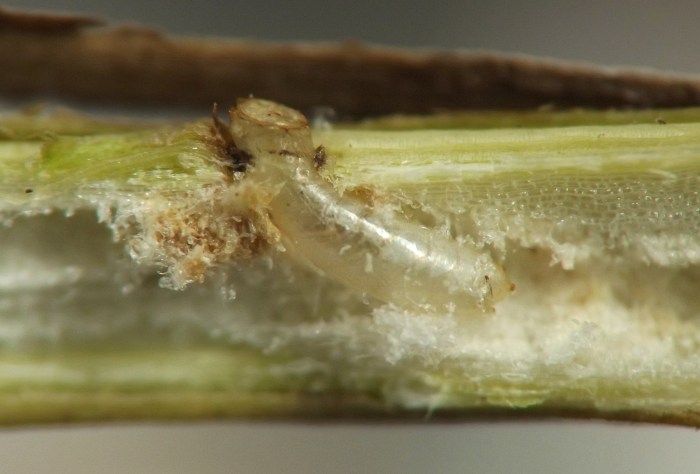
The pale yellow larva of this borer forms an elongate tunnel in the pith of the stem. Rather than concentrating its feeding in a localized area within the stem (as does another internally feeding agromyzid on Clematis, in record 0158), it travels for a long distance along the main axis of the stem until it completes its development, its tunnel usually spanning multiple internodes.
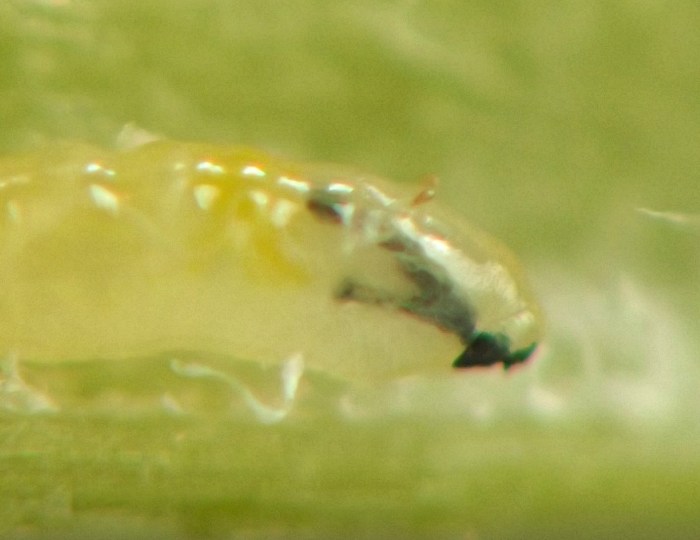
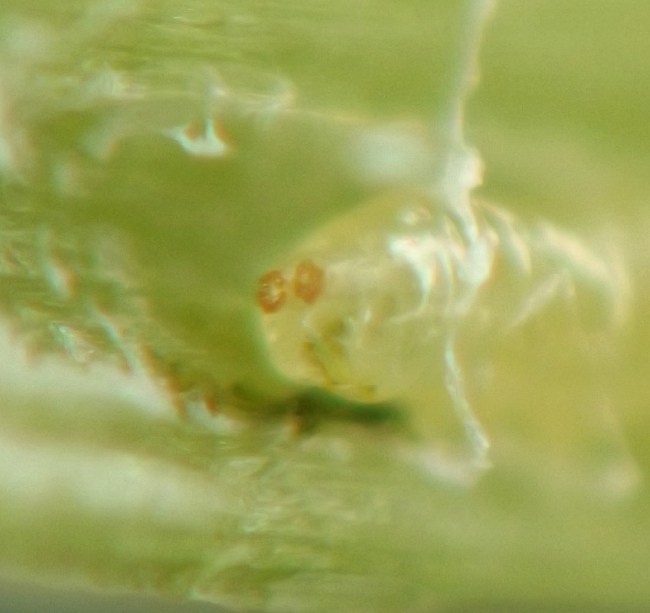
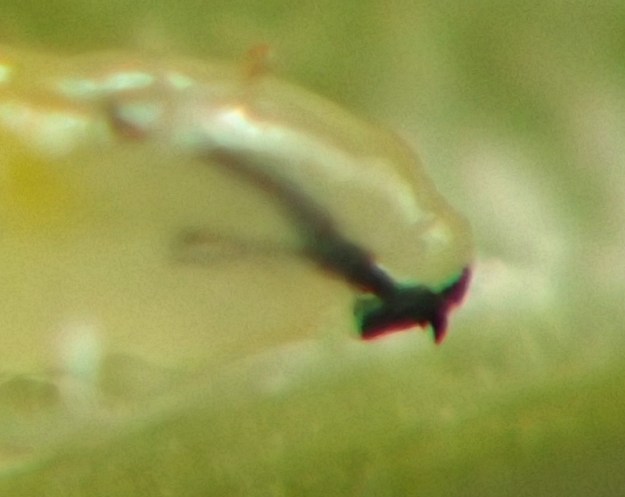
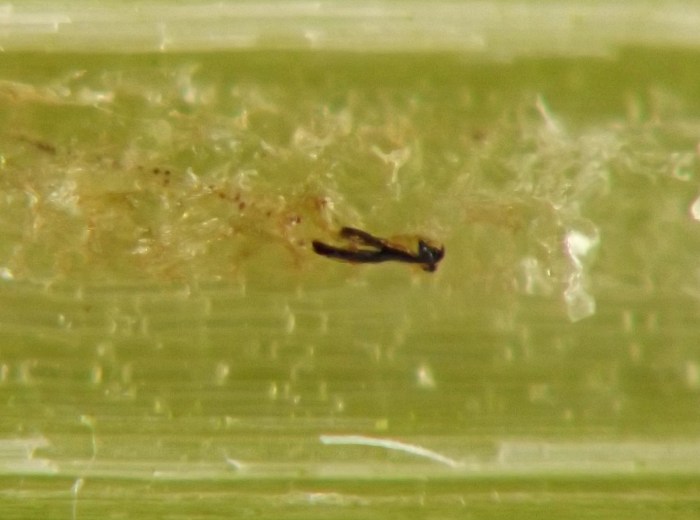
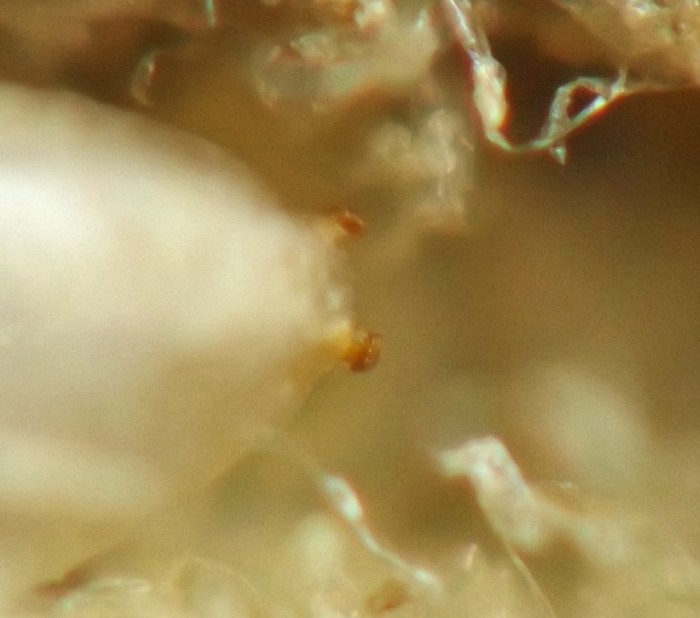
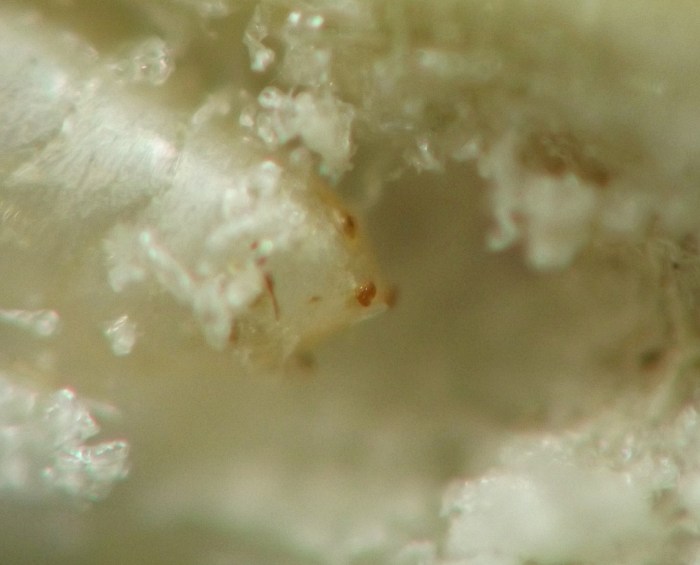
The tunnel has ragged walls typical of agromyzid borers, and my photos show small liquidy splotches of dark green frass deposited periodically along the length of a tunnel. In one case I also observed the remnants of a larva's cephaloskeleton left behind in its tunnel after a molt. The rear portion of the cephaloskeleton appeared as if divided in two robust arms, suggesting the species belonged to the subfamily Phytomyzinae, which I was later able to confirm with successful rearing. My photos also show that the posterior spiracles of one larva each featured orangish-brown bulbs arranged in a ring and slightly elevated above the surrounding tissue, with the pale center of the ring apparently lacking any bulbs or discernable darkening.
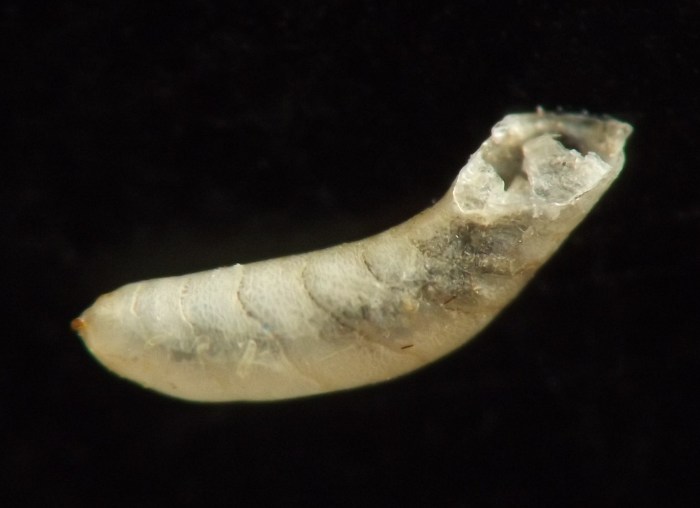
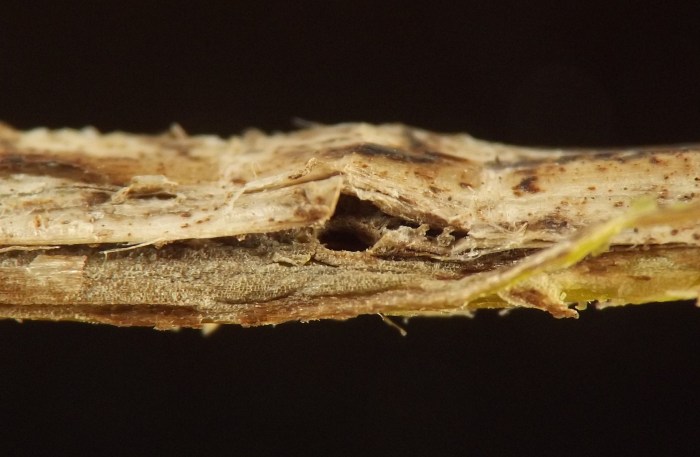
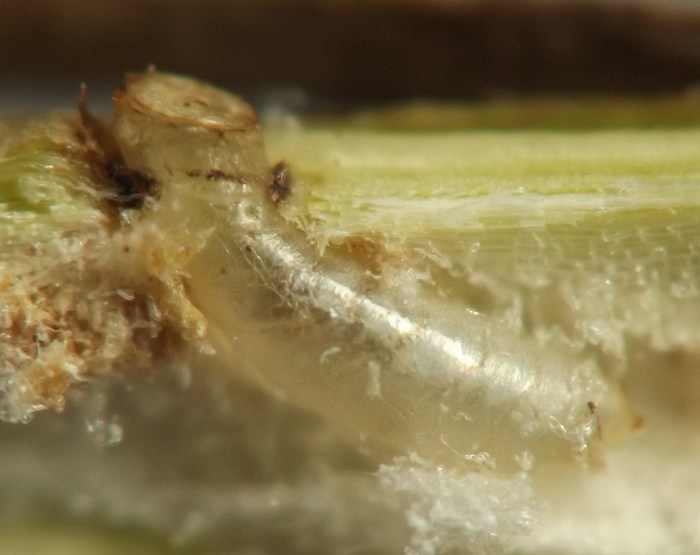
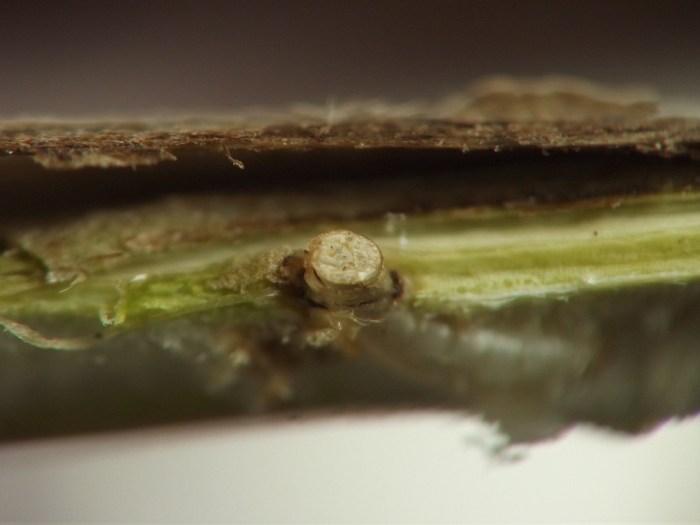
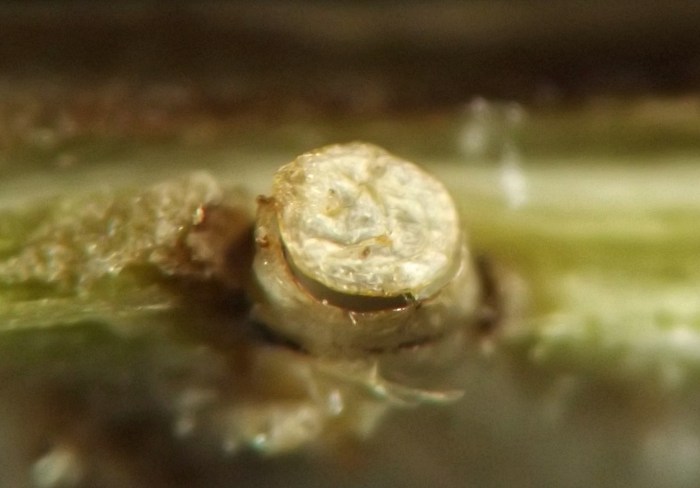
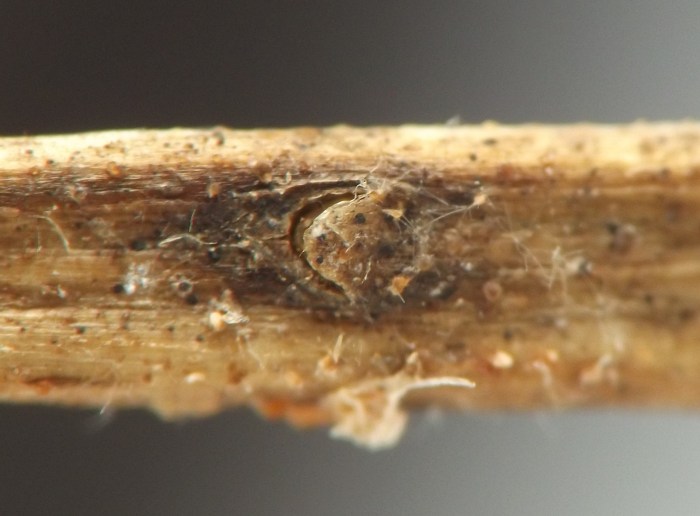
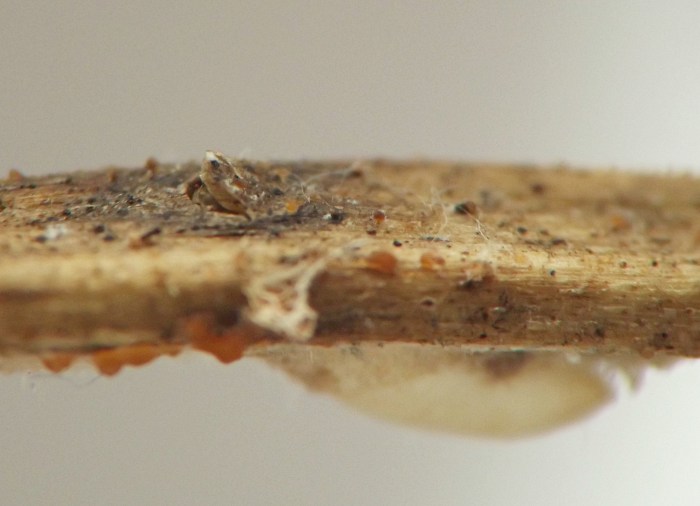
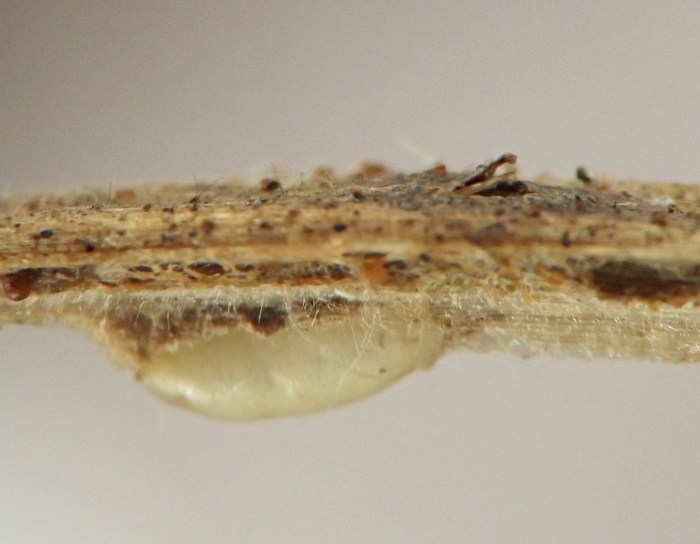
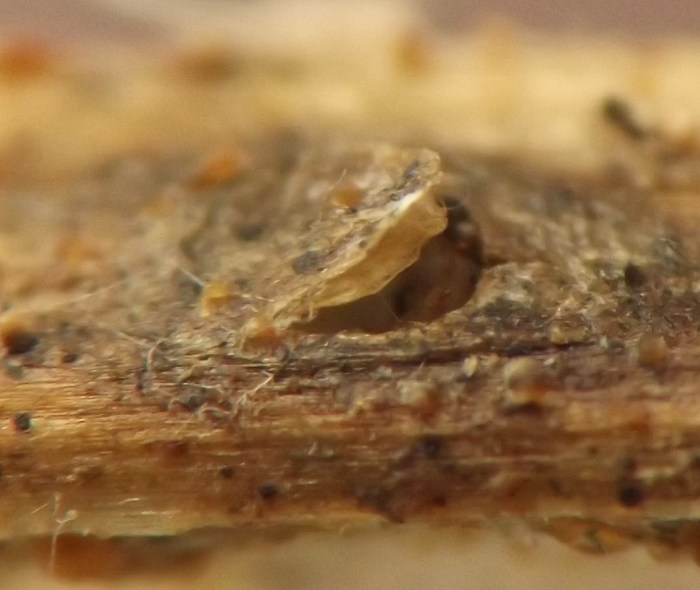
When it is finished feeding, usually somewhere along the length of an internode, the larva establishes a short, curving tunnel outward to just under the bark of the stem. It cuts an exit slit or window in the bark that remains closed for the time being. The larva then pupates here at the terminus of the curved tunnel, the puparium taking on the arching shape of the tunnel in a manner unusual among the stem agromyzids examined in the current study.
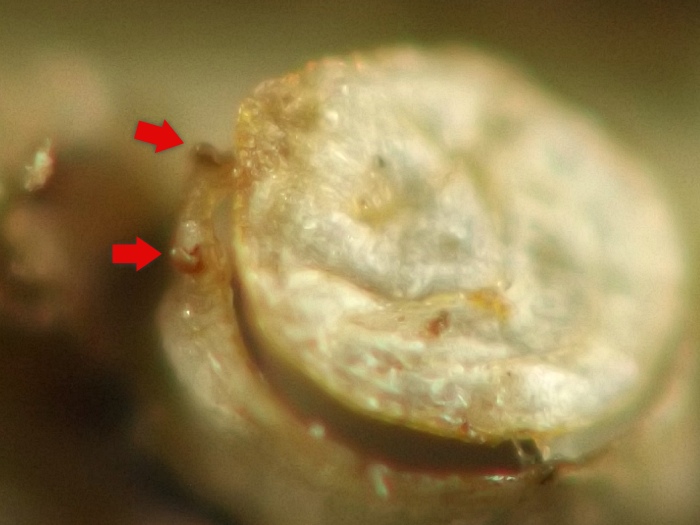
Also unusual for a stem agromyzid, the anterior end of the puparium is modified into a peculiar, flat, circular "lid" that remains appressed to the underside of the bark until the adult emerges, at which point the "lid" (along with the exit window in the bark) pops open. The slender, teardrop-shaped anterior spiracles of the puparium arise from the main body of the puparium, projecting from the rim where the "lid" attaches. Aside from the unusual curved shape and modified front end, the puparium possesses unremarkable posterior spiracles that appear to be rather weakly sclerotized, without development of strongly darkened plates or significant horns, although the plates are darker in color than the surrounding integument. Overall the puparium is a whitish color.
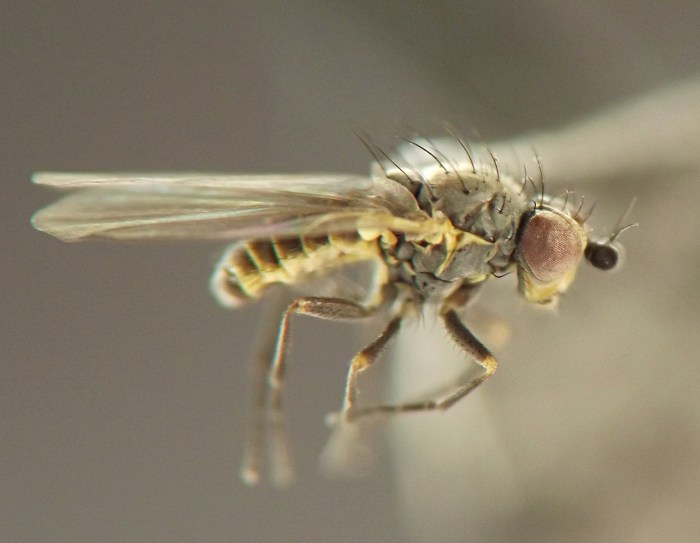
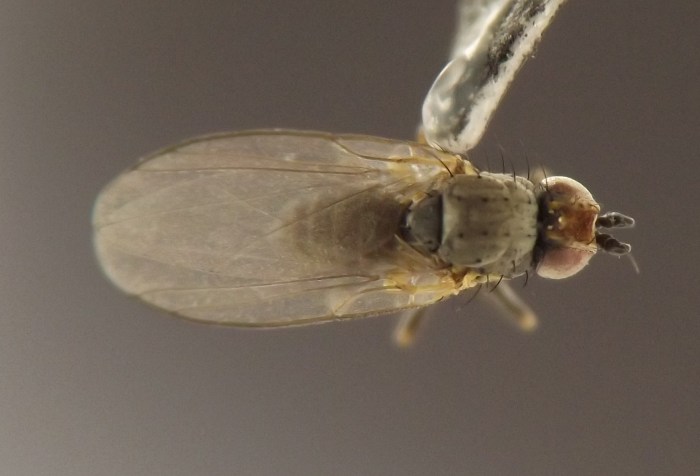
I reared a single male adult in spring 2023.
 Prev
Prev
Page created: October 16, 2023. Last update: February 9, 2026