Local feeder (Diptera: Cecidomyiidae) in stems of Clematis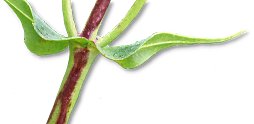
| Record no.: | 0161 |
|---|---|
| Feeding guild: | Local feeder in stem |
| Taxonomy: | Diptera: Cecidomyiidae: Neolasioptera cf. clematidis |
| Stages observed: | trace, larva, pupa, adult |
| Distribution observed: | IA |
| Hosts in Clematis: | C. virginiana (virgin's bower) |
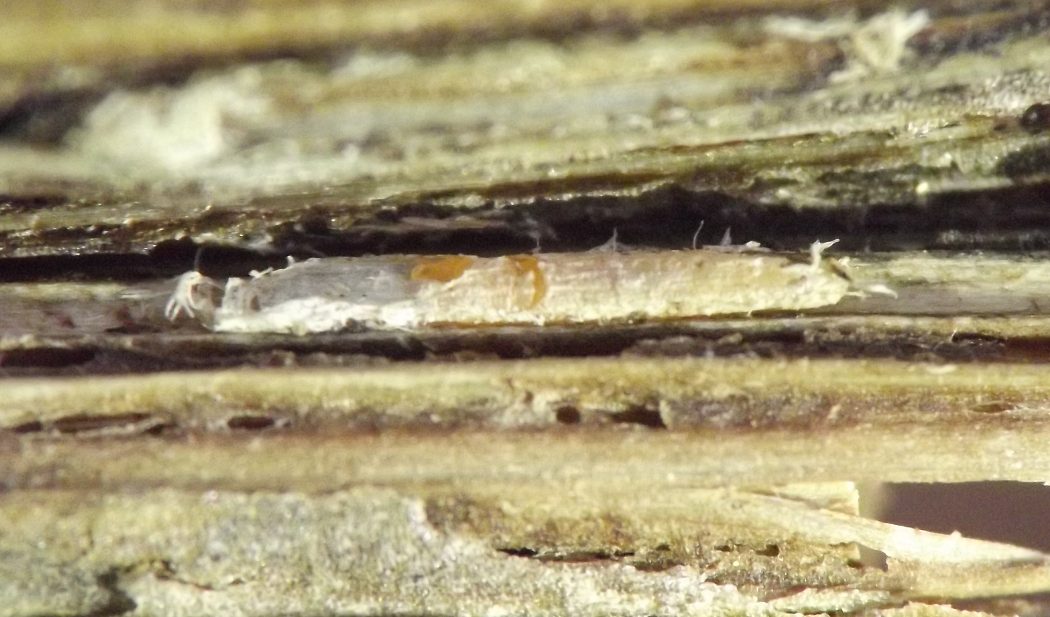
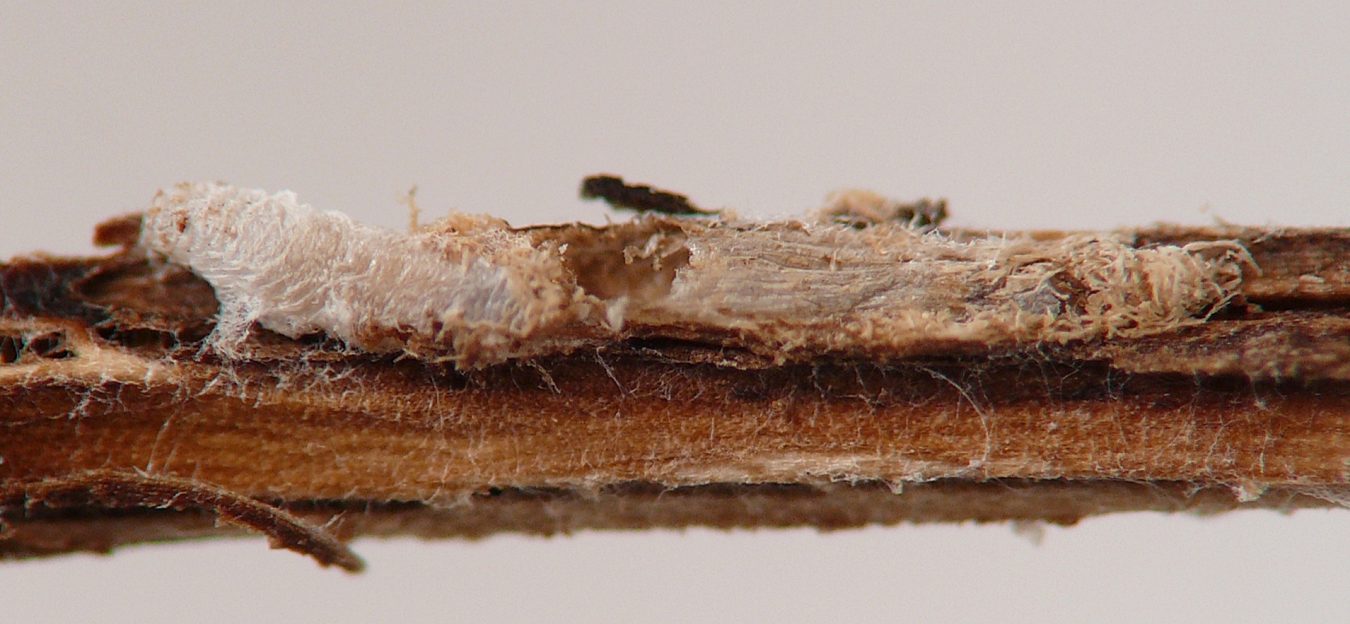
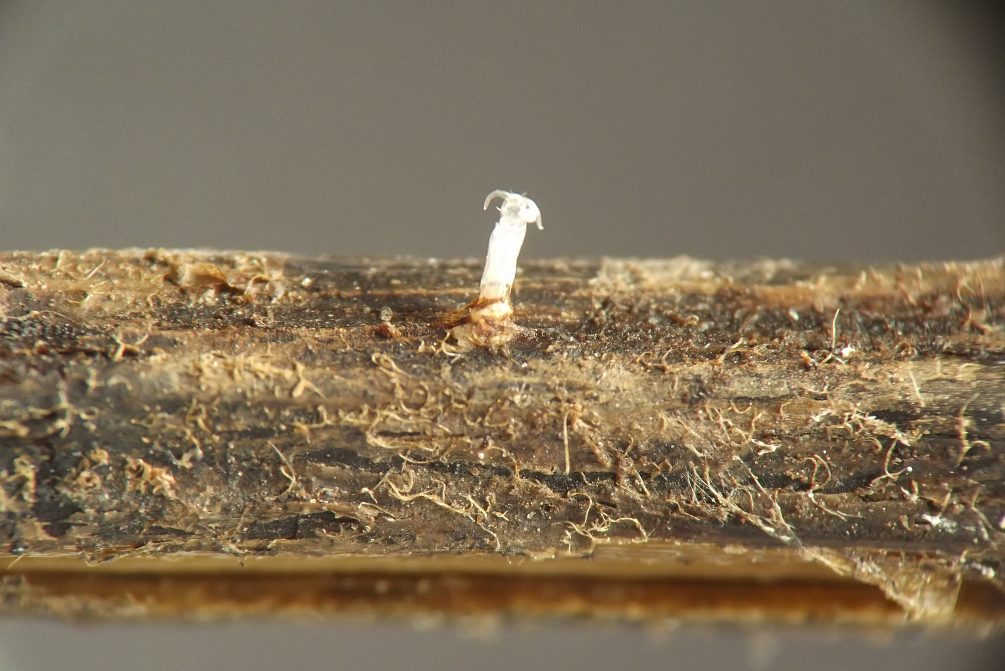
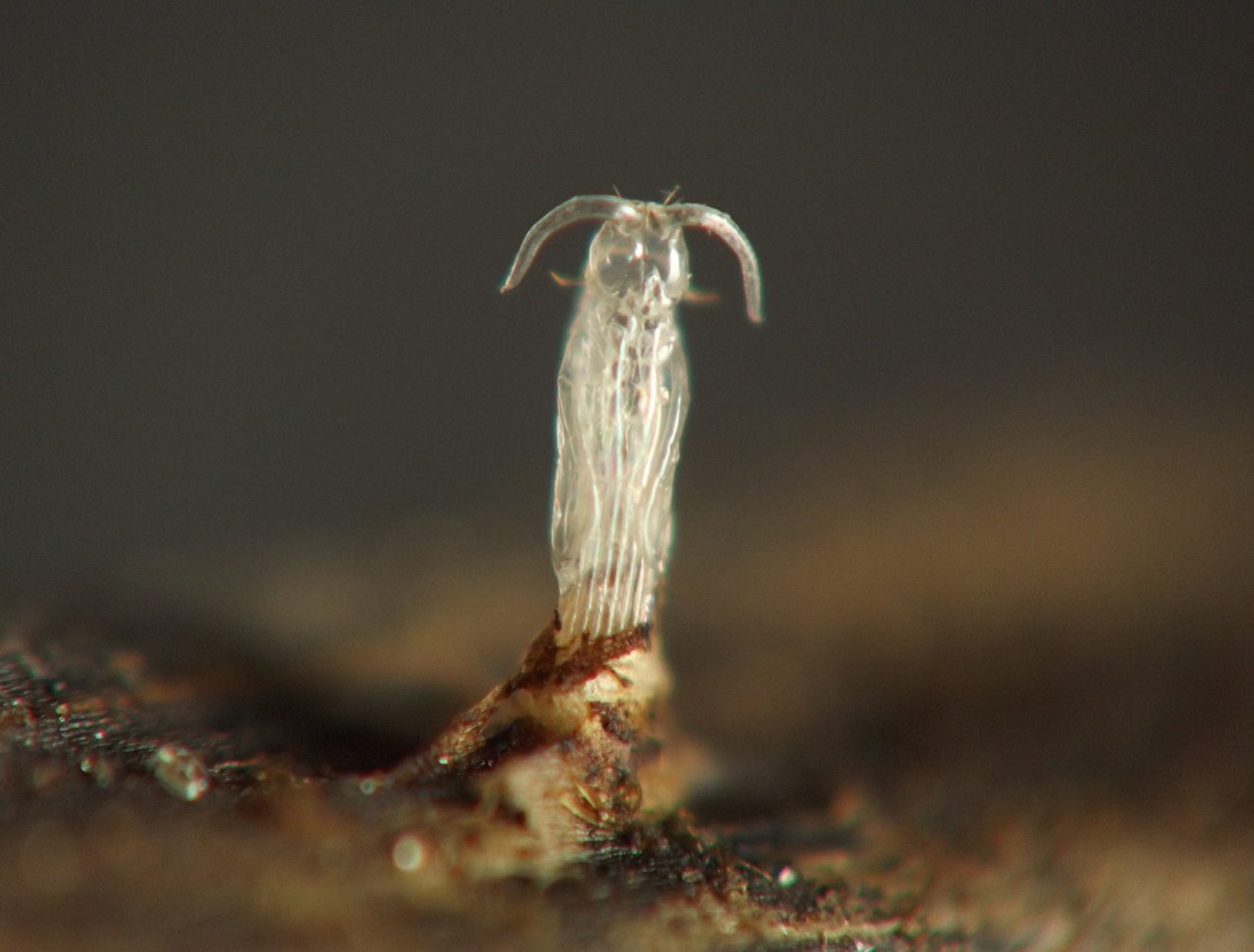
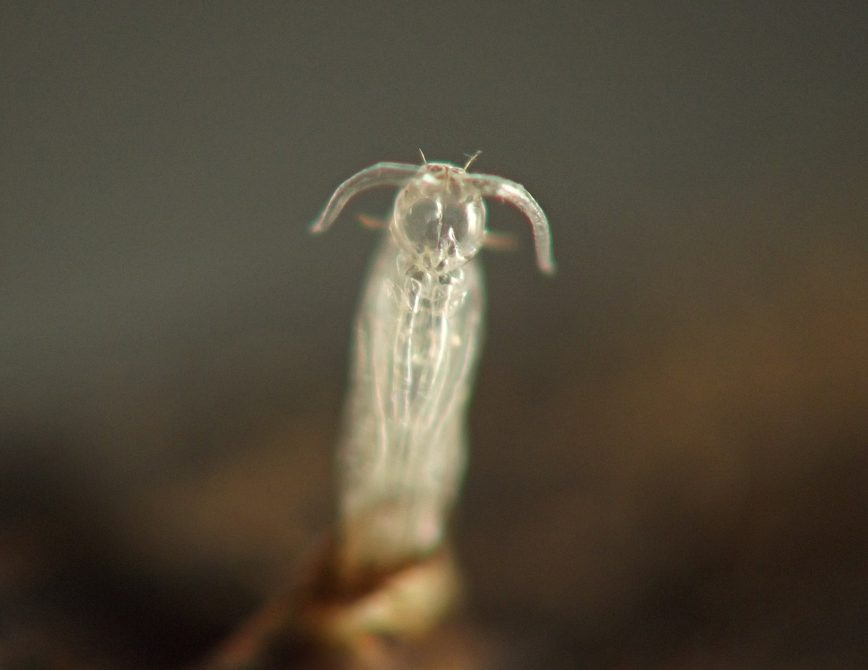
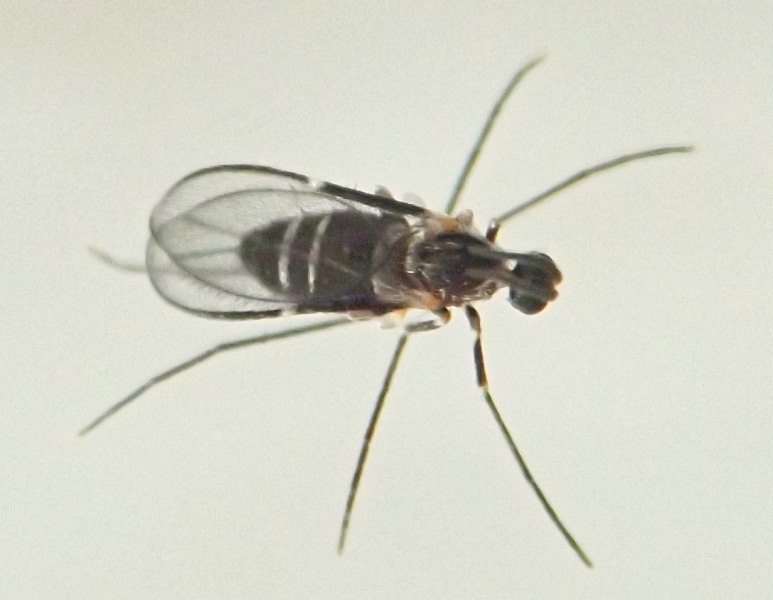
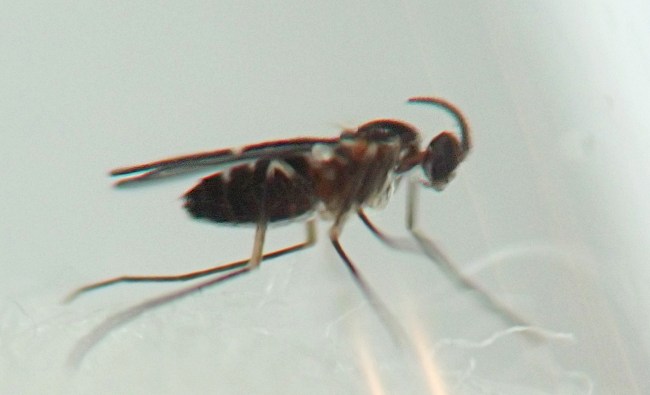
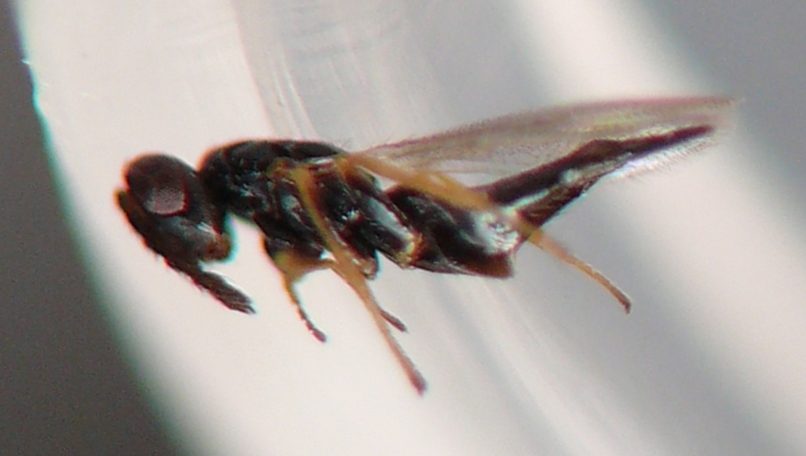
In early May, 2021, I found larvae overwintering in elongate white cocoons under the bark at the very base of Clematis virginiana stems, near where the stems joined the crown of the plant (images 161-07 & 161-08). Later that year, from 13-15 September I reared eight Neolasioptera adults from stems collected on 11 August (representative adult and pupal exuviae shown in images 161-11 through 161-15).
Next, in early July 2022 I found a larva in a short tunnel or chamber in a green stem, just under the outermost layer of stem tissue. Sunken blackened areas stretched away from either end of the chamber along the long axis of the stem.
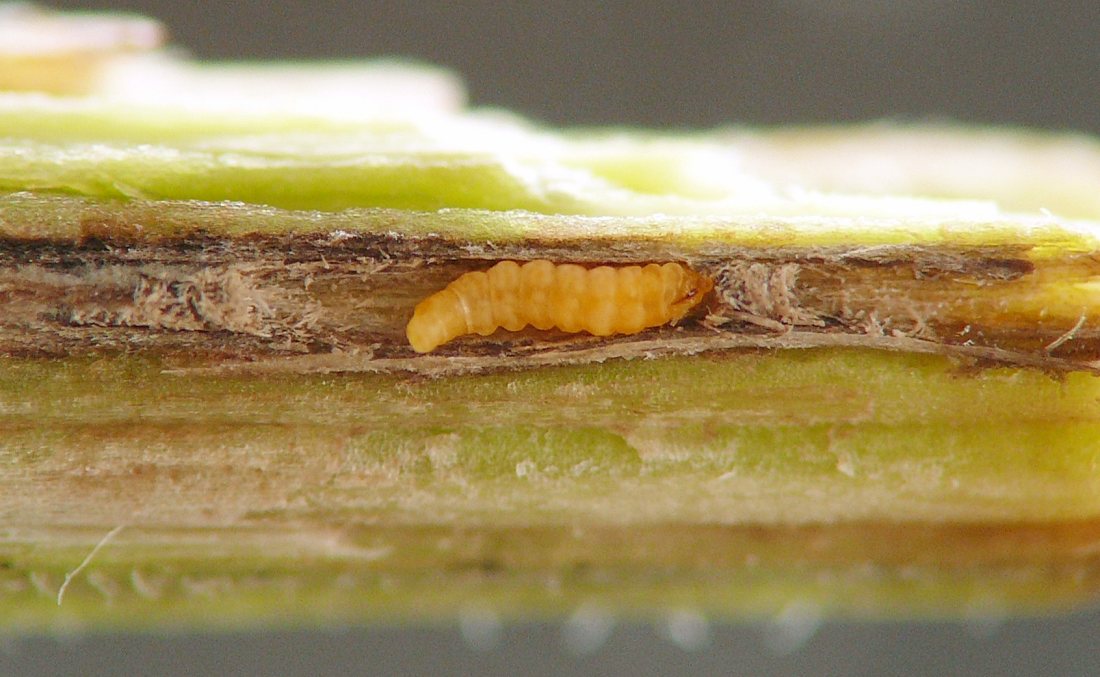
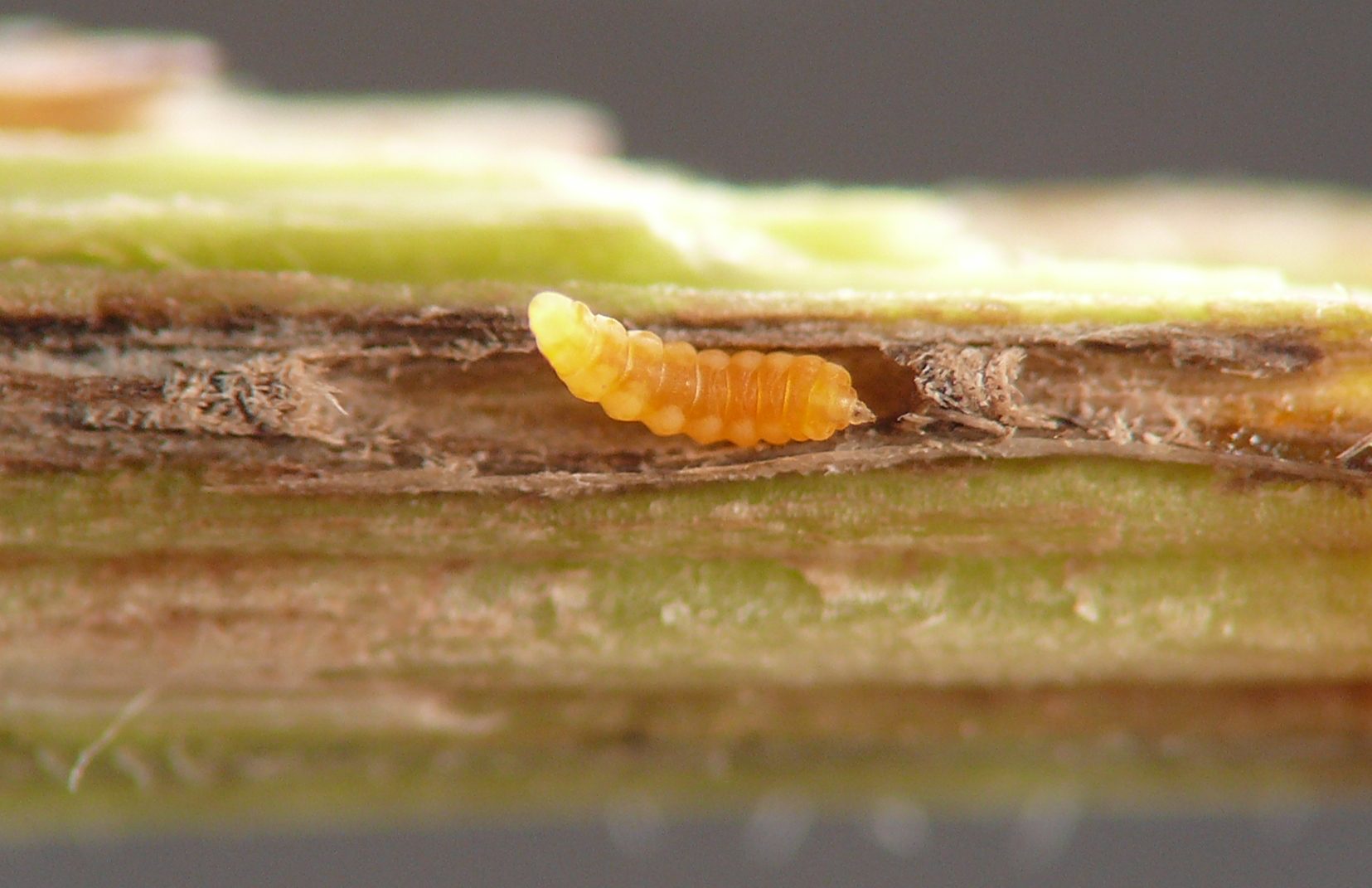
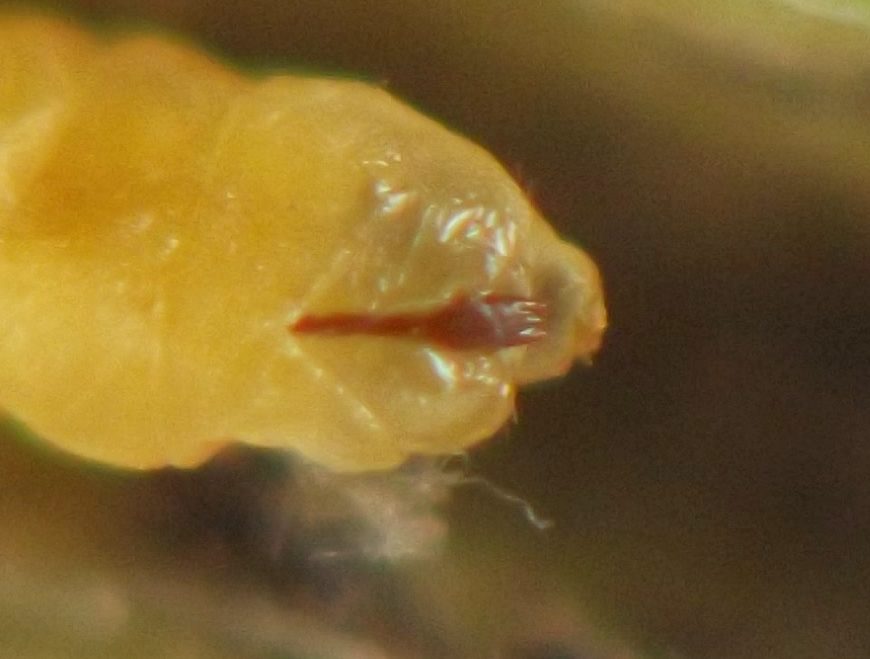
Almost exactly a year later, in early July, 2023, I found a larva in a blackened hollow in a stem just below a node. At least one narrow, cylindrical parasitoid larva was attached to the exterior of the cecidomyiid larva. Above the larva's location, the stem had wilted, and when I handled it in the field, it broke off at the aforementioned node, revealing dark brown or black discoloration to the pith at the node. This discolored pith was directly adjacent to the hollow in which I found the larva (images 161-04 and 161-05). Photos of this larva show that its spatula had two triangular outer teeth and a third, middle tooth that was shorter than the outer two.
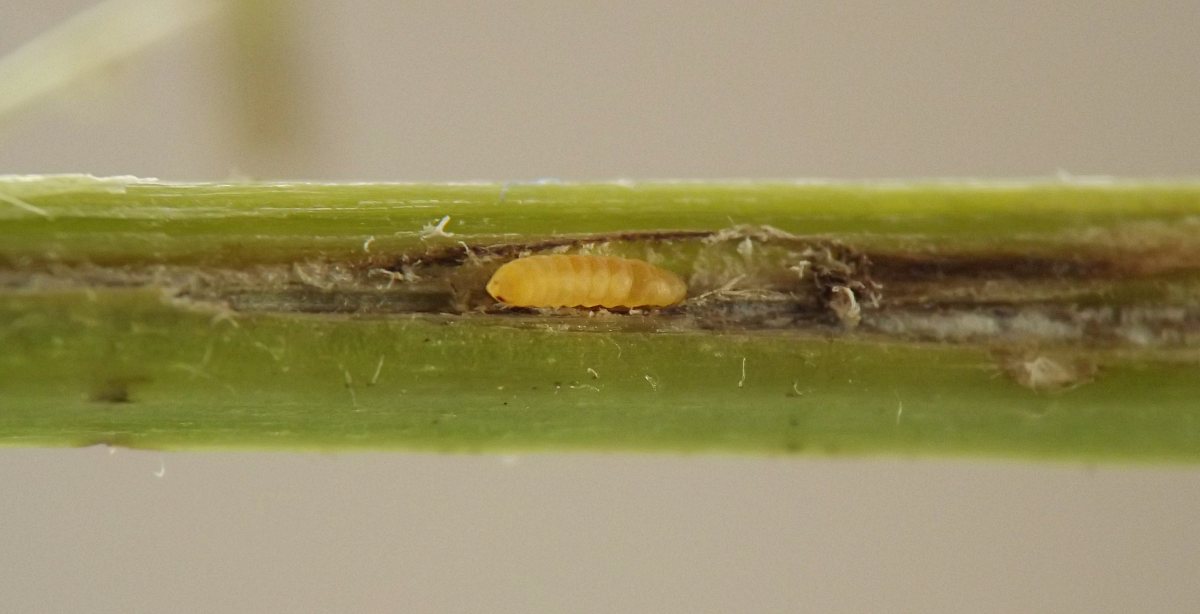
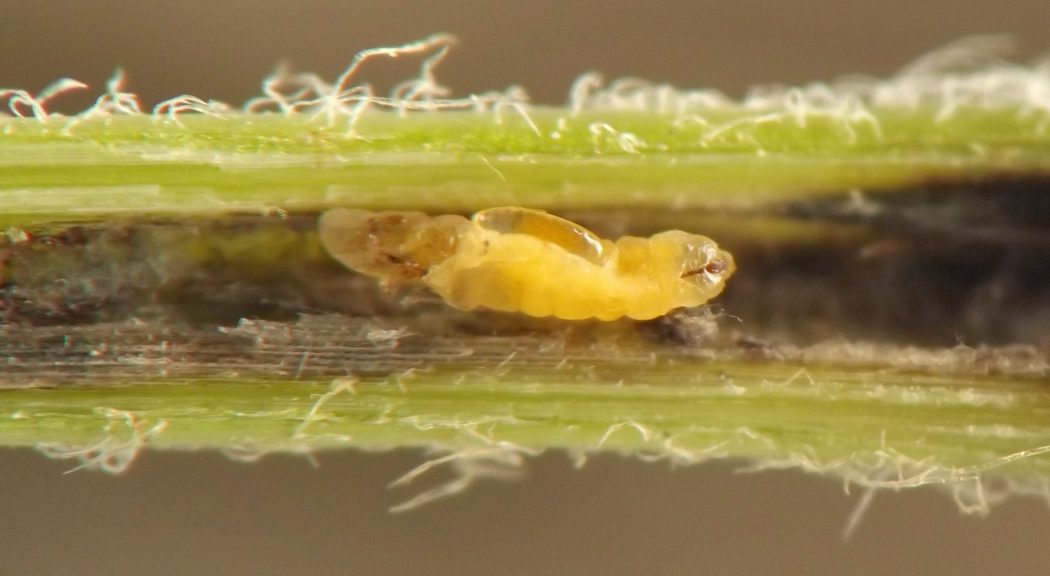
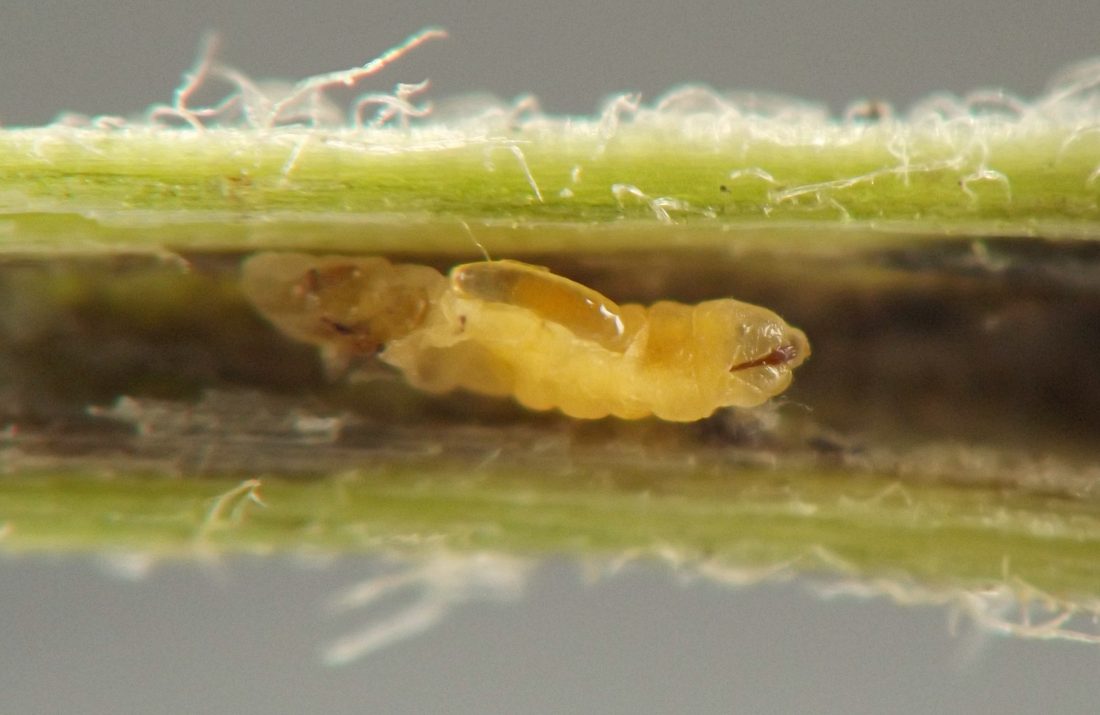
In early October 2025, I found two larvae inside another C. virginiana stem. I wrote later, "As I recall there was at least a narrow line of obvious blackening, possibly sunken, on the stem exterior." Inside, two larvae were positioned end-to-end in a short, blackened tunnel, with a plug of fibrous material separating them. A second such plug capped one end of the tunnel, so that the photographed larva (images 161-02 and 161-03) was enclosed on both ends by the fibrous plugs.
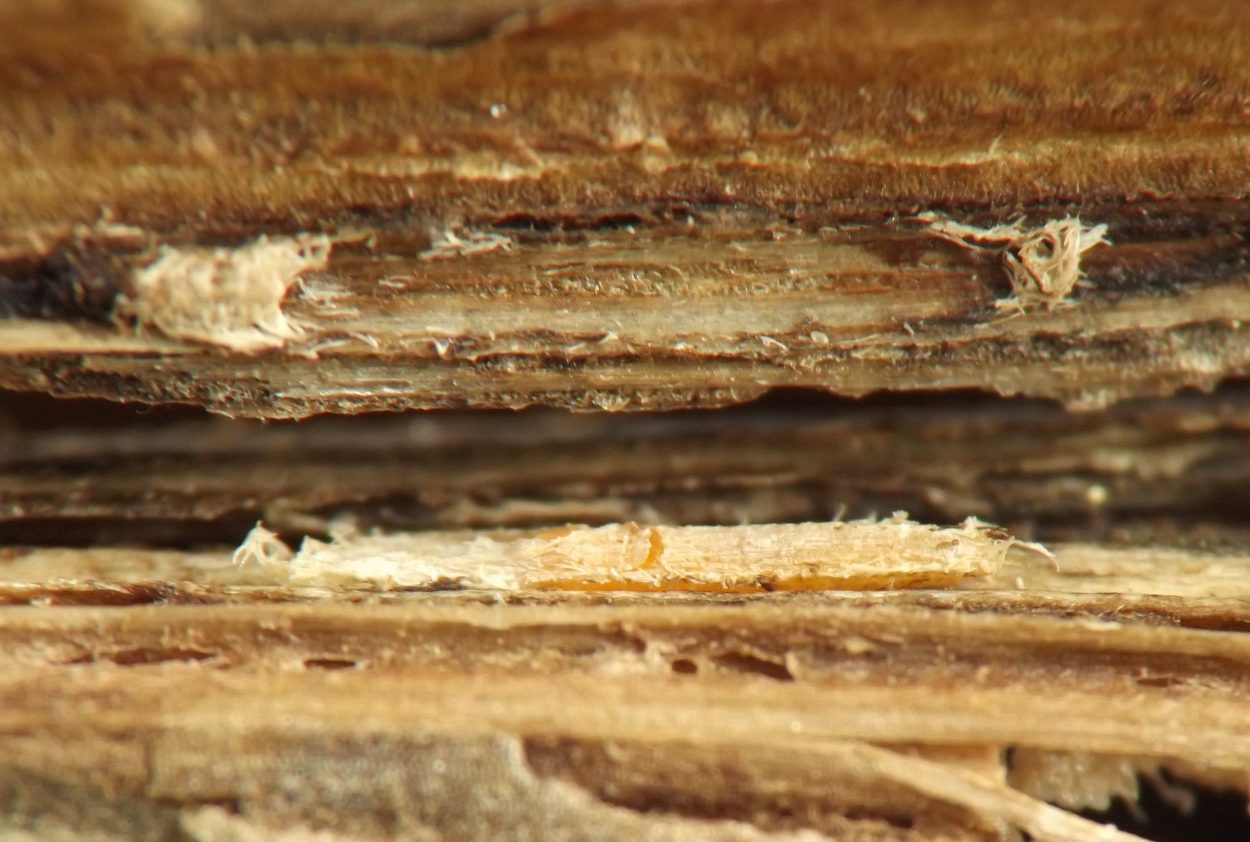
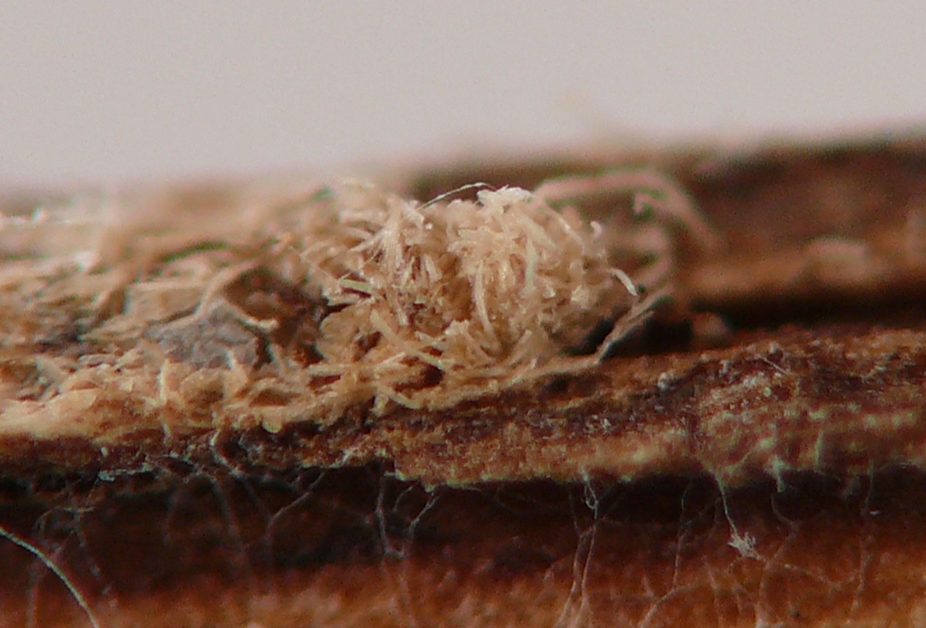
It appears to me that the plugs are generated by the larvae, either as part of their feeding activity or as a way to seal off the ends of individual chambers within their tunnels. A magnified view of some of this fibrous material is shown in image 161-10.
Neolasioptera clematidis (Felt) has been previously recorded from swellings on stems and tendrils of this host (Gagné 2026).
 Prev
Prev
- Gagné, R.J. 2026. The plant-feeding gall midges of North America (2nd edition). https://doi.org/10.5281/zenodo.21376229[return to in-text citation]
Page created: September 2, 2026. Last update: September 2, 2026