Stem borer (Diptera: Agromyzidae) in Galium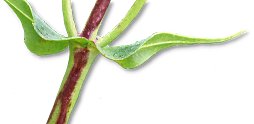
| Record no.: | 0244 |
|---|---|
| Feeding guild: | Stem borer |
| Taxonomy: | Diptera: Agromyzidae: cf. Ophiomyia sp. |
| Stages observed: | trace, larva, puparium, adult |
| Distribution observed: | IA |
| Hosts in Galium: | undetermined G. sp. 2 |
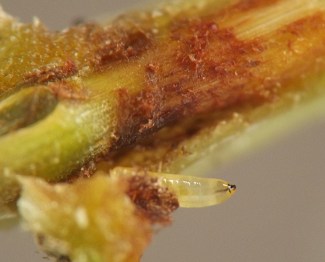
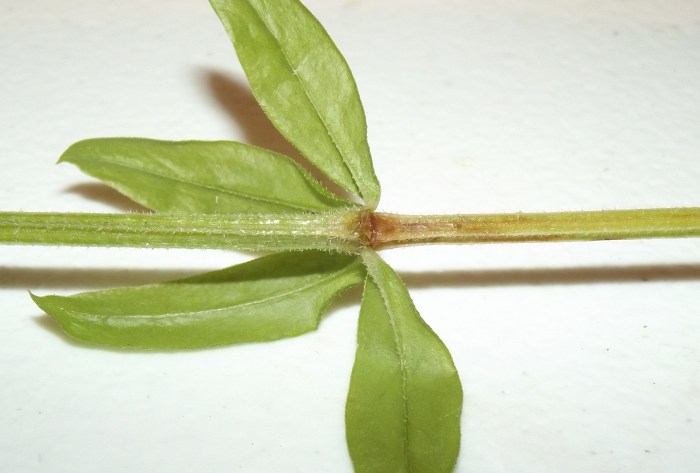
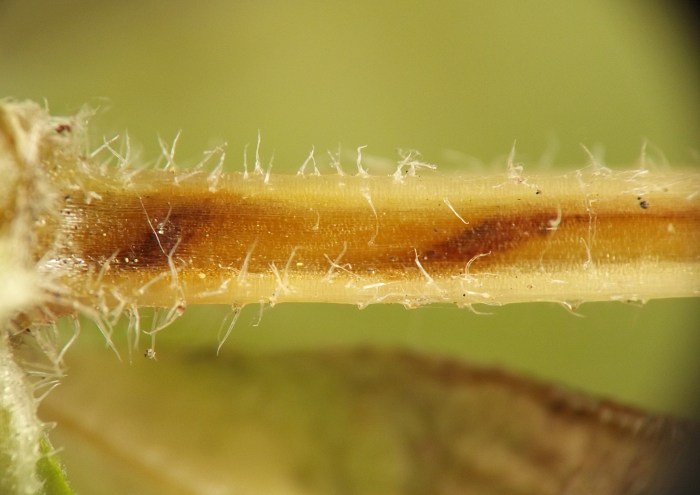
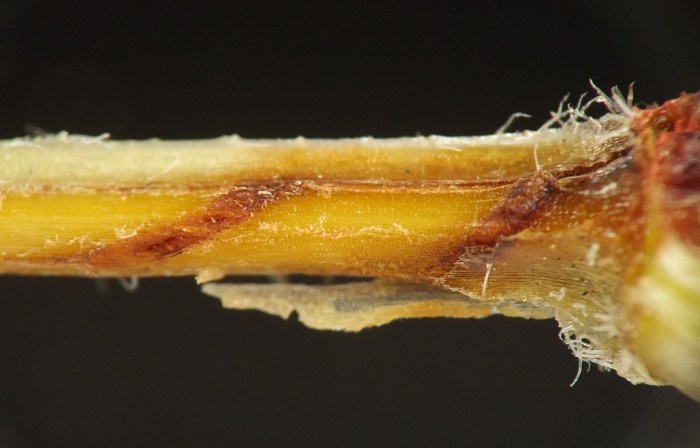
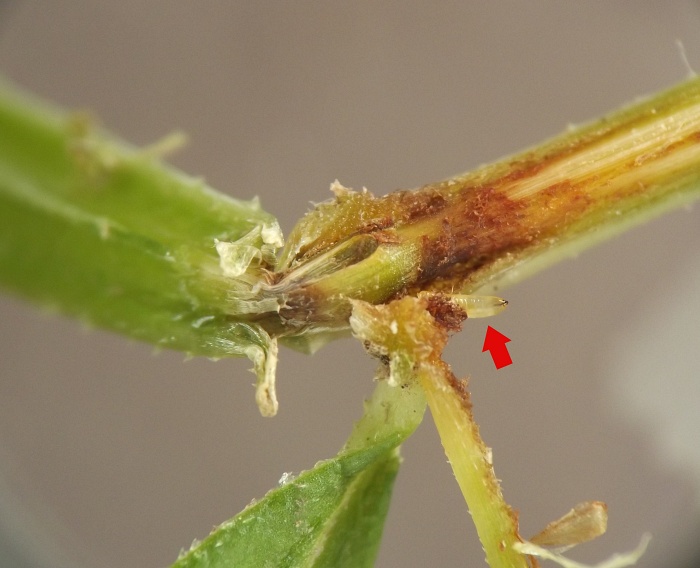
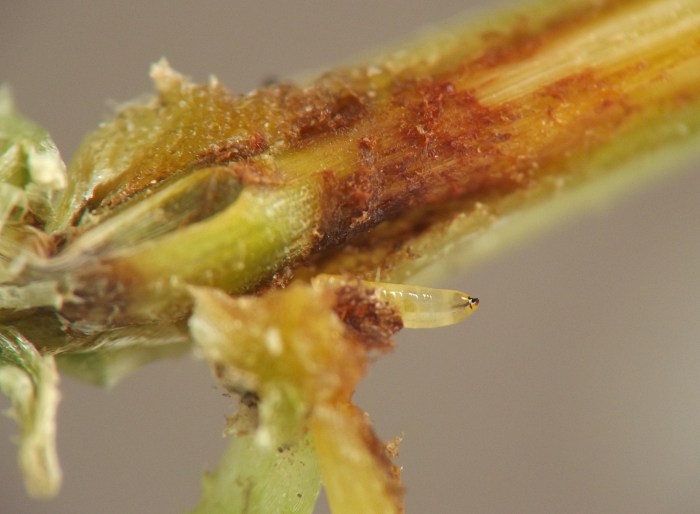
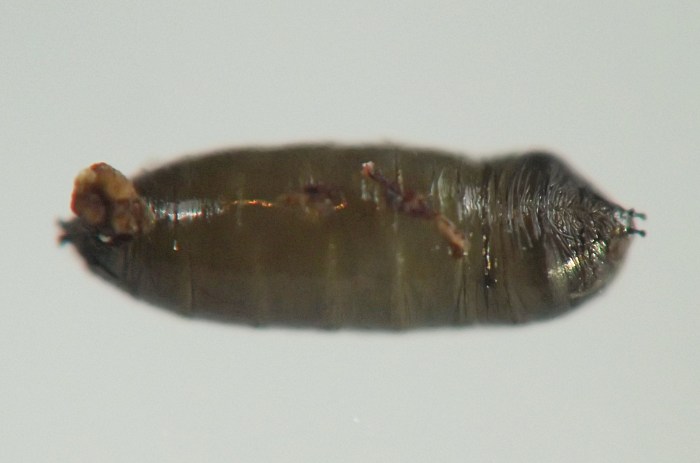
The externally visible sign of this borer consists of rusty reddish-brown discoloration to the stems, especially at the nodes but also in the form of shallow subsurface linear tracks along the internodes. Depth-wise, the larva's feeding mostly occurs in the space between the outer sheathlike layer and the tough inner core layer of the stem, and the outer layers of tissue are generally thin enough to allow the rusty discoloration to show through. The larva tunnels shallowly along the lengths of the internodes, with the tunnel sometimes spiraling around the stem but usually not doubling back on itself (i.e., an individual larva apparently only travels the length of a given internode once). Upon reaching a node, the larva performs some more concentrated excavation of the inner tissues, and if it is still young, after a little while it will leave the partially excavated node and enter the next internode to continue its movement and feeding along the length of the stem. After moving through multiple nodes and internodes in this way, the larva finishes its development in a node, which it more or less completely hollows out with the possible exception of some of the inner core layer. The larva then prepares an exit window in the epidermis and forms its black puparium just beneath the exit window within the hollowed-out node.
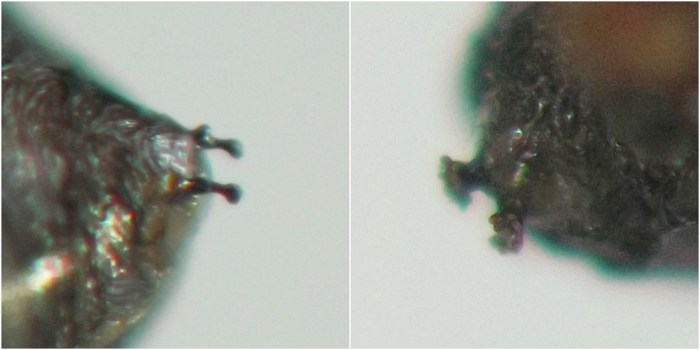
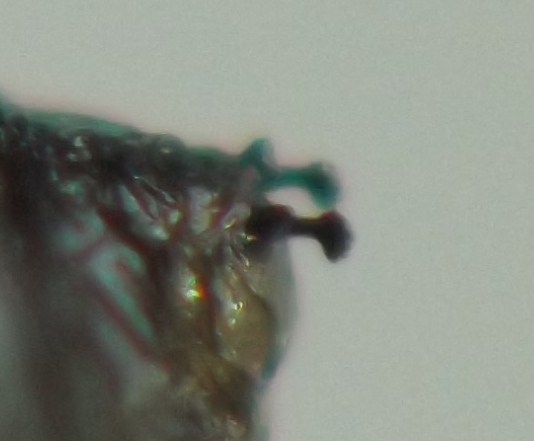
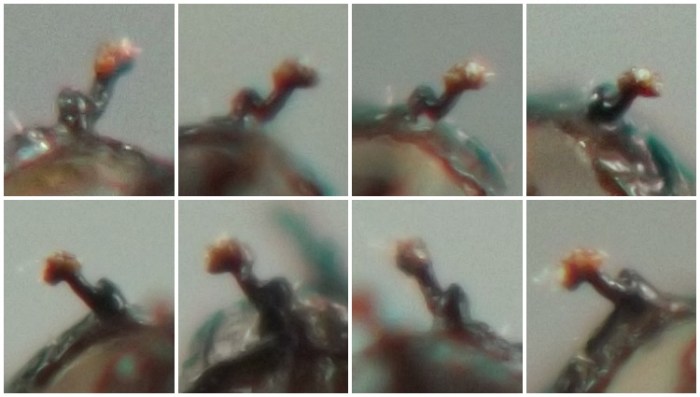
The anterior spiracles of the final-instar larva and puparium feature an archlike protrusion at the base of the spiracle stalk that projects slightly above the main body of the puparium, but not as prominently as the distal end of the stalk.
I reared adults in spring 2022. The adult and puparium both resemble Ophiomyia, and the recently described O. galiodes has been reared from Galium plant material in spring (see Lonsdale 2021), but its feeding mode was unrecorded.
This borer should not be confused with the Ophiomyia stem miner that may also be found in Galium stems in the study area (record 0242). The miner creates a blotch mine in the internode just under the epidermis, causing the affected area to turn a silvery or light brown color.
 Prev
Prev
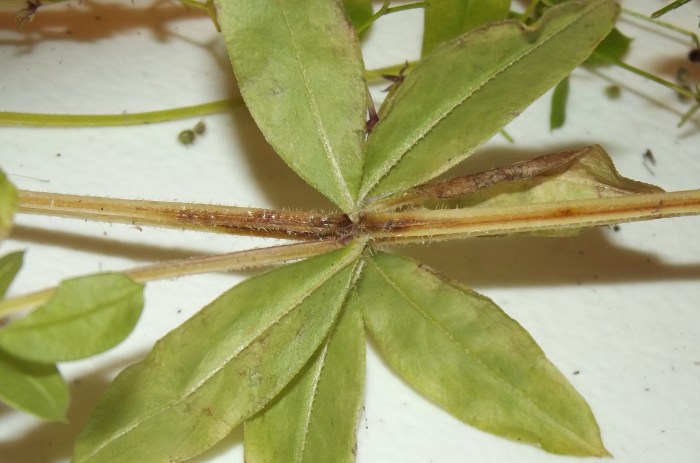
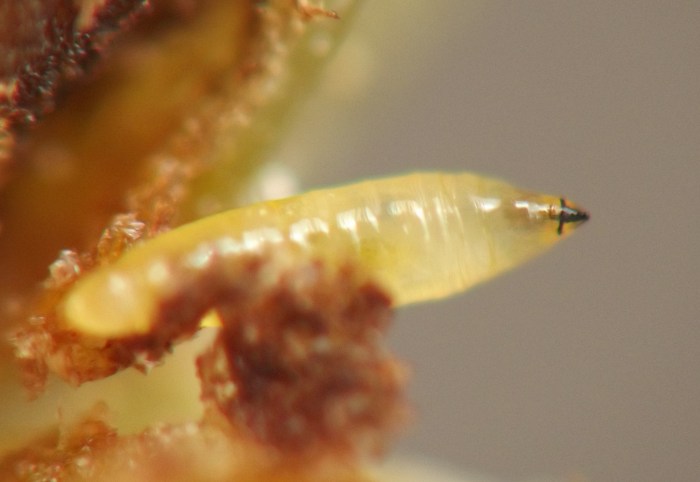
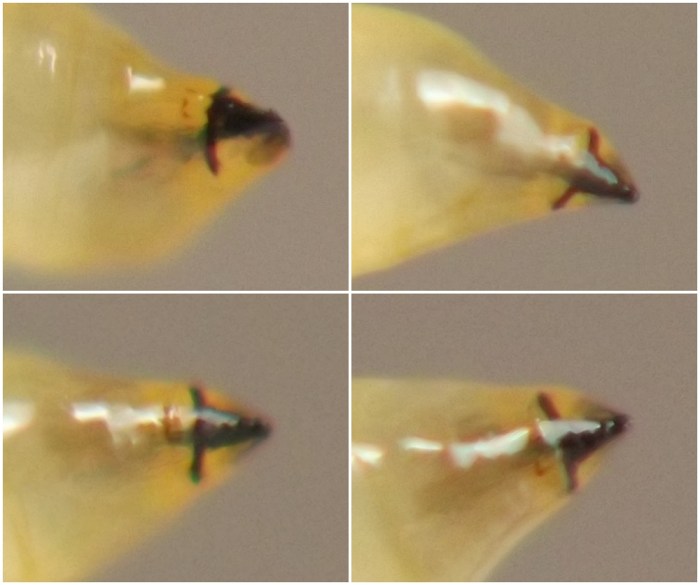
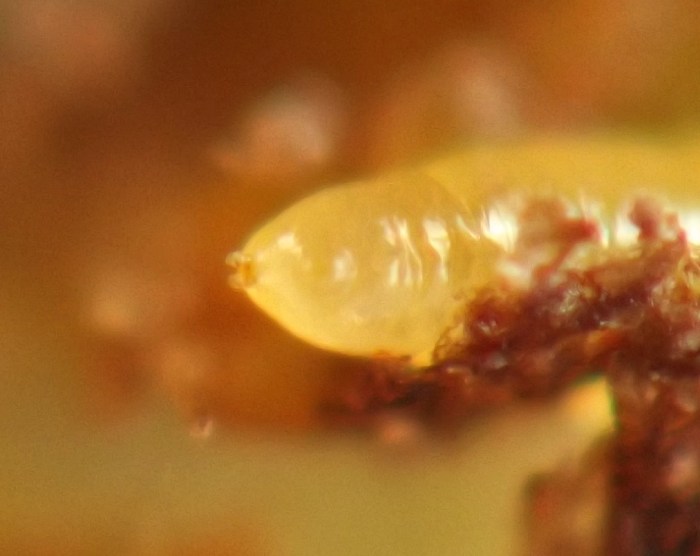
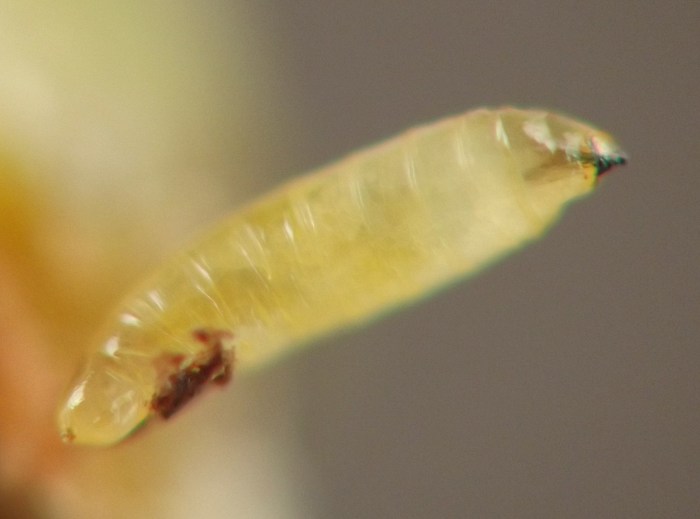
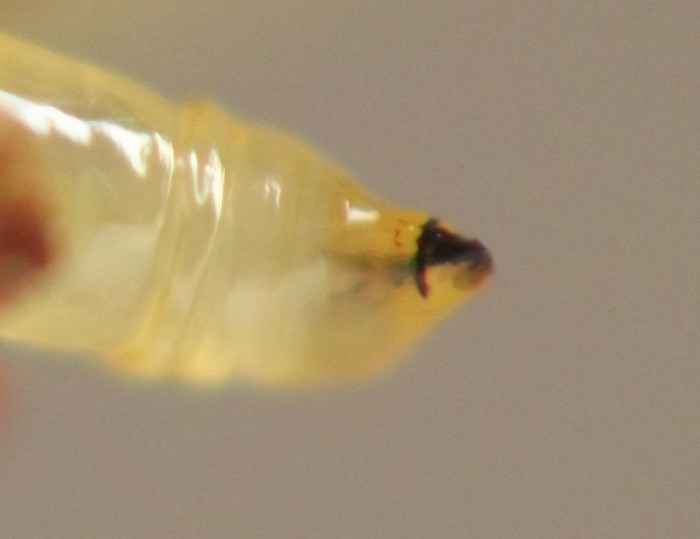
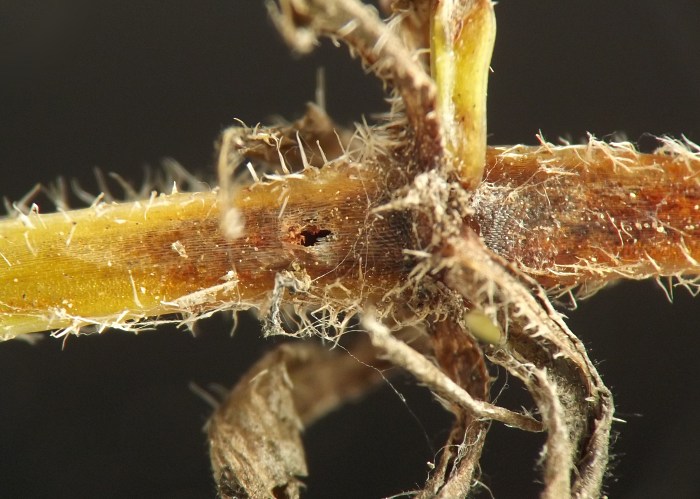
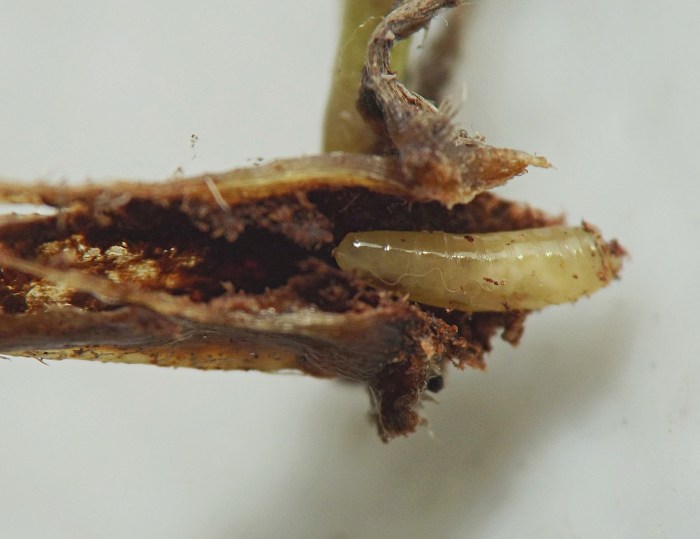
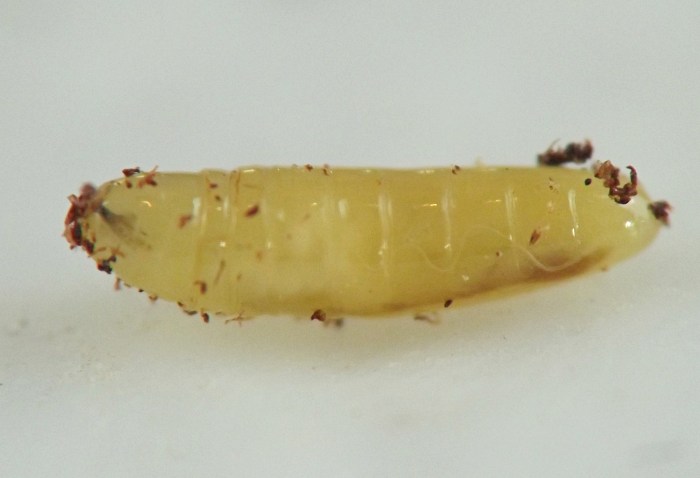
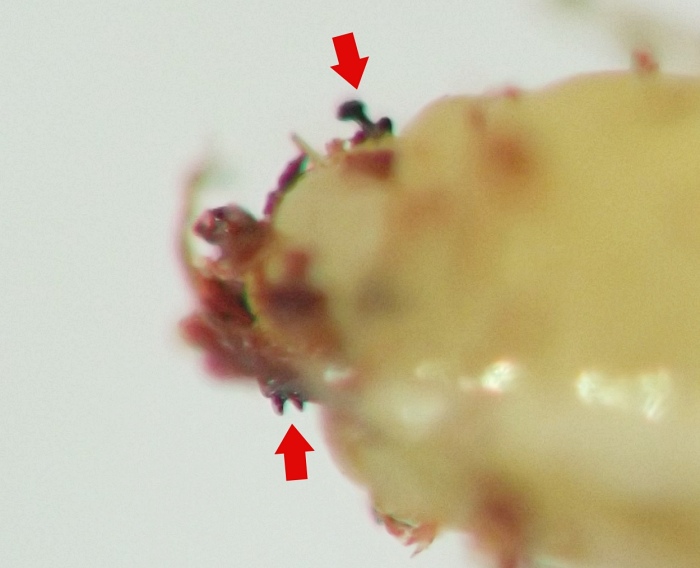
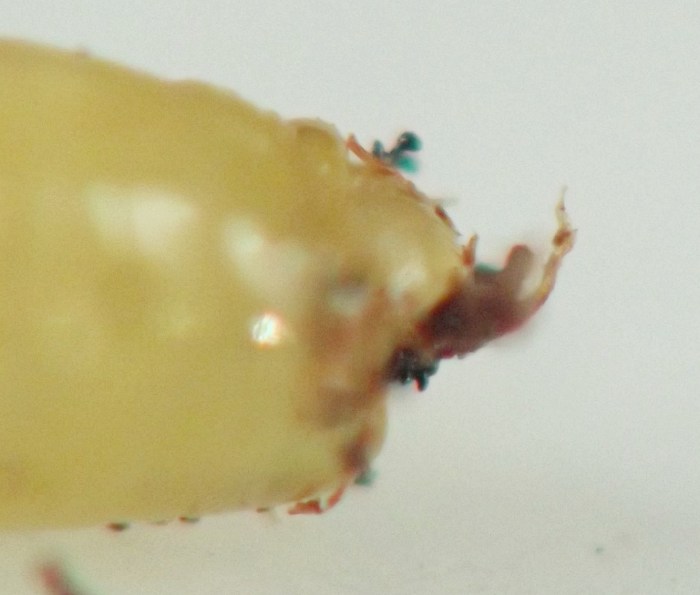
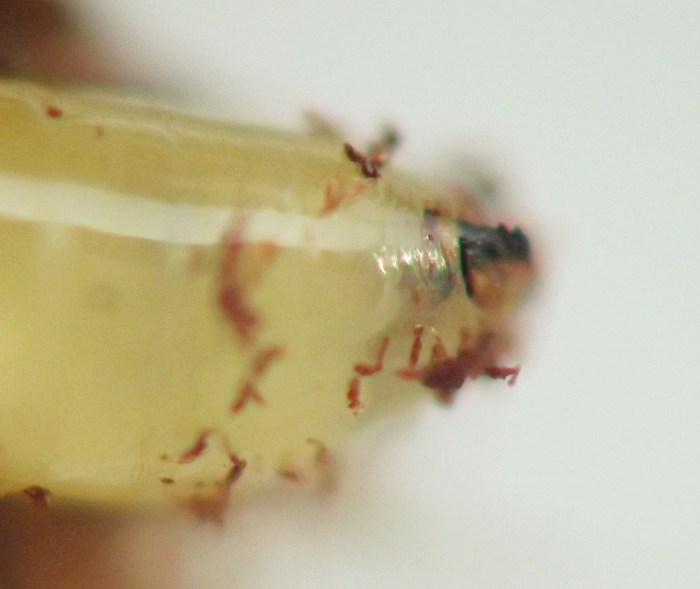
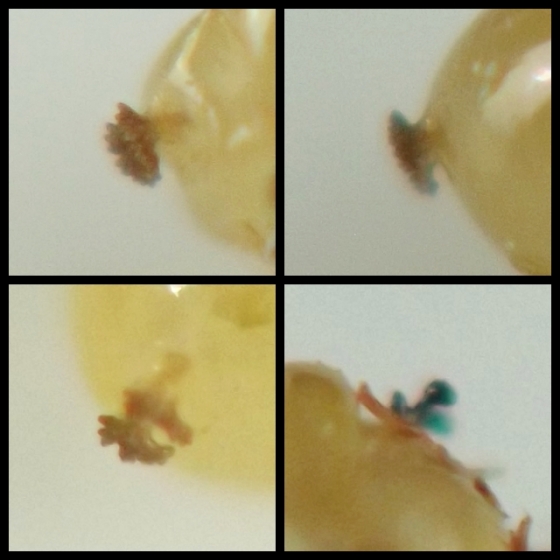
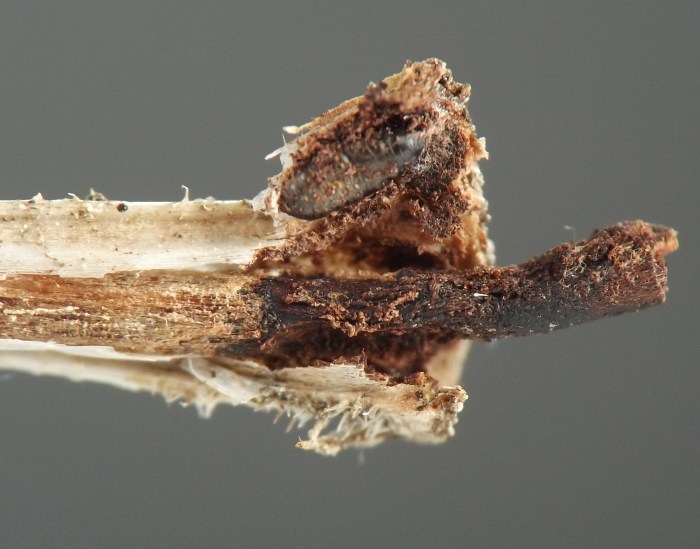
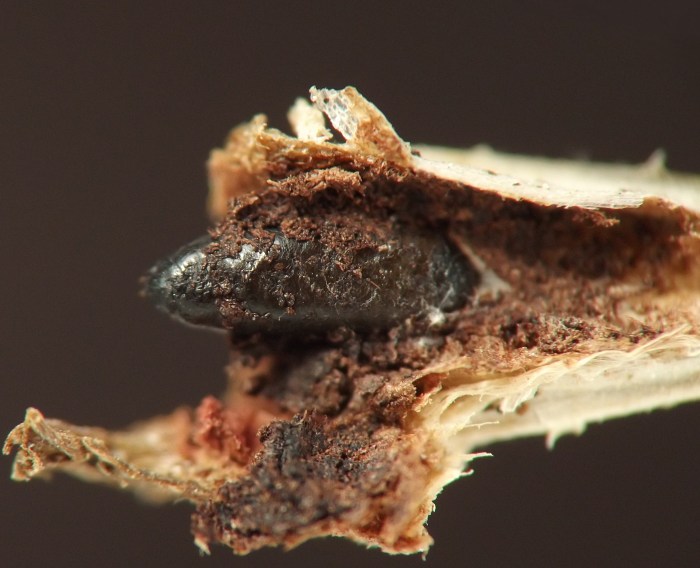
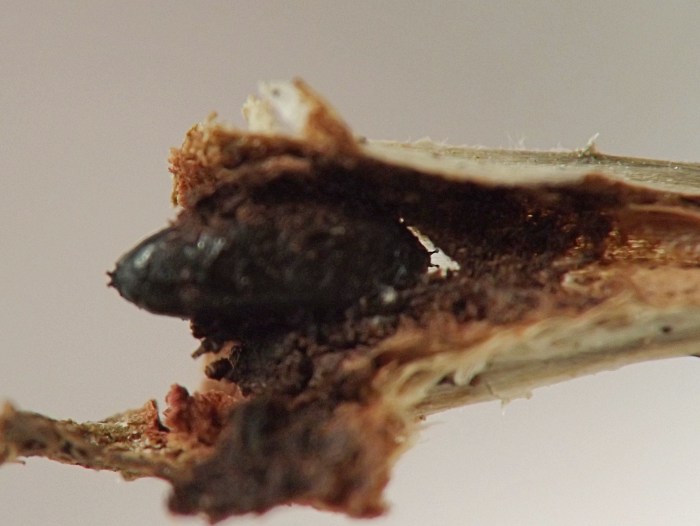
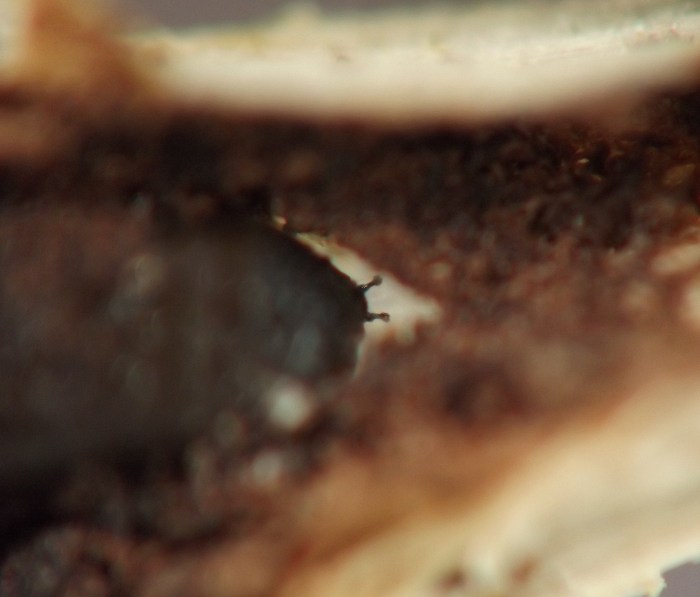
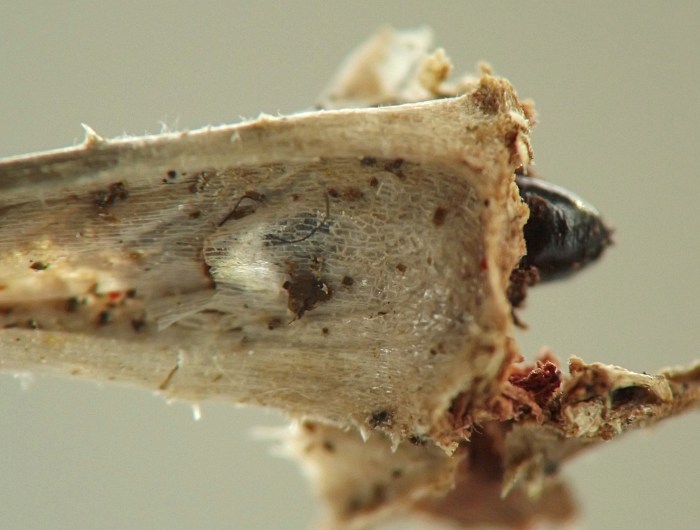
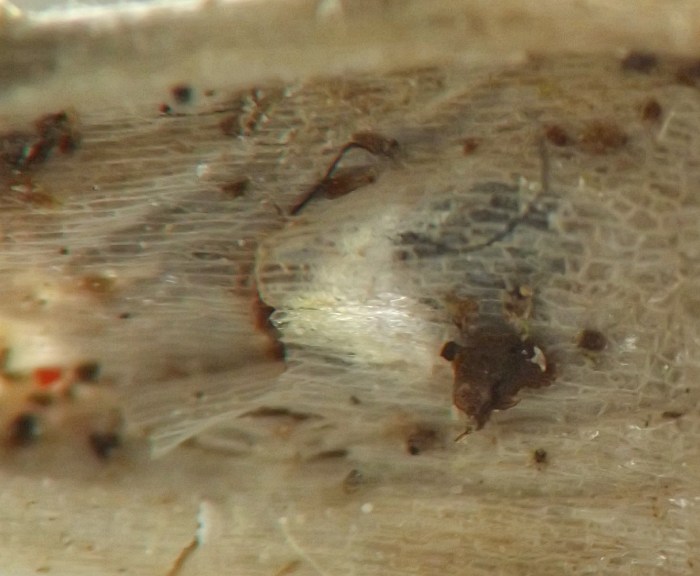
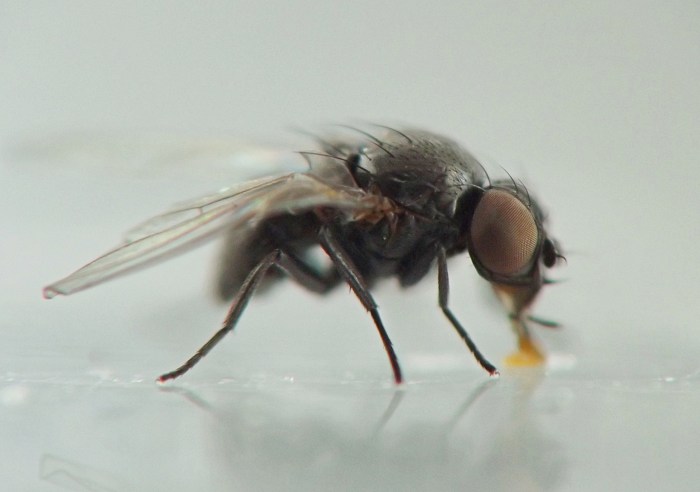
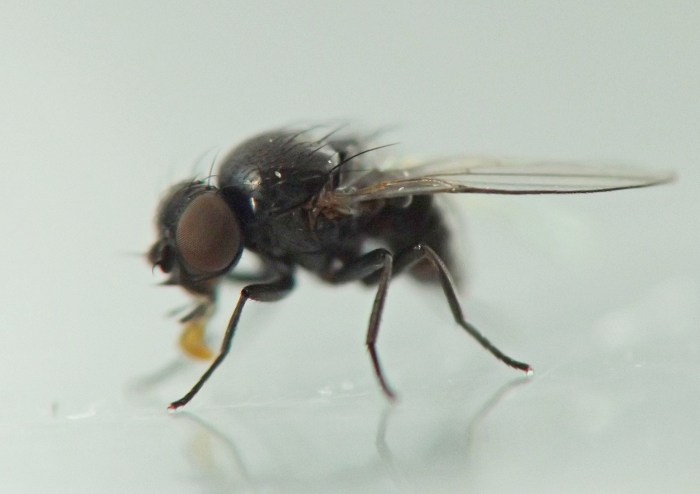
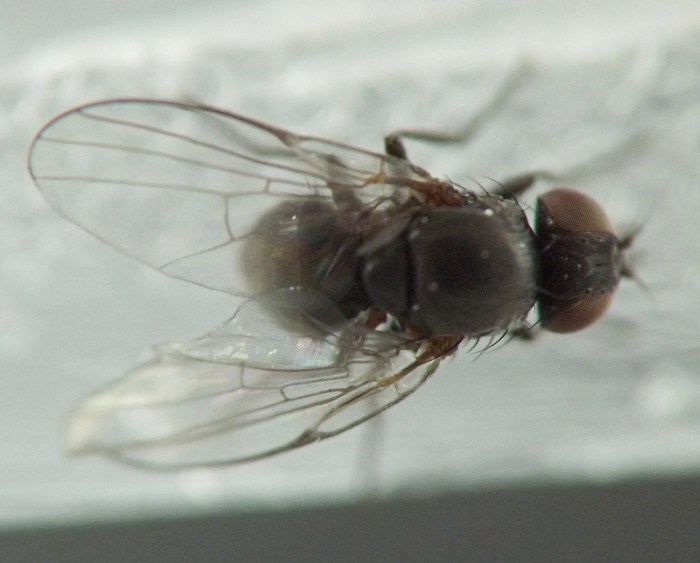
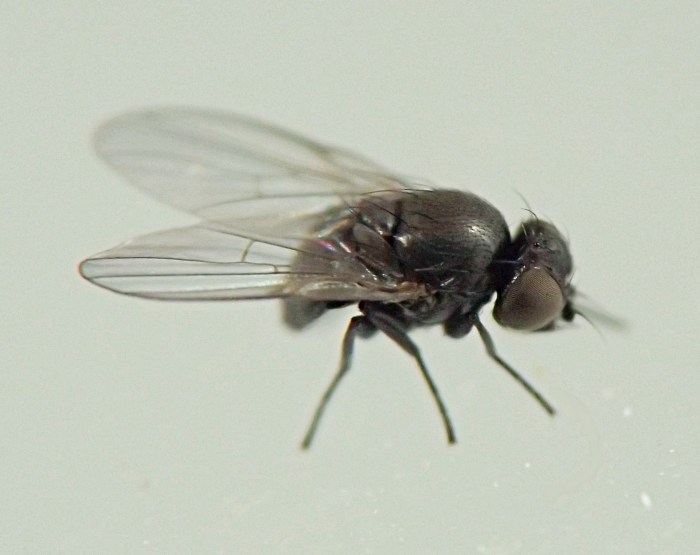
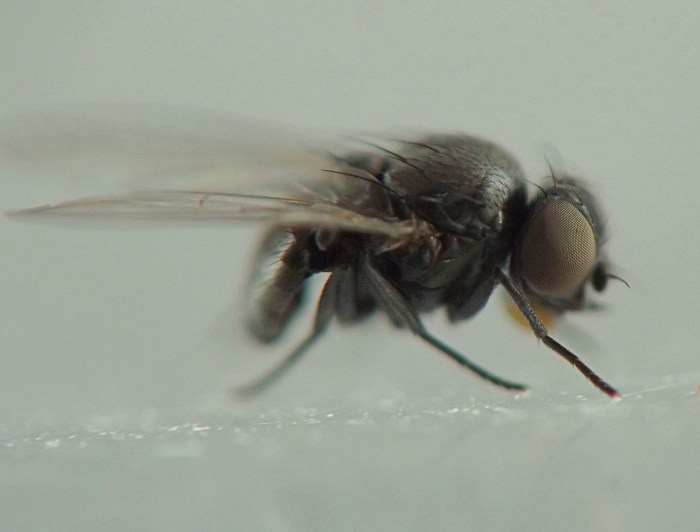
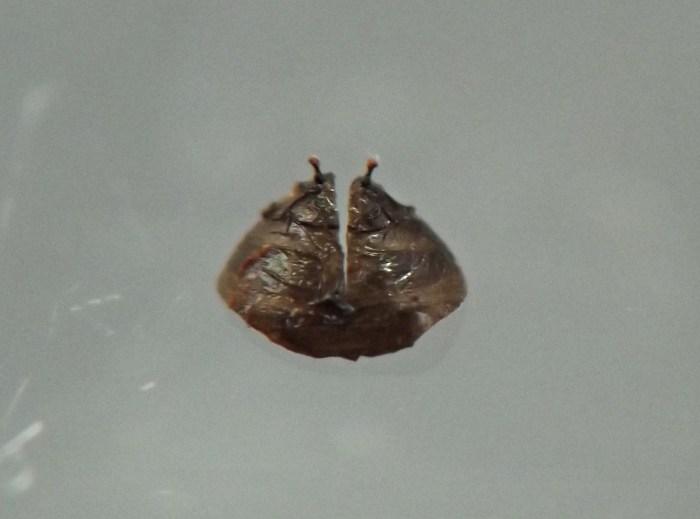
Coll. 07/09/21, photographed same day (01); coll. 06/28/21, photographed same day (02-08); coll. 08/11/21, damage and larva photographed 08/13/21 (09-17, 31) and larva's fresh puparium photographed on 08/14/21 (18-19, 34); coll. 02/11/22, photographed same day (20); coll. 04/02/22, photographed 04/04/22 (21-25); coll. 02/11/22, em. 03/15/22 (26-28); coll. 04/02/22, em. 04/14/22 (29-30); coll. 04/02/22, adult em. by 04/16/22, puparium photographed on 10/27/23 (33, 35).
- Lonsdale, O. 2021. Manual of North American Agromyzidae (Diptera, Schizophora), with revision of the fauna of the “Delmarva” states. ZooKeys 1051: 1–481. https://doi.org/10.3897/zookeys.1051.64603[return to in-text citation]
Page created: October 27, 2023. Last update: March 10, 2026