Stem borer (Coleoptera: Cerambycidae) in Monarda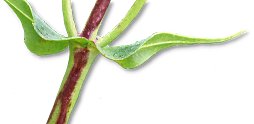
| Record no.: | 0334 |
|---|---|
| Feeding guild: | Stem borer |
| Taxonomy: | Coleoptera: Cerambycidae: cf. Oberea perspicillata |
| Stages observed: | trace, larva, adult |
| Distribution observed: | IA |
| Hosts in Monarda: | M. fistulosa (bee balm, wild bergamot) |
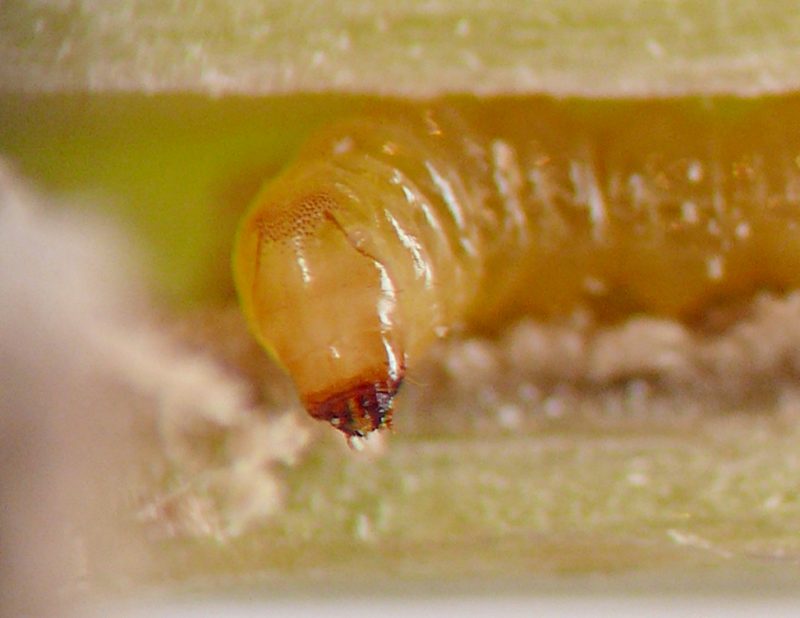
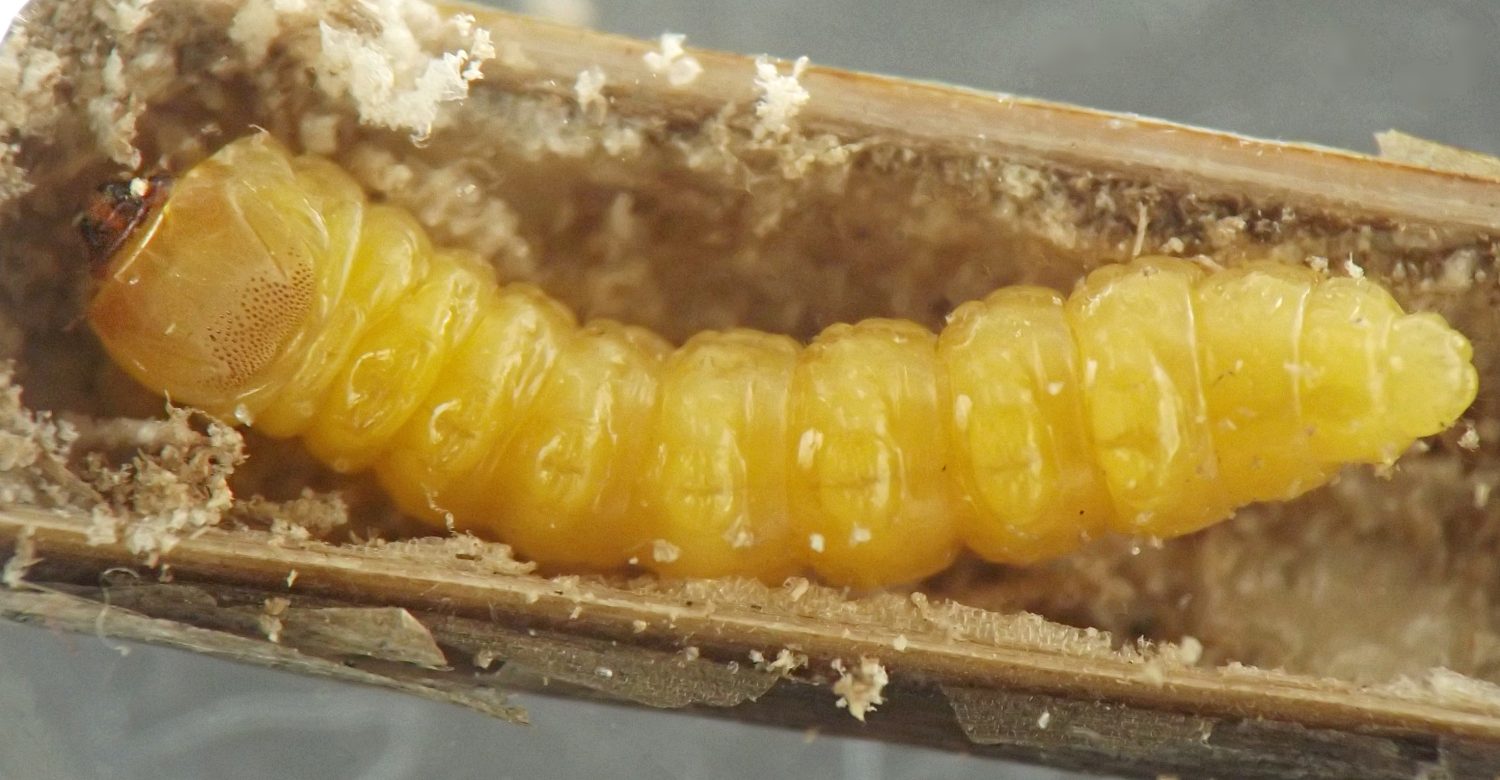
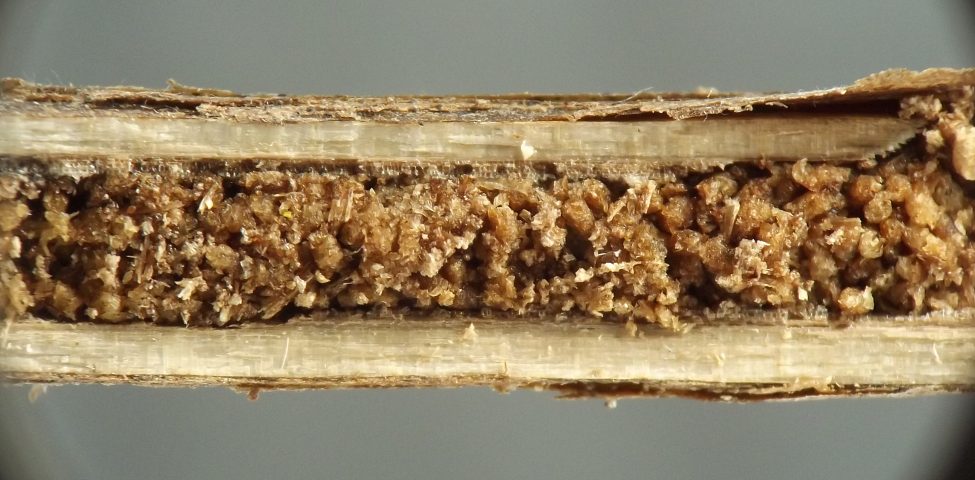
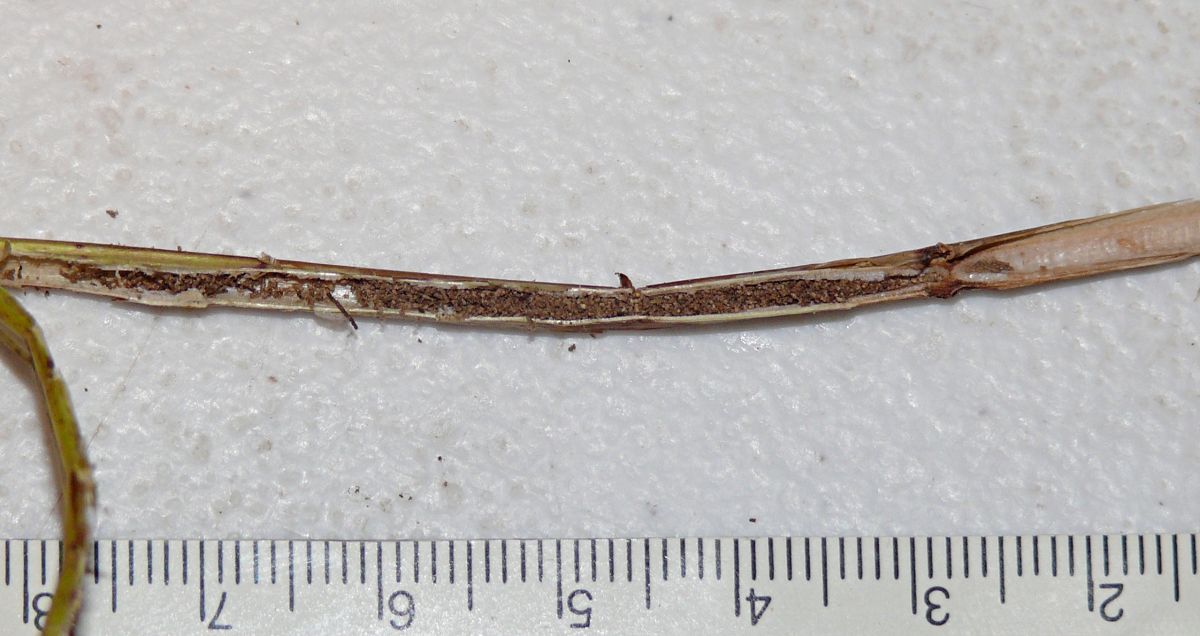
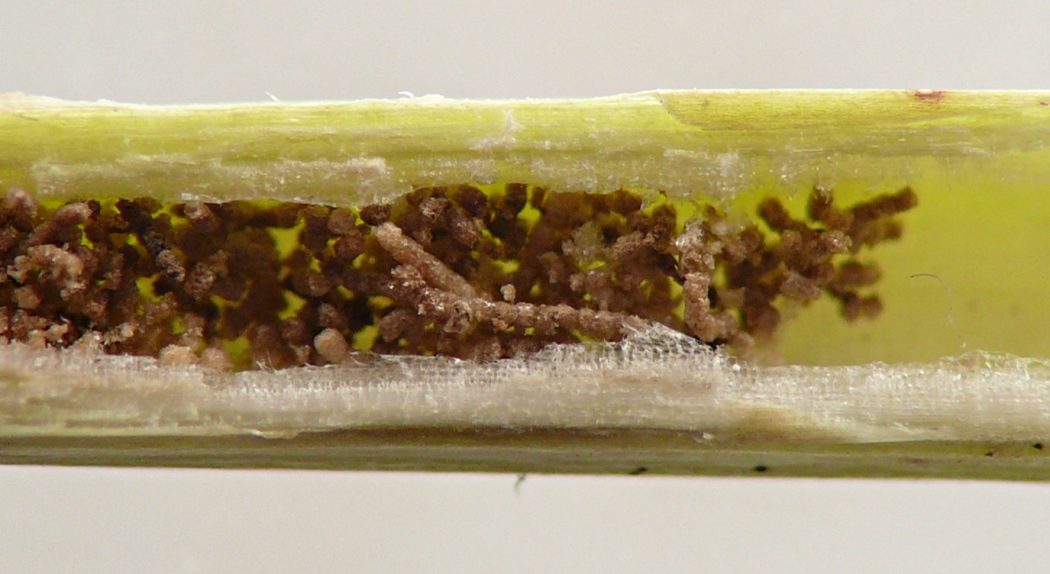
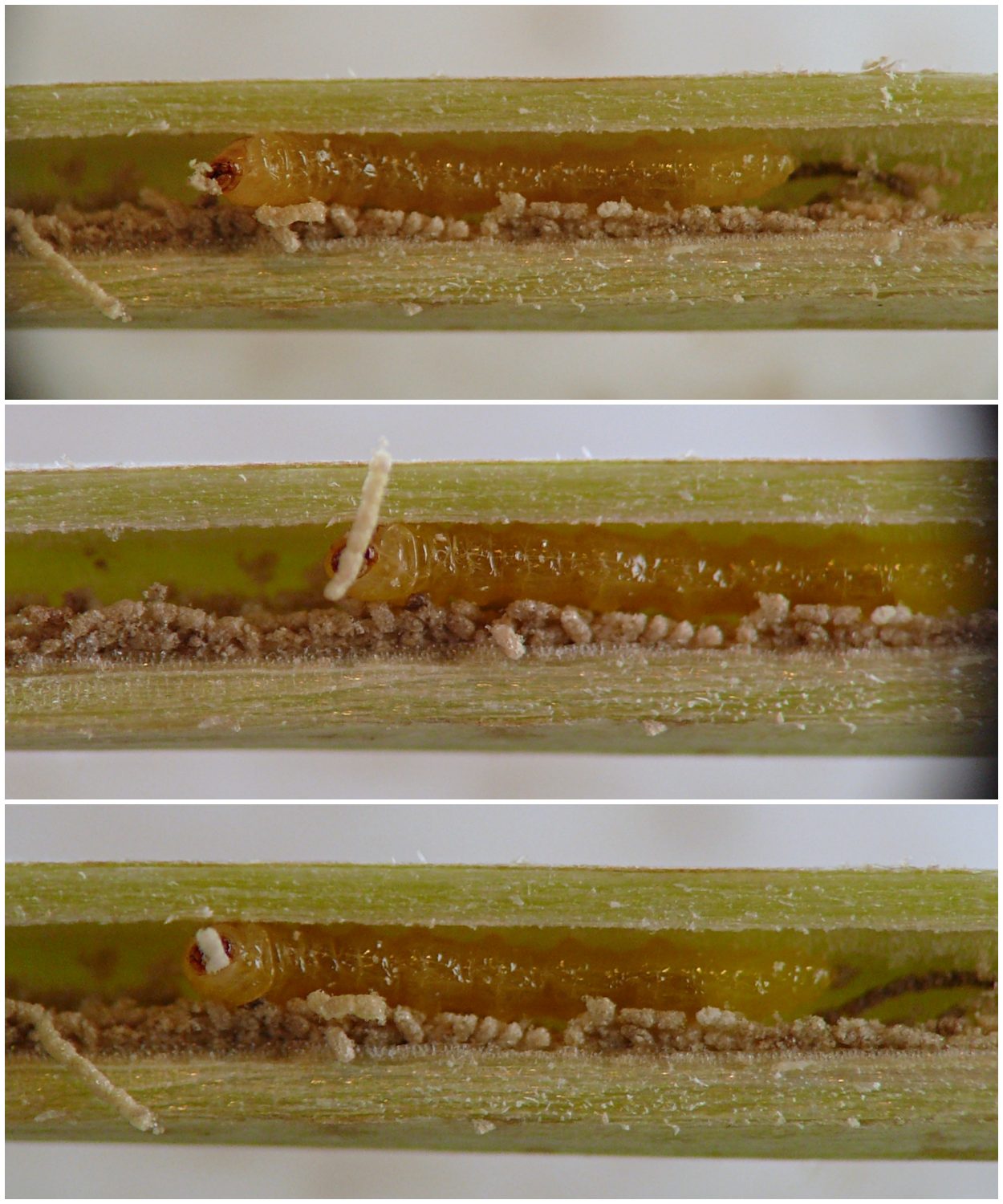
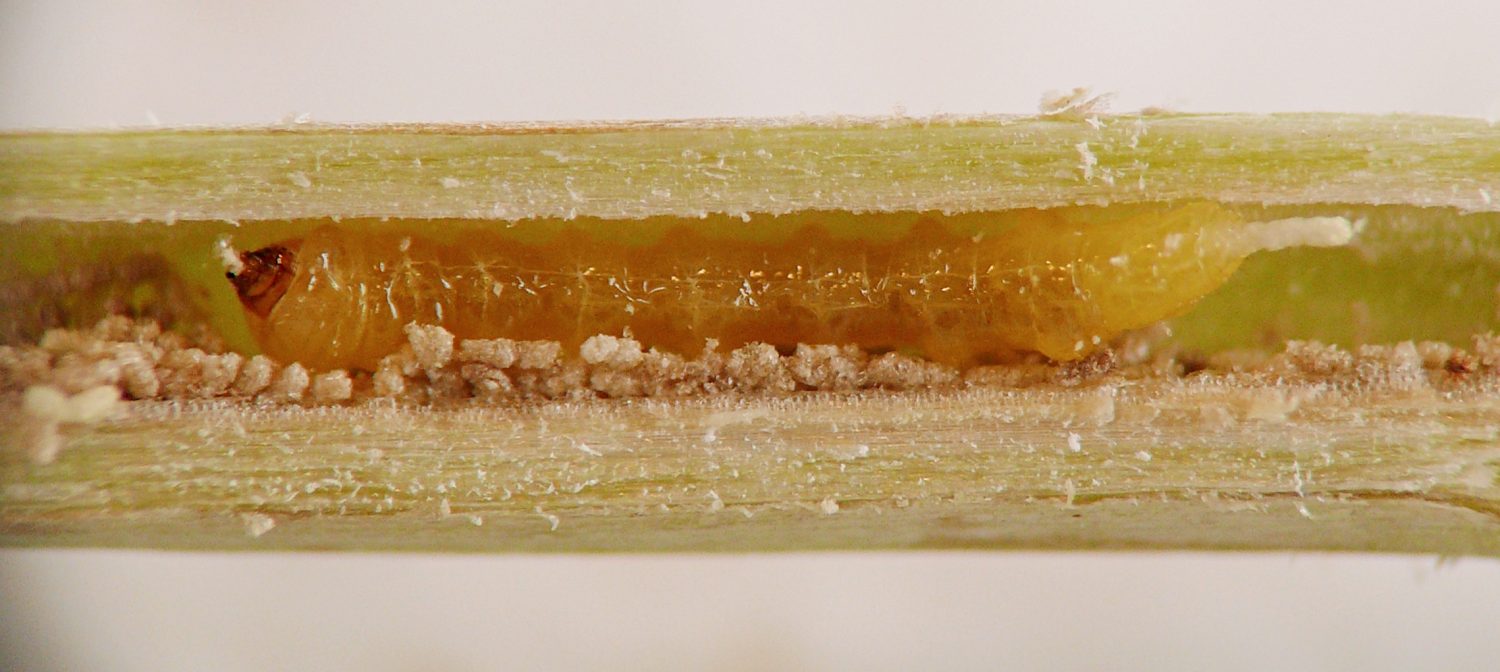
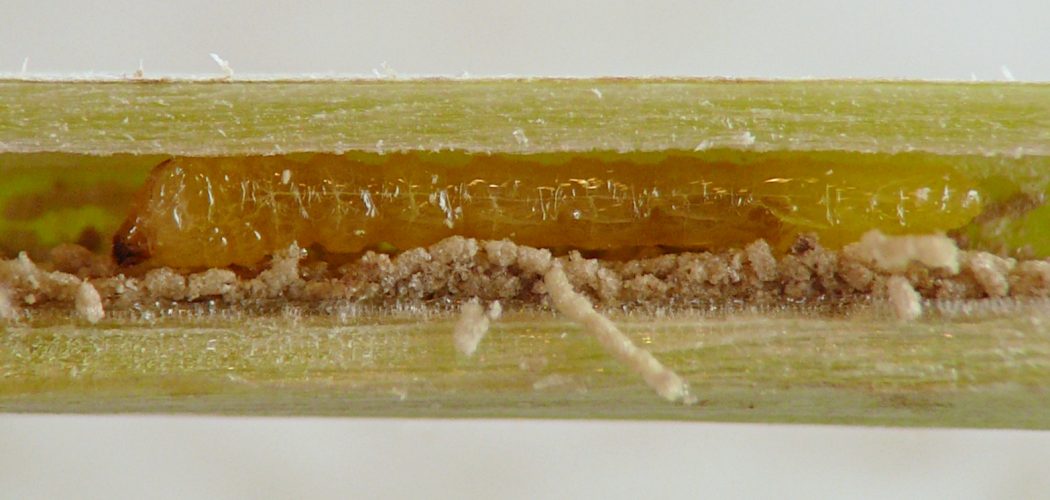
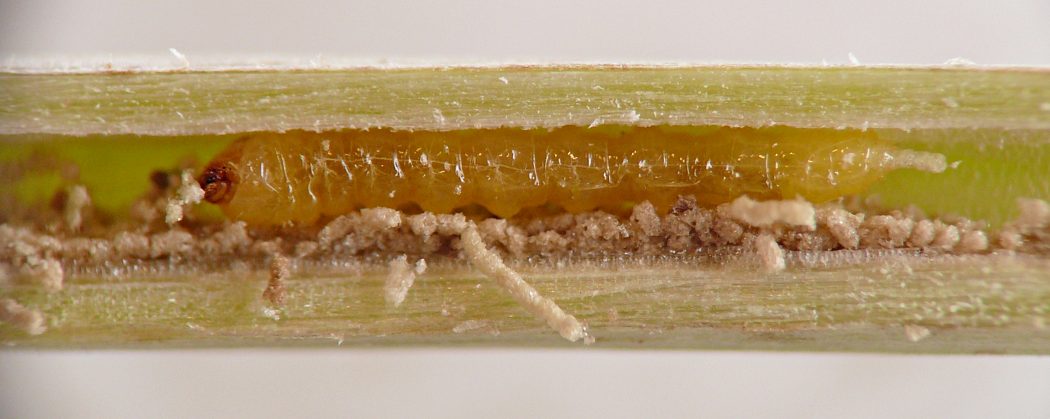
In March 2024, I found a rather thick dead stem of a robust wild bergamot plant that was inhabited by a mature cerambycid larva. The larva's excavations began approximately 40-50cm above ground level in the middle-to-upper portion of the stem and led down to the horizontal rooted portion of the stem, where the larva was overwintering. I wrote in my notebook that "the amount of frassification [in the stem] was incredible, and the large grain size of the frass along with the amount of frass tipped me off that it was a [relatively] large [insect], but I thought it would be larger even than this larva." The frass consisted of numerous dry, brown, short-cylindrical pellets densely packed into long agglomerations that stretched for many centimeters through the stem interior. The stout larva was a golden yellow color. I did not rear it to adulthood.
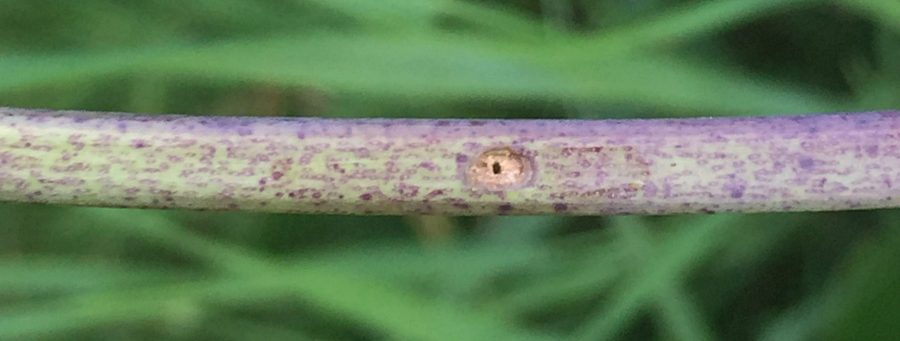
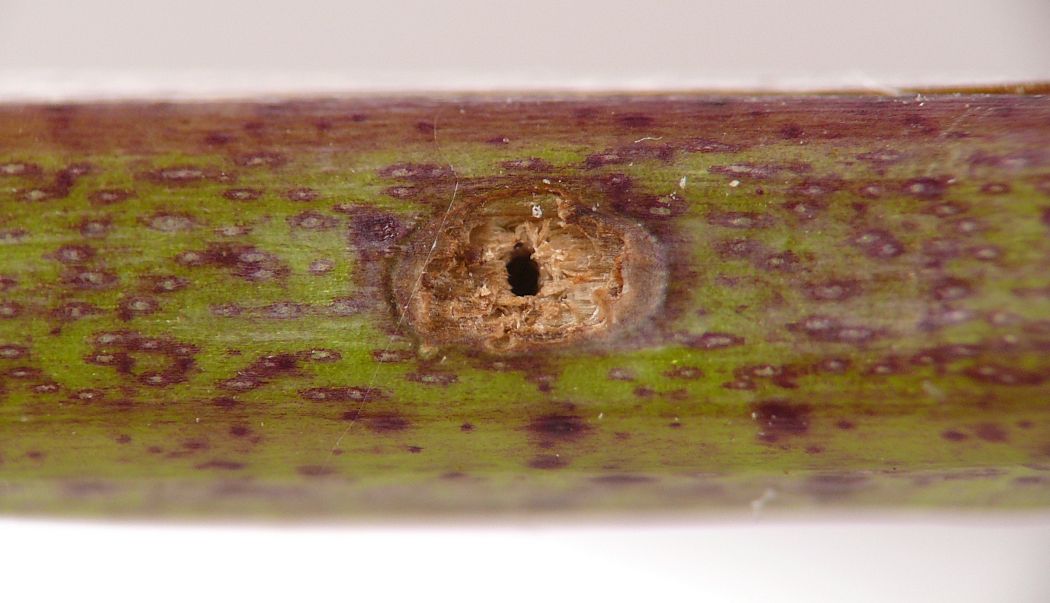
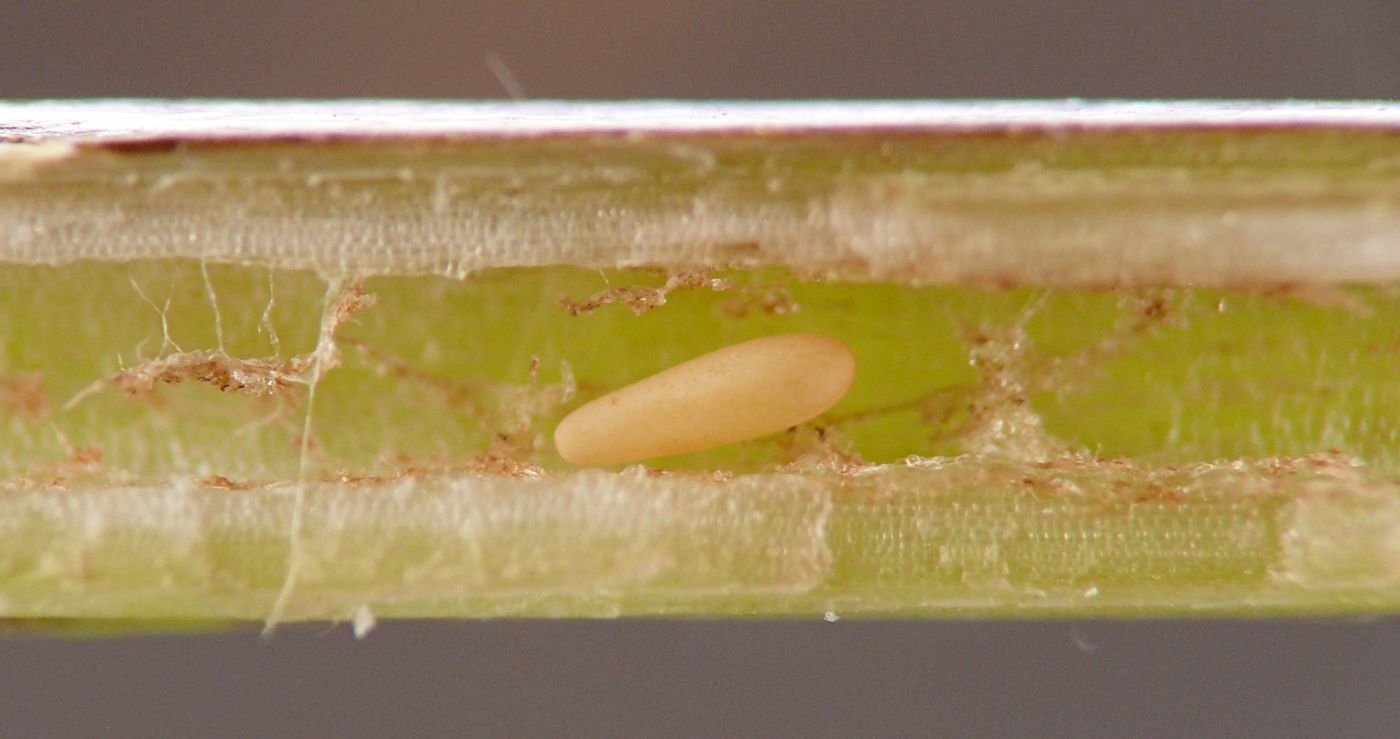
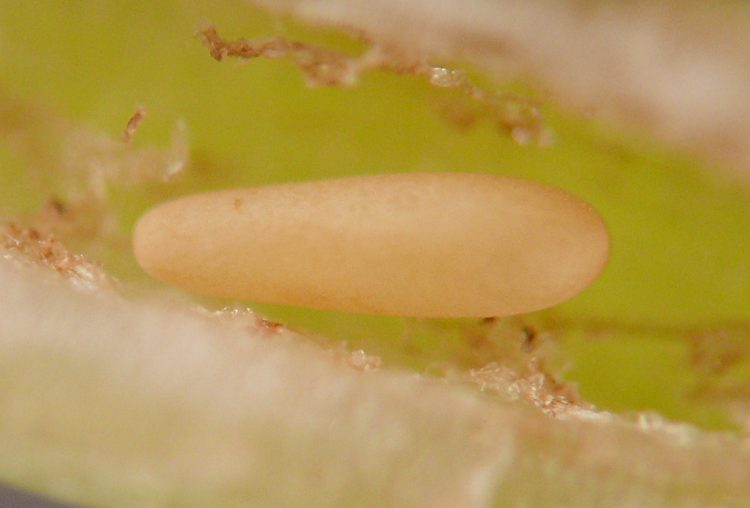
In the final days of June 2024, I collected a stem of the host that contained a small but externally visible oviposition scar, accompanied by an egg in the stem interior. The scar consisted of an oval area, roughly 7 mm long by 4 mm wide, from which the outermost layers of stem tissue had been scraped away to produce a flat-bottomed depression, with a small round hole about 1 mm in diameter situated in the center of the oval and penetrating into the stem interior. The egg was smooth and tan in color, cylindrical, and broader and more rounded on one end, tapering along its length to the narrower, more blunted opposite end, the whole egg about 3.5 times as long as its average width.
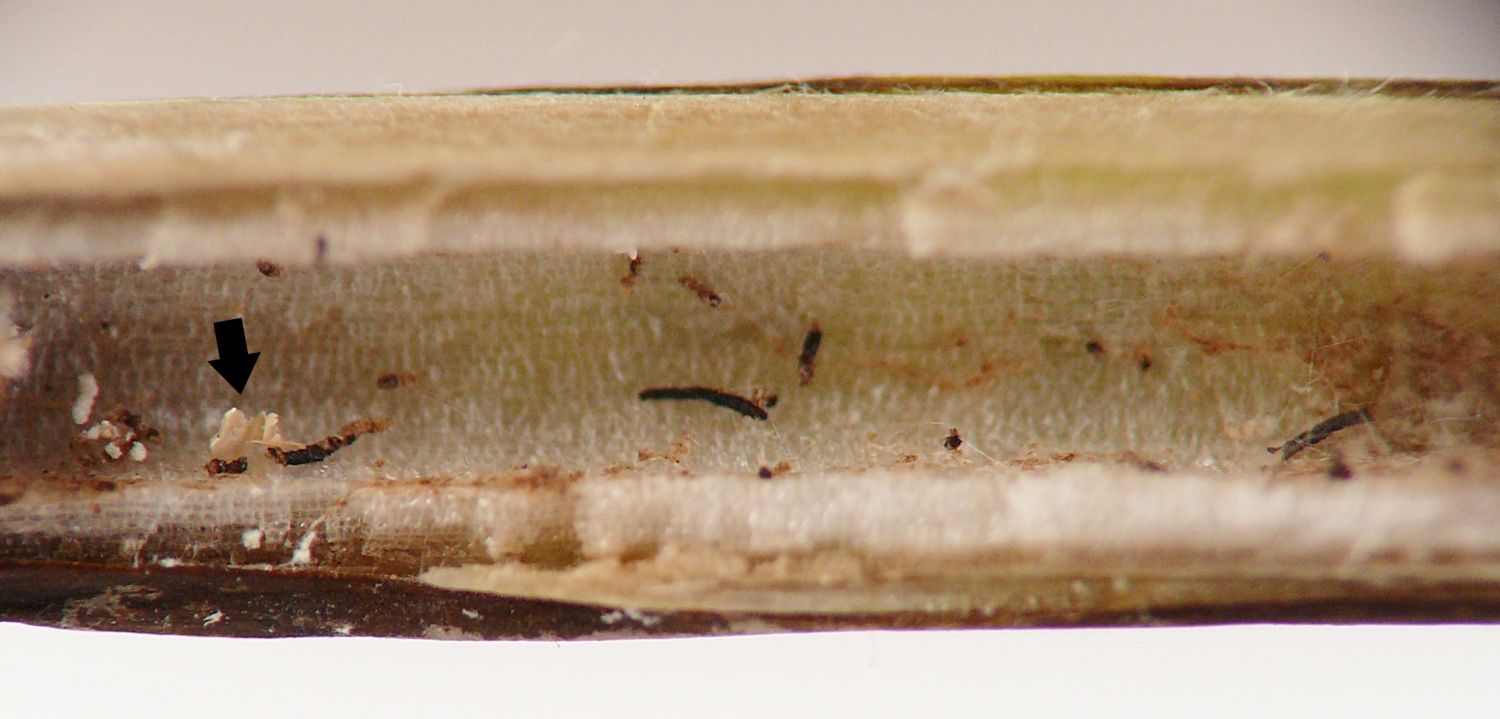
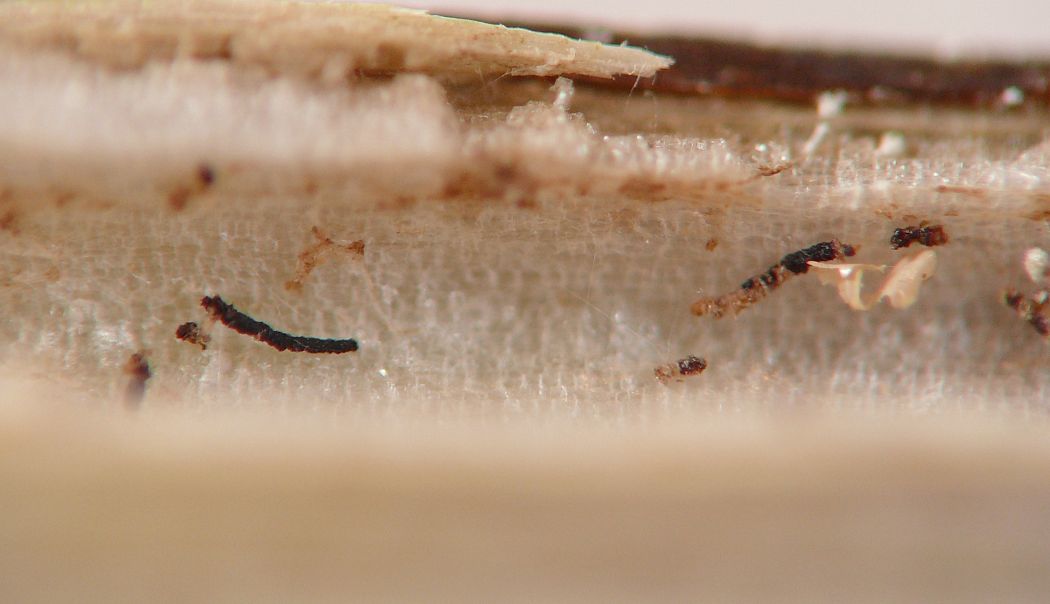
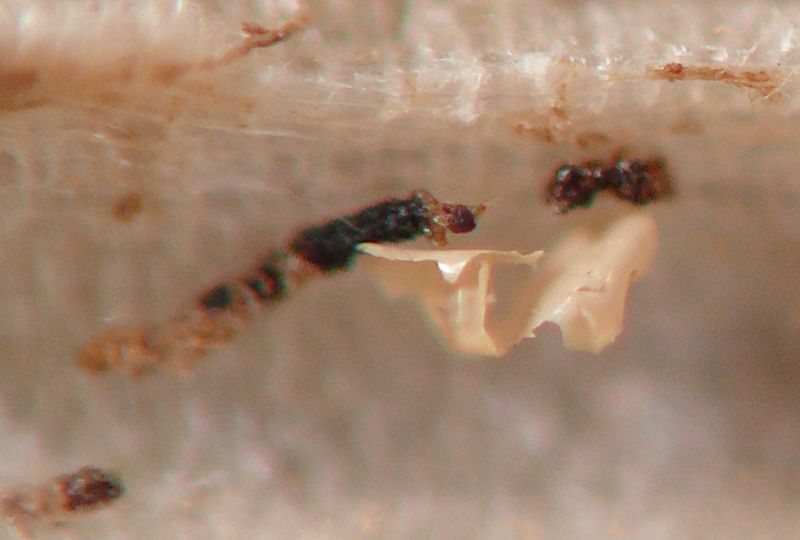
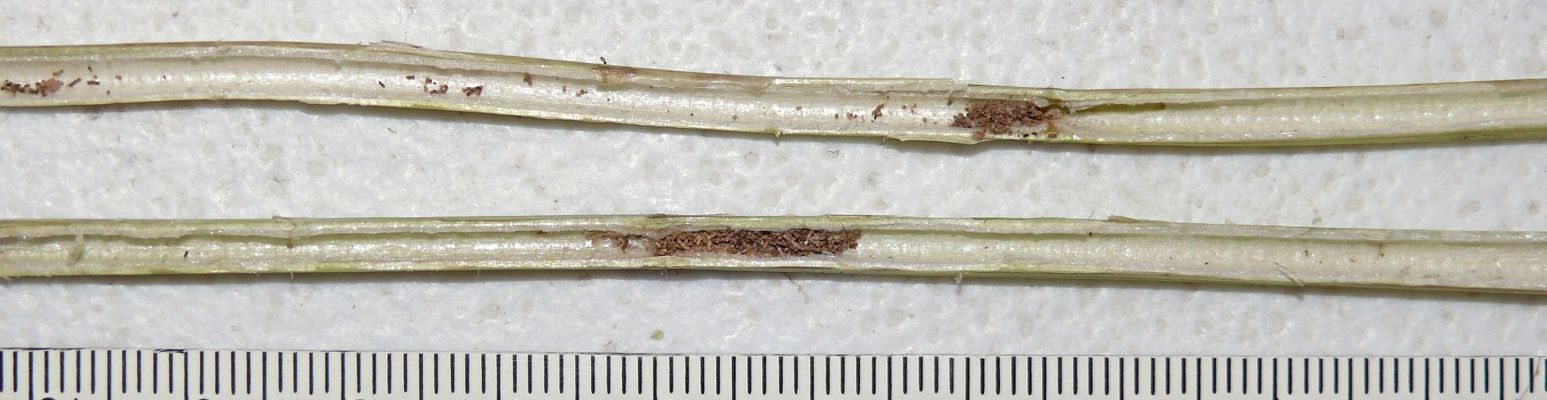
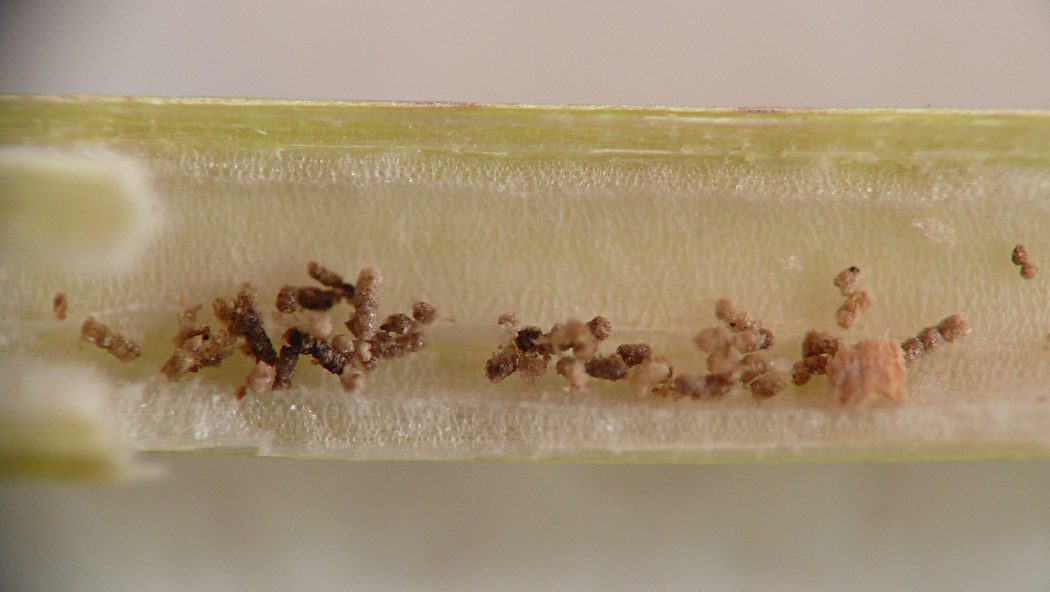
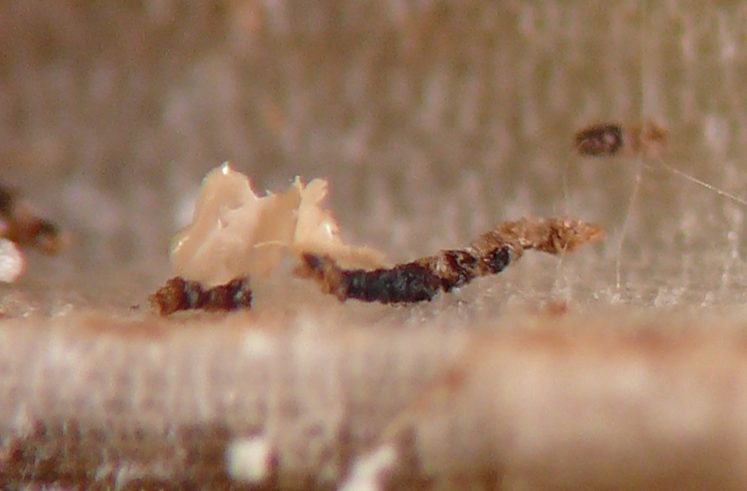
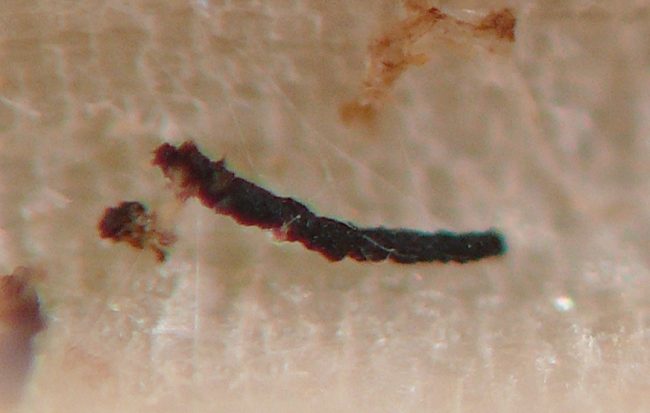
I stored the section of stem containing the scar and egg in a container with another section of Monarda stem from a different individual plant. When I inspected the container and dissected both stem sections several days later, I found that the egg in the first stem section had hatched, leaving behind tattered chorion remnants where the egg had been resting in the stem interior. The hatchling larva had evidently fed on the pith lining the hollow stem interior, based on the presence of several thin, elongate rods of black frass, along with a few white airy frass pellets that appeared to consist of stem pith that had been only minimally processed as it moved through the larva's digestive system. In the bottom of the rearing container was a very young cerambycid larva that was small enough to have recently hatched from the egg and produced the accompanying frass. The second stem section contained an erotylid larva (record 0338). Though I could not completely rule out the erotylid larva's involvement, I concluded that the cerambycid larva had most likely hatched from the egg in the first stem section, fed for a short time in the interior of the stem, then tunneled downward and out of the stem section, ending up on the bottom of the container.
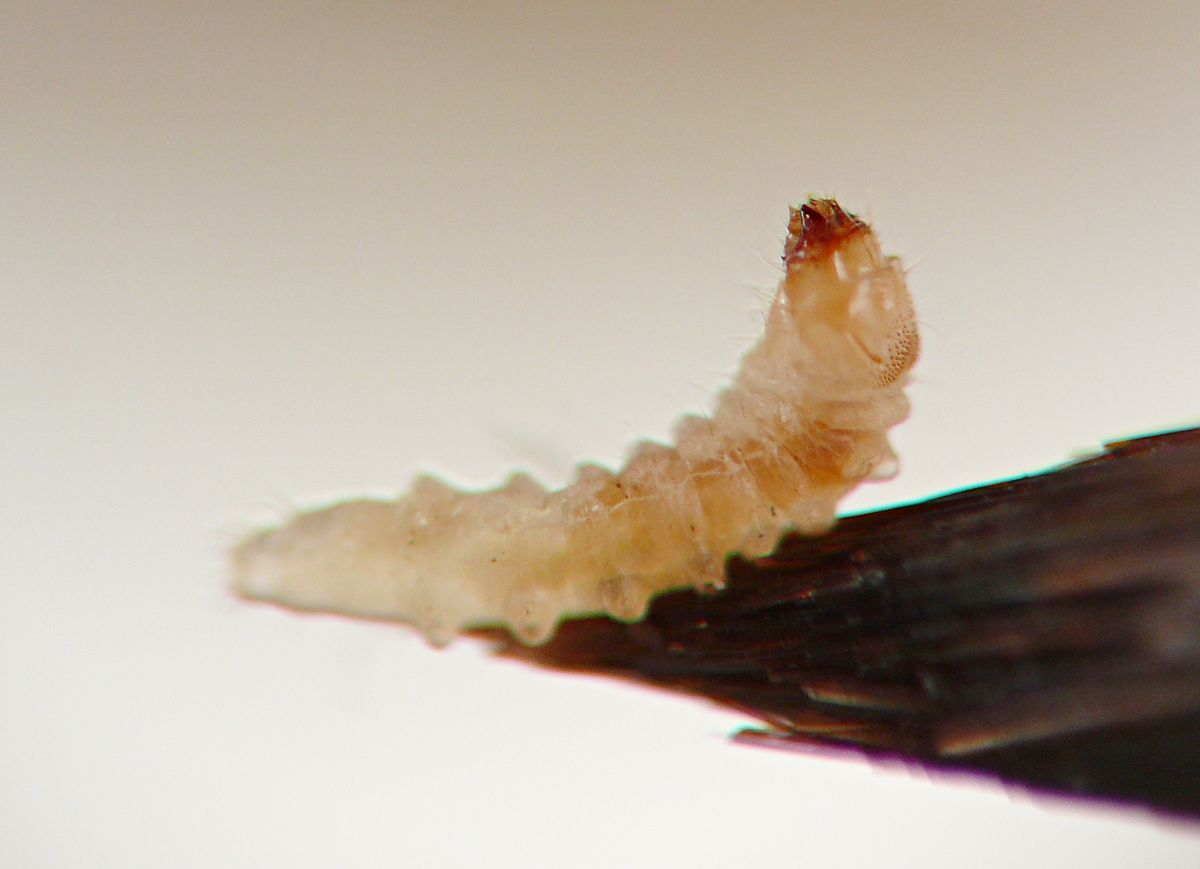
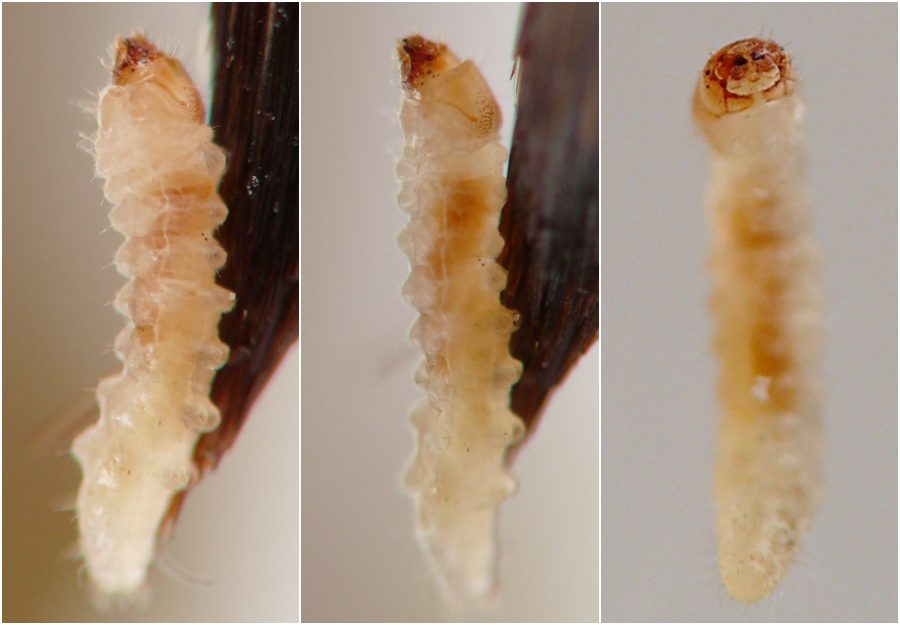
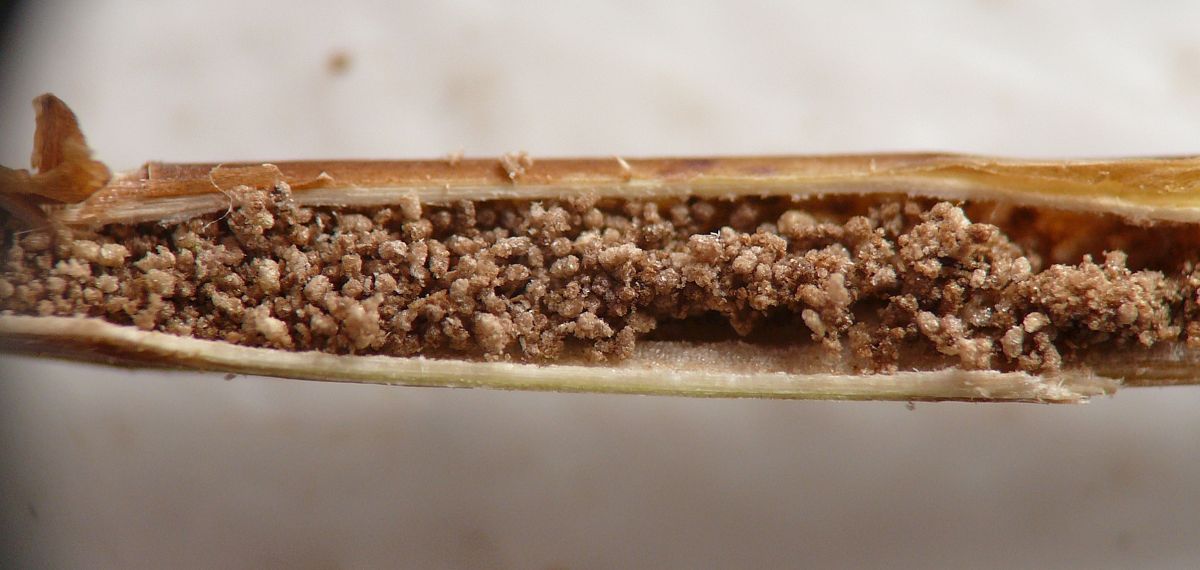
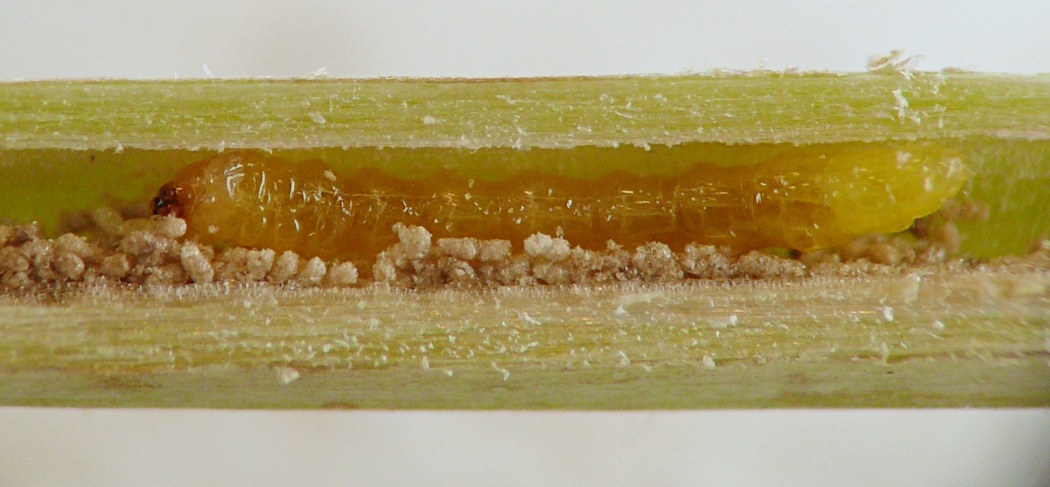
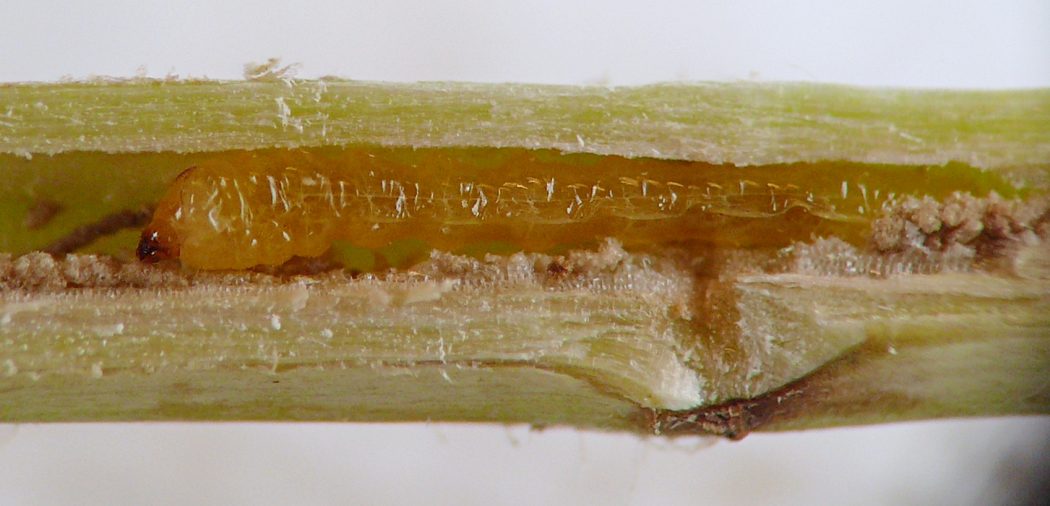
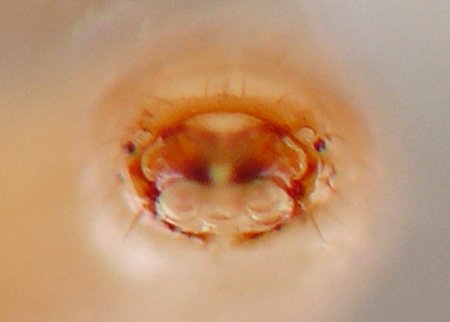
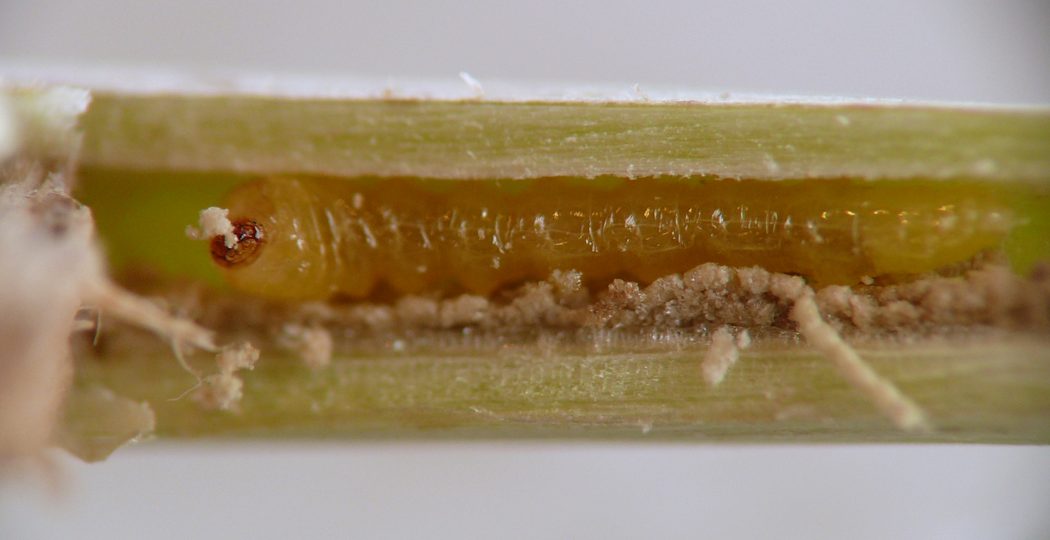
Finally, in mid-August 2024 I found another Monarda stem with a cerambycid larva inside. Sclerotized areas of the larva's head and prothorax, though larger and more developed, were otherwise reminiscent of those belonging to the June larva. High in the affected stem were a few places where the larva had gathered its frass into loose clumps, while the lower stem hosted a larger and more dense accumulation of frass along with the larva itself. The frass consisted of dry, light brown, short-cylindrical pellets, very similar to those of the March larva, with some of the pellets affixed end-to-end in chains up to 2 or 3 mm long.
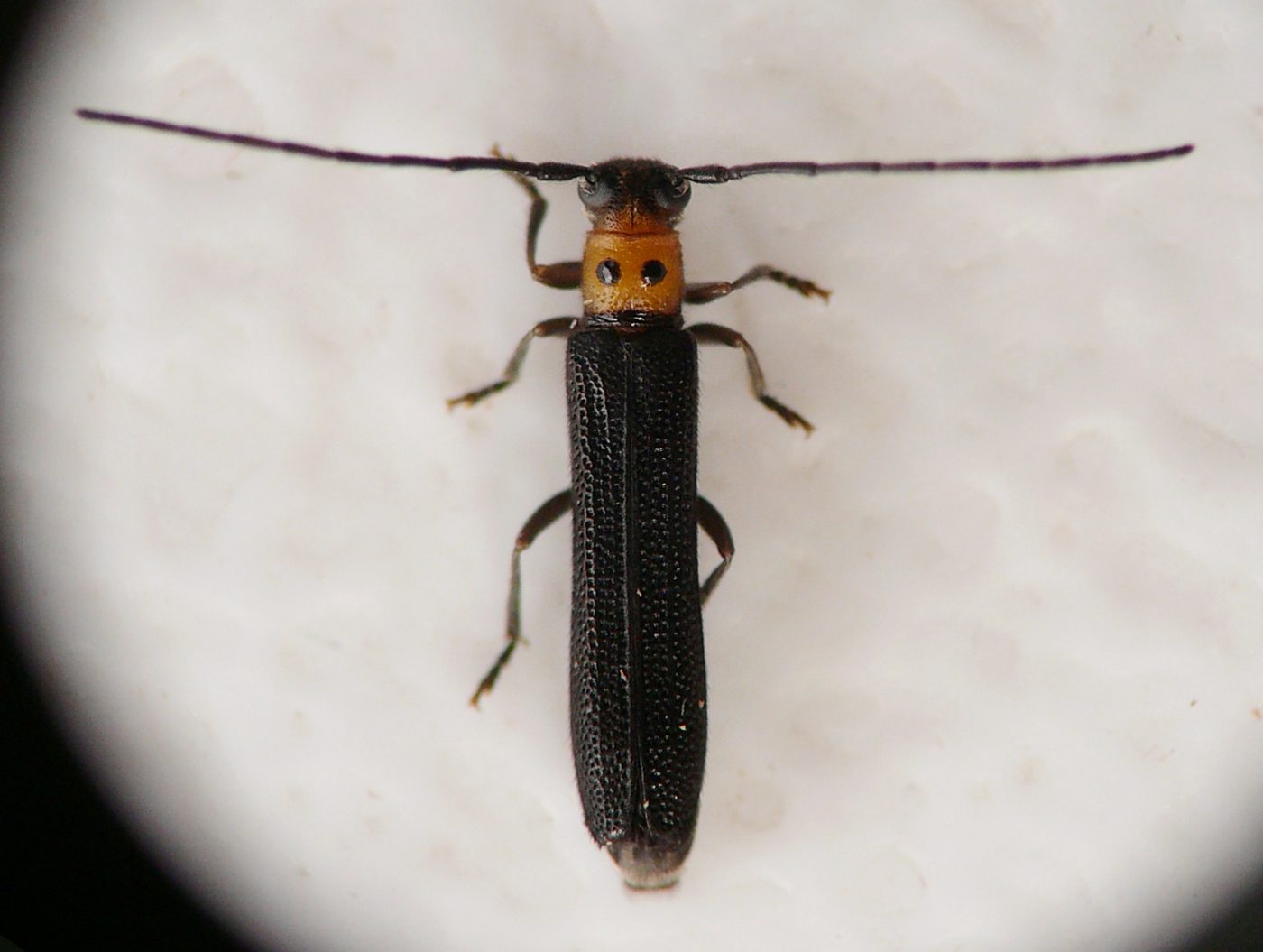
I successfully overwintered this larva, and the adult beetle emerged in spring.
Because I did not rear the March and June 2024 larvae to adulthood, I cannot be certain they belong to the same species as the August 2024 larva, though it seems likely to me that no more than two species are involved, especially given the similarities in larval morphology and plant damage.
The adult I reared has not yet been conclusively identified to species, but its appearance matches the brief written description of O. perspicillata and accompanying images in VanDyk (2026b). Yanega (1996) lists the hosts of O. perspicillata as "living blackberry, raspberry, rose" and mentions that "there has been considerable confusion as to its identity in the past; it may still represent more than a single true species" (p. 144). It seems at least some individuals of this species or group of species may consistently be found in association with plants in the mint family; in addition to the rearing in the current record, I have noted a similar-looking Oberea species ovipositing in Blephilia hirsuta (record 0098), and there are several images on iNaturalist showing O. perspicillata adults perched on mint family plants, although only one of these shows reproductive activity on the part of the beetle, and using a plant as a perch certainly does not by itself indicate the plant is a larval host. Even so I have assembled the iNaturalist records below for reference (Baratta 2022; Cama 2021; Fowler 2024; Username sheriglow 2024; Wight-Maier 2022). (When tracking down those records, I also noted several images on iNaturalist in which beetles identified as O. perspicillata were perched on what appeared to be aster family plants.)
 Prev
Prev
- Baratta, E. 2022. Raspberry Cane Borer (Oberea perspicillata). Contributor post on iNaturalist.org. Retrieved February 13, 2026 from https://www.inaturalist.org/observations/122314507.[return to in-text citation]
- Cama, R.G. 2021. Raspberry Cane Borer (Oberea perspicillata). Contributor post on iNaturalist.org. Retrieved February 13, 2026 from https://www.inaturalist.org/observations/84432132.[return to in-text citation]
- Fowler, K. 2024. Raspberry Cane Borer (Oberea perspicillata). Contributor post on iNaturalist.org. Retrieved February 13, 2026 from https://www.inaturalist.org/observations/223210058.[return to in-text citation]
- Username sheriglow. 2024. Raspberry Cane Borer (Oberea perspicillata). Contributor post on iNaturalist.org. Retrieved February 13, 2026 from https://www.inaturalist.org/observations/228753414.[return to in-text citation]
- VanDyk, J., ed. 2026b. Species Oberea perspicillata - Raspberry Cane Borer. Species page at BugGuide.net. Retrieved February 13, 2026 from https://www.bugguide.net/node/view/96073.[return to in-text citation]
- Wight-Maier, Z. 2022. Raspberry Cane Borer (Oberea perspicillata). Contributor post on iNaturalist.org. Retrieved February 13, 2026 from https://www.inaturalist.org/observations/123153697.[return to in-text citation]
- Yanega, D. 1996. Field guide to northeastern longhorned beetles (Coleoptera: Cerambycidae). Illinois Natural History Survey Manual 6. 184 pp.[return to in-text citation]
Page created: February 13, 2026. Last update: June 4, 2026