Stem borer (Coleoptera: Erotylidae) in Monarda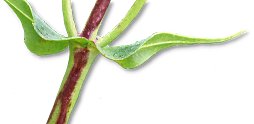
| Record no.: | 0338 |
|---|---|
| Feeding guild: | Stem borer |
| Taxonomy: | Coleoptera: Erotylidae: Languria cf. trifasciata |
| Stages observed: | trace, larva, pupa, adult |
| Distribution observed: | IA |
| Hosts in Monarda: | M. fistulosa (bee balm, wild bergamot) |
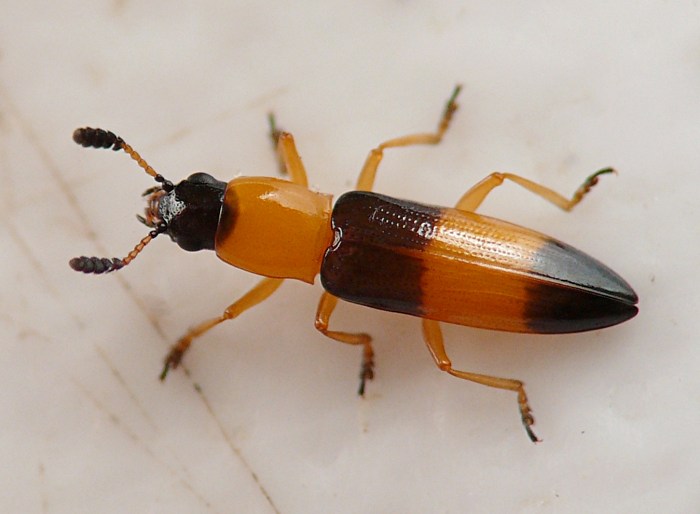
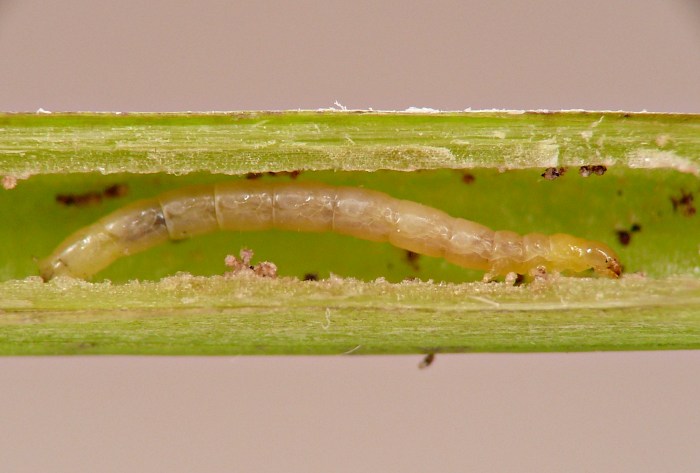
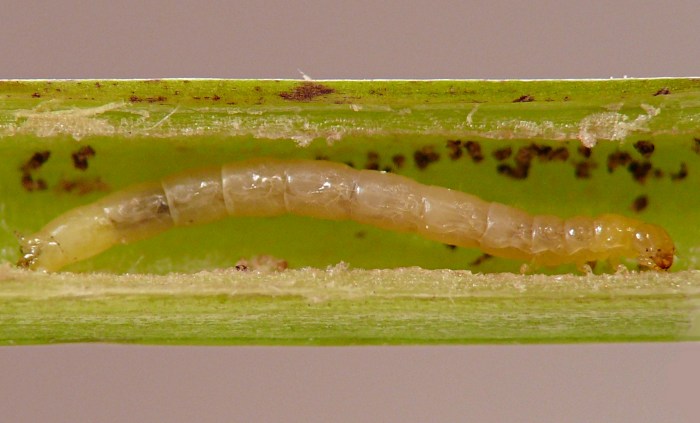
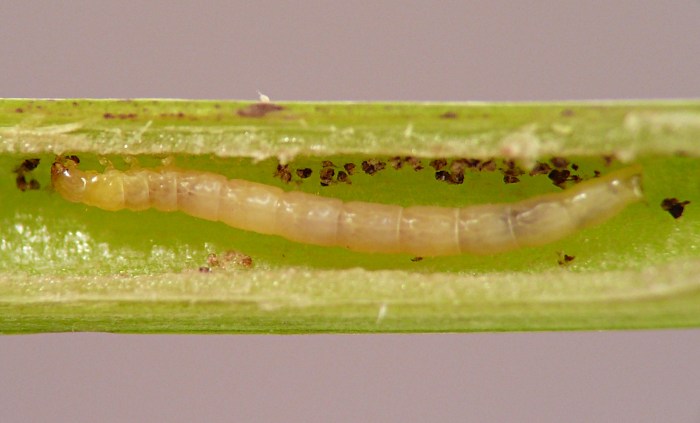
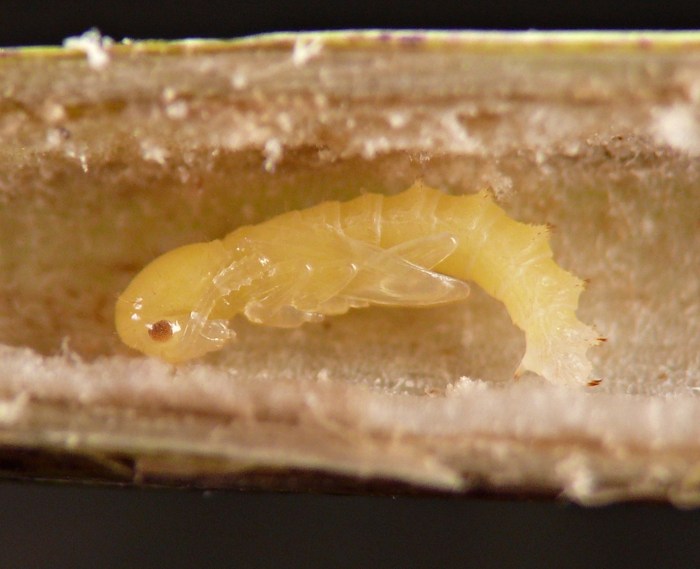
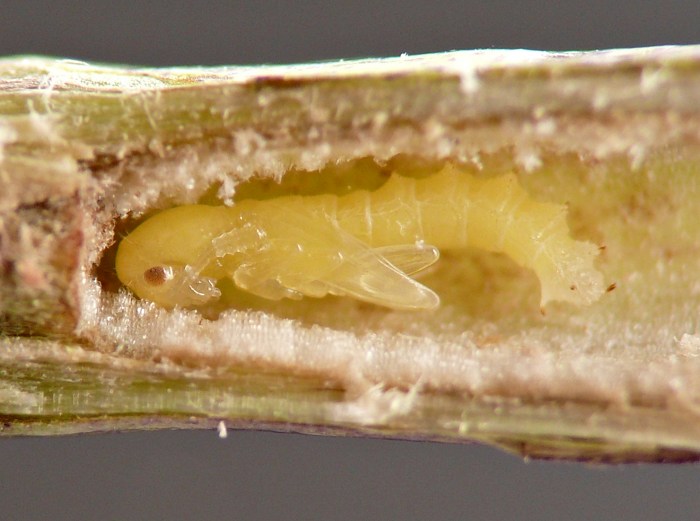
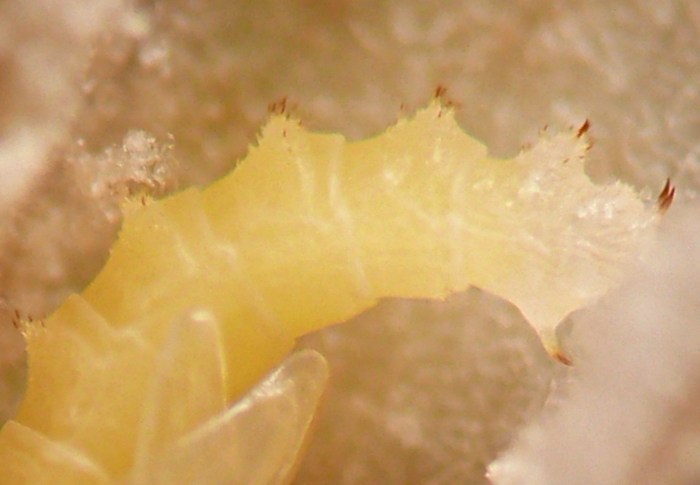
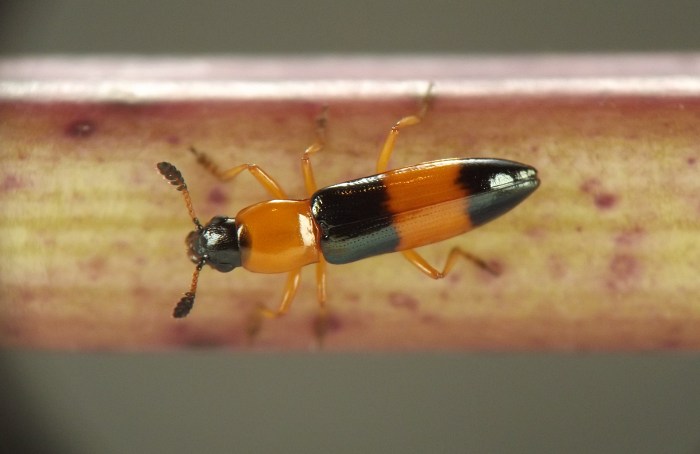
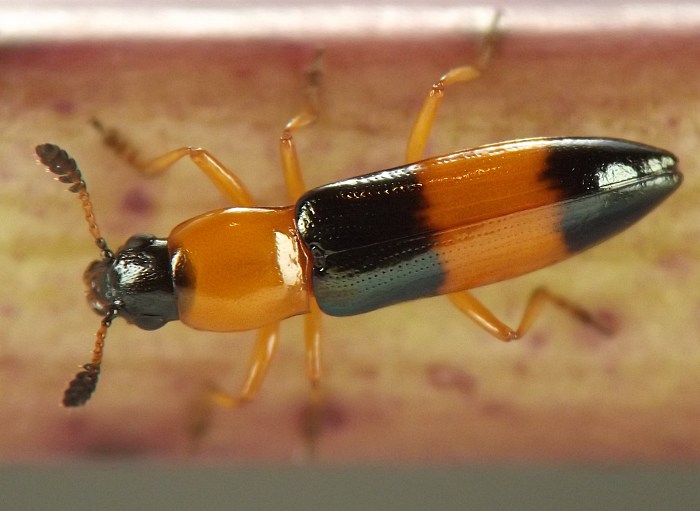
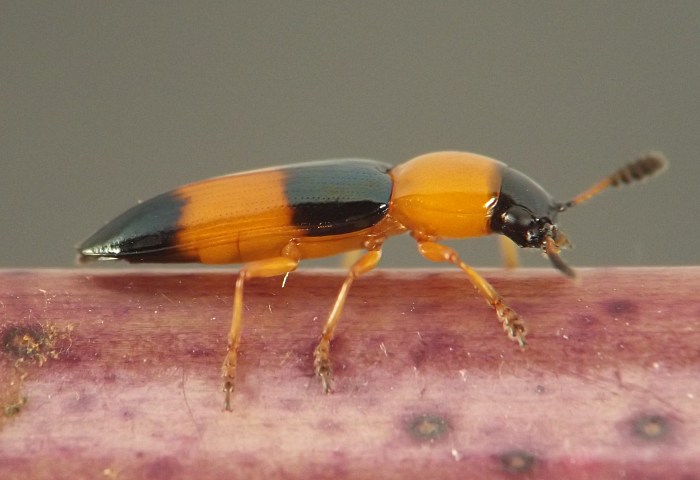
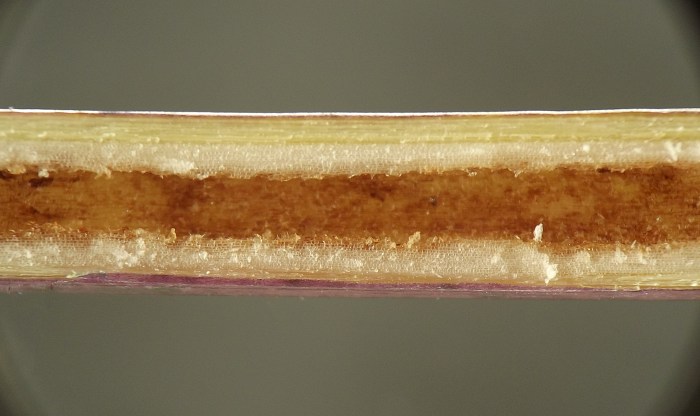
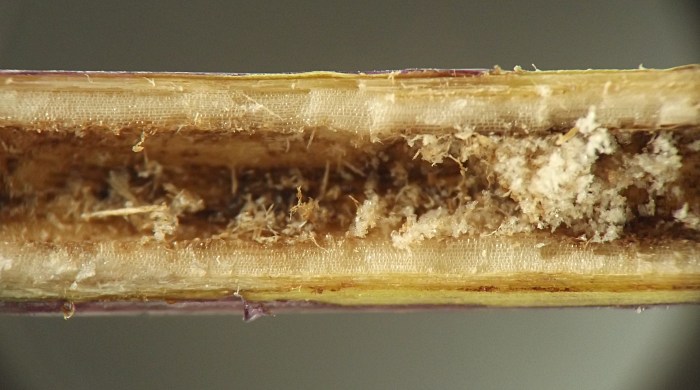
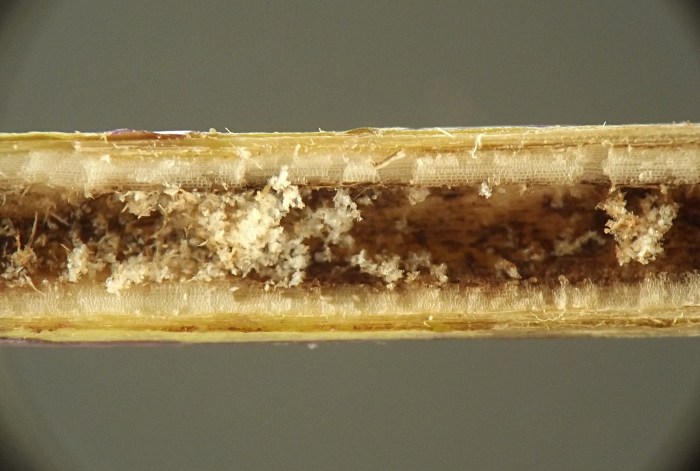
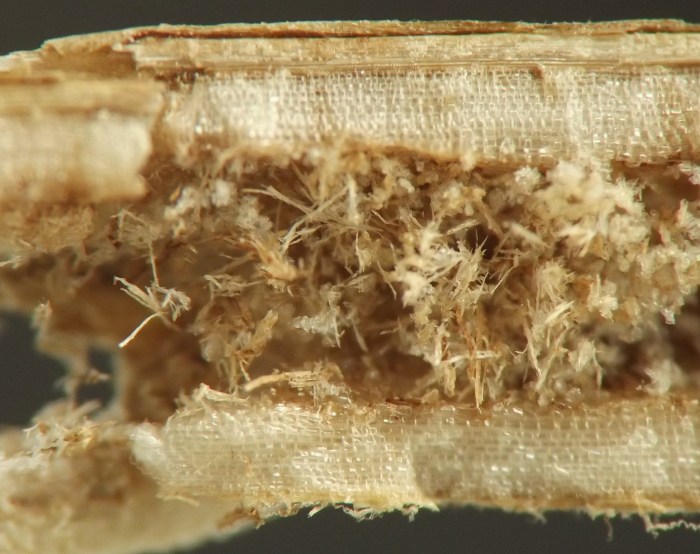
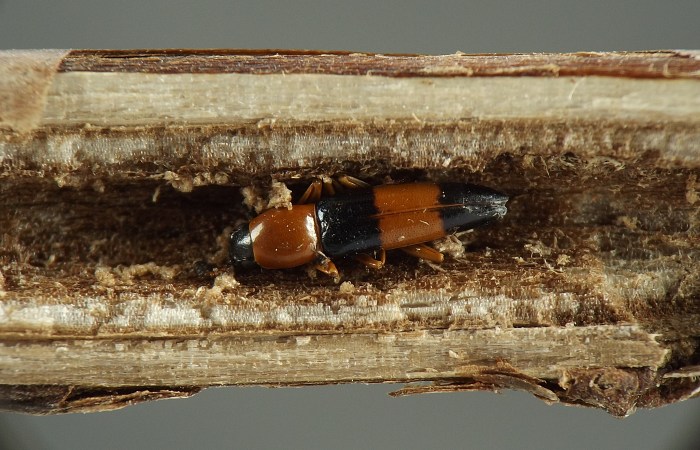
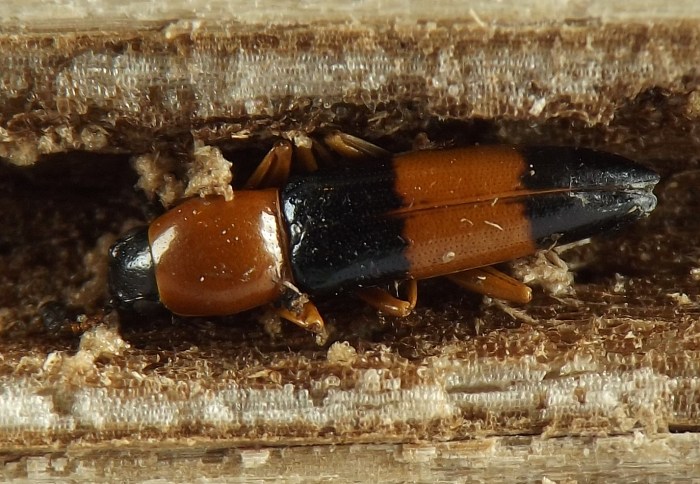
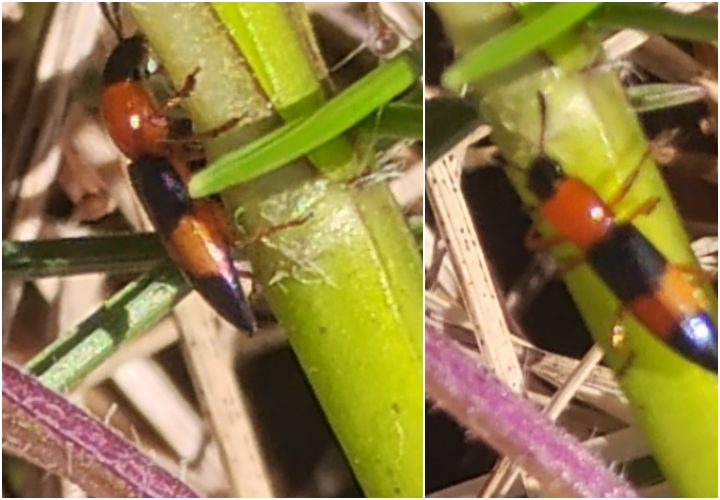
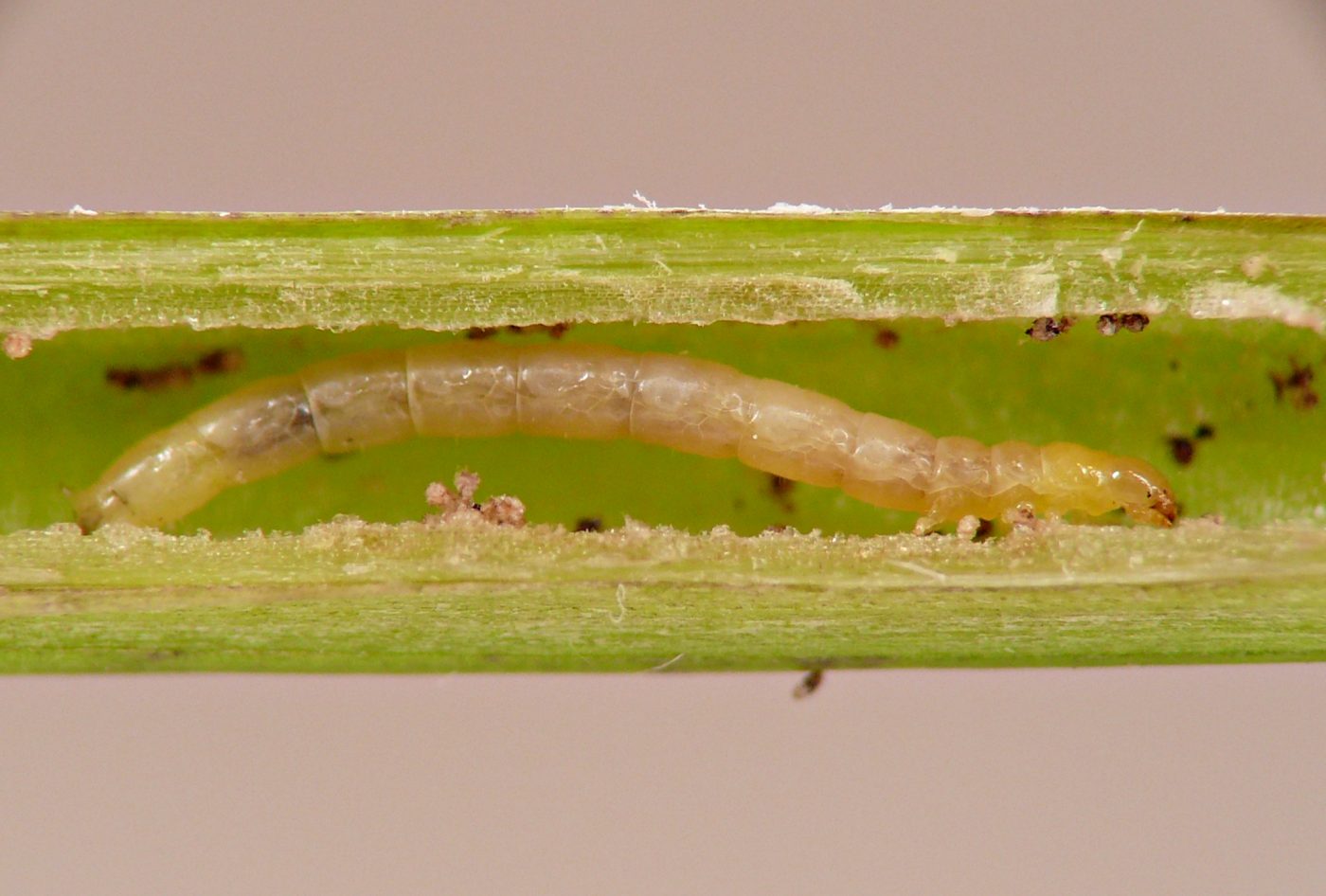
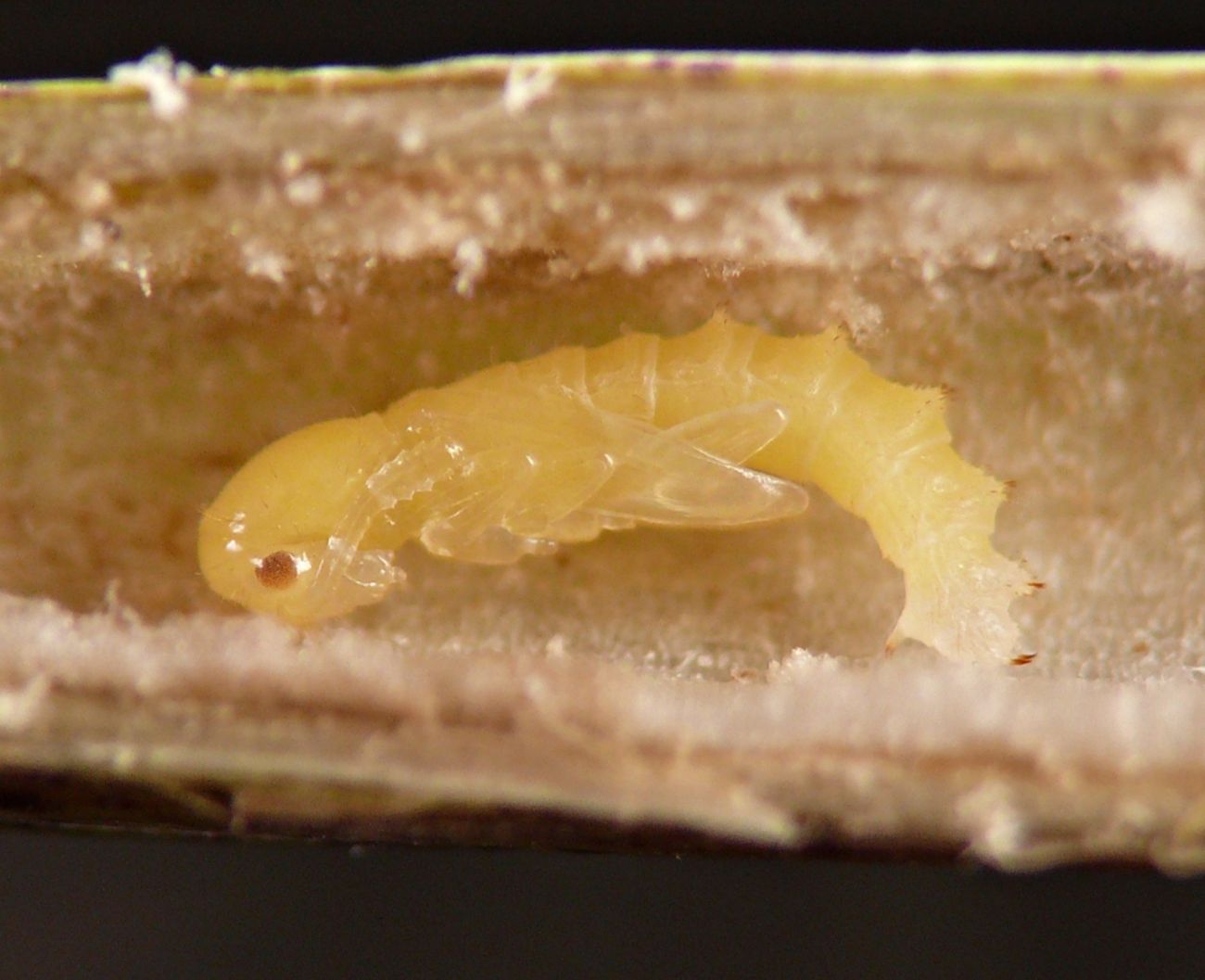
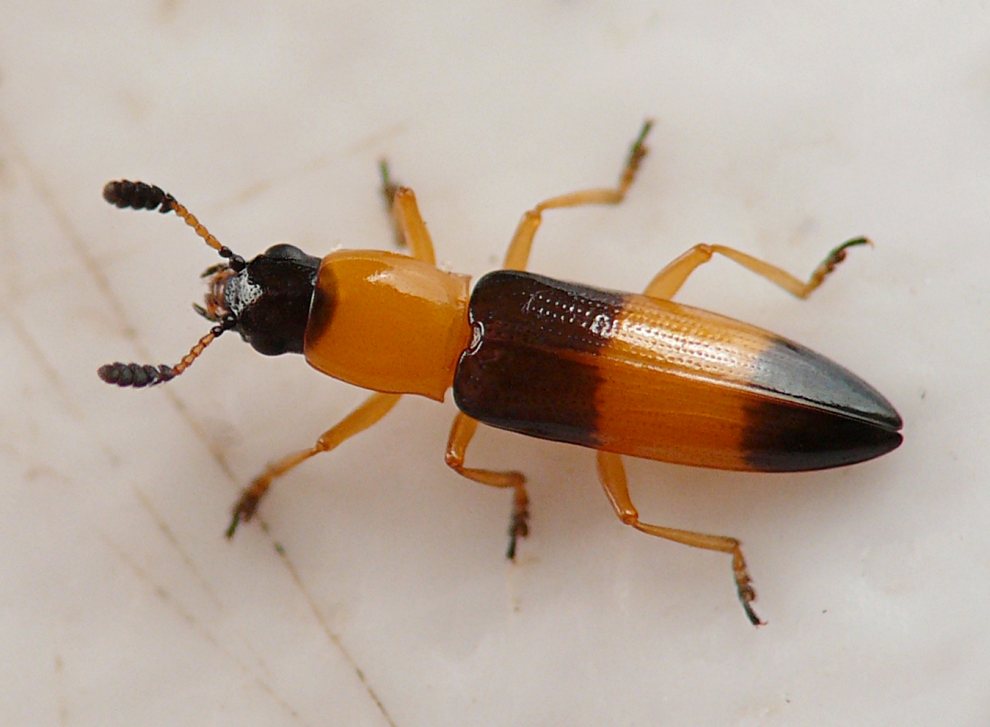
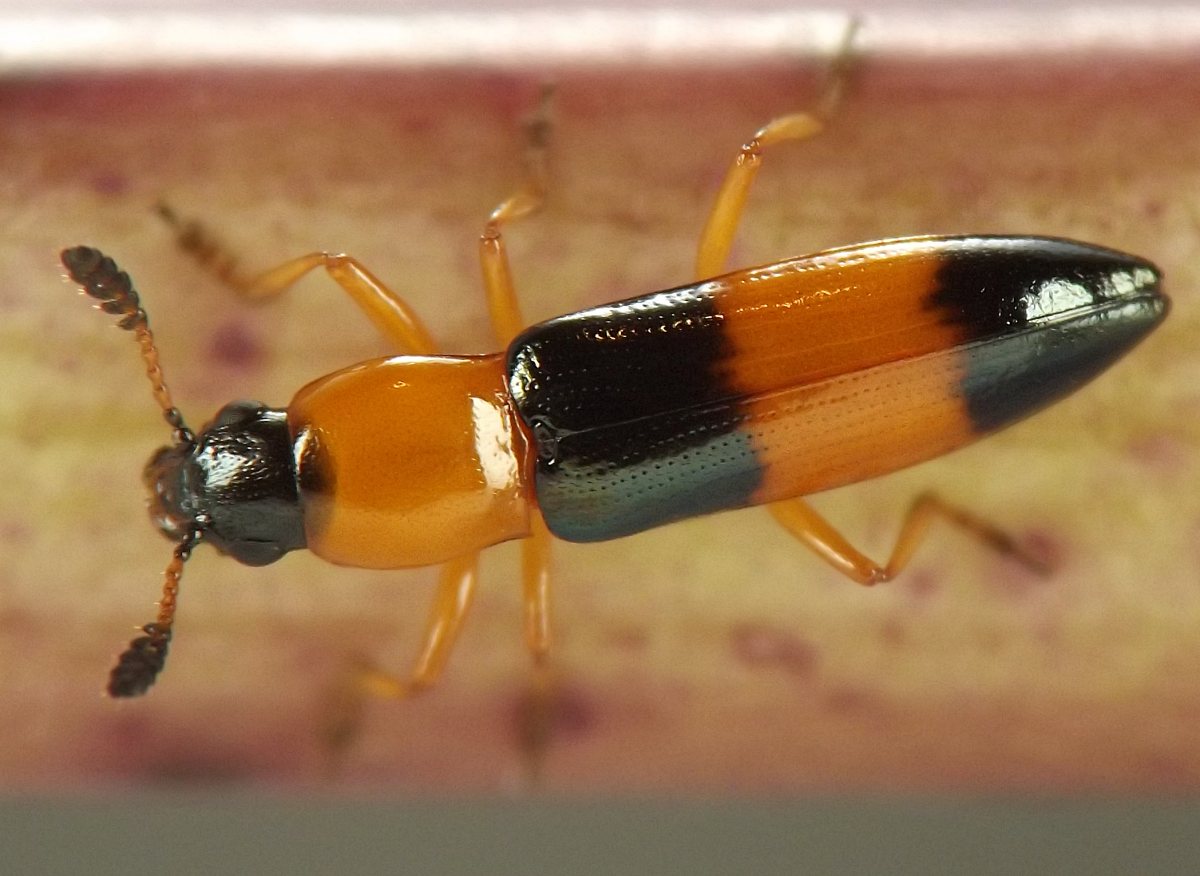
The larva of this beetle tunnels in the stem of the host. Because Monarda fistulosa stems are at least partially hollow, much of the larva's feeding involves excavating the layer of pith lining the inner walls of the stem. Two larvae collected from late June to mid-July emerged as adults at the end of July. Both larvae were yellowish in color, not orange like most larvae of a more common species of lizard beetle (Acropteroxys gracilis) encountered in the current study; the pupa was also yellow. Additionally, I located a deceased adult in a tunneled stem of the host in winter, after the stem had long since senesced. The adults all appeared externally similar to Languria trifasciata, based on images of that species at BugGuide.net (VanDyk 2024d).
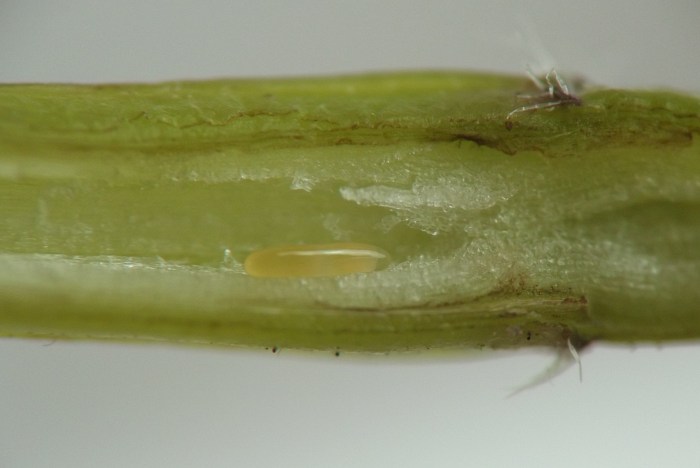
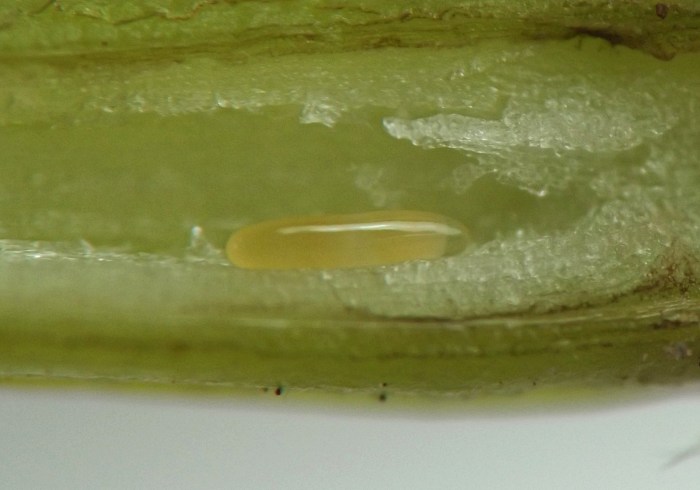
Additionally, I hypothesize that an egg I found in the stem of a spring shoot belonged to this species, based on similarities with erotylid oviposition observed in an unrelated host (J. van der Linden, unpublished data; also note Tangren and Frye 2020). I've included the egg record, though uncertain, on this page in the images below for the sake of completeness. Given the fact that L. trifasciata has been reported from the Northeast and Midwest at least as early as mid- to late April (Carr and Alexander 2013, Moorehouse and Hedlund 2022), it does not seem unreasonable to suppose that at least some adults could lay eggs in spring shoots of their host plants.
L. trifasciata has been previously reported as a stem borer in Lactuca canadensis (Chittenden 1904).
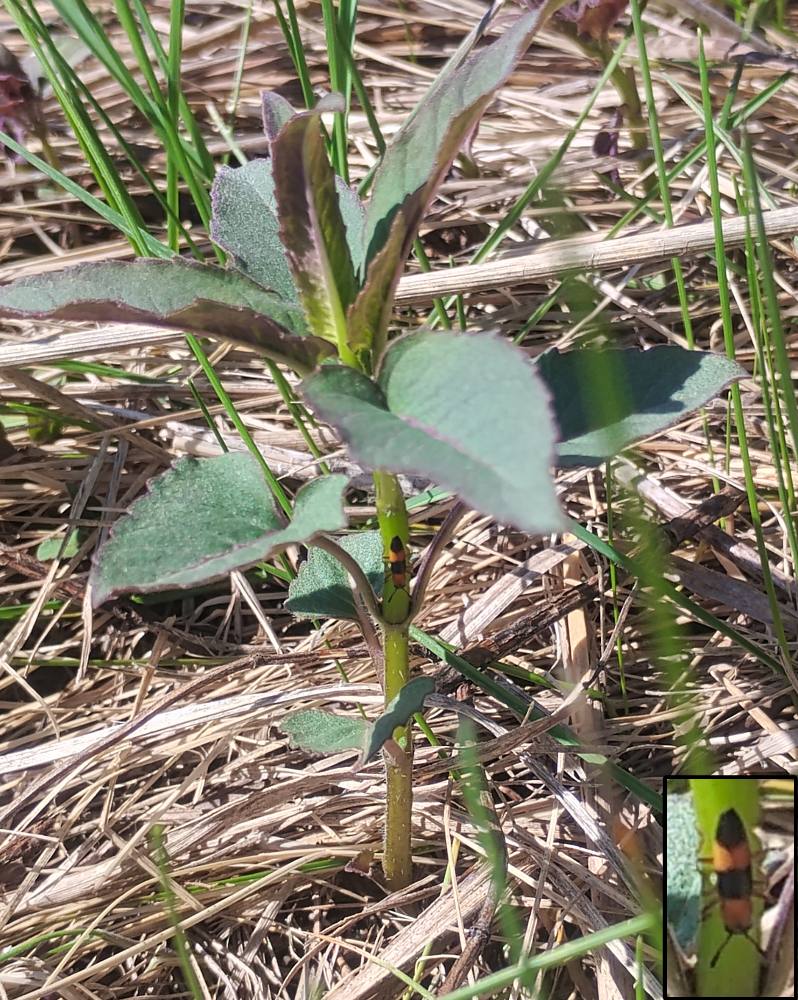
UPDATE, 2026: On 16 April, during a warm and sunny afternoon in a somewhat unusually early spring, while examining young Monarda fistulosa shoots for sign of the Pseudopostega on this host (record 0339), I came across an adult Languria cf. trifasciata lizard beetle resting on the stem of one of the shoots. After checking to see if the beetle was actively ovipositing (it was not), I moved my camera close to the shoot at several angles in order to take photographs, brought my hand near the stem, and even bent the shoot over gently for a better view. In response to these actions, the beetle adjusted position quickly and capably, sometimes moving to a different part of the shoot, but it refused to leave the shoot and always returned to the same location on the stem after I retreated. I did not observe egg-laying, but the beetle's fidelity to the stem suggested to me that its behavior was related to oviposition. This would also be consistent with my previous finding of a tentatively identified erotylid egg inside the stem of a shoot in early spring 2023 (images 338-11 through 338-13).
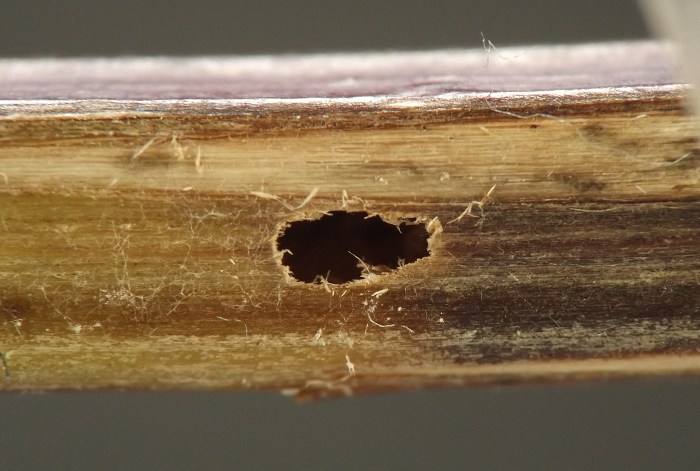
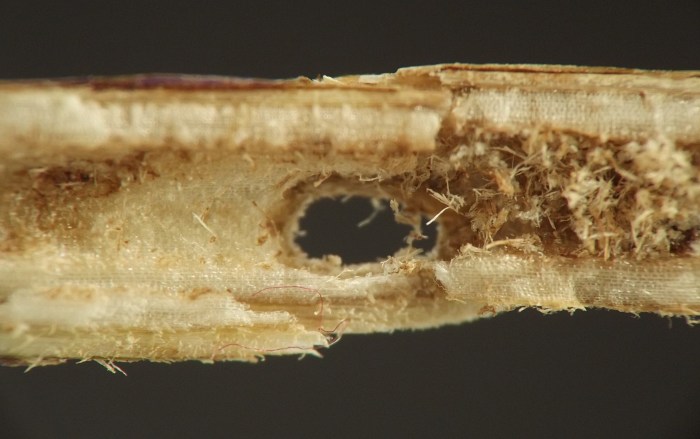
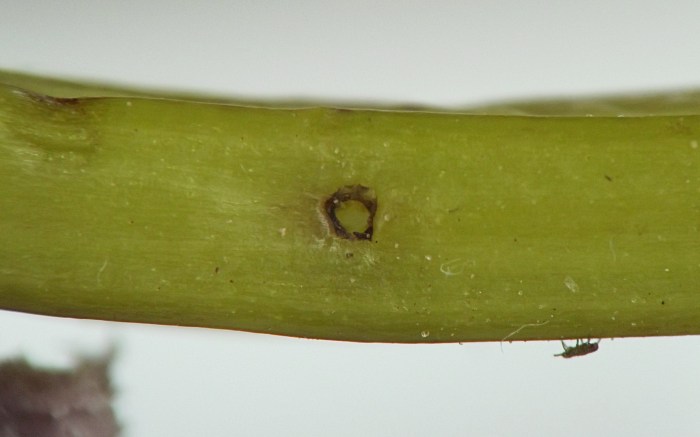
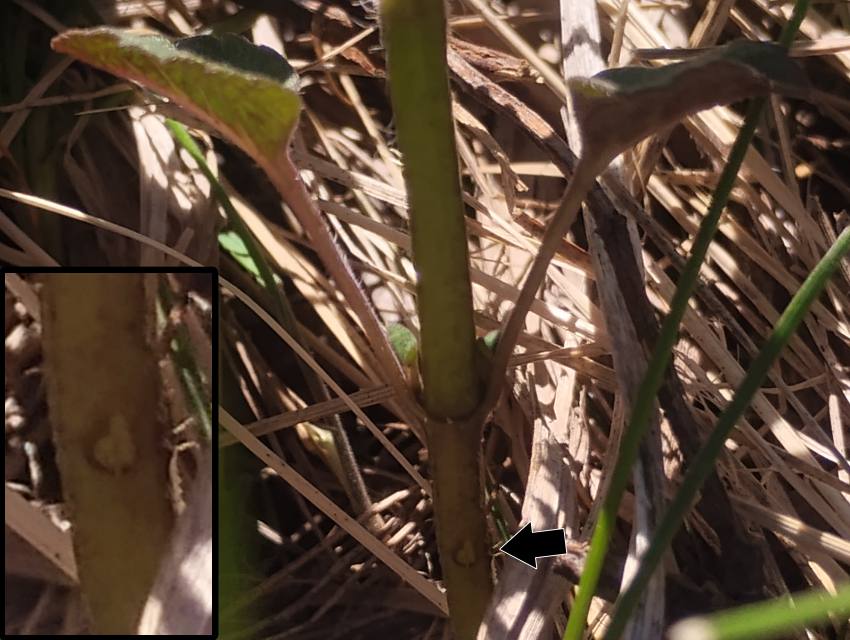
I also observed a hole in the lower portion of the 16 April 2026 shoot near ground level (image 338-24), but I could not definitively link this to the presence of the adult beetle. On further reflection, though I had no clear evidence for this, the presence of the hole made me wonder if there was any possibility the beetle could be guarding the stem after having laid an egg in it. Chaboo and McHugh (2010) note that several authors have documented maternal guarding of offspring in Erotylidae, and while "guarding of egg clutches has not been described for any erotylid species, [it] could be predicted from the observed guarding of larvae" (p. 116). A perhaps simpler explanation in this case is that the beetle I observed was planning to lay an egg in this stem after having sought it out it as an ideal choice among the Monarda stems available to it, and thus it did not wish to abandon the stem.
Trager (2010) also photographed a Languria trifasciata adult perched on a Monarda fistulosa stem in the Midwest during spring.
 Prev
Prev
- Carr, J.F. and Y. Alexander. 2013. What's red and black and eats pollen? - Languria trifasciata. Contributor post on BugGuide.net. Retrieved November 6, 2023 from https://bugguide.net/node/view/763617.[return to in-text citation]
- Chaboo, C.S. and J.V. McHugh. 2010. Maternal care by a species of Pselaphacus Percheron (Coleoptera: Erotylidae: Erotylinae) from Peru. The Coleopterists Bulletin 64(2): 116-118.[return to in-text citation]
- Chittenden, F.H. 1904. Biologic notes on species of Languria. Journal of the New York Entomological Society 12: 27-30.[return to in-text citation]
- Moorehouse, A. and T. Hedlund. 2022. Languria trifasciata lizard beetle - Languria trifasciata. Contributor post on BugGuide.net. Retrieved November 6, 2023 from https://bugguide.net/node/view/2108993.[return to in-text citation]
- Tangren, S.A. and C.T. Frye. 2020. Clover stem borer infestation in sundial lupine: recognition and consequences. Natural Areas Journal 40(2): 121-128.[return to in-text citation]
- Trager, J.C. 2010. Languria (?) on Monarda fistulosa - Languria trifasciata. Contributor post at BugGuide.net. Retrieved April 18, 2026 from https://www.bugguide.net/node/view/397112/.[return to in-text citation]
- VanDyk, J., ed. 2024d. Species Languria trifasciata. Species page at BugGuide.net. Retrieved July 21, 2024 from https://bugguide.net/node/view/397212/bgimage.[return to in-text citation]
Page created: November 5, 2023. Last update: April 18, 2026