Internal feeder (Diptera: Cecidomyiidae) in Sanicula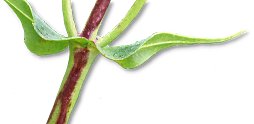
| Record no.: | 0491 |
|---|---|
| Feeding guild: | Local feeder / miner in petiole and stem |
| Taxonomy: | Diptera: Cecidomyiidae: Neolasioptera sp. |
| Stages observed: | trace, larva, pupa, adult |
| Distribution observed: | IA |
| Hosts in Sanicula: | undetermined S. sp. (sanicle, black snakeroot) |
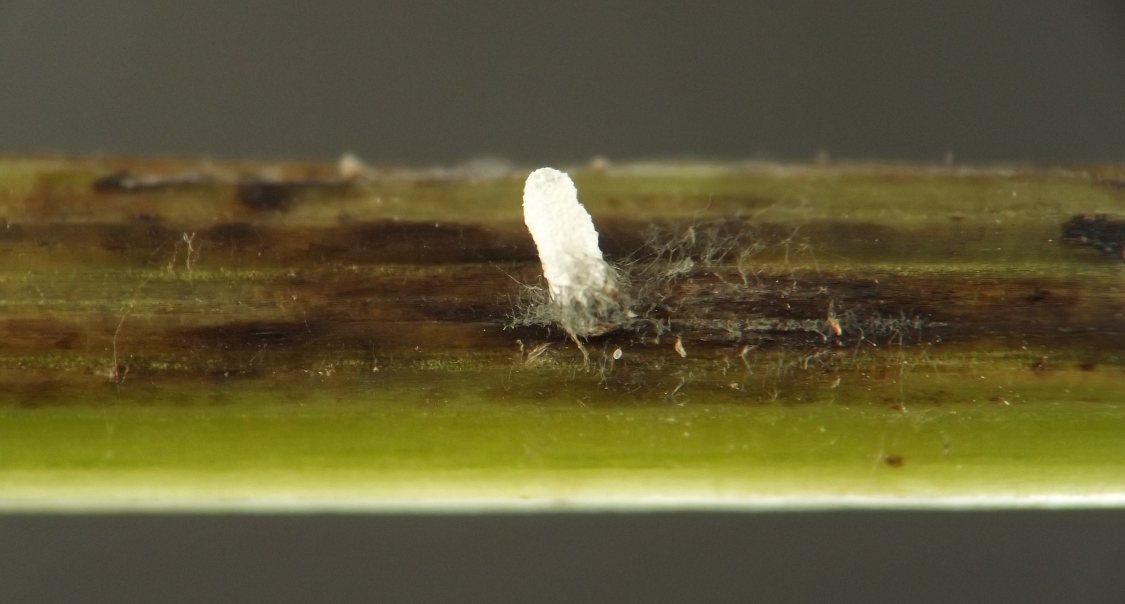
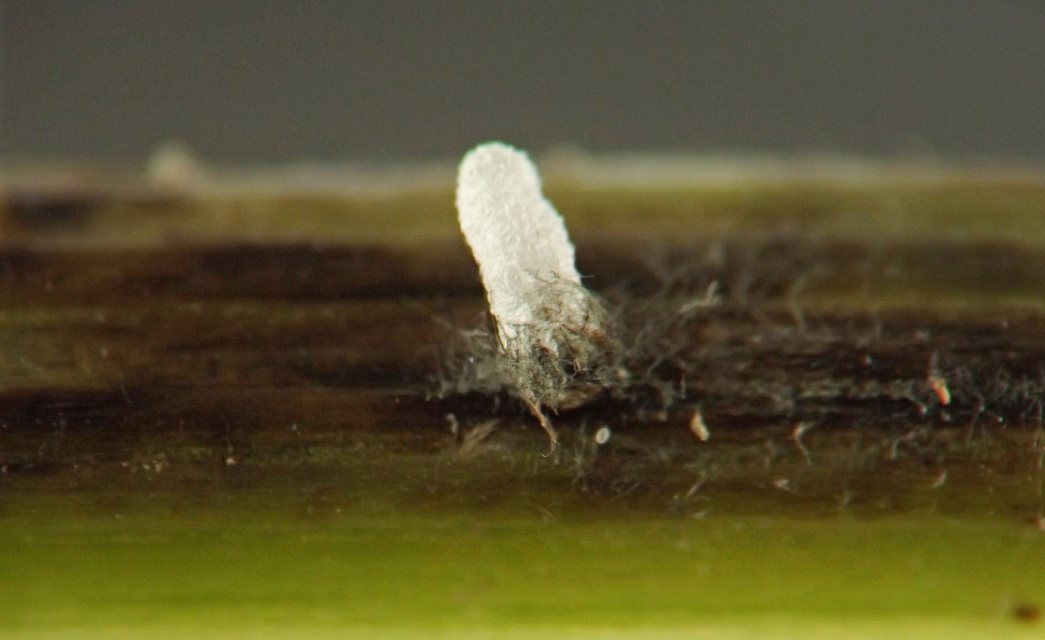
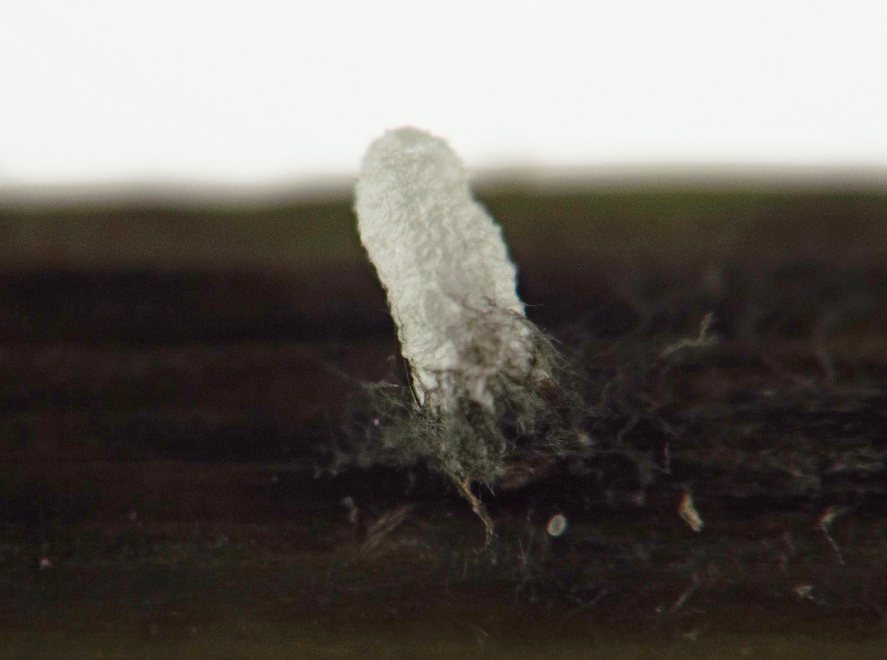
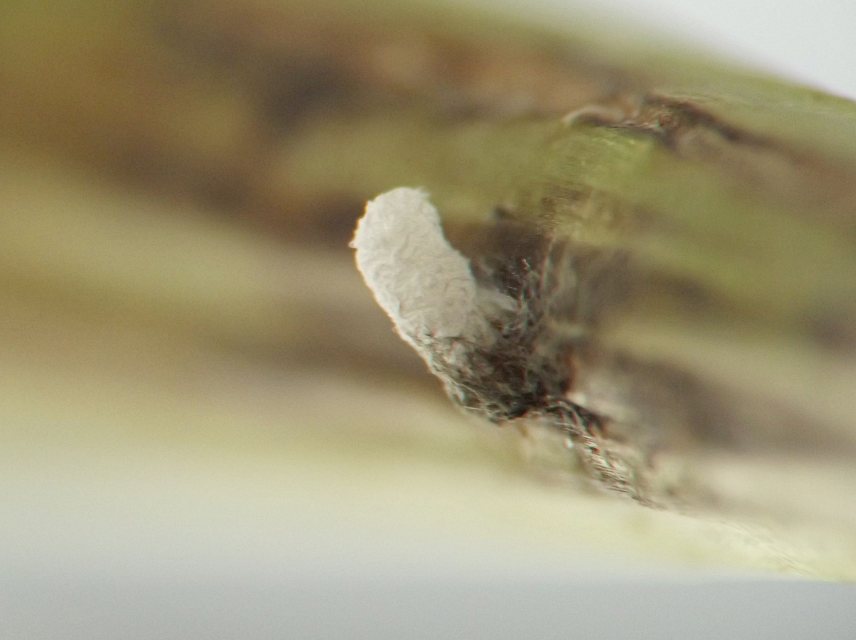
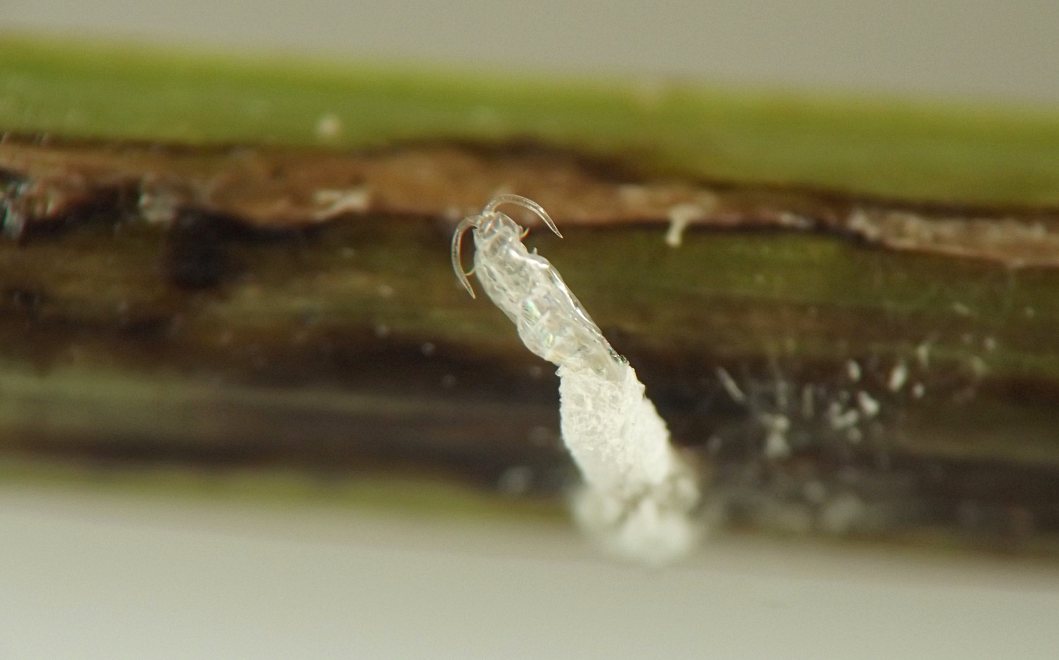
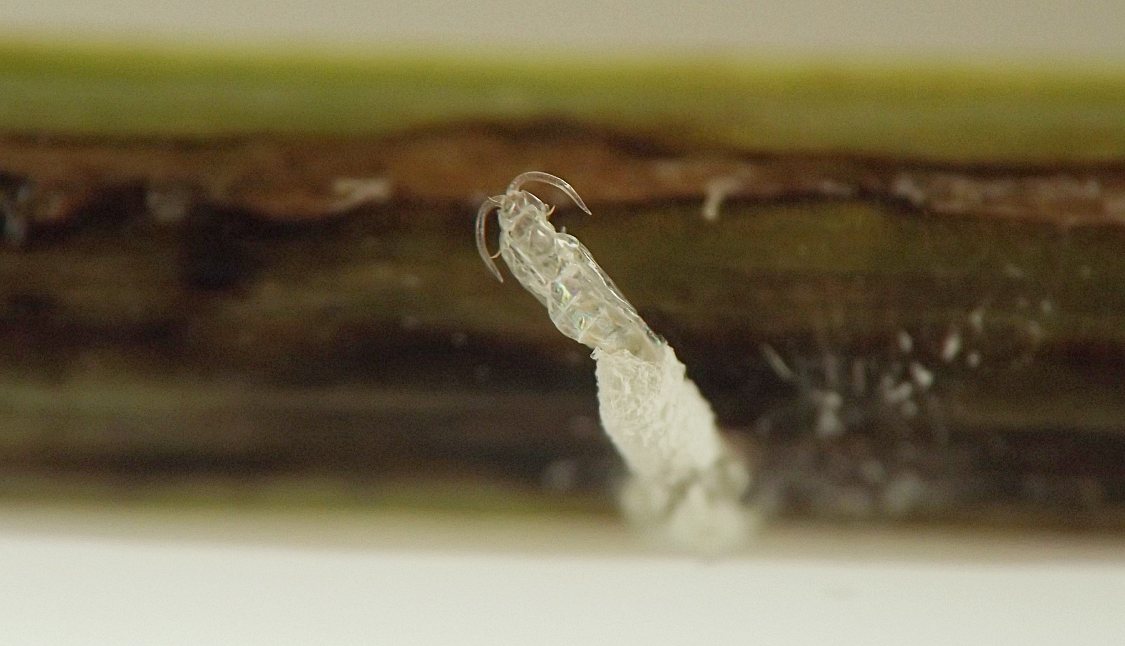
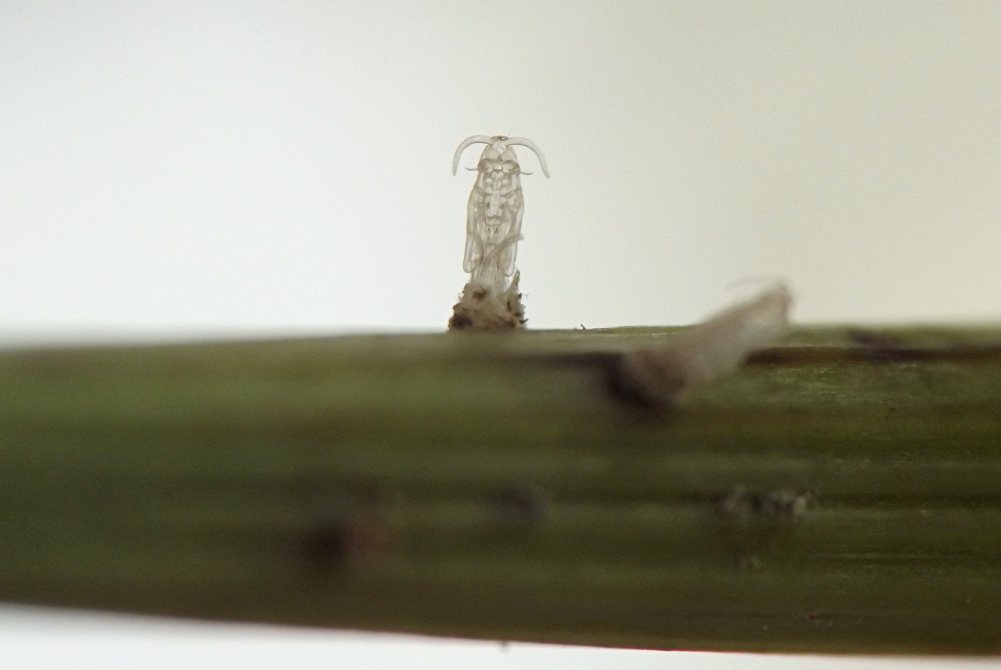
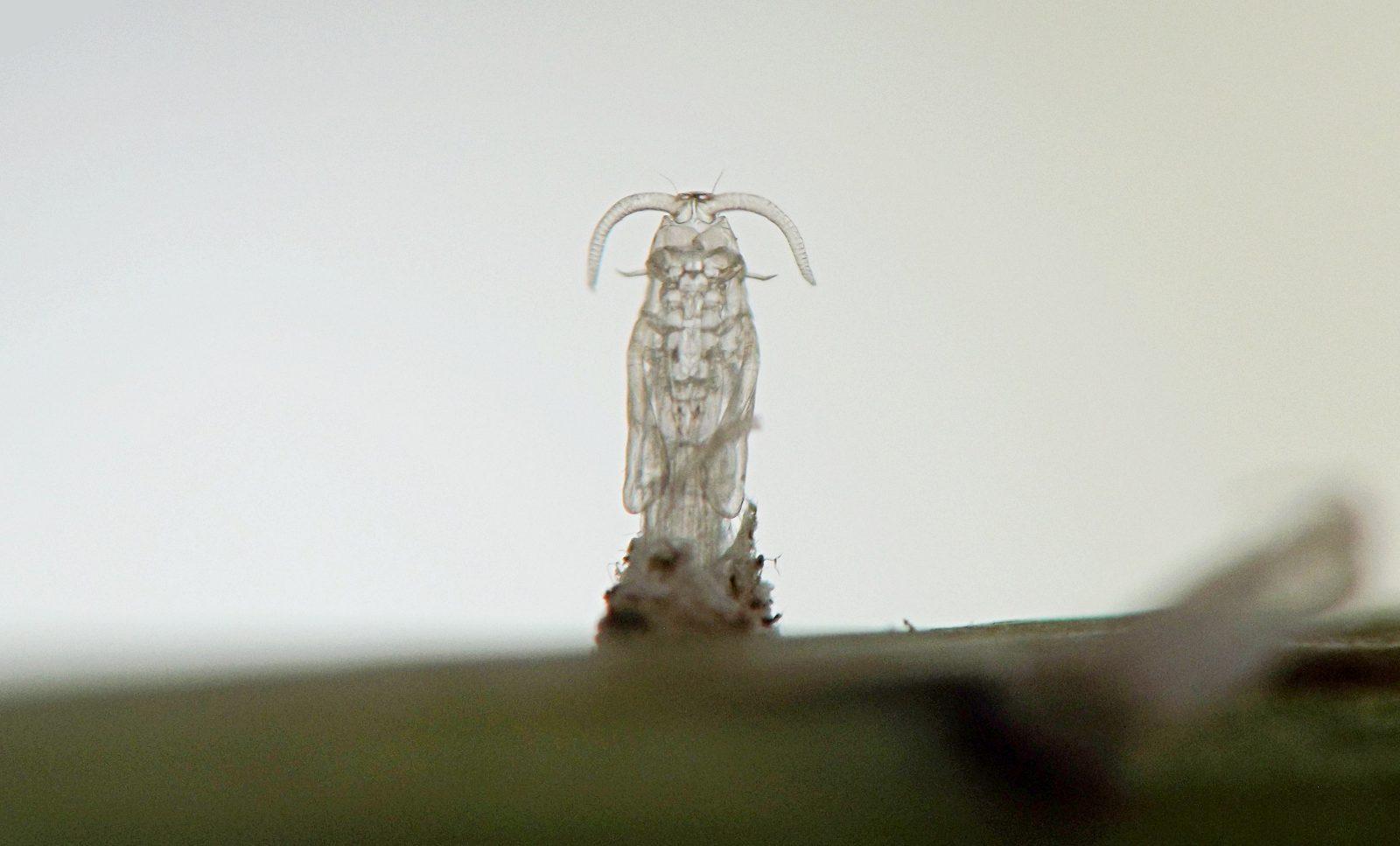
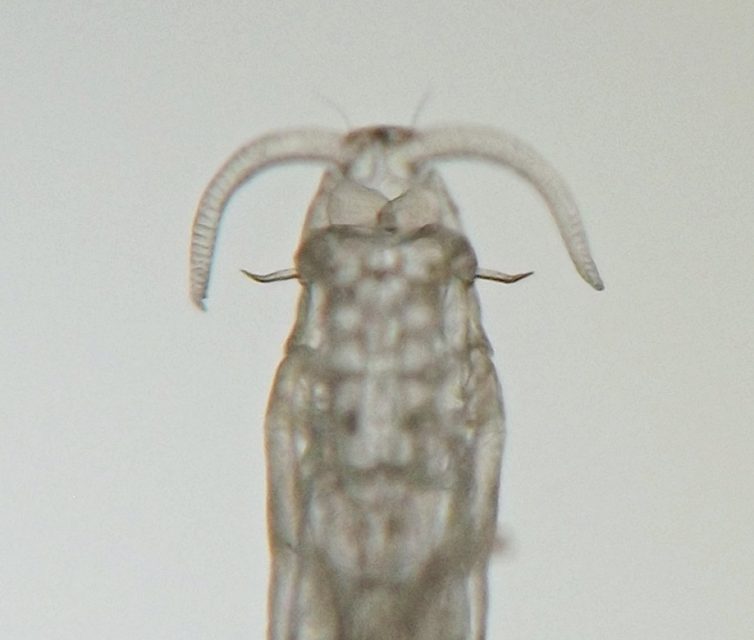
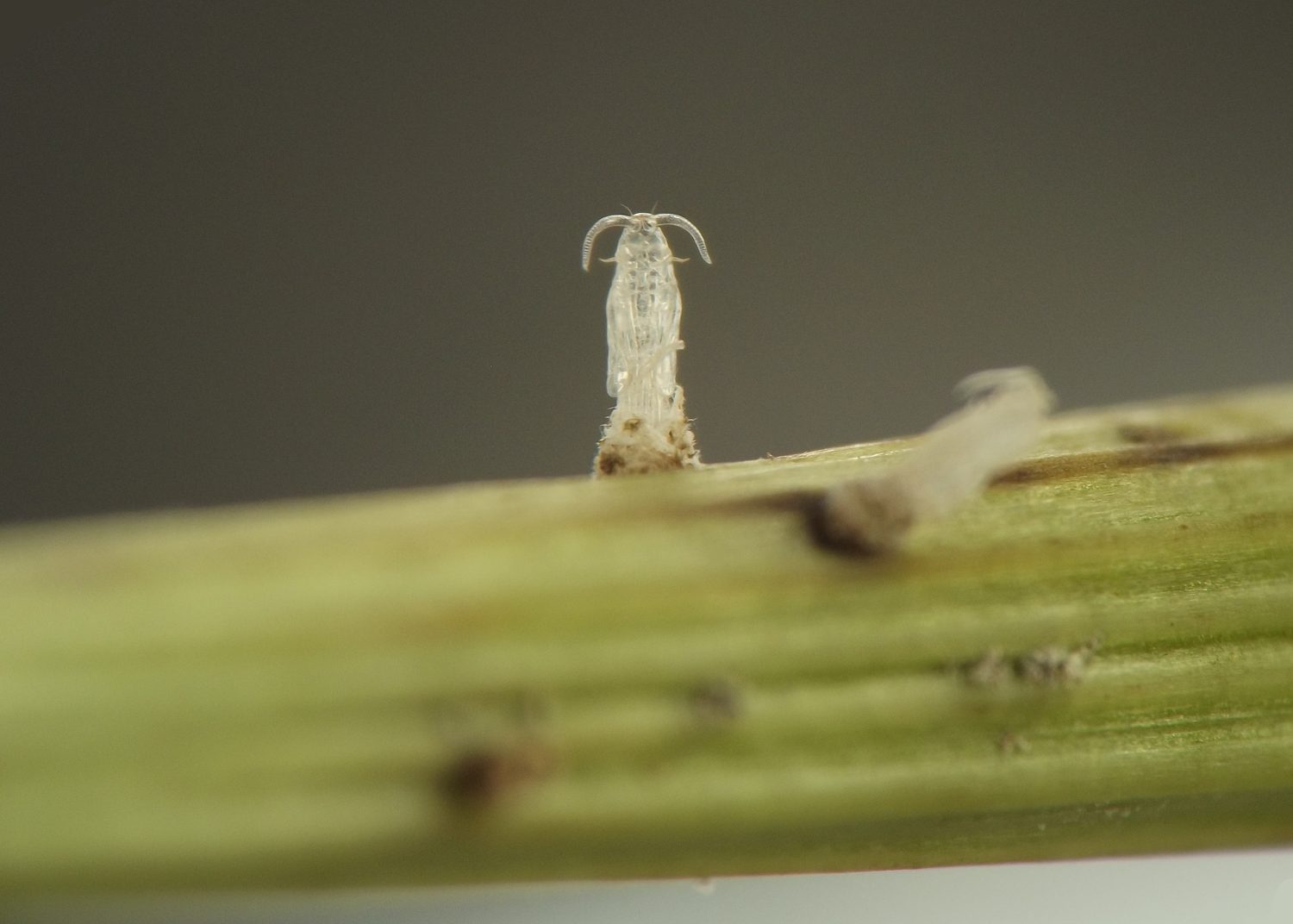
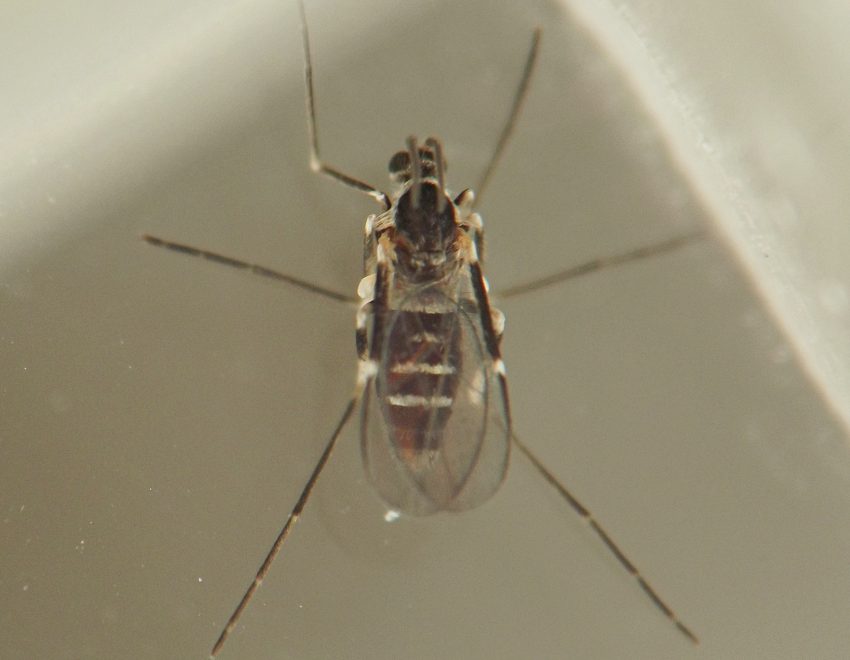
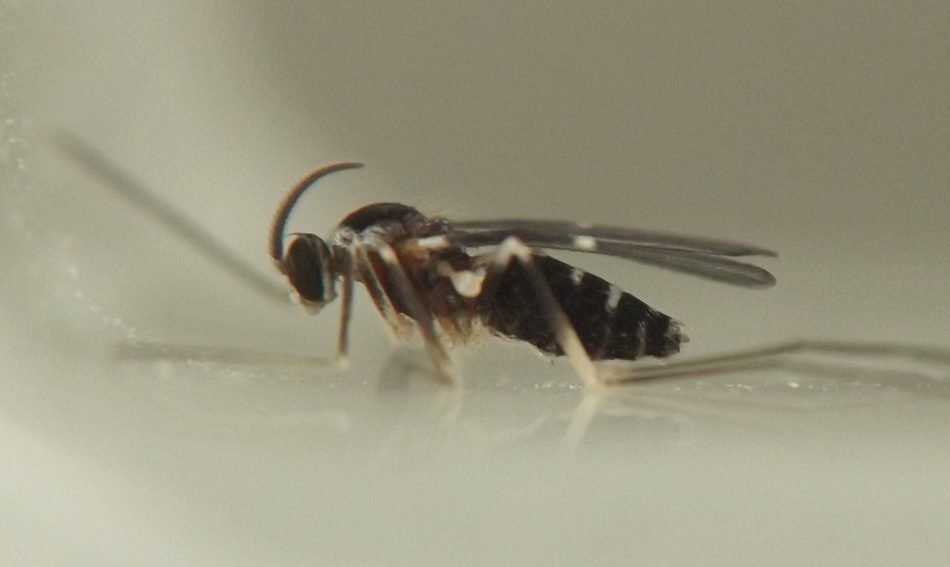
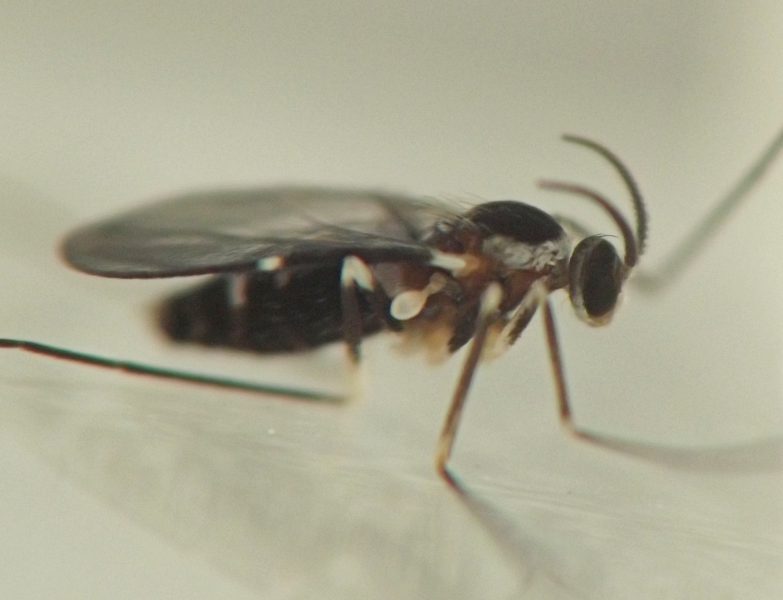
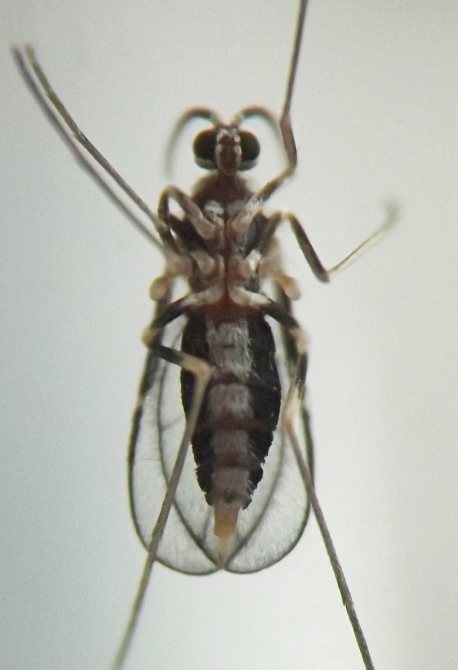
I observed this cecidomyiid inhabiting stems and basal leaf petioles in summer and autumn. One summer observation, made on 9 July, involved the upper portion of a main stem just below the lowest branching point of the inflorescence. The stem at this location featured several yellowish or brownish, minelike linear traces running parallel to one another along the long axis of the stem. By 17 July, a larvae inside one of these minelike traces had spun a white cocoon that protruded partway out of the stem (images 491-12 through 491-15). An adult emerged from this cocoon on 27 July, leaving its pupal exuviae protruding from the cocoon (images 491-16 and 491-17), and more adults emerged from the stem over the next week and a half.
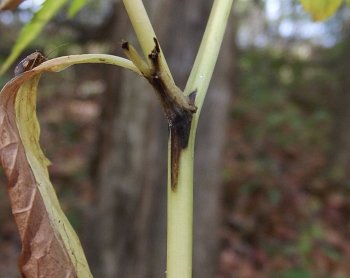
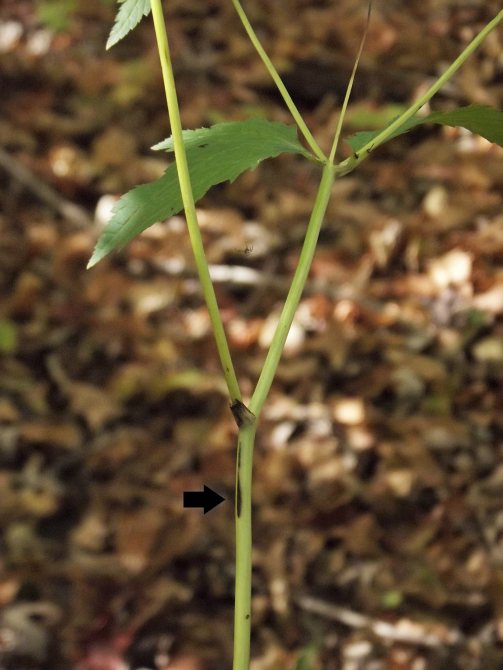
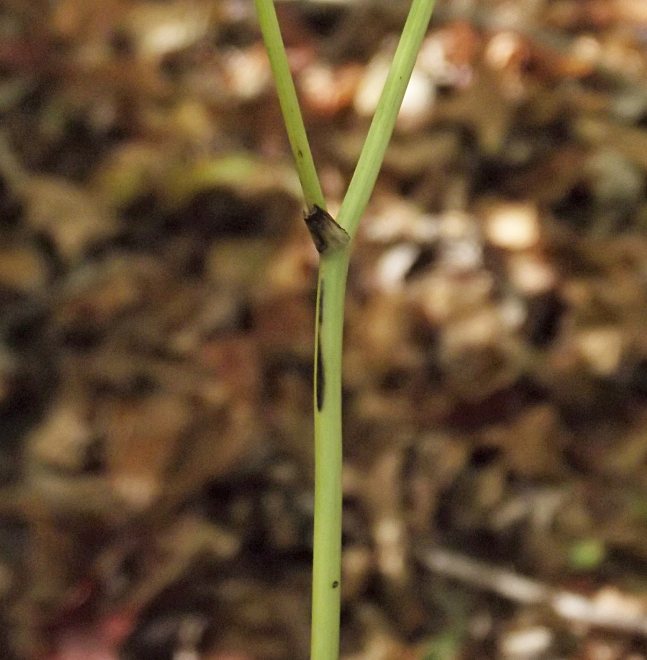
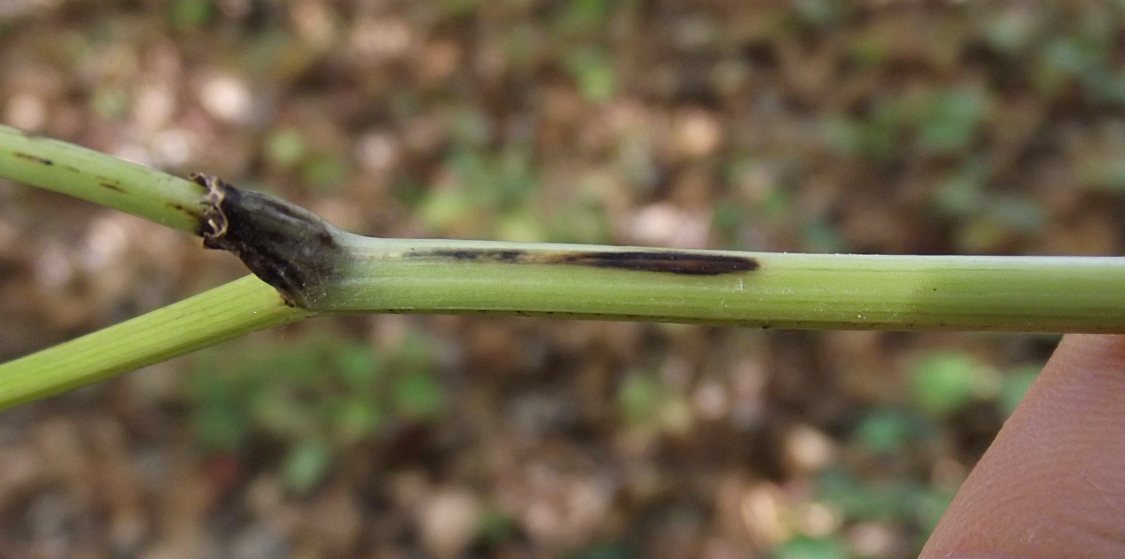
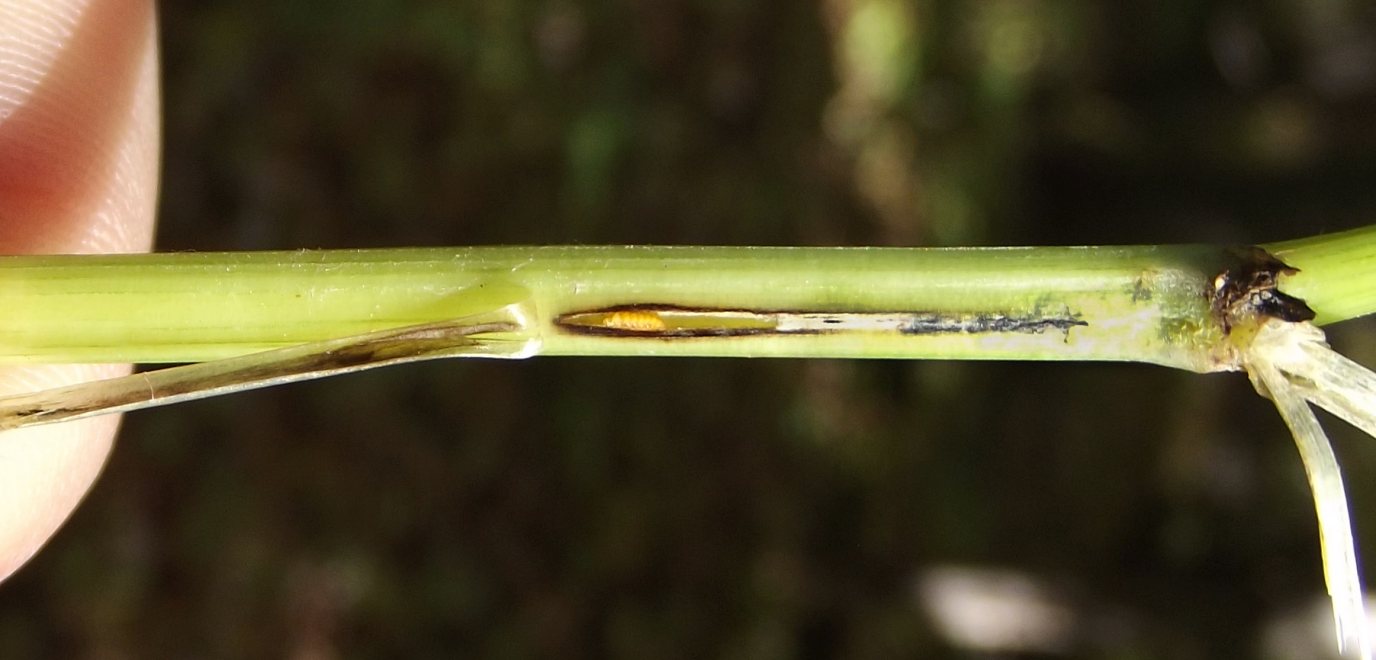
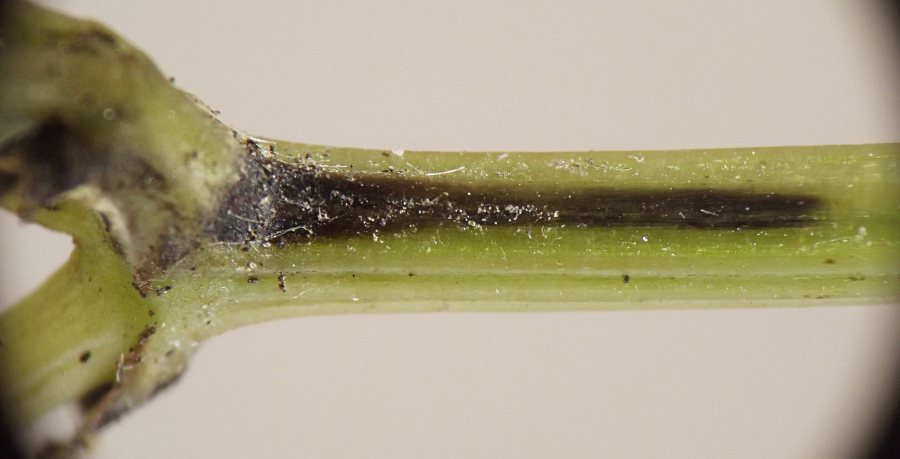
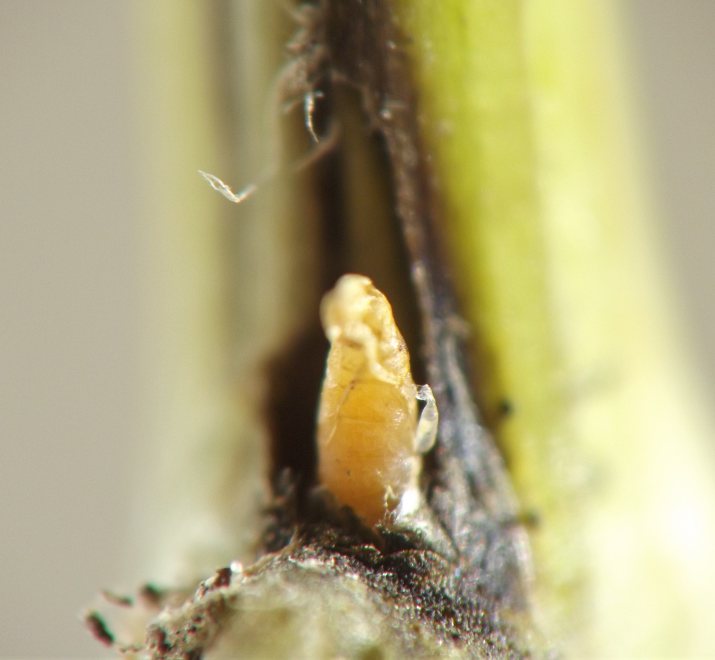
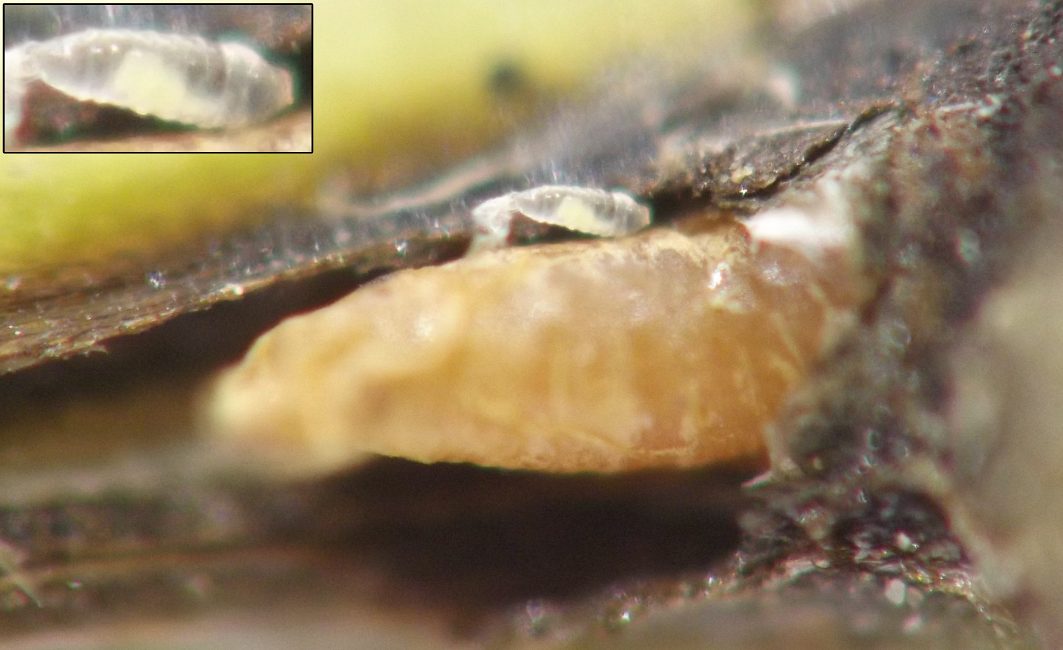
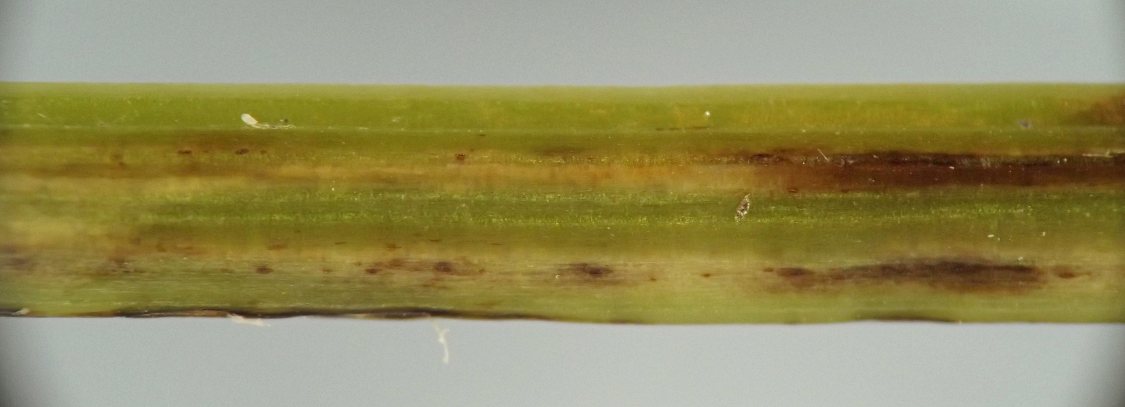
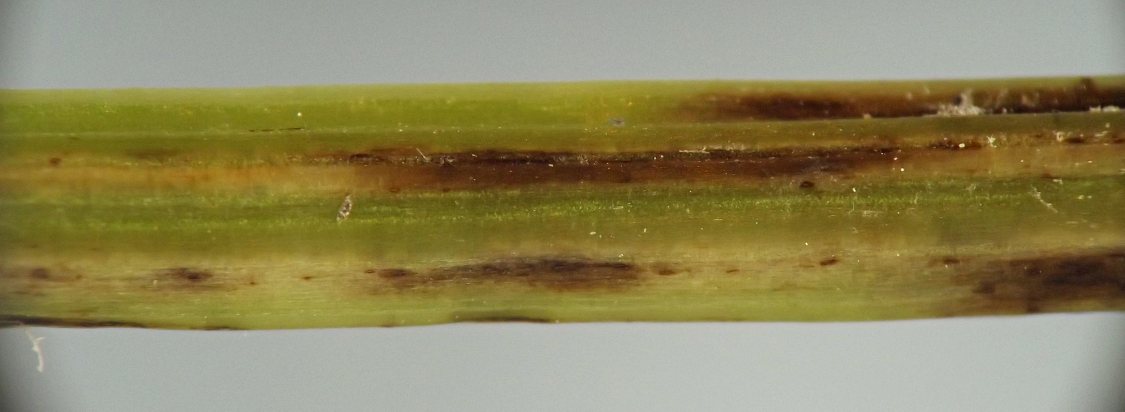
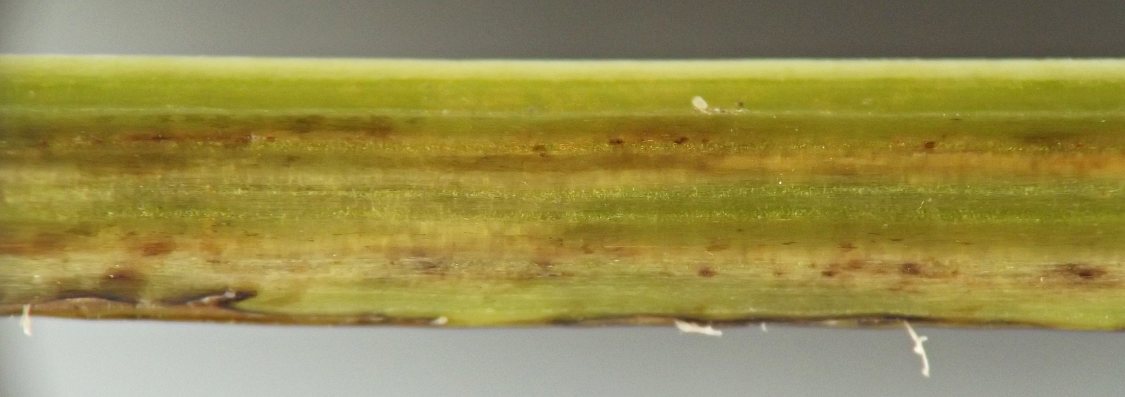
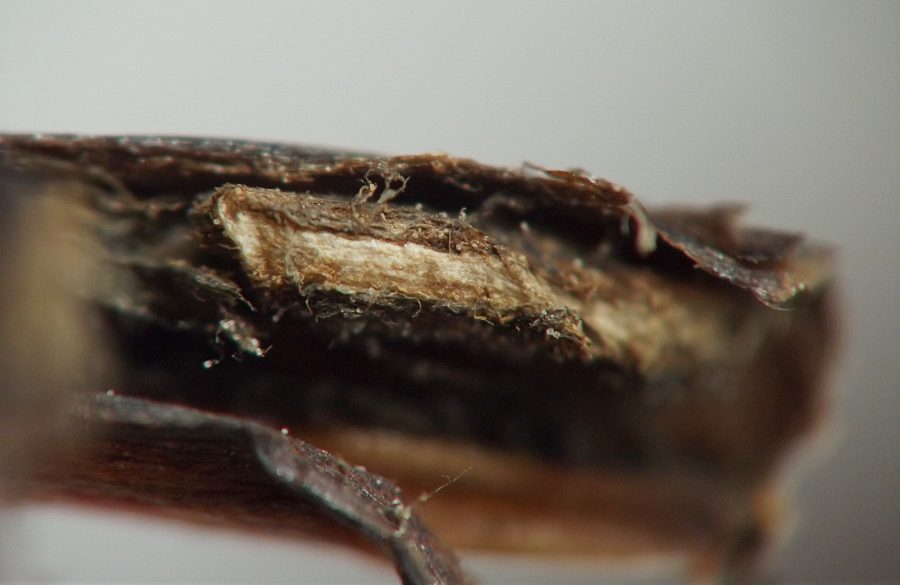
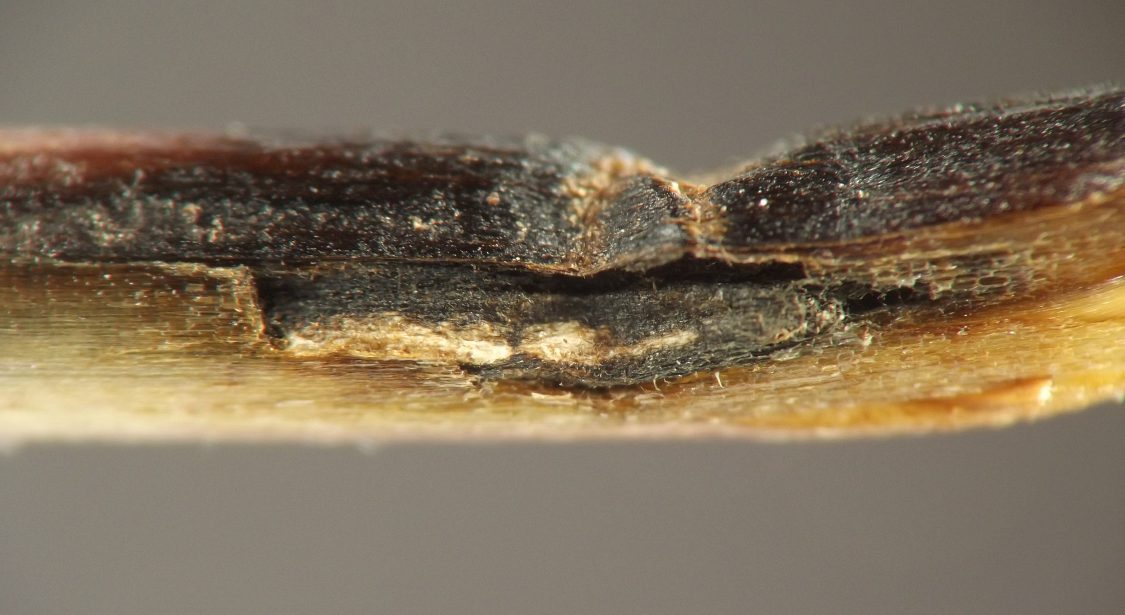
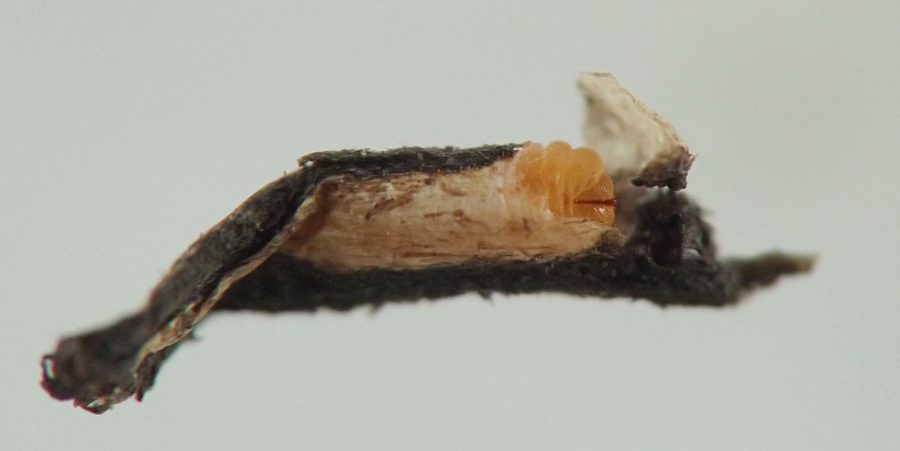
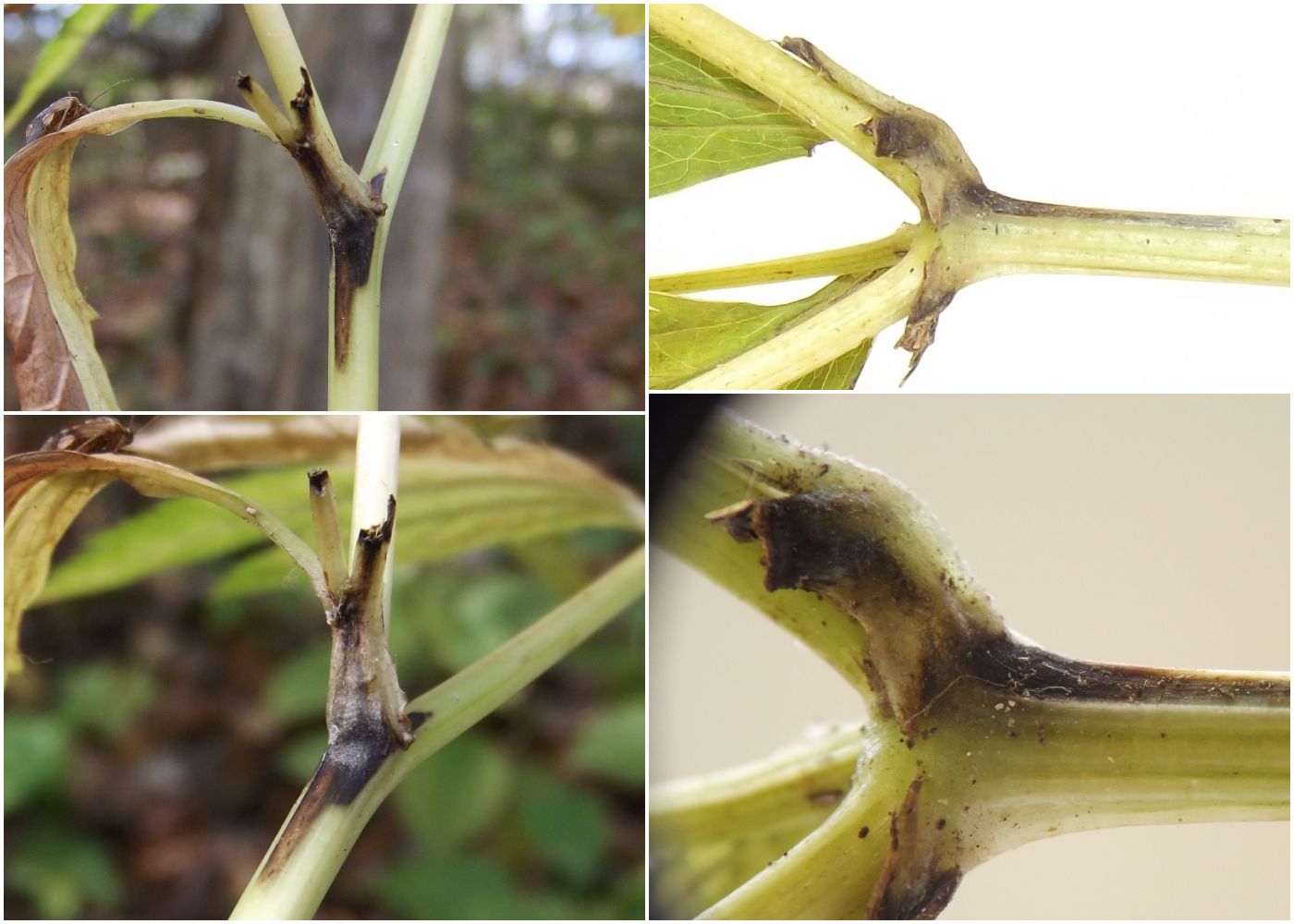
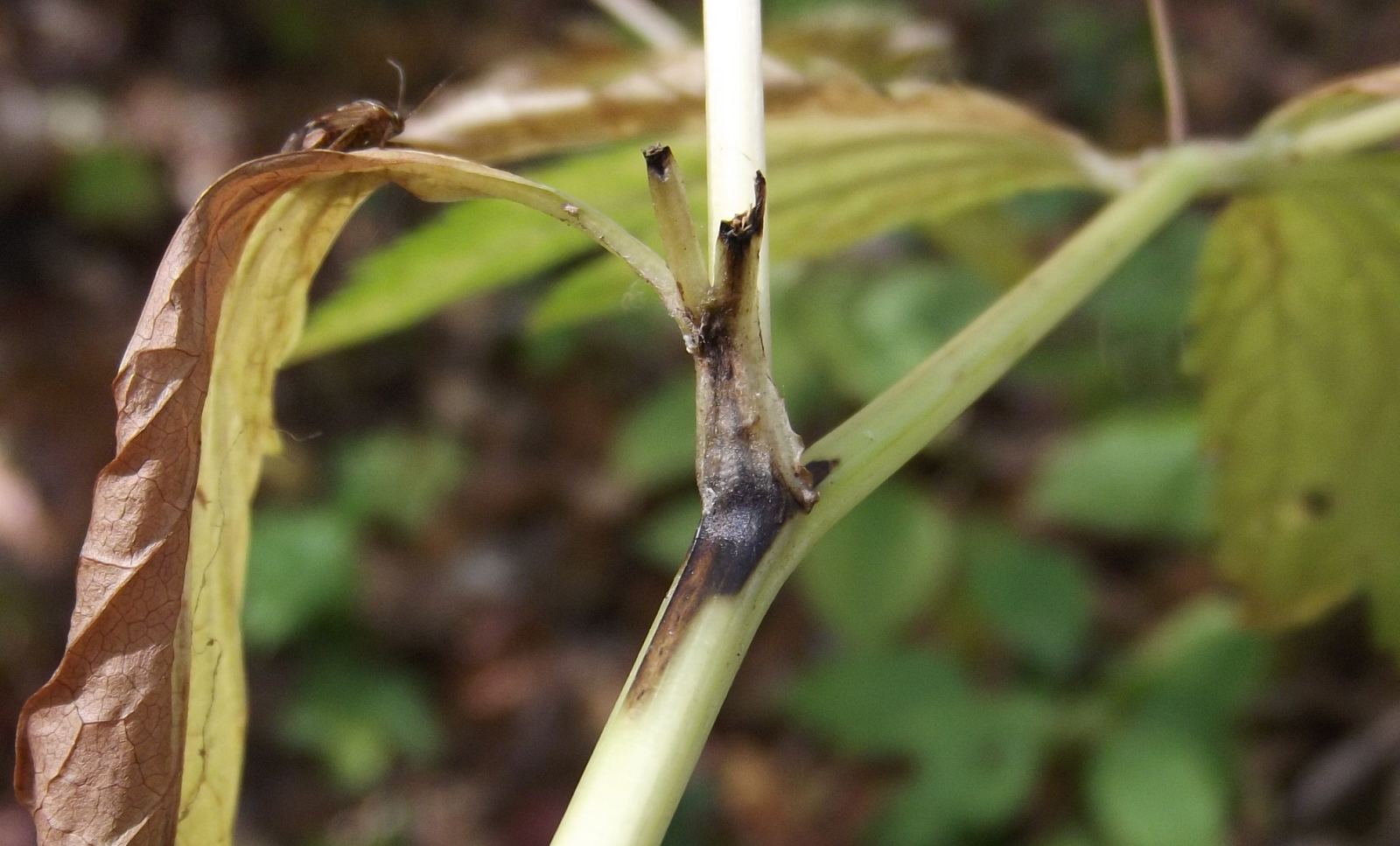
The autumn observations of inhabited stems, from late September and early October, involved several plants that each featured a short, linear, blackened area on the main stem just below the lowest branching point of the inflorescence (images 491-01 through 491-06 and 491-30 through 491-32). Each blackened region hosted a single larva in a chamber just under the outermost layers of stem tissue, the chamber elongated into a tunnel several centimeters in length in at least one instance (images 491-01 through 491-04). One larva I examined had a very tiny ectoparasitoid larva attached to it (image 491-32).
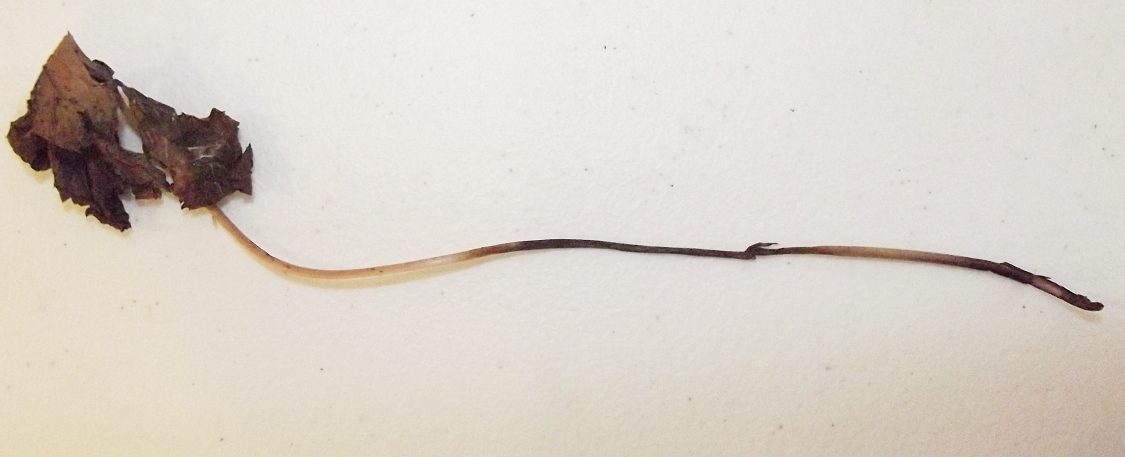
I also located inhabited basal leaf petioles in autumn. In one of these observations (images 491-26 through 491-29), the inhabited portion of the petiole was externally and internally blackened, with multiple orange larvae in whitish cocoons inside. At least one of the cocoons was mostly covered in an unidentified black material, probably hyphae of a symbiotic fungus (image 491-28).
R.J. Gagné (pers. comm., fall 2021) identified one of the petiole larvae as an undetermined Neolasioptera. The adults I reared from stem-dwelling larvae all appeared similar to confirmed Neolasiopteras I reared from other hosts in the survey, and I am including the individuals from summer stems and those from autumn stems and petioles all in this record, though I am unsure if they all belong to the same species.
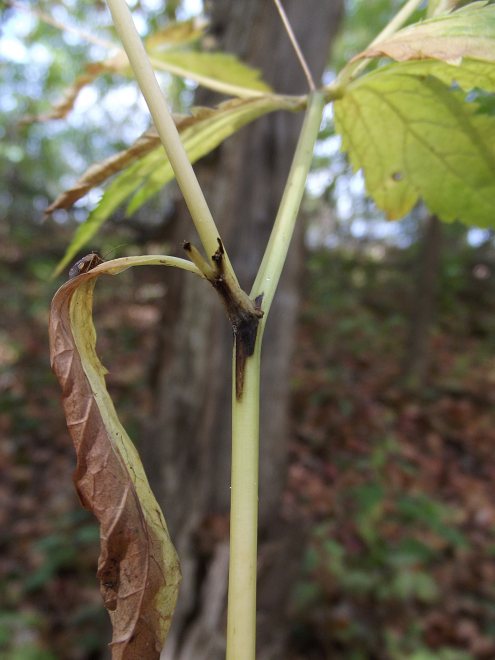
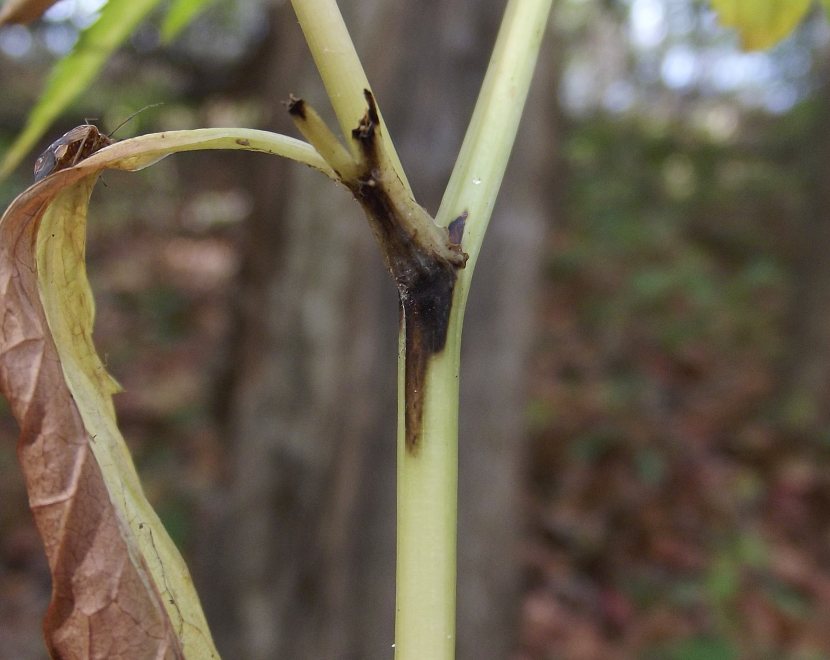
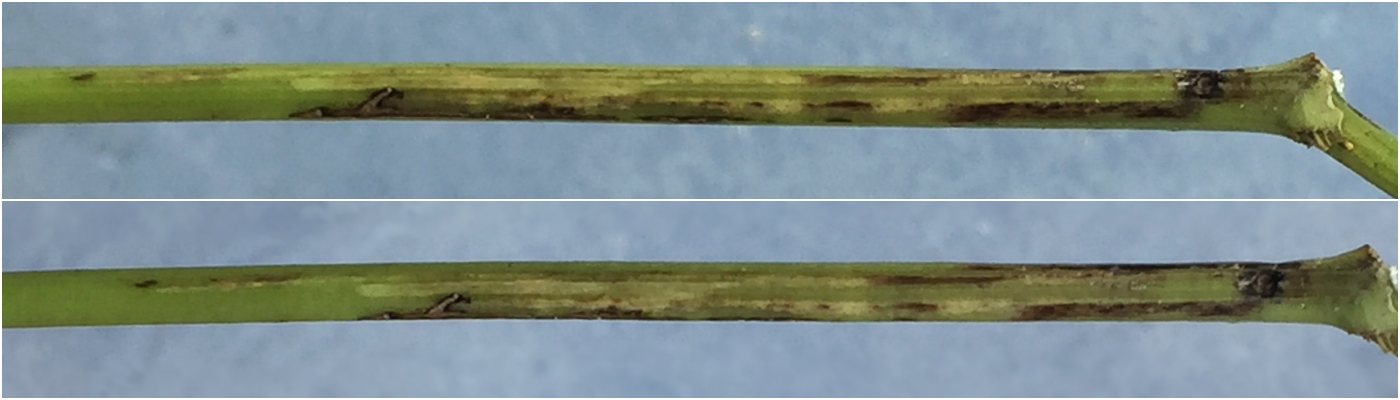
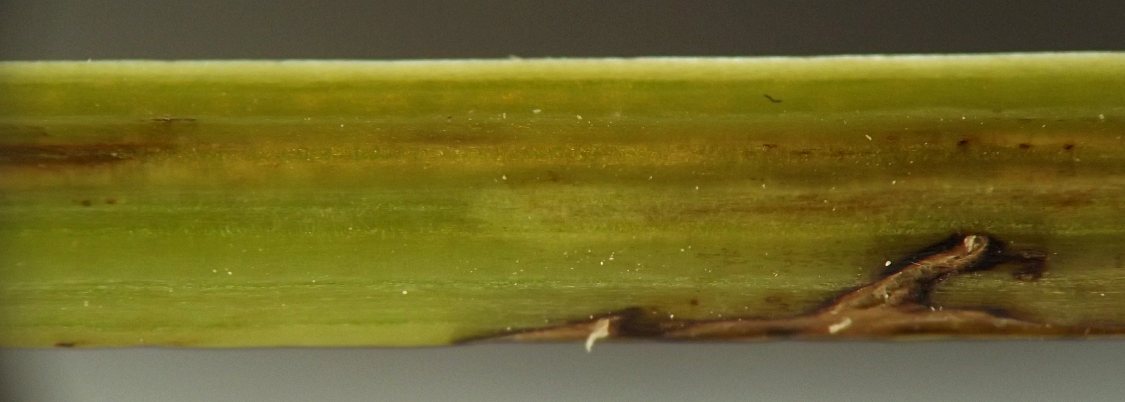
Finally, a further note on the plant damage wrought by this insect. In at least two of the affected stems I observed in autumn, the inhabited blackened region on the stem appeared to extend as a black line into the petiolule of one of the three leaflets of the adjacent, compound stem leaf (images 491-33 and 491-34), and this petiolule had broken so that the blade of the leaflet was missing. I hypothesized that the blackened region's extension into the petiolule had weakened the petiolule and thus eventually caused it to break, but I was unable to confirm this. Also in autumn, I found a Sanicula basal leaf with a blackened mine traveling from the leaf blade into the petiole, and the part of the mine in the petiole resembled the blackened regions in the autumn stems. I have placed this leaf mine observation in another record (0489) since the culprit was absent from the mine and I know of no records of cecidomyiids mining in leaf blades. However, the mine did share some similarities with the petiolule-to-stem blackened regions in the autumn stems, and, when combined with the minelike traces in the summer stems, it is tempting to speculate that the Neolasioptera may sometimes migrate from a leaflet into the main stem or petiole, or just for some distance along the main stem, in a manner similar to mining, but further study is needed. (Leaf terminology based on Master Gardeners of Northern Virginia 2026.)
 Prev
Prev
- Master Gardeners of Northern Virginia. 2026. Petiole, petiolule. Retrieved April 10, 2026 from https://mgnv.org/plants/glossary/glossary-petiole-petiolule/.[return to in-text citation]
Page created: April 10, 2026. Last update: April 10, 2026