Stem miner/borer (Diptera: Agromyzidae) in Silphium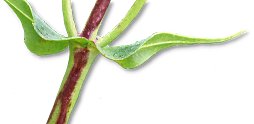
| Record no.: | 0506 |
|---|---|
| Feeding guild: | Stem miner/borer |
| Taxonomy: | Diptera: Agromyzidae: cf. Melanagromyza |
| Stages observed: | trace, larva, puparium, adult |
| Distribution observed: | IA |
| Hosts in Silphium: | S. perfoliatum (cup plant) |
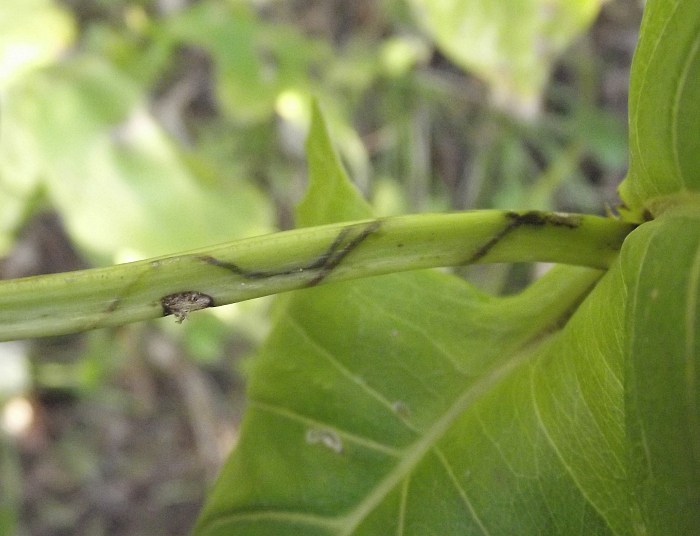
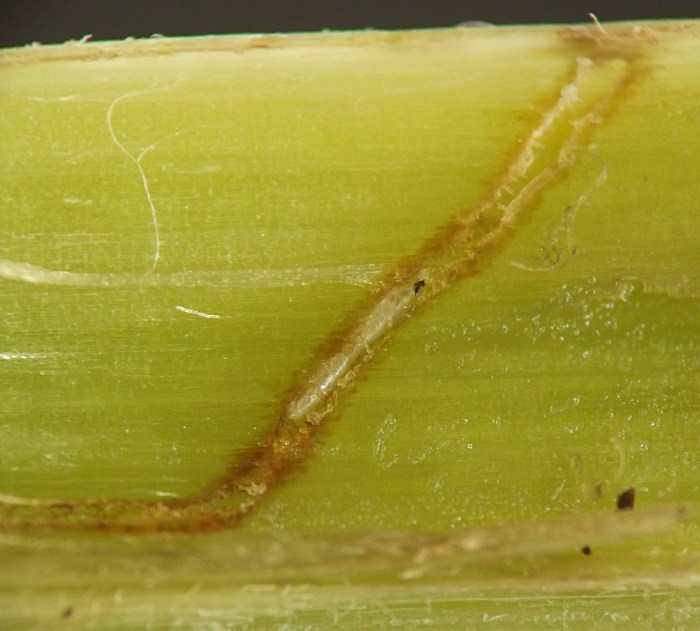
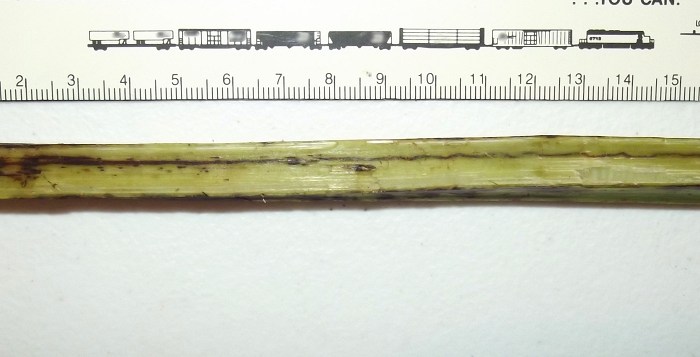
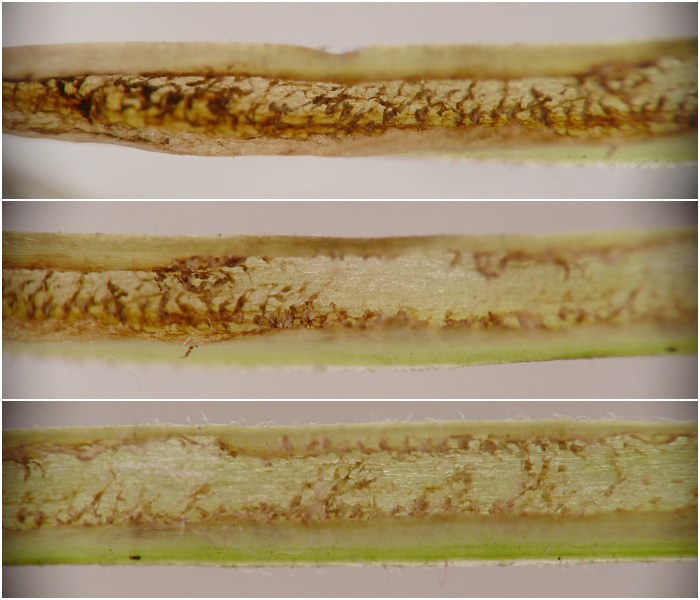
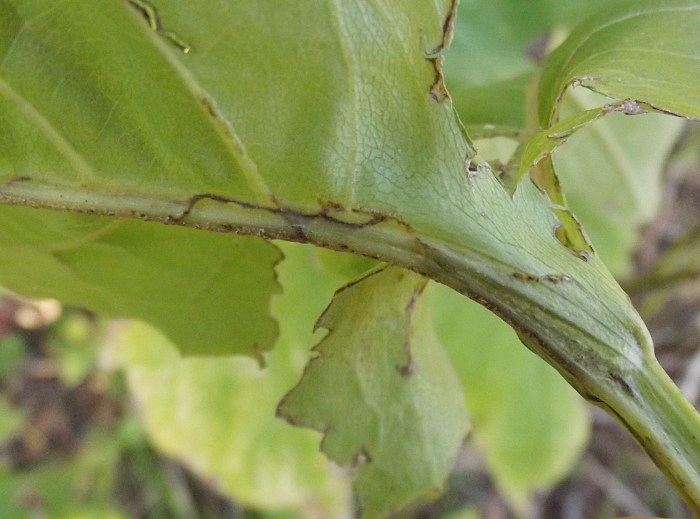
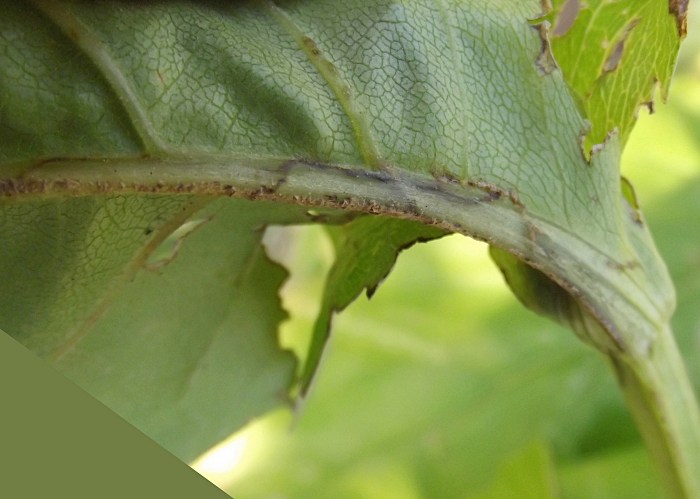
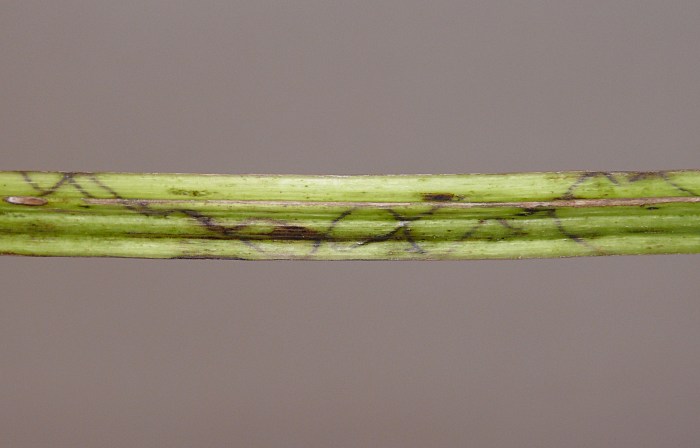
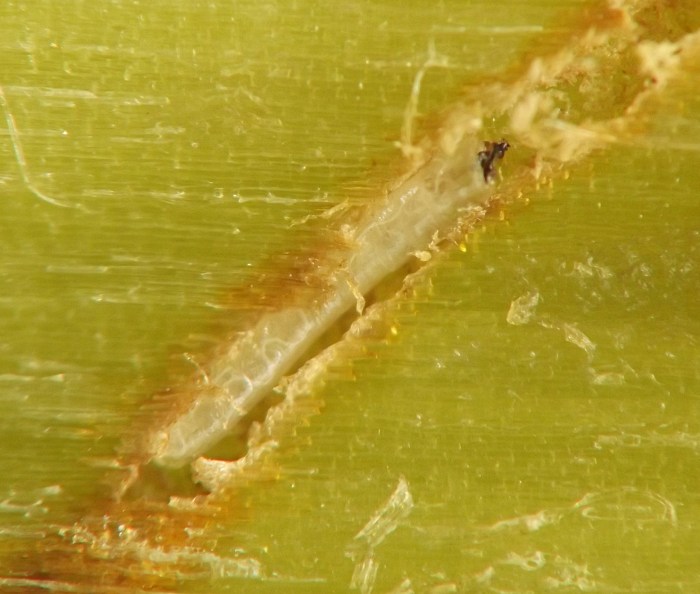
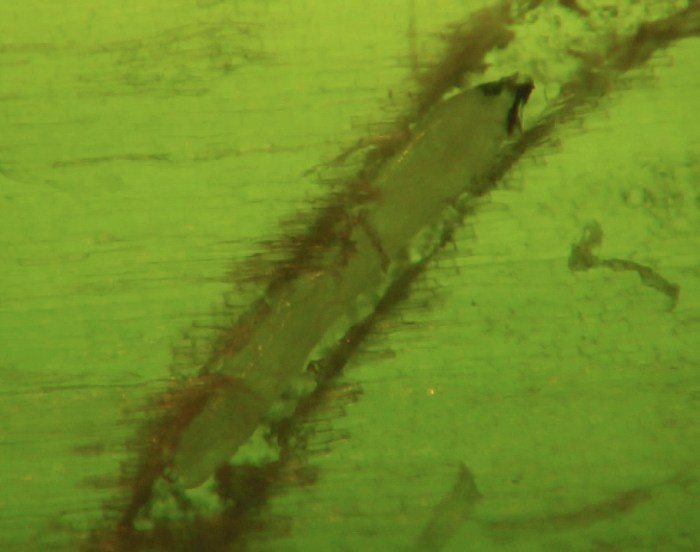
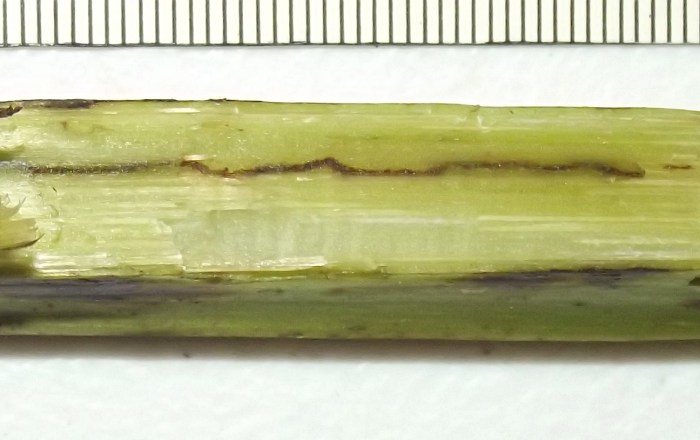
I first detected this unusual agromyzid miner/borer in 2020, observing the externally visible, shallow, blackened tunnels the young larva creates in midribs and stems of the host during the summer of its first growing season. The tunnels tend to meander irregularly across and around the stem, sometimes forming a spiral or sinusoidal pattern. They also wind through all depths of the stem and vary in color along their length, from black to brown to occasionally white/green, so that they can be quite difficult to follow in places.
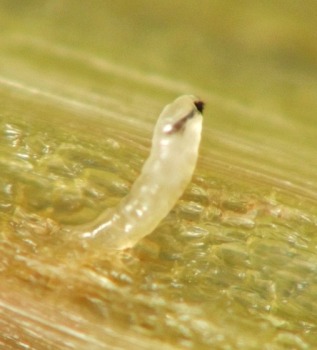
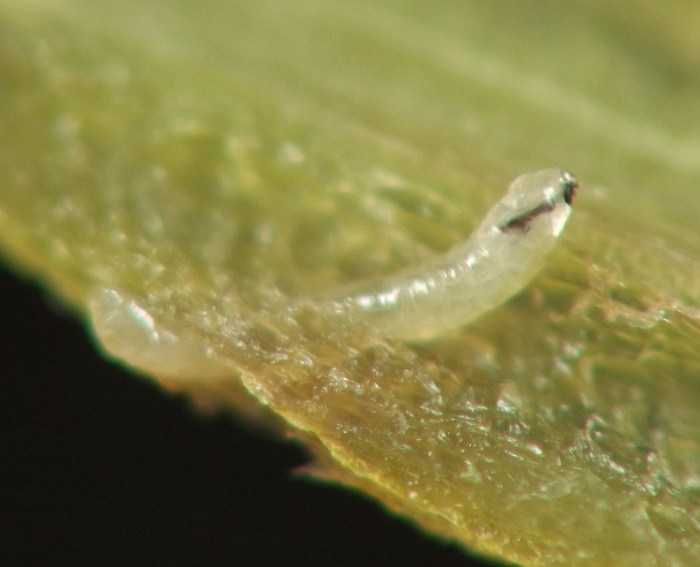
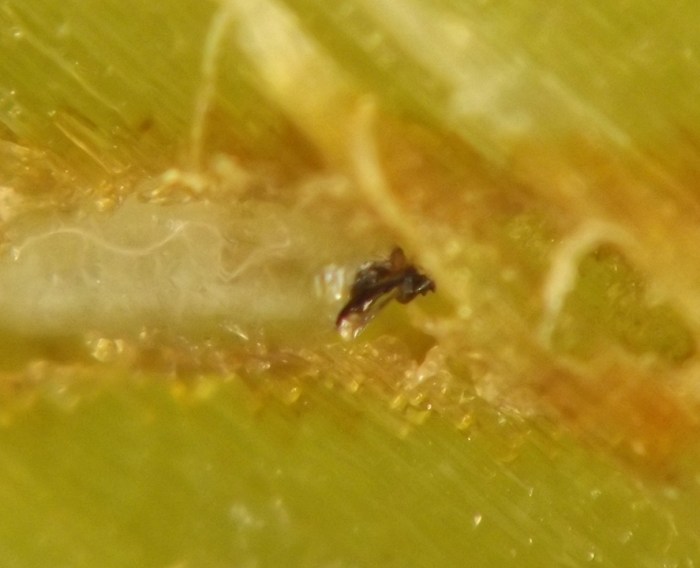
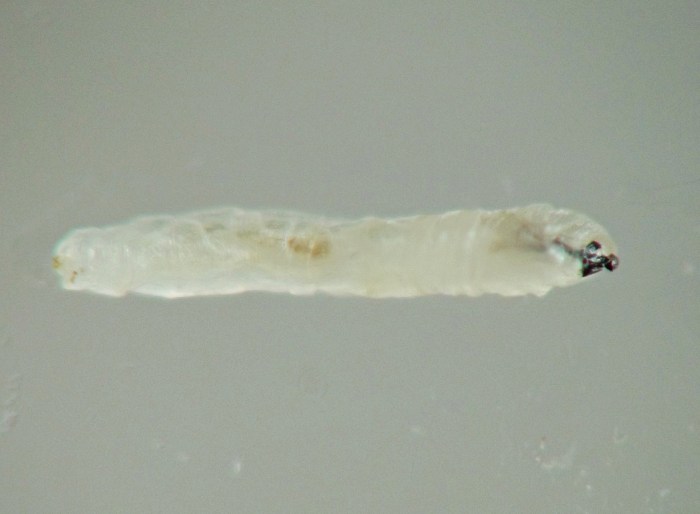
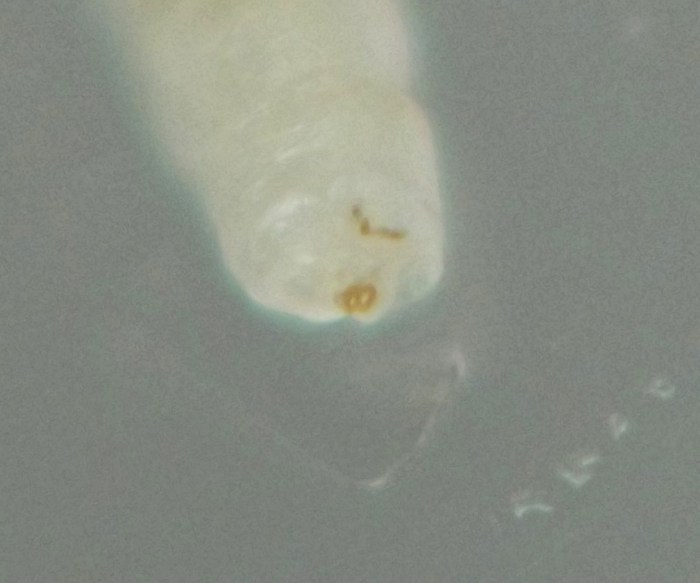
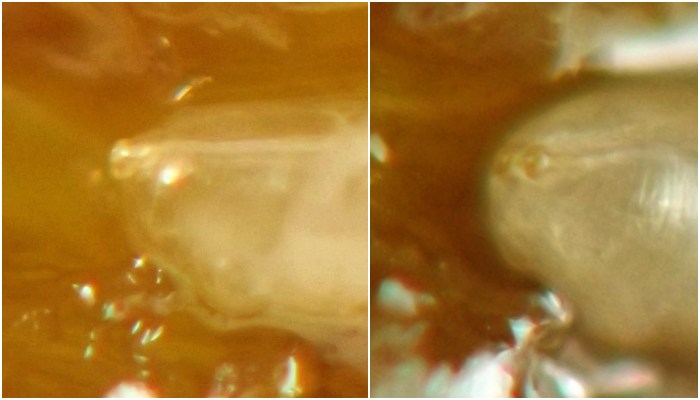
Sometimes, when following such a tunnel, I was able to successfully locate the young larva inside it. In one instance the tunnel was shallow enough that the larva's cephaloskeleton could be faintly seen through the outer wall of the stem. Such larvae appeared to be mostly early to middle instars. They were pale whitish with black cephaloskeletons and a pair of very small, light brown, ringlike posterior spiracular areas. My earliest observation of a larva occurred on 29 June.
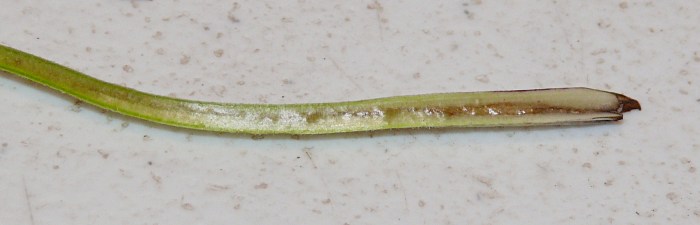
In two stems of mature plants I examined in September 2022, the tunnels straightened out as they moved down the stem and, in the lowest 15-25 cm of stem, they appeared to head directly and unwaveringly for the belowground parts of the plant. Even these straight lower stem tunnels had a relatively small diameter, suggesting they were made by early- or middle-instar larvae who still had a ways to go before reaching maturity.
Along with these initial observations during summer and fall, 2020 through 2022, in winter I searched senesced stems bearing old feeding sign of early or middle instar larvae. I gave particular attention to the lowermost portions of the stems near ground level. However, I found no puparia in the stem interiors.
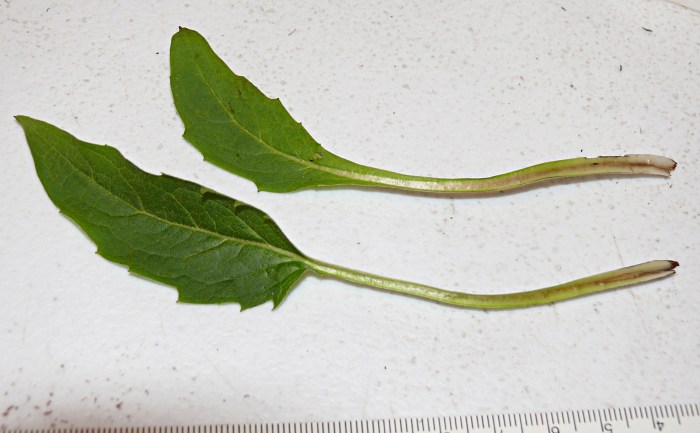
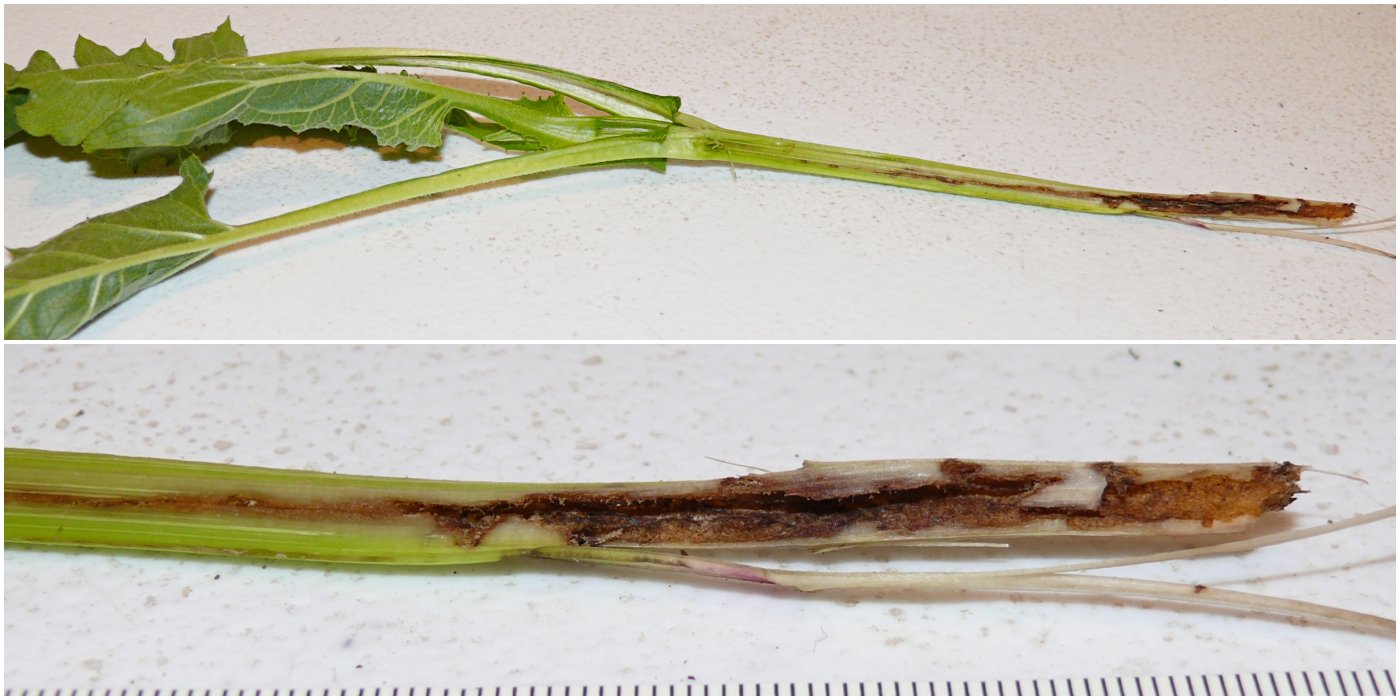
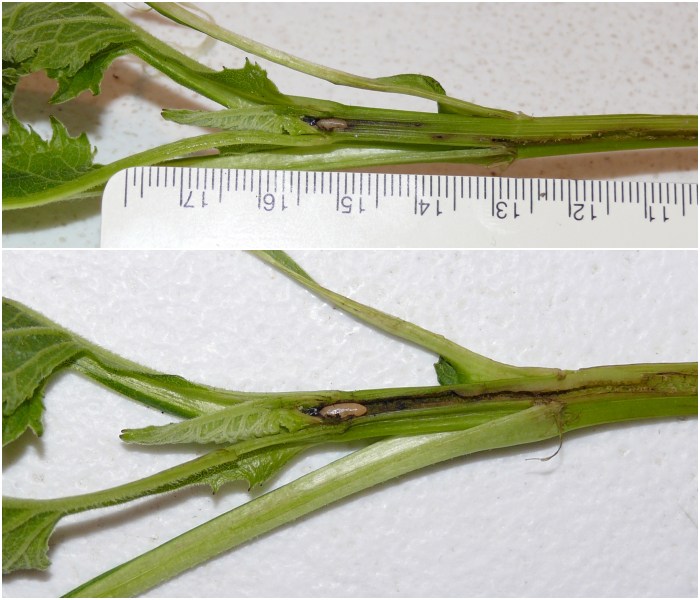
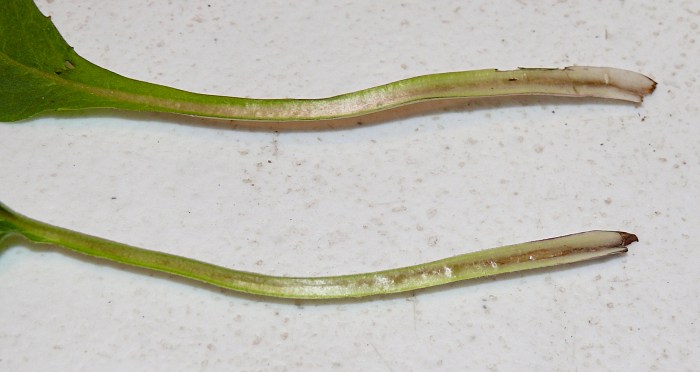
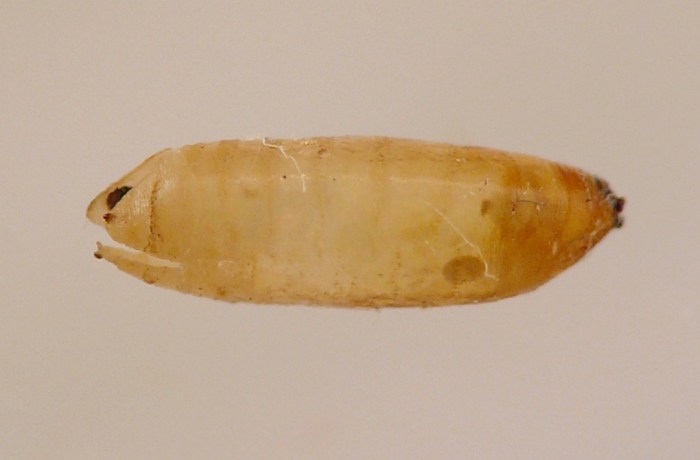
I did not make much further progress understanding this insect until, on 18 May 2025, I discovered that the lowermost stem leaves on a growing shoot of the hostplant (the shoot ca. 20 cm tall) contained tunnels in their petioles. The next day I harvested the shoot and examined its interior. It showed extensive tunneling in the interior, with ~60% of the volume of the upper half of the shoot hollowed out. A large, recently formed agromyzid puparium (length 5.4mm) was positioned in the tunnel at the very tip of the shoot. A much smaller diameter tunnel was visible in the cross section of the cut end of the shoot base, and this tunnel was contiguous with the extensively hollowed area higher in the shoot and also with the tunnels leading into the leaf petioles. This suggested the larva had overwintered in the crown and then moved up into the shoot, where it tunneled in the leaf petioles and stem before pupating at the shoot tip.
The tunnel walls in the lower portion of the shoot were dark brown or black in color, while the fresher excavation higher in the shoot and the tunnels in the leaf petioles were less darkly discolored. A dead stem from last year, which connected to the plant crown near the base of the shoot, contained tunnels of the type observed in mature stems of the host in previous years (described above), leading from the shallow exterior into the pithy interior. These tunnels were much smaller in diameter than the tunnels high in the spring shoot, but approximately the same diameter as the tunnel visible in the cross section of the shoot base. I therefore assumed that the young fly larva made the tunnels in last year’s stem while the stem was still alive during the 2024 growing season, proceeded into the crown to overwinter, then migrated into the new shoot in spring, in which it grew to maturity (creating wider tunnels in the process) and pupated.
Interestingly, this affected shoot, besides the subtle tunnels in the petioles of the lowermost leaves, showed no obvious external sign of the extensive tunneling in the interior. The leaves of the shoot tip appeared to be healthy, as did all the other leaves and the shoot itself, with no wilting or dieback and none of the stem tunneling showing through to the shoot exterior.
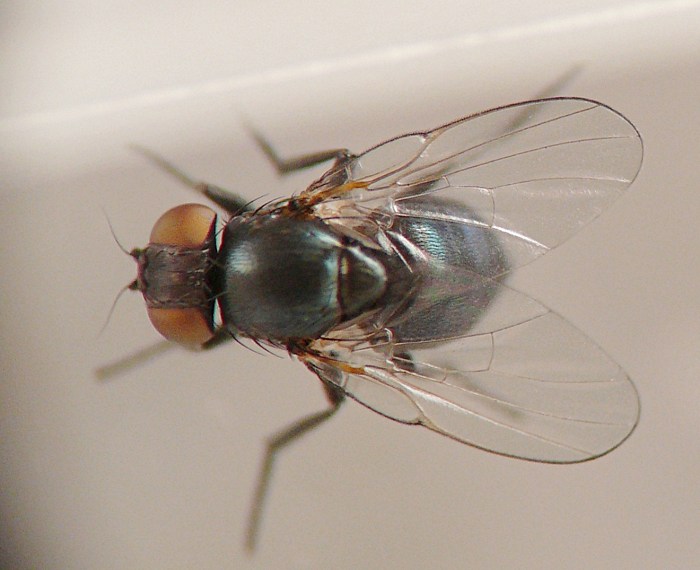
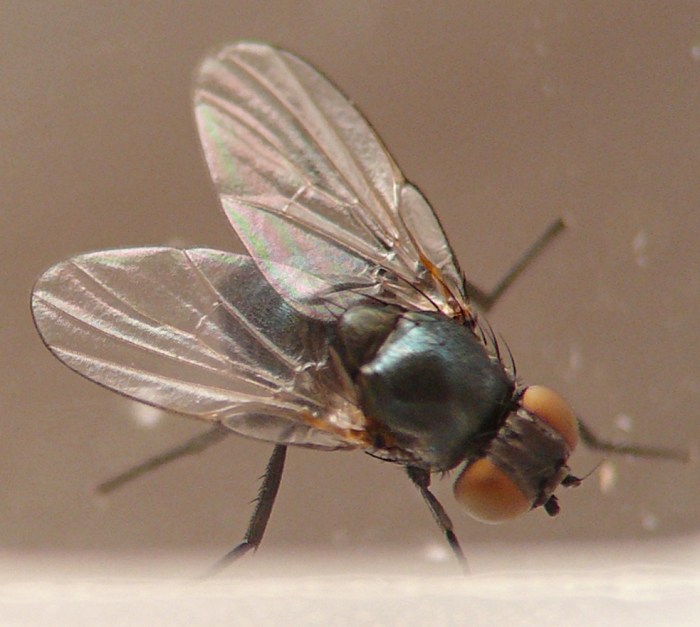
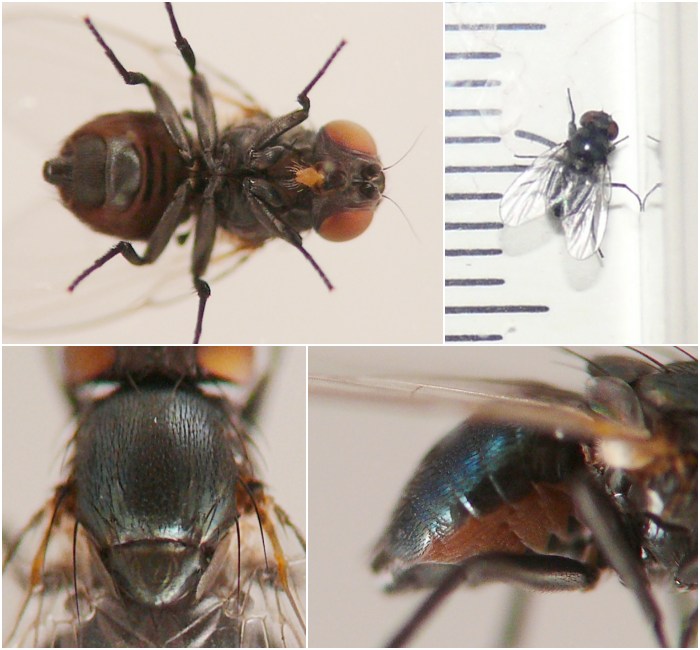
An adult agromyzid, cf. Melanagromyza sp., emerged from the puparium on 14 June. The fly was one of the largest agromyzids I had ever reared, with body length ca. 4.0 mm (excluding wings) and wing length ca. 3.3 mm. It possessed a shiny blue iridescence on the dorsal surface of the abdomen and a somewhat duller, more blue-green iridescence on the dorsal surface of the thorax. The underside of the abdomen was partly red-brown in color.
This is one of my favorite stem-dwelling insects, not in the least because of the work it took to understand its larval life history!
 Prev
Prev
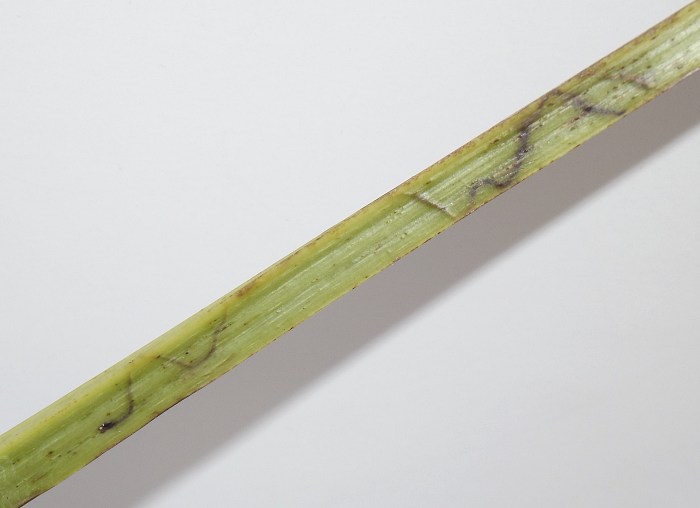
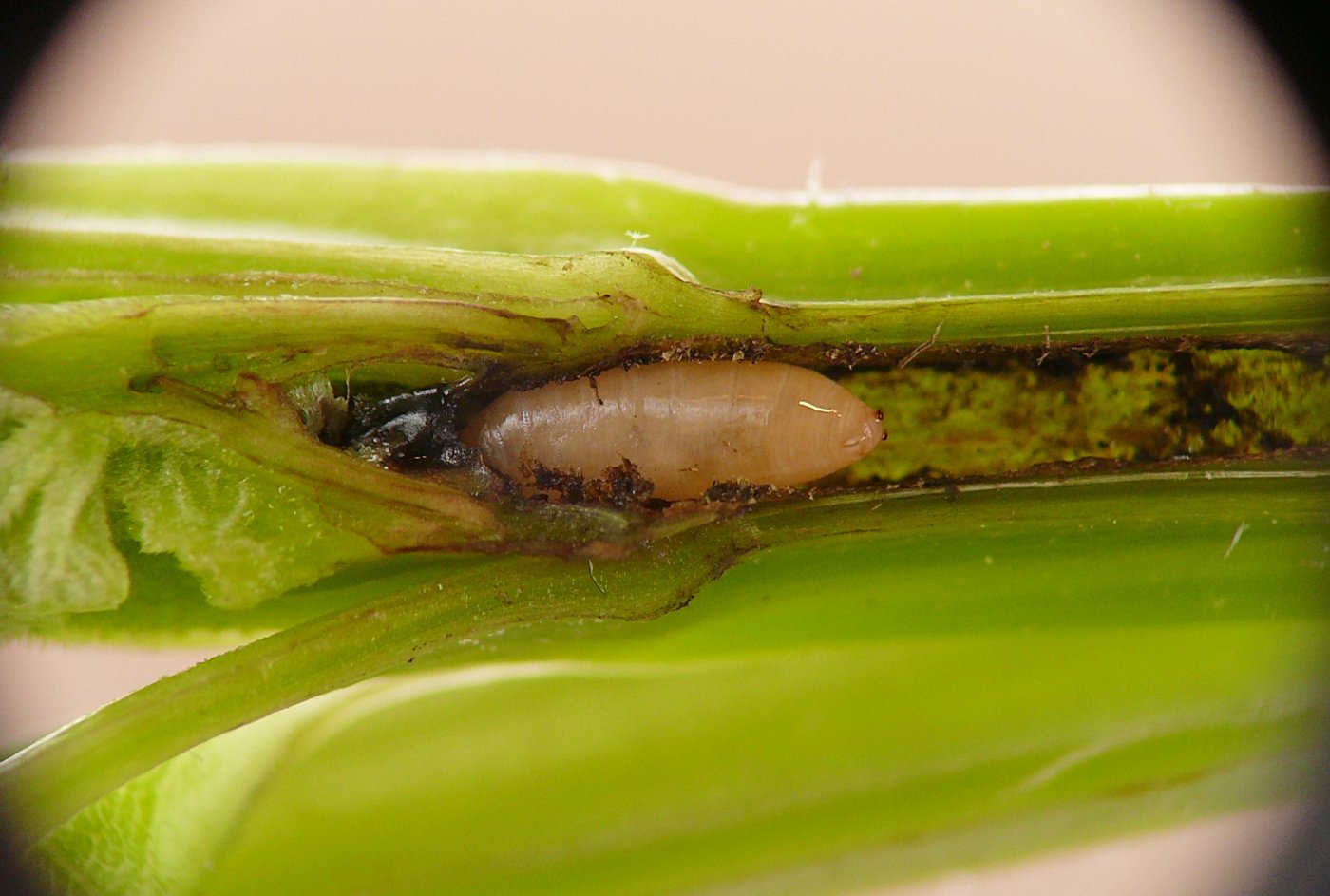
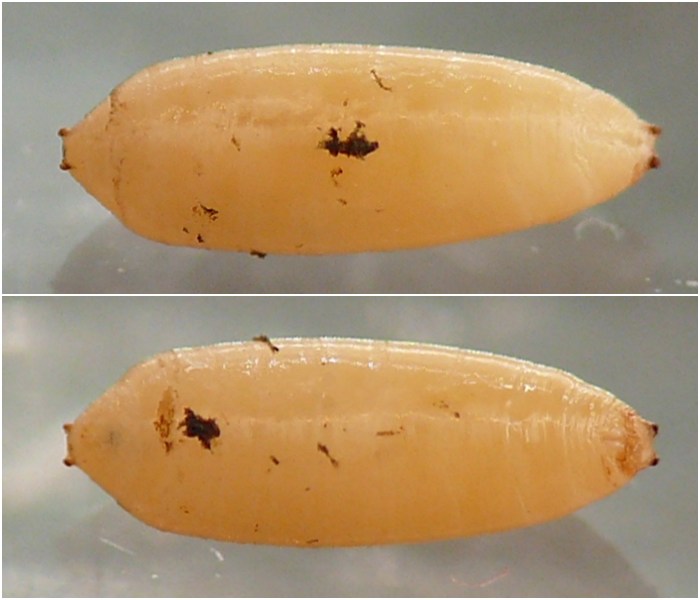
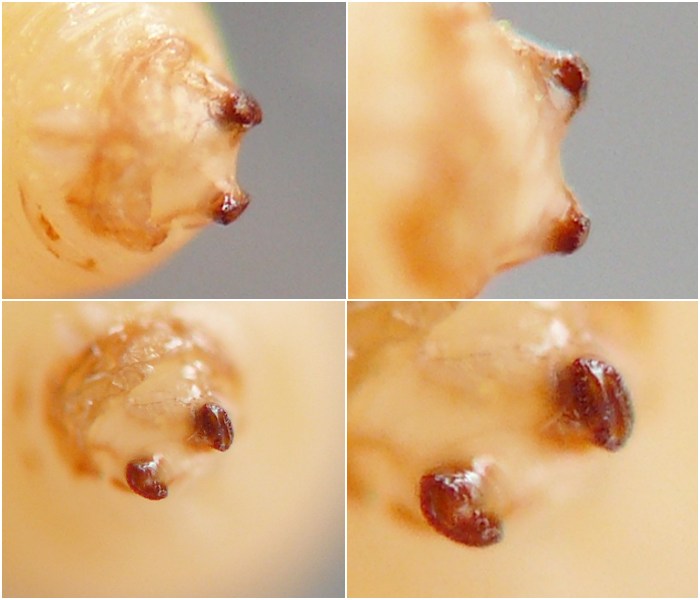
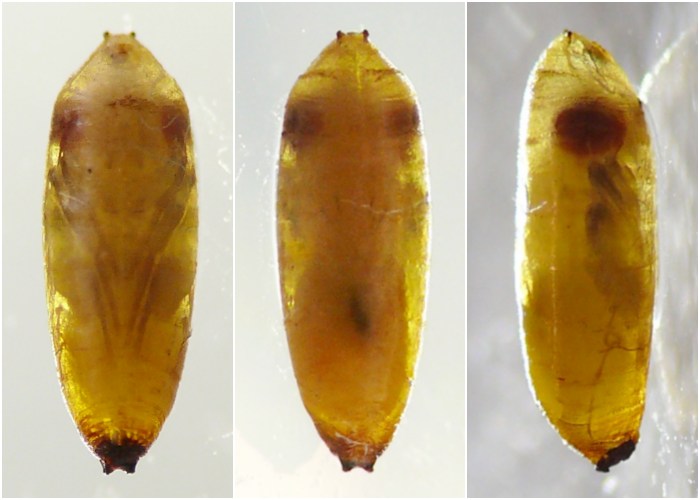
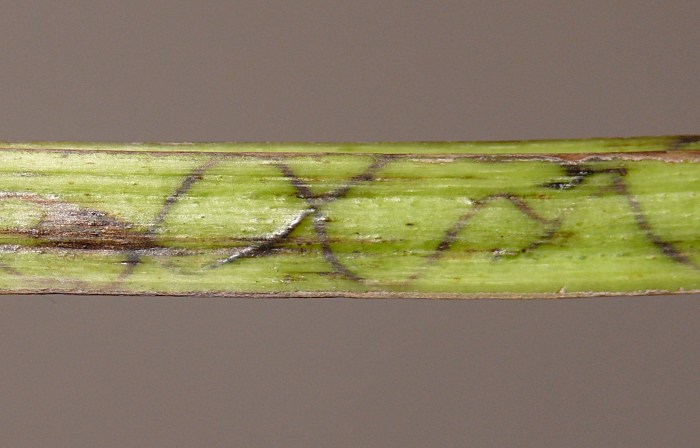
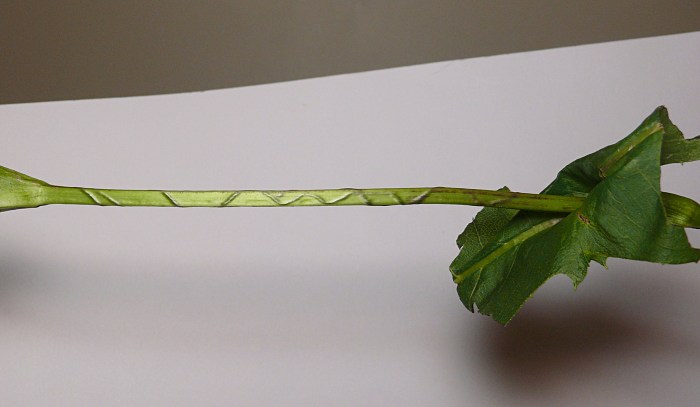
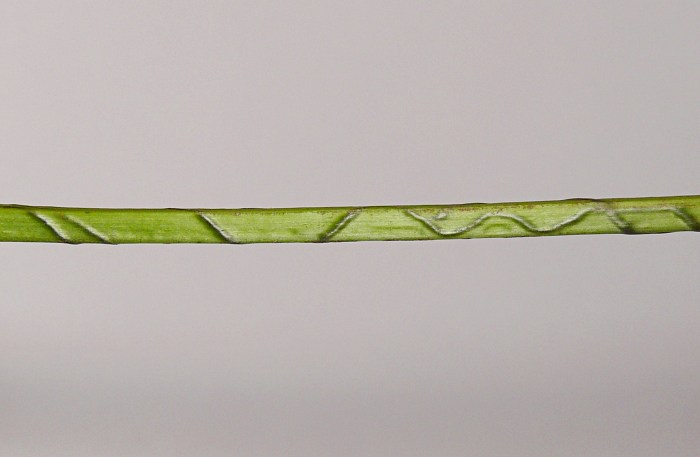
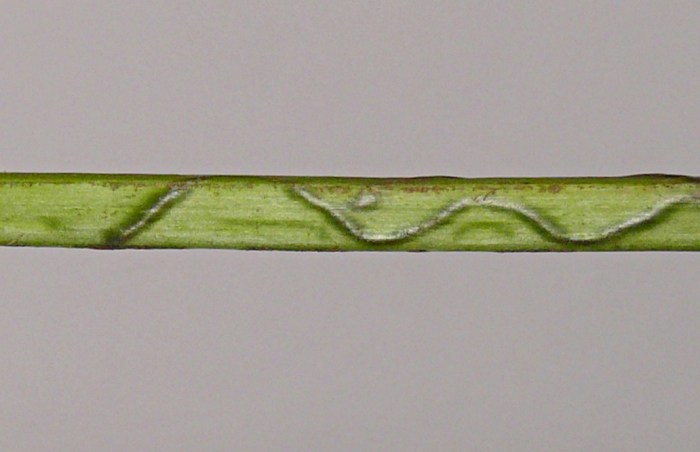
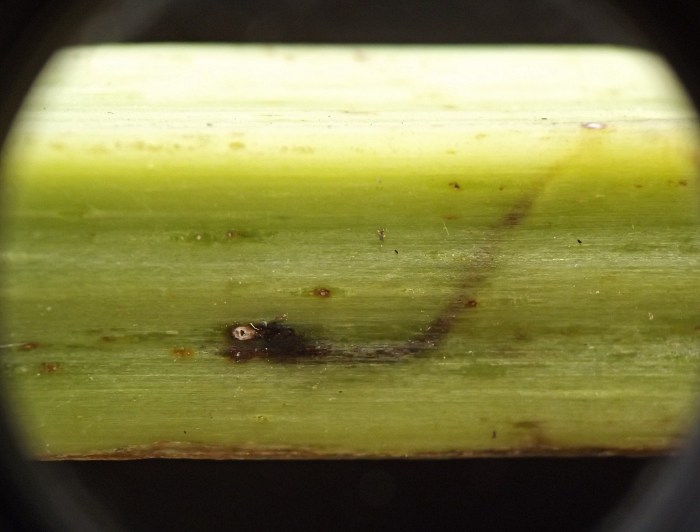
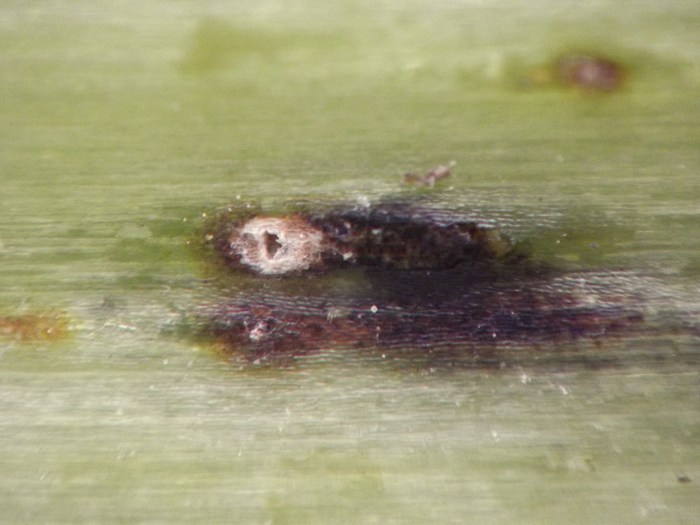

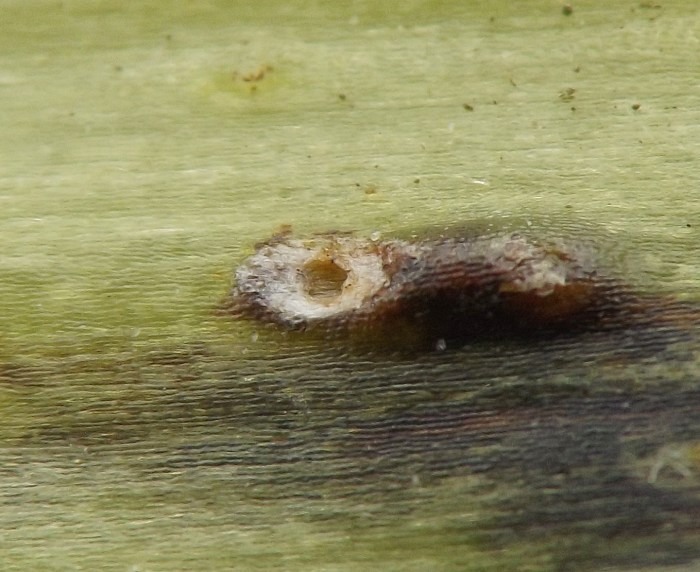
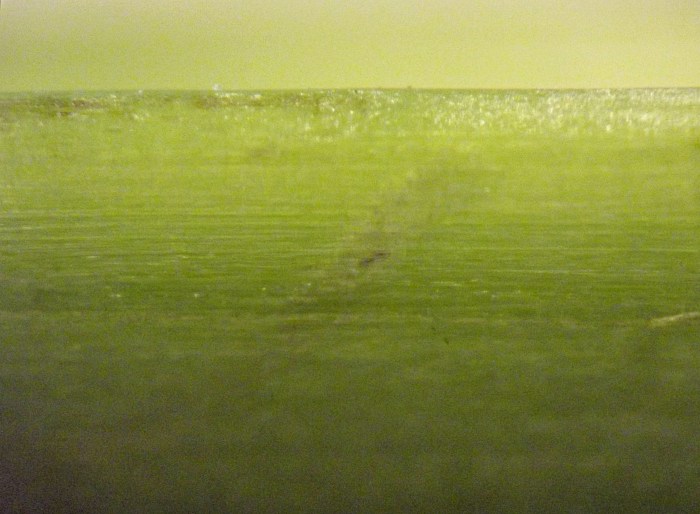
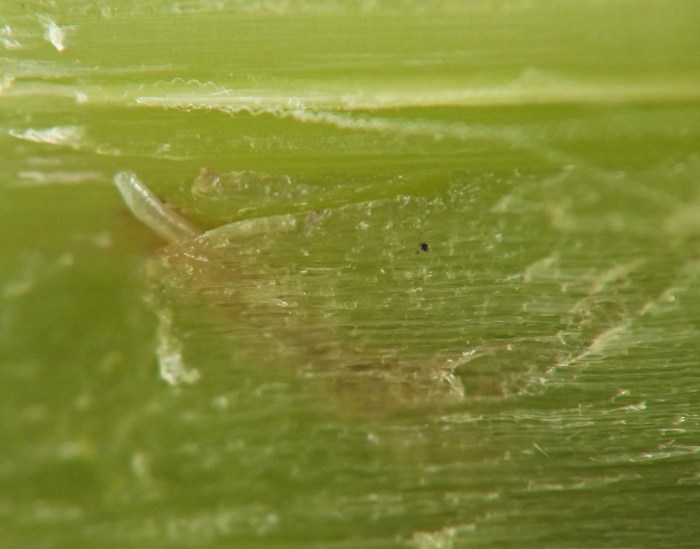
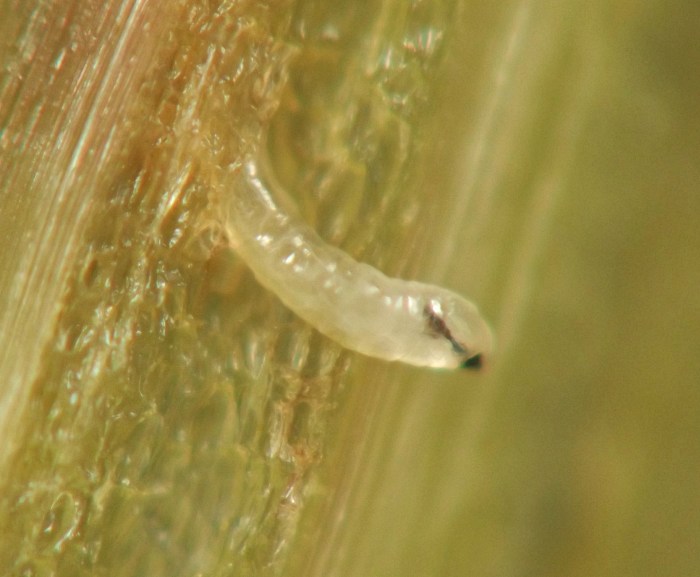
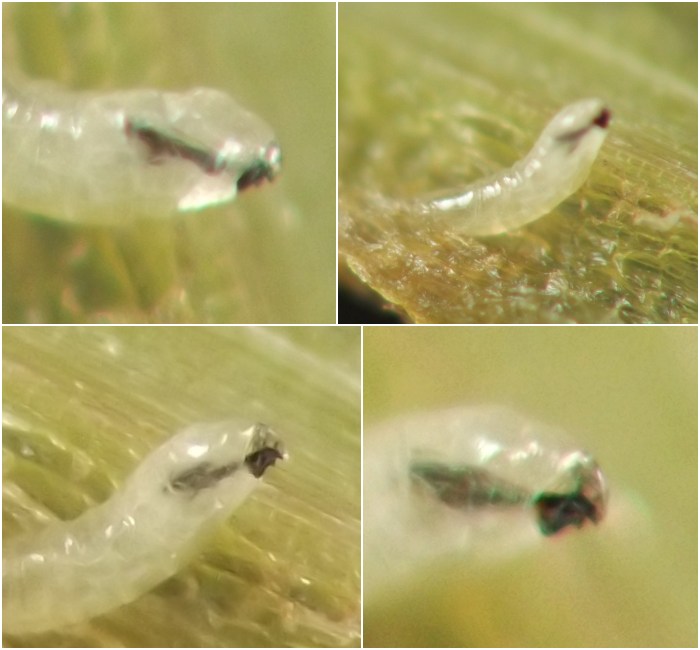
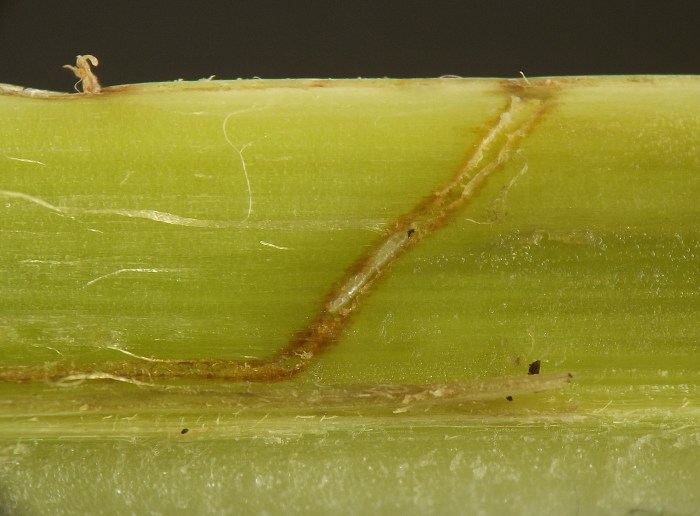
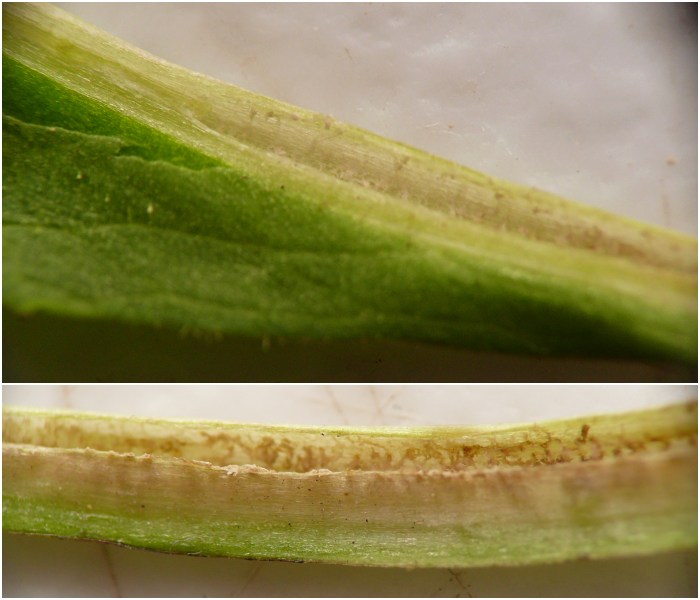
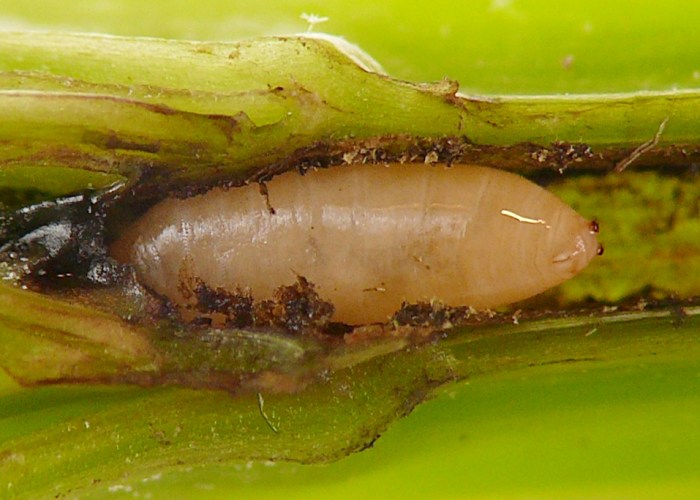
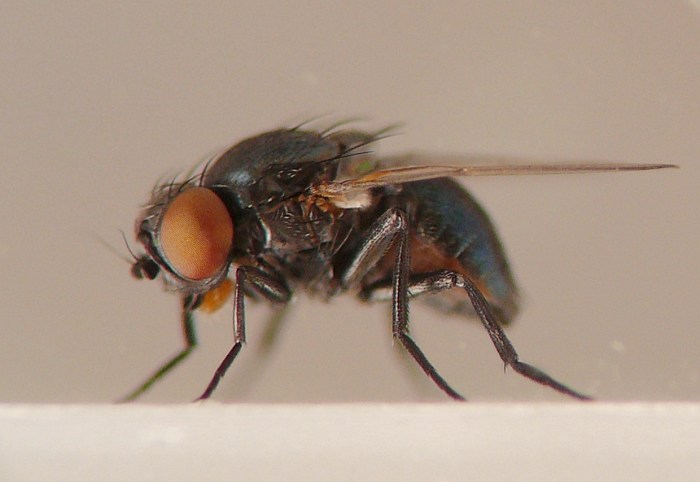
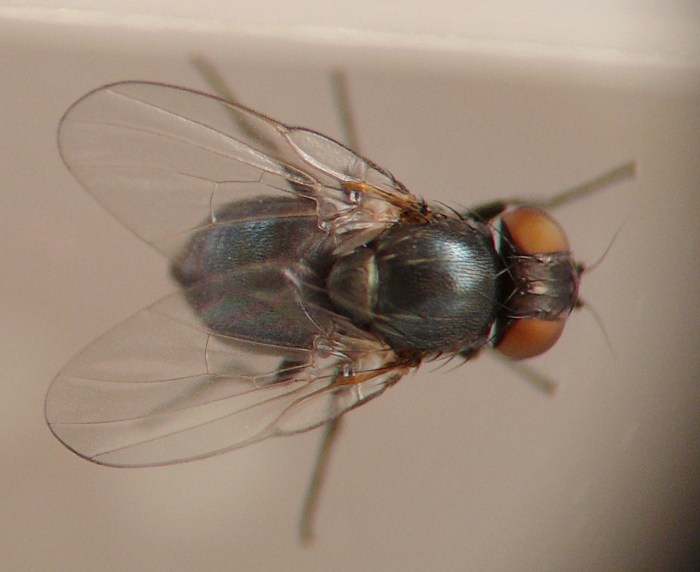
Field photos taken 10/06/20 (01-03); coll. 09/30/20, photos same day (04, 11-14); coll. ~08/07/22, photos same day (05-06), photos 08/07/22-08/11/22 (20-25, 29), photos 08/30/21 (26); coll. ~08/16/22, photos same day (07-09); coll. ~09/18/22, photos same day (10, 27-28); coll. 06/28/21, photos 06/28/21-06/29/21 (15-19); coll. 05/18/25, photos same day (30-34); coll. 05/19/25, photos on 05/20/25 (35-40), 06/07/25 (41), 06/14/25 (42-46), and 06/15/25 (47).
Page created: December 2, 2024. Last update: January 31, 2026