Stem borer (Lepidoptera: Pterophoridae) in Symphyotrichum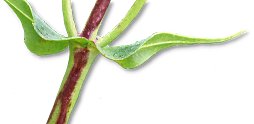
| Record no.: | 0559, 0711, 0765 |
|---|---|
| Feeding guild: | Stem borer |
| Taxonomy: | Lepidoptera: Pterophoridae: Hellinsia glenni |
| Stages observed: | trace, larva, pupa, adult |
| Distribution observed: | IA |
| Hosts in Symphyotrichum: | undetermined S. sp. (aster), linear/lanceolate leaves, in disturbed ground; undetermined S. sp. (aster), large wetland species, either S. puniceum or S. novae-angliae; undetermined S. sp. (aster), very tall cultivar in garden, heart-leaved with leaves broad at widest point, possibly either S. ciliolatum, S. cordifolium, or S. drummondi |
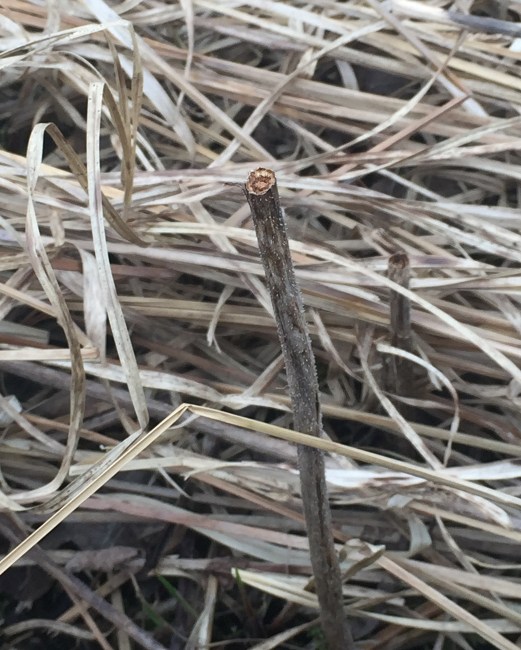
In the late summer or fall, mature larvae of this stem borer cut around the circumference of the stem from the inside at a point approximately 10-30 cm above ground level, causing the upper part of the plant to break off and leaving behind a lower stem "stump" with the larva still inside. The open end of the stump is plugged with frass, and the larva passes the winter in the stump. In spring, probably while still a larva right before pupation, the insect removes the frass cap in the top of the stump, making way for the eventual emergence of the adult moth. Pupation occurs in the stump. The pupa is elongate, with short spines on the posterior half and a flattened, heavily sclerotized, spiny anterior end. The adult moth emerges from the split-open anterior end of the pupal skin and evidently crawls out of the open top of the stump before its wings expand and harden.
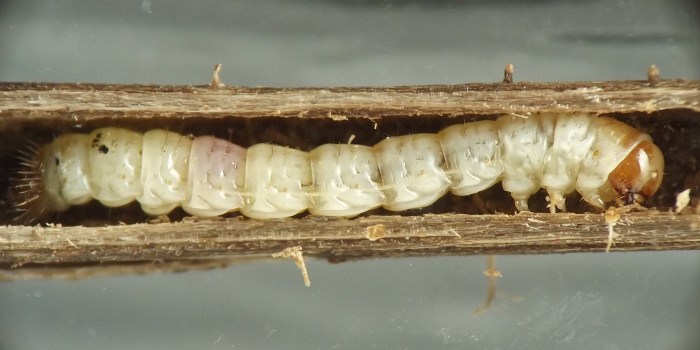
In spring 2023, I reared an adult from a larva found overwintering in a Symphyotrichum stem stump in a wetland. The host was either S. puniceum or S. novae-angliae, based on characteristics of the stem stump and the infructescence of the severed upper portion of the stem, combined with plant identifications I have made within a few meters of the stem stump's location at that site during the growing season.
In November 2024, I located a freshly formed Symphyotrichum stem stump tentatively ascribed to Hellinsia sp. in my yard. The host plant was a weedy aster species, about 65 cm tall with a bushy, branching growth form and numerous stems arising from the belowground parts. The plant had long since gone to seed and senesced and I did not identify it to species, but one of the most common asters at this location, having a similar growth form to the plant in question, was awl aster, Symphyotrichum pilosum. Similar stumps only a few feet away were formed in the stems of a weedy goldenrod, Solidago sp., probably by the same species of insect, which I have indeed reared from Solidago at other locations (record 0517).
Finally, in fall 2025, also in my yard, I found a Hellinsia larva dwelling in the lower stem of a Symphyotrichum cultivar growing in a garden bed. In this case, the larva had not (yet?) created a stem stump. I wrote the following in my notes about this sighting:
[Today I found a] neatly round hole in [a cultivated Symphyotrichum stem in my yard] about 40cm above the stem base, the endpoint of a tunnel leading down to the plant crown. The tunnel was almost entirely cleared of frass in the portion below the hole. The larva was at ground level, essentially in the crown of the plant, facing down. ... The tunnel continued above the hole but was narrower here and filled with whitish frass. [I dissected] the stem because I wasn’t sure if the larva was still in there; since the hole was open (not covered with an operculum) I thought maybe it was some moth that had already emerged and I would find the pupal exuviae in there. Turns out it was a plume moth larva that was still in there. There was very little, almost no frass sealing the tunnel between the hole and the larva, but there was a lot of distance between them. The tunnel made a nice 90 degree turn at the location of the hole, turning from its main track parallel to the stem axis until it opened out into the hole.
 Prev
Prev
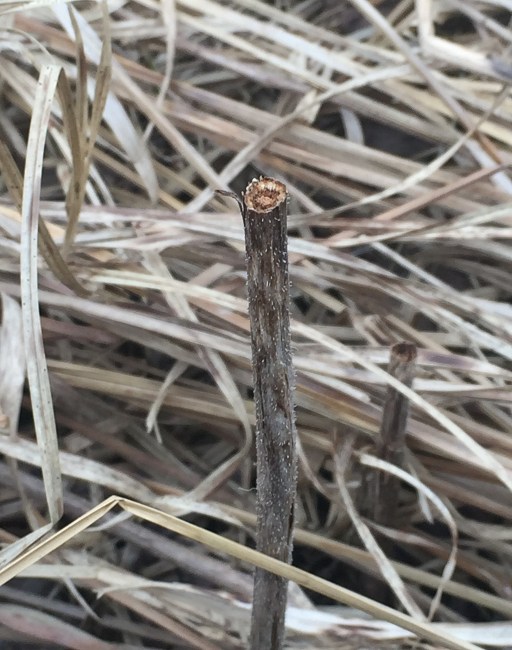
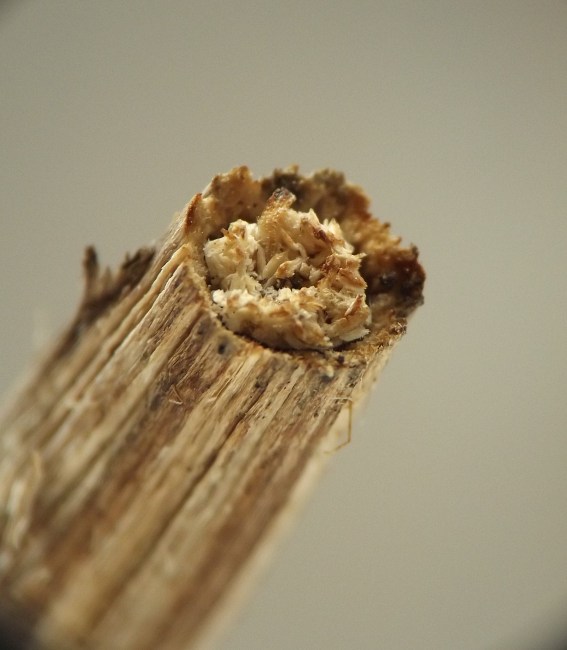
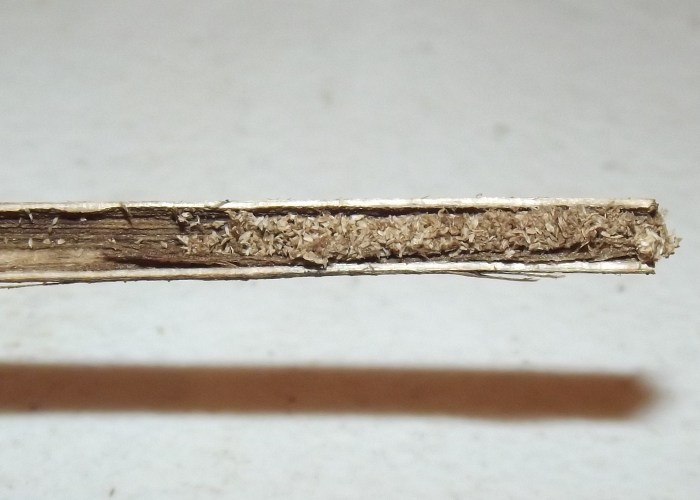
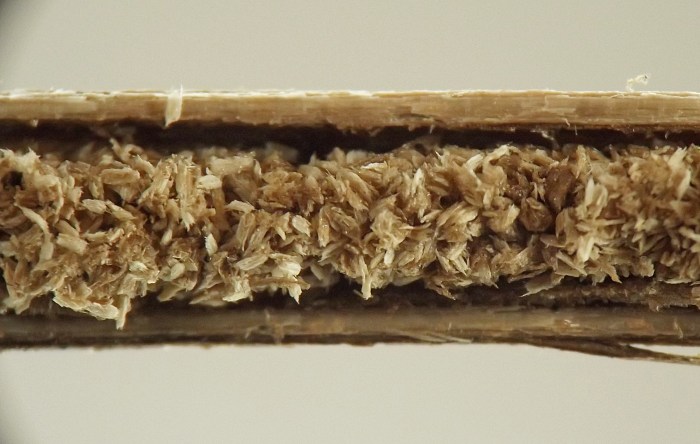
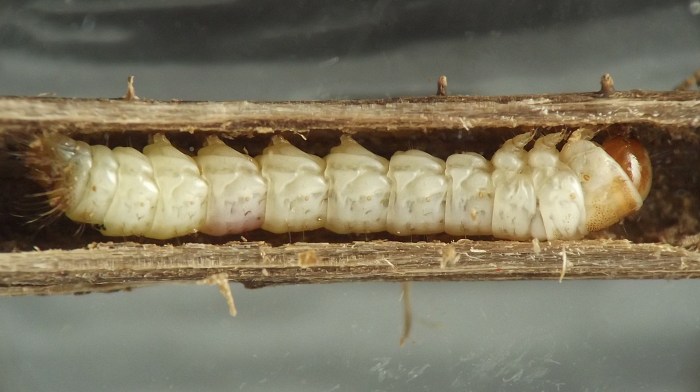
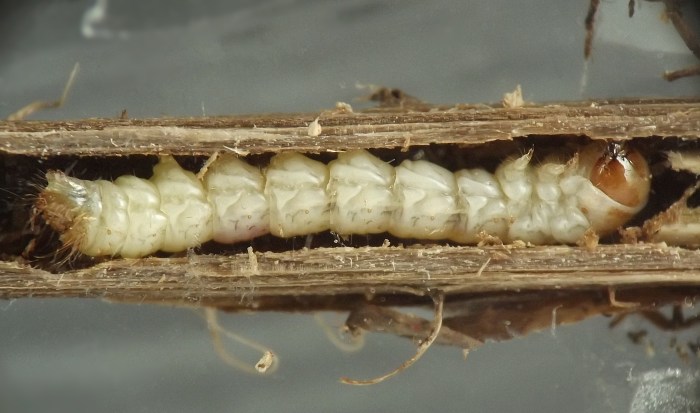
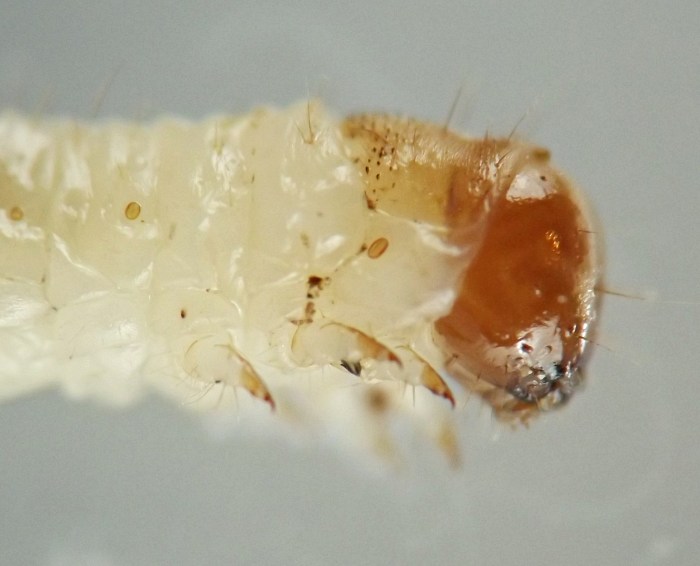
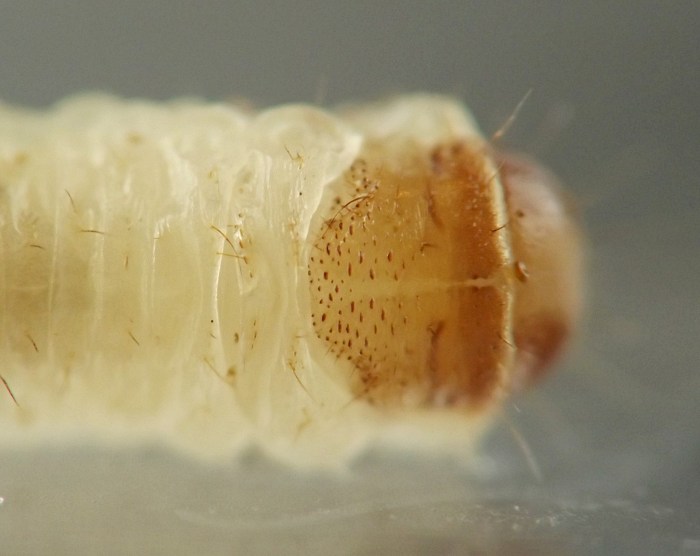
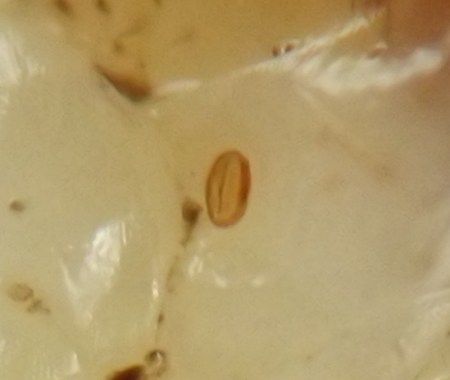
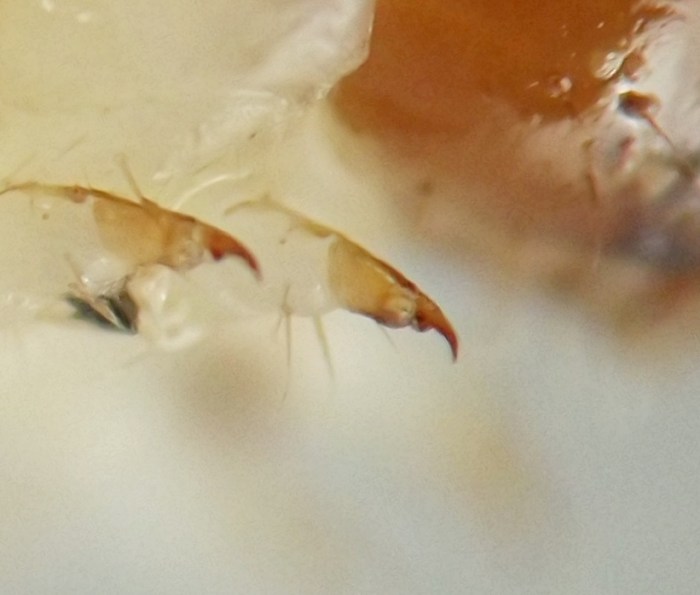
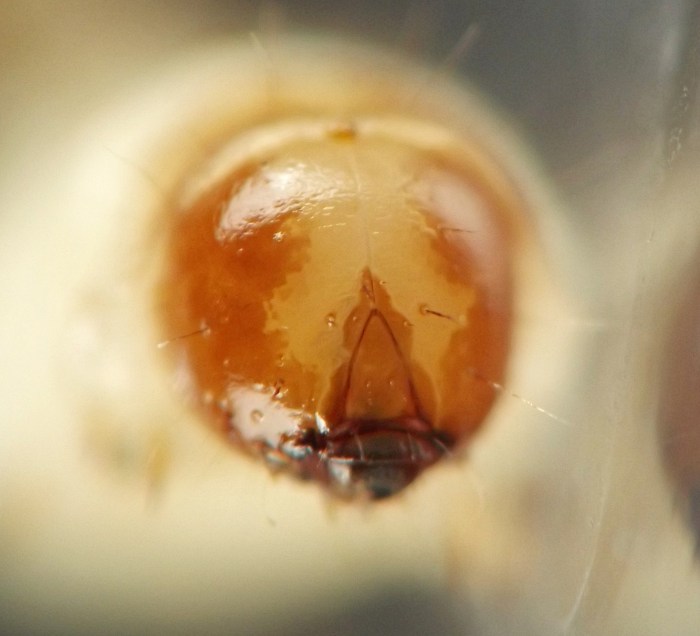
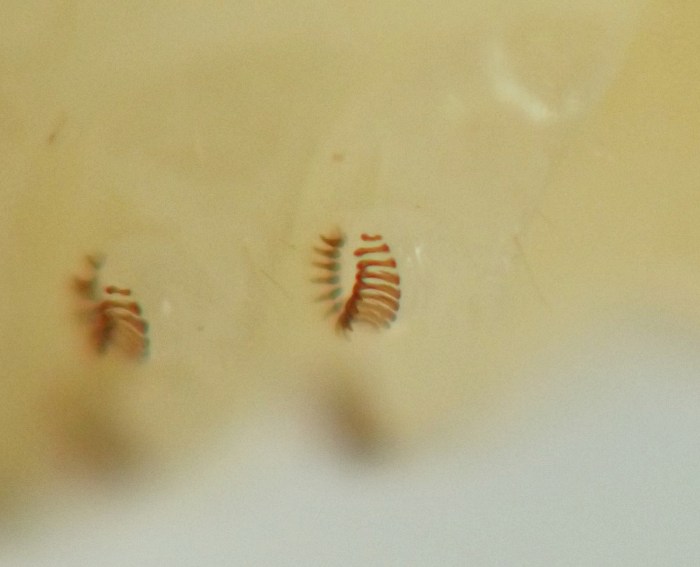
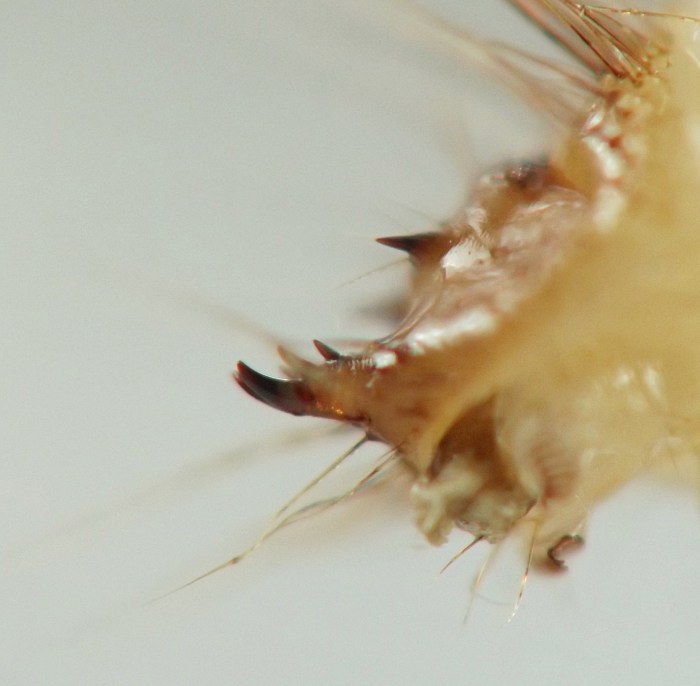
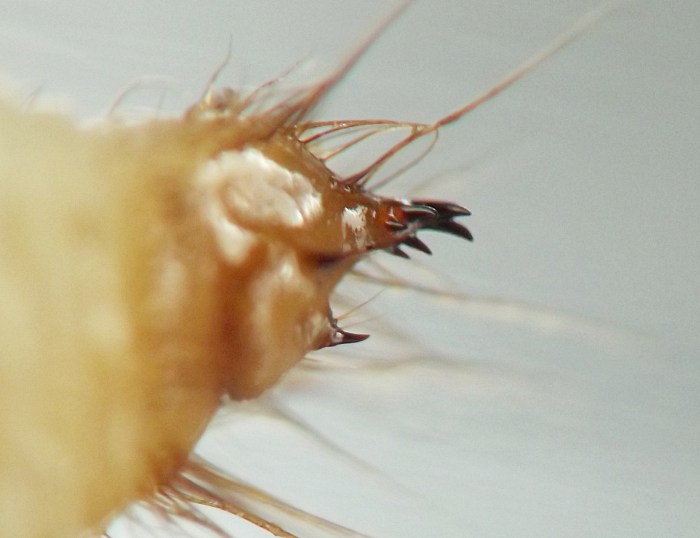
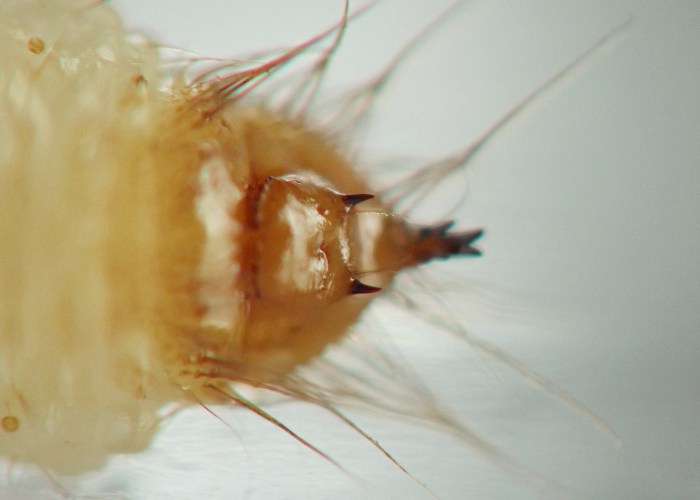
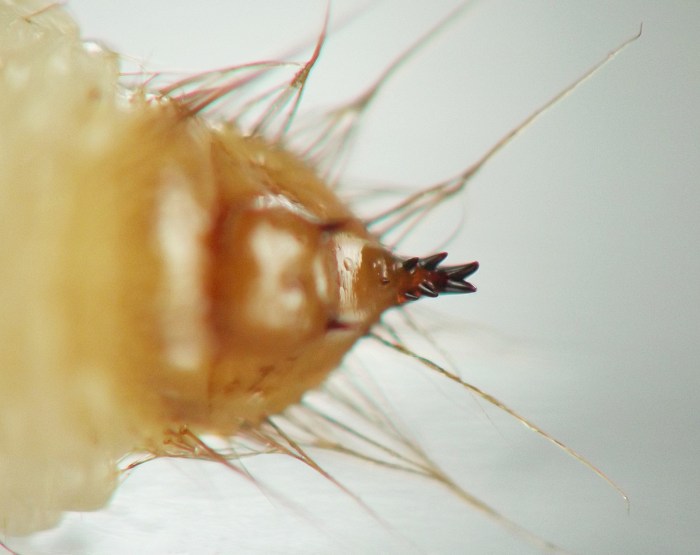
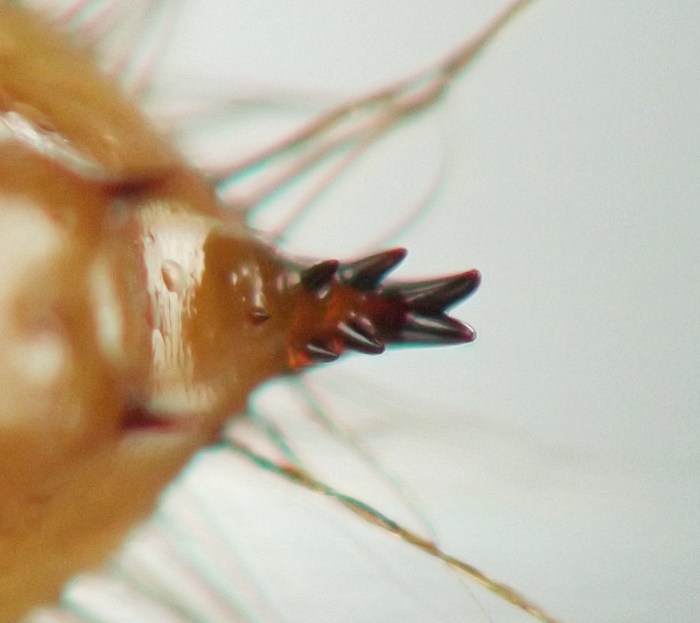
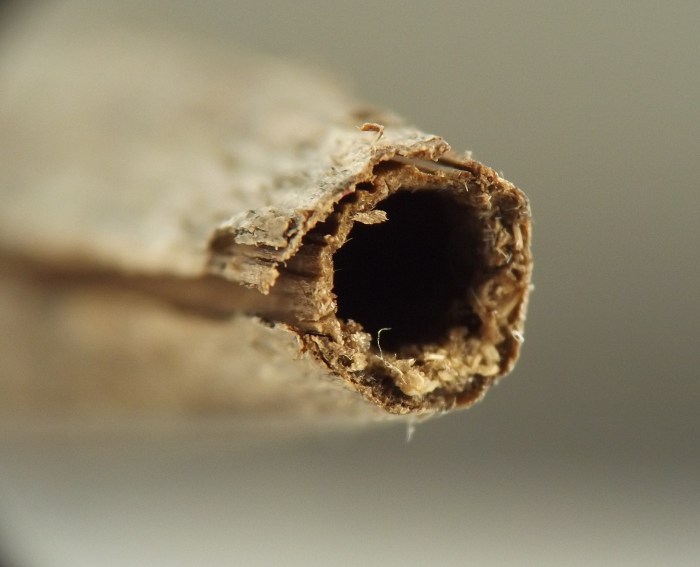
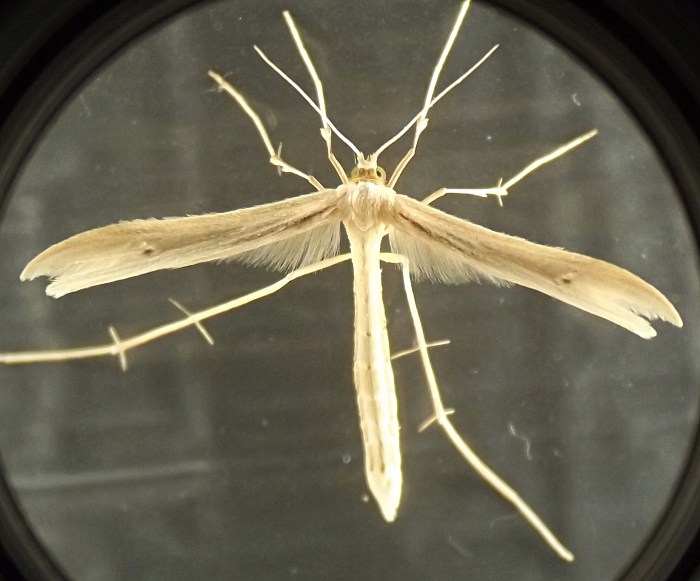
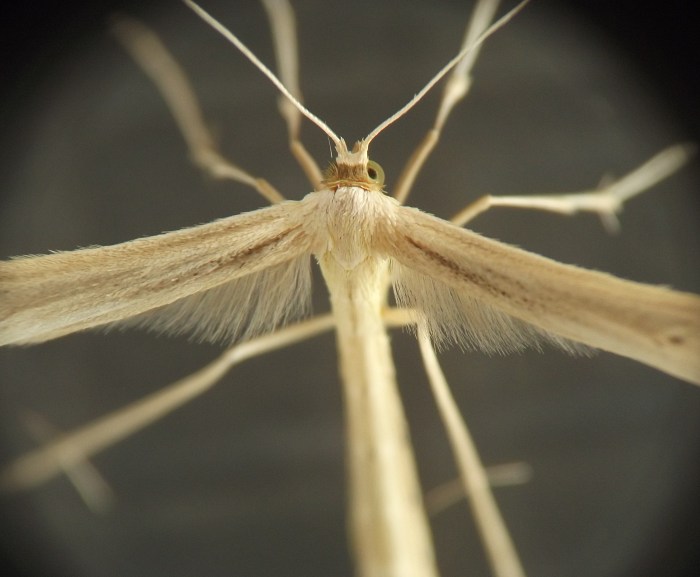
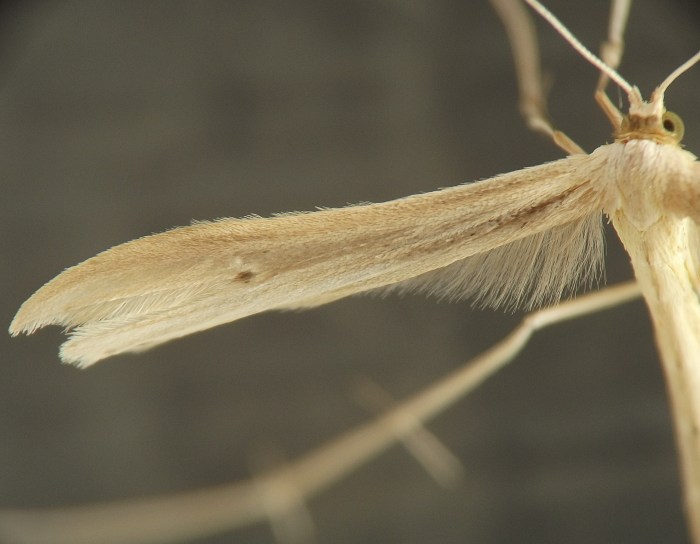
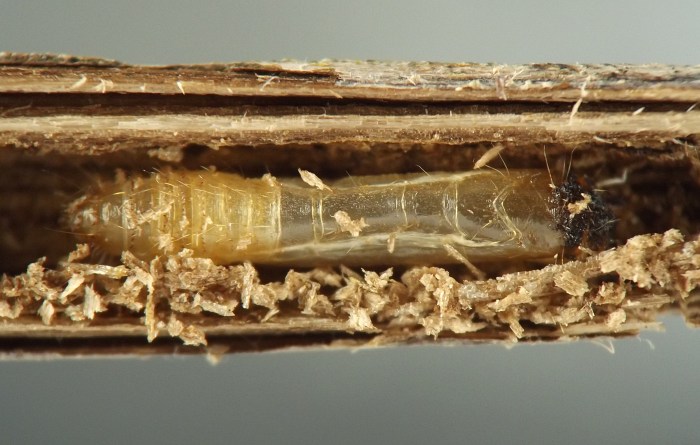
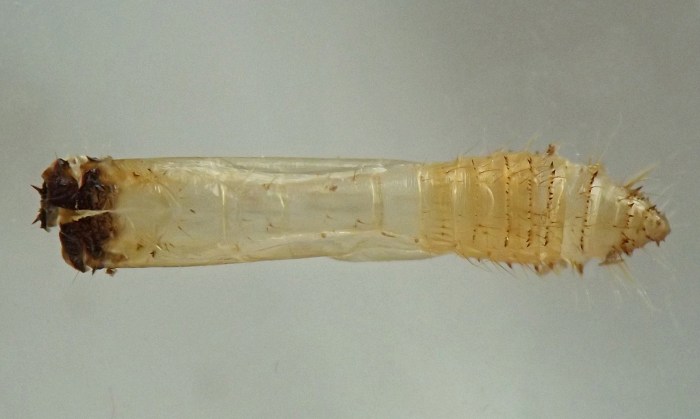
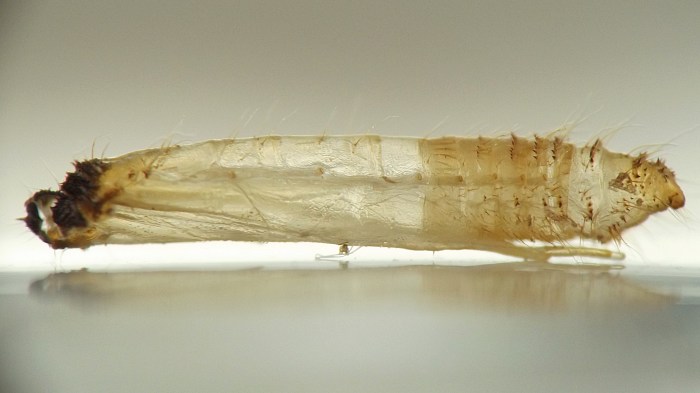
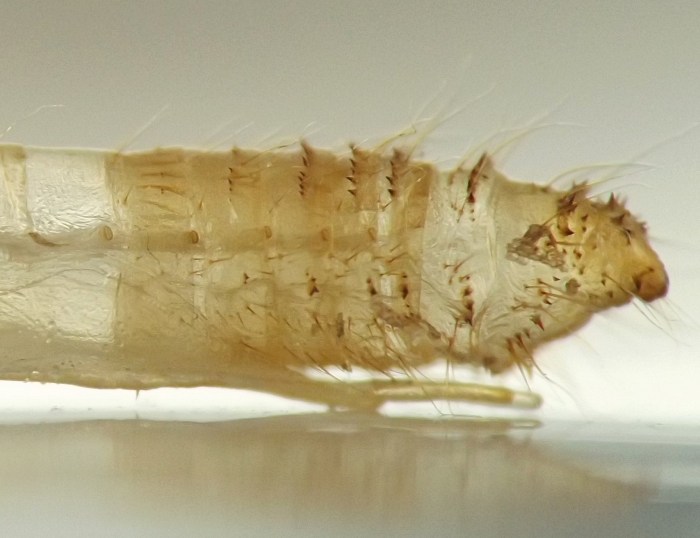
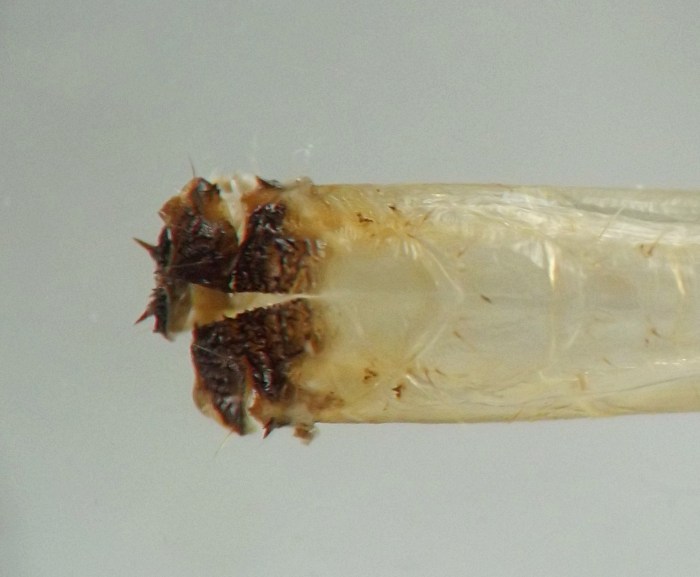
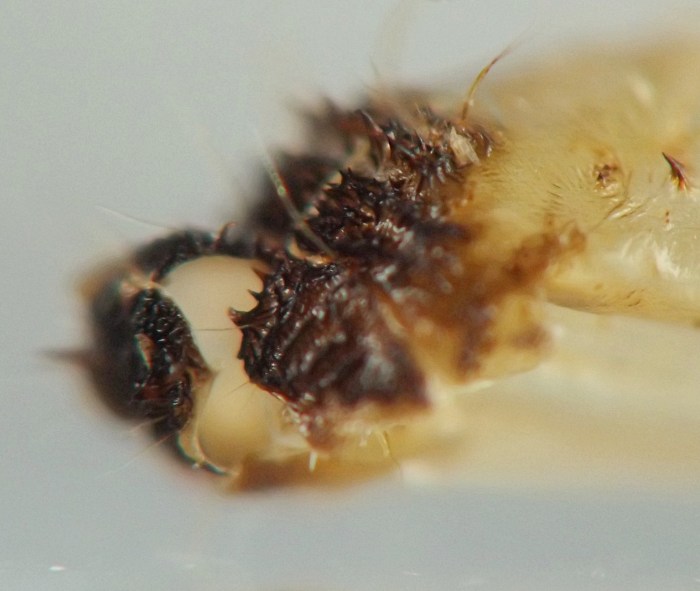
Coll. 04/14/23, photos of larvae and plant damage taken on 04/14/23-04/15/23 (01-23), adult em. 05/09/23, photos of adult and exuviae on 05/10/23 (24-33).
Page created: November 30, 2023. Last update: March 20, 2026