Petiole and stem miner/borer (Diptera: Agromyzidae) in Heracleum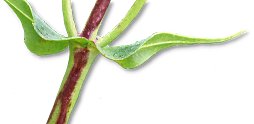
| Record no.: | 0695 |
|---|---|
| Feeding guild: | Miner/borer in stem and in petiole of basal leaf |
| Taxonomy: | Diptera: Agromyzidae: Phytomyza cf. nugax |
| Stages observed: | trace, larva, puparium, adult |
| Distribution observed: | IA |
| Hosts in Heracleum: | H. maximum (cow parsnip) |
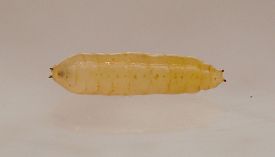
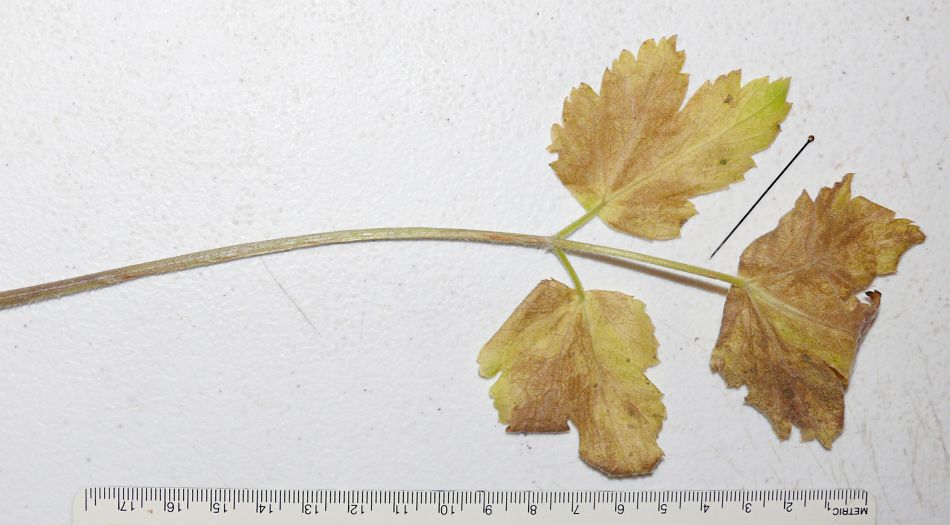
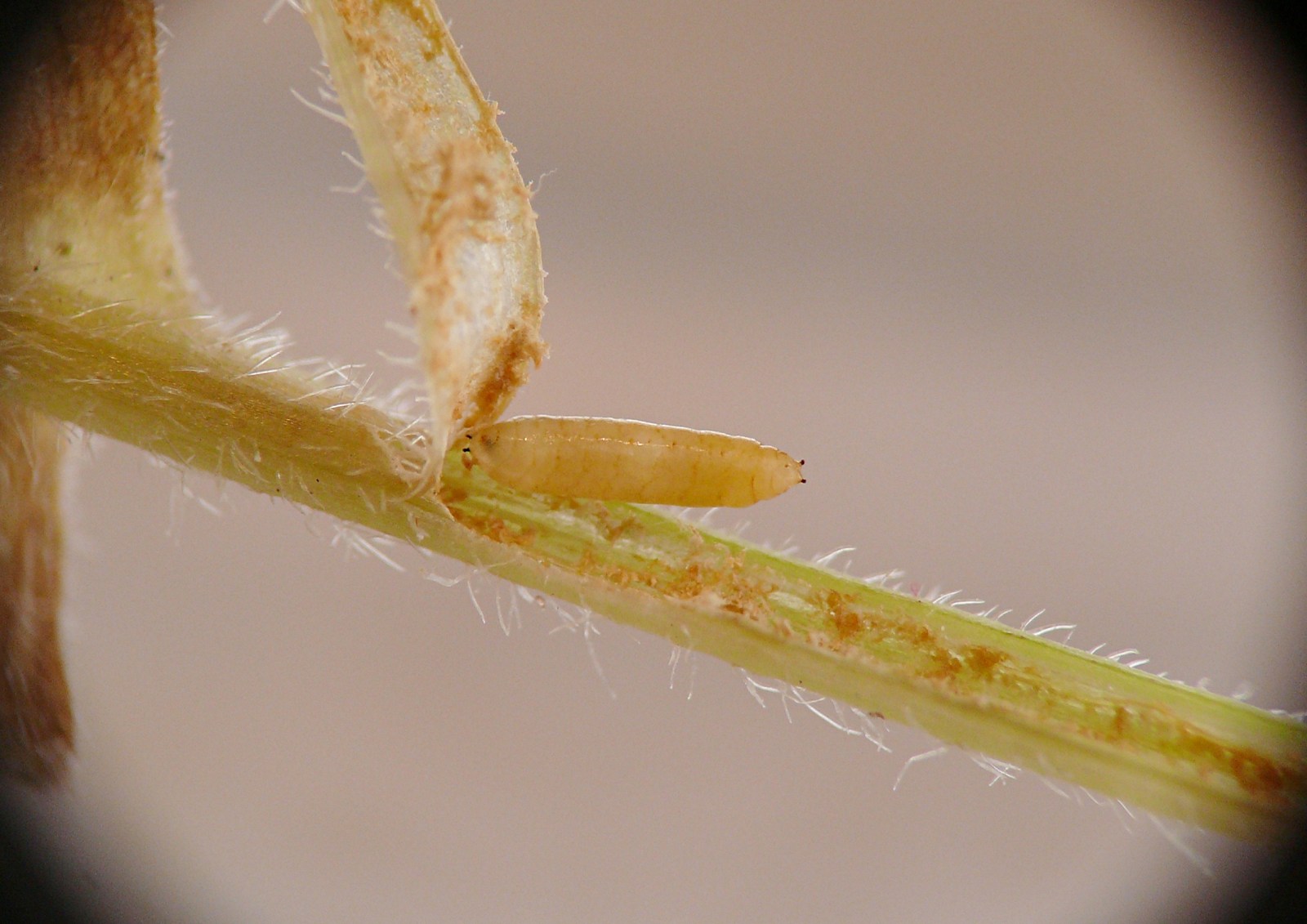
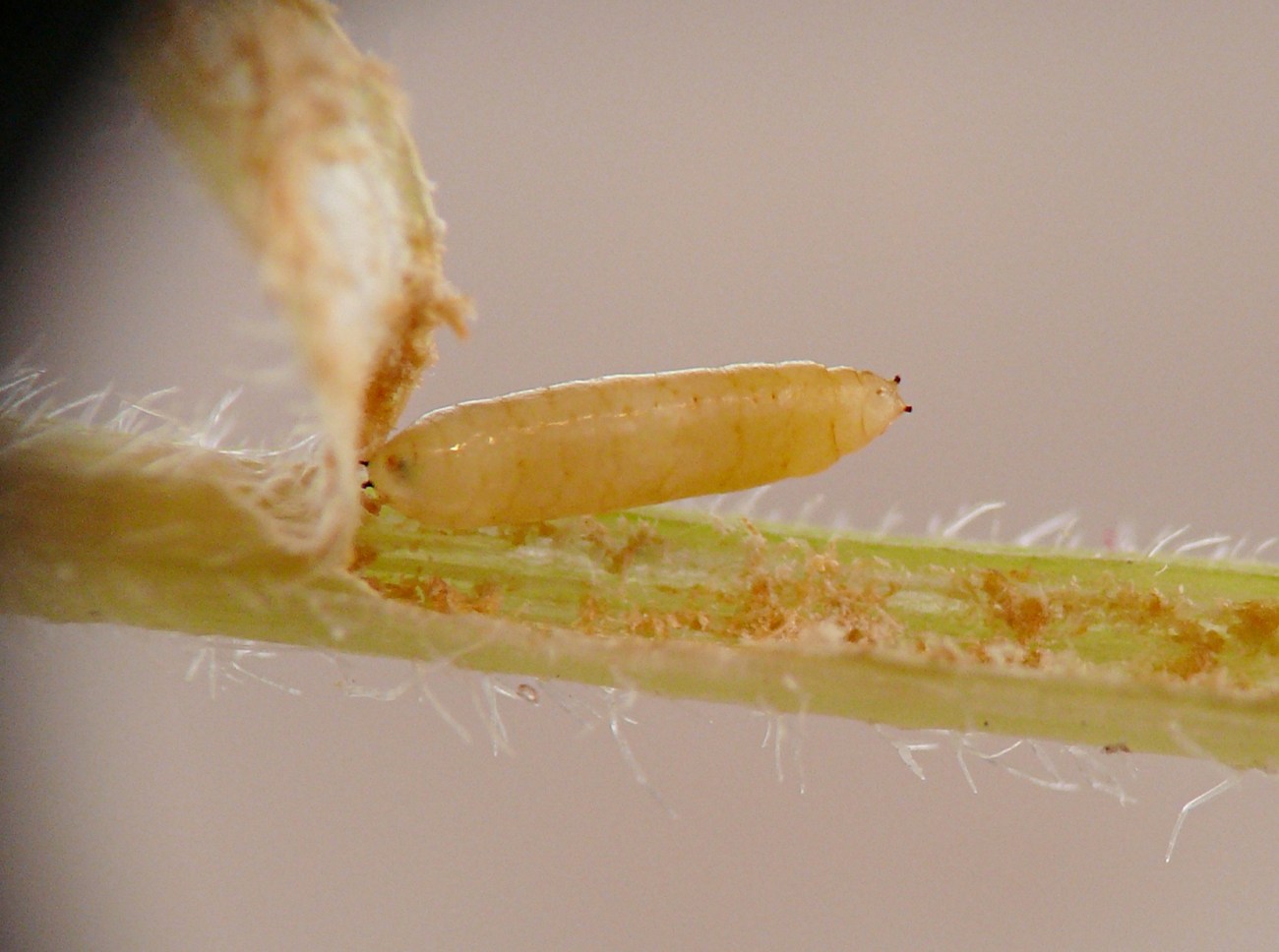
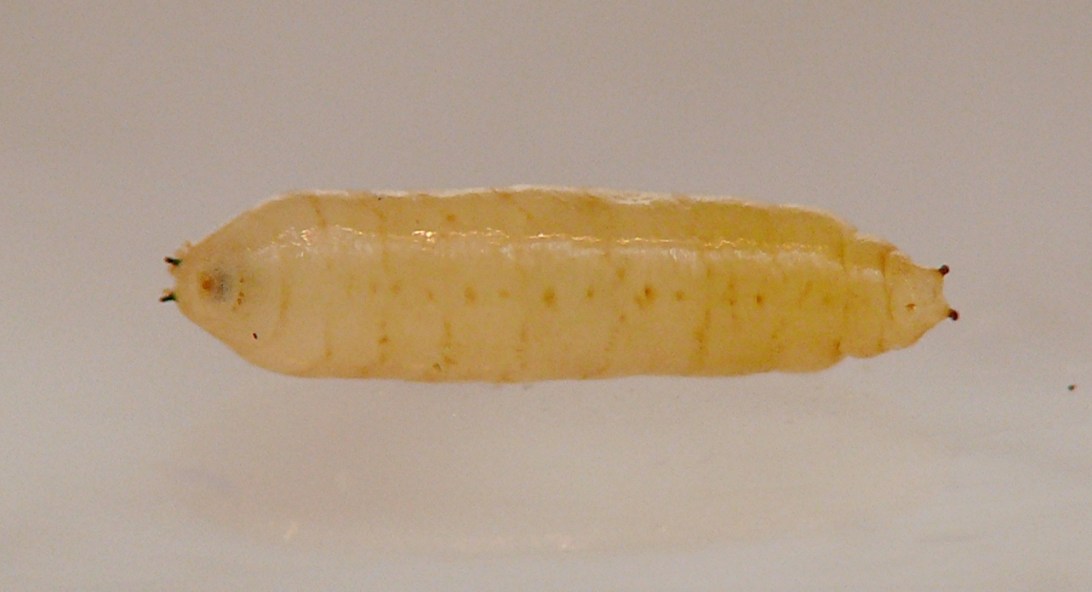
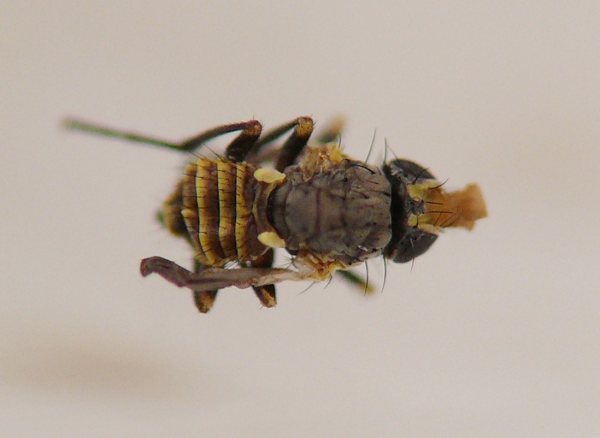
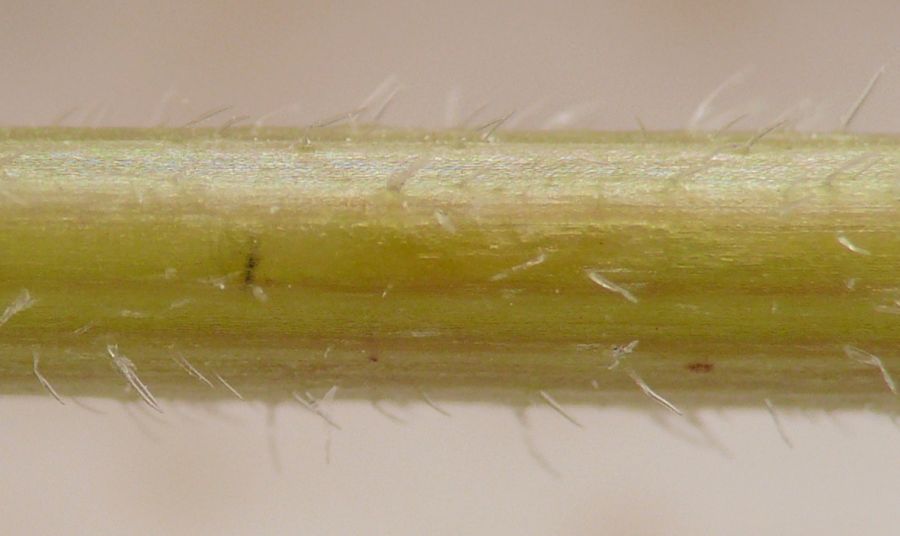
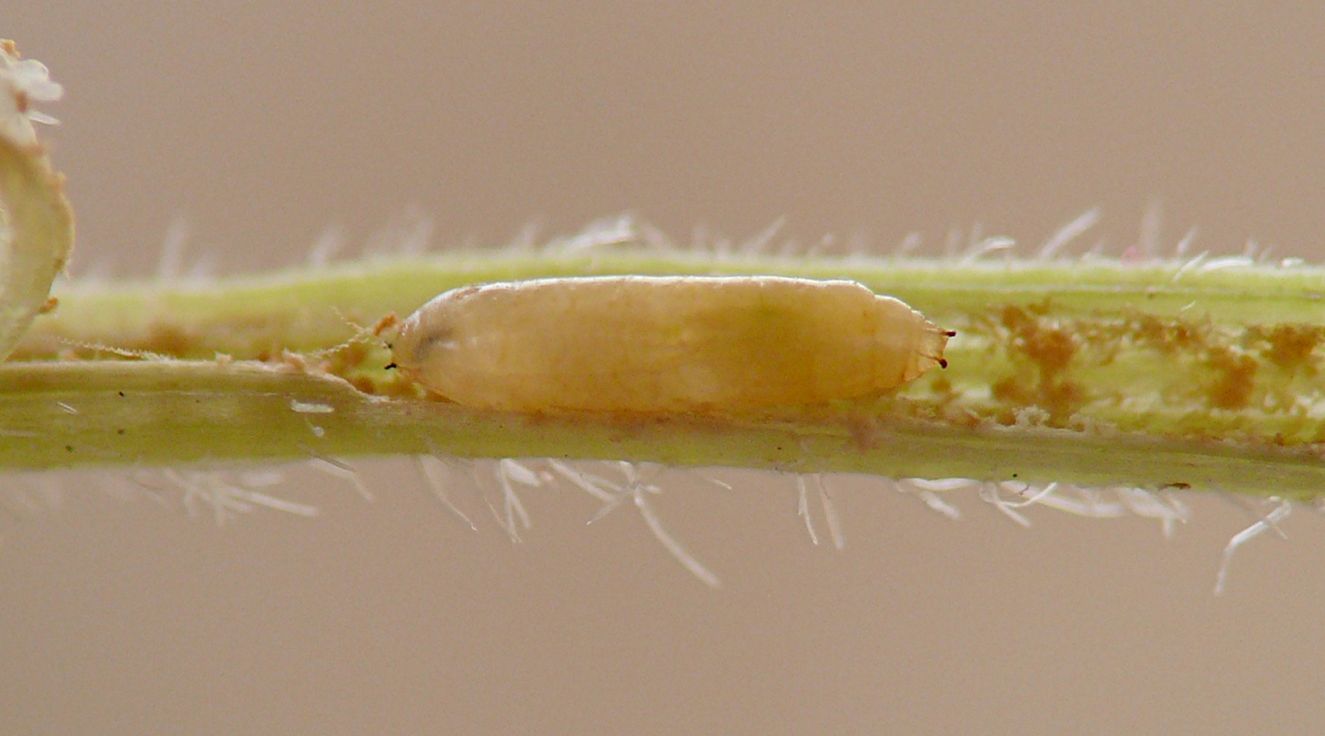
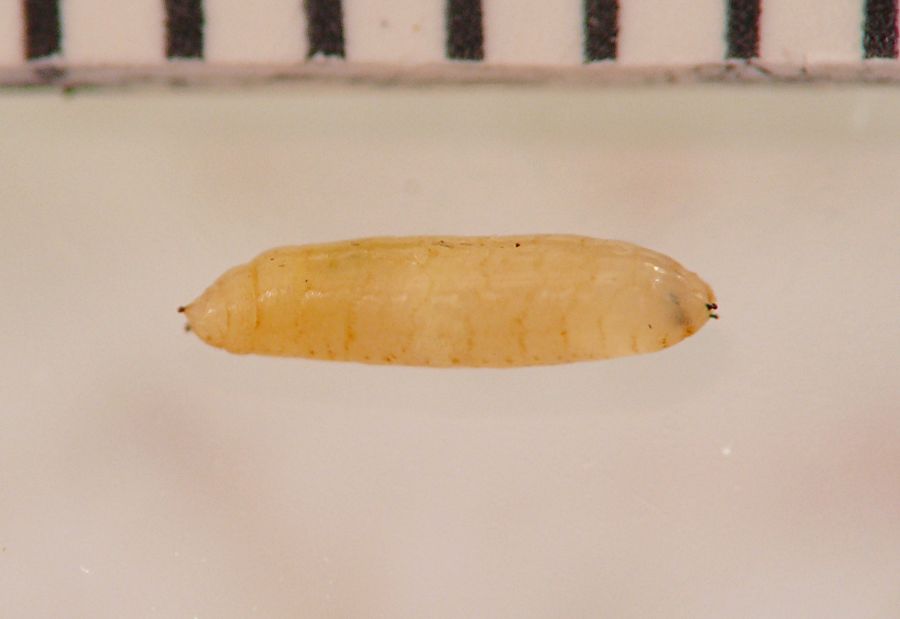
In September 2024, I found subtle mining or shallow tunneling in a senescing basal leaf petiole of the host. The black cephalopharyngeal skeleton of the larva was externally visible at close examination, moving rhythmically as the larva fed. The puparium (length ~3.9mm) was formed in a rounded subsurface chamber that included an operculum apparently intended to serve as an exit window for the emerging adult. I reared an adult Phytomyza from this puparium, which I am suggesting may be P. nugax since I have have reared an adult of that species from an essentially identical puparium in a petiole of wild parsnip, Pastinaca sativa (record 0365) (see Eiseman et al. 2026). Dissecting the affected cow parsnip petiole revealed at least some of the larva's feeding occurred deeply enough to perhaps qualify as petiole boring rather than mining, although the petiole was not much thicker than the animal itself, making the distinction in this case probably a bit arbitrary!
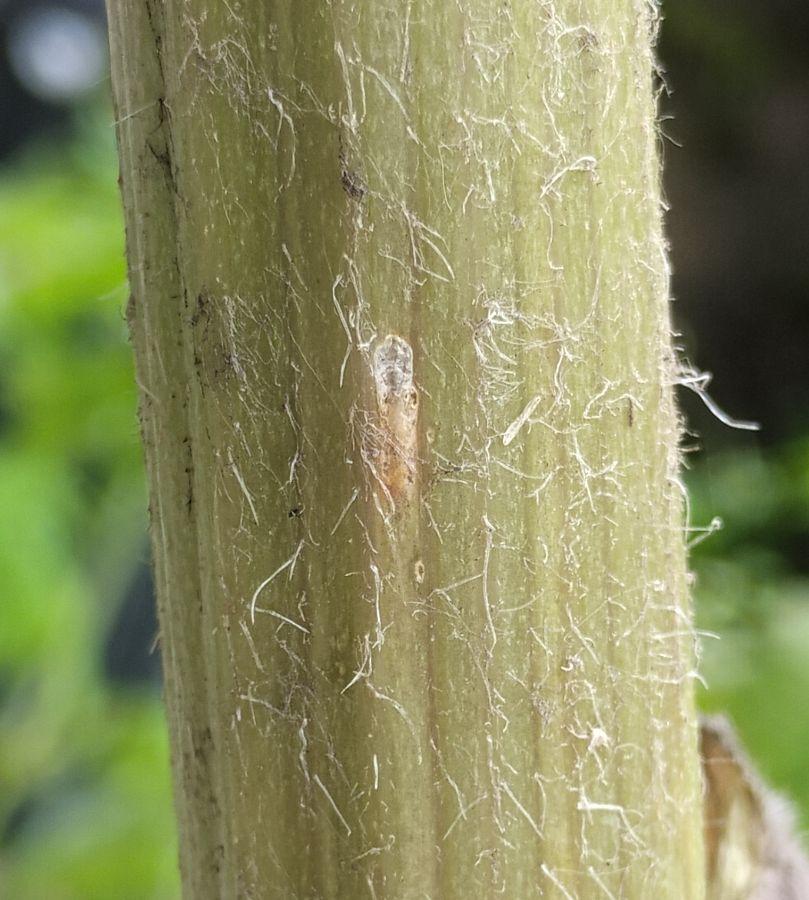
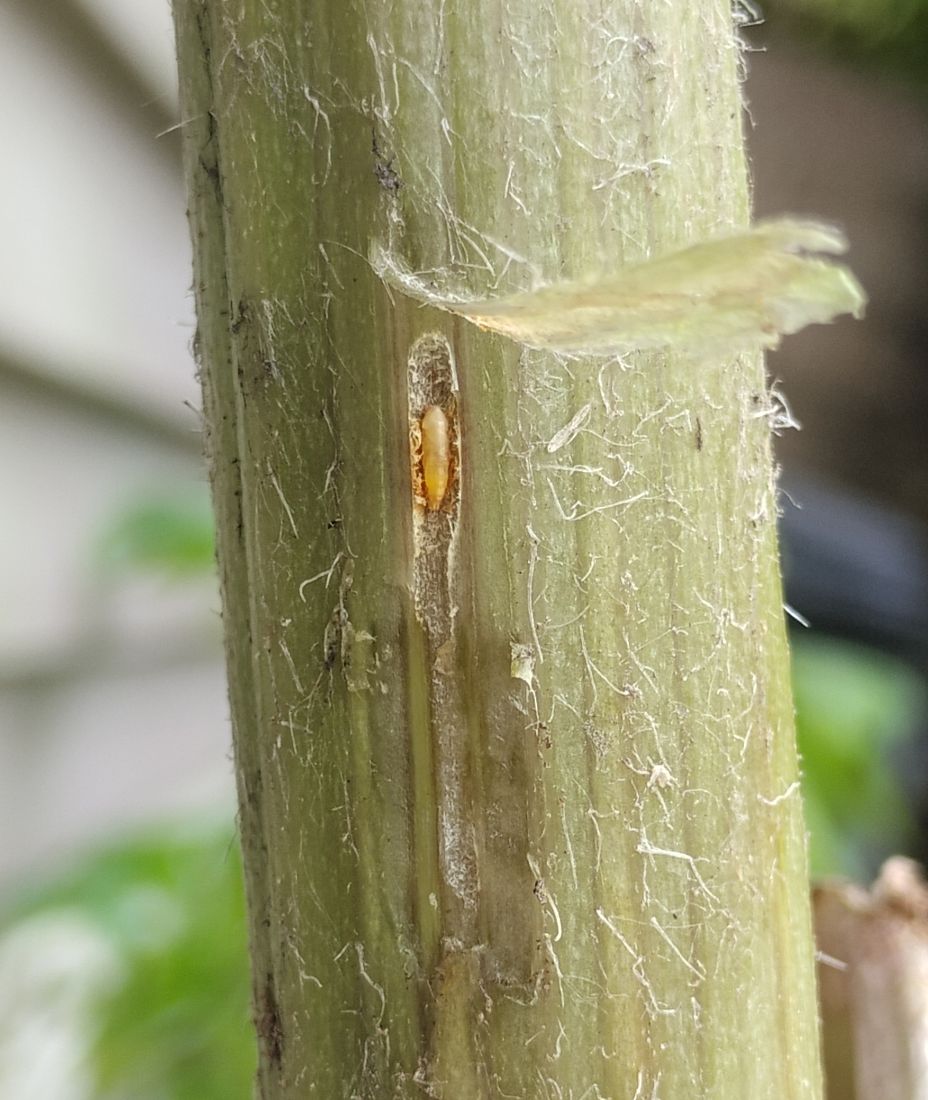
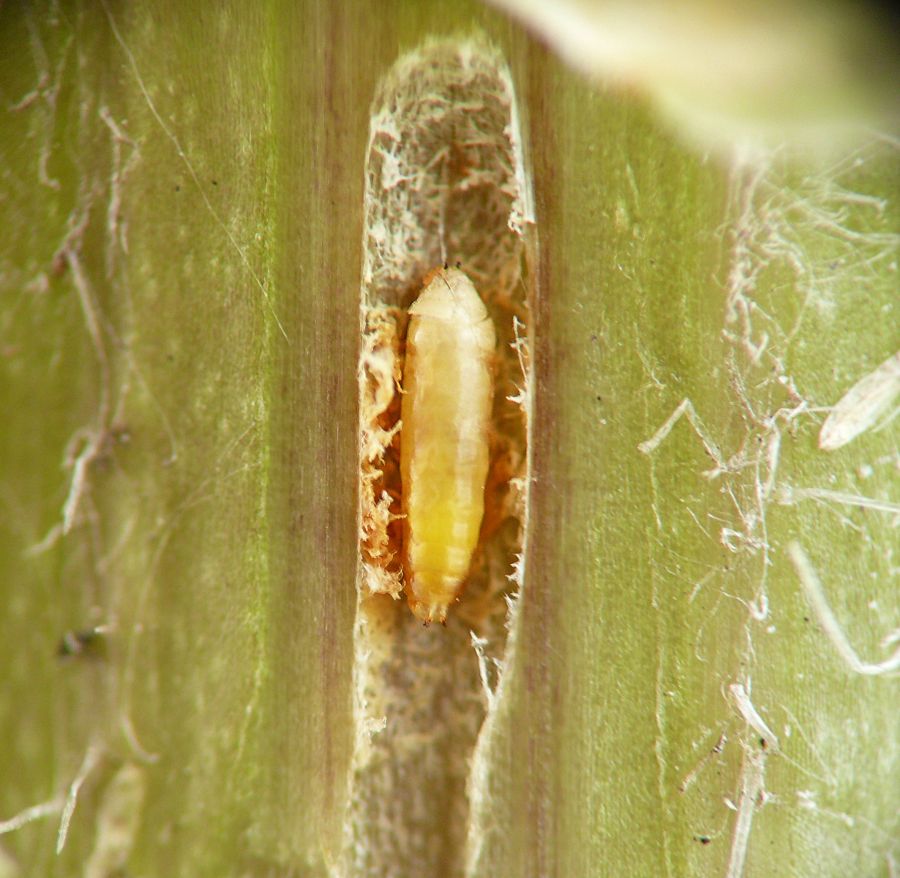
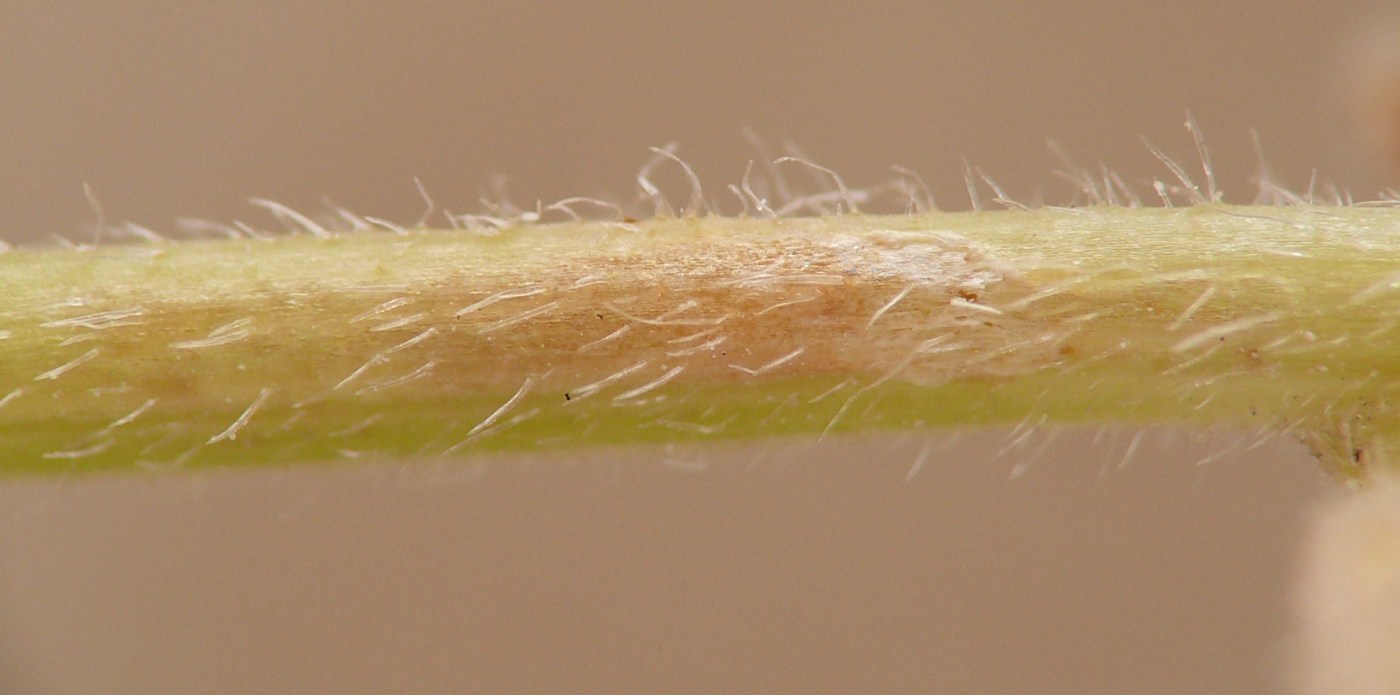
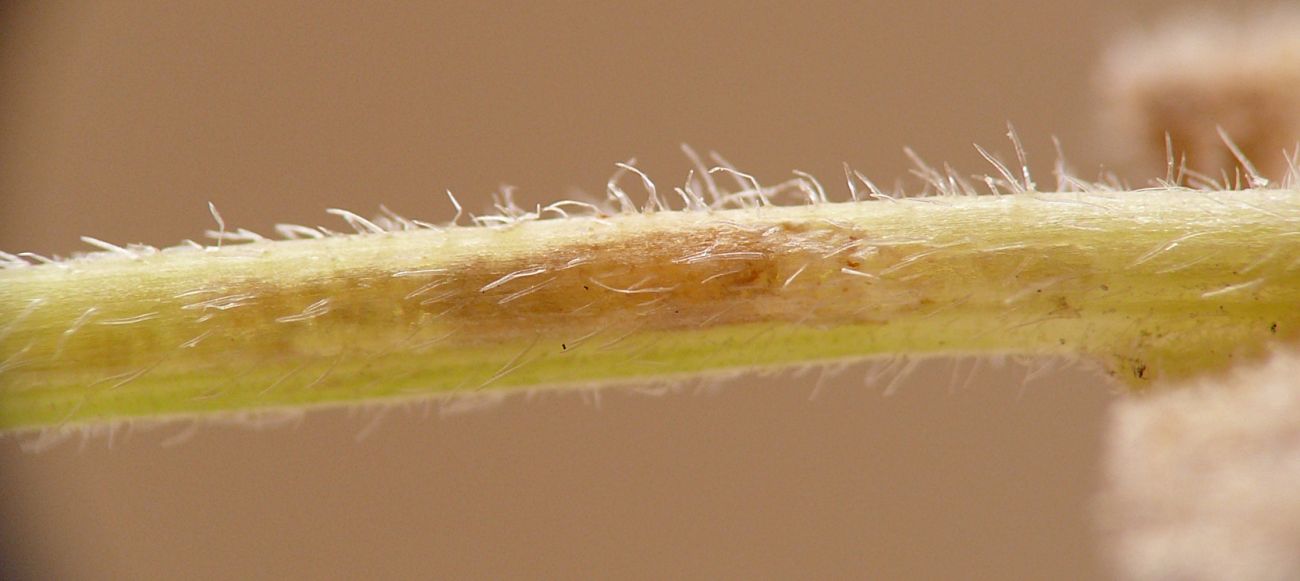
Next, in early July 2025, I observed a discolored, externally visible chamber in a stem of the host, similar to the terminal chamber in the petiole tunnel from 2024, with a spent agromyzid puparium positioned under an operculum in the epidermis at the top end of the chamber. The larva's tunnel in the stem below the chamber was indistinct, but photos of the stem with a strip of epidermis peeled back suggest that the portion of the tunnel just behind the chamber was fairly shallow.
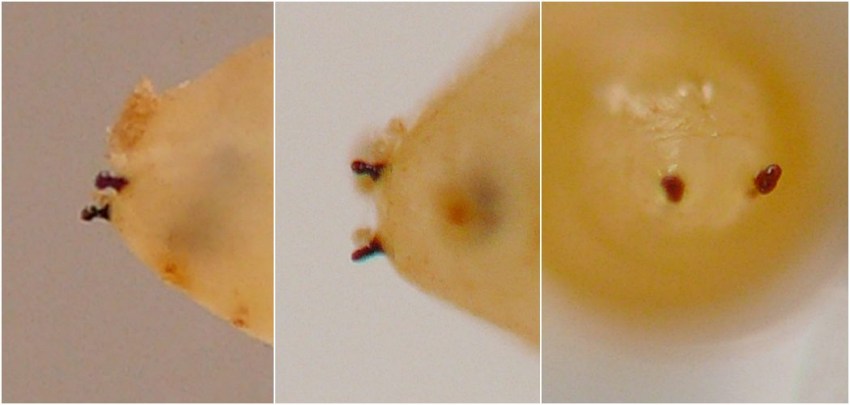
The observed puparia from a stem and a petiole were similar in appearance, and unusually long and narrow relative to their width, compared to most other stem agromyzids I observed in the survey. The anterior spiracles were borne on short stalks, and the posterior spiracles also protruded significantly from the main body of the puparium.
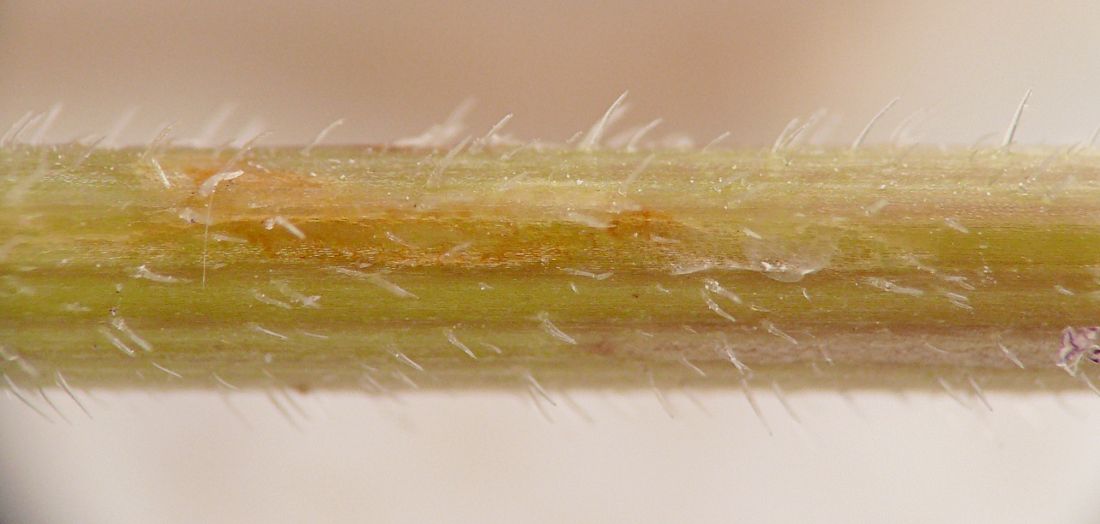
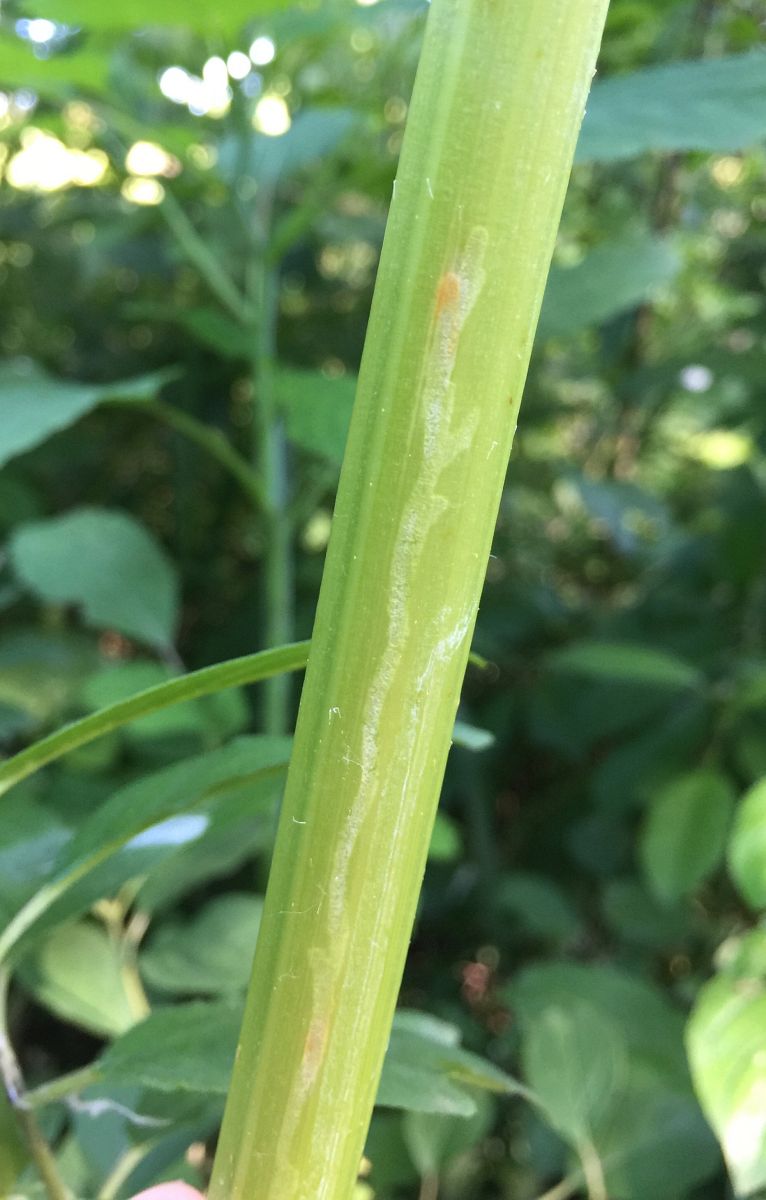
Also, in the end of June 2024, I found a shallow stem mine I am speculatively attributing to this species. The white linear mine (image 695-01) moved up the stem and contained several short, fingerlike excursions branching off the main track. The mine appeared to end in a rounded, orangish chamber slightly wider than the rest of the trail. I did not observe whether this chamber contained a puparium. The external appearance of the terminal chamber was somewhat similar to that of the aforementioned stem and petiole examples that contained puparia, but the clear visibility of the mine stands in contrast to those other examples (in which the mining was difficult to see from the outside), and seems more similar to stem mines I have attributed to an undetermined Ophioymia on this host (record 0274).
 Prev
Prev
- Eiseman, C.S., Lonsdale, O., Feldman, T.S., and J. van der Linden. 2026. Thirty-three new species of Agromyzidae (Diptera) from the United States and Canada, with new host and distribution records for 154 additional species. Zootaxa 5745(1): 1-265.[return to in-text citation]
Page created: March 23, 2026. Last update: March 23, 2026