Internal feeder (Lepidoptera: Heliozelidae) in Parthenocissus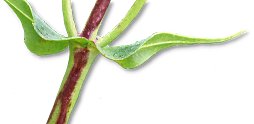
| Record no.: | 0729 |
|---|---|
| Feeding guild: | Internal feeder in stem |
| Taxonomy: | Lepidoptera: Heliozelidae: cf. Heliozela sp. |
| Stages observed: | trace, larva |
| Distribution observed: | IA |
| Hosts in Parthenocissus: | undetermined P. sp. (woodbine / Virginia creeper) |
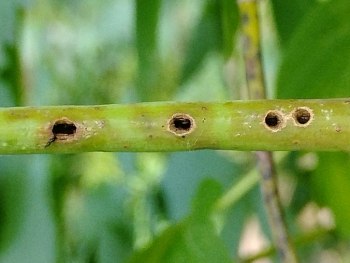
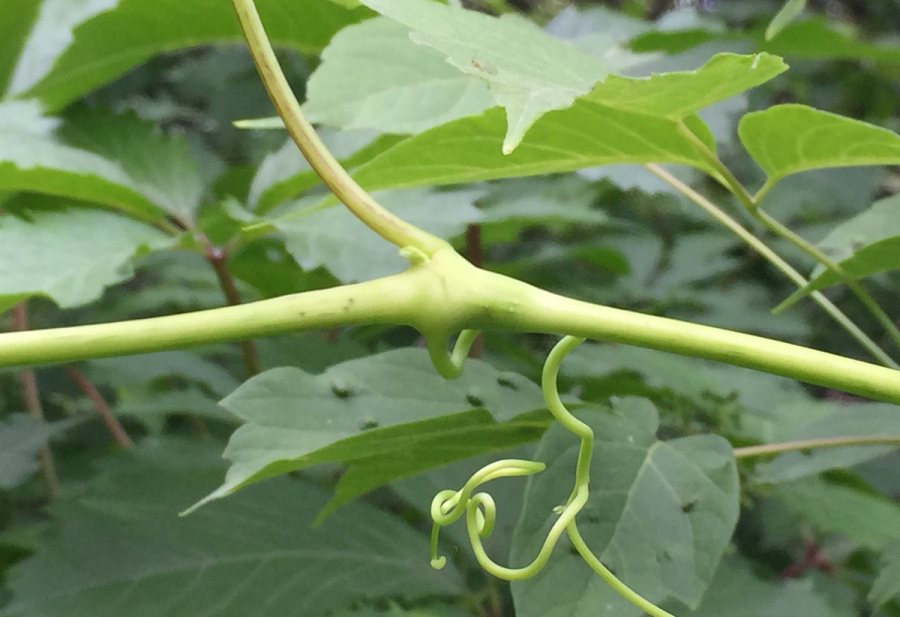
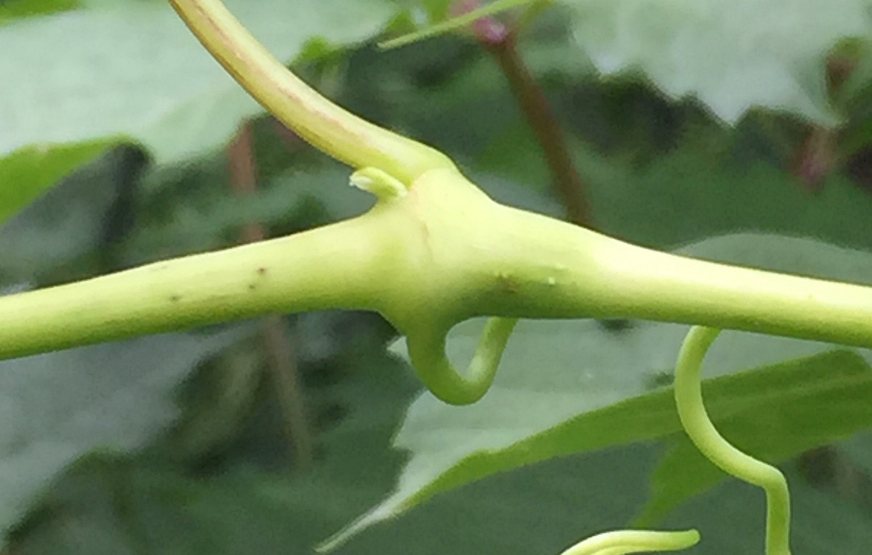
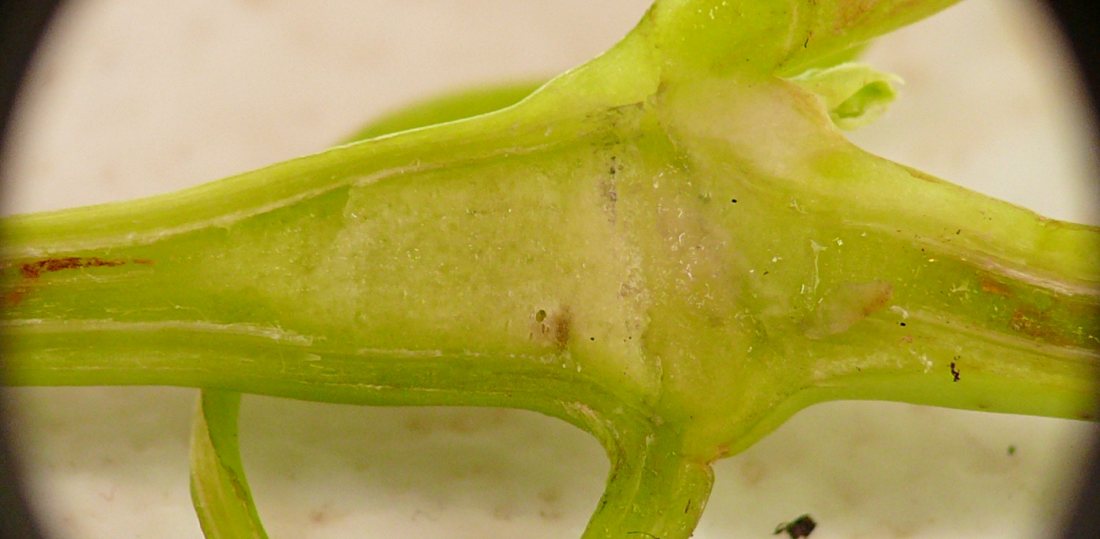
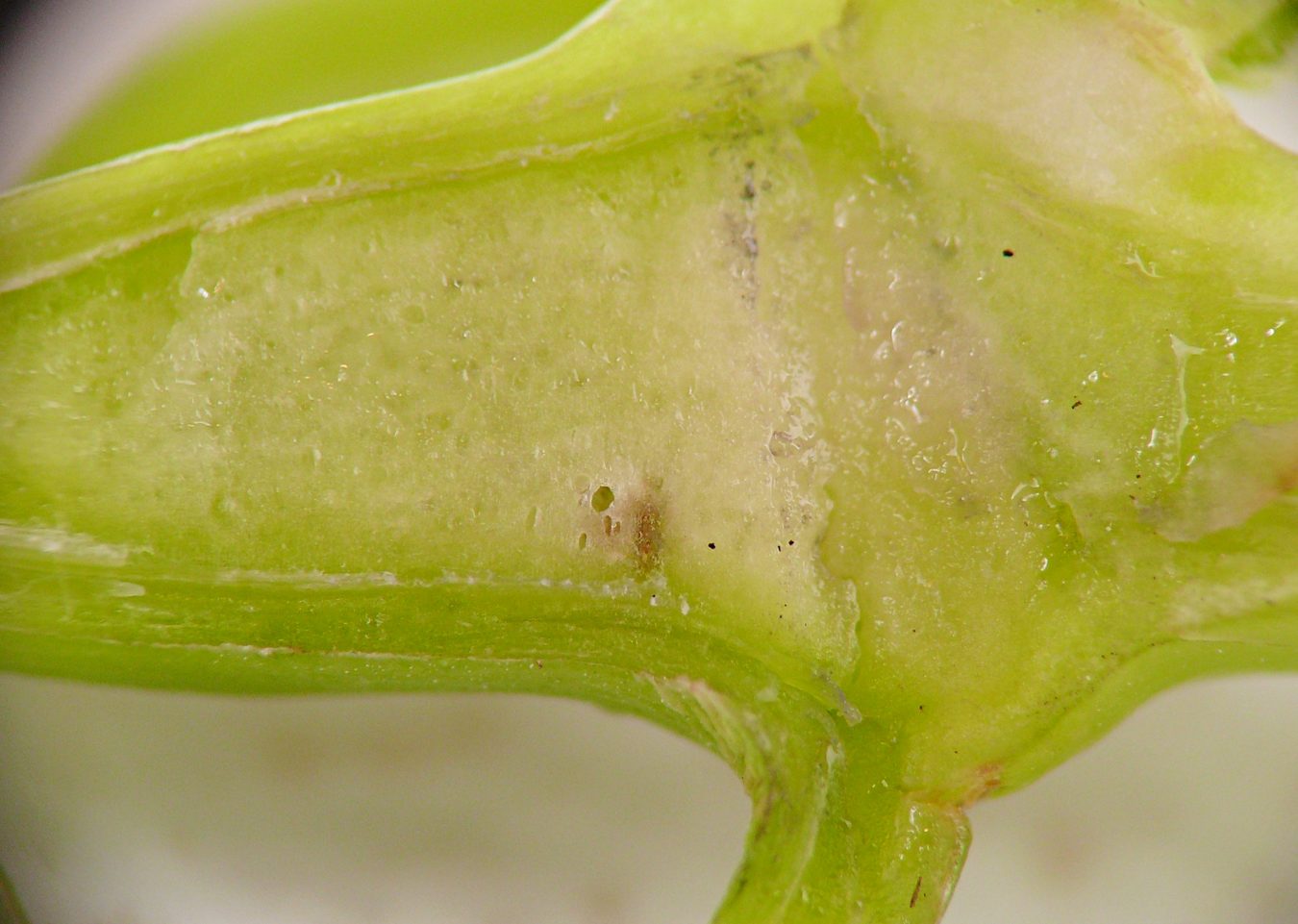
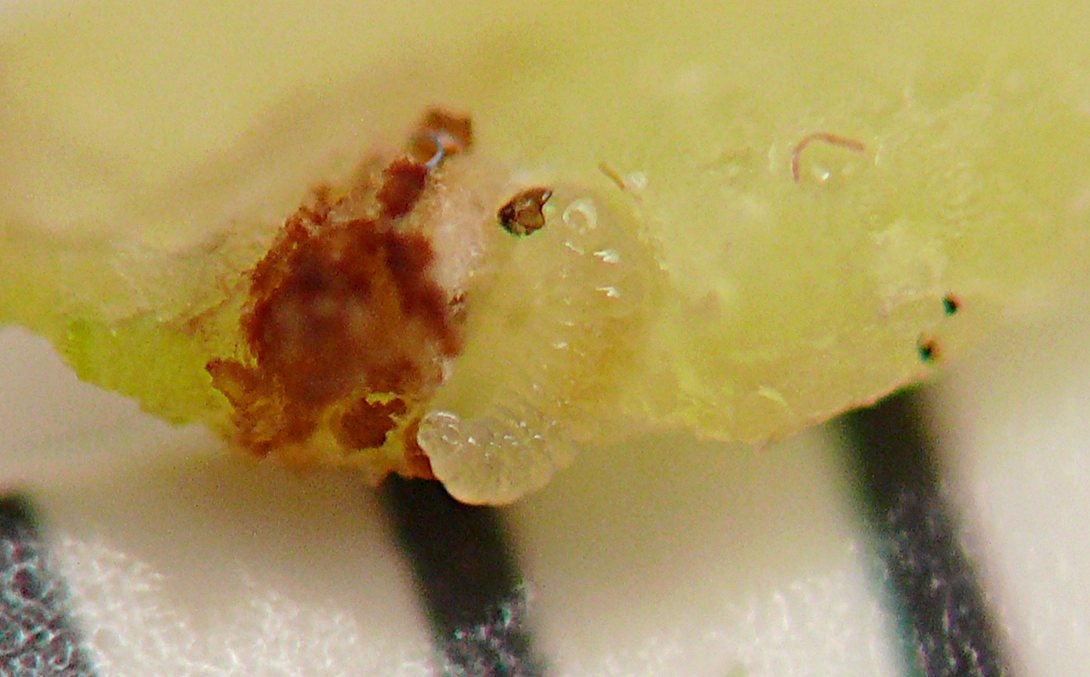
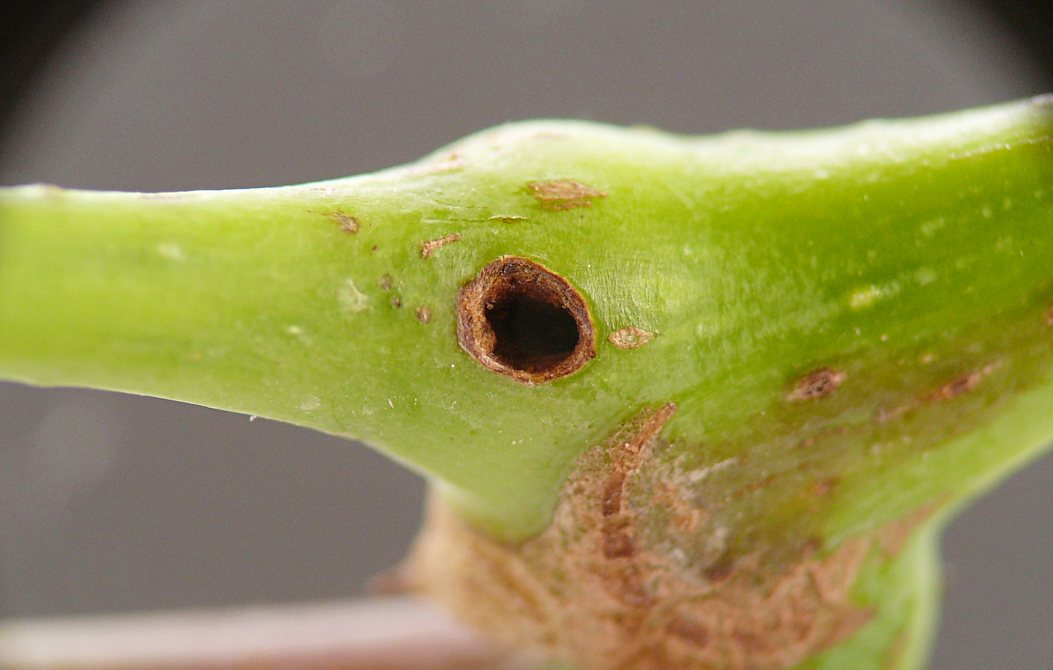
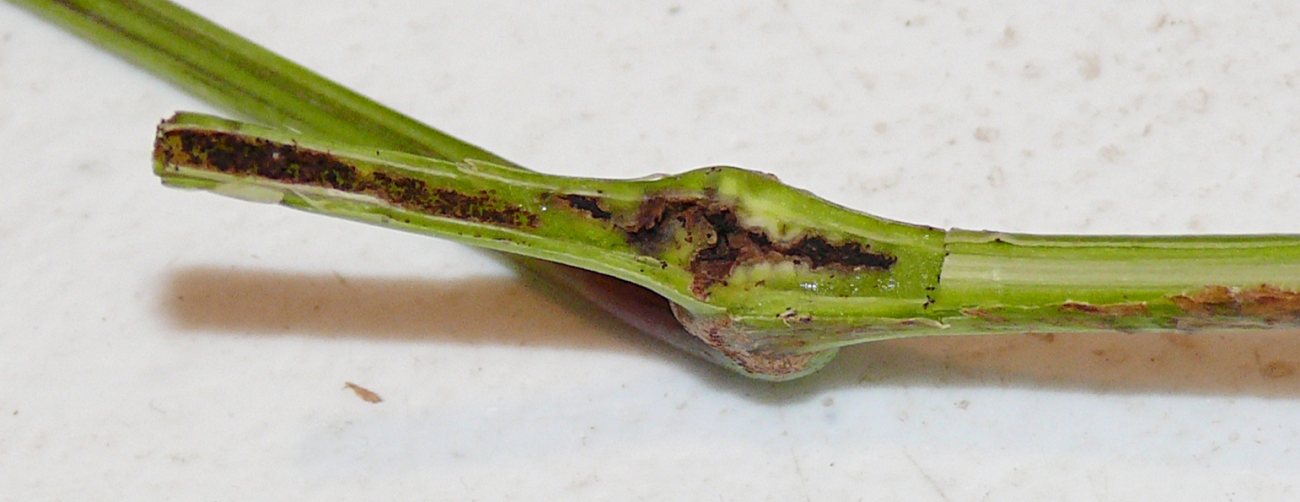
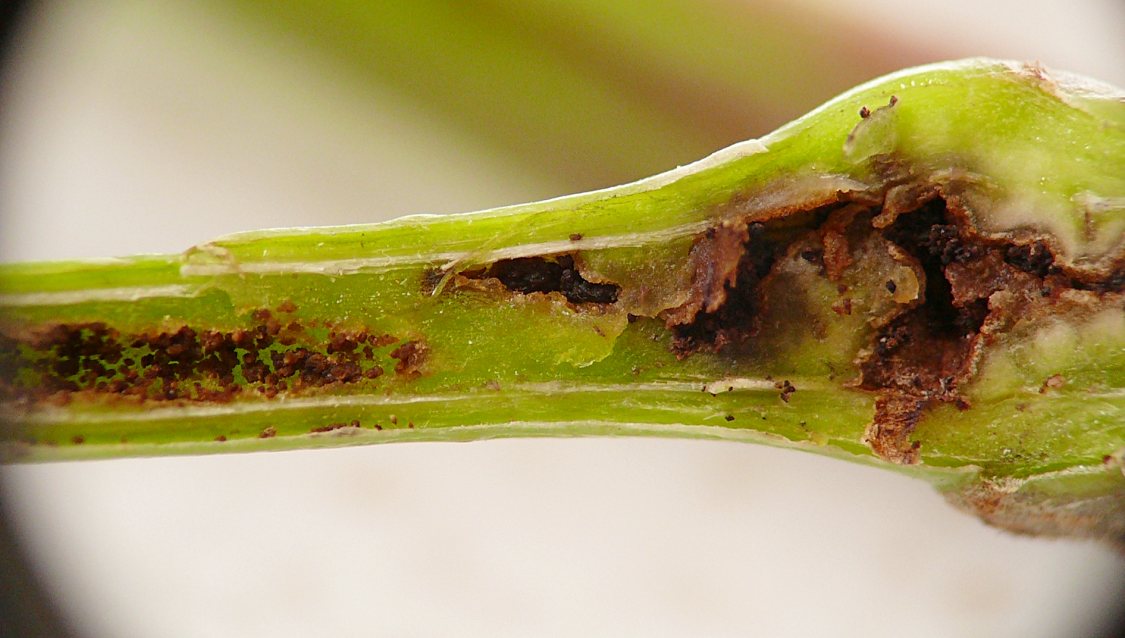
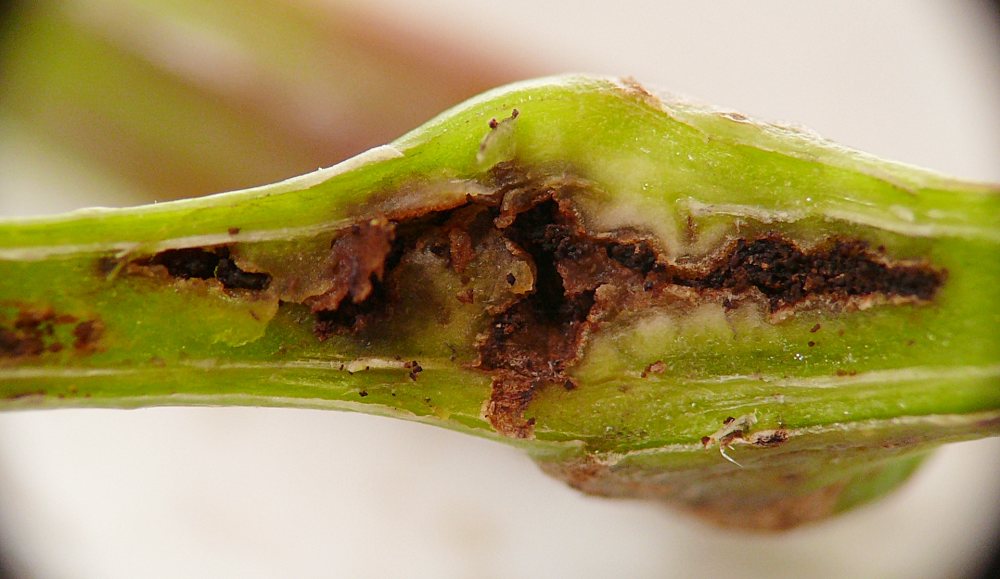
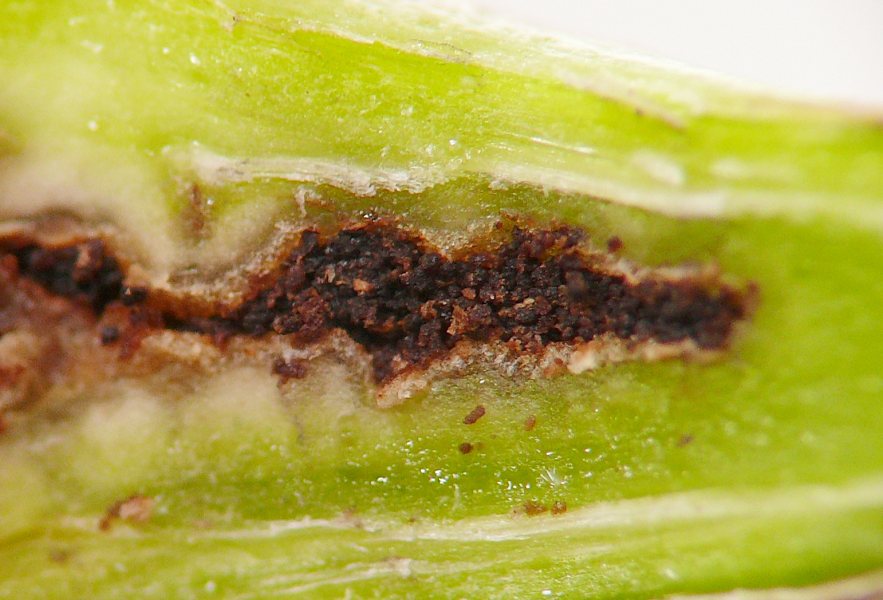
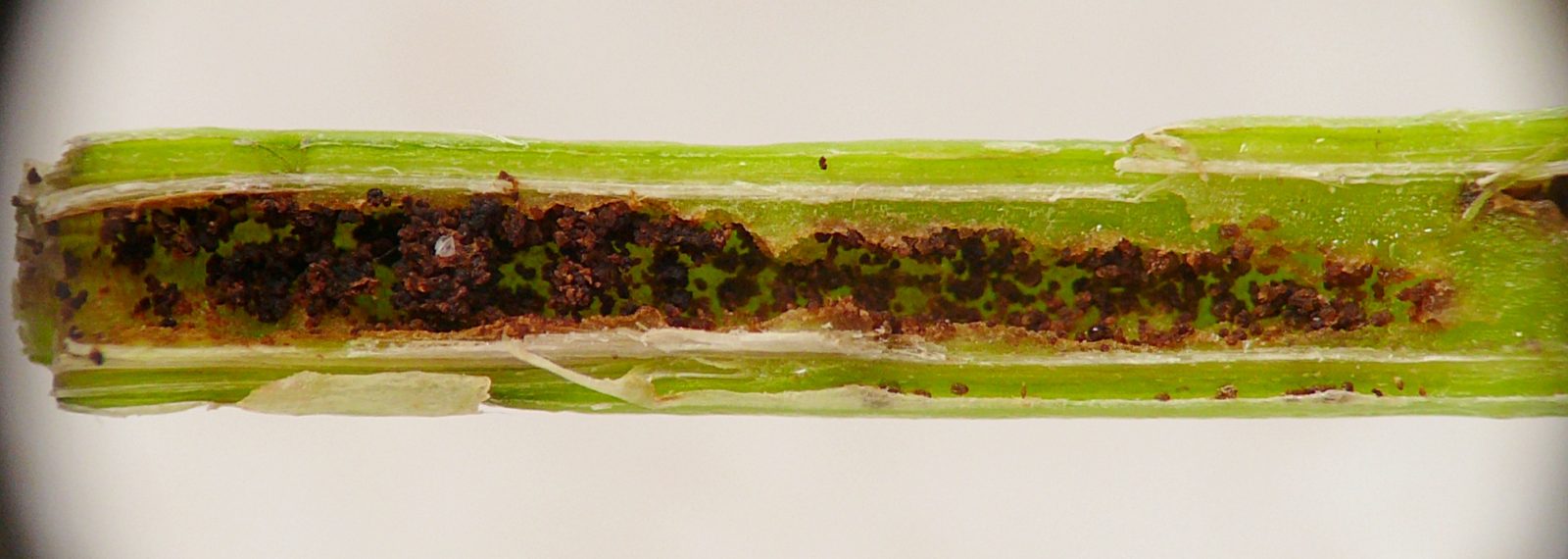
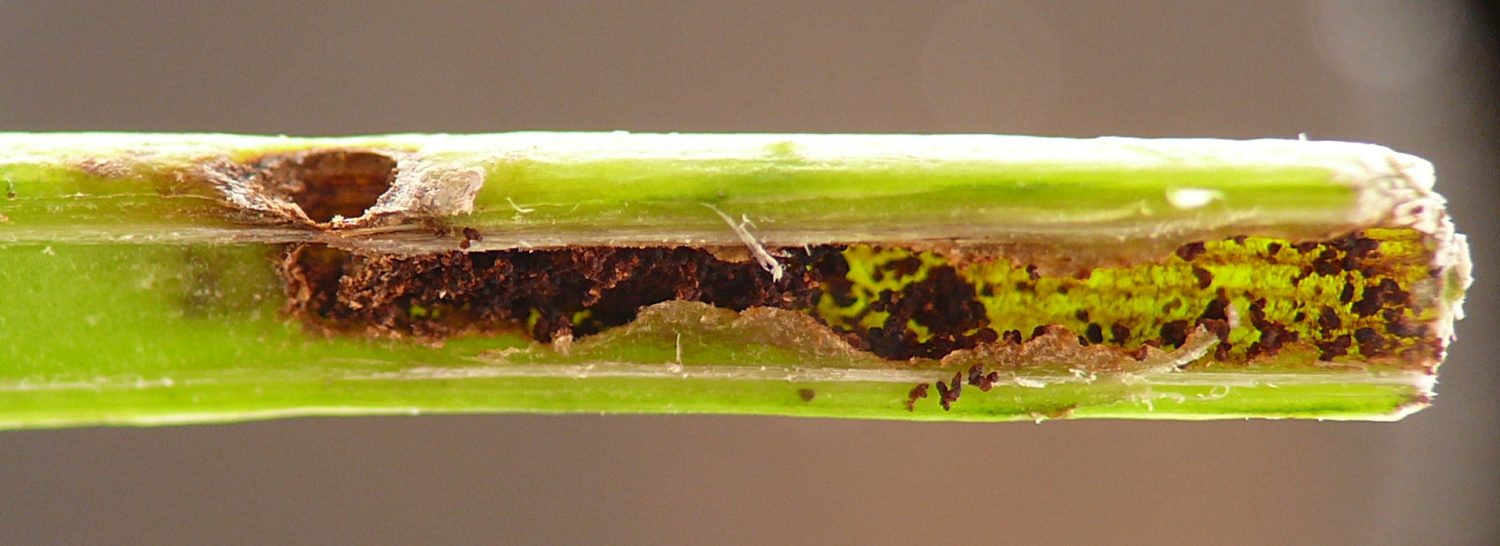
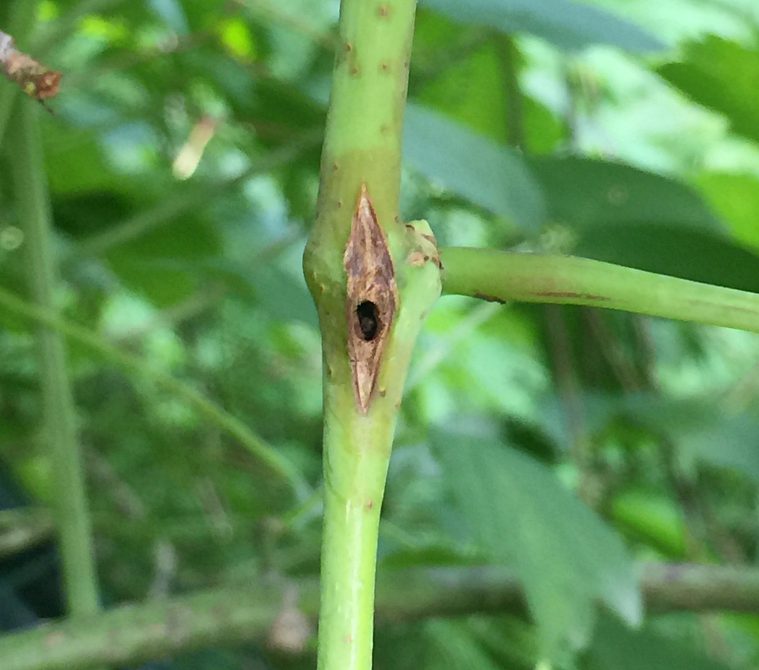
I have observed an apparent Heliozela species tunneling in main stems of Parthenocissus in mid-June. Each larva's tunneling occurs deep in the pith of a localized area at a node or sometimes in an internode, the localized area roughly 10-30mm in length. Affected nodes may swell, forming a rather subtle gall. I did not observe any clear swelling in affected internodes. The tunneling itself is not externally visible until the larva exits the plant material (see below).
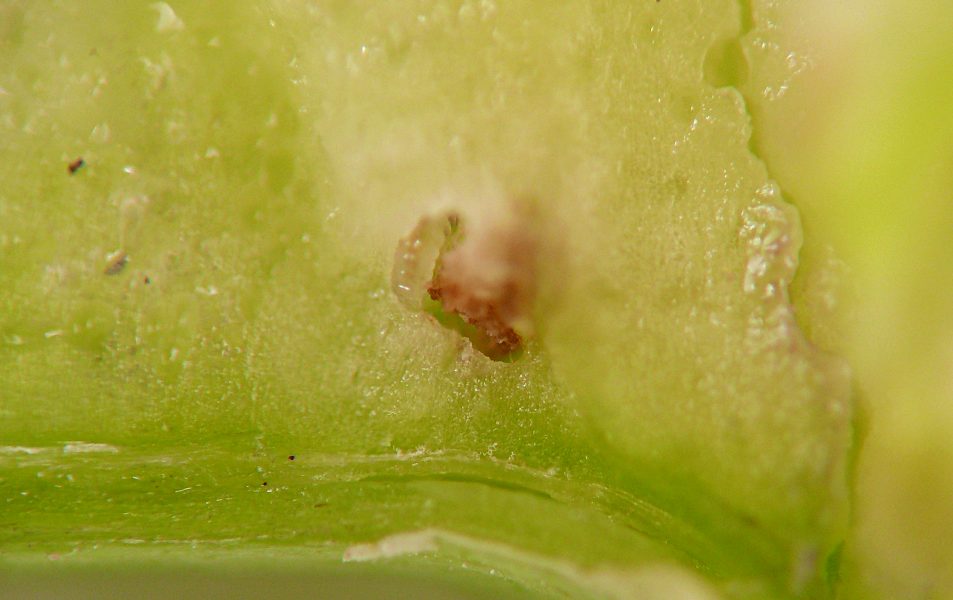
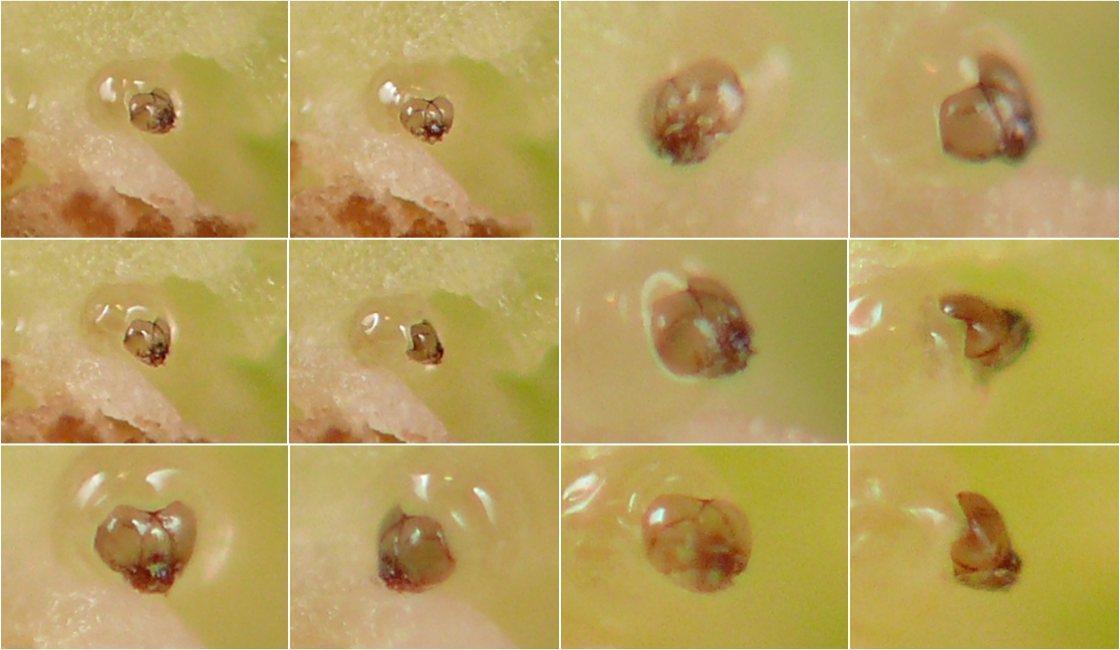
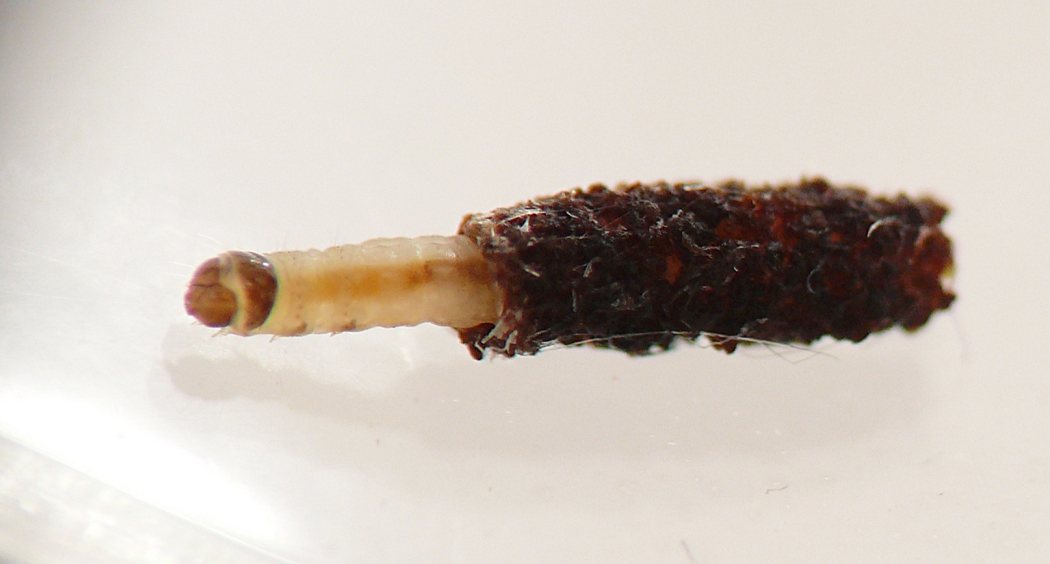
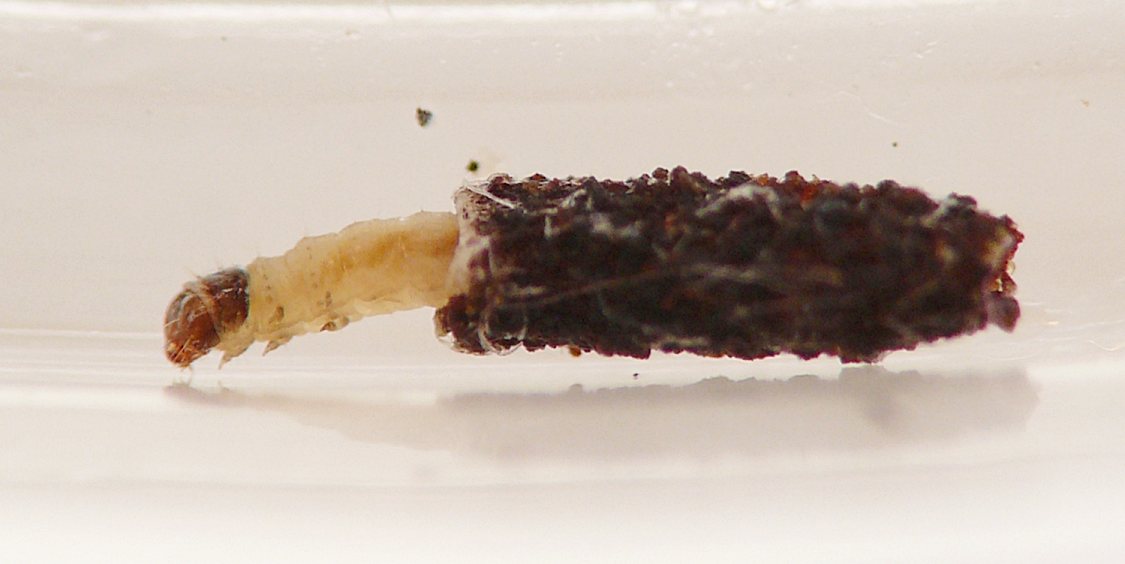
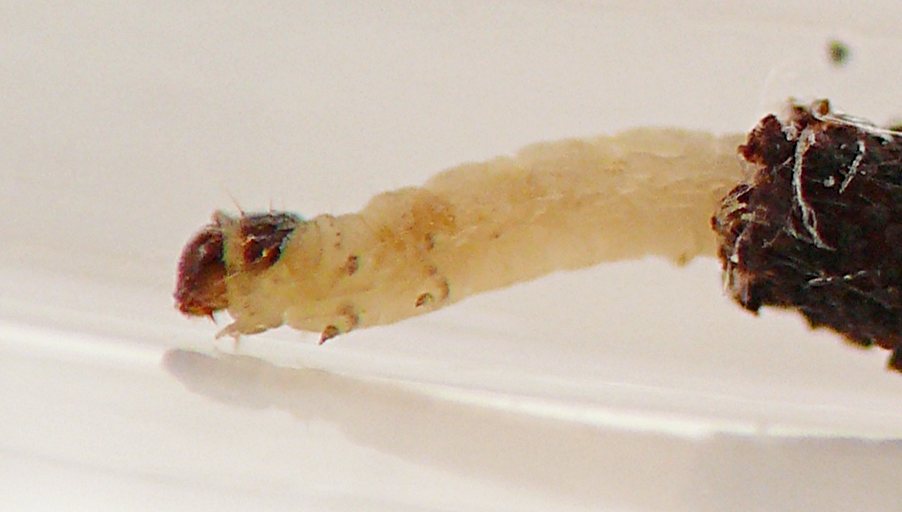
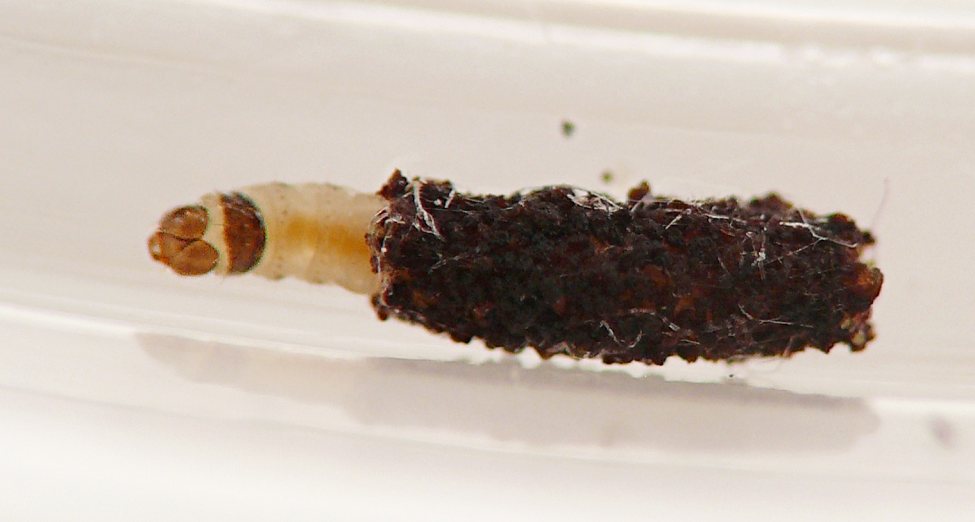
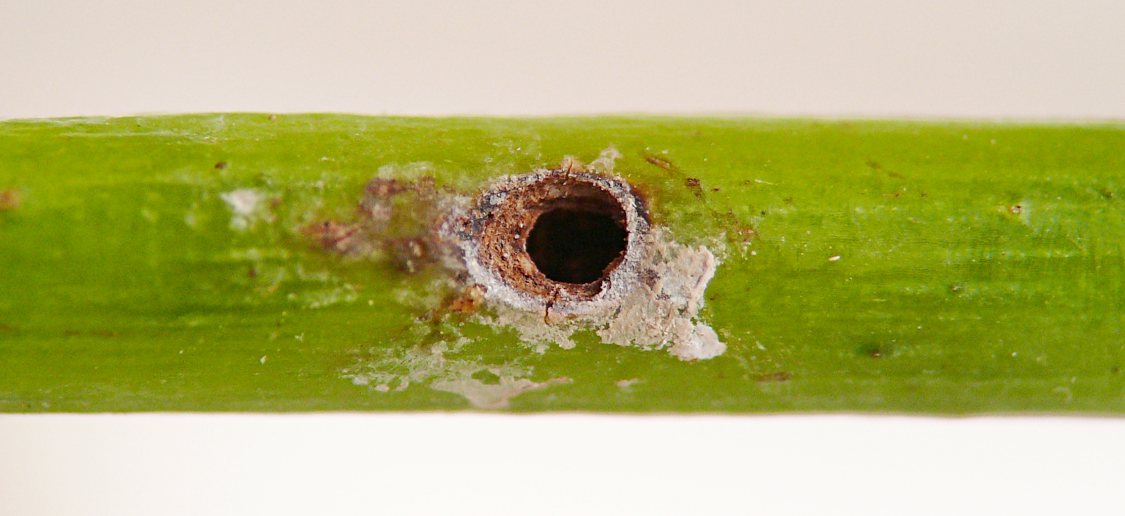
In 2025, I found a recently hatched larva in a swollen stem node on 11 June. It developed very rapidly, hollowing out most of the gall. By 19 June it had formed a tubular case around itself (covered with dark brown pellets of its own frass) and exited the plant material in the rearing container. Exit holes of other individuals had been formed in the field at the same site by 20 June. I recorded the following notes in my journal about the sign left by these other individuals:
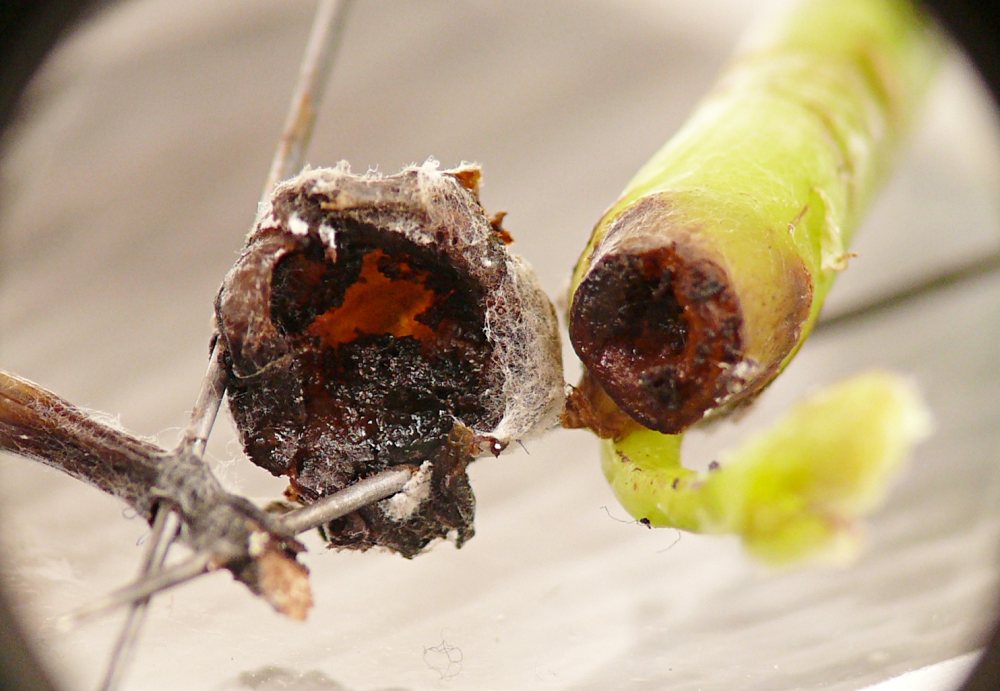
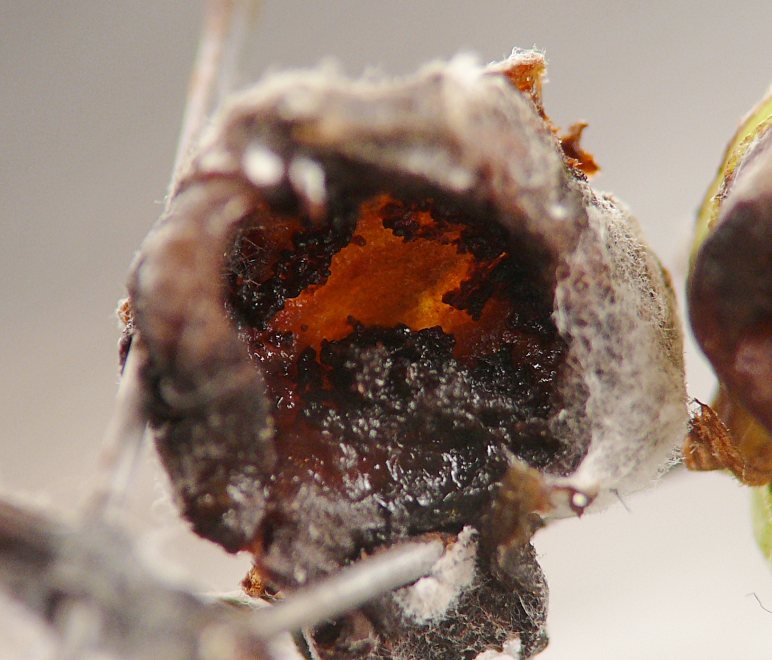
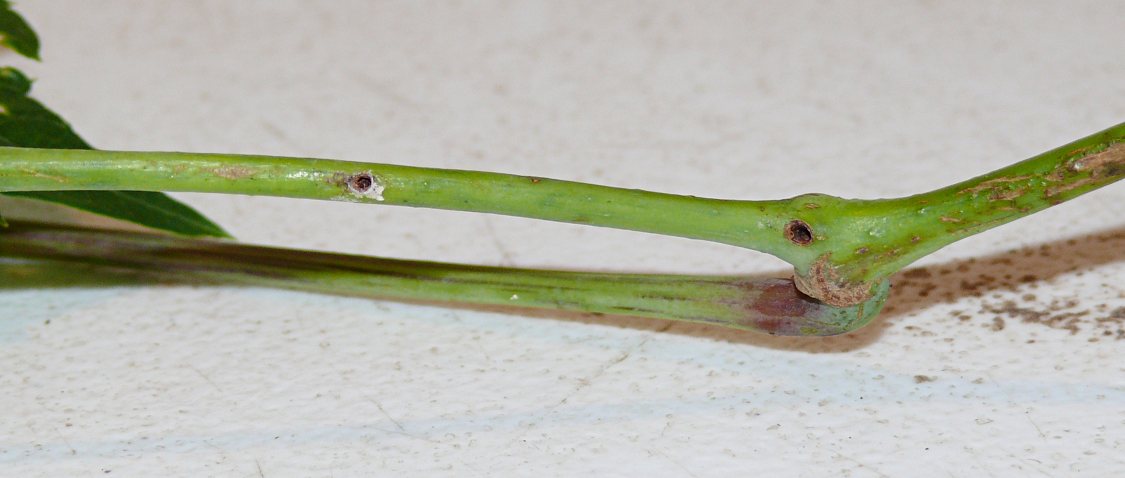
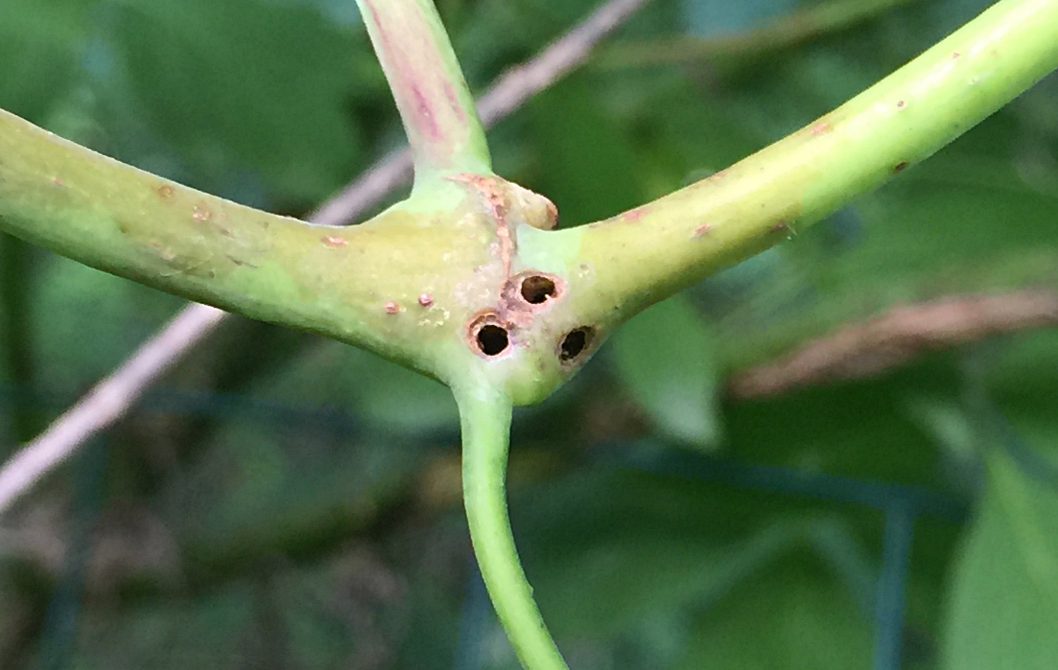
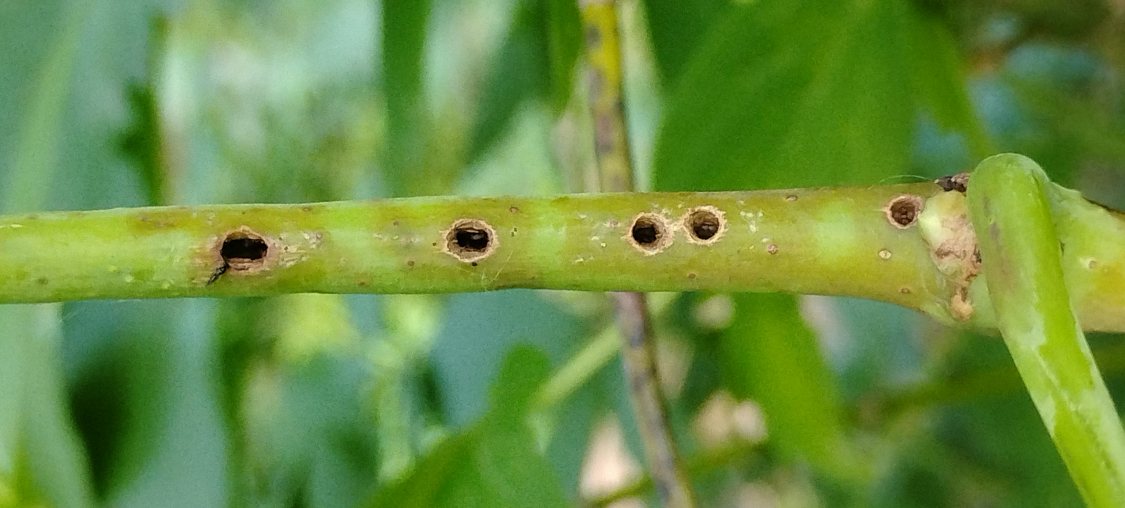
[Today, June 20,] I located another Parthenocissus individual plant next to the original one [from which I had collected the larva on June 11], and parting the foliage to look at its stem I immediately knew I was looking at the sign I had come here to find. Holes in the stem! Some round some oblong, the oblong ones possibly actually two holes side by side, or maybe these larvae just needed more materials for their cases for some reason. The holes were in both nodes and internodes, and corresponded to tunneled areas inside the stem. ... [P]hotos show one sprig of plant material I gathered that had 3 holes in it. Two of the holes were in internodes, with corresponding internal tunnels in the stem of length 27 and 24 mm; the third hole was in a node and the internal tunnel in the node was only 13 mm long but it was contorted and meandered throughout the node so that the volume tunneled out by the larva was probably comparable (maybe 20% less?) to the volume tunneled out by the internode larvae.
Differences in phenology and plant damage suggested to me that this species might be different from Heliozela near aesella (record 0363), which I have observed forming elongate petiole swellings in Parthenocissus. As alluded to in the preceding quote from my journal, based on my observations of the exit holes left by H. near aesella, I hypothesized that the exit holes left in the stem nodes and internodes by the current, allegedly distinct species of Heliozela are established when the larva excises a round or oval piece of epidermis, which it uses to form the foundation for its case. However, this is speculative, as I did not observe it directly.
 Prev
Prev
Page created: March 12, 2026. Last update: June 9, 2026