Exit holes
This page is no longer being updated. For the most up-to-date version, please visit Exit holes (survey/pages/exit-holes.html).
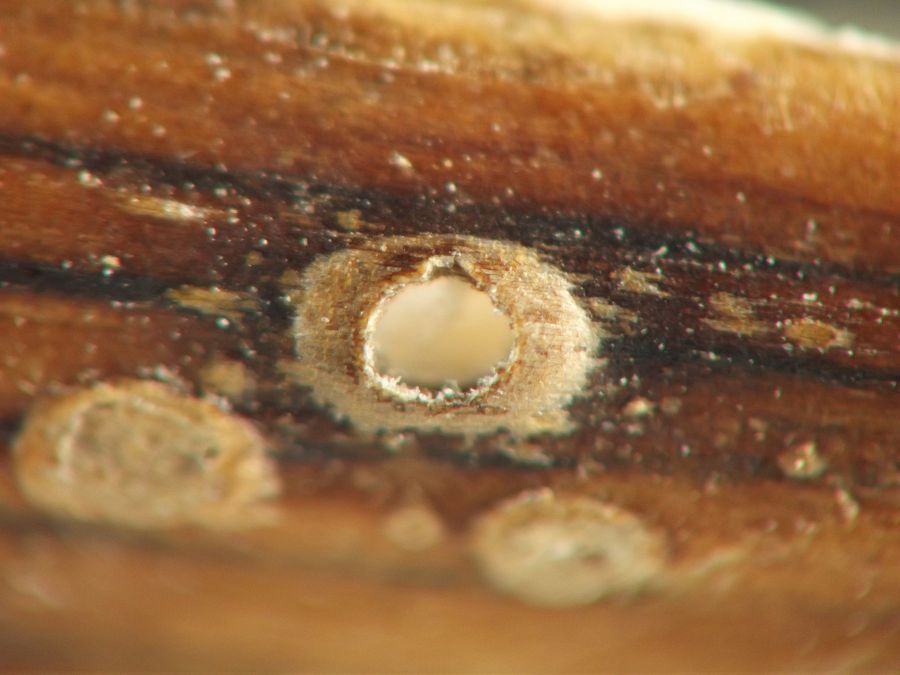
This page collects some of my images of borer, miner/borer, and local feeder exit holes in stems and stemlike structures, organized by insect taxonomic group.
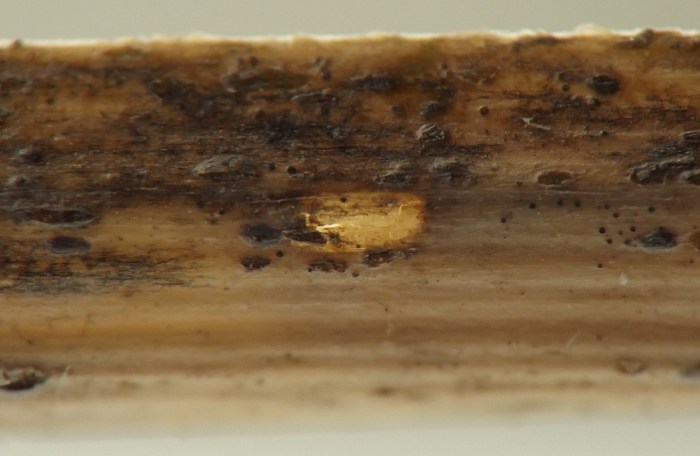
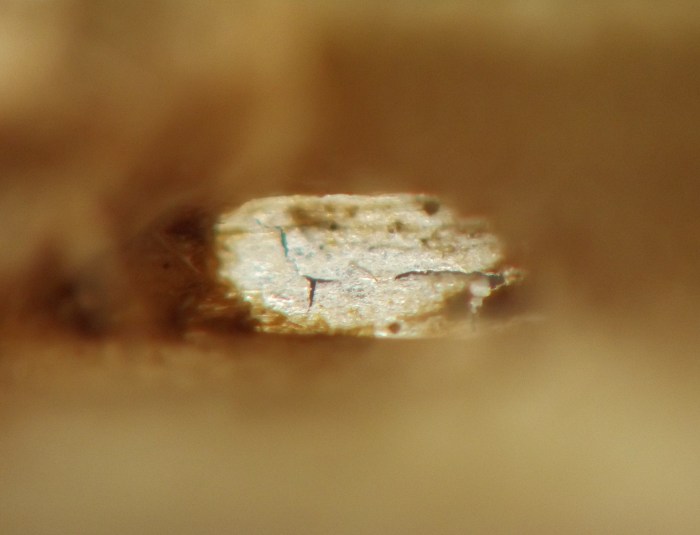
Diptera: Agromyzidae: Melanagromyza stem borers.
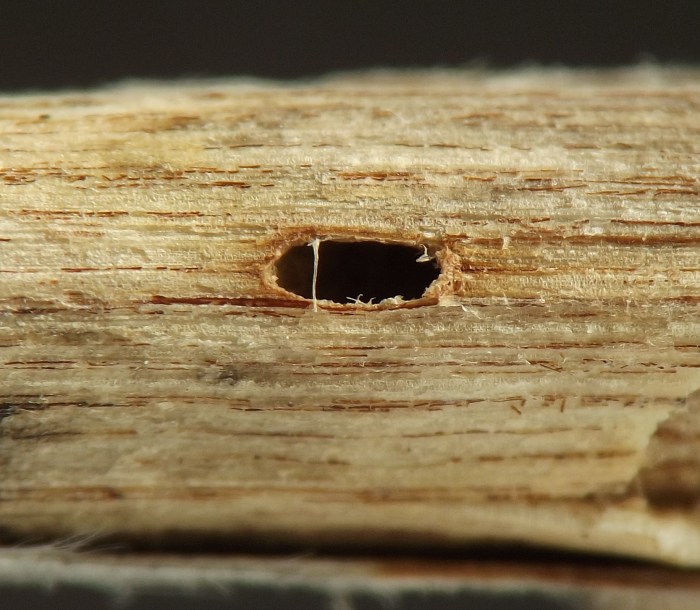
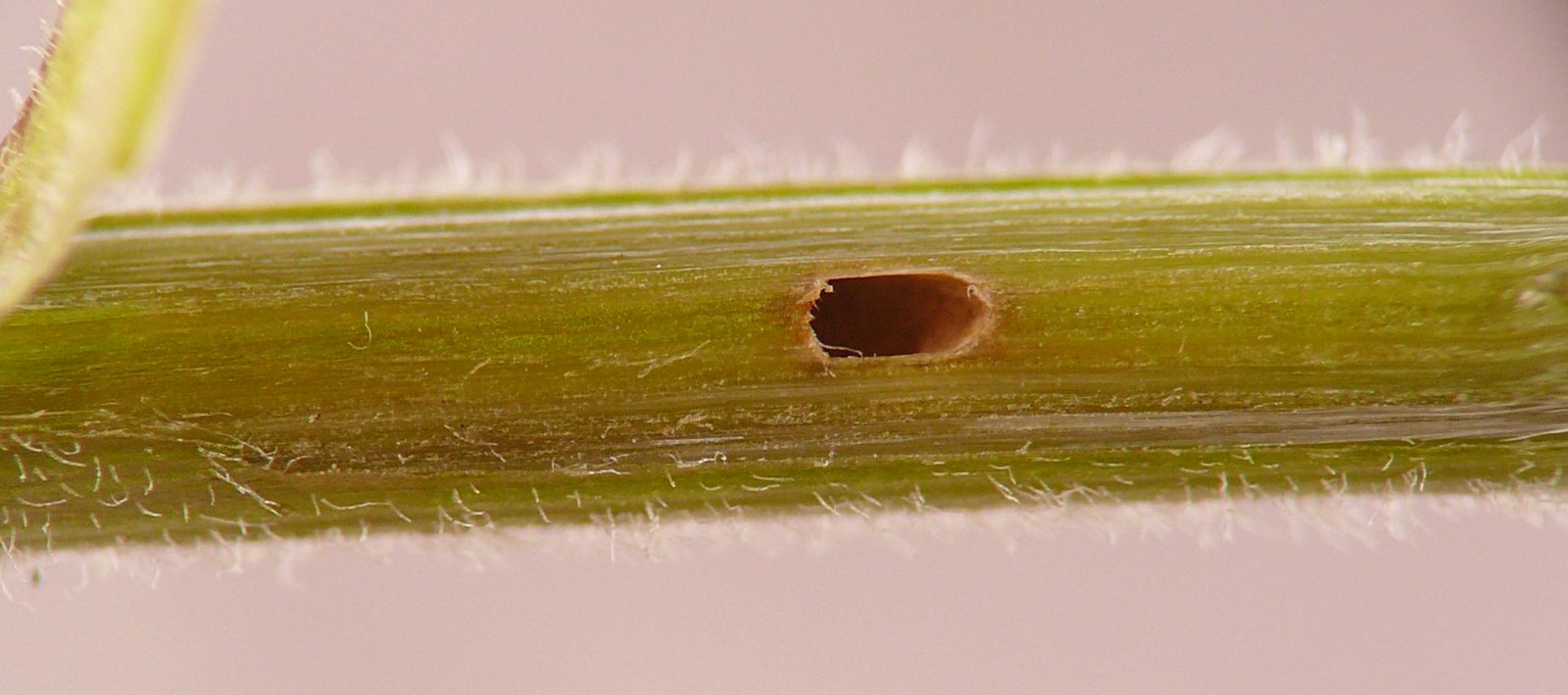
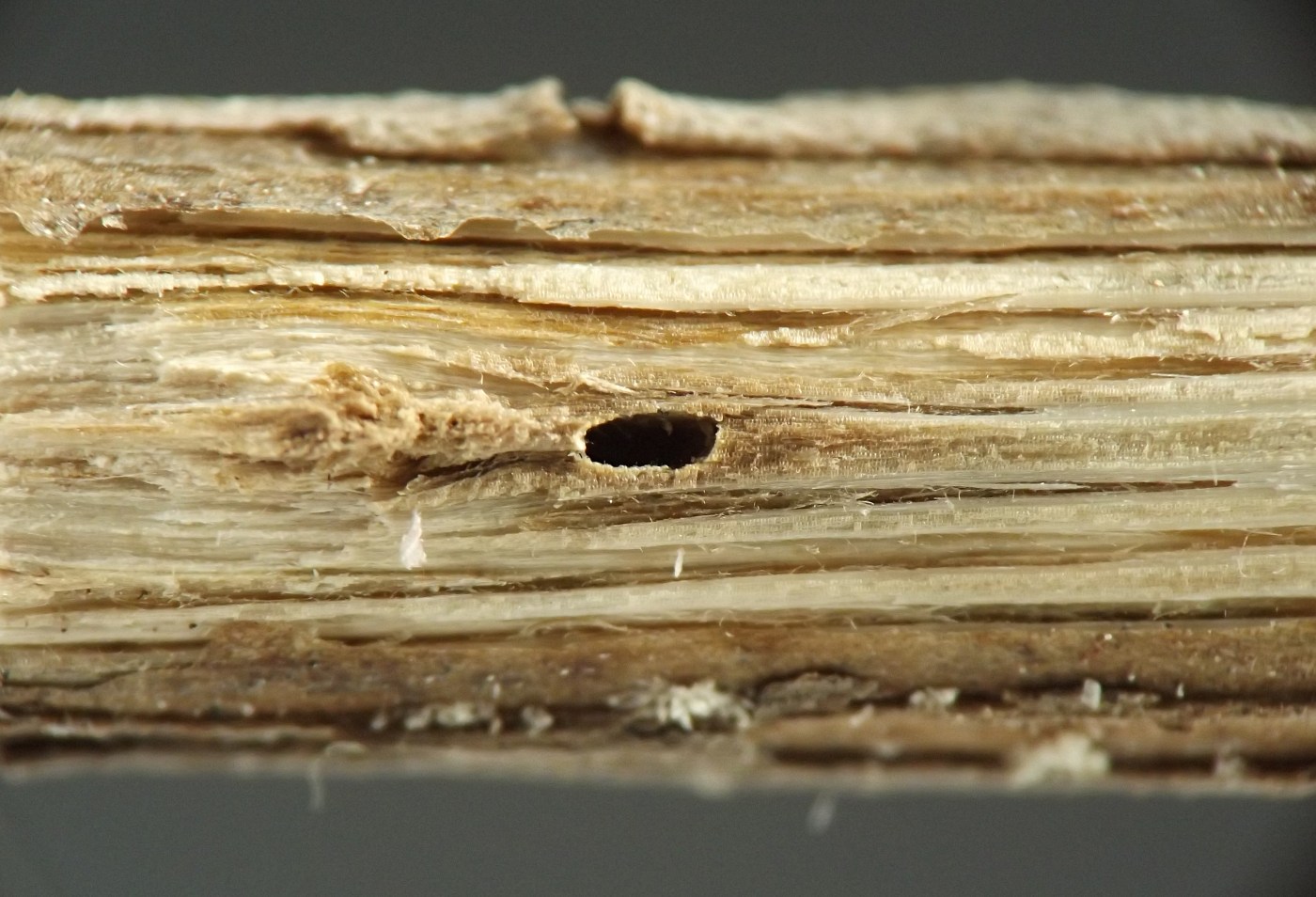
Exit holes for emerging adults, prepared by the larvae prior to pupation and typically covered by an operculum of epidermis (which I removed for most of these photos). The holes are oblong, two to three times as long as wide, with the long axis of the hole parallel to the long axis of the stem. What I've seen of tephritid borer (e.g., Strauzia) larval exit holes have been similar in shape and orientation, but larger.
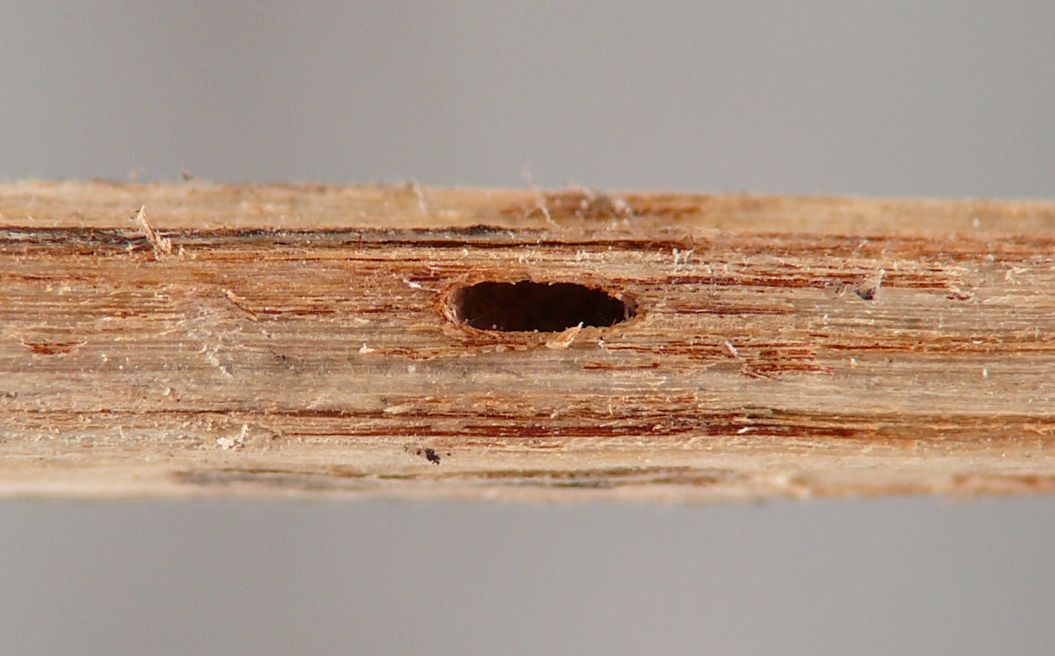
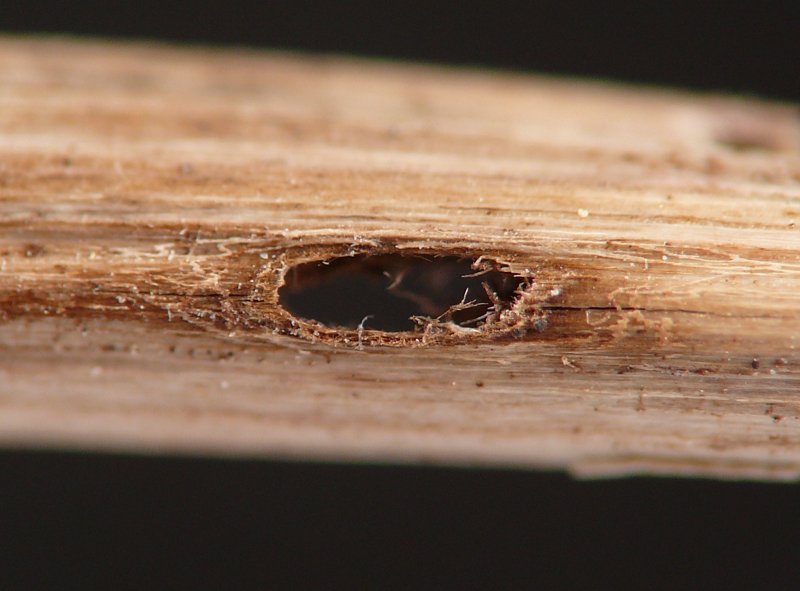
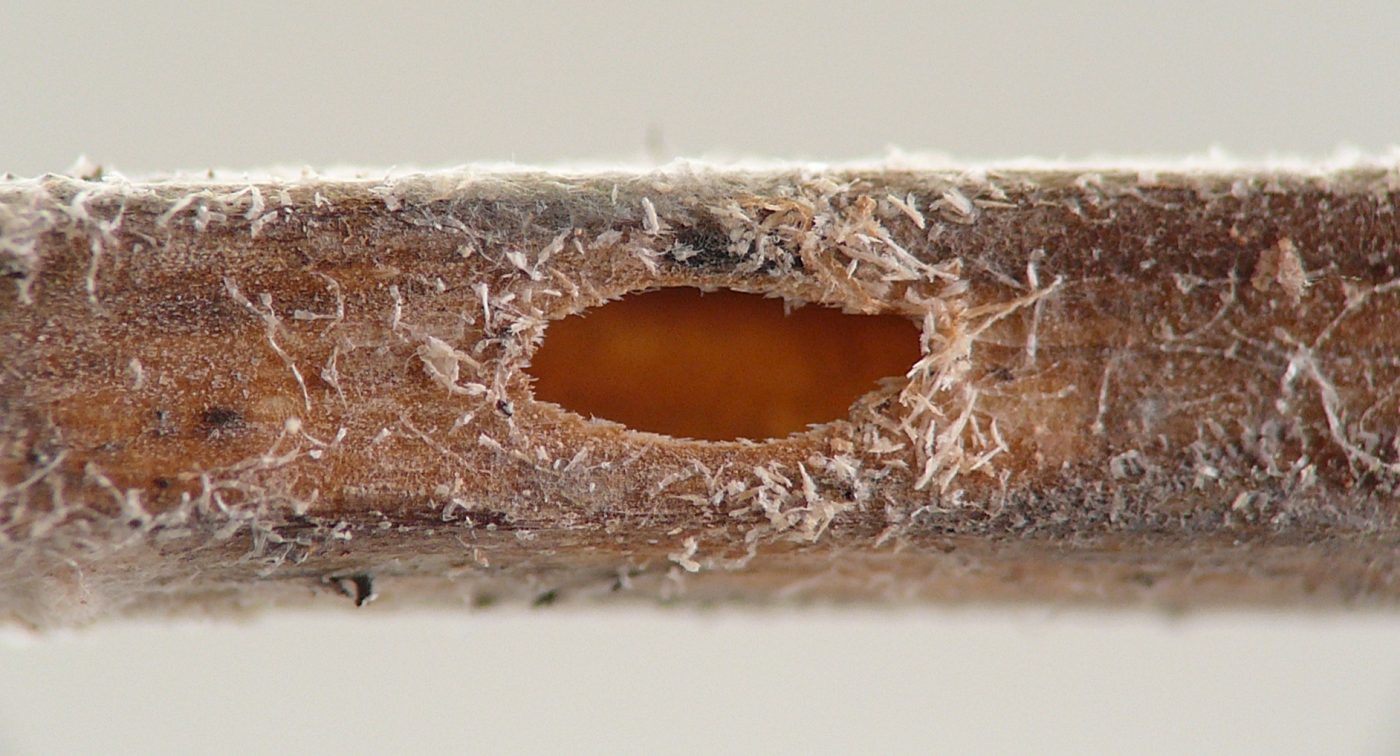
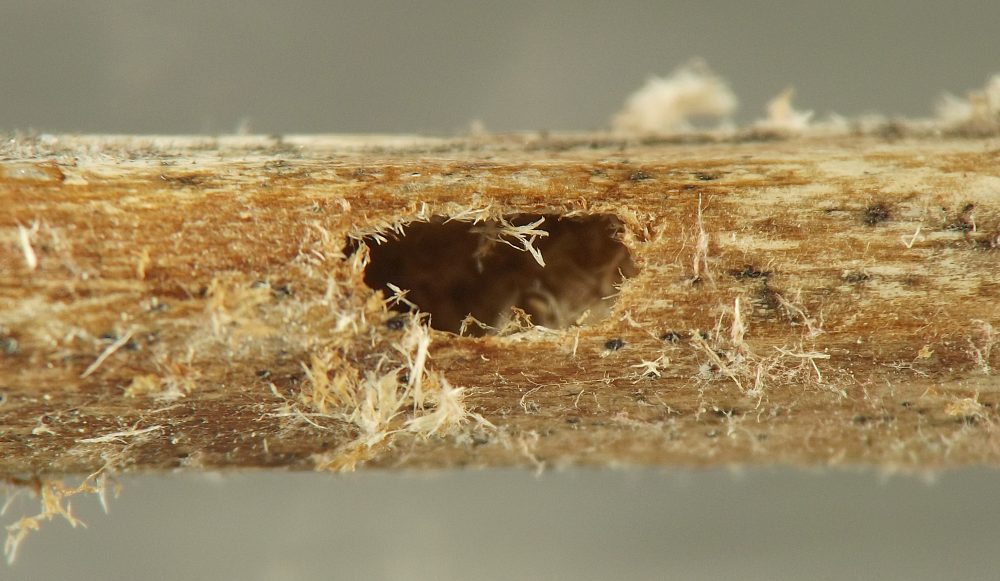
Coleoptera: Erotylidae: Languriini.
Exit holes left in stems upon the successful emergence of the adult lizard beetle. Oval, sometimes with rough and/or irregular edges, about 2 to 2.5 times as long as wide, with the long axis of the hole parallel to the long axis of the stem. Significantly larger than agromyzid exit holes.
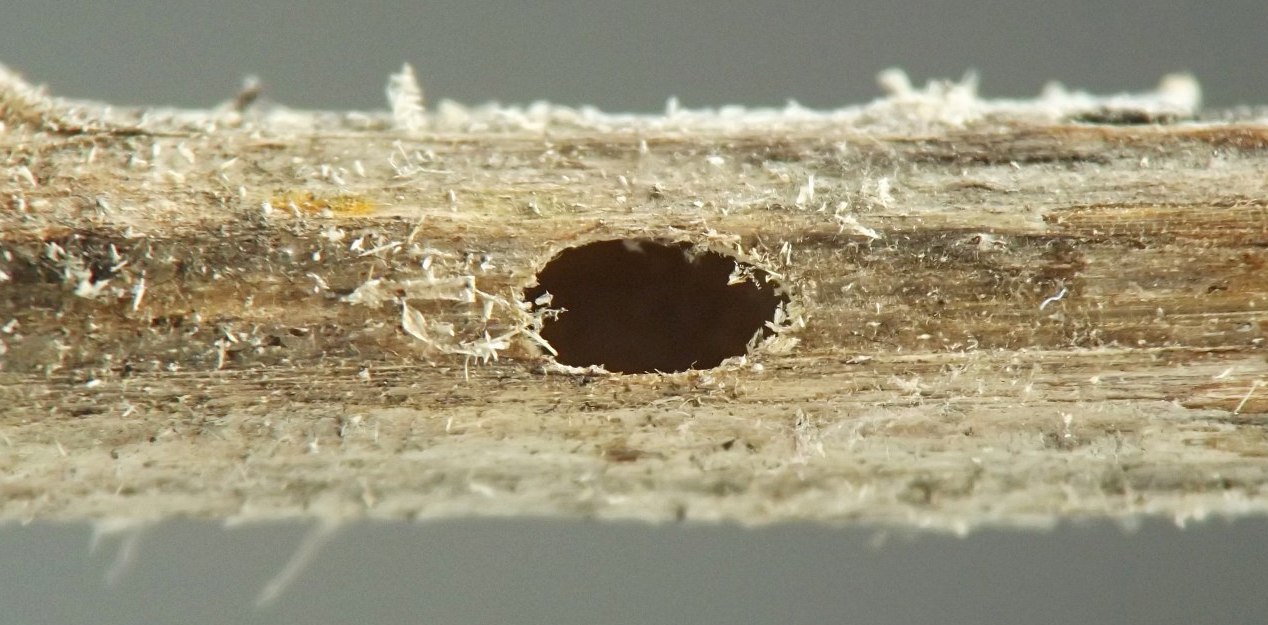
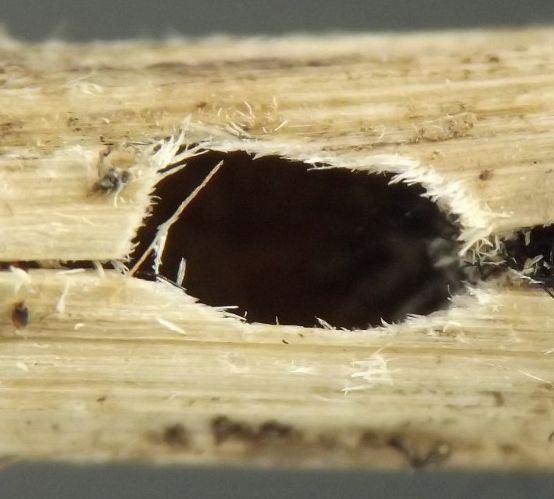
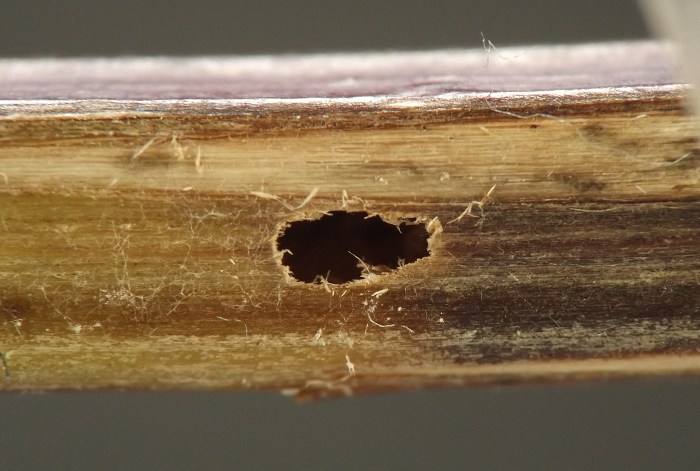
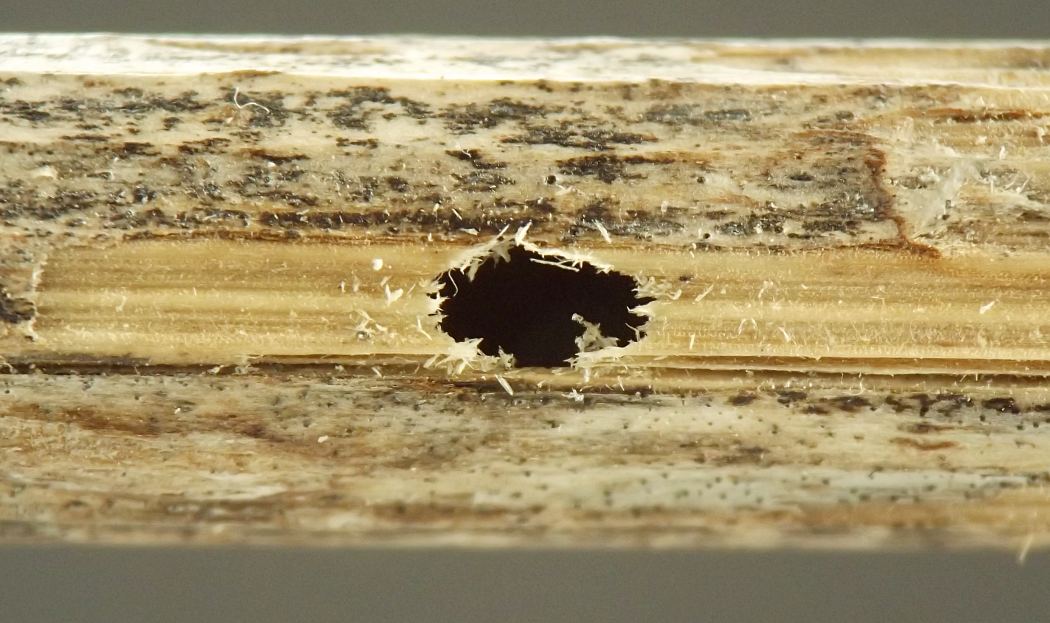
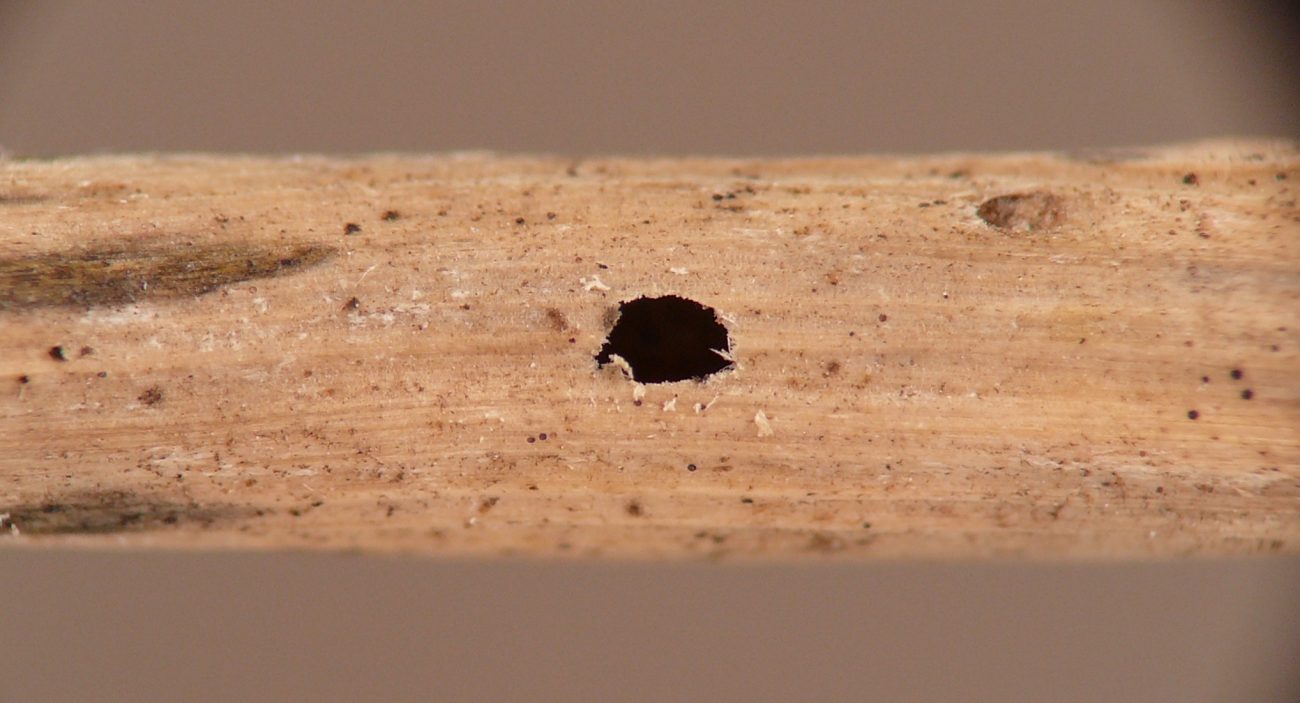
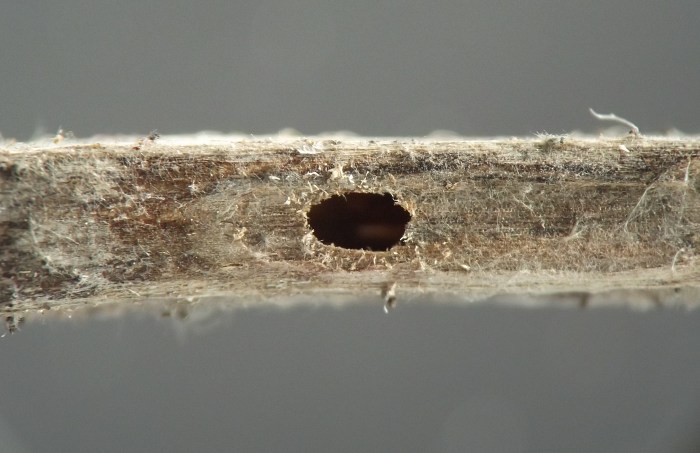
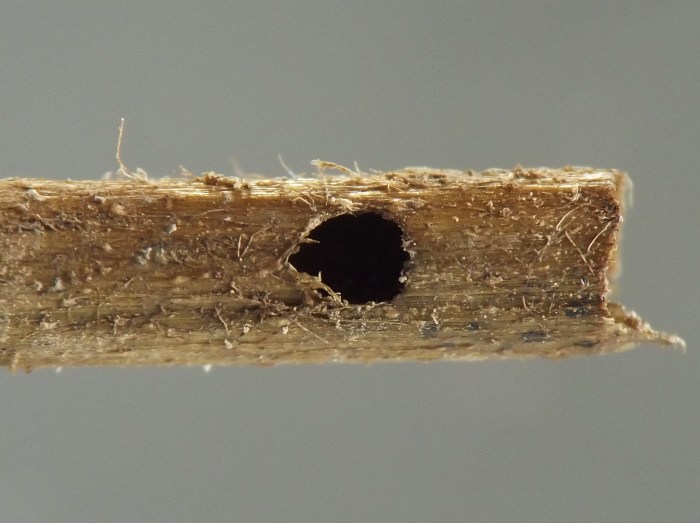
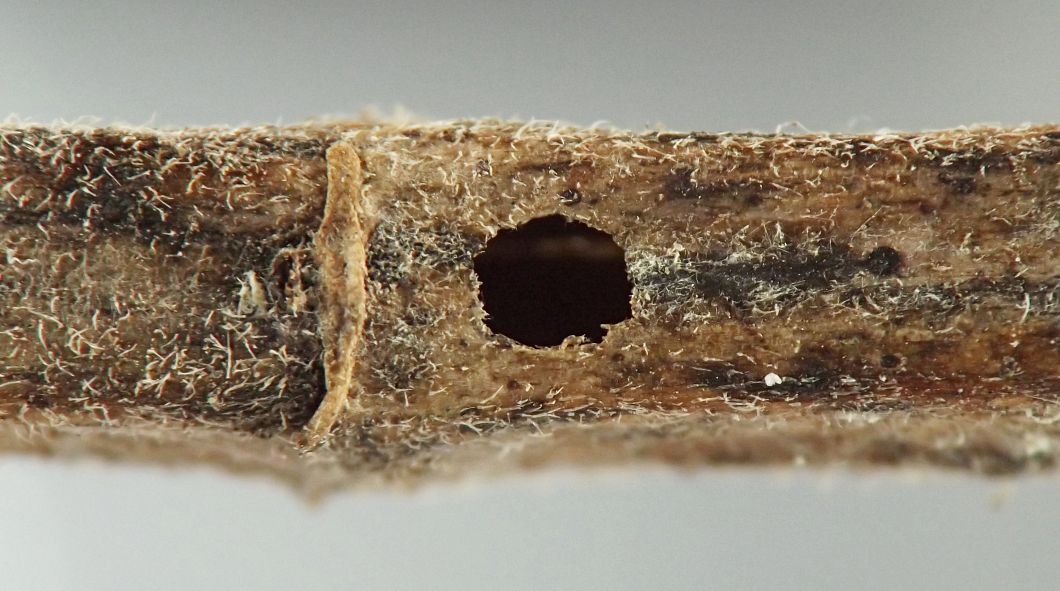
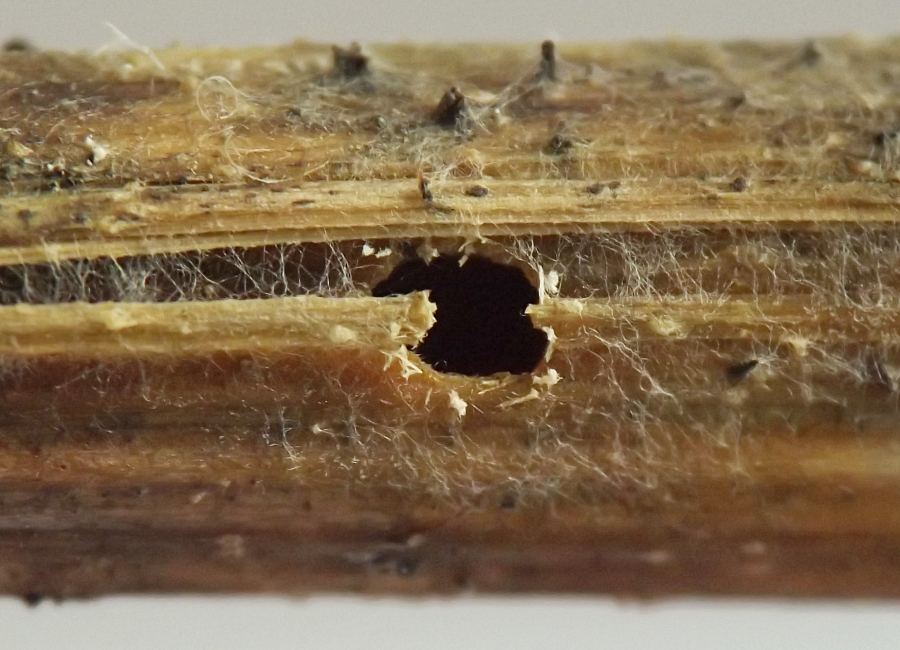
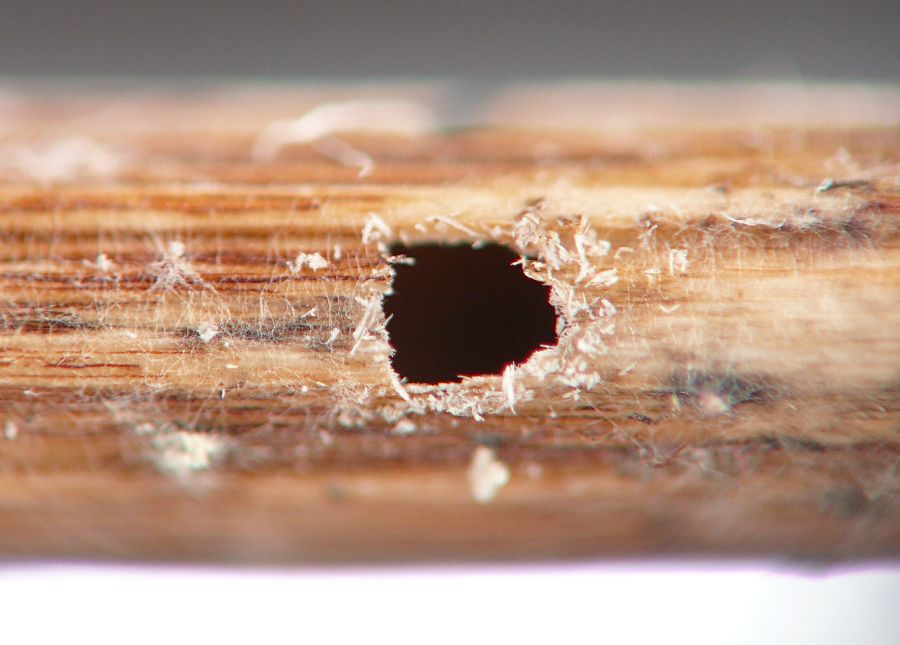
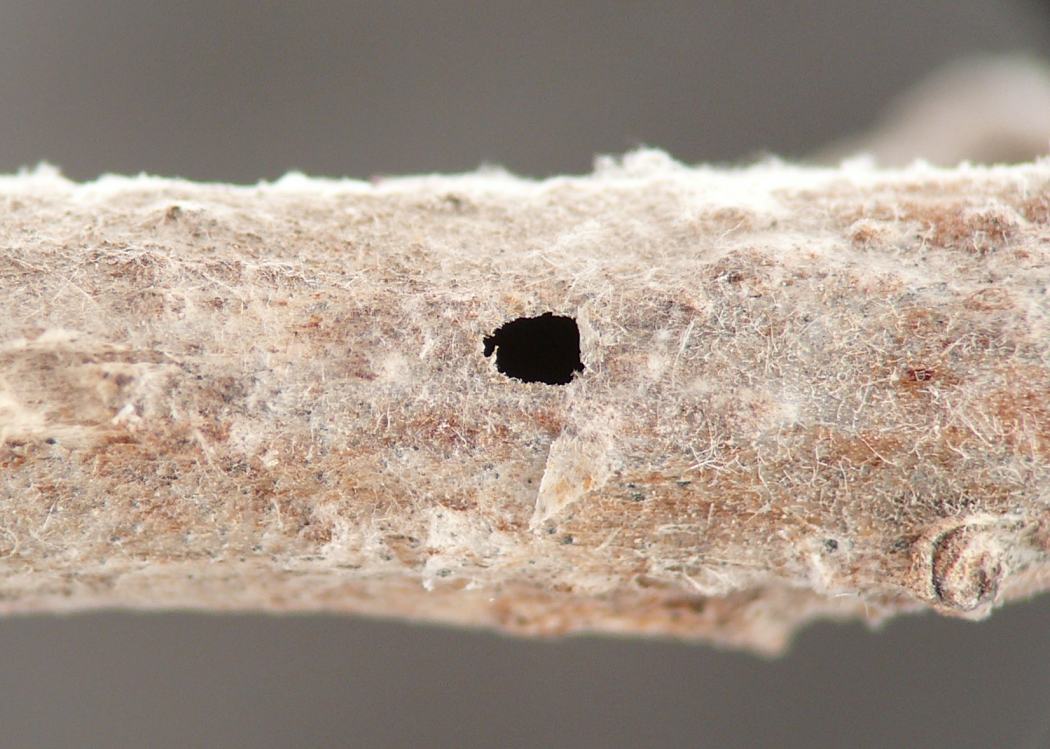
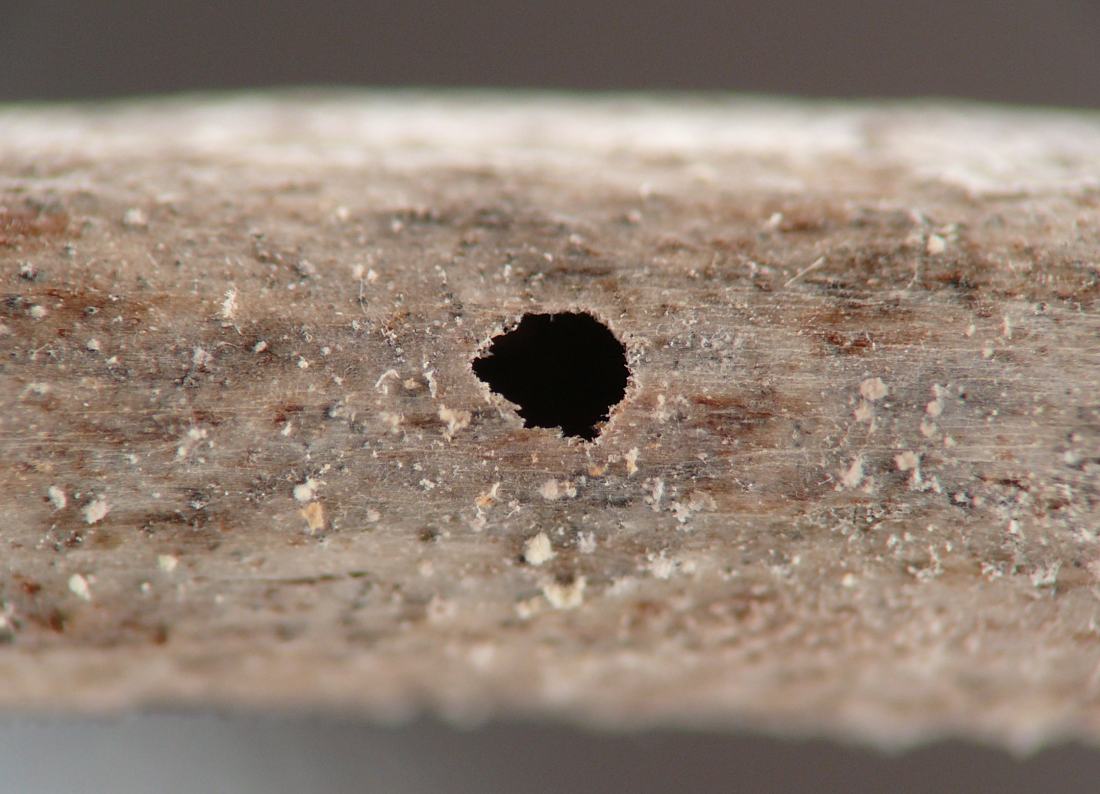
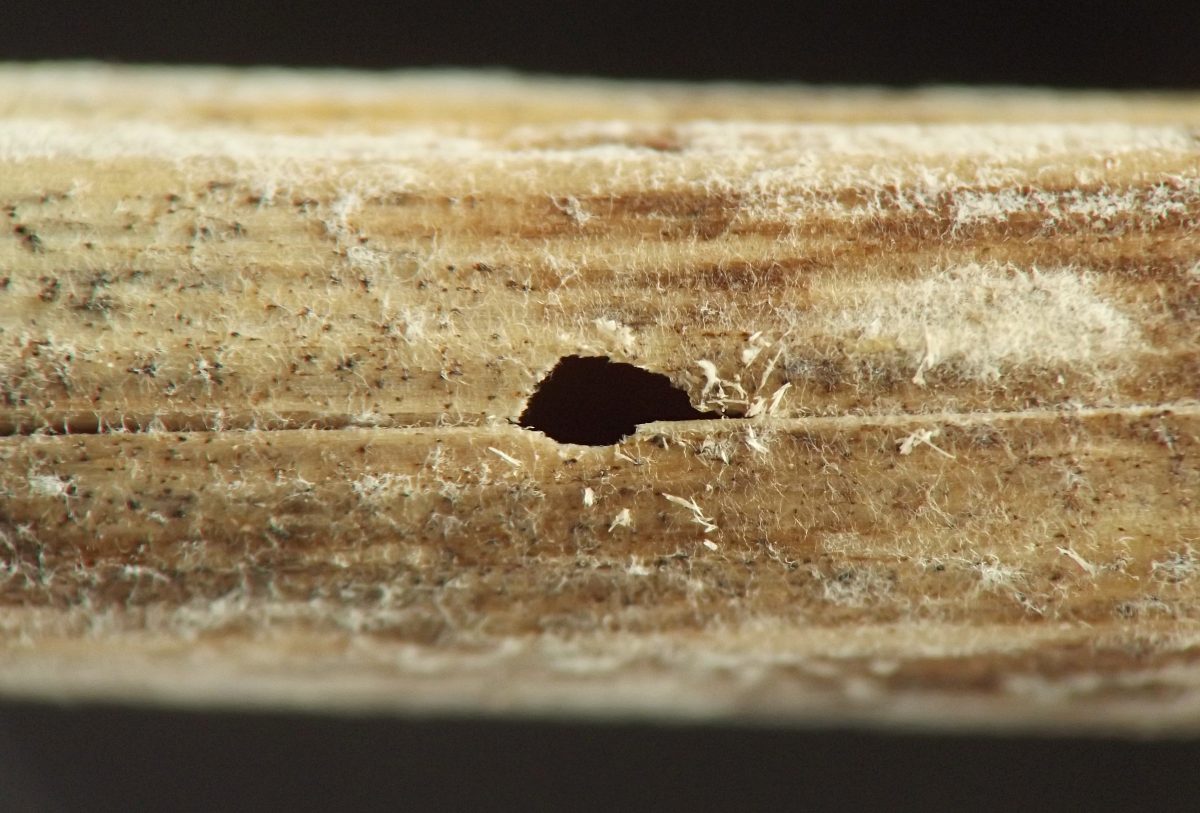
Coleoptera: Mordellidae.
Exit holes left in stems after the adult beetle emerges. Roundish to somewhat oval, one to two times as long as wide; may have rough or irregular edges. Most examples I have so far photographed were more circular and less oval in shape compared to typical Melanagromyza or Languriini exit holes.
Diptera: Cecidomyiidae.
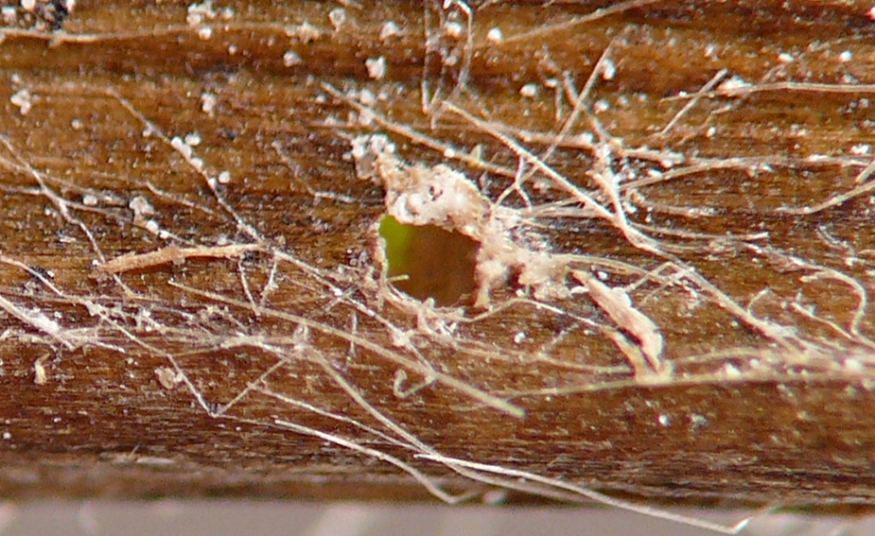
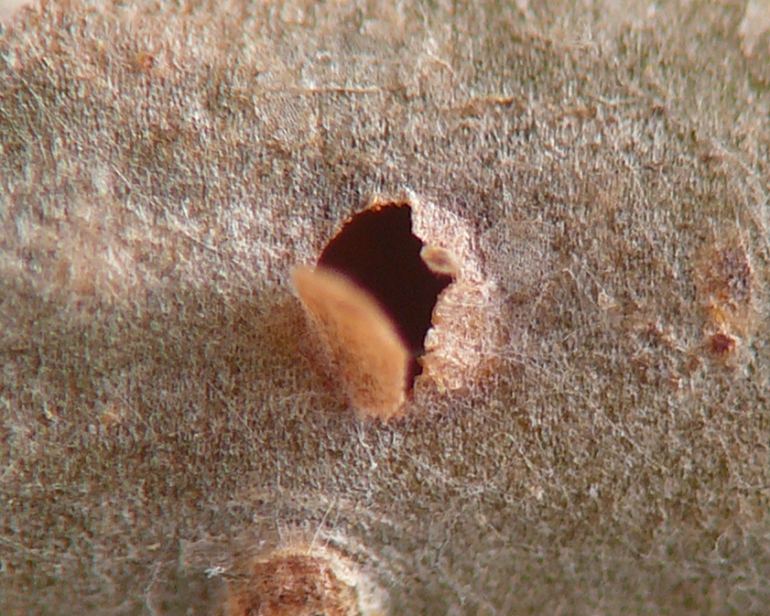
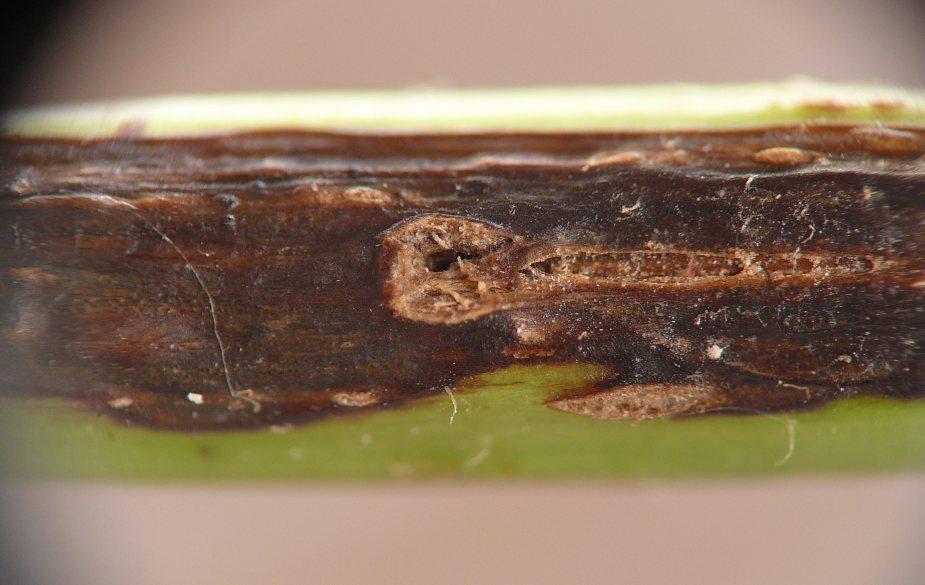
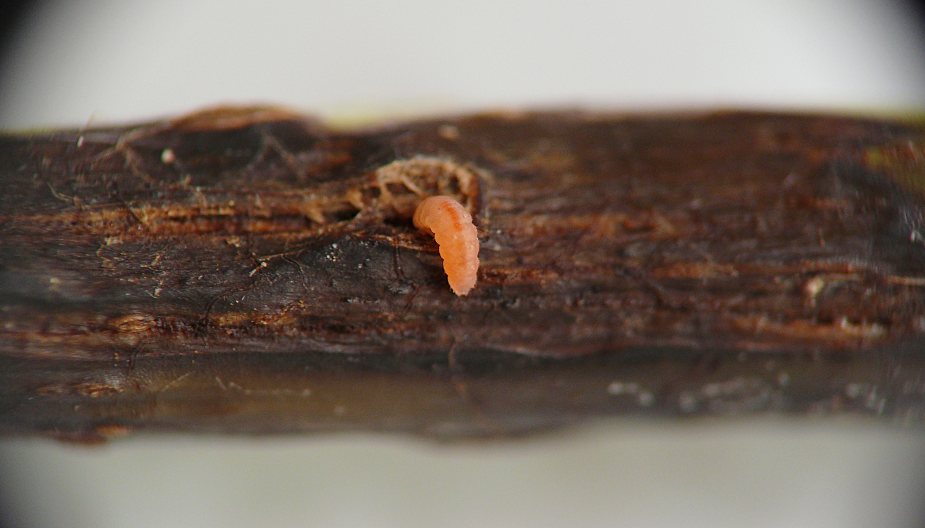
I don't observe cecidomyiid exit holes much; besides the fact that the holes are tiny, among Neolasiopteras (the most common stem cecidomyiids I encountered) the tip of the whitish silken cocoon and the bulk of the pupal exuviae often protrude from the stem upon the adult's emergence, which tends to obstruct the exit hole. However, from what little I have been able to observe, unobstructed exit holes are usually minute and round to oval, and some cocoon silk may be visible around the rim of the hole or in its interior, when viewed from the stem exterior (images 6-01, 6-04). Such exit holes are employed by emerging adults of species that pupate in the stem, but for those species that evacuate the stem as mature larvae, the exit holes of the larvae may be discernible in some cases. For instance, an Ageratina stem I observed that contained Resseliella larvae developed a tiny round hole through which I believe I may have witnessed one of the larvae exiting. The epidermis surrounding this hole had sloughed away, so that the hole was embedded in a rough-textured, circular scar that was lighter in color than the darkened epidermis around it.
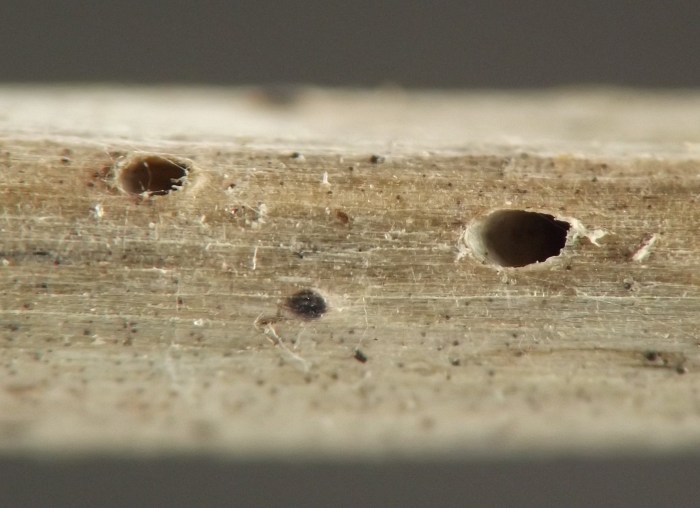
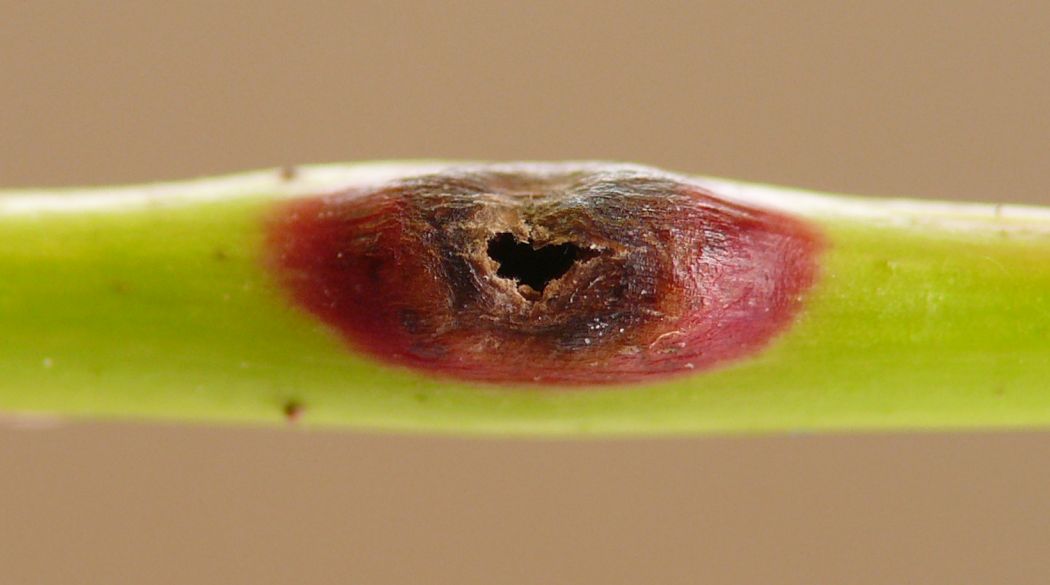
Lepidoptera: Opostegidae.
Exit slits left by mature larvae when they evacuate the stem in order to pupate off the plant. Semicircular, sometimes very neatly so; usually with fairly smooth edges when fresh, but with the hanging chad of tissue on the inside of the semicircle becoming ragged with age.
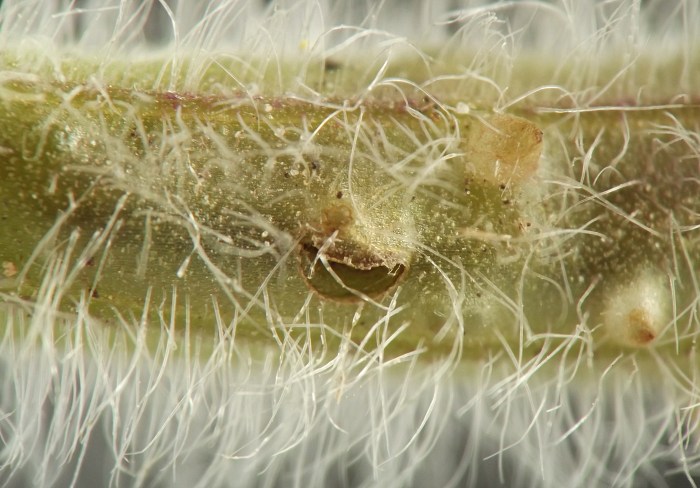

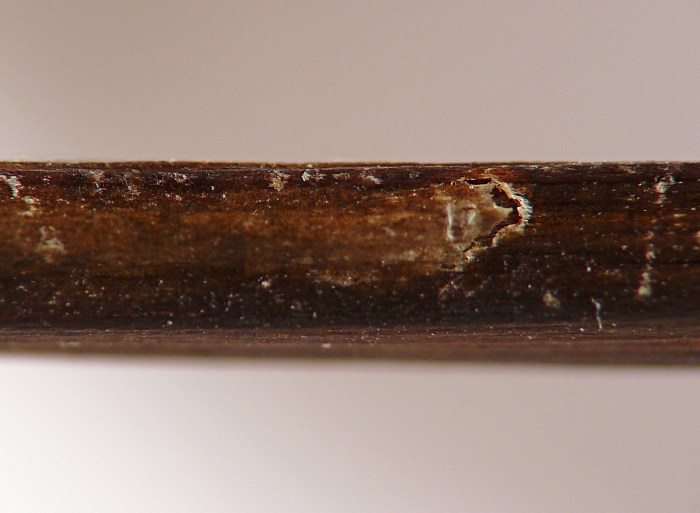
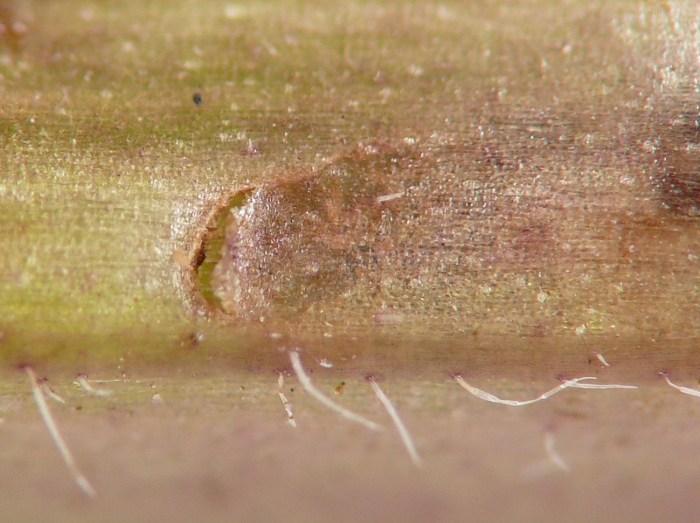
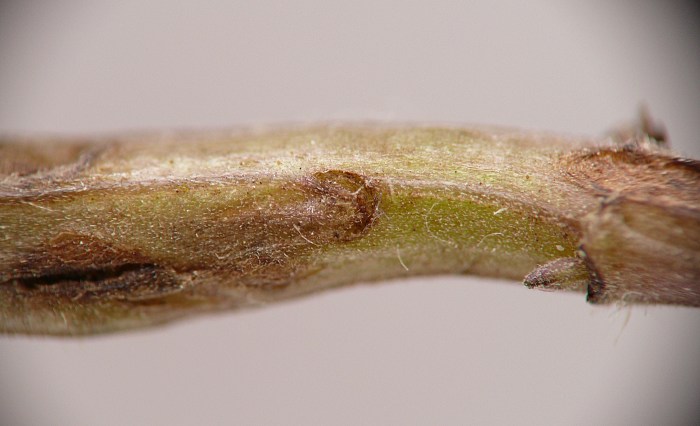
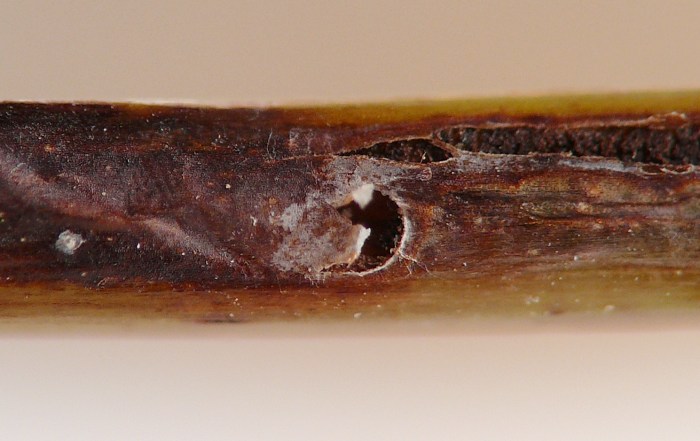
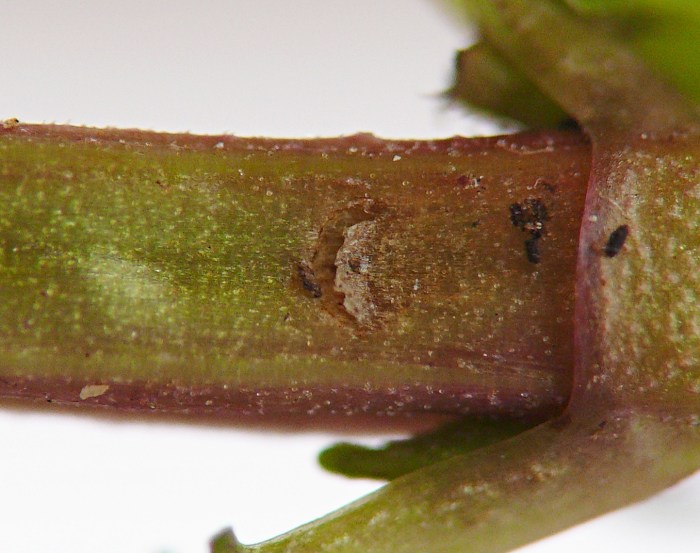
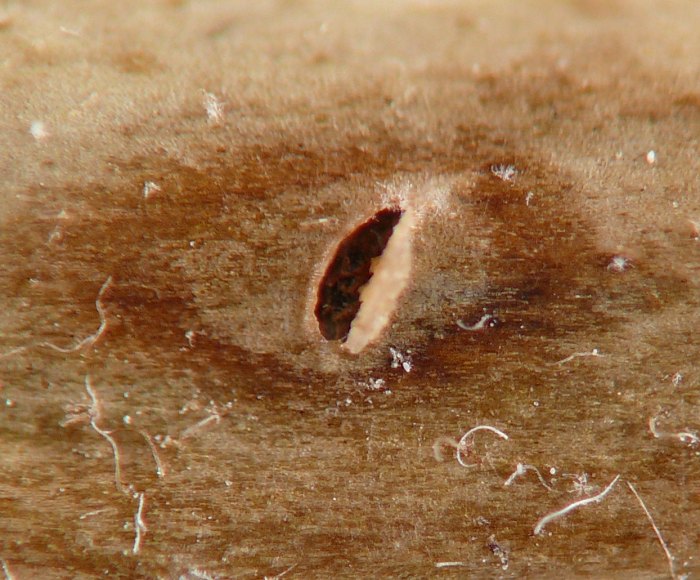
Diptera: Agromyzidae: Parthenocissus borer.
Exit sign of emerged adults of the Parthenocissus borer may vary somewhat, but typically consists of a semicircular flap or hole in the bark of the vine. In at least one example I photographed, the flap had broken off and the hole was more or less circular.
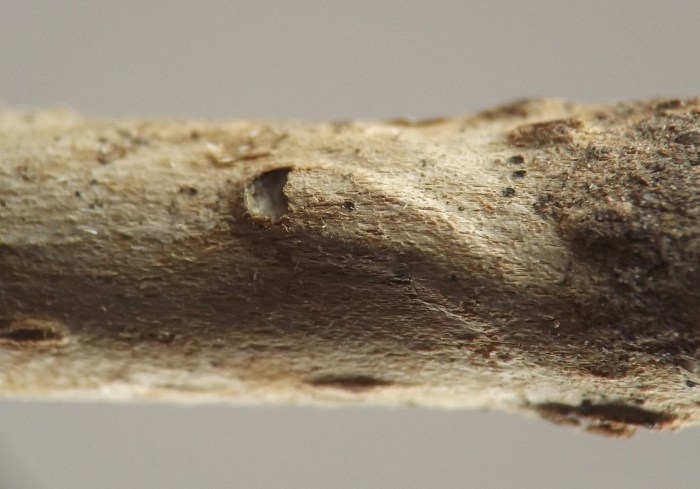
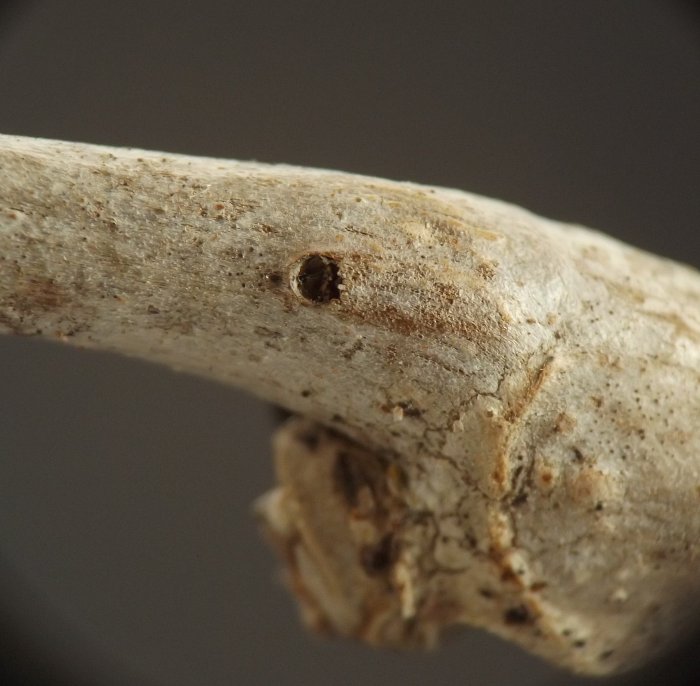
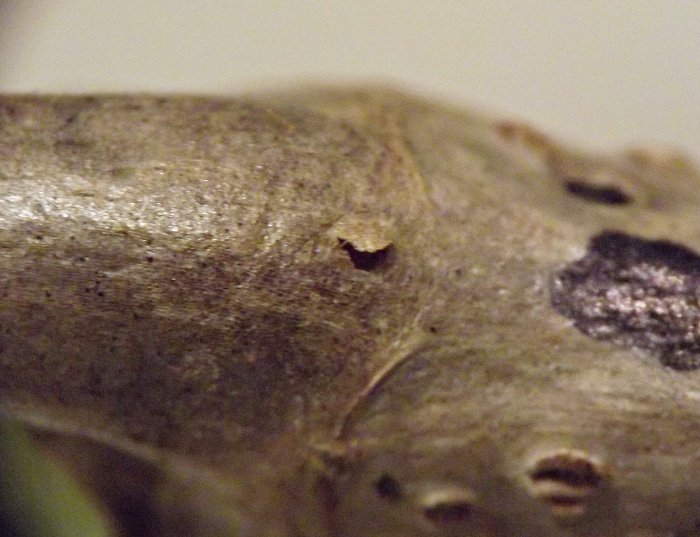

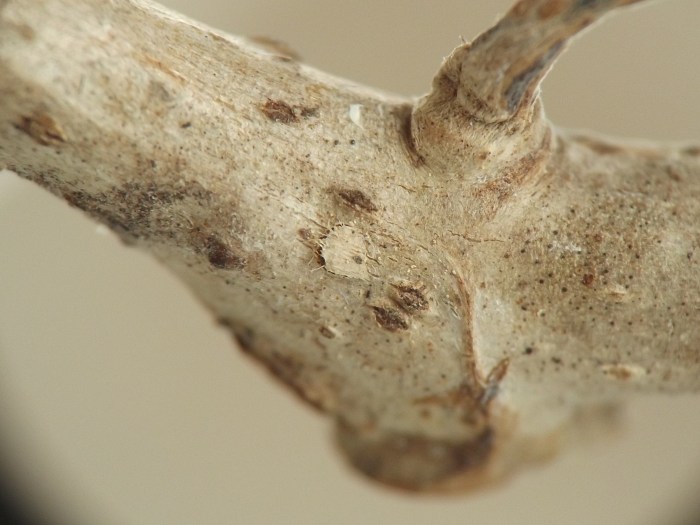
Diptera: Agromyzidae: miscellaneous.
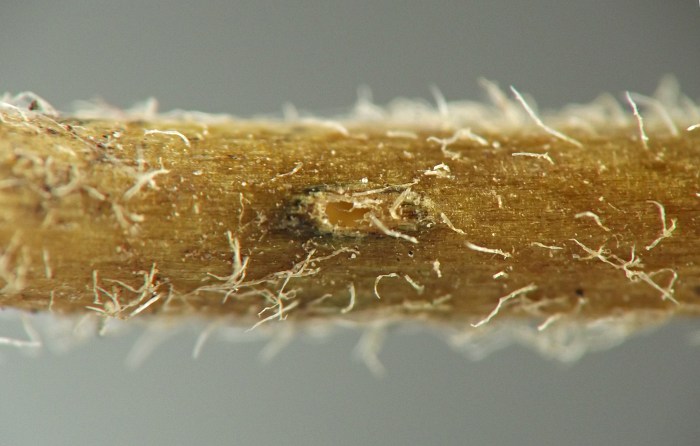
I haven't seen very many examples of either, but from what I have seen, the Clematis borer leaves a semicircular exit flap when the adult fly emerges, while the Clematis local feeder/borer establishes a round hole in a node when the mature larva exits the plant in order to pupate on the ground. The petiole miner/borer in Arnoglossum constructs an irregular, roundish to oval hole covered by an operculum of epidermis. Mature larvae of the Phlox divaricata borer evacuate the stem through a hole of which I have only observed a few examples; in the example shown here, the hole is a small, irregular oval, surrounded by a dark ring of necrotic tissue and partly obscured by the stem hairs.
Coleoptera: Curculionoidea.
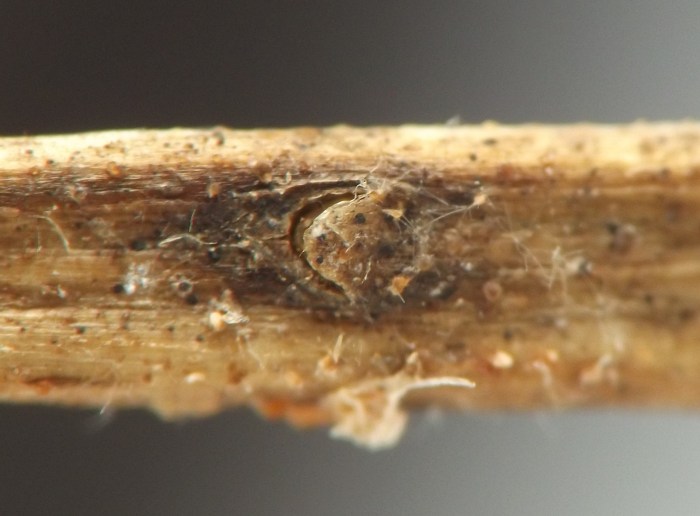
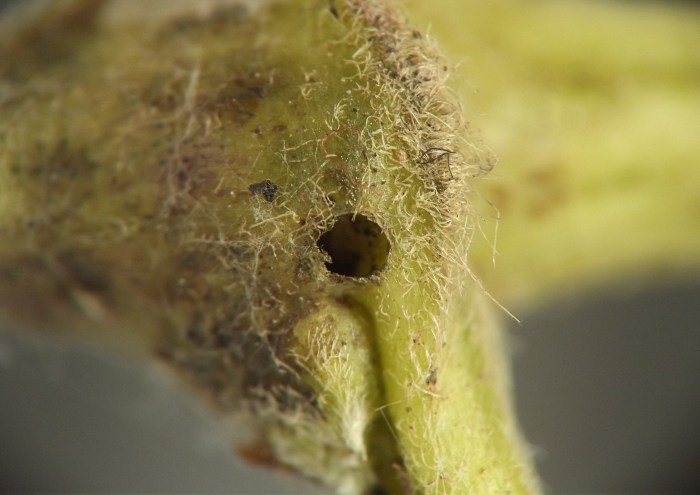
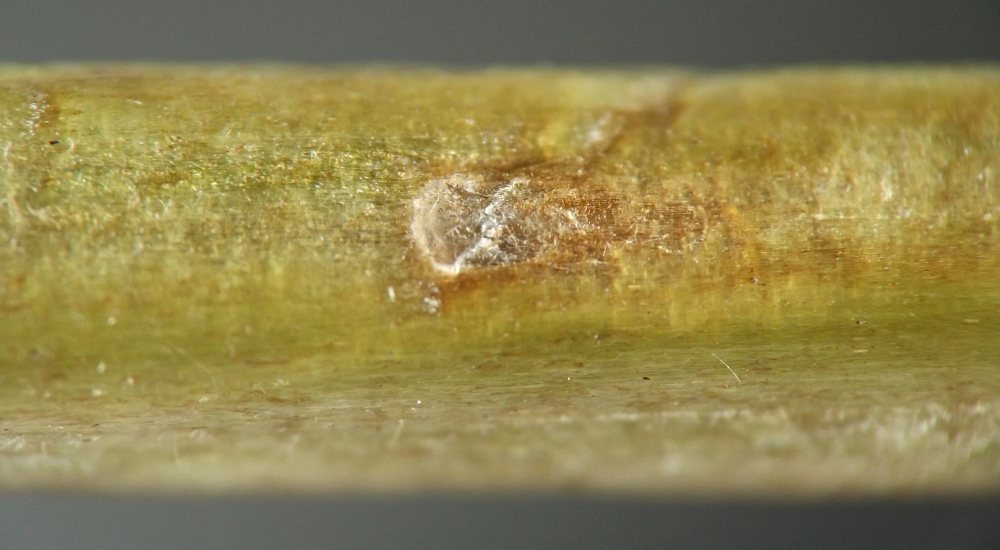
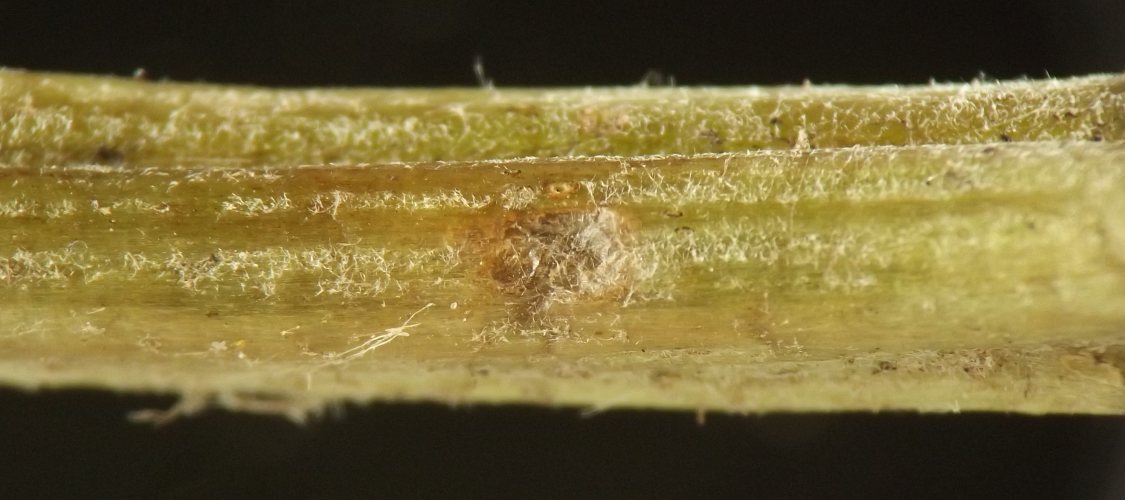
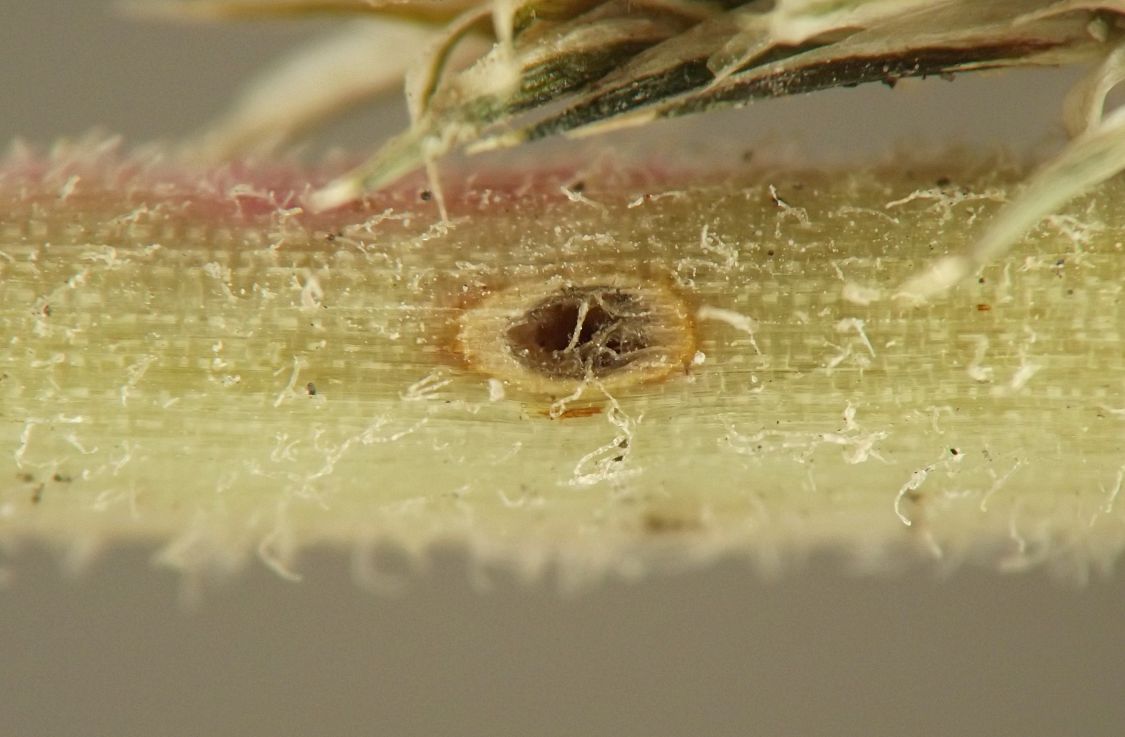
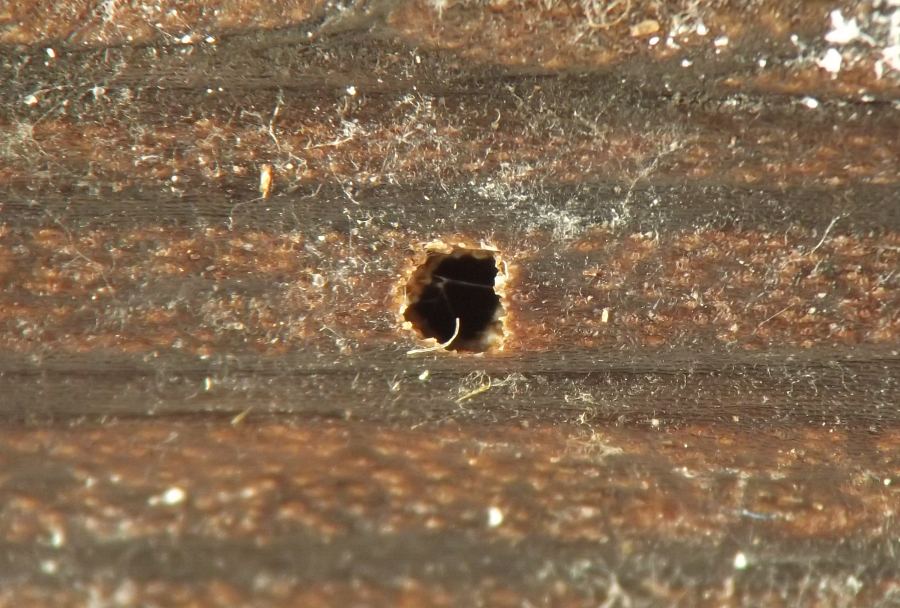
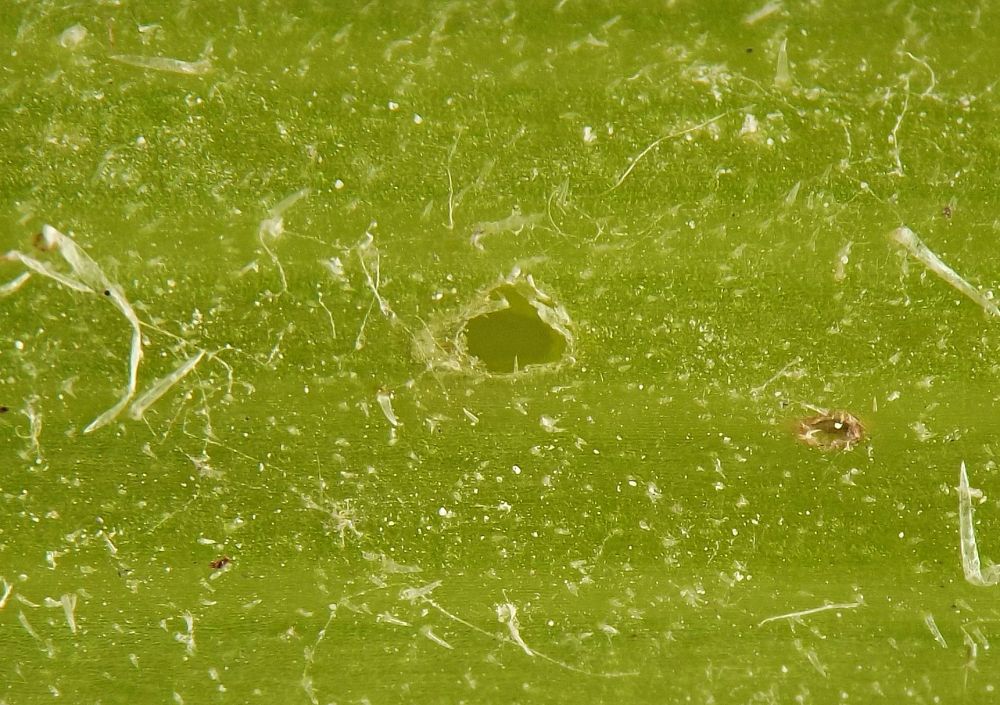
Exit holes of emerging adults. Round or roundish, sometimes with an irregular edge. This is a very small sample size involving only a few weevil species from a handful of hosts, so it may be perilous to generalize!
Page created: April 3, 2026. Last update: August 10, 2026